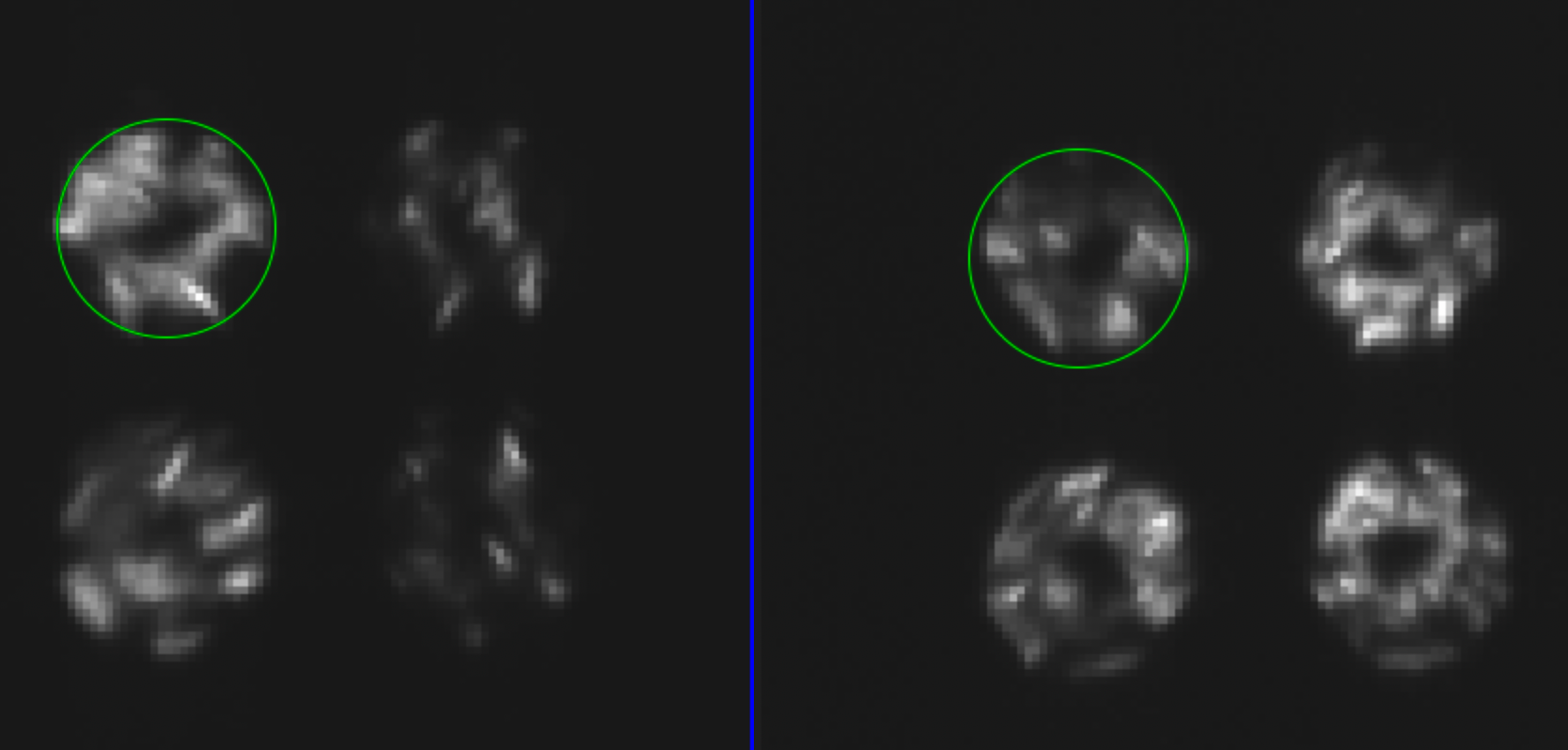
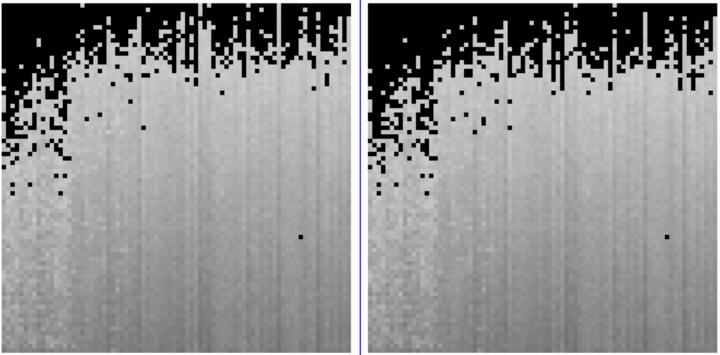
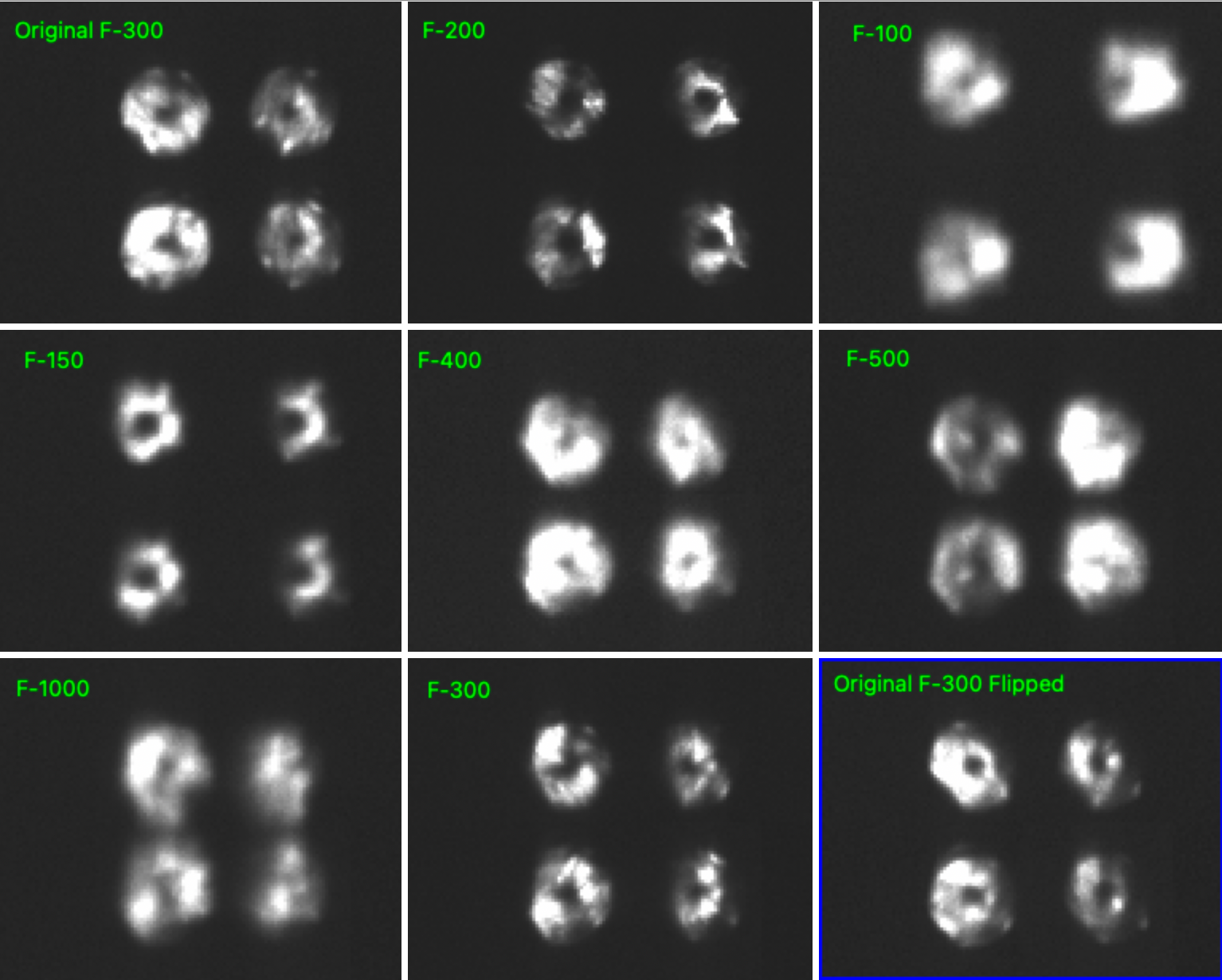
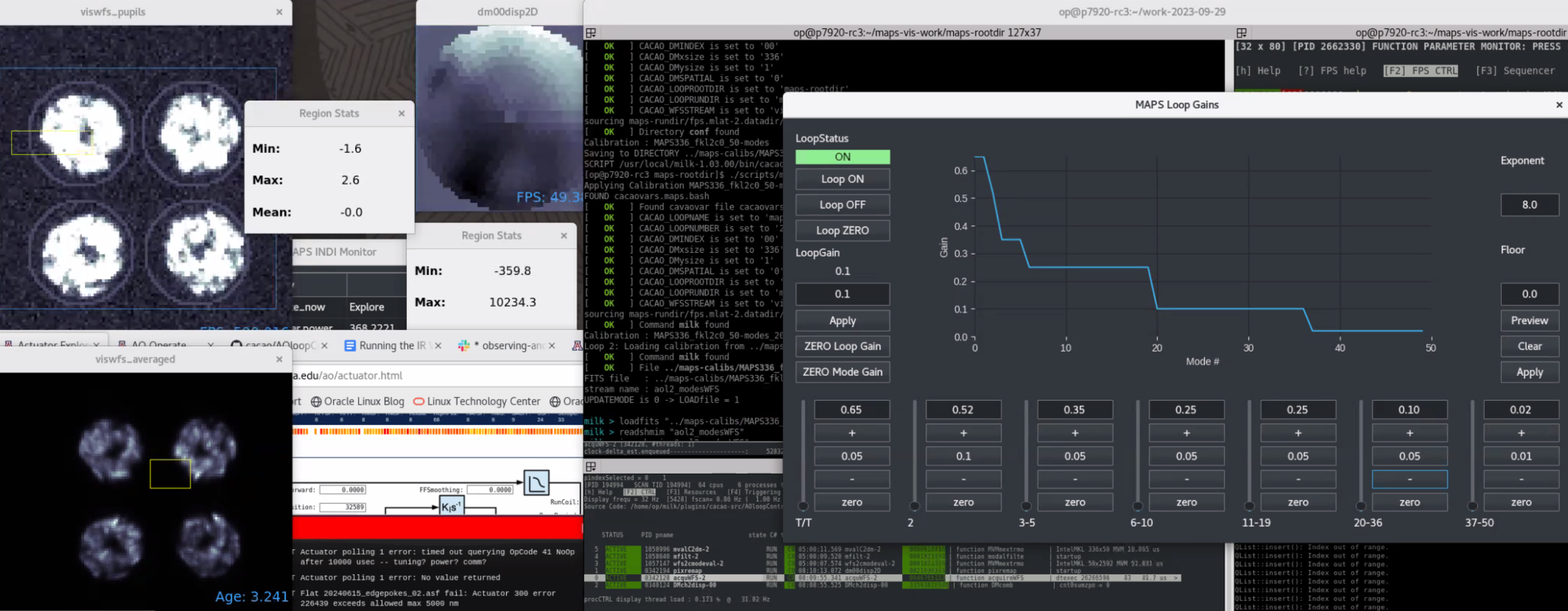
Today/tonight Dan and Amali went down, Dan and Oli came up, and Craig and Oli went down. Oli brought up six (6) new negative lenses ranging from f=-100 to -1000mm to test the Vis WFS pupil focus. We took another image set with the current lens (f=-300mm) and then swapped it out for each of the other lenses to see the difference in pupil focus and pupil size/separation. Here is what we saw:
Negative lens test, in front of Vis WFS.
Result: The best are f=-200 & f=-300. Oli’s feeling is the best focal length is going to be around f=-250mm. That lens is not available but can be created by combining two lenses. Furthermore, there are other degrees of freedom that can be used to fine tune… namely the separations between the CCID75, CTL, and Pyramid. By adjusting those distances, the overall magnification (pupil size and separation) will change. This is a much more complicated alignment and is destructive since a move cannot be perfectly reversed. So we may try that another time.
Meanwhile we took some ARIES spectra, then went on to closing the CACAO loop with 50 modes and saving some ARIES images. Unfortunately the seeing was around 2-3” so these won’t be great, but it was also a really good practice session for Lauren and Bianca to run CACAO while Amali coached them remotely from Tucson.
There was a dust storm blowing over from New Mexico. Around 3:45am it got worse, and meanwhile the seeing had blown up to above 3” where we were unable to make much progress anyway, so it was time to close for the night. We have 1 more night but the forecast doesn’t look promising, so we shall see.
The word of the night is TEAMWORK. The MAPS team has done a great job this run covering the various tasks even though various people have had to come and go due to life circumstances. Thanks for the excellent teamwork, MAPS team!
Today was the last day of SPIE Astronomical Telescopes & Instrumentation 2024 and tonight was the last night of MAPS June 2024A.
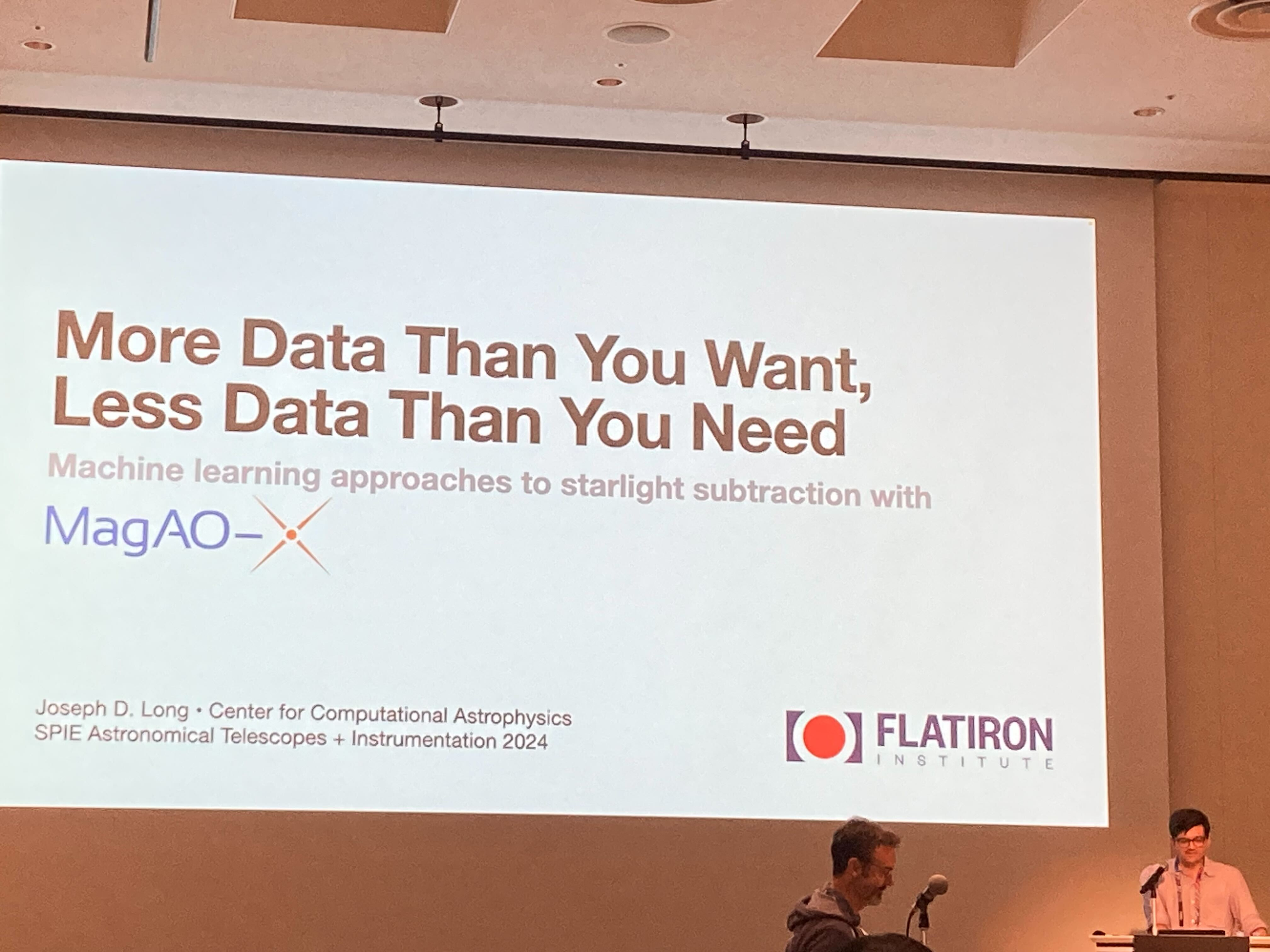
Joseph gave a nice talk (second-to-last of the conference) with MagAO-X data:
Joseph Long giving a talk in the PSF reconstruction session.
Meanwhile at the MMT we tested our previous CACAO calibration, took a new one in better seeing, practiced both Bianca and Lauren running CACAO, and were in the process of more testing when we had to close the dome due to high winds. We waited around until finally calling it a night and a run around 2:30am when the winds continued rising and the clouds came up too.
Here’s our pretty good CACAO loop with 50 modes.
We keep asking Tim and others from MMTO to explain the hexapod to us, but we still don’t understand some of the behavior we see. Last night we had the focus pushed to the limit (near +1600 um), even to the point where the LUT wanted to offload coma but couldn’t send it. So last night we tried starting over: We put the focus to +800 um, let the LUT run for a little while, and lo and behold we were way out of focus. As we focused by eye we ended up back near the limit, around +1600. Tonight, on the other hand, we’re around +700 um and we’re in focus. We asked Brian if the temperature correction is very different and it’s not — well it’s about 50 um different, but that’s not enough to account for the focus difference of around 800 um.
Thanks for a great conference and observing run all!
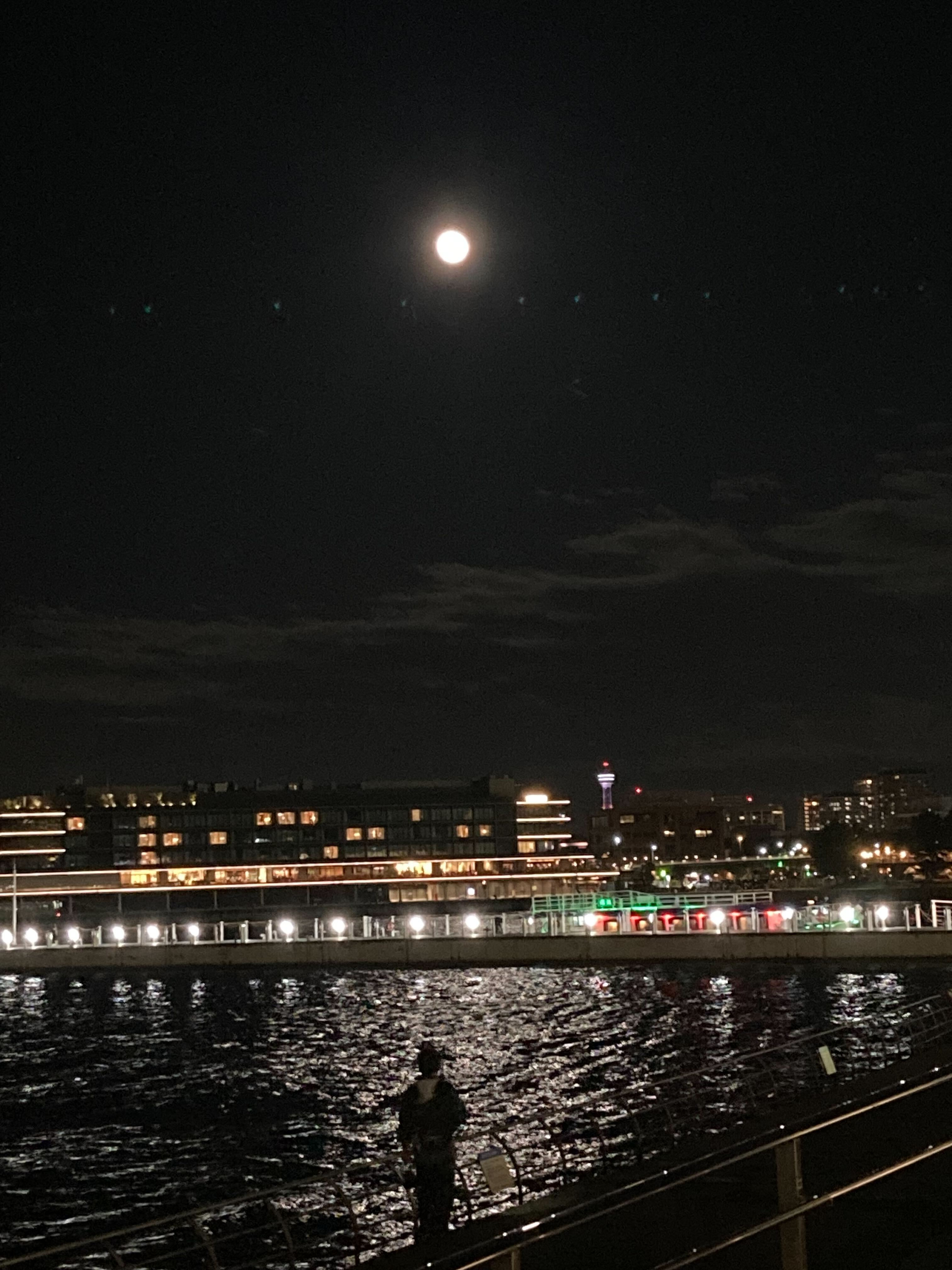
Full moon over Yokohama
The word of the night is 満月 (Mangetsu) which means full moon.