MagAO-X 2026A Day 10: Work Hard, Play Hard

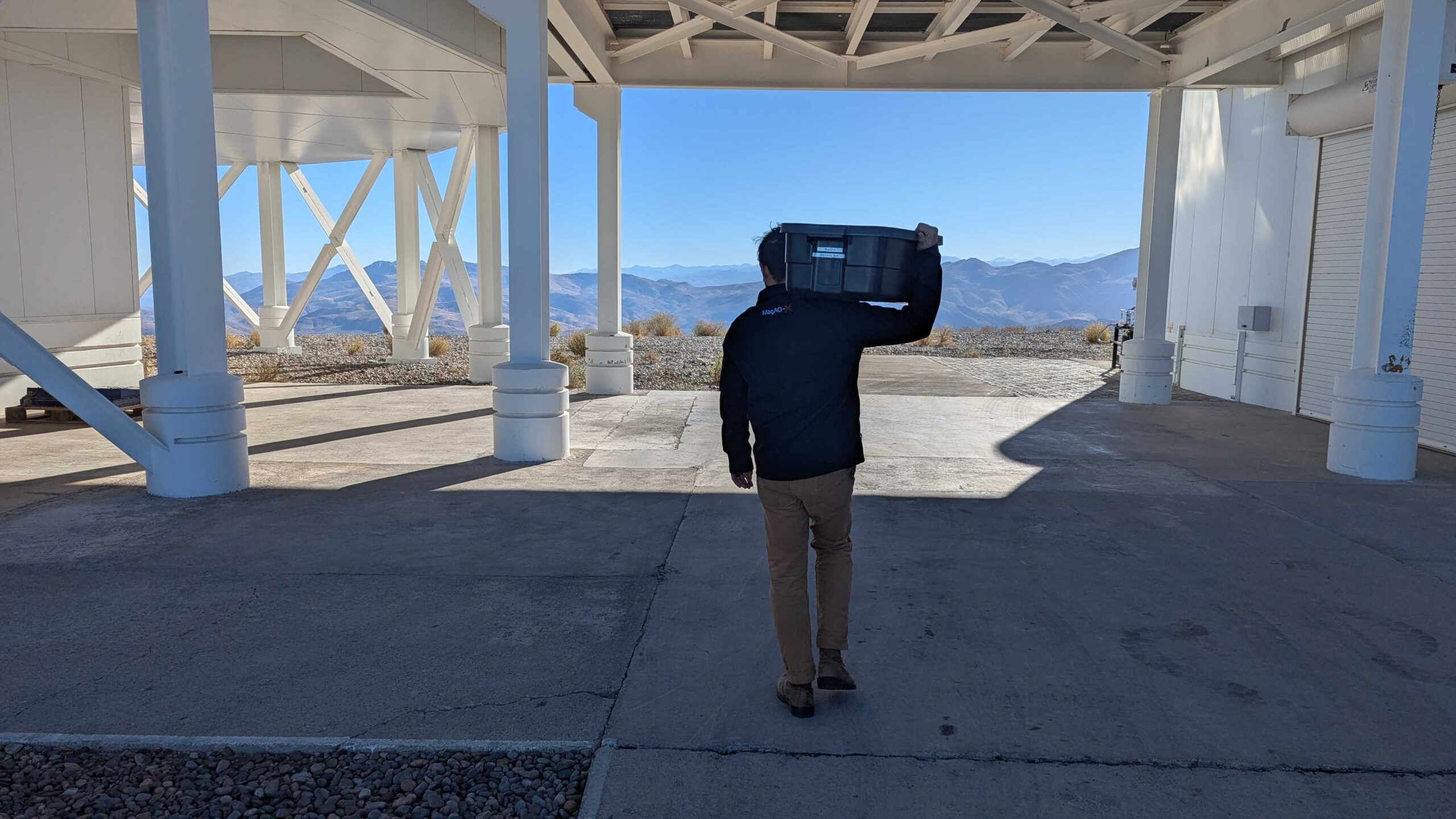
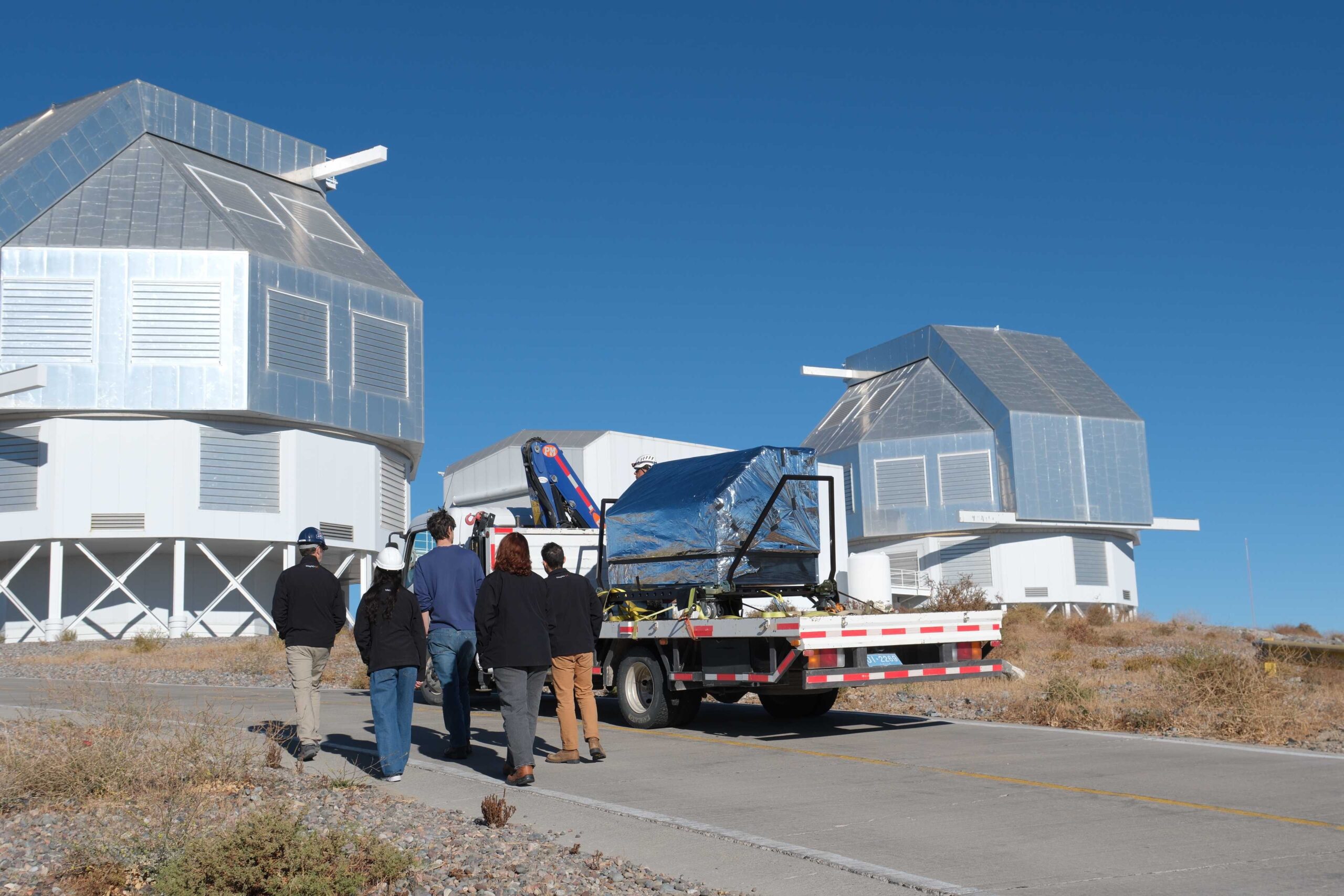
Today’s the day. And it’s going to happen again and again. But for this time, the first order of business is to pick up where we left off at the end of the day yesterday and move MagAO-X, safely, from the cleanroom -> up the summit -> onto the Nasmyth platform.

Moving from the clean room to the telescope

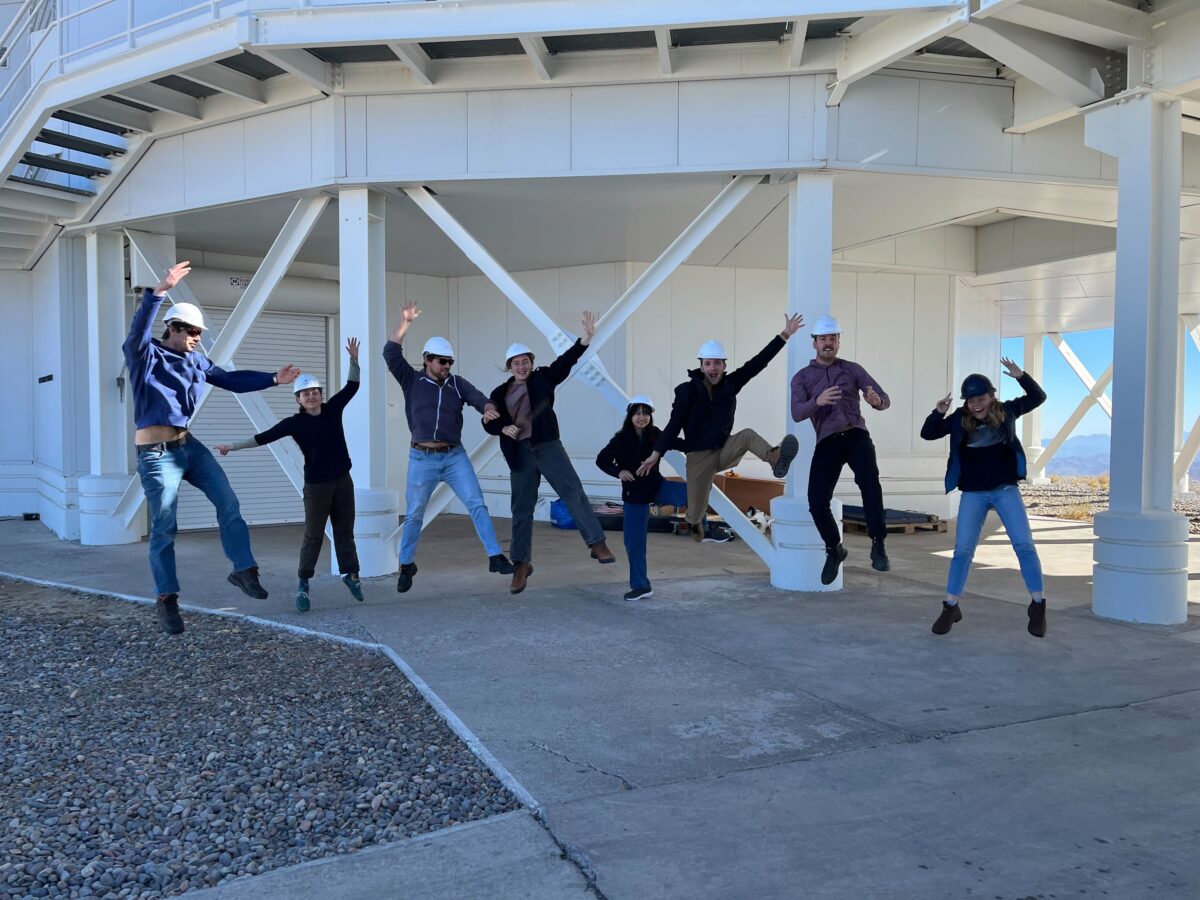
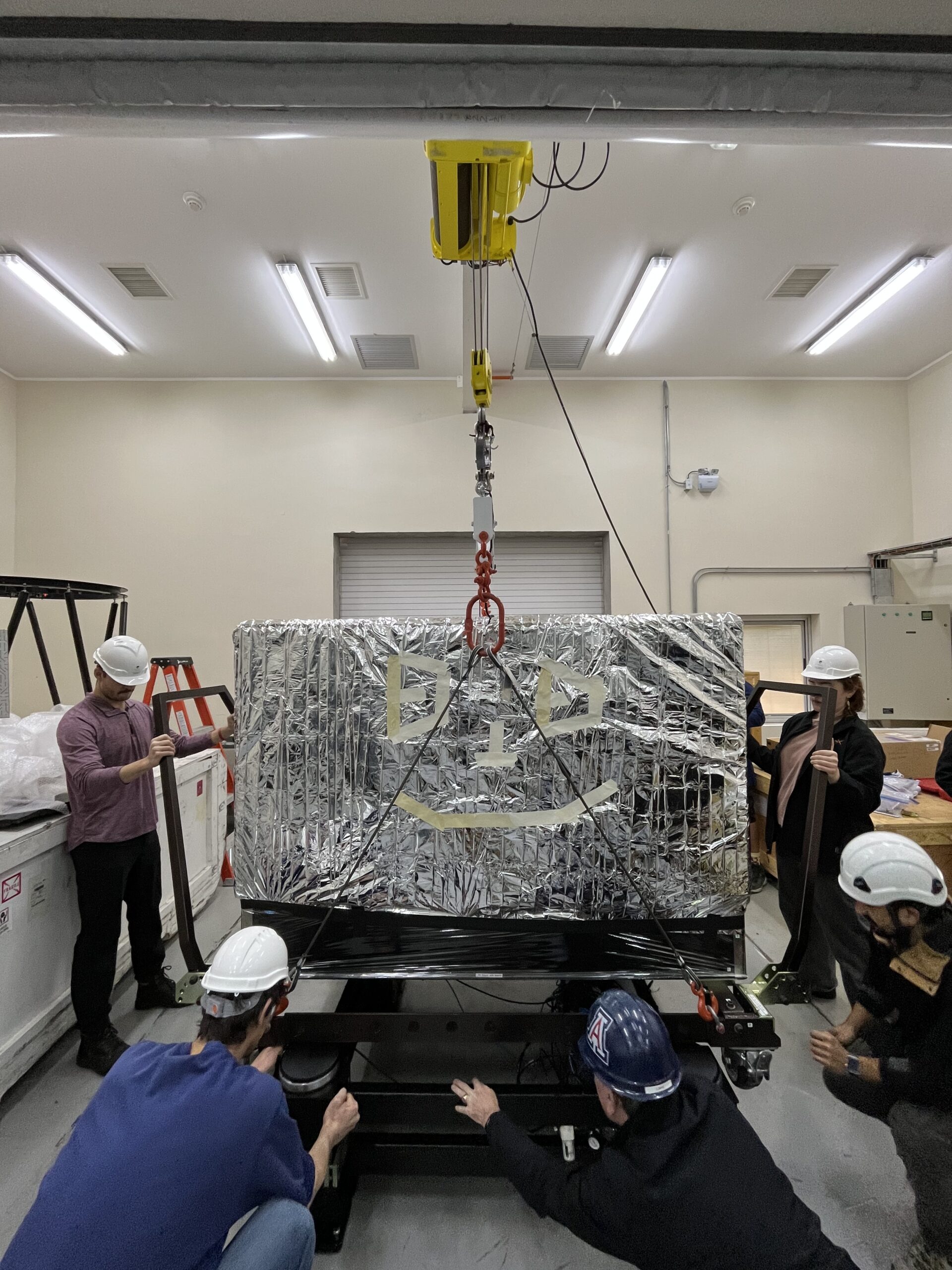
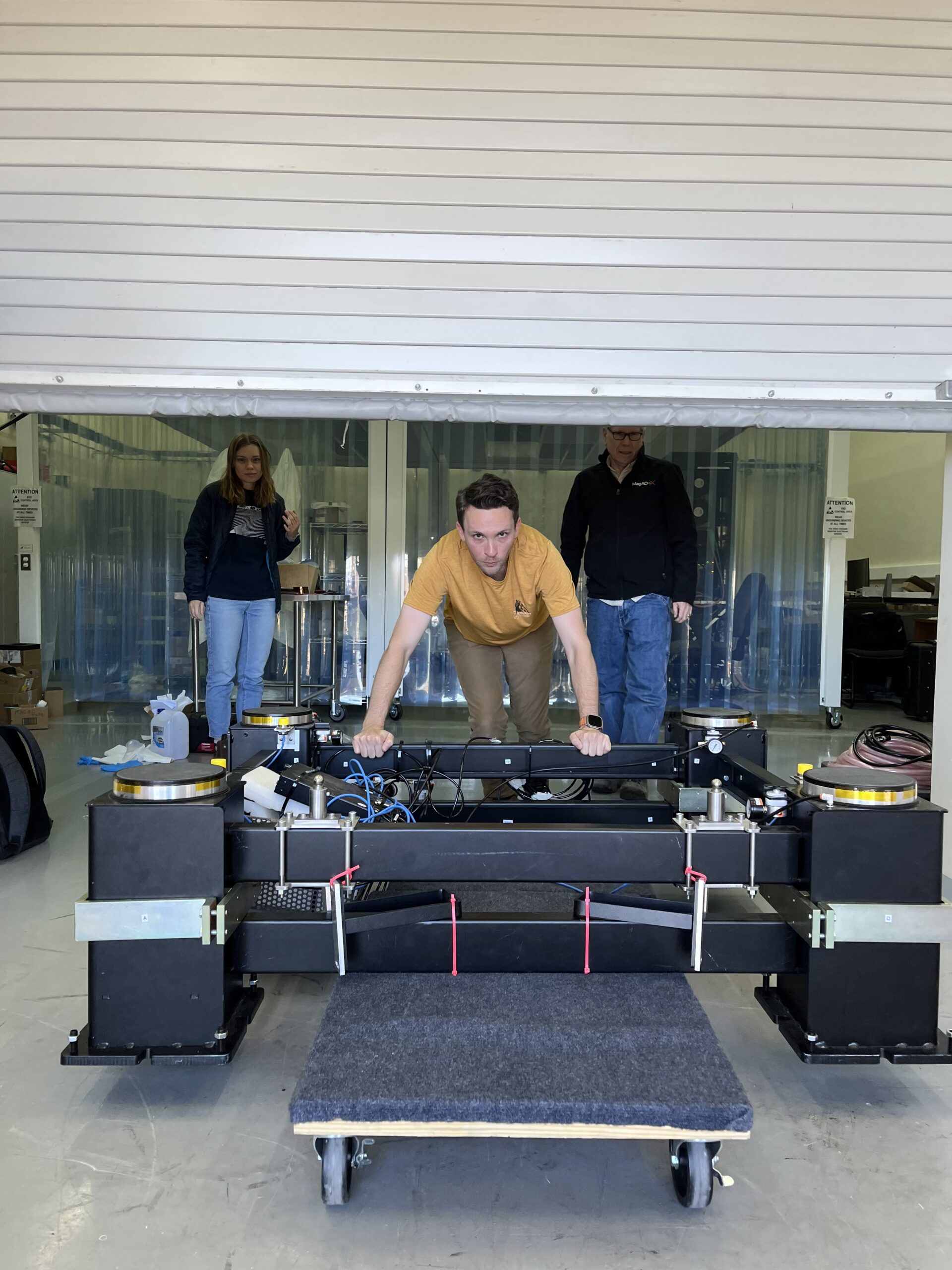
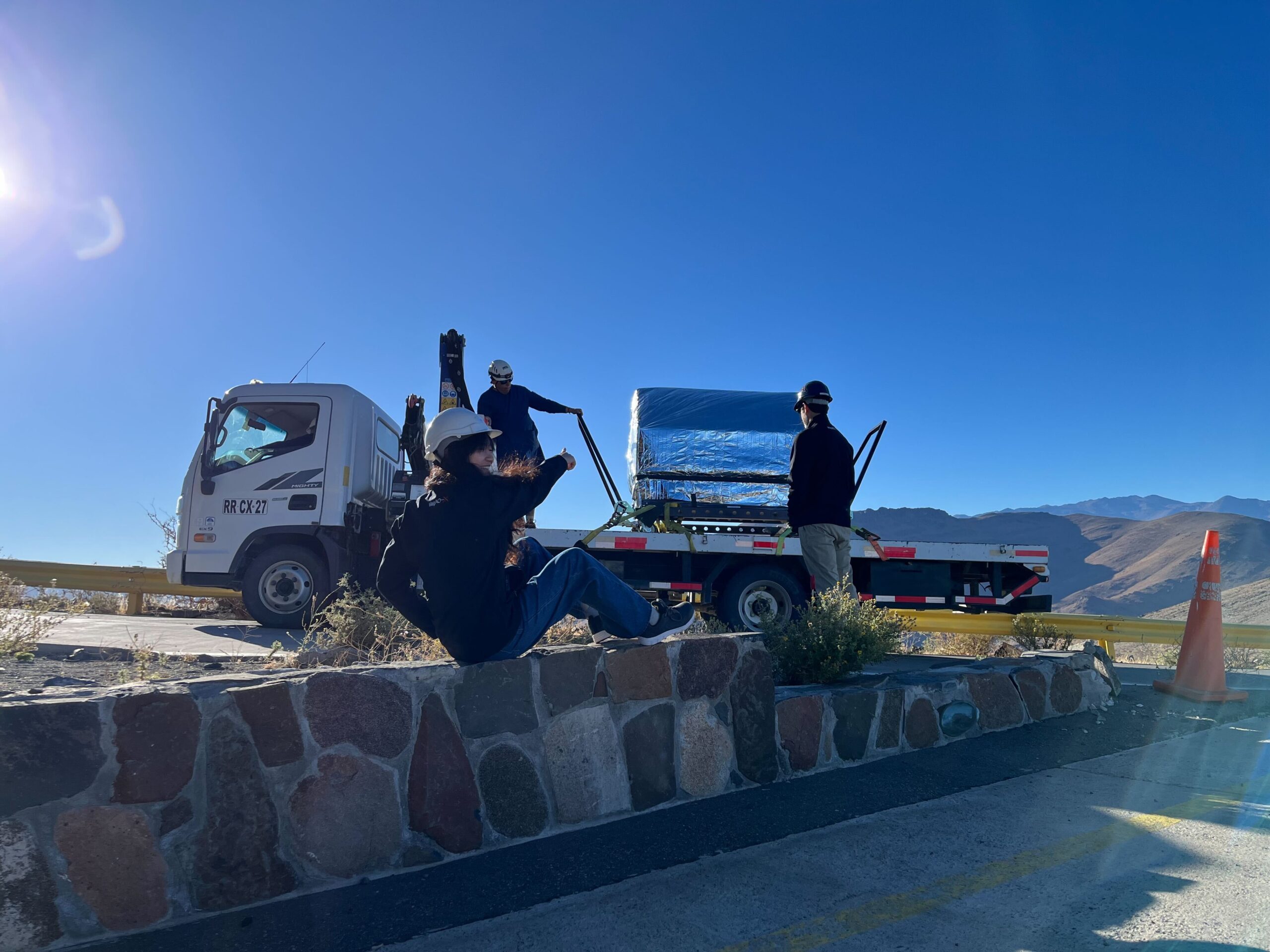
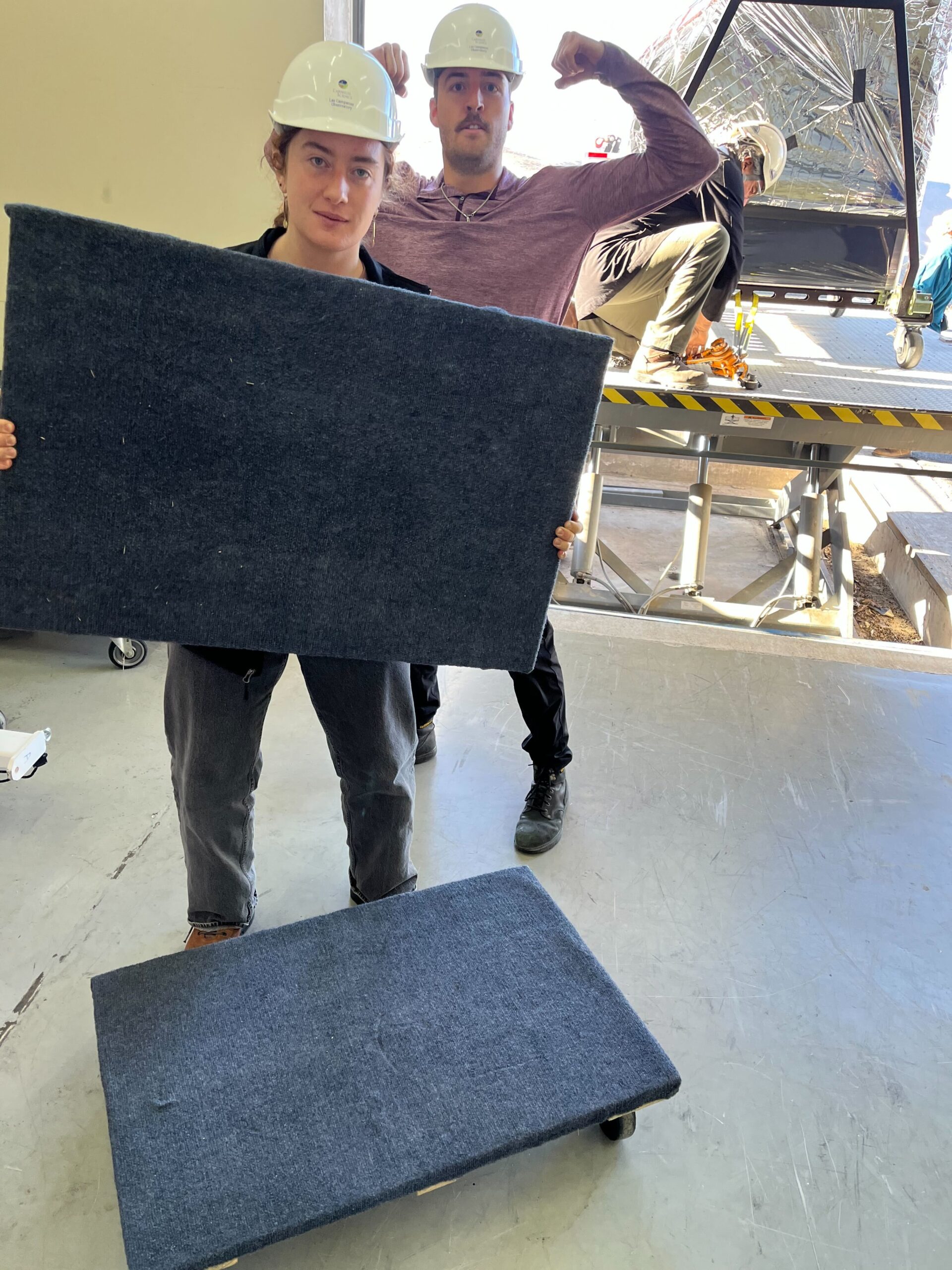
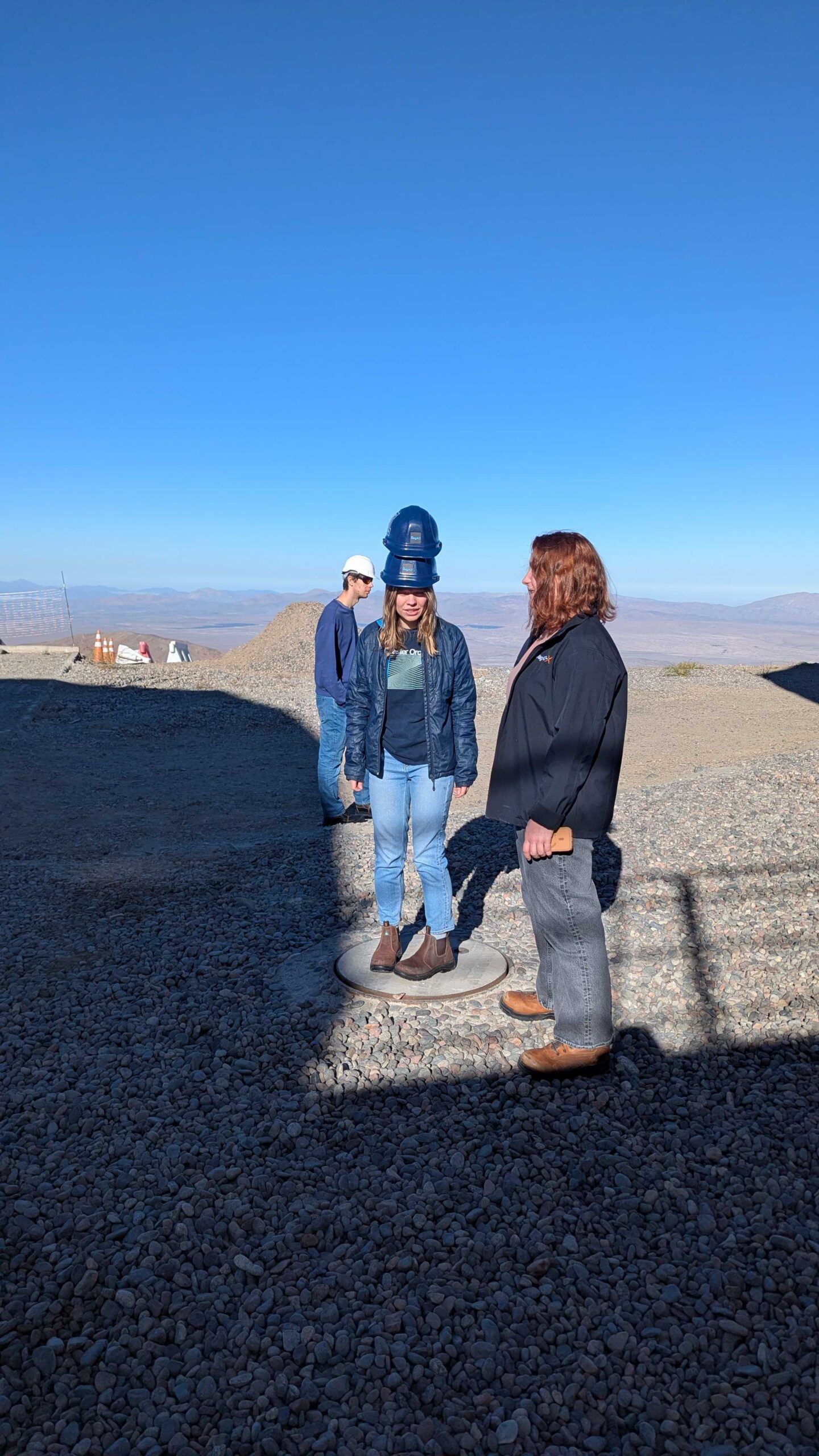
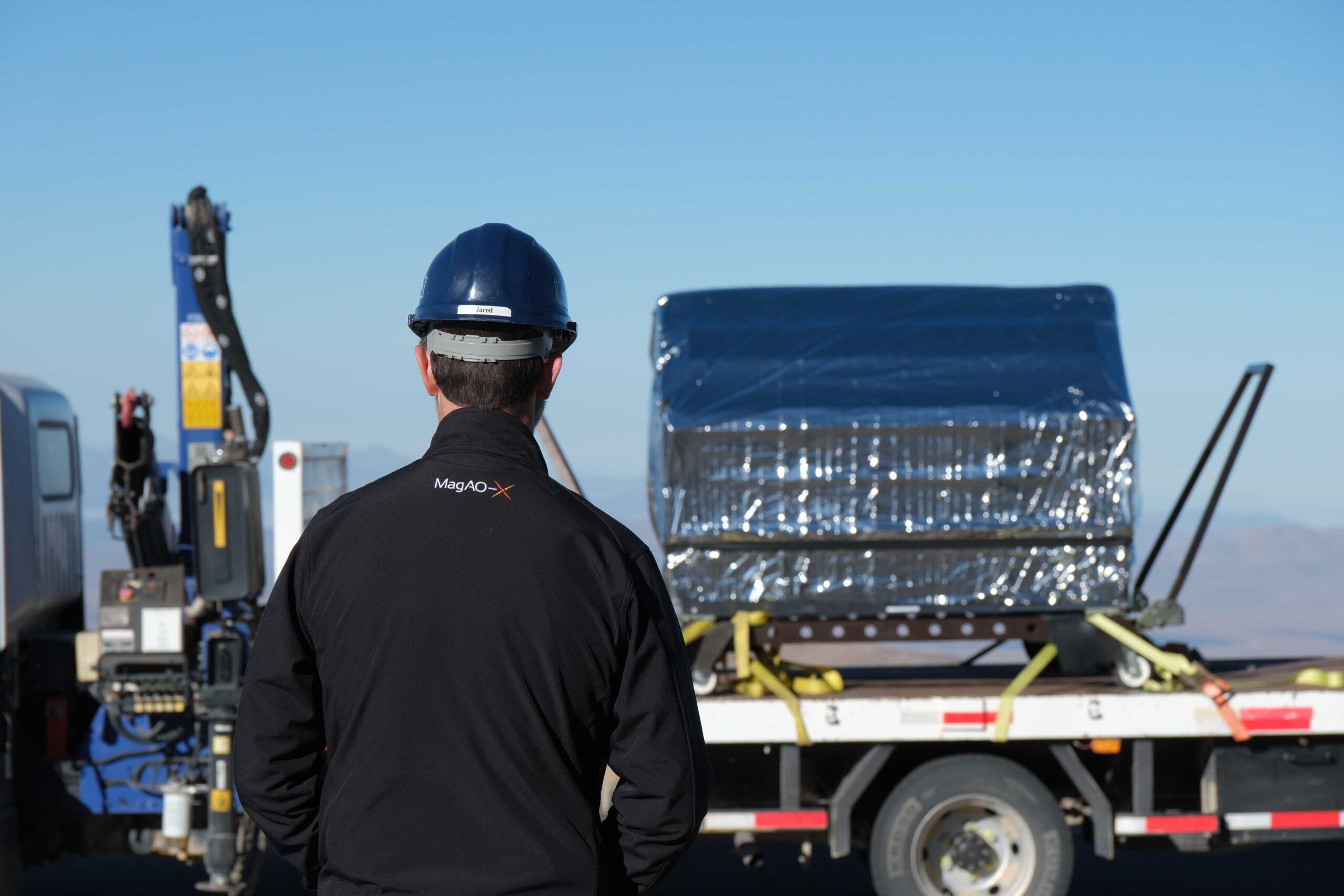
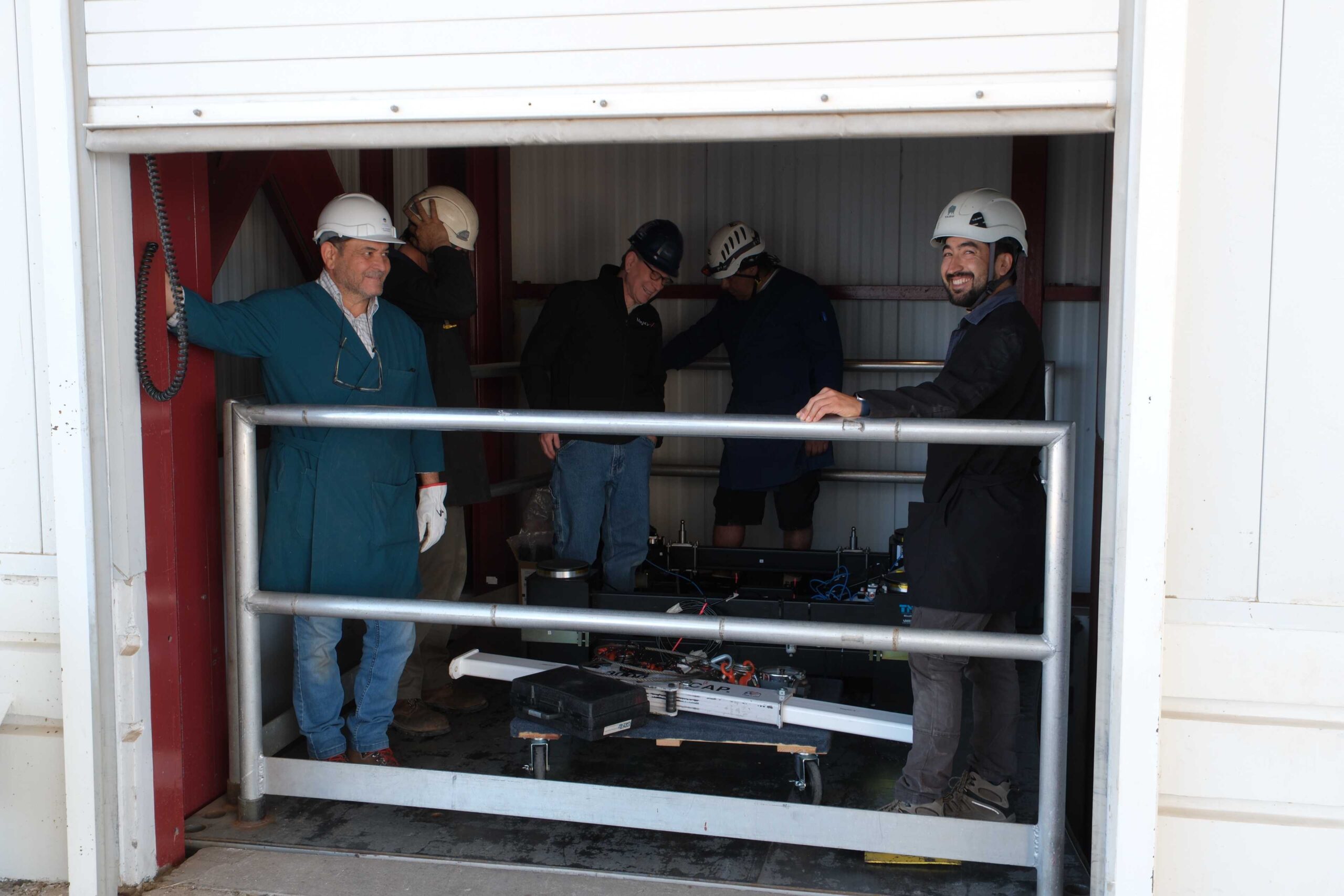
The team continues where they left off yesterday, but now donning hard hats and hard-toed boots since the cranes are needed to transfer the ~2000 pounds of instrument onto its specialized cart (and off its specialized cart later on…!).

Special thanks to the hard-working staff at LCO, we couldn’t have done it without you.

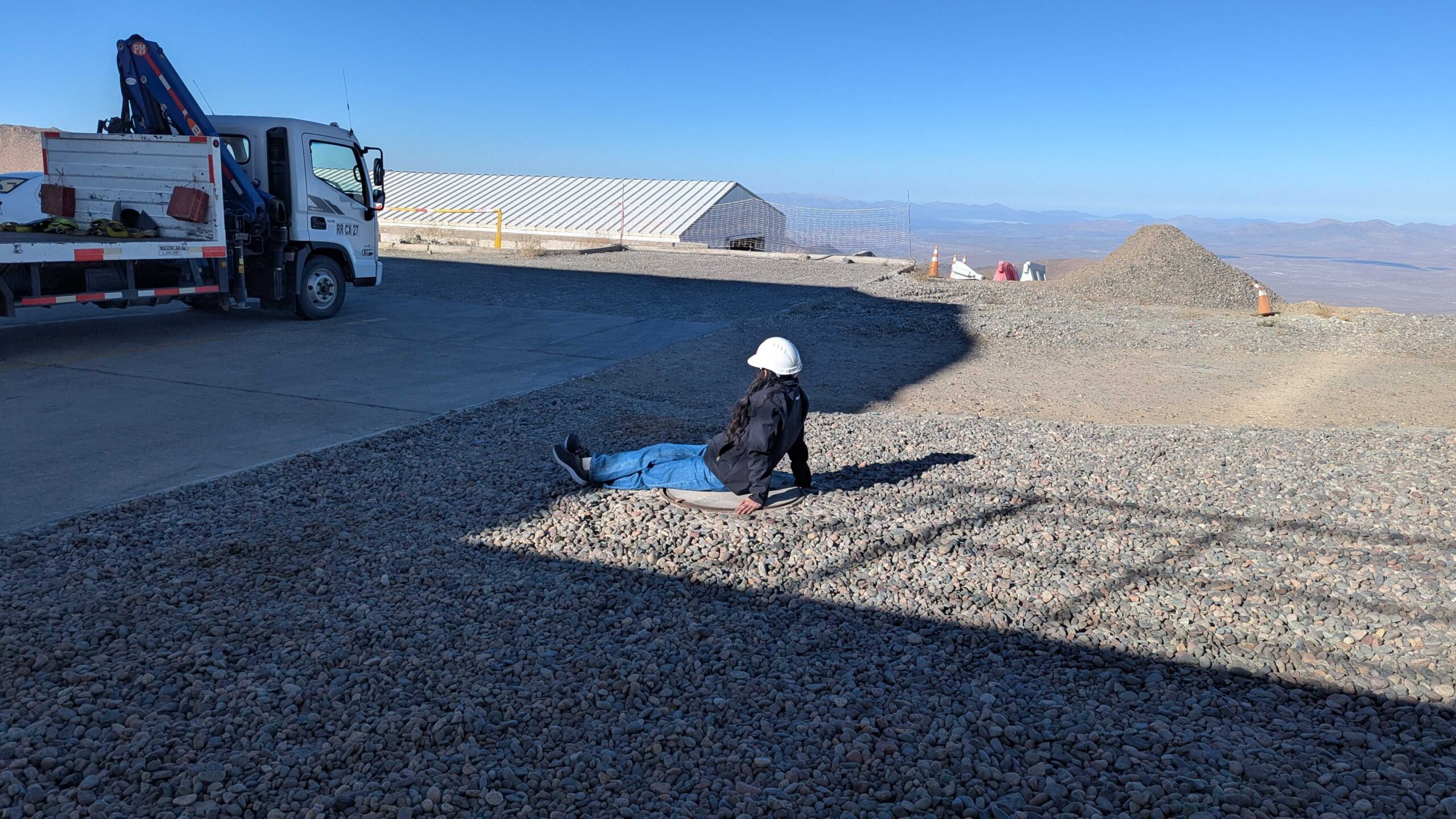
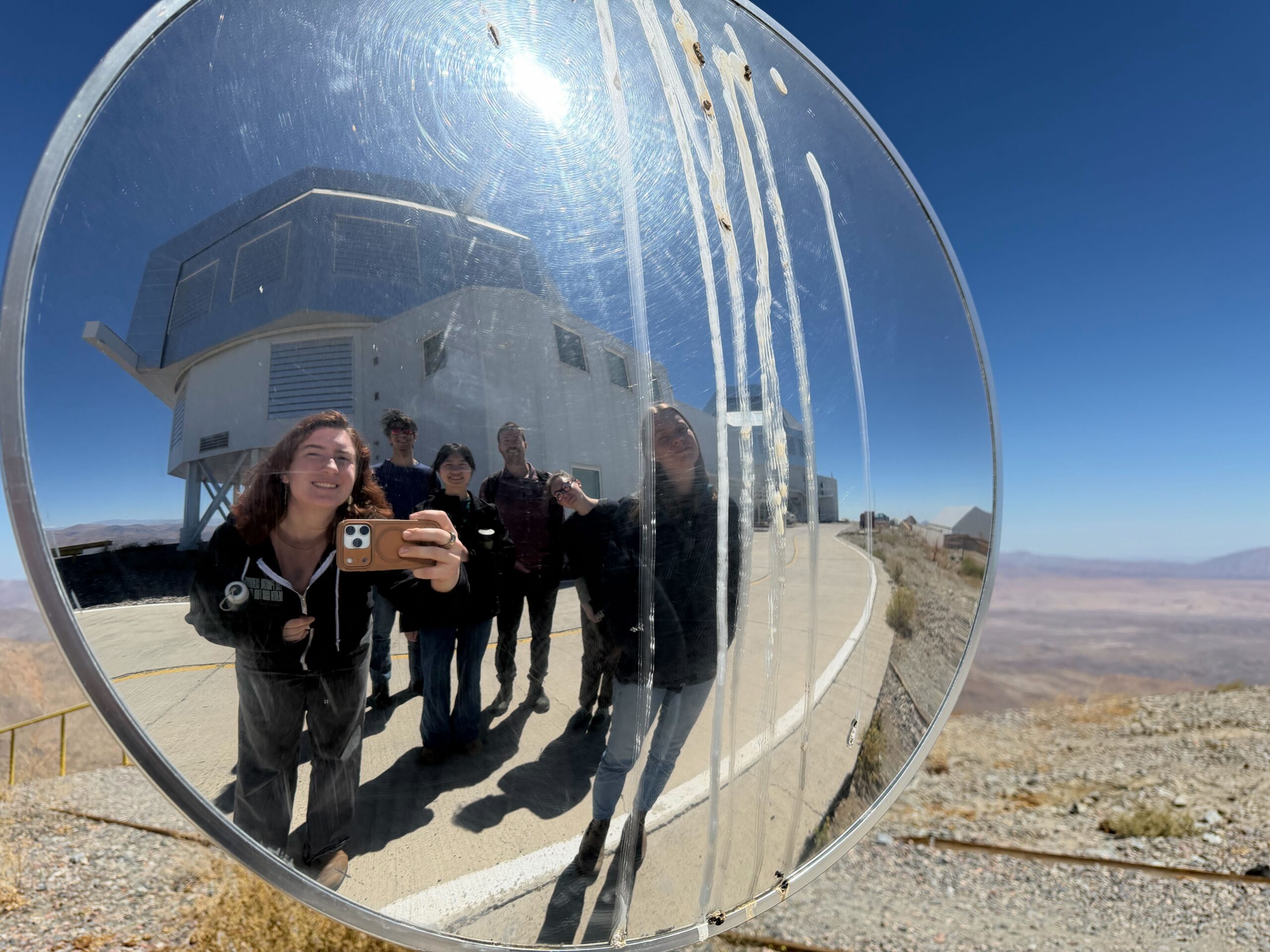
Truly the last thing u see b4 u die

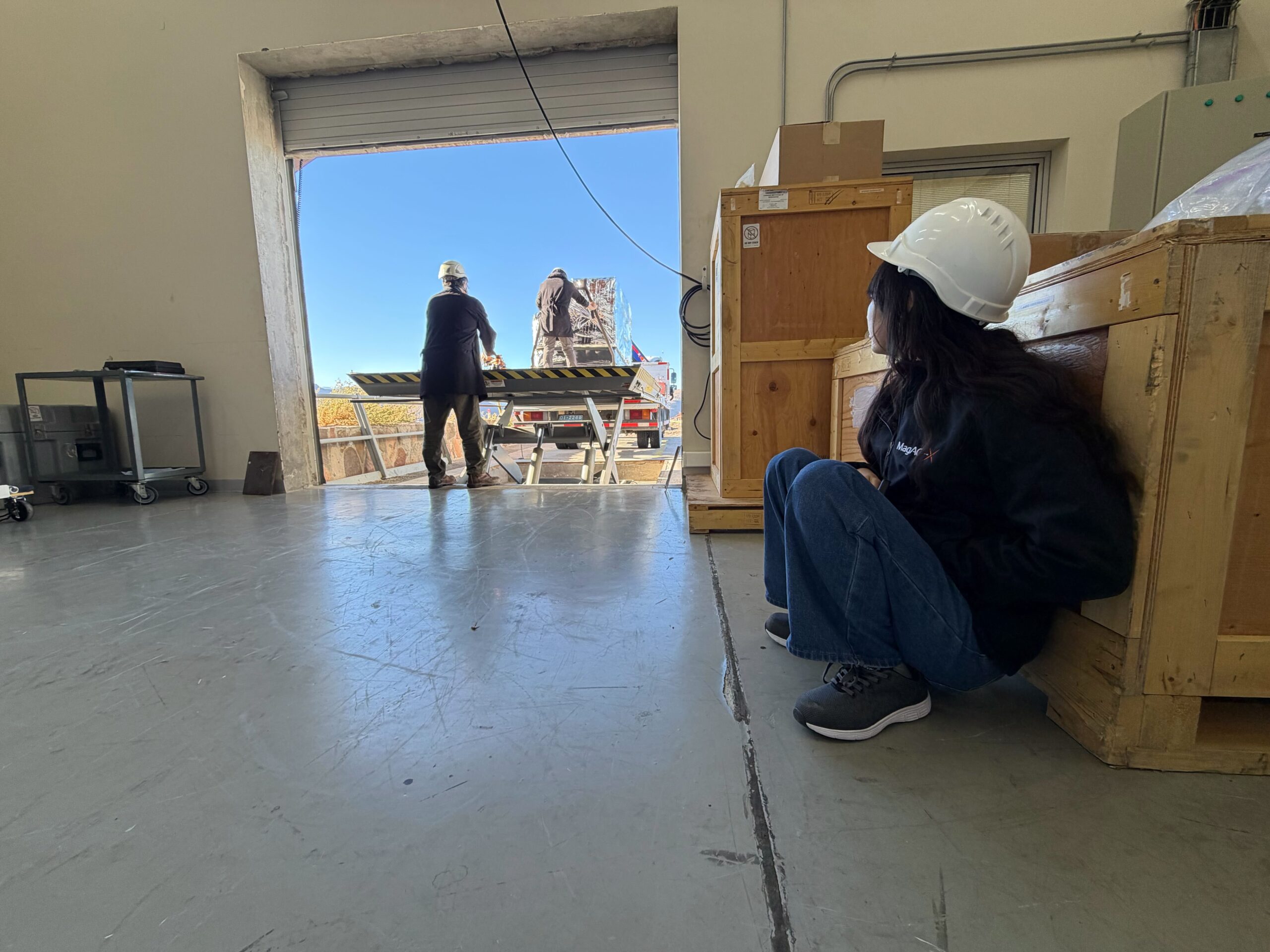
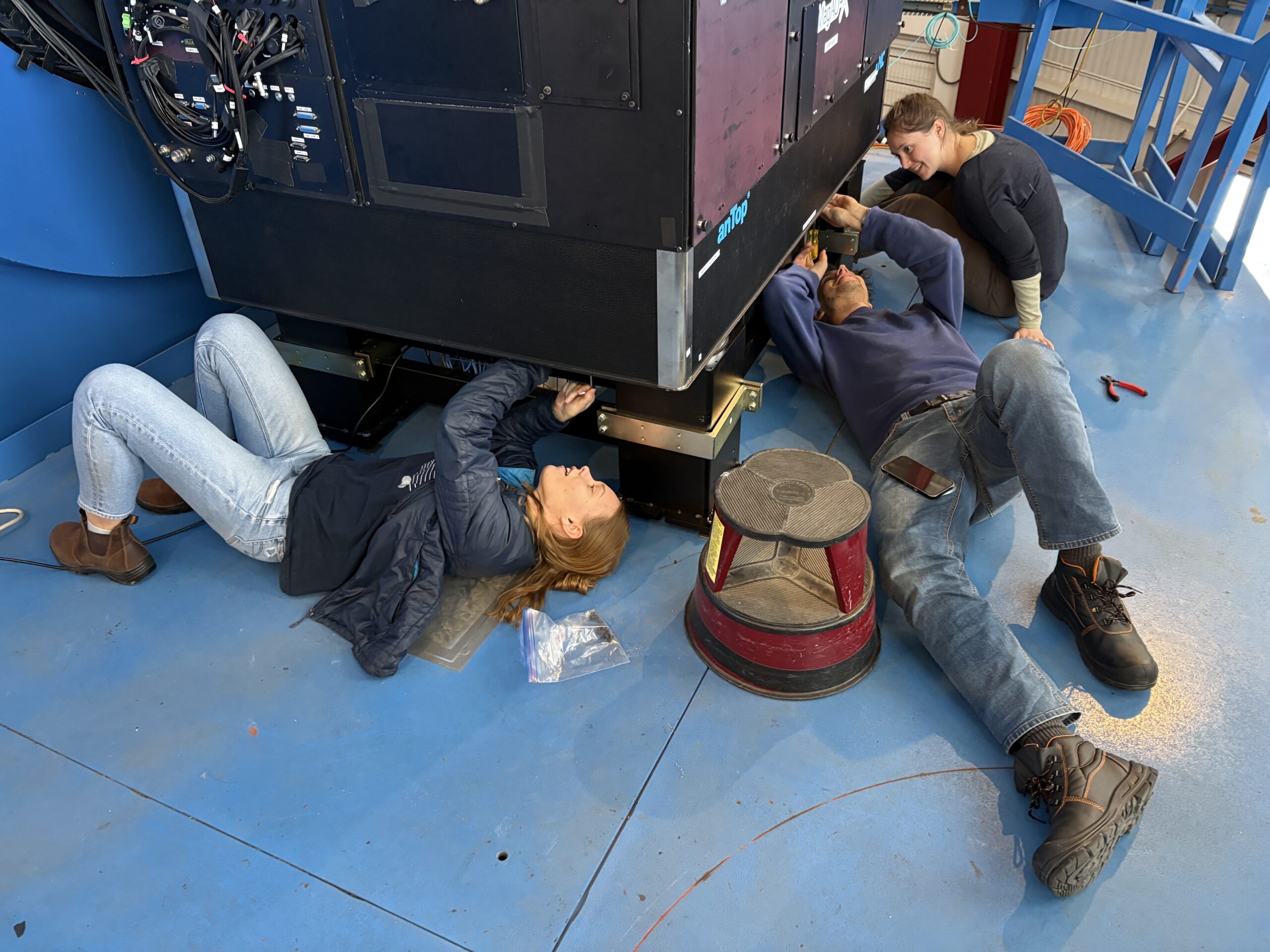
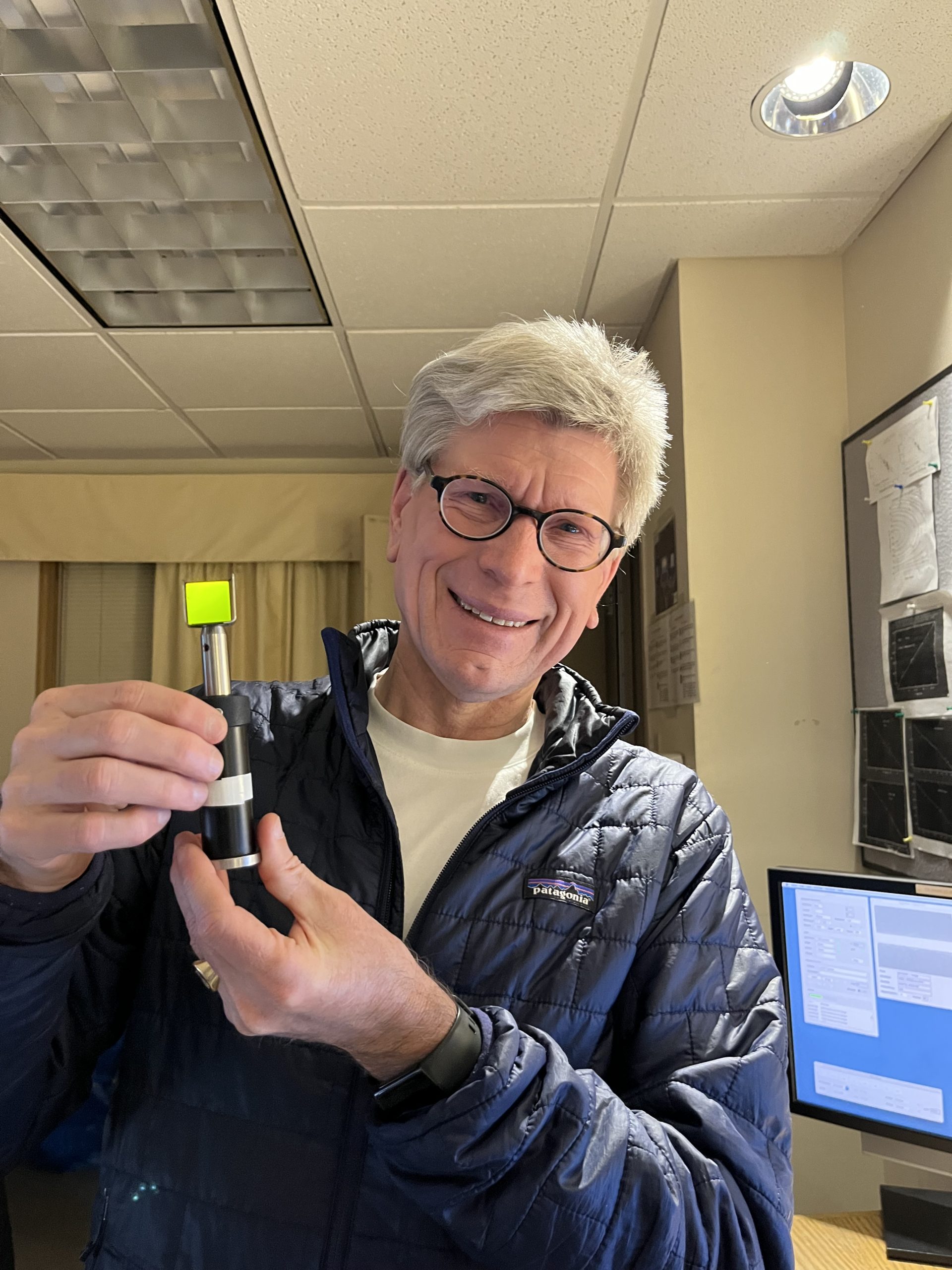
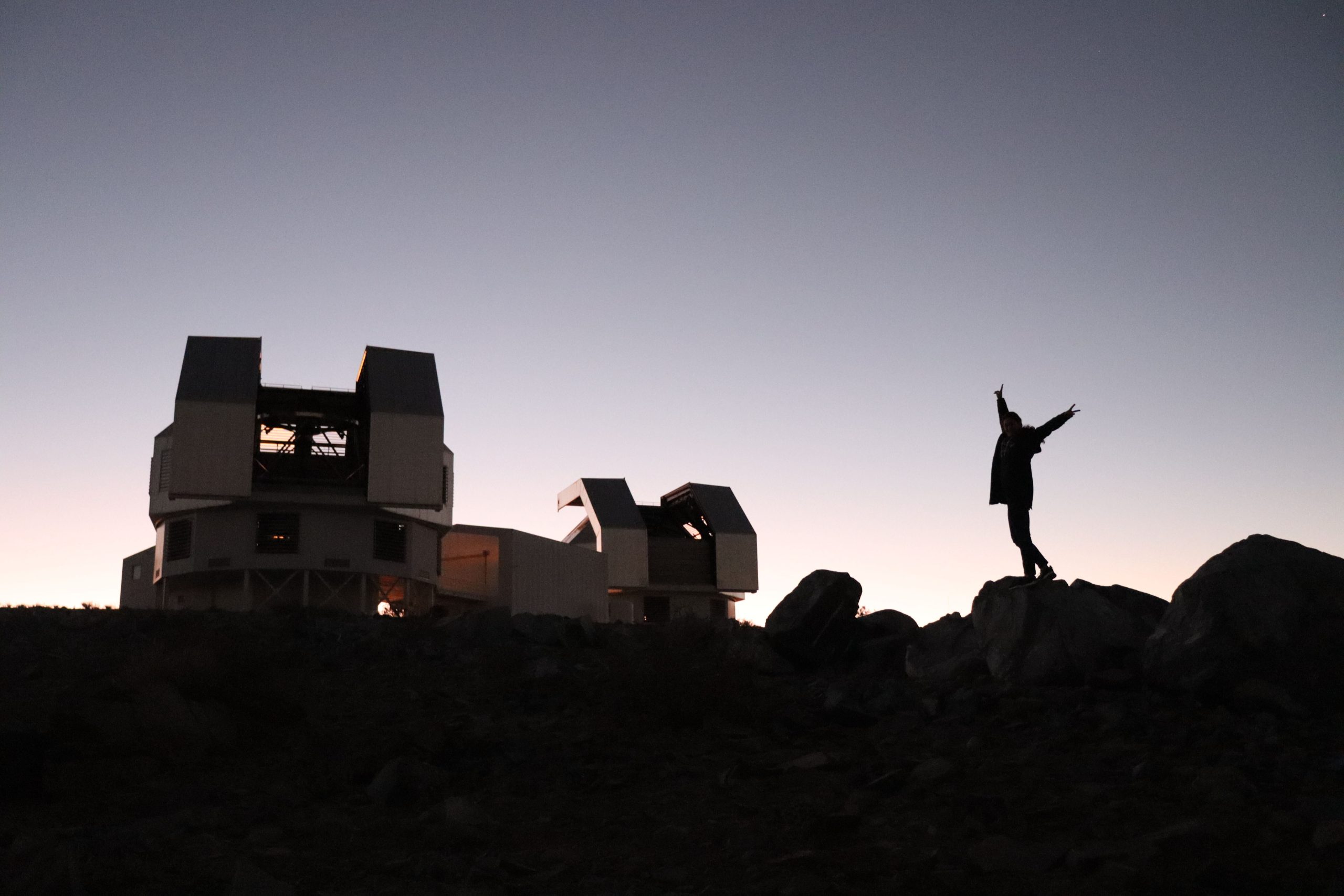
First year Master’s student Tiffany Nguyen captures the vibes expertly on move day.

…But so do the other grad students 🙂

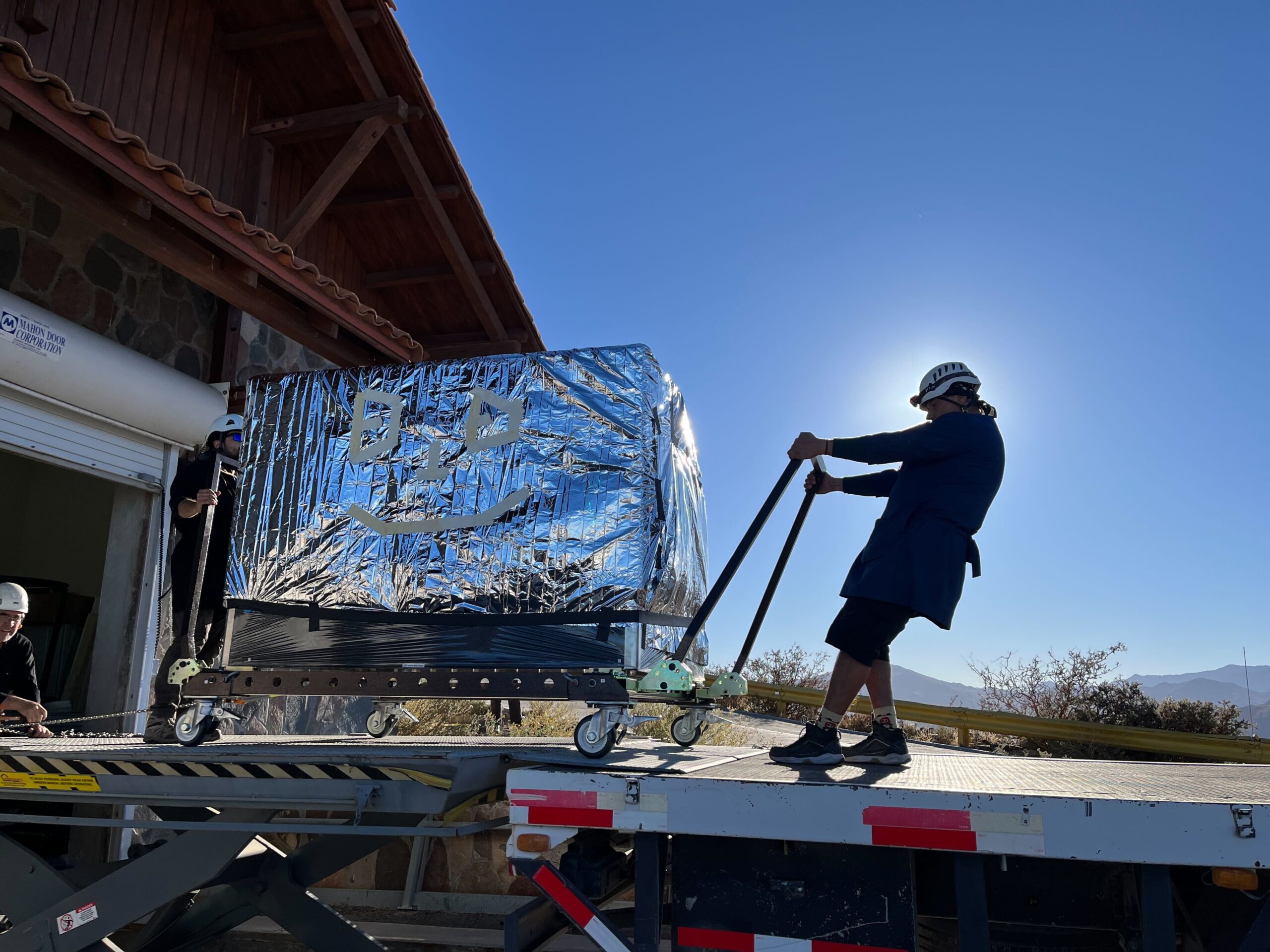
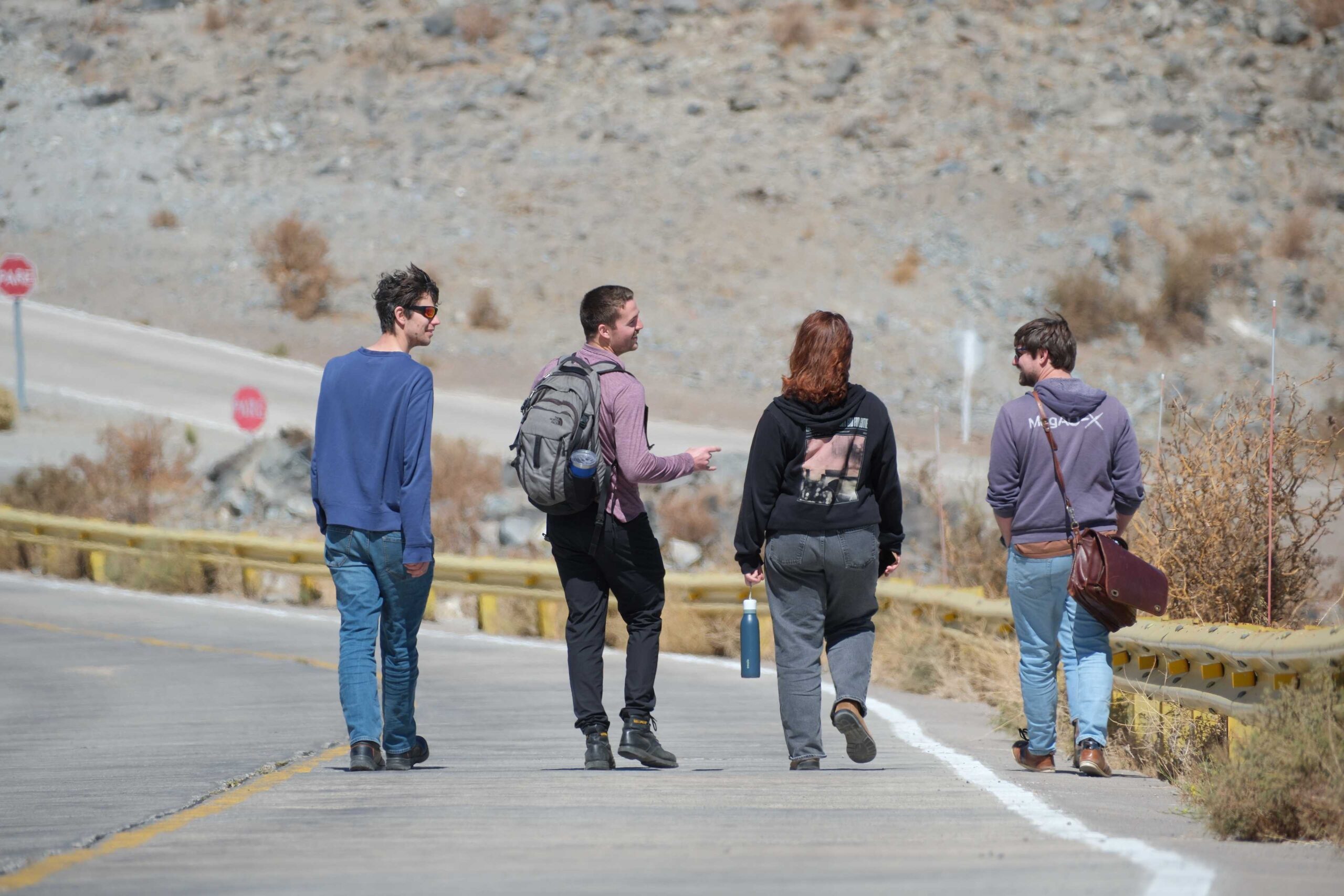
It is critical that once MagAO-X is on the flatbed truck, it is transported -slowly- to minimize the vibrations induced on the various internal optics, which are sensitive.

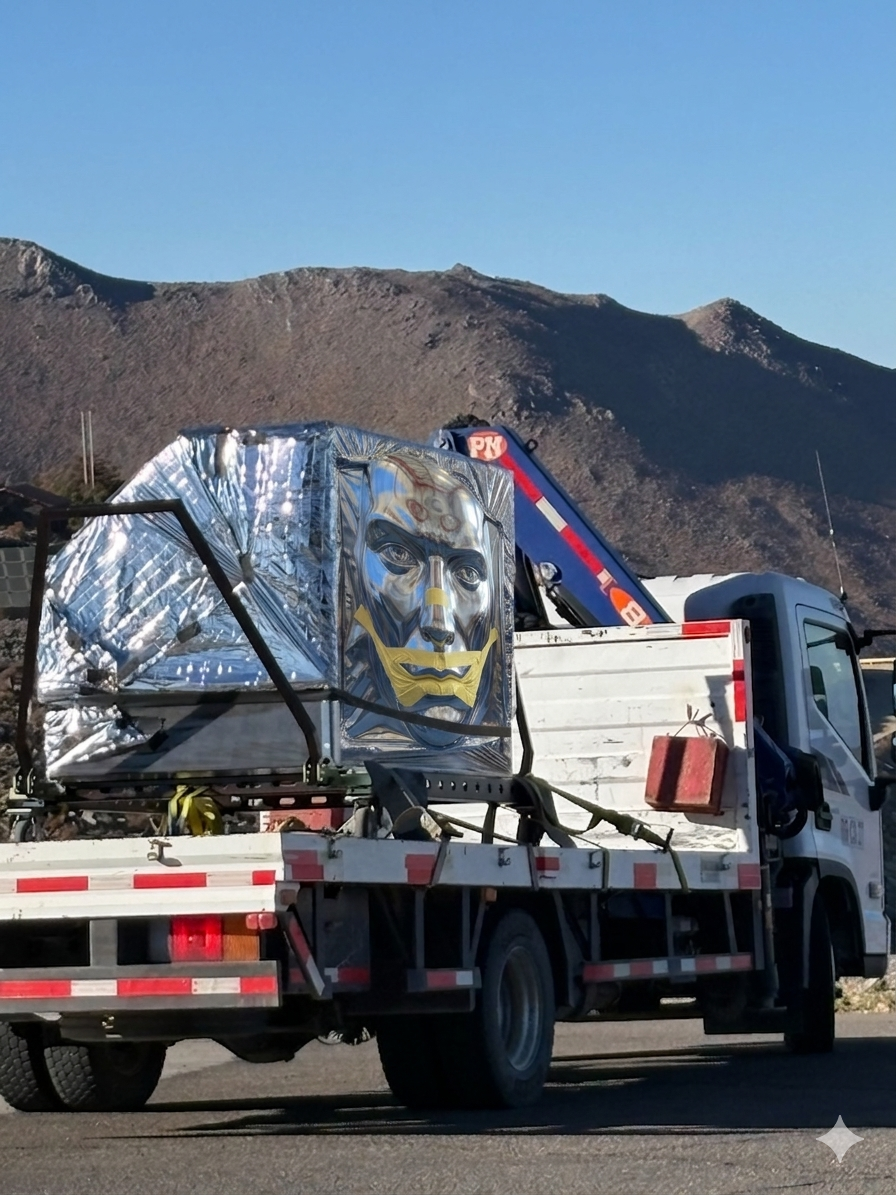
The instrument was looking a little goofy during the ride up the summit to the telescope, maybe it was enjoying the ride?

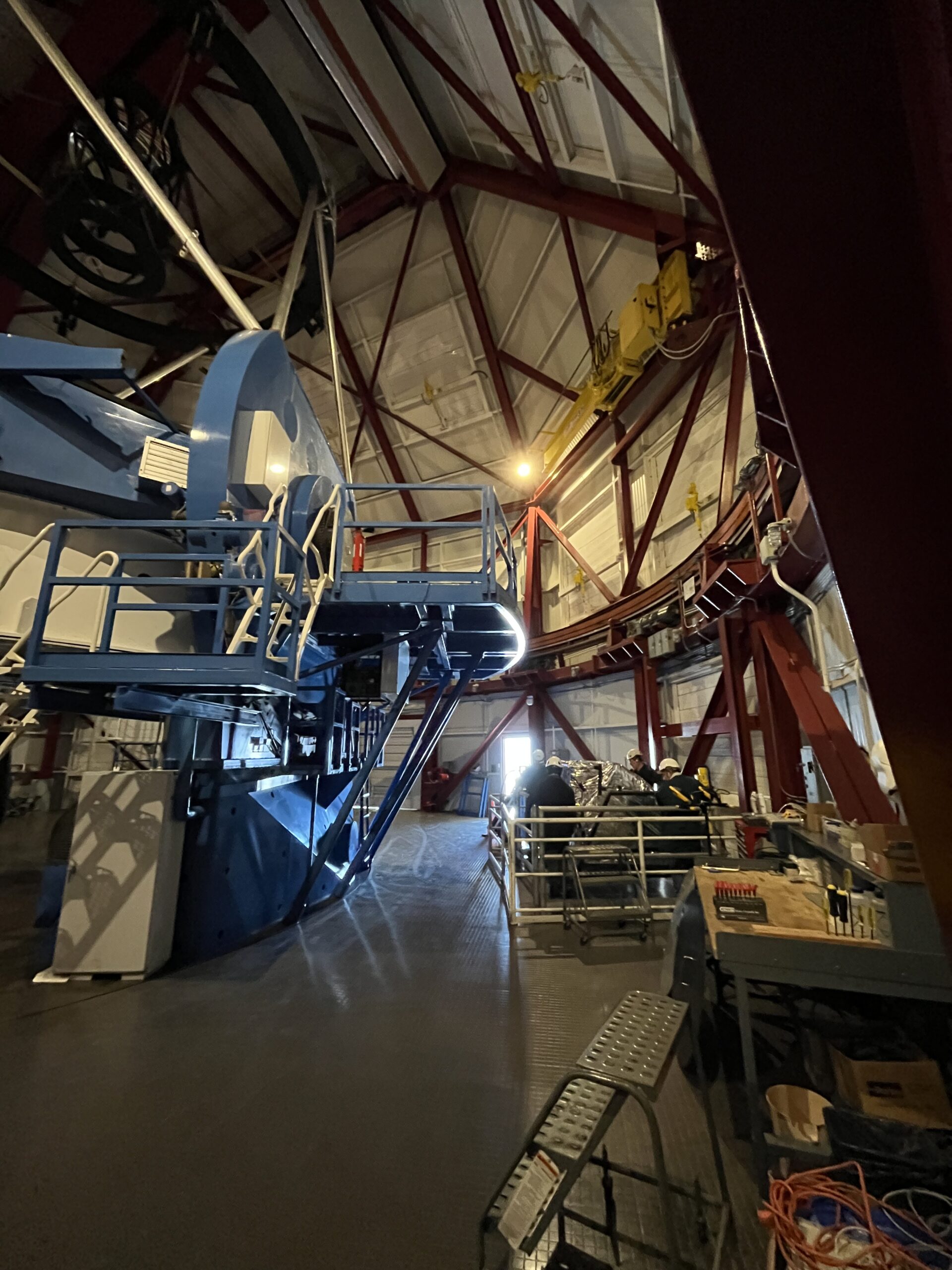
Installing the instrument onto the *West* Nasmyth platform

Dedicated readers of the blog may think they’ve seen all this before, but it turns out this install procedure is quite different. How so? Well, for this run, the instrument will be installed on the platform opposite of the usual side of the telescope. This is subject to lead to (undoubtedly) a whole set of new challenges, of which I’m sure we’ll encounter tomorrow when the team works on aligning the instrument to the telescope in this new position with no existing reference marks.

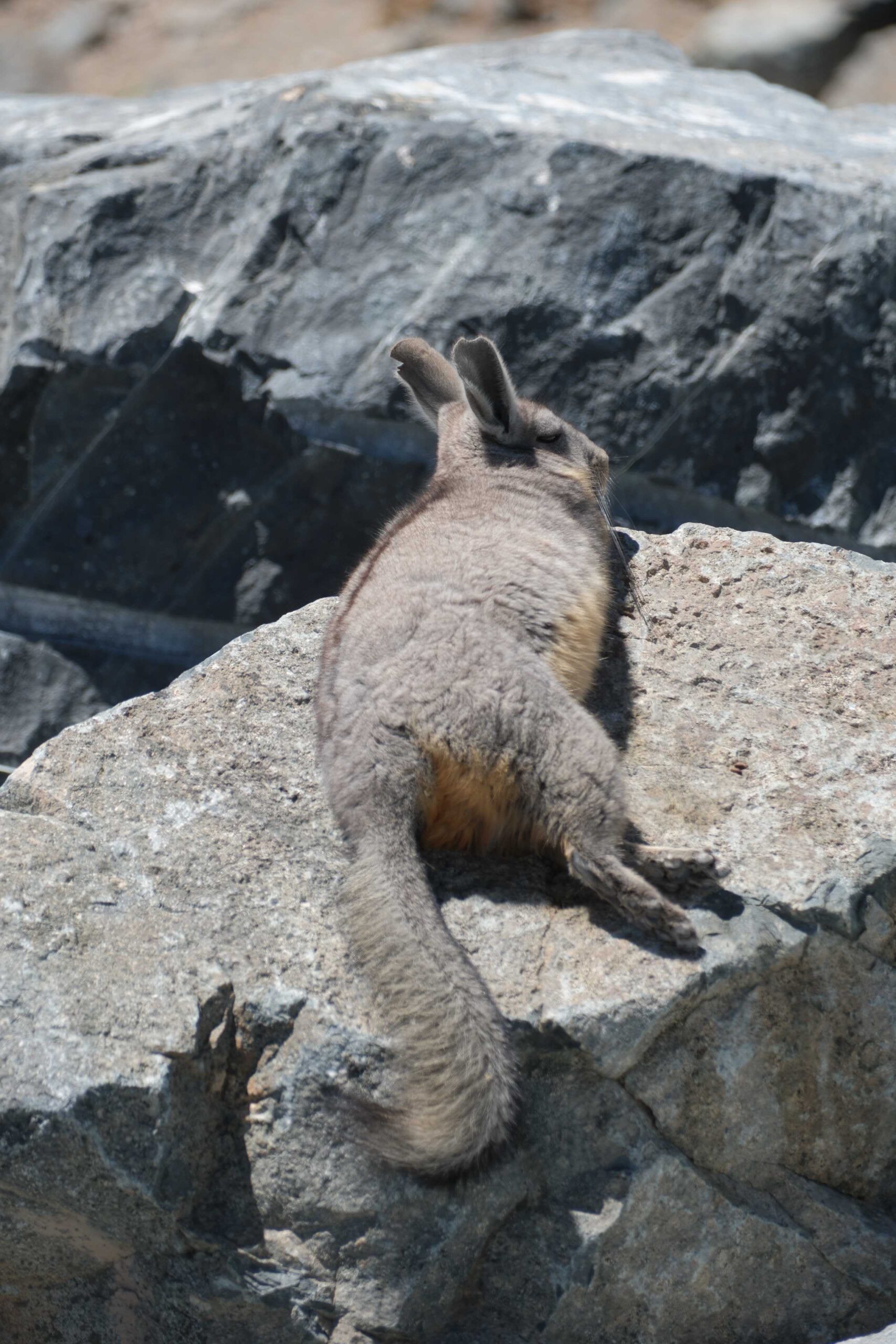
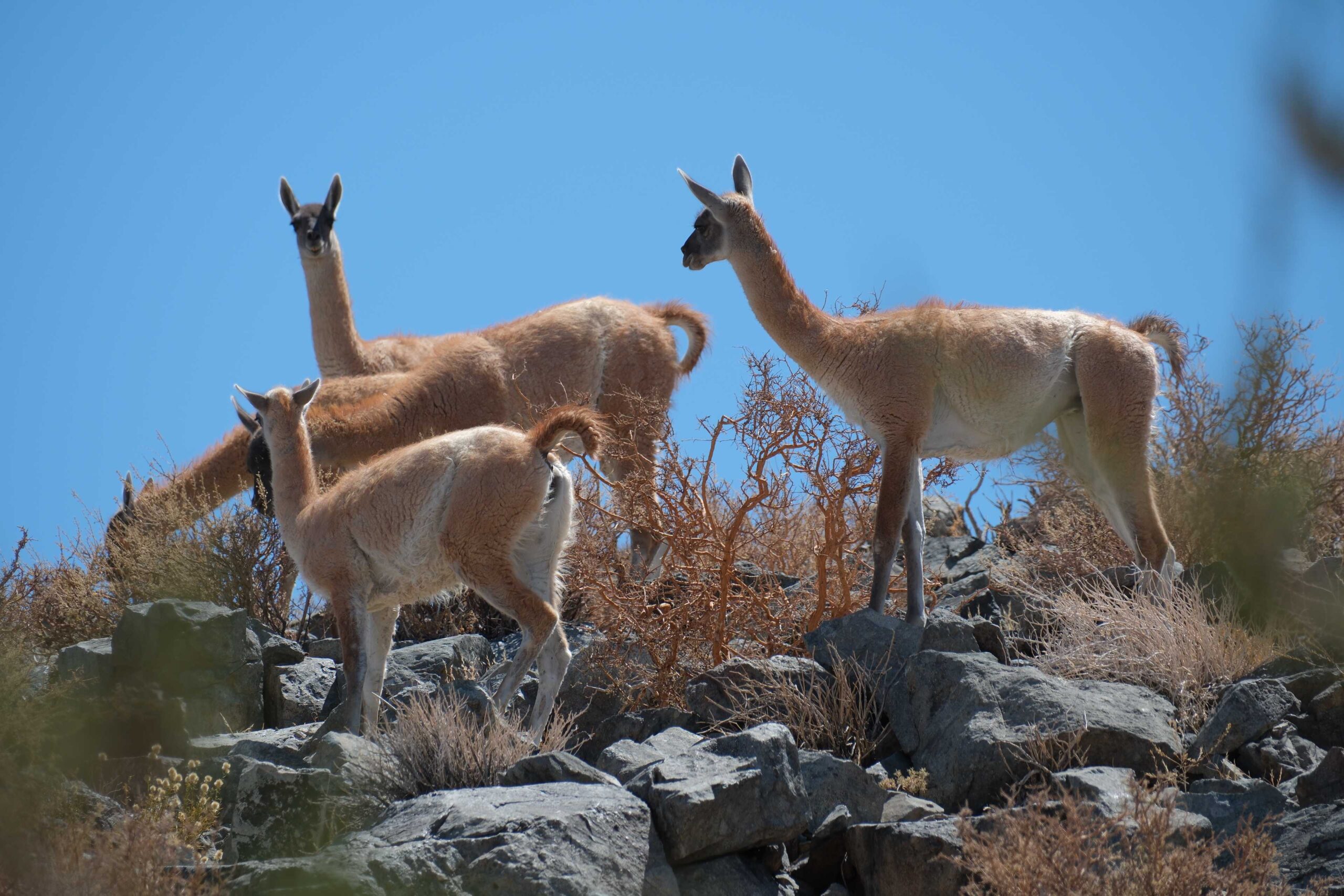
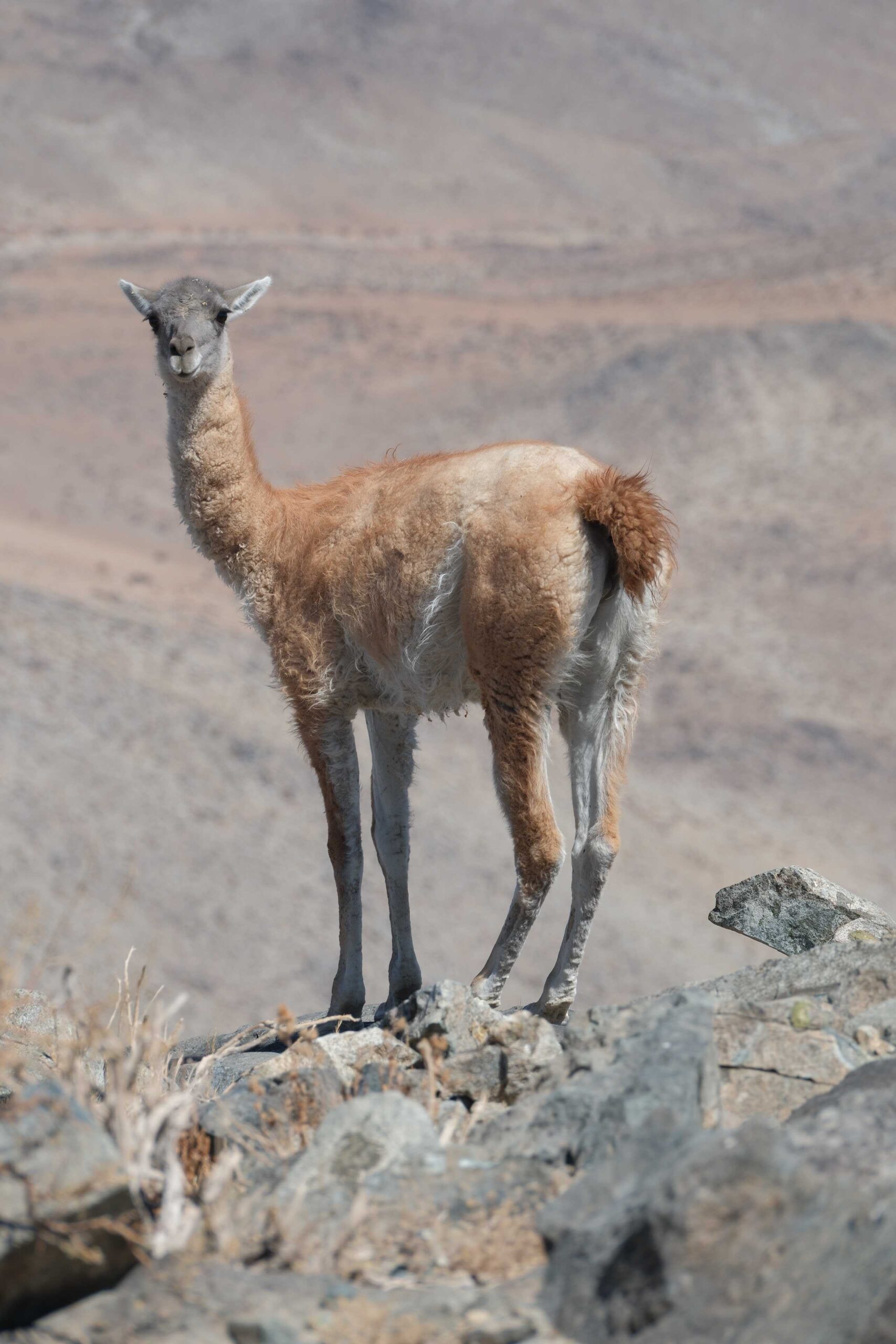
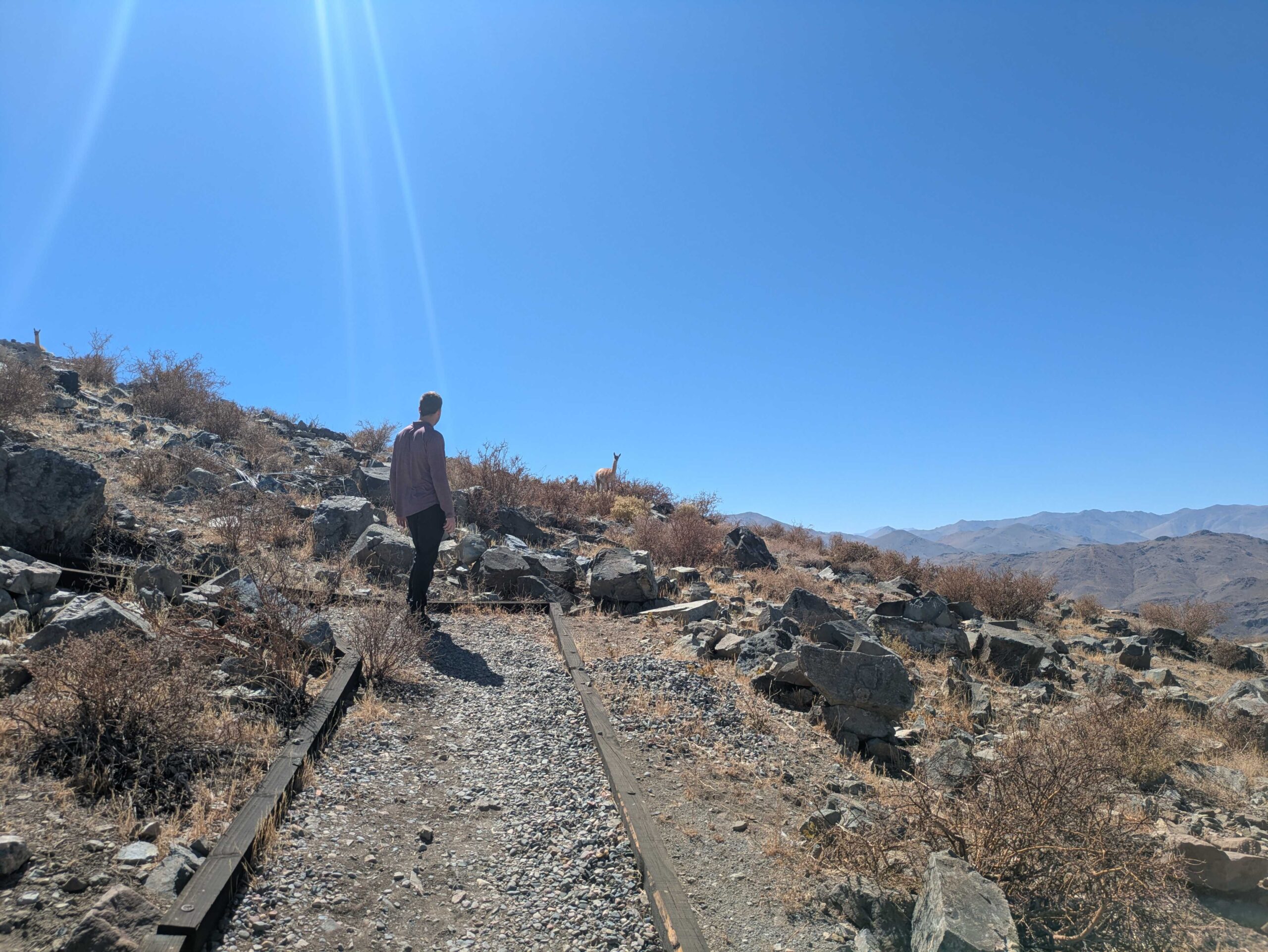
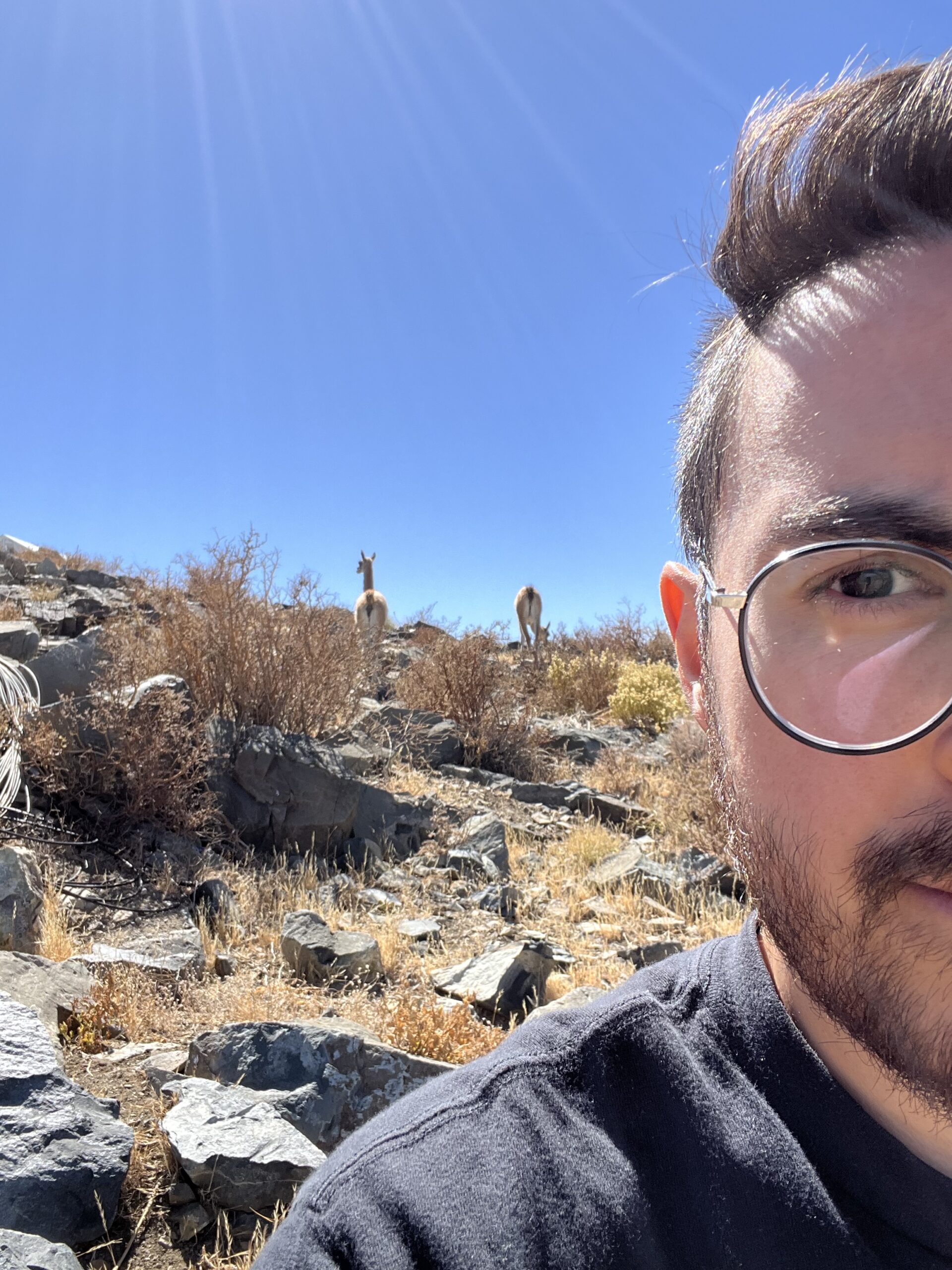
Wildlife intermission

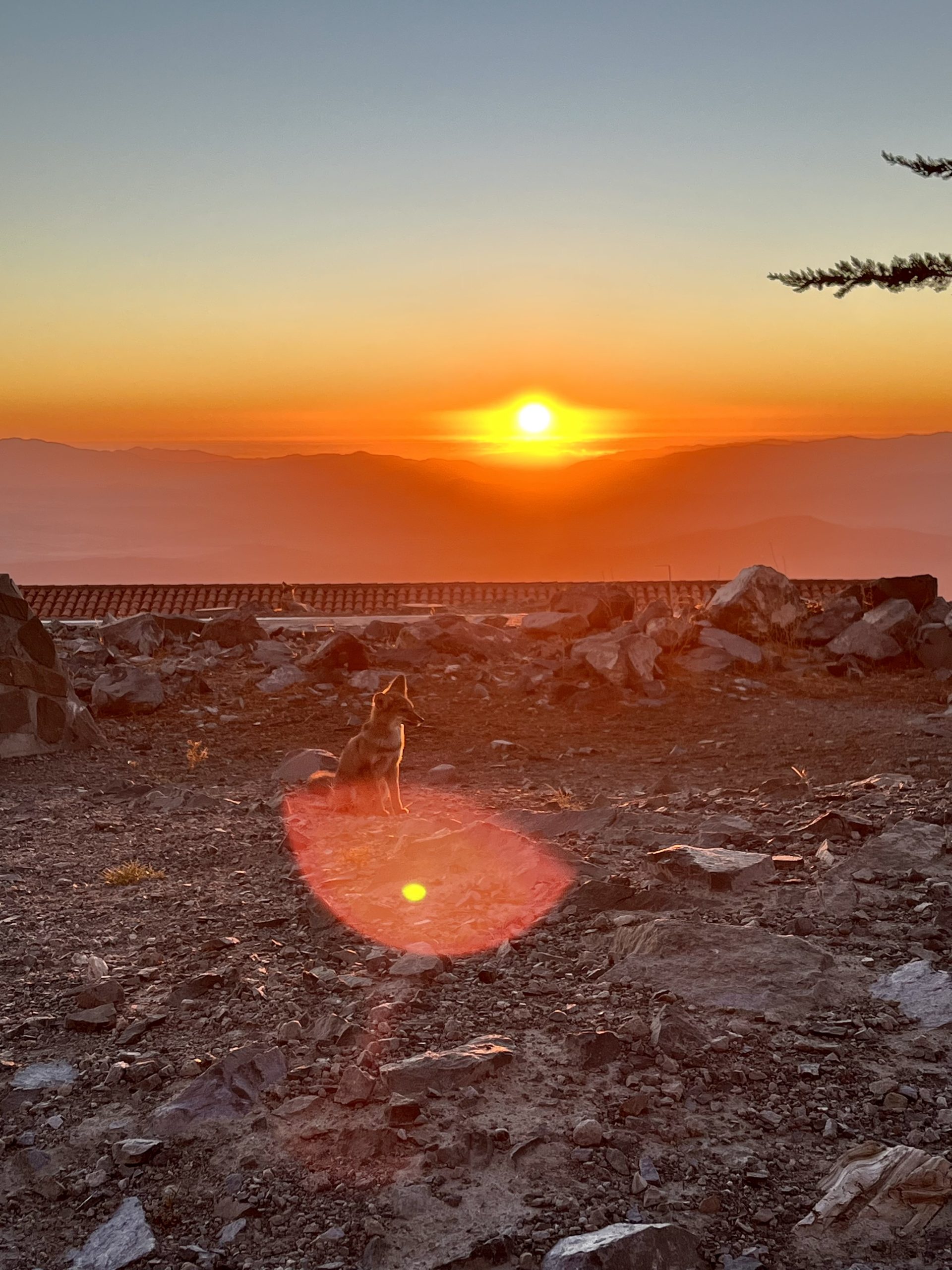
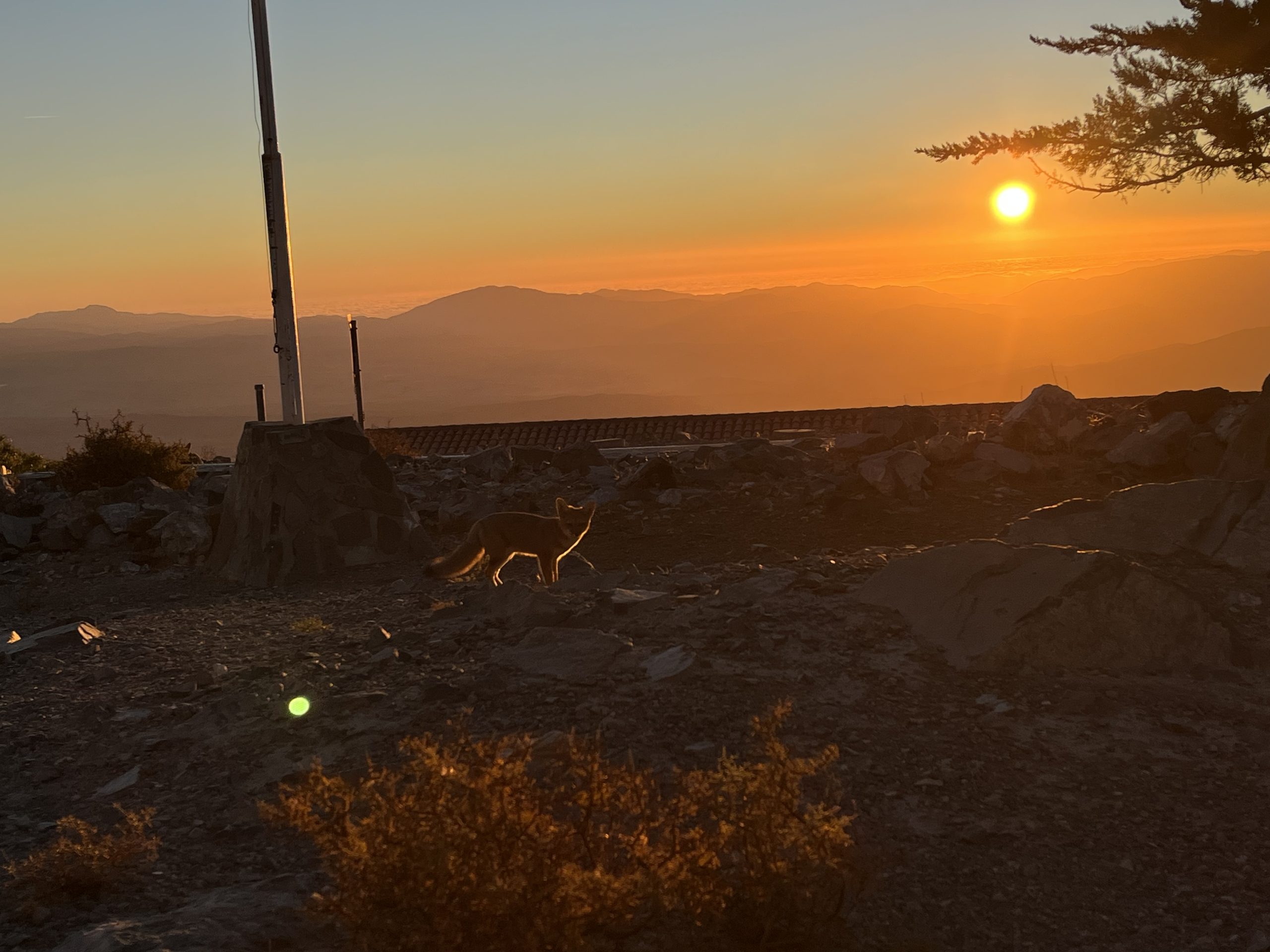
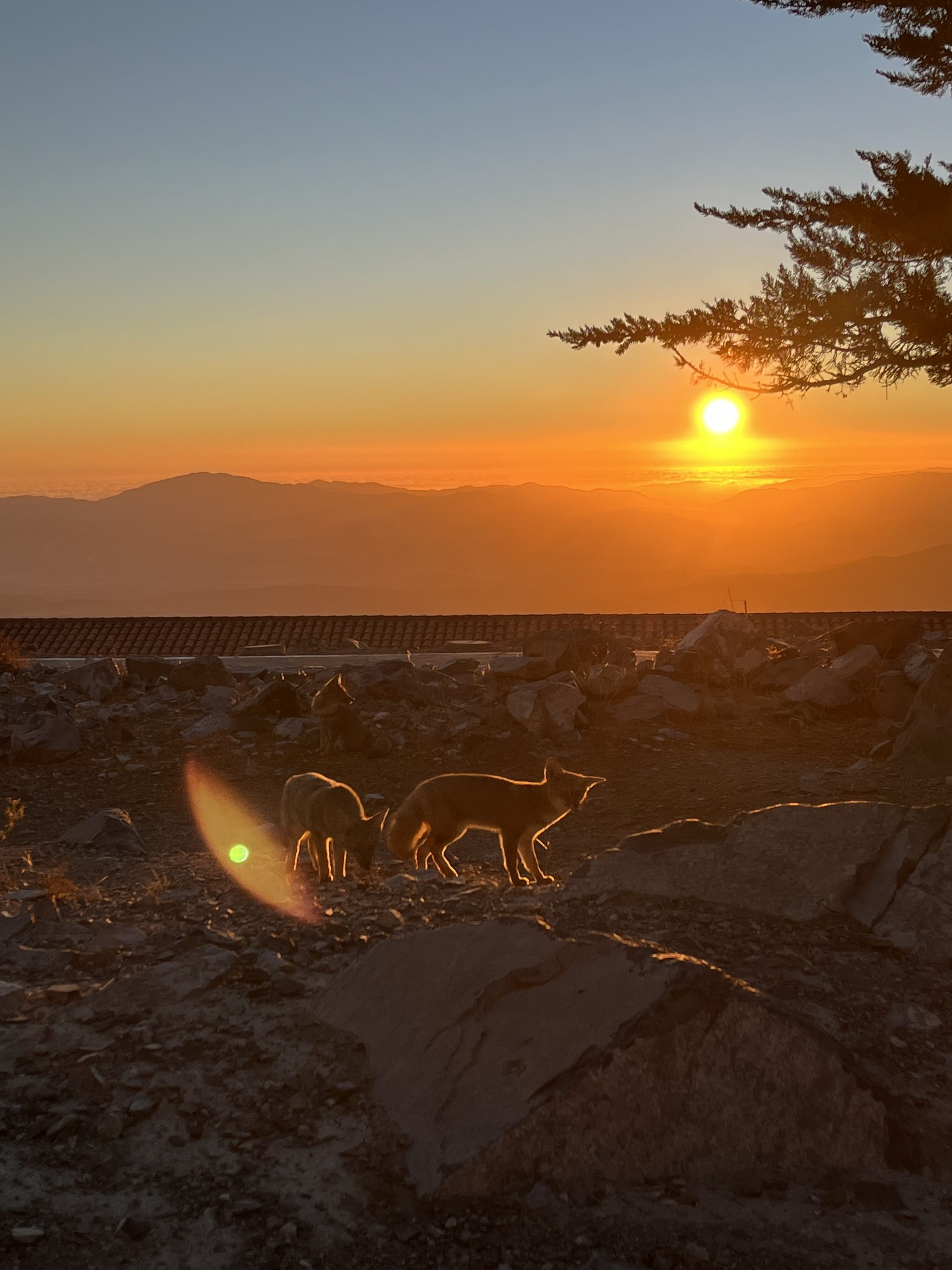
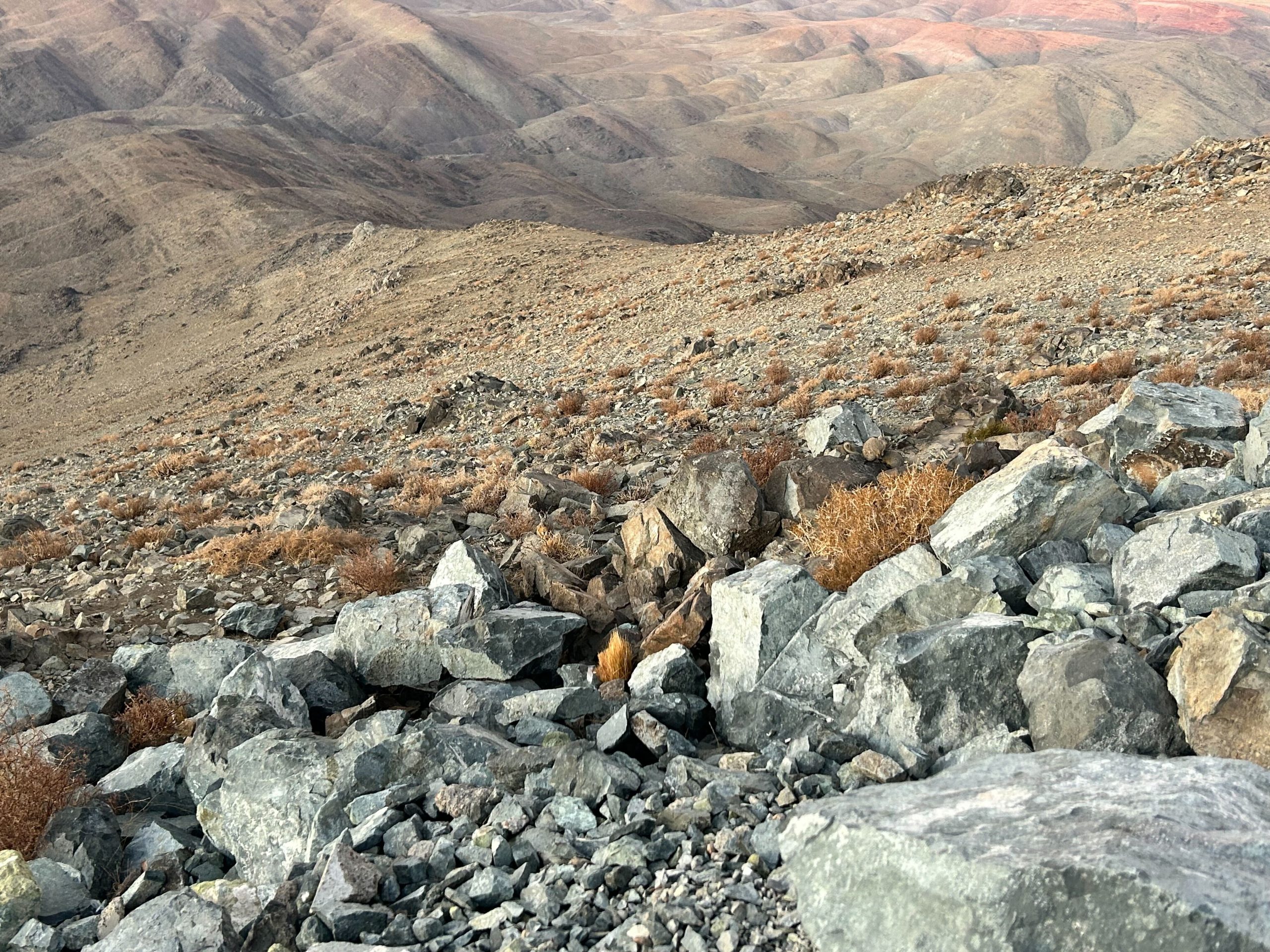
Let’s briefly pause to admire some very nice shots of the various fauna found in and around the LCO campus. Pic credits in this section go to the wickedly-talented Viktoria Kutnohorsky!

Afternoon executive time

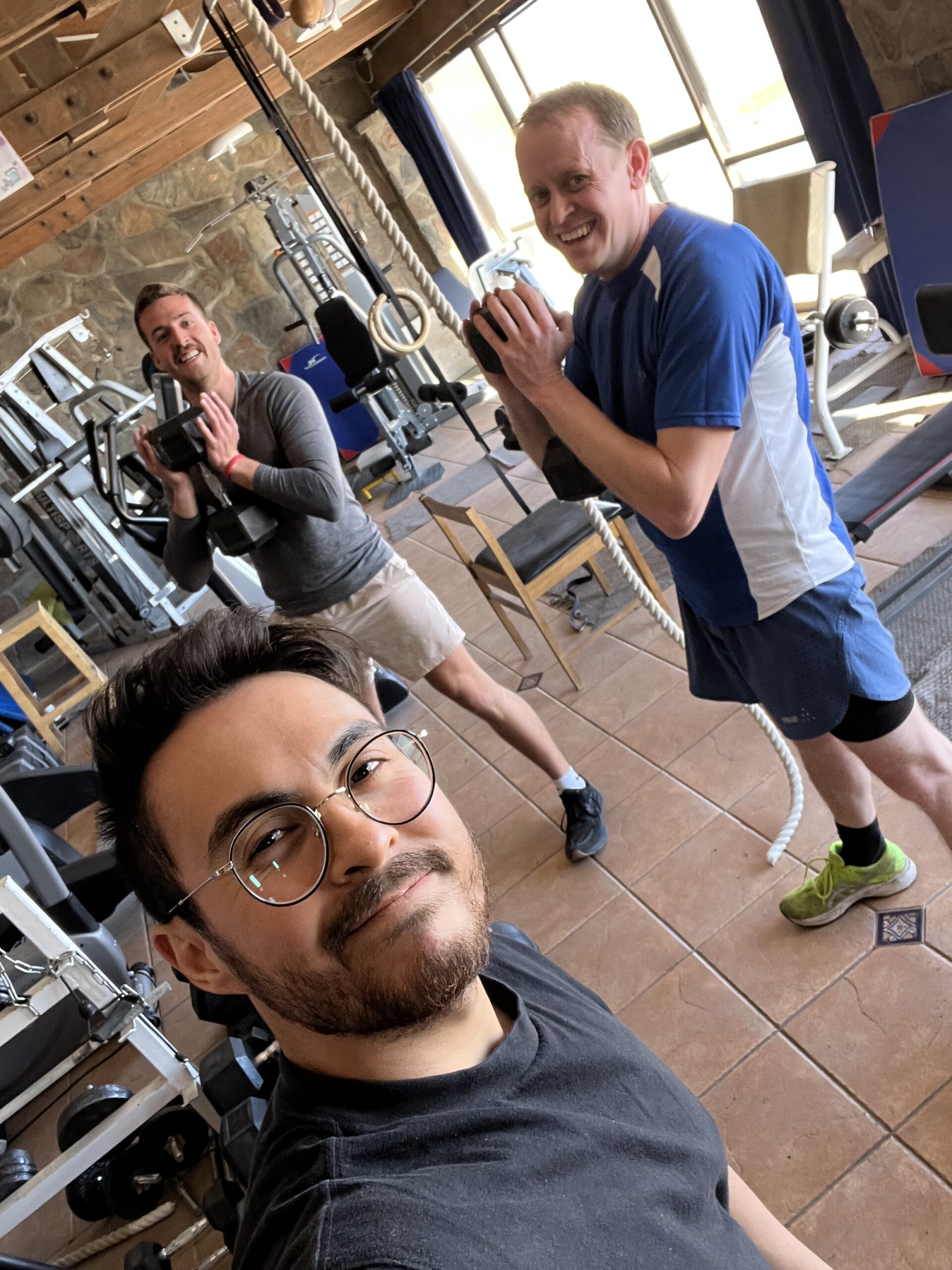
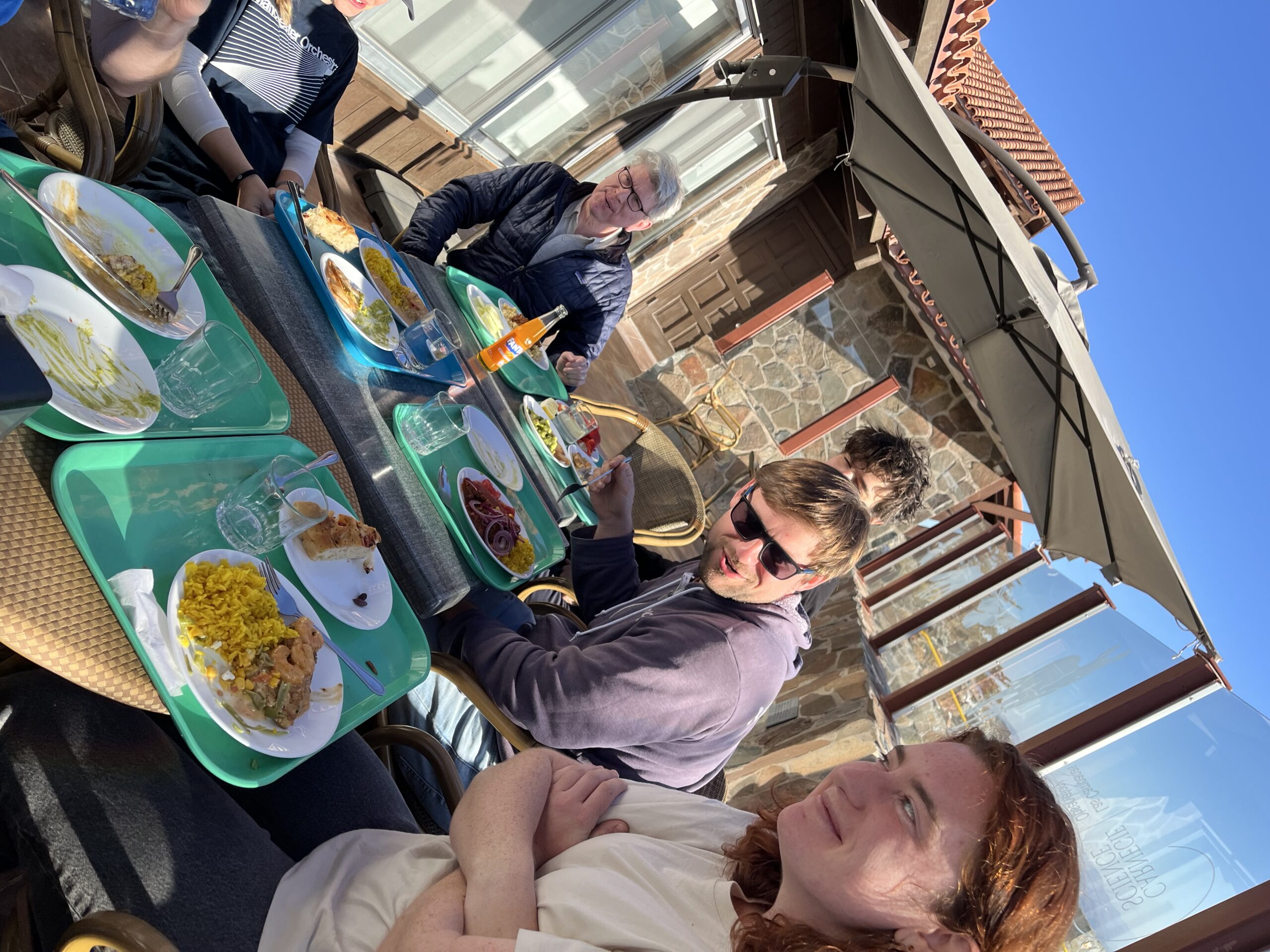
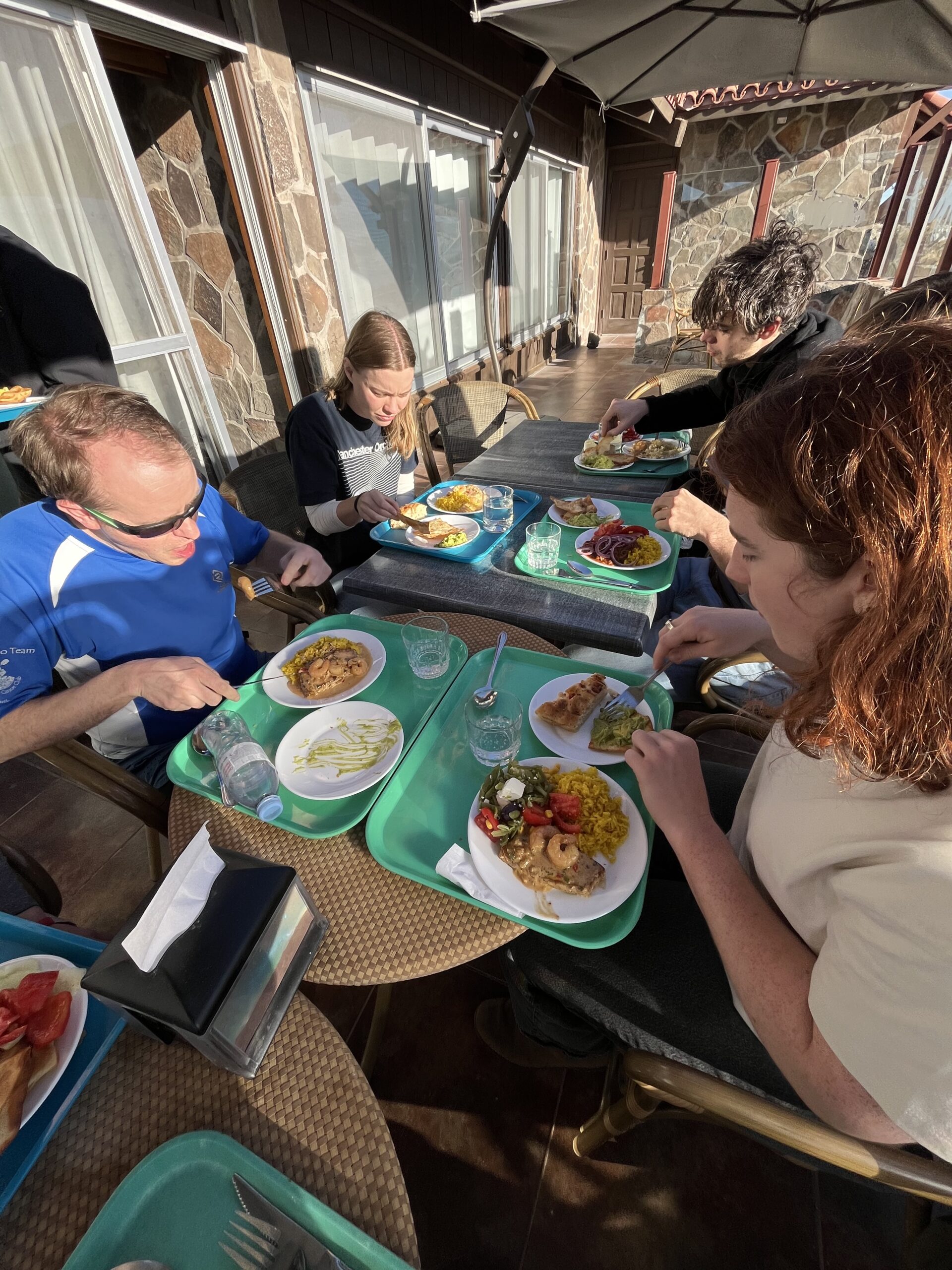
Today we ran into an uncommon situation where we weren’t expected to be working on jobs related to the instrument. This is because the Magellan-Clay telescope wasn’t quite ours to infest yet (there is another observer who had one more night of telescope time, and needed sensitive calibrations to be taken during the day). As such, many of us found other outlets to let loose for a bit after a week of hard work preparing the instrument for its first night on-sky.

We’ve a new addition to the calves –> cows crew! Shoutout to our Durham collaborator Rob Harris for hanging out with us at the LCO gym.

Color of the Day

In anticipation of getting on-sky in ~24 hours, the swatch of the day is black w/ white polka dots.

Song of the Day

Today’s song performed by a couple of biblically-accurate French Canadians

MagAO-X 2026A Day 1: It’s official.

Today, we’re officially officials of the official pre-observing engineering duties for MagAO-X officials. We officially go on-sky on March 25 so we’ve got a jam-packed list of things to knock out before then. Since we arrived on the mountain without delays yesterday, we elected to dedicate the rest of the day/night Saturday for healing after the long trip, which was much appreciated. Today, after breakfast, Jared, Eden, and I promptly headed back to the cleanroom to get to work.

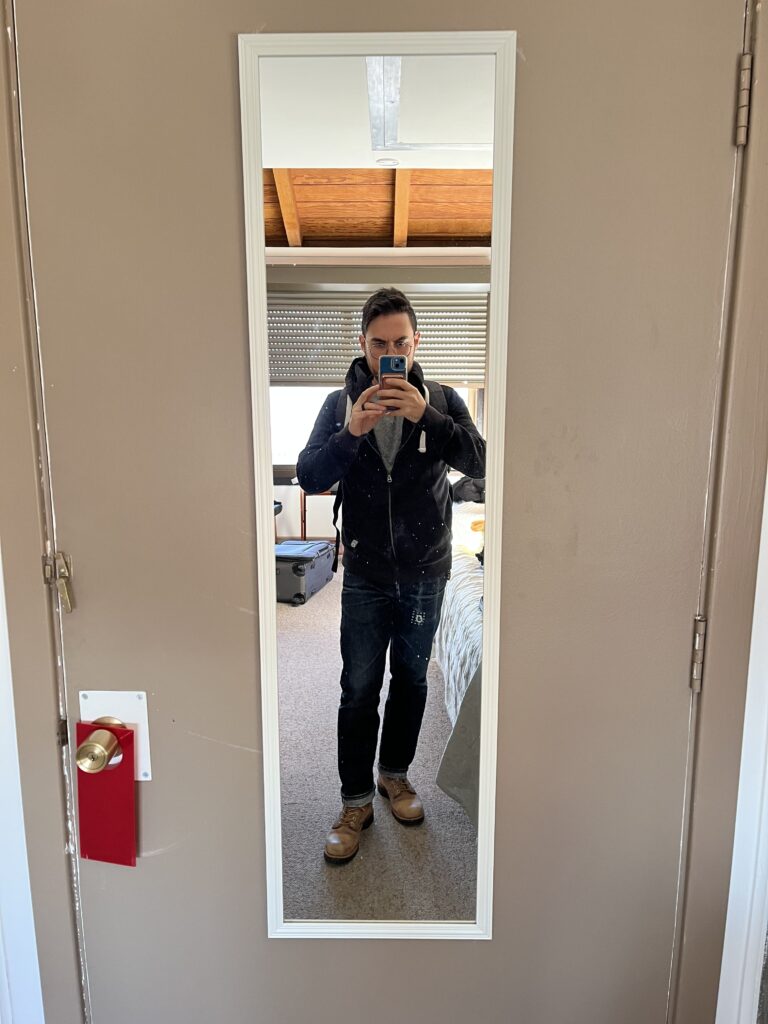
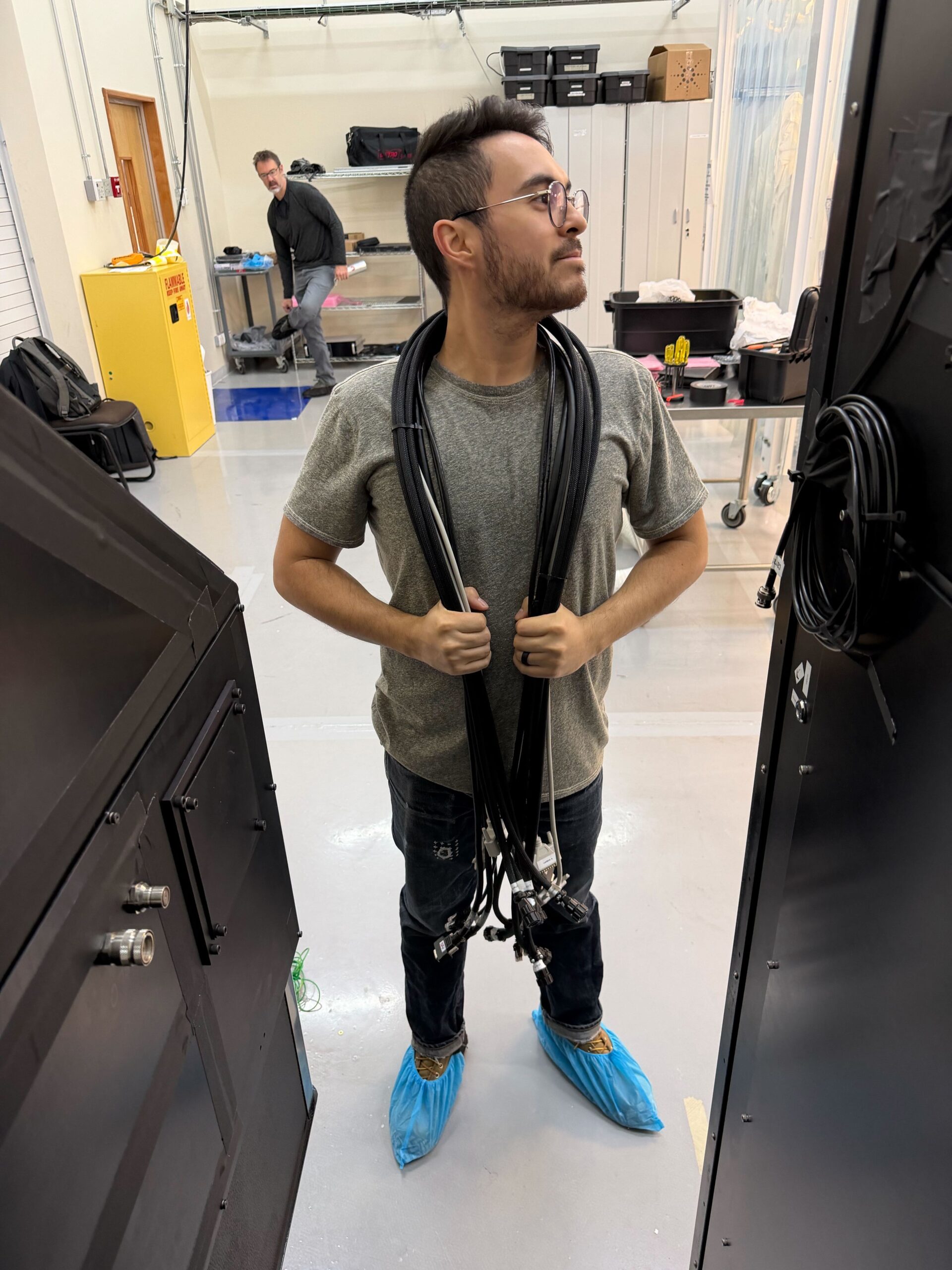
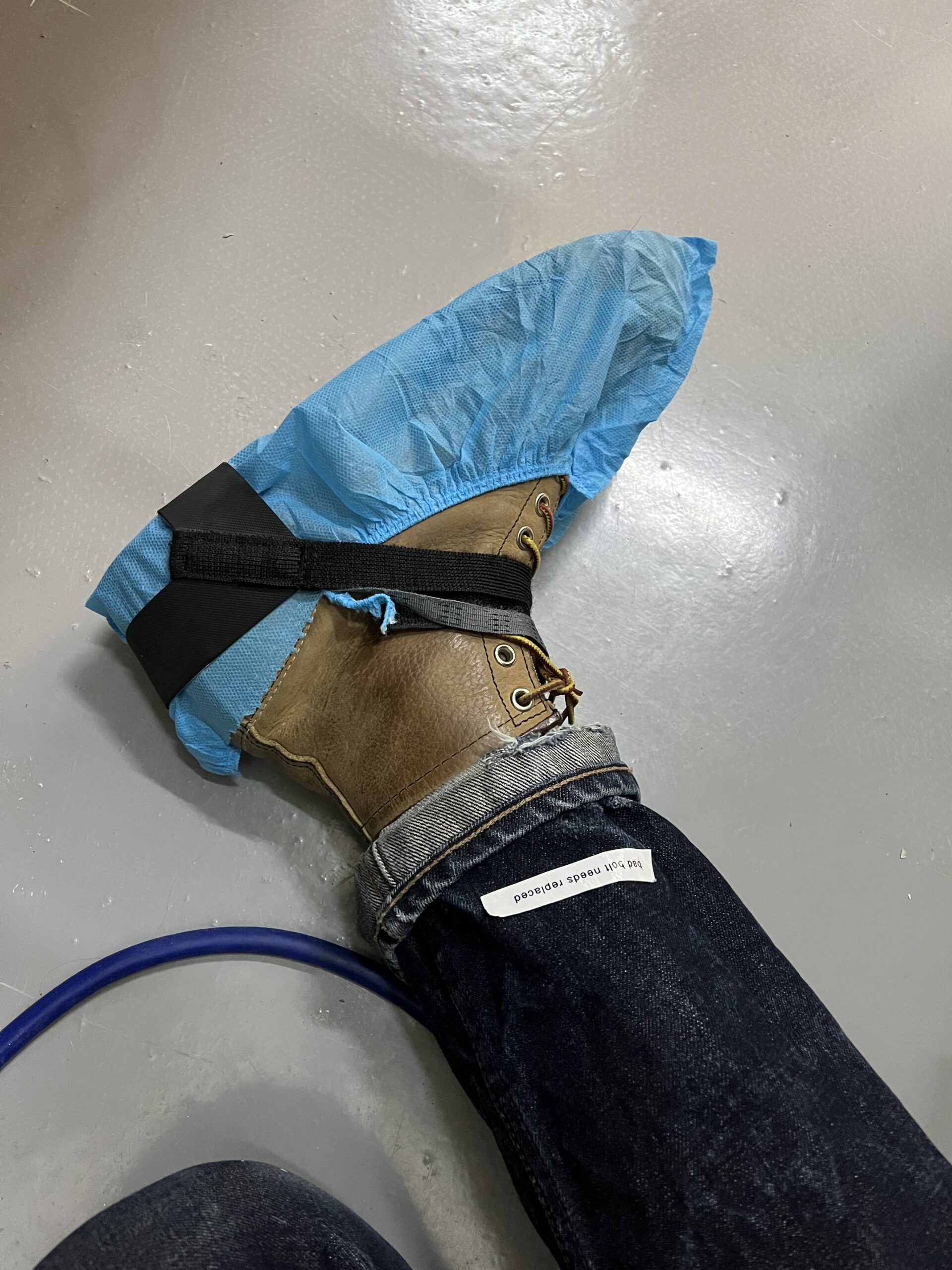
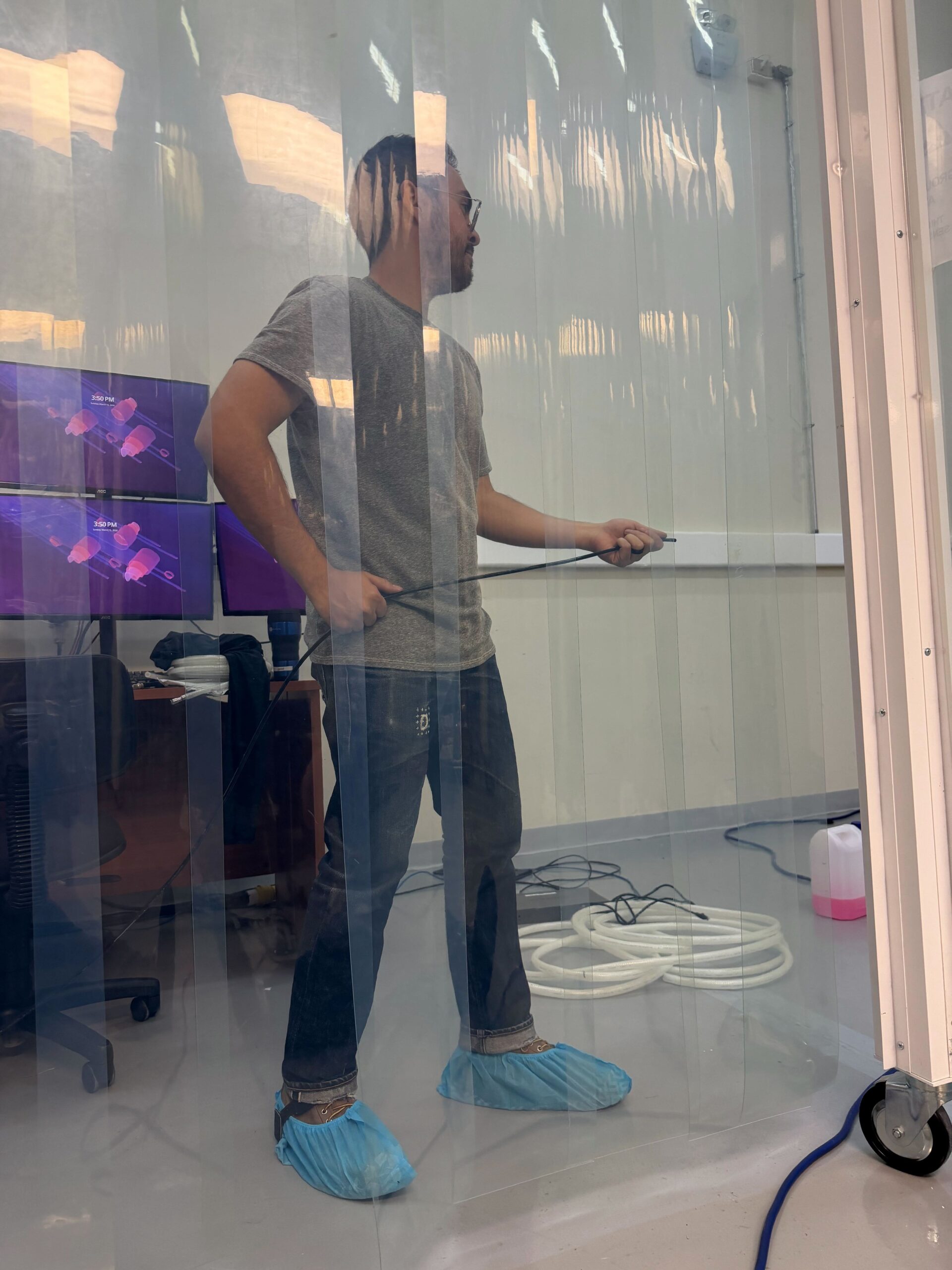
quick OOOTD fit check before some hardcore clean room activities

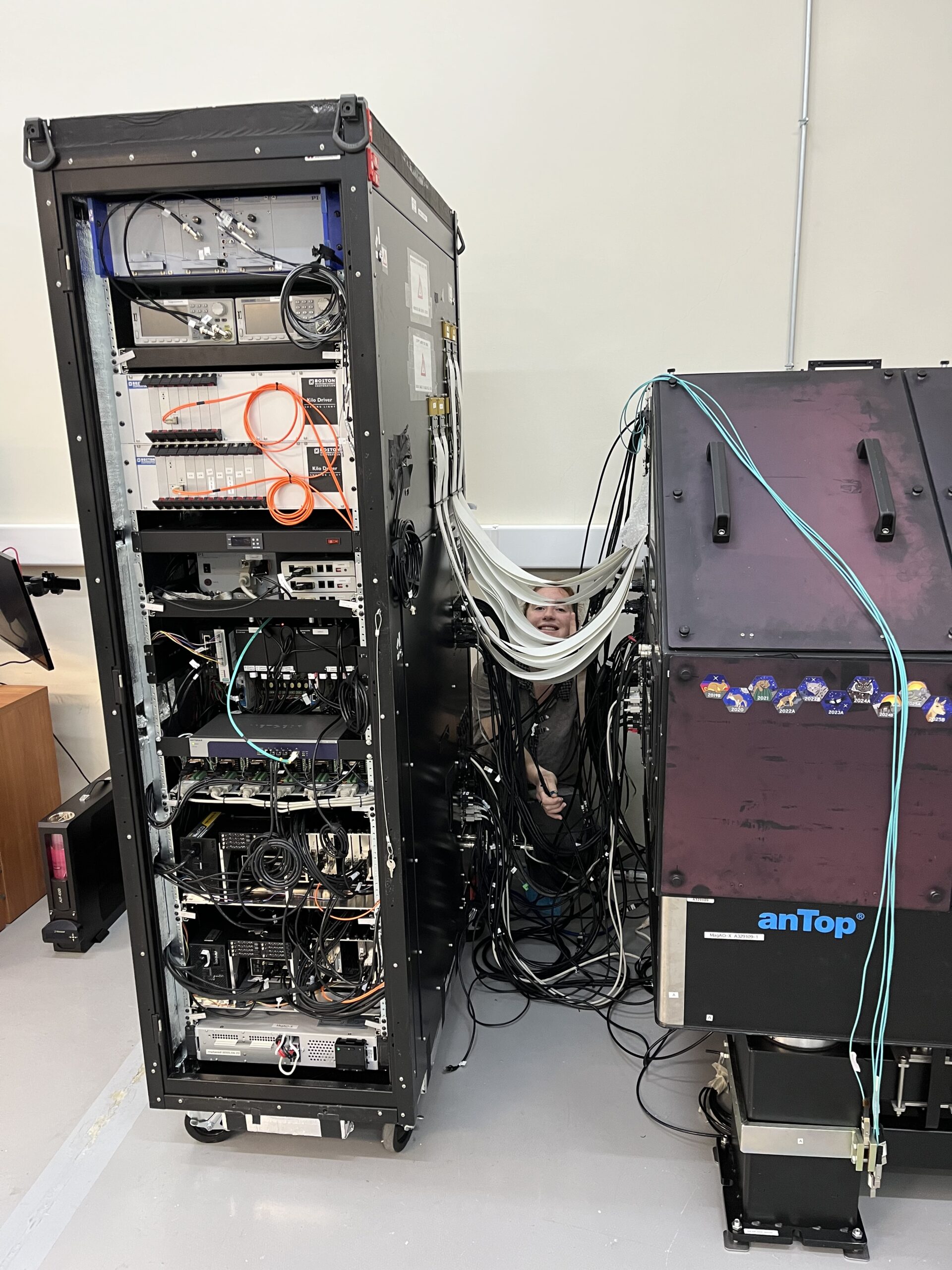
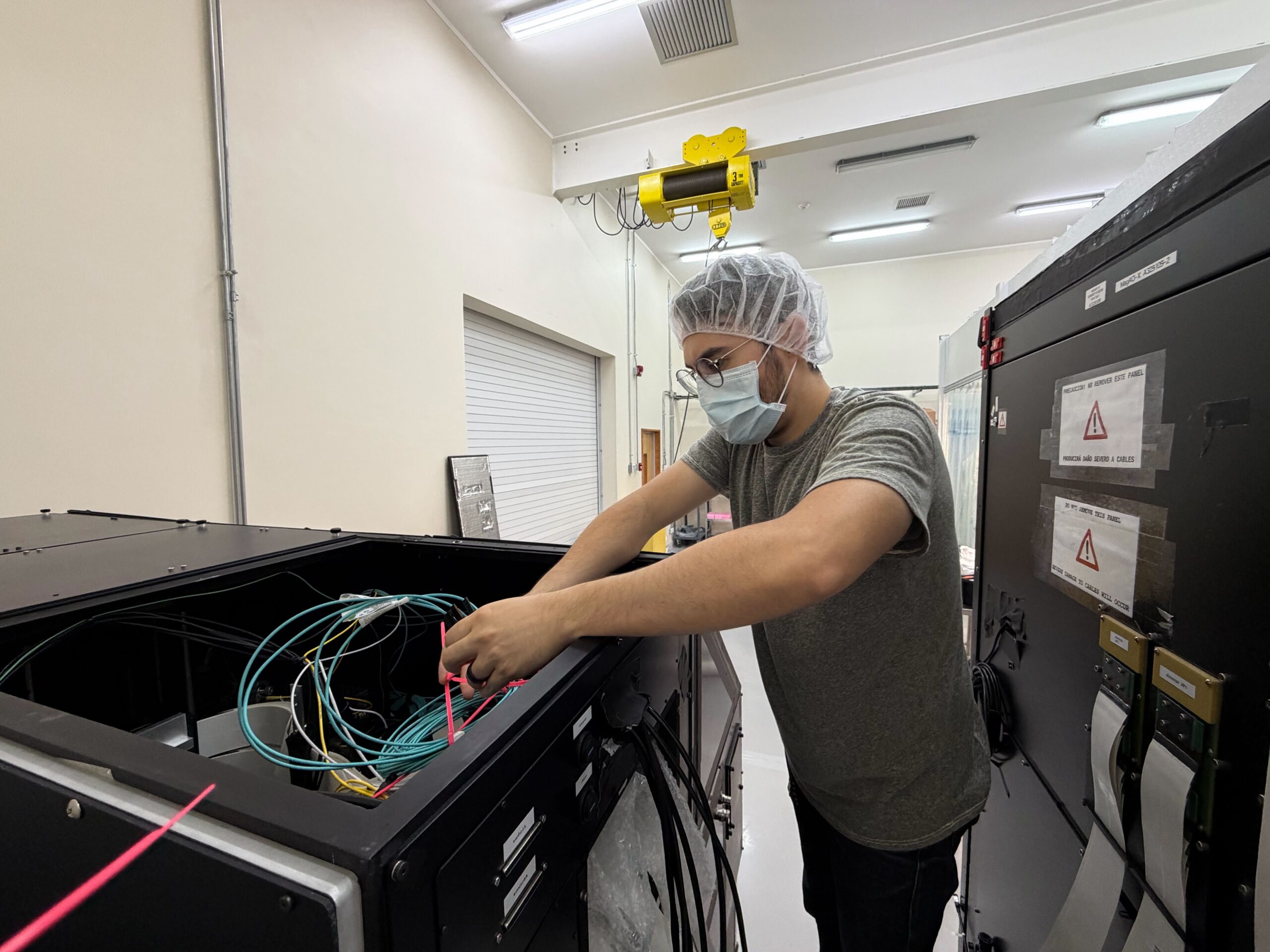
The first step was to de-cable the electronics rack and instrument which Eden and I made quick work of…! This is because we eventually needed to push the rack and instrument into the clean room such that the real instrumentation work can begin ASAP.

After separating the components, we then addressed the screw jacks that allow us to raise and lower the instrument for precision leveling and telescope alignment on the platform. You see, we were losing screw thread integrity across several bolts very quickly due to (we suspect) galling. To fix this issue, we installed new black oxide screws for better compatibility with the stainless threads. Will this solve our screw jack issues? Time will tell.

Oh yeah, and since today was Sunday…

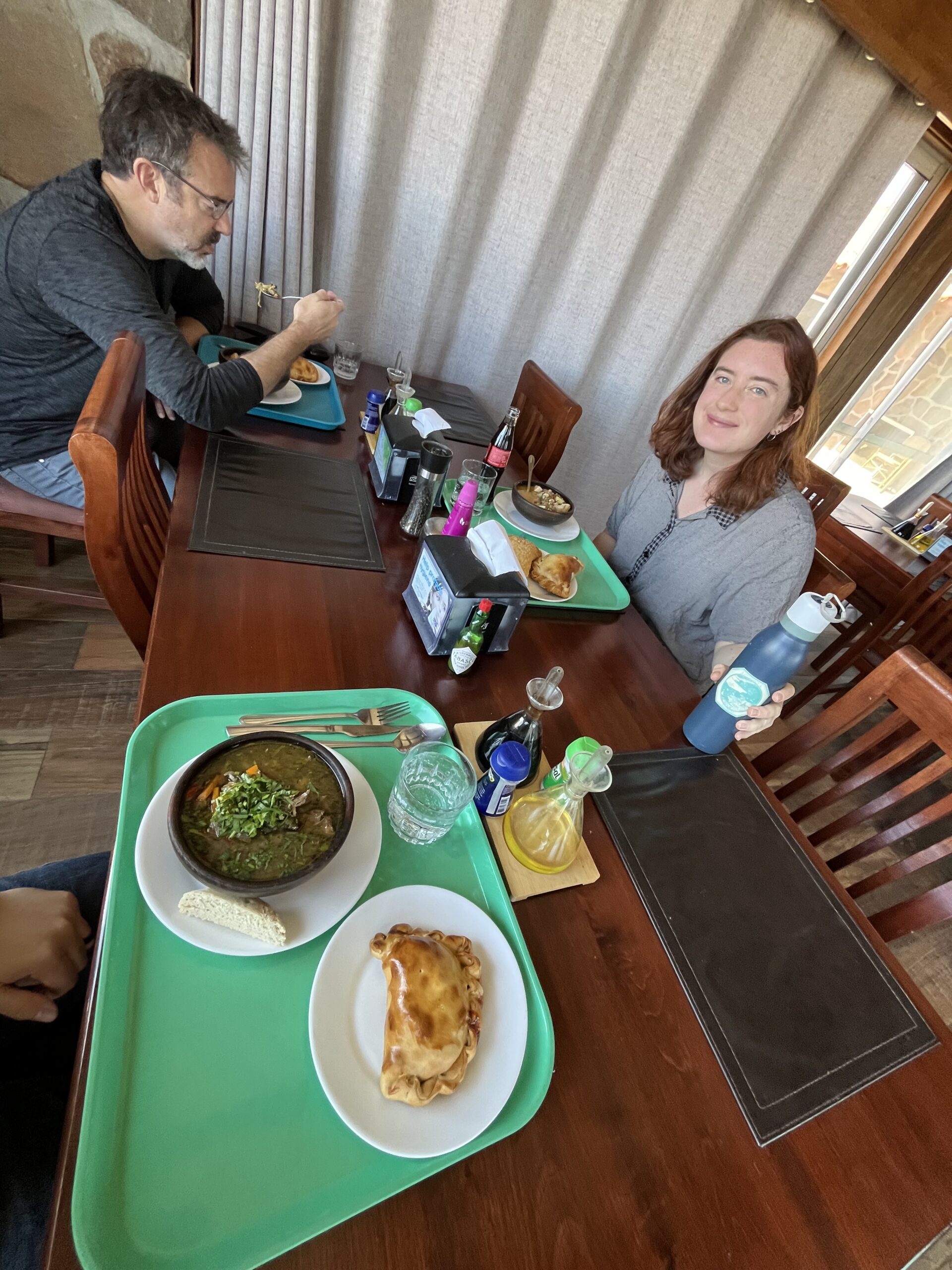
After empanada lunch, we were soon joined by our resident expert in polarimetry who was v quick and eager to get to work.

One of the big ticket items to address today was a mysterious and yet sudden increase in the measured humidity in the air that feed the DM enclosures within the instrument. Since humidity levels can invite corrosion (hence damage) in our MEMS DMs, it’s important that we investigated the quality of the air coming out of the clean room air supply. However, when we started scrutinizing the various components of the air feed system, we noticed exhausted desiccant and a compressed air drier full of water. Not great, but the drier can be drained and the desiccant replaced. However, when we drained the drier and re-connected the air tube back to the supply it filled back up almost immediately…! In fact, we disconnected the air hose at an intermediate point while it was still connected to the supply at the back wall and we had a full-on mini fire hose in our hands…!! This could have obviously led to a catastrophe of epic proportions, but disturbingly didn’t. It’s clear that our desiccant can work miracles or something.

This little air hose was legit hosing down the walls of the clean room with the amount of water coming out of it

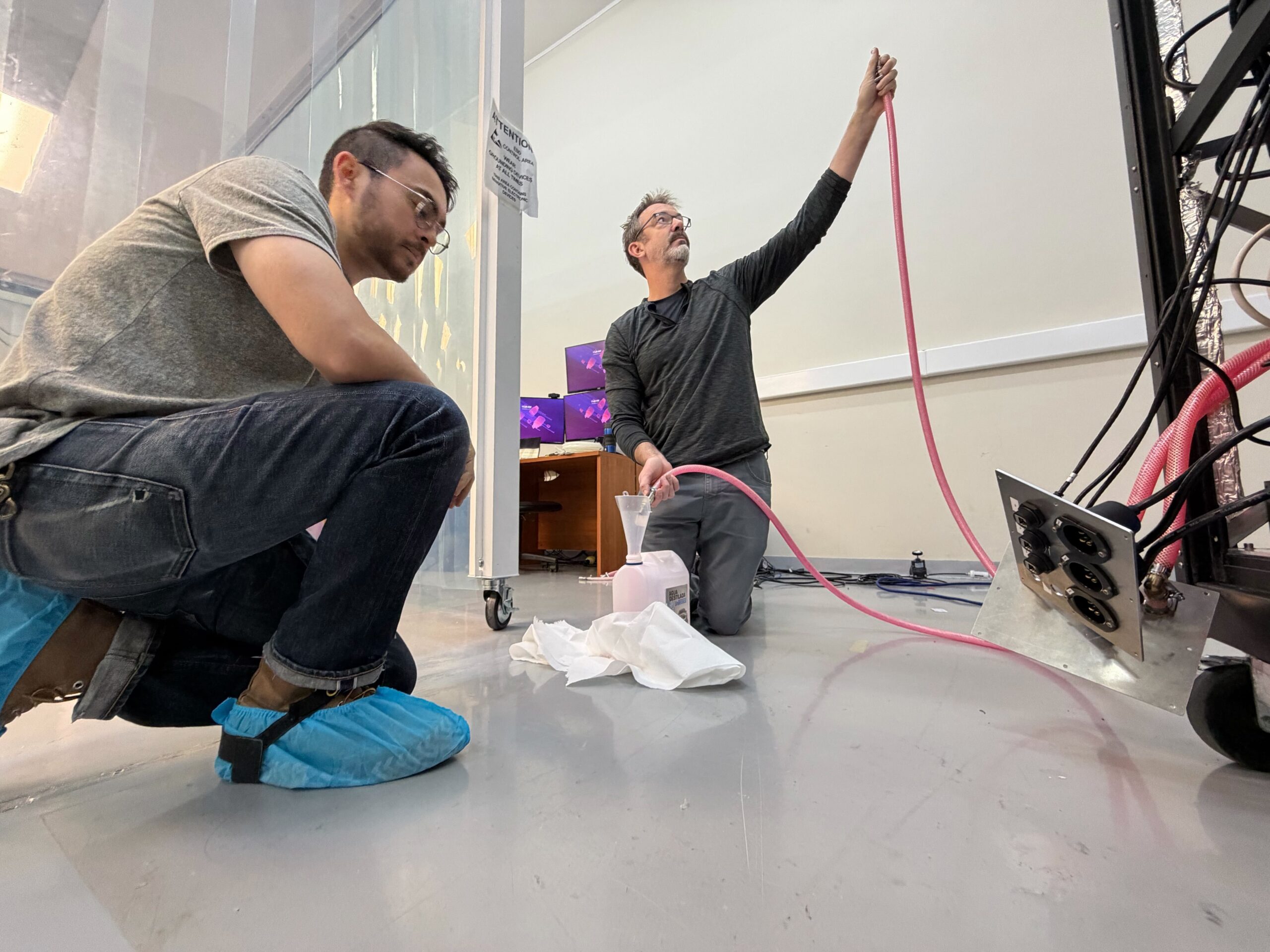
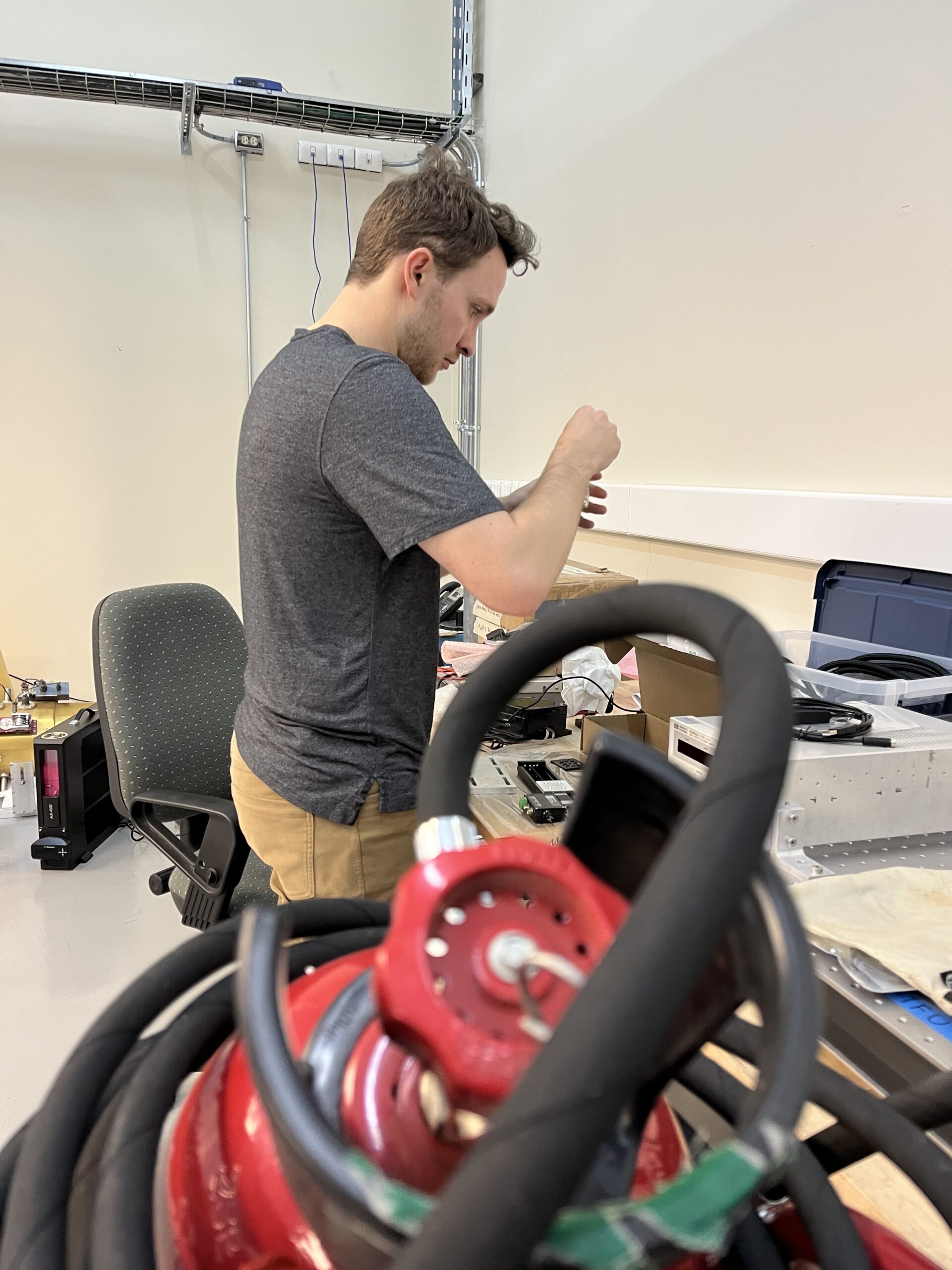
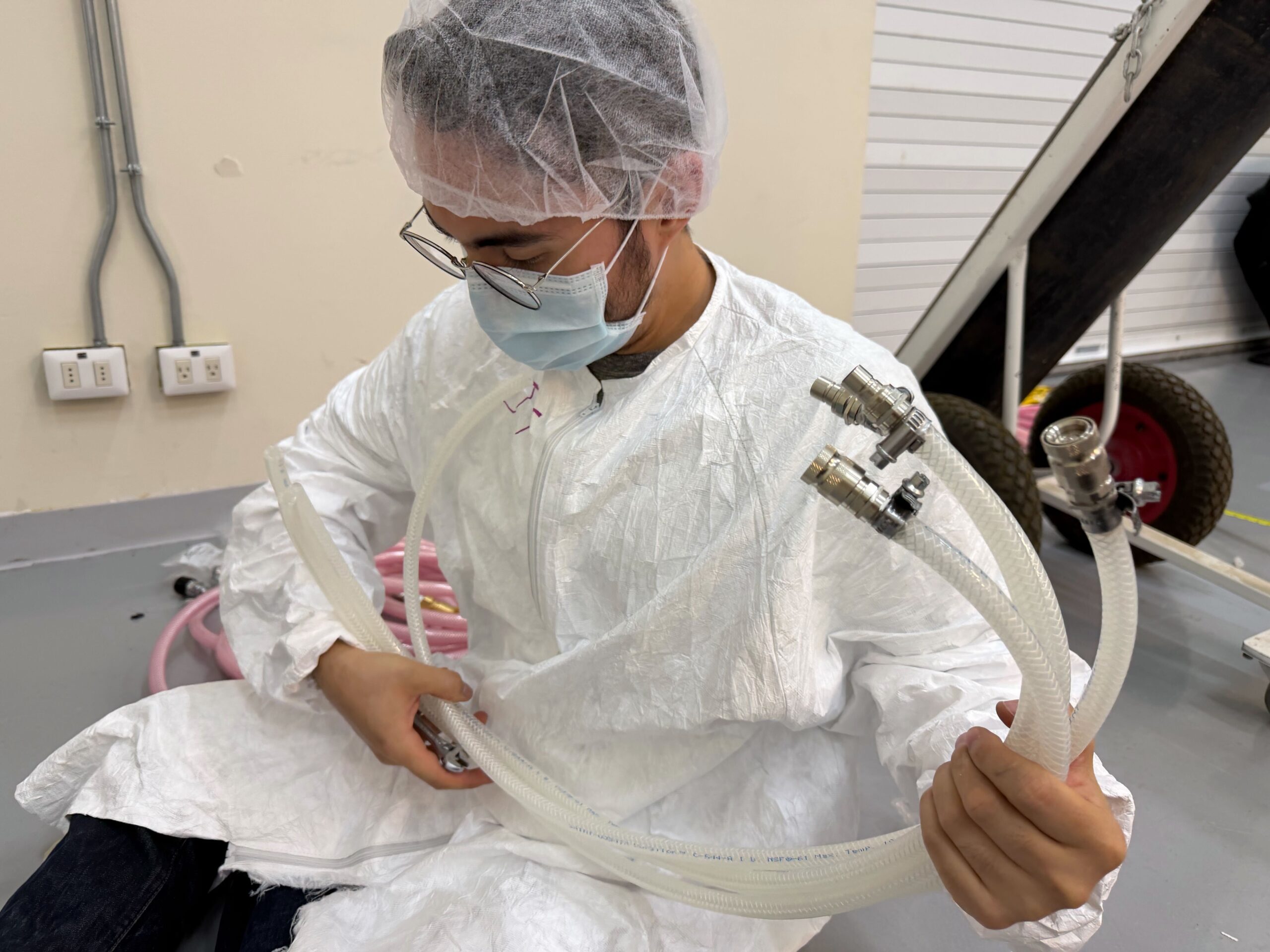
Obviously we’re a bit dead in the water while this issue gets addressed as we can’t operate the DMs or float the table at this point. To cap off the work day, we worked on installing liquid cooling for the Kinetix cameras in the instrument in an effort to address bench seeing caused by thermal gradients. This way, the heat generated by these fast-running cameras will get flushed out rather efficiently and released far from the telescope. This portion of the work day involved lots and lots of hosing, (back)flushing, and glycol which is always fun.

As such, the color of the day is:

really leak-proof glycol pink!

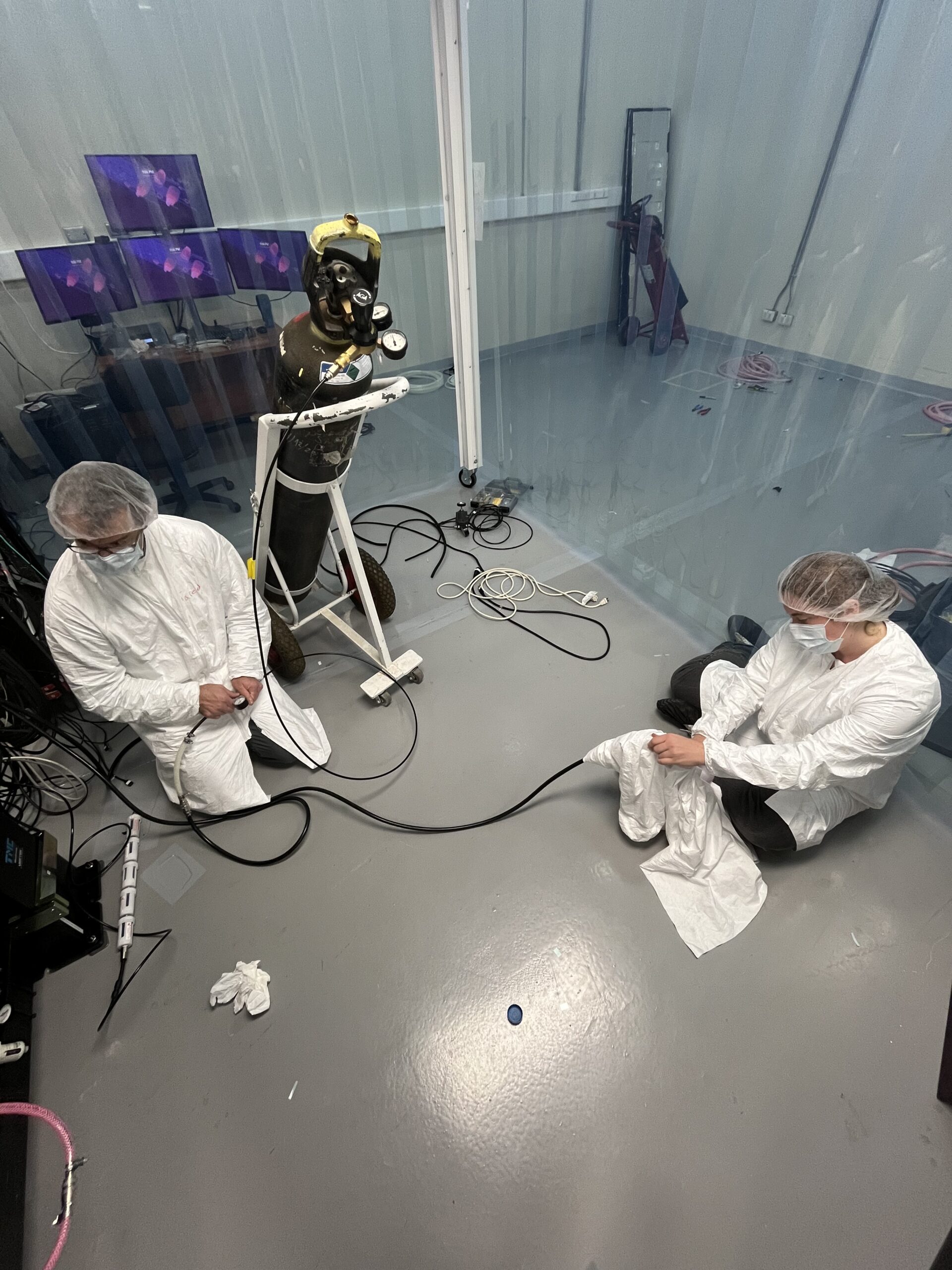
We ended the work day with final install of all our custom-made glycol hosing for the Kinetix cameras for FLOWFS and LLOWFS. After clamping it all down, we intitiated a leak test by pressurizing the (empty) glycol tubing with air to 12 PSI with the intent to see if the pressure decreases overnight. If it doesn’t, then we’re good to refill the instrument glycol system and move onto the next project! We’ll check on it in the morning, so stay tuned for tomorrow’s post to hear about the results.

Song of the Day

If arts and crafts with glycol tubing was a guitar riff…

MSM Day 2: Instruments galore

Spring is a great time to be in DC (when it isn’t raining…!). The day started with a typical spring morning in DC and maybe some slight mechanical issues with a certain dishwasher, but we made the ~8 min commute to the Earth and Planets Lab campus without a hitch soon after.

After coffee and light snacks, the morning session was ripe with ienteresting talks from the transiting exoplanet community, which was nice to see. Eventually we broke for lunch where we had some sick mediterranean food and engaged in some colorful dicussions on asteroid mining.

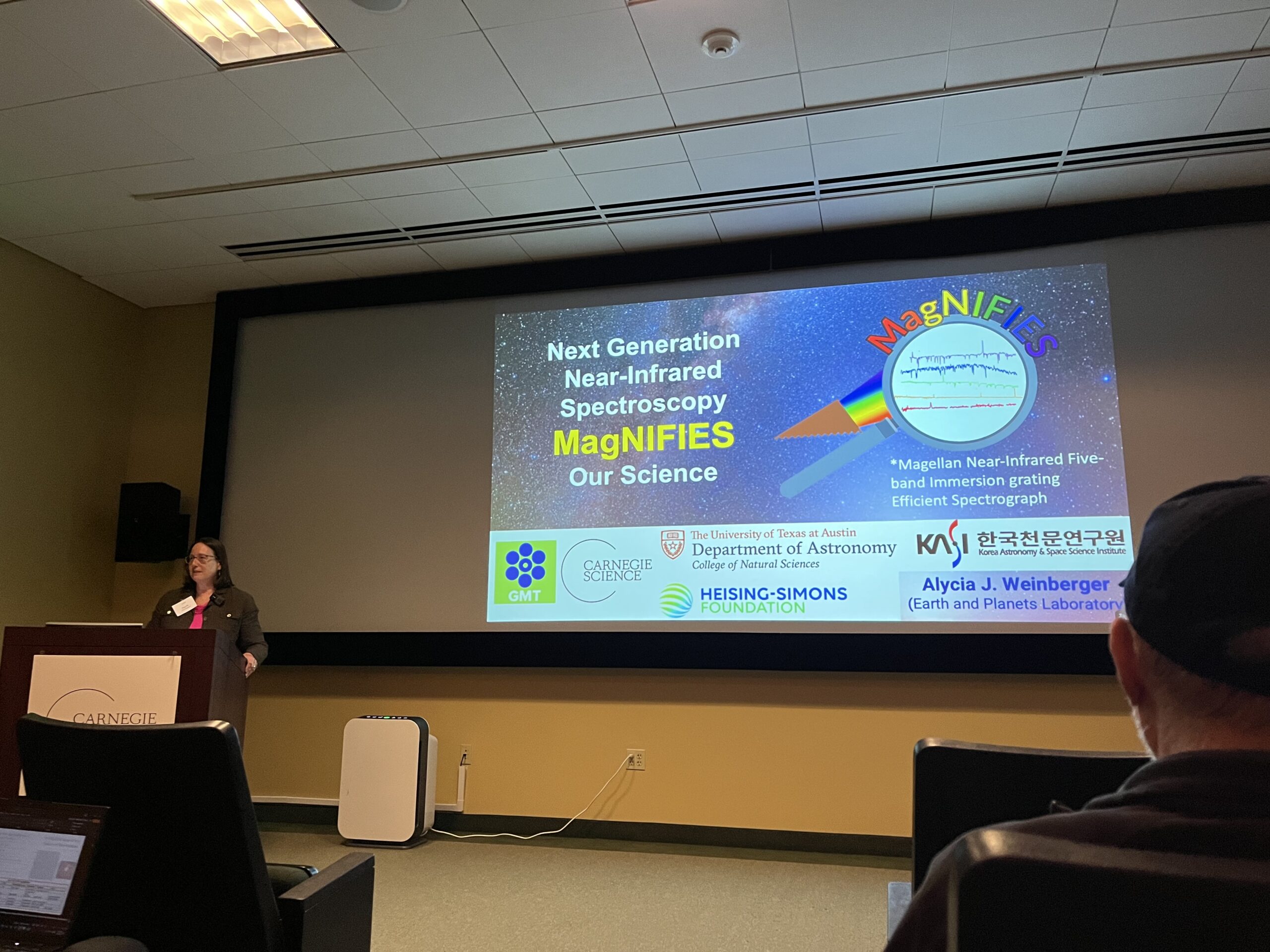
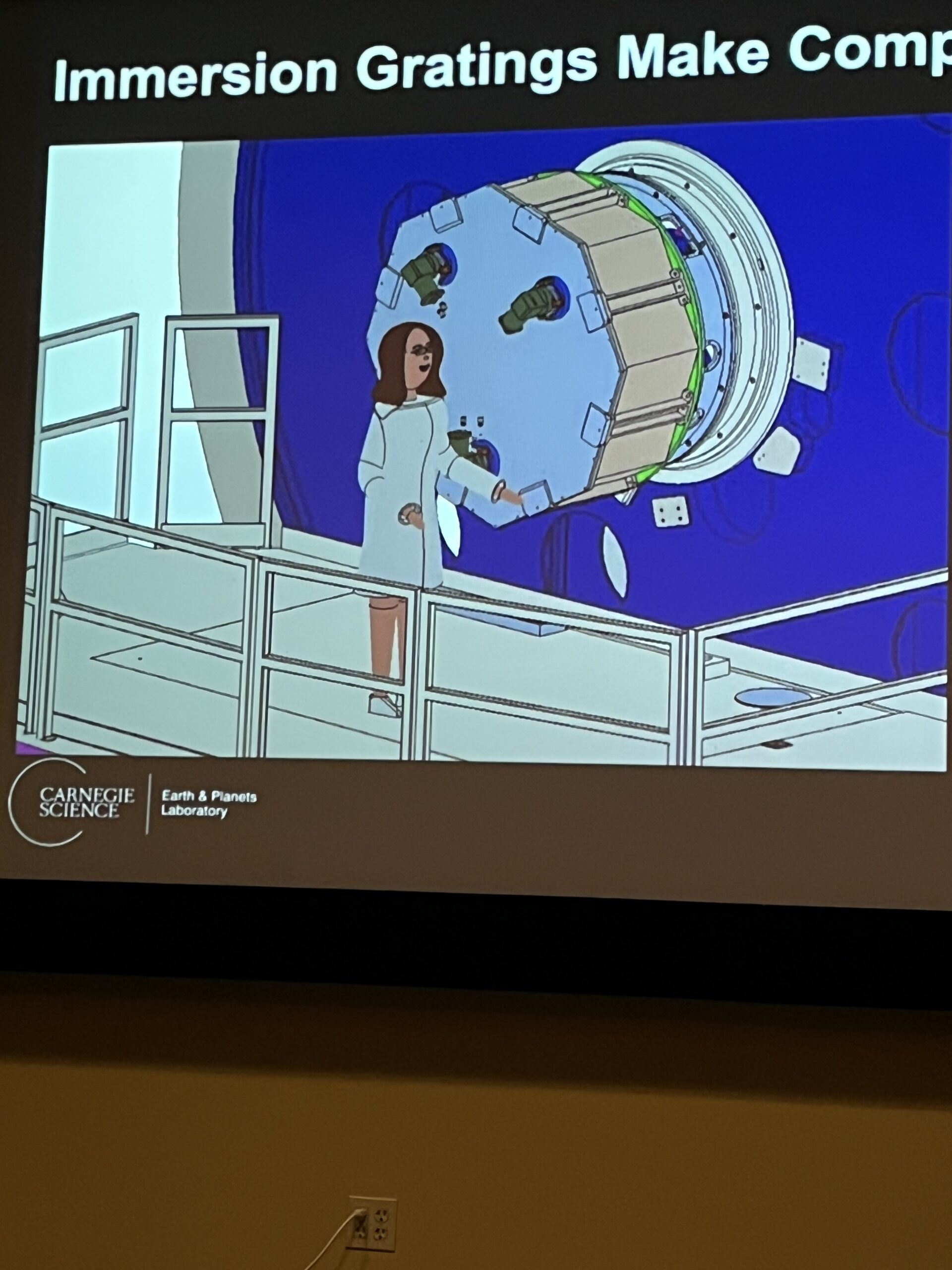
Immediately after lunch Alycia gave her talk on the new upcoming spectroscopic instrument, MagNIFIES. I didn’t realize that this instrument is essentially GMTNIRS and will be installed on one of the Magellans as we wait for GMT, great plan.

We were all treated with a glimpse of CAD Alycia…! Don’t be fooled, but if you suspect that you are, CAD Alycia is apparently ~4 inches taller than her true height. So that’s the distinguishing feature, FYI.

The rest of this session detailed new and upcoming instruments for the Magellan telescopes and was (for me) the most interesting session of the day. In particular, there was a talk on a new instrument (LIGHTSPEED) that makes use of one of the new Hamamatsu qCMOS cameras that had me on the edge of my seat…! Those cameras are impressive (and cheap) pieces of imaging technology.

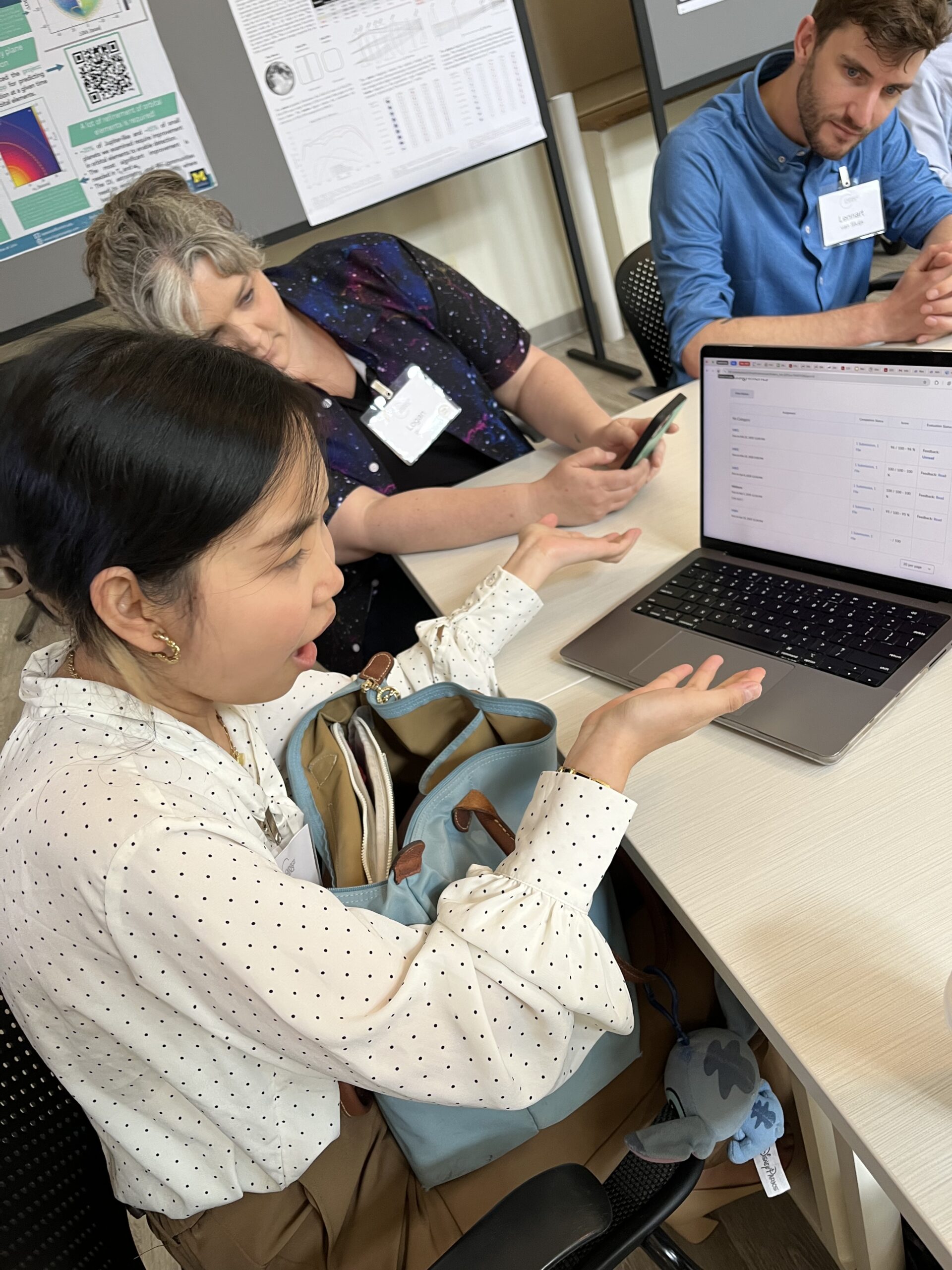
In the afternoon, a subset of the attendees coalesced and had a nice discussion on efforts towards exoplanet science at Magellan. It was recognized that one of the current drawbacks for the community is a shortage of ports for all the various instruments, and there was some discussion about moving LDSS3 to a permanent position on one of the reinforced auxilary ports in addition to removing Four Star from the other Clay nasmyth platform.

Jialin, being the talented multitasker that she is, juggled participating in the discussion with managing her final exams.

After the breakout sessions, I had a super meeting with Alycia and her postdoc Daniel about our most recent efforts studying the dust that makes up the HR4796 disk. Recall, there isn’t a single grain model that can explain both the scattering function *and* and spectrum across all the data collected on this system so far. Our most recent observing runs have given us some really good data that should really help solve this problem.

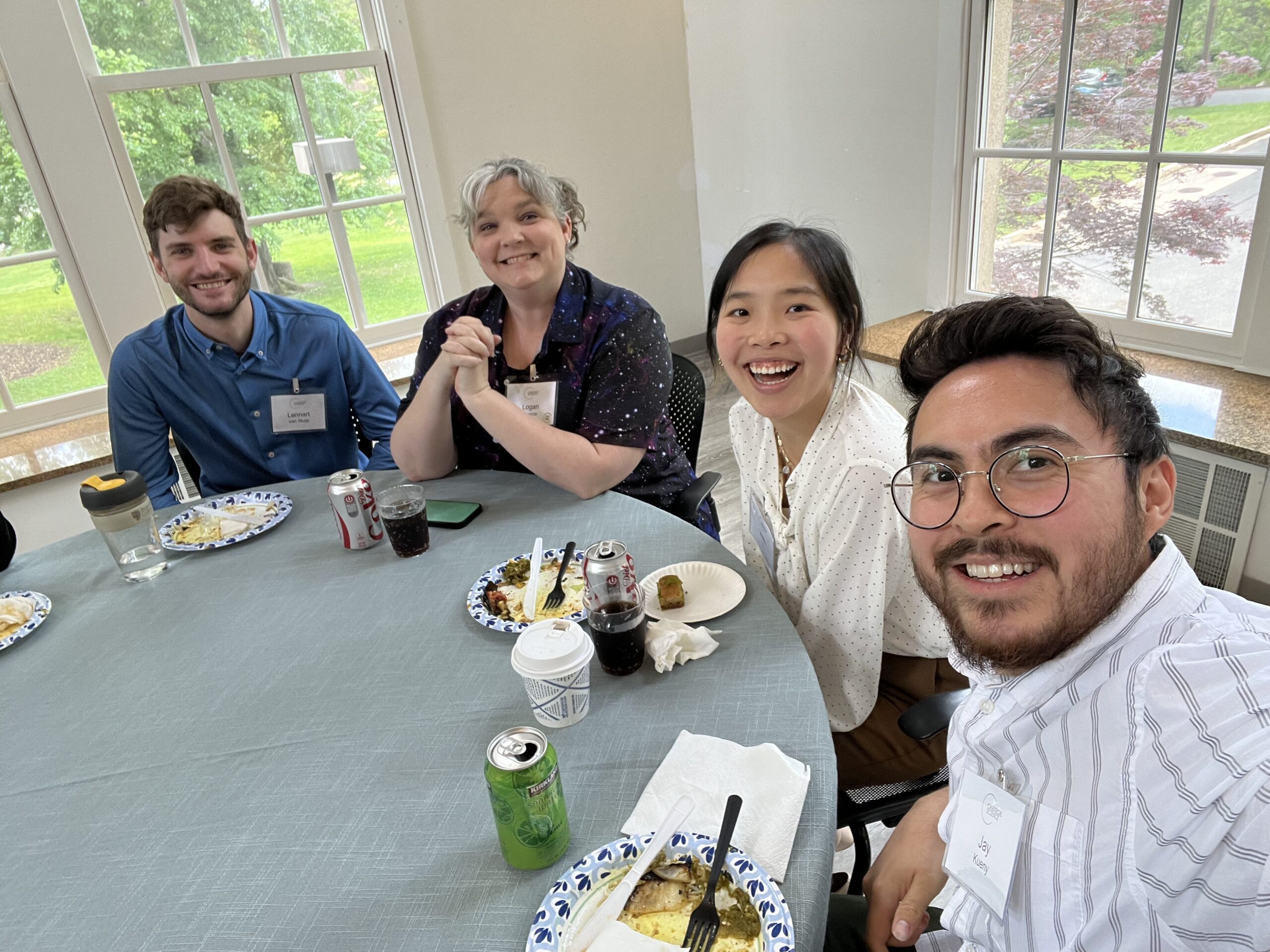
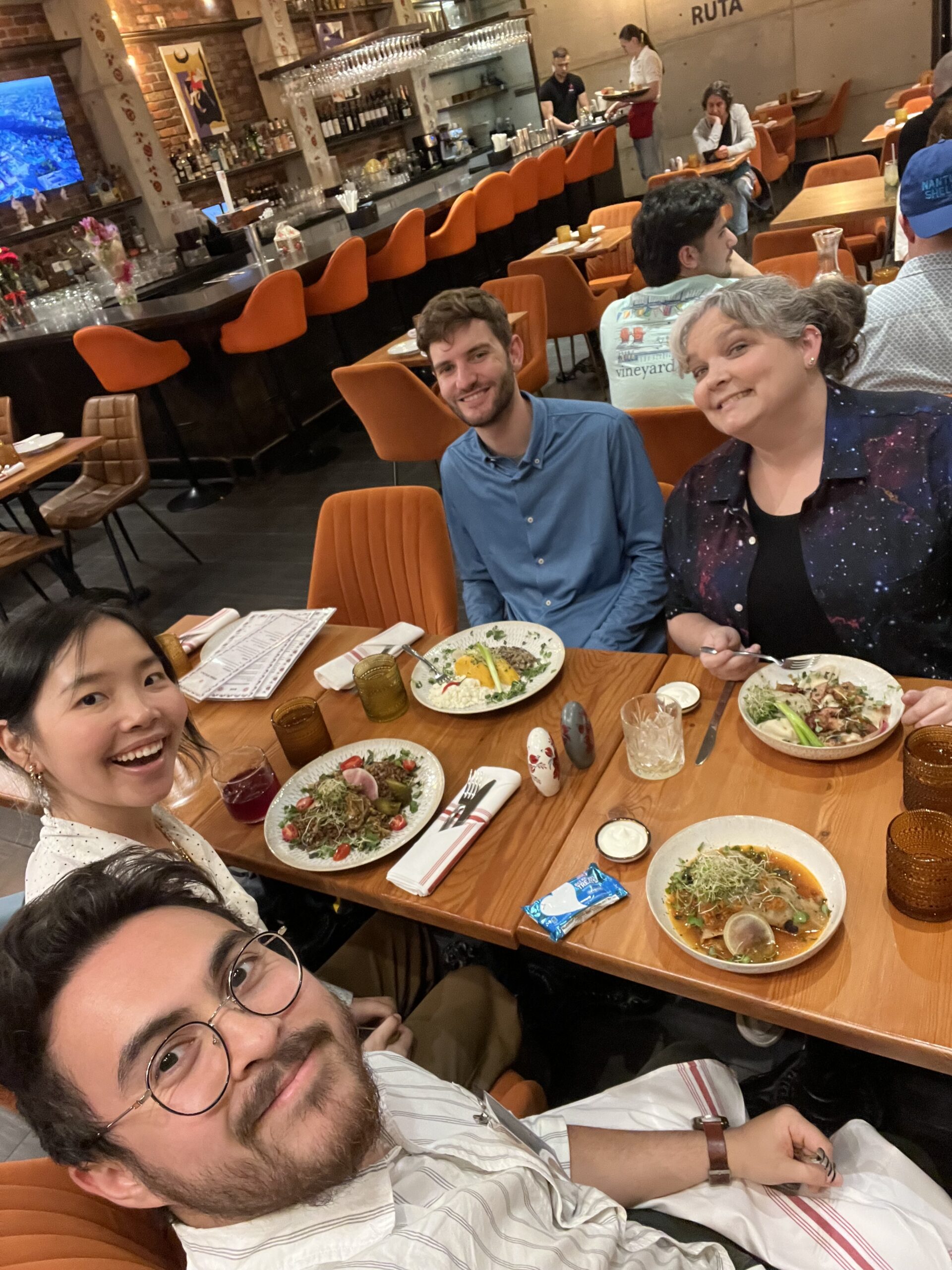
We ended conference activities by eating Ukrainian food at a local restaurant with Lennart van Slujis, who is from the Netherlands (now a Univ. of Michigan postdoc) and apparently has attended lectures given by Sebastiaan. Astro is such a small world.

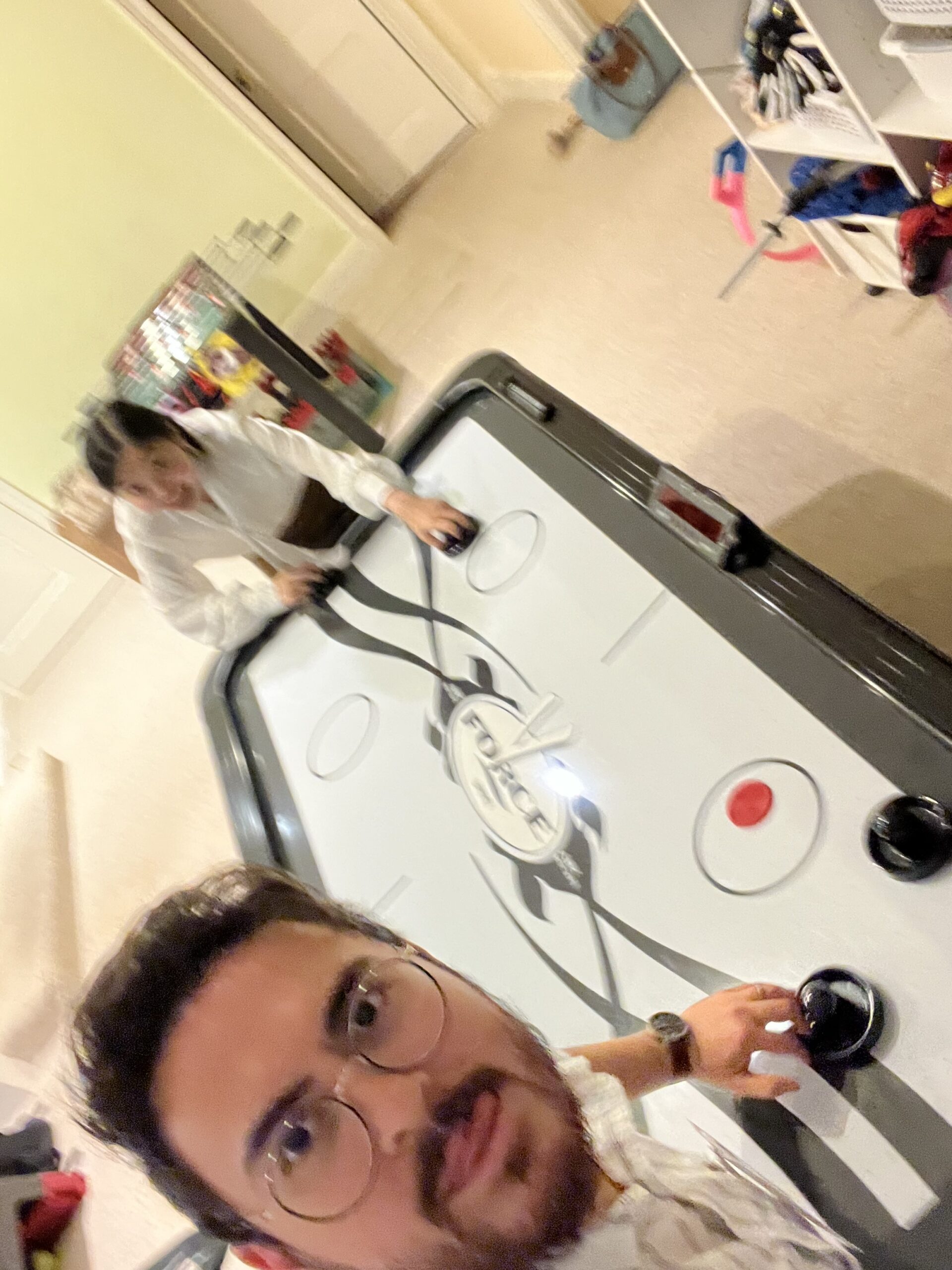
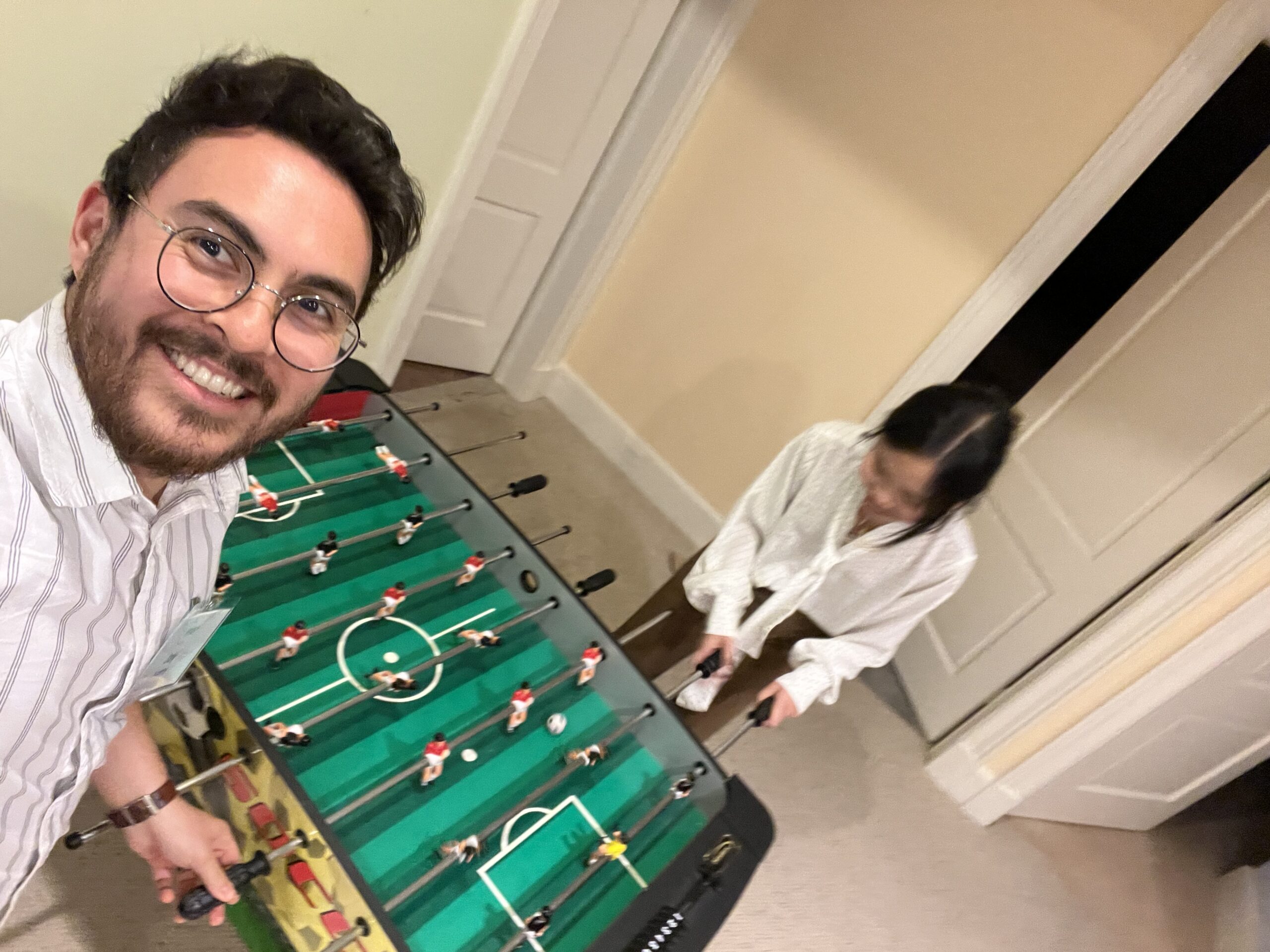
We would like to thank Alycia very much for her hospitality and hosting us during the duration of this conference. Of course, Jialin and I quickly found that the best way to end the work day at Alycia’s house was with a few intense bouts of air hocky and foosball!

Song of the Day

How about some early 2000’s action courtesy of John Mayer?

MagAO-X 2025A Day 7: Seeing green

First off, a special congratulations to Parker for being offered the NSF GRF award! That’s awesome. And it means that the panel that reviewed his application is just as excited about drilling holes in the Magellan-Clay telescope to mount the accelerometers as we are. It sounds a little jarring, but it’s for the Greater Good, we promise…!

The night started off as usual, with some daytime engineering followed by an excellent dinner. I didn’t take a picture, but I’m kicking myself for realizing afterwards that tonight’s dinner contained all of the components to make a California burrito. Namely, the chefs prepared a burrito-like thing (basically a beef rolled taco) and had fries and guac and such at the salad bar. Dang, talk about a missed opportunity.

This evening also offered many sightings of the family of culpeos that has taken residence in front of the lodge as the sun set in the background. Behold:

As the sun set, preparations for tonight’s observations began quickly and efficiently. For mine and Alycia’s observations tonight, we made use of a spare g’-band filter to take some data on a very special debris disk. The biggest MagAO-X fans will remember that we already have a g’-band filter installed and available in the instrument, so why is a second one necessary?…

It turns out, a longstanding problem surrounding the old g’ setup was a case of disappearing flux. Namely, there was something within the instrument that was severely affecting the throughput of green light unbeknownst to the observers who used this filter in the past. Well, we can thank Jared for spending the pesos necessary to get a green laser and do a proper test in the lab to determine the cause of the missing green light.

After some exploration with the laser we were able to determine that it was a beamsplitter in the instrument that was attenuating green light. So, our quick solution to this problem is to just bypass this beamsplitter and manually place a separate g’ filter in front of one of our science cameras. Thanks to Laird to coming up with this quick fix so that we could execute MagAO-X’s best observations at 527 nm! “The target audience will hate love it.” “Who’s the target audience??” “People with eyes…!”

Meanwhile, I thought I’d highlight a really cool picture taken by our new Leiden-based collaborator (and Master’s student to Sebastiaan) Eugenia Maria. Great shot!

We’ll end tonight with a fun challenge. Parker claims there are 5 vizzies in this photo, can you find them all?

The quotes in this post are from the move Argo which I watched on one of the long plane rides recently (thanks to Katie for the suggestion). It’s a historical flick about how CIA operatives were able to rescue US embassy hostages in Iran by masquerading as Canadian filmmakers. Would recommend!
Song of the Day

Please enjoy the 527 nanometer hill zone:

MagAO-X 2025A Day 1: Back in the Saddle

Hey it’s ya boi, JK. No really, Jay here with the latest updates pertaining to the 2025A run. We experienced a very colorful and interesting journey getting here, as we saw in Parker’s previous post. That entire expedition had us pretty much saying to each other out loud, ““Where are you Going? So full of Hope? There is NO HOPE!”.

In my opinion, one of the more interesting aspects of our trip was our serendipitous run-in with a fellow astronomer– Dr. Susana Deustua. This run-in happened as we were waiting for our hotel vouchers on the early morning of March 31st. As we were commiserrating with the others in the line around us, she caught wind of the fact that our group of obvious Americans were trying to get to La Serena and put together the fact that we were also en route to an observatory. We ended up at the same hotels, and she ended up accompanying us all the way to the La Florida airport in La Serena before needing to part ways to visit many of the other observatories in the area. What’s crazy, but ultimately unsurprising, is that she knew a lot of my old colleagues at NAU and Lowell Observatory, as well as some faculty at UA and Carnegie; Astronomy is such a small world.

We facilitated the healing of our battle wounds incurred from the journey to LCO with a classic Babcock Breakfast combo.

So good! The red stuff is a viciously hot (but tasty) mixture of some kind of chili paste in a mason jar that I’ve never seen before, but allegedly floats around the dining room from time to time. I’ll definitely be looking for this stuff more often.

We continued the work day with many Carlos sightings. He has been just hanging out in the front yard of the lodge for the entire day, and seems a lot less skittish than usual.
Some improvements to the Observatory are being made. By the Magellan telescopes, they’ve started what appears to be a roadway to a new instrument storage facility. As well as a w i n d s o c c ….!

The most exciting quality of life upgrade that they’re implementing here is our very own grocery store and taste of home!!! Can’t wait!!!!!!!!!!!!

As it is Tuesday, we experienced all the hustle and bustle of the weekly tourneaux. Along with more Carlos sightings.

As for lab work, Parker has been hard at work with the calibrations associated with the new accelerometer project. It turns out that it’s the classic physics lab experiments that will hopefully make short work of this calibration phase. Back to basics! To construct the pendulum setup, Parker had to get creative and make use of materials on his person to get optimum results.

We ended the day greeting our Brazilian colleagues Tiago and Rodrigo. Welcome to LCO!

Today brought on a solid start to the run, with a lot of tedious but really important lab work completed. Tomorrow is another solid day of engineering and we’re hoping that Laird is able to arrive after being delayed to weather-related issues. We’re also wishing luck and safe travels to Joseph and the first of the Leiden crew (Sebastiaan and Elena).

To comply with this run’s new blog rule, the movie quote I used is from Mad Max: Furiosa, which was something I watched on the long plane ride.

Song of the Day

Song unrelated, but a cool music video from one of my faves, Kaki King.