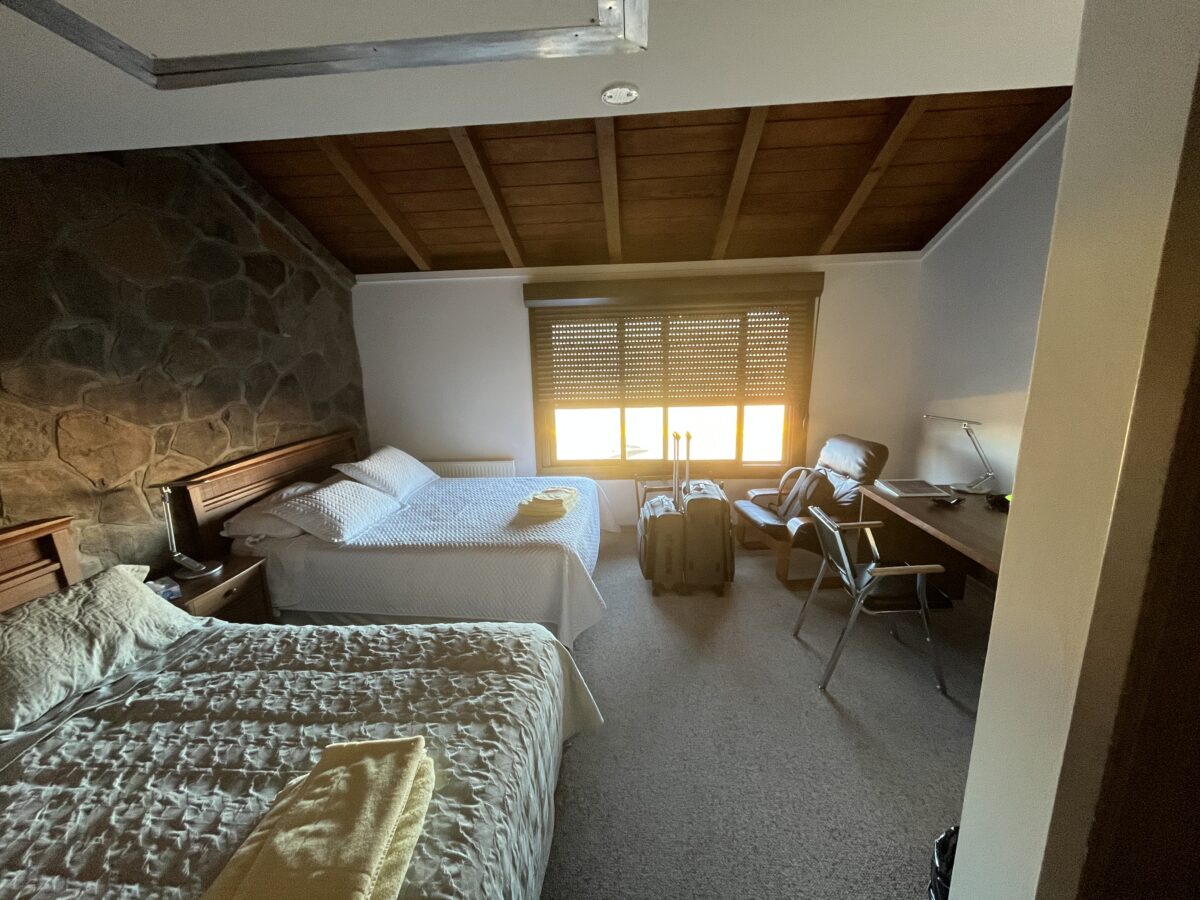
Today, we’re officially officials of the official pre-observing engineering duties for MagAO-X officials. We officially go on-sky on March 25 so we’ve got a jam-packed list of things to knock out before then. Since we arrived on the mountain without delays yesterday, we elected to dedicate the rest of the day/night Saturday for healing after the long trip, which was much appreciated. Today, after breakfast, Jared, Eden, and I promptly headed back to the cleanroom to get to work.
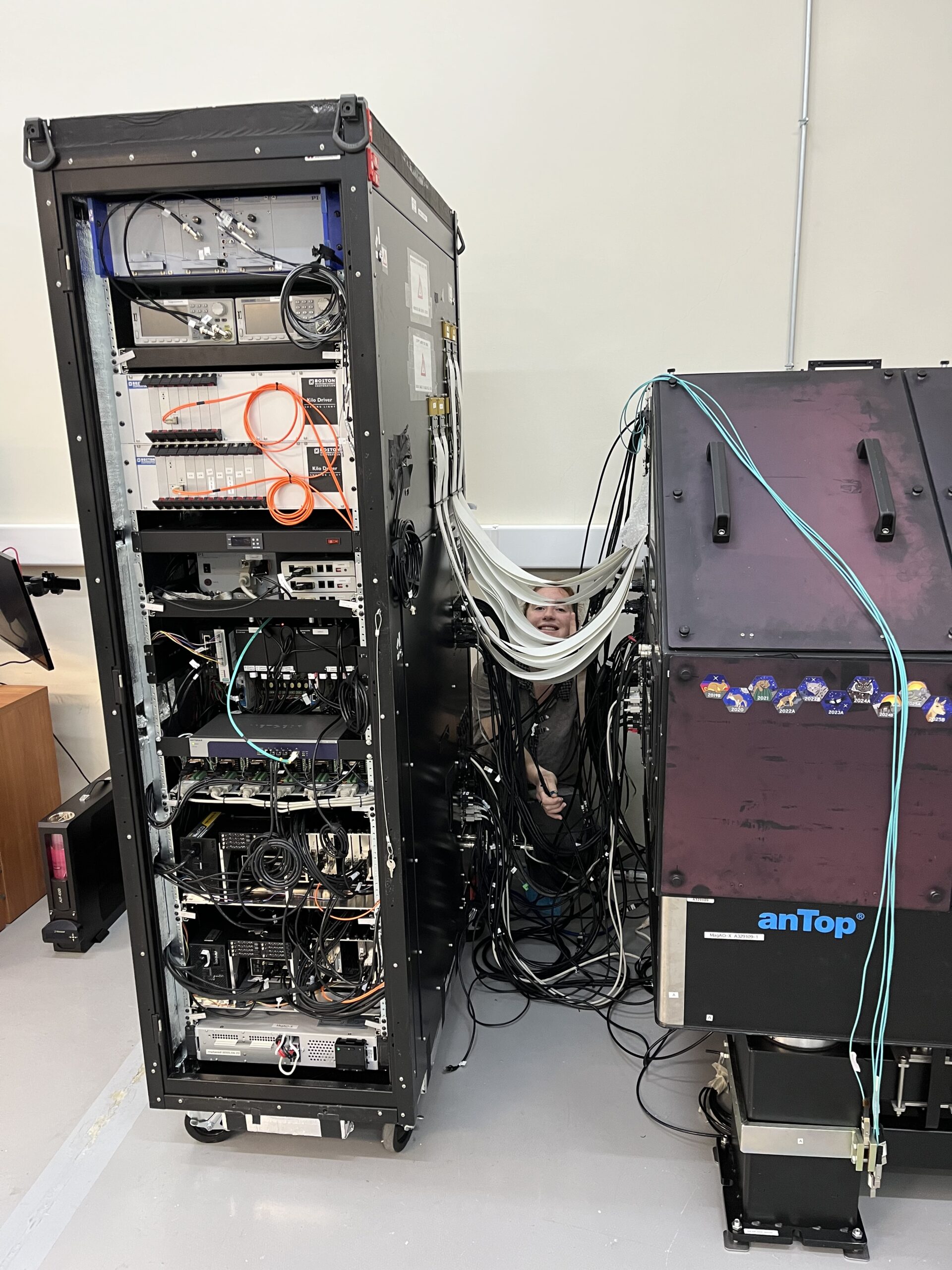
The first step was to de-cable the electronics rack and instrument which Eden and I made quick work of…! This is because we eventually needed to push the rack and instrument into the clean room such that the real instrumentation work can begin ASAP.
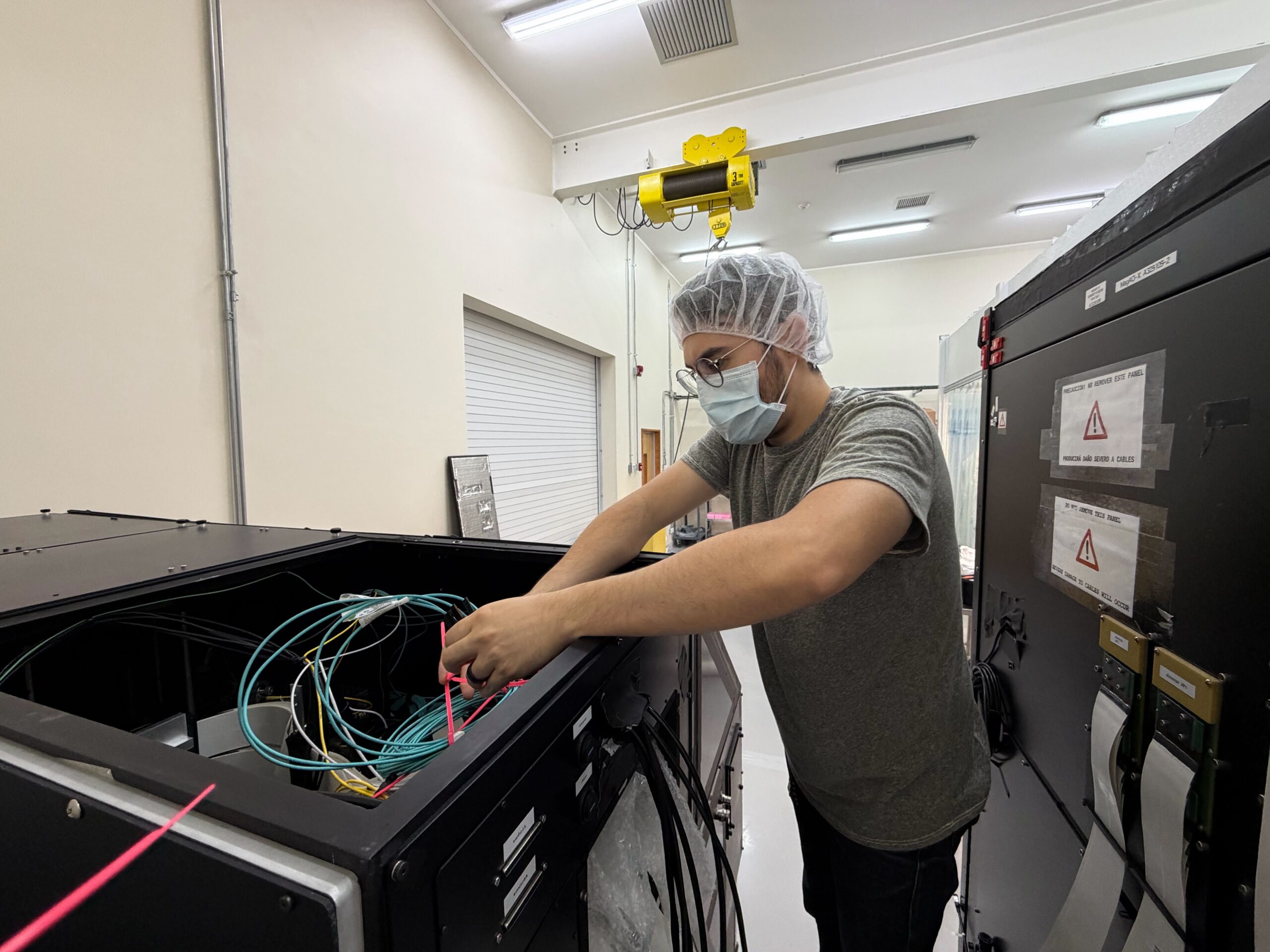
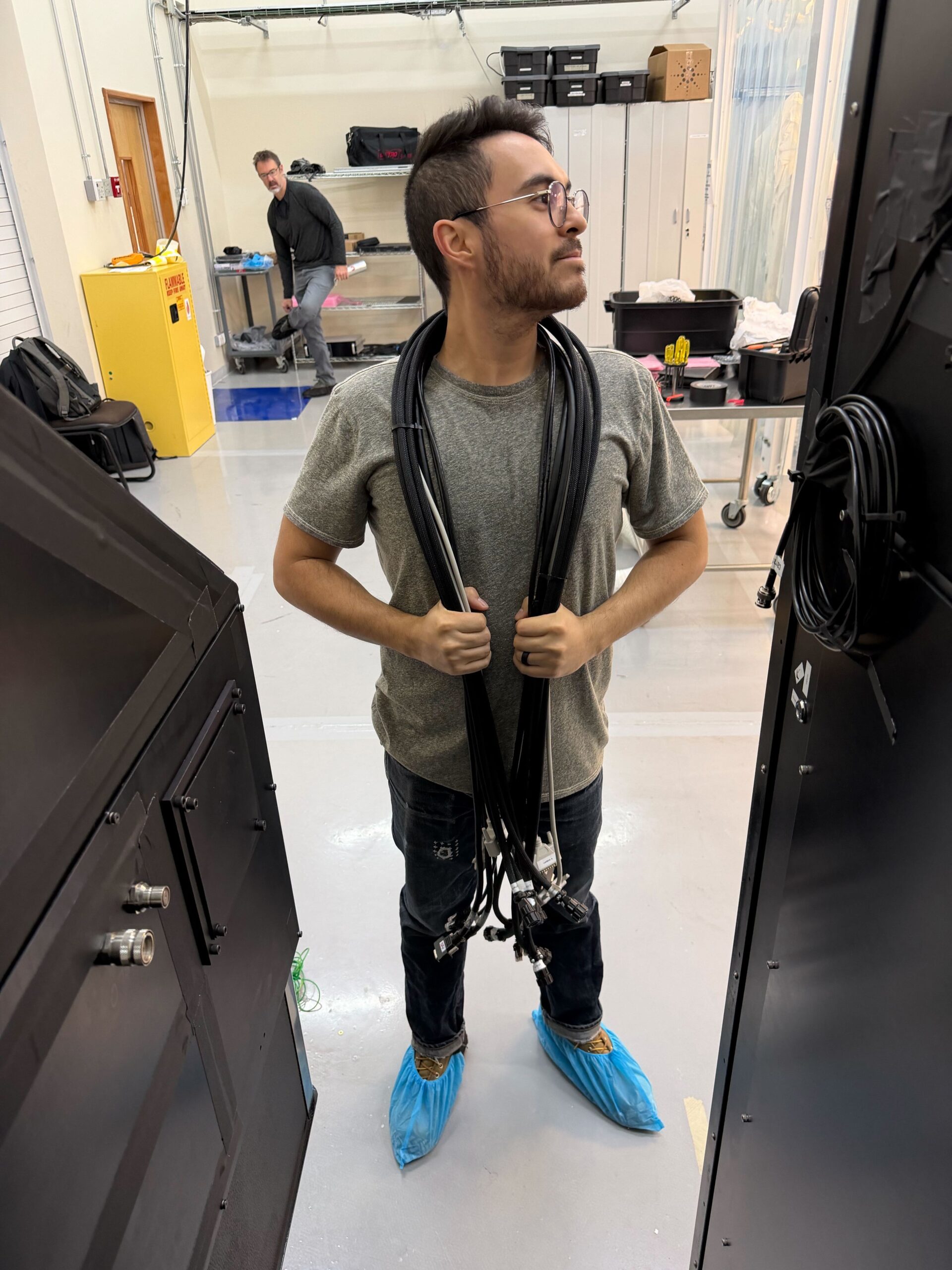
After separating the components, we then addressed the screw jacks that allow us to raise and lower the instrument for precision leveling and telescope alignment on the platform. You see, we were losing screw thread integrity across several bolts very quickly due to (we suspect) galling. To fix this issue, we installed new black oxide screws for better compatibility with the stainless threads. Will this solve our screw jack issues? Time will tell.
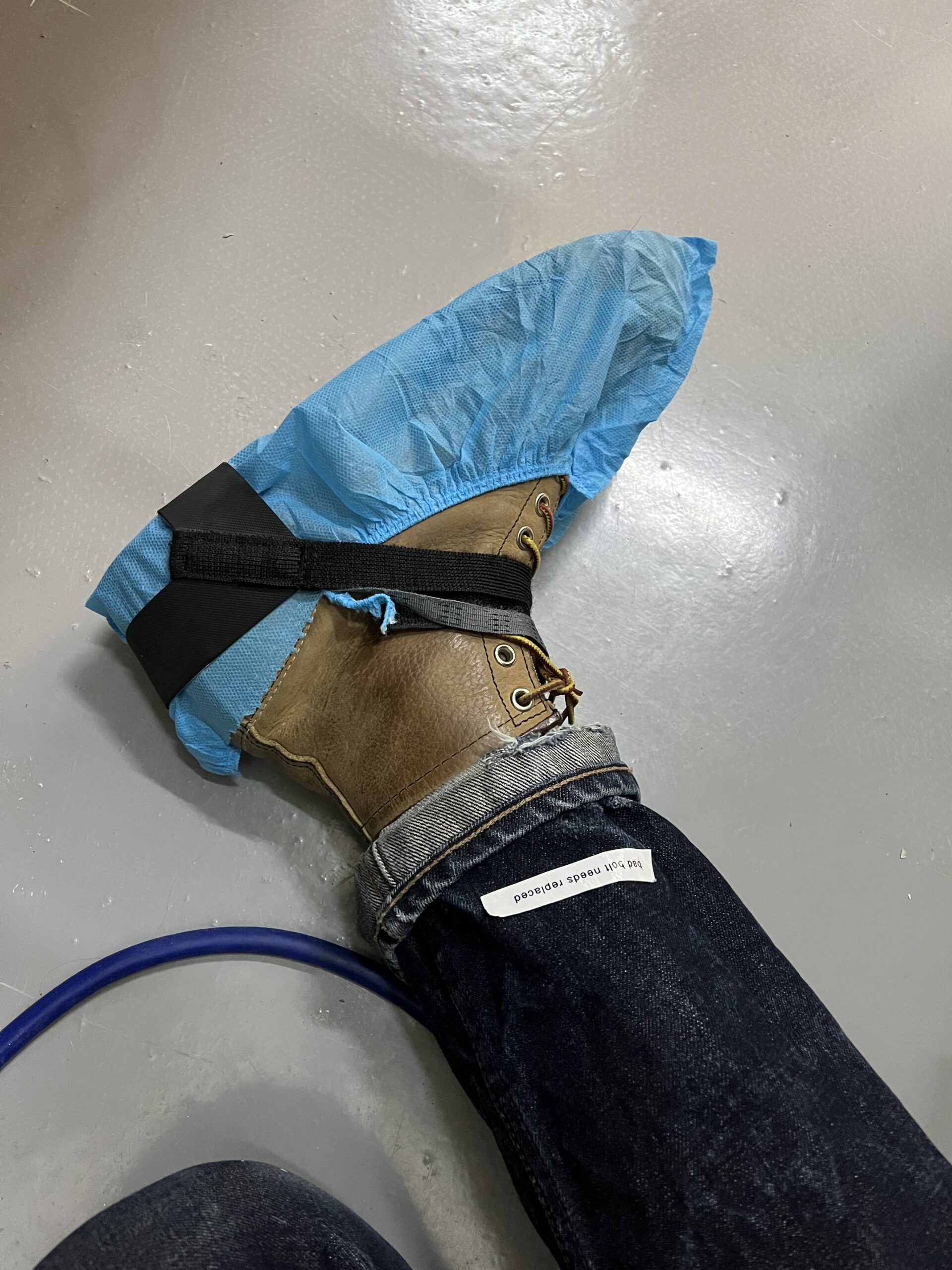
Oh yeah, and since today was Sunday…
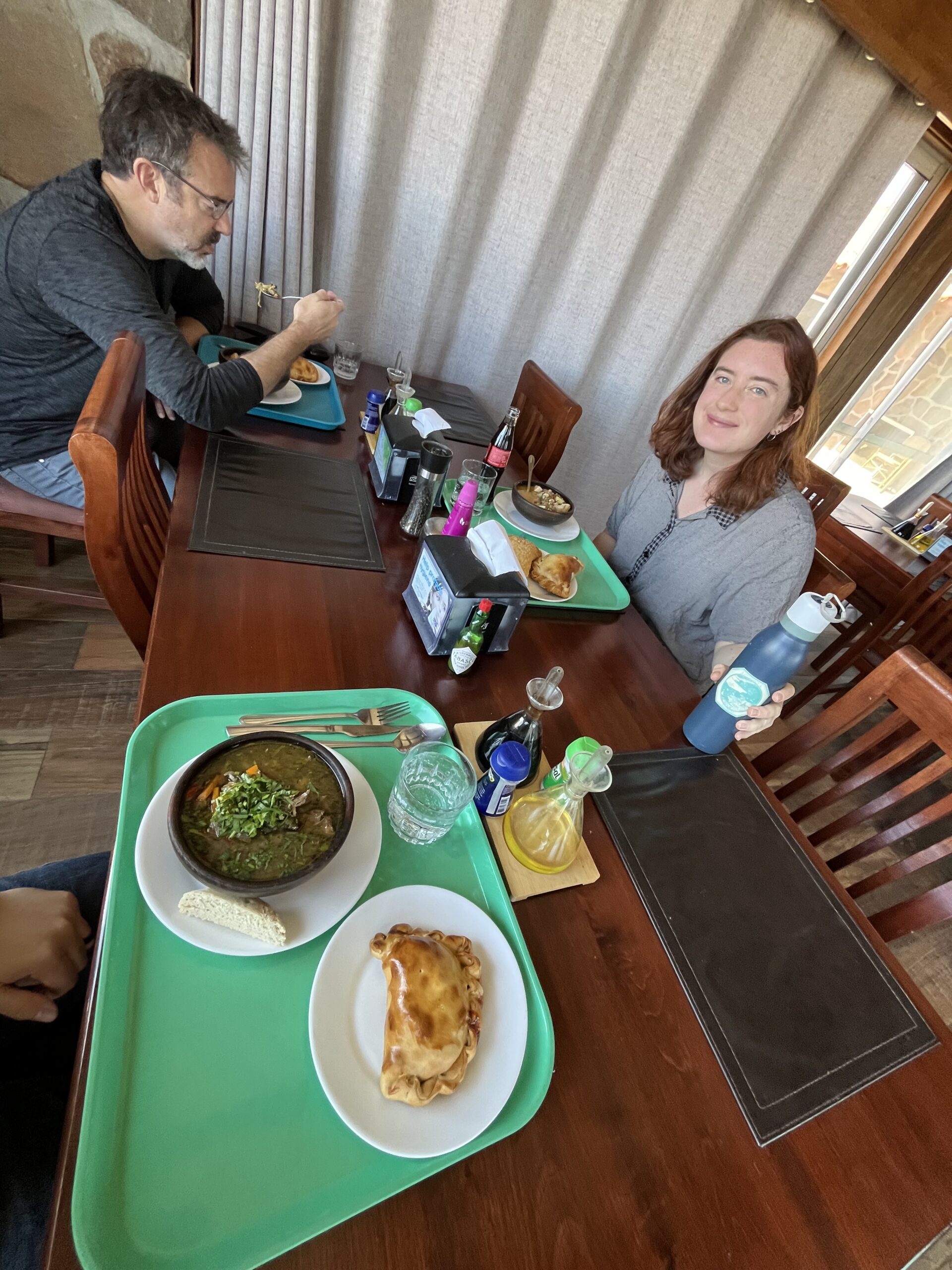
After empanada lunch, we were soon joined by our resident expert in polarimetry who was v quick and eager to get to work.
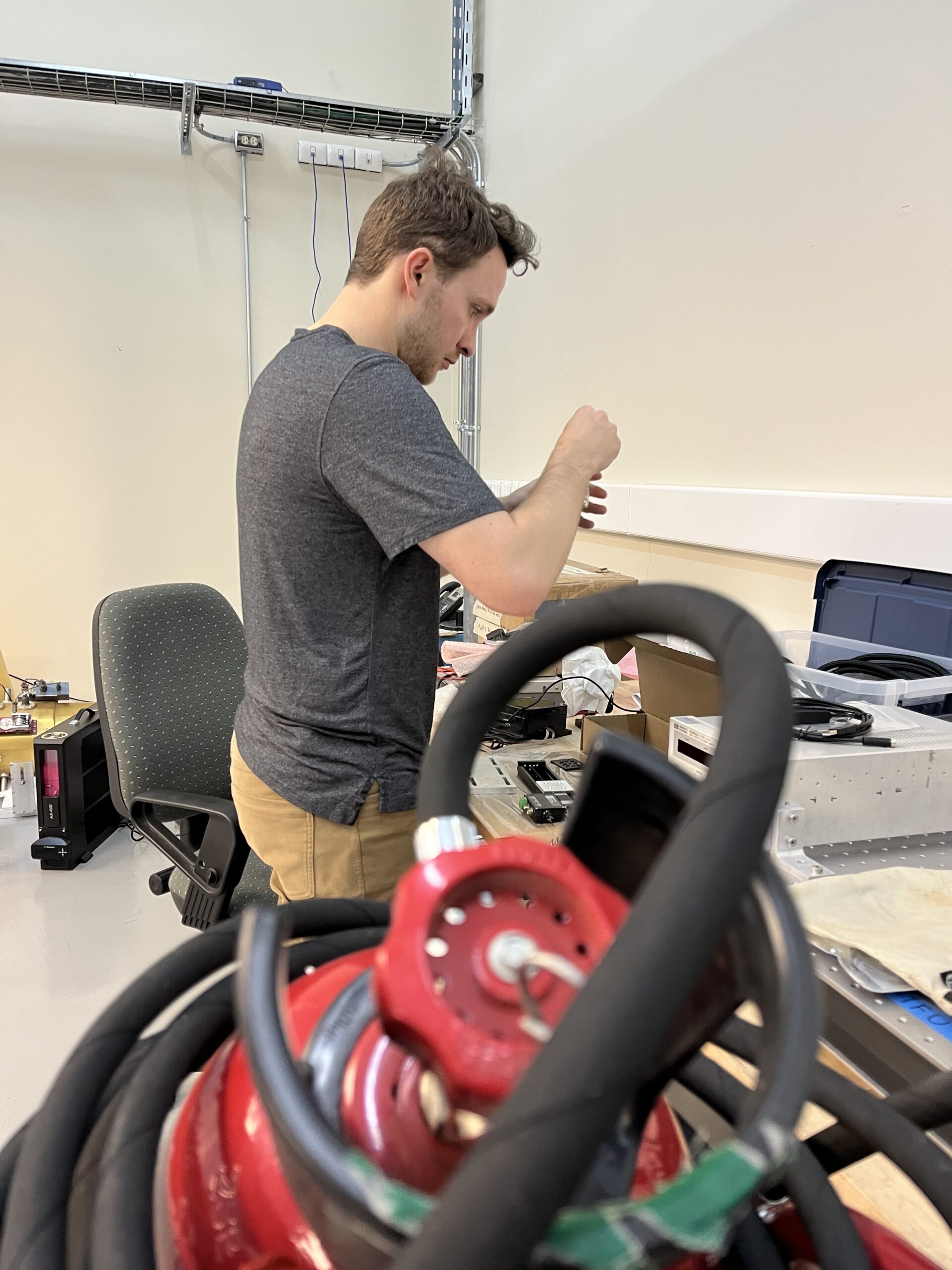
One of the big ticket items to address today was a mysterious and yet sudden increase in the measured humidity in the air that feed the DM enclosures within the instrument. Since humidity levels can invite corrosion (hence damage) in our MEMS DMs, it’s important that we investigated the quality of the air coming out of the clean room air supply. However, when we started scrutinizing the various components of the air feed system, we noticed exhausted desiccant and a compressed air drier full of water. Not great, but the drier can be drained and the desiccant replaced. However, when we drained the drier and re-connected the air tube back to the supply it filled back up almost immediately…! In fact, we disconnected the air hose at an intermediate point while it was still connected to the supply at the back wall and we had a full-on mini fire hose in our hands…!! This could have obviously led to a catastrophe of epic proportions, but disturbingly didn’t. It’s clear that our desiccant can work miracles or something.
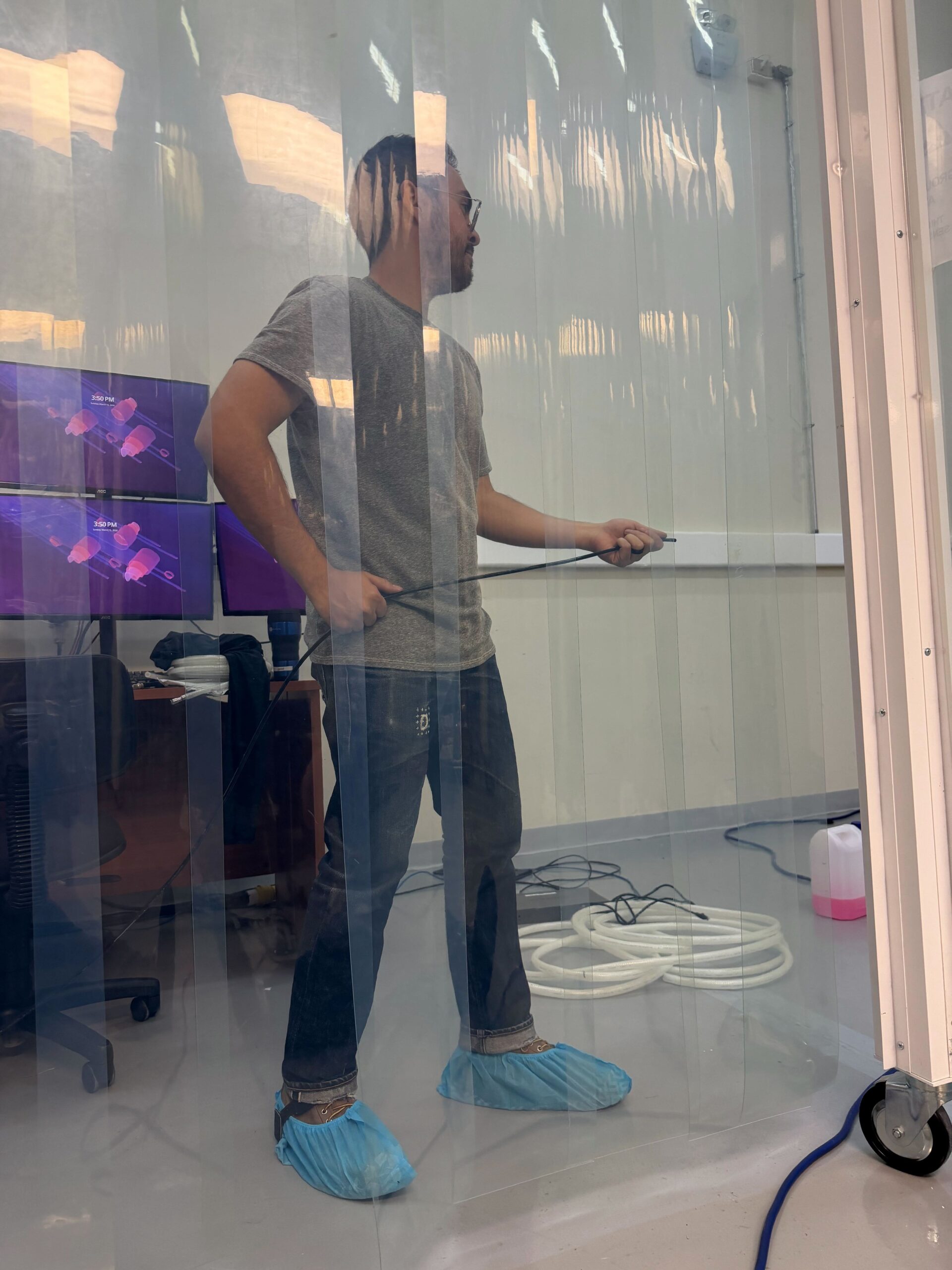
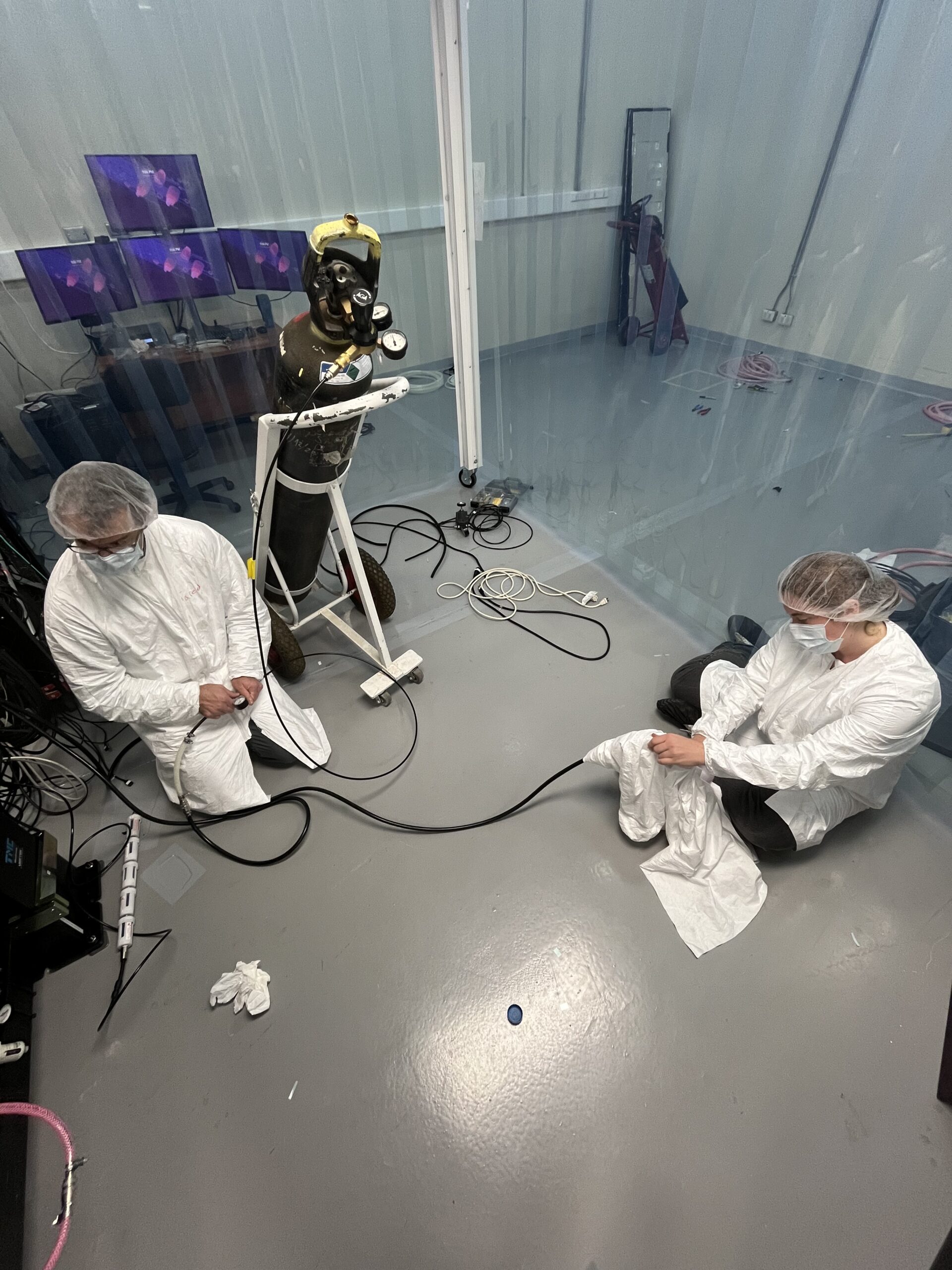
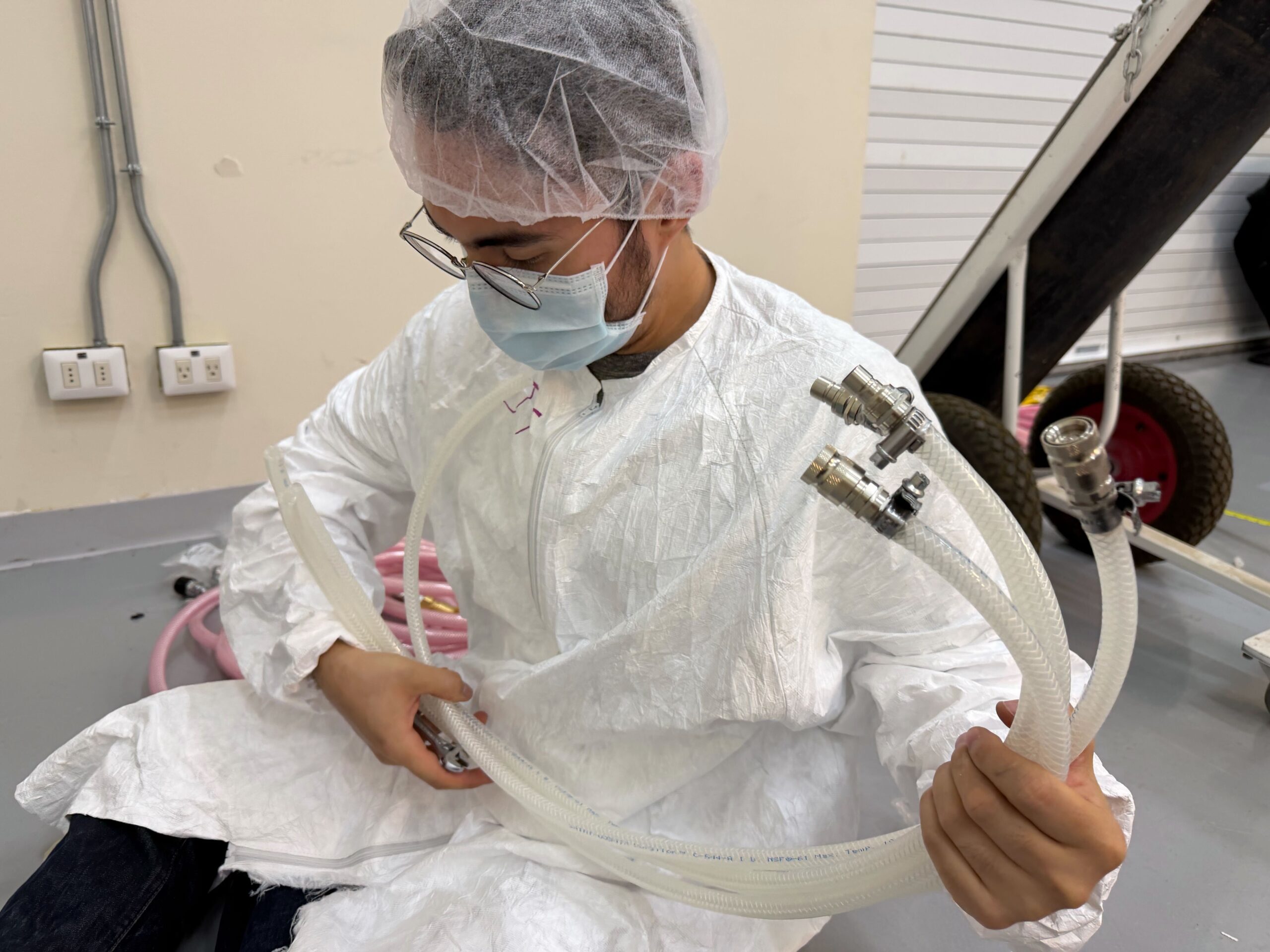
Obviously we’re a bit dead in the water while this issue gets addressed as we can’t operate the DMs or float the table at this point. To cap off the work day, we worked on installing liquid cooling for the Kinetix cameras in the instrument in an effort to address bench seeing caused by thermal gradients. This way, the heat generated by these fast-running cameras will get flushed out rather efficiently and released far from the telescope. This portion of the work day involved lots and lots of hosing, (back)flushing, and glycol which is always fun.
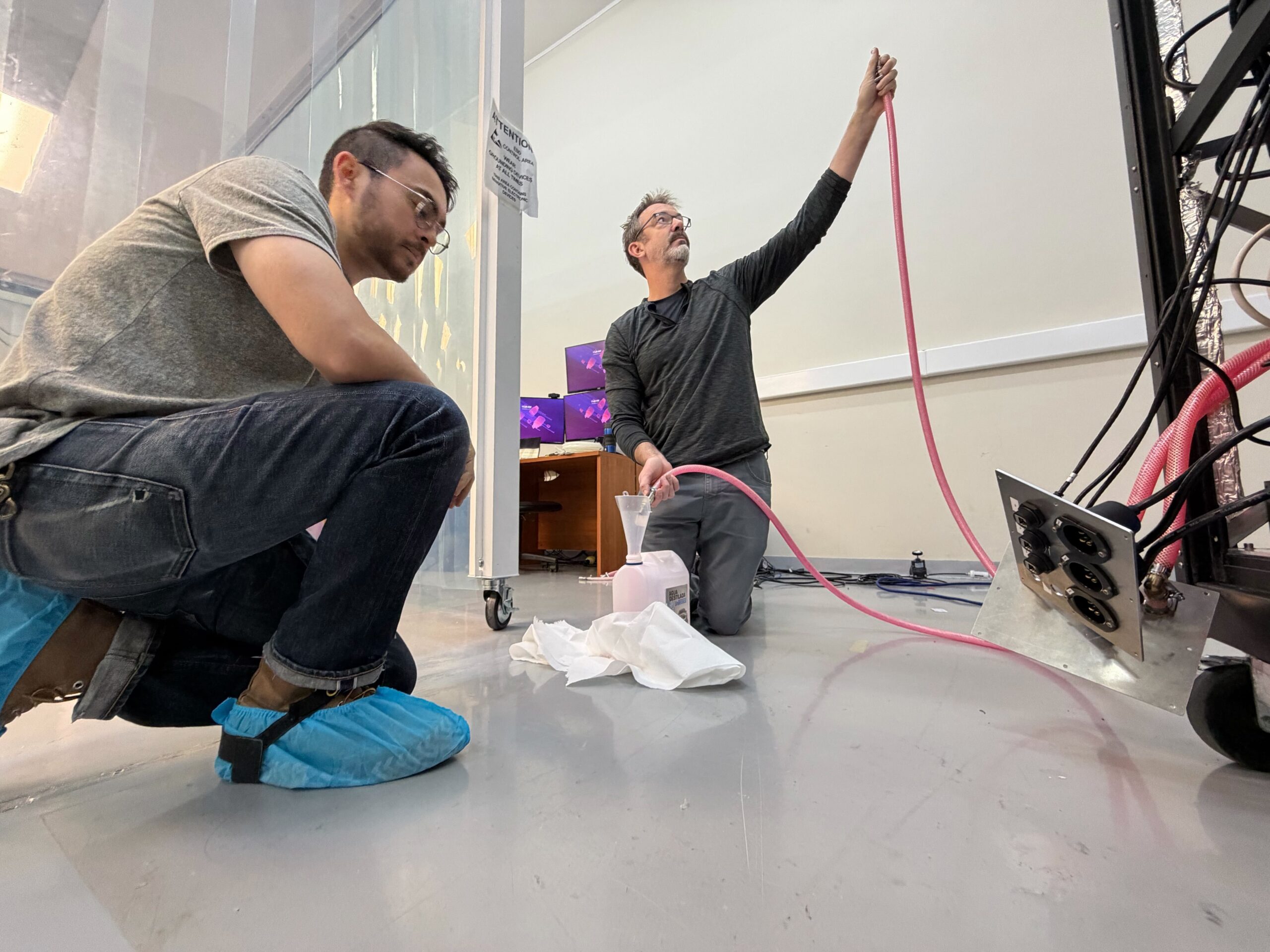
As such, the color of the day is:
really leak-proof glycol pink!
We ended the work day with final install of all our custom-made glycol hosing for the Kinetix cameras for FLOWFS and LLOWFS. After clamping it all down, we intitiated a leak test by pressurizing the (empty) glycol tubing with air to 12 PSI with the intent to see if the pressure decreases overnight. If it doesn’t, then we’re good to refill the instrument glycol system and move onto the next project! We’ll check on it in the morning, so stay tuned for tomorrow’s post to hear about the results.
Song of the Day
If arts and crafts with glycol tubing was a guitar riff…