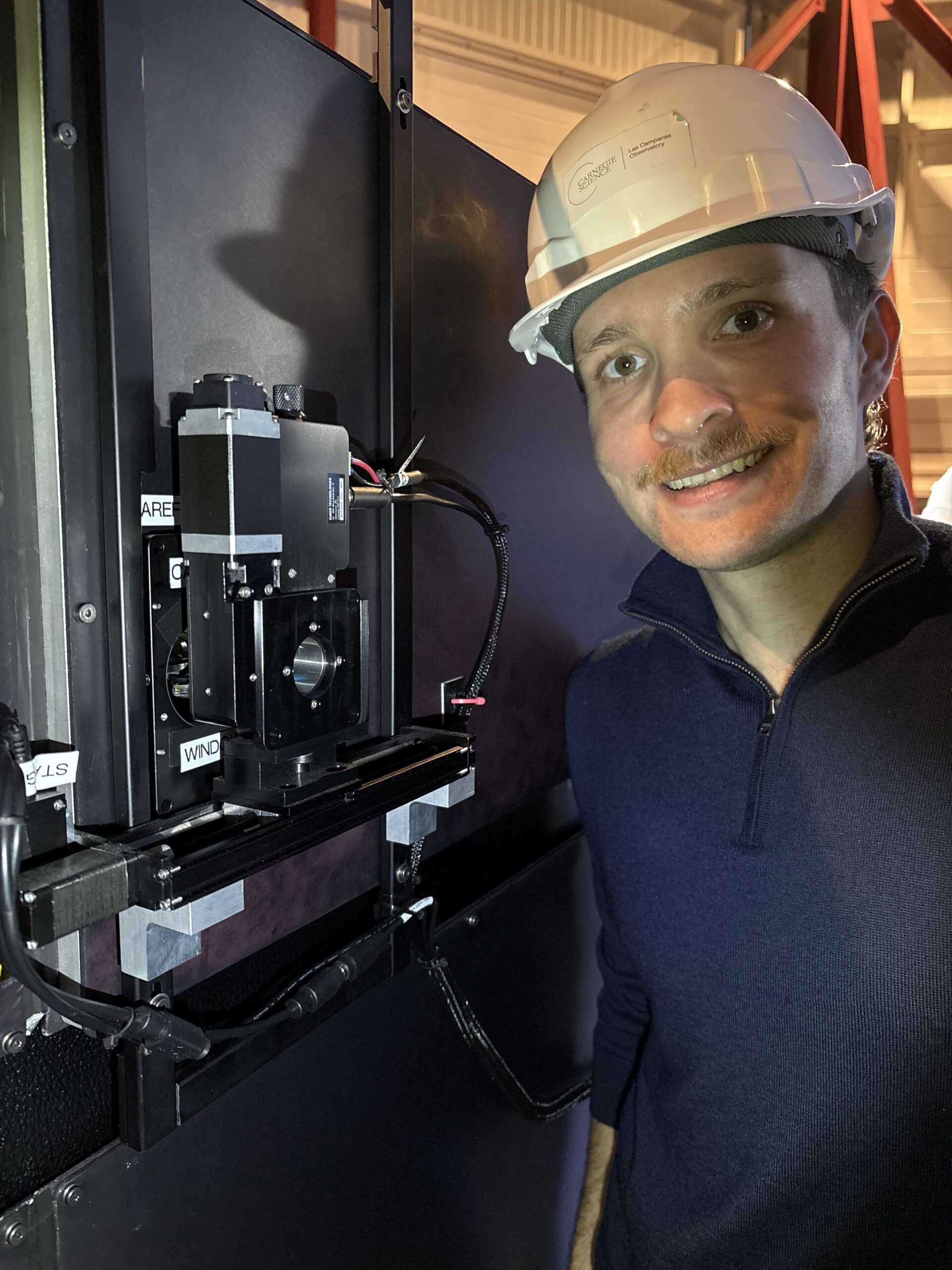
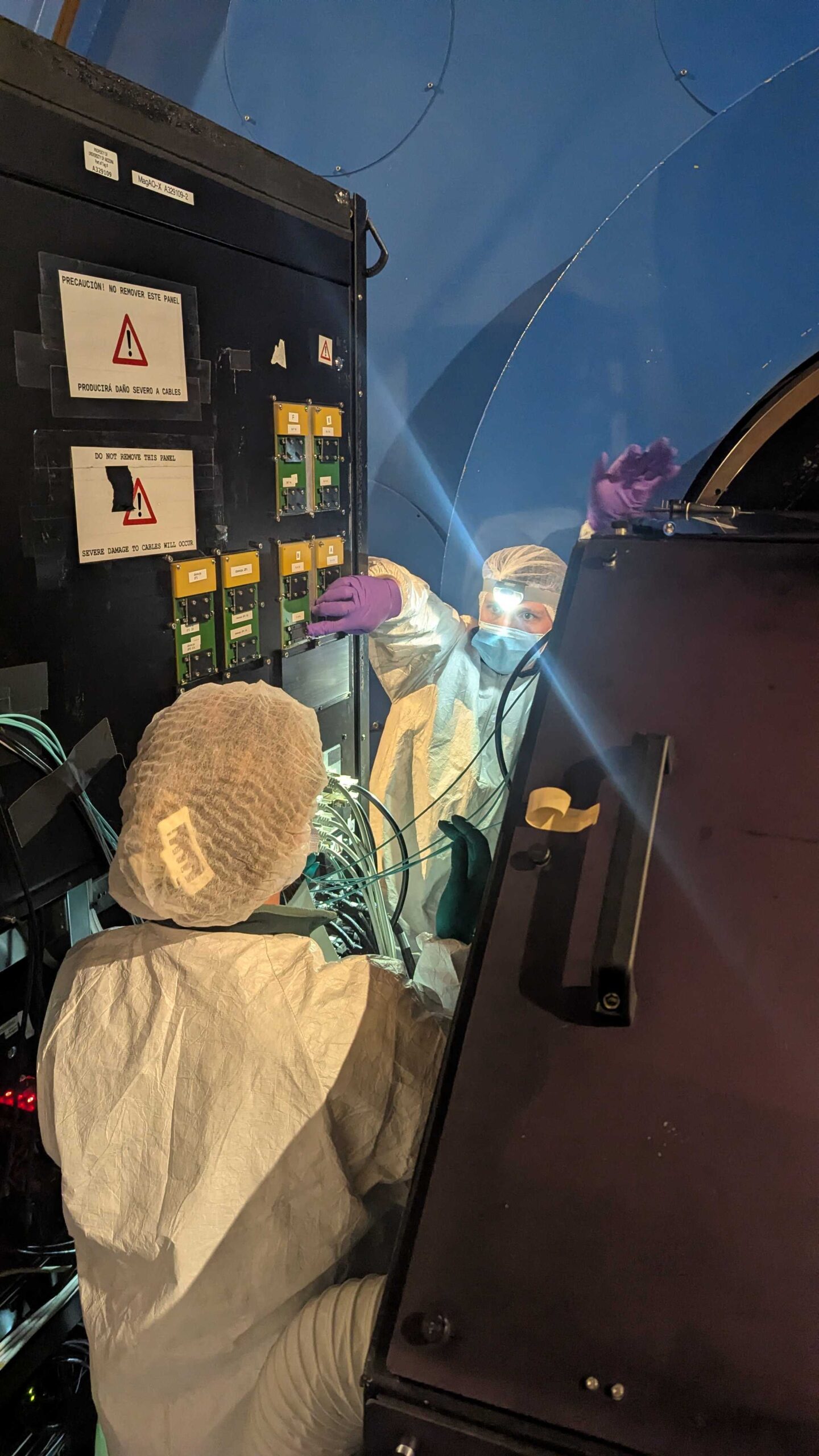
Today was installation day, so we went up to the telescope in the morning to move MagAO-X onto the platform. This time we installed the instrument on the East Nasmyth platform instead of the West, where it was during the previous run.
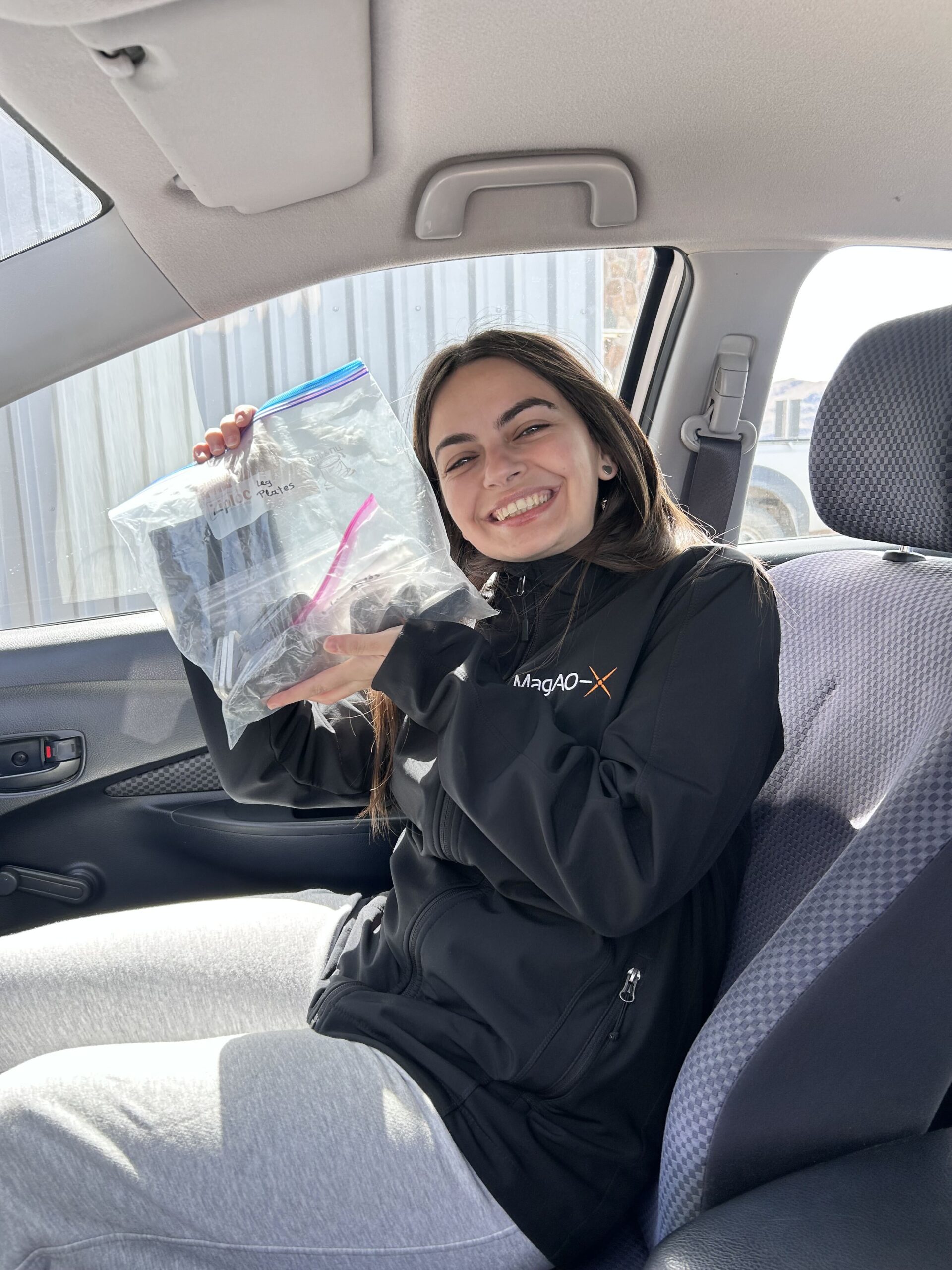
Installation went quite smoothly, and it looked like we would finish cabling before lunch. Unfortunately, the alignment plates had gone missing, and we spent half an hour looking for them. Parker checked the spot where they were hiding twice, but it took Elena to actually find them.
Usually when we dig a dark hole, we do it in the starlight so we can look for planets. The observatory crew spent part of the day digging a somewhat more conventional hole. The construction caused quite a bit of noise and vibrations, scaring away the vizzy’s.
During observing runs, astronomers also become meteorologists and the weather forecast was not looking great for the first three observing nights. Laird convinced us that this was an ideal time to look at Betelgeuse and that the clouds wouldn’t be a big issue. However, the humidity was too high to open the telescope for the first couple of hours, so our expectations for the night were pretty low.

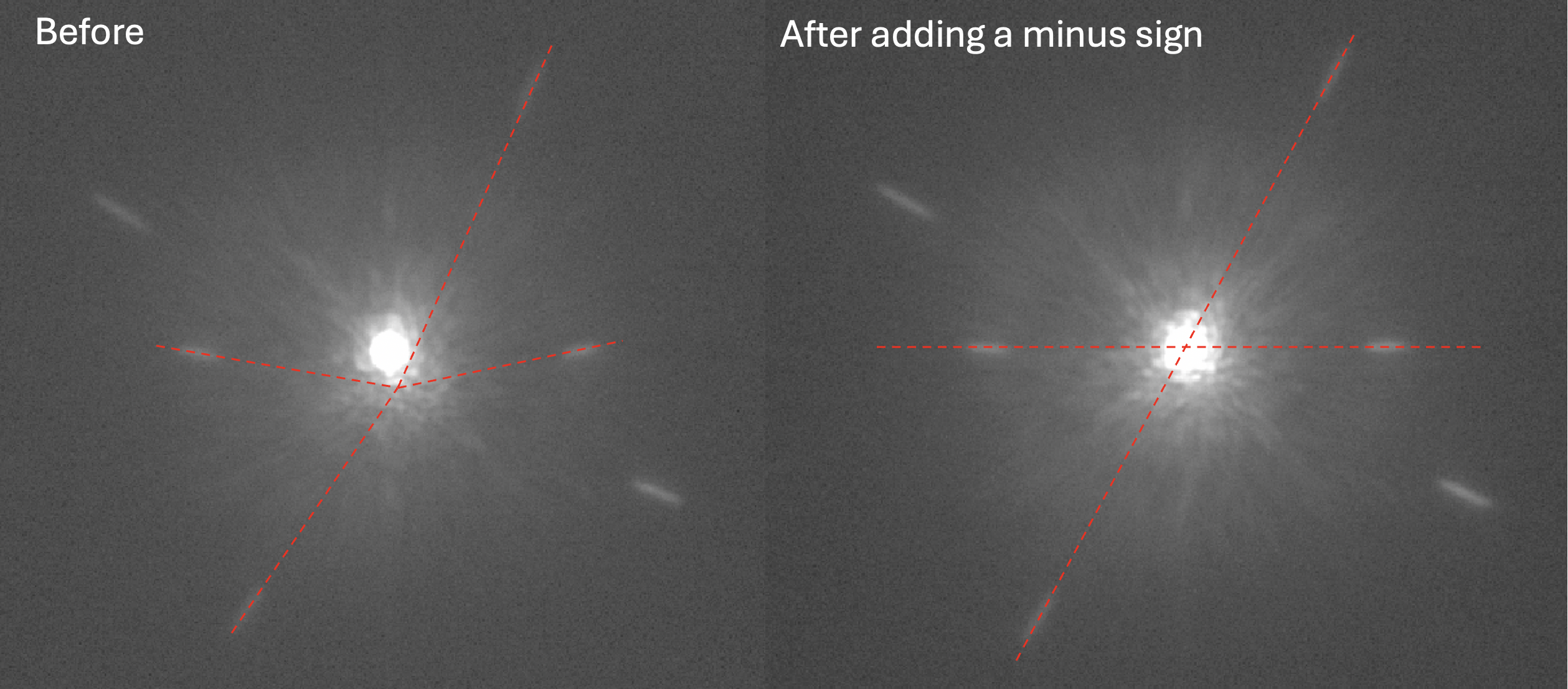
Luckily, the sky cleared up a bit and the humidity dropped so we could open up the telescope. We tried to acquire our first star, but we couldn’t get a good image on the acquisition camera. The solution? Add a minus sign.
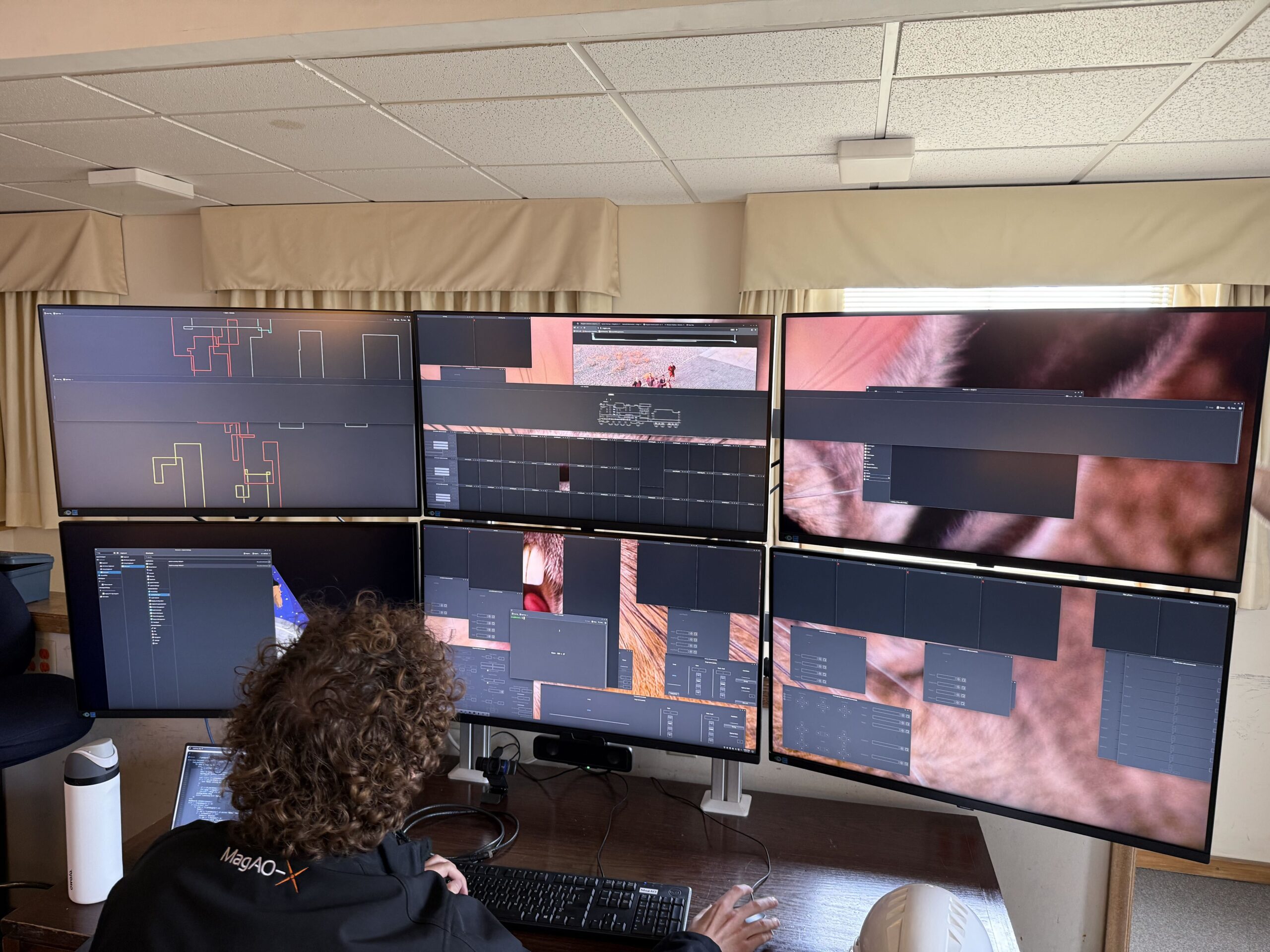
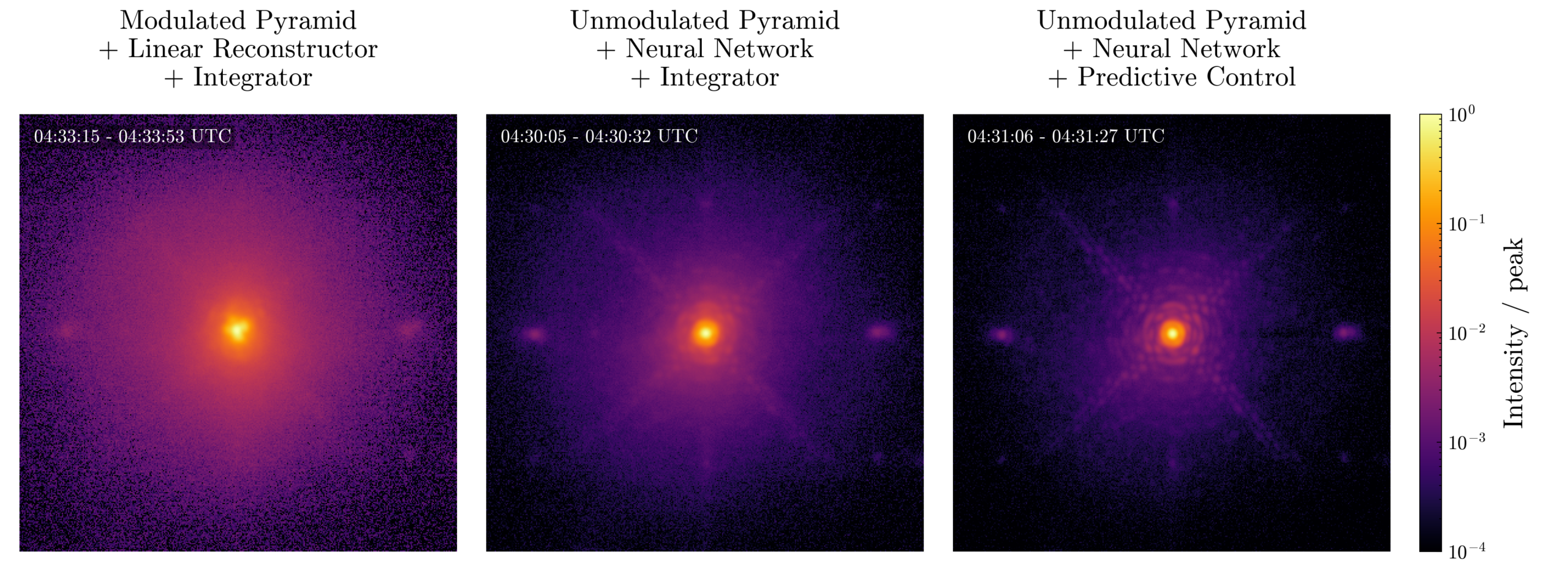
The seeing was pretty bad, so we figured we might as well try the unmodulated pyramid wavefront sensor with the neural-network reconstructor and see if things improved. And improve it did! We then switched on the predictive controller I’ve been working on. It uses reinforcement learning to try to predict what the atmosphere is about to do, so we can get the correction in a little earlier. That improved the image quality even further. We were very excited to see this happen on-sky!
Katie then worked on getting the atmospheric dispersion corrector running in closed loop, but it wasn’t quite cooperating. The fix? Another minus sign. That made two for the night, and we now had undispersed images from R through I band.
We spent the rest of the night watching Betelgeuse appear and disappear between patches of cloud. Eventually the clouds got close enough that we had to close the telescope. After a long day installing MagAO-X followed by our first night of observing, I was quite happy to go to bed.
So, next time something isn’t working at the telescope, try these two things:
1. Turn it off and on again.
2. Add a minus sign