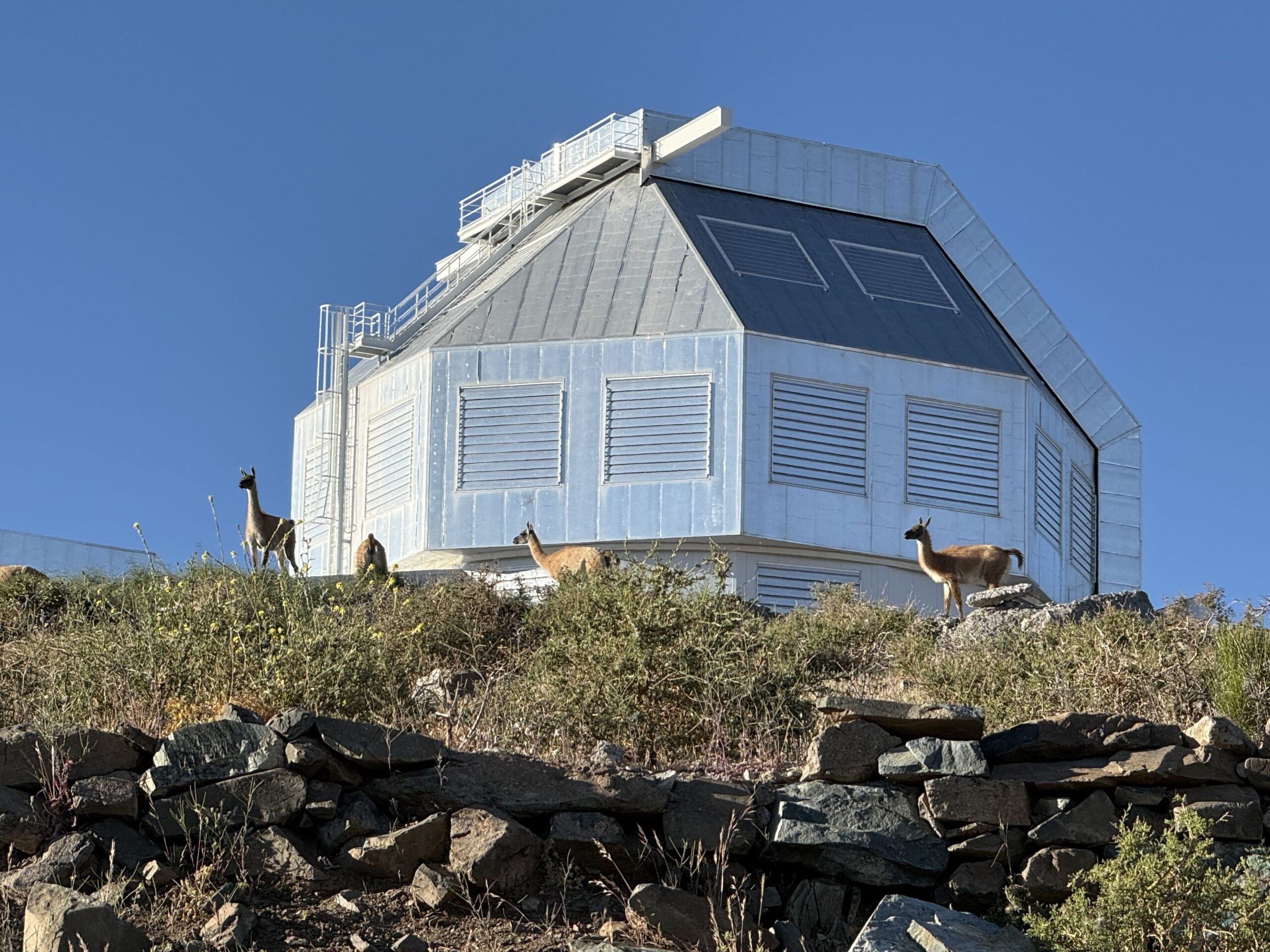
The afternoons have been wonderful the past couple of days, with clear skies, plenty of wildlife to spot and pleasant temperatures.
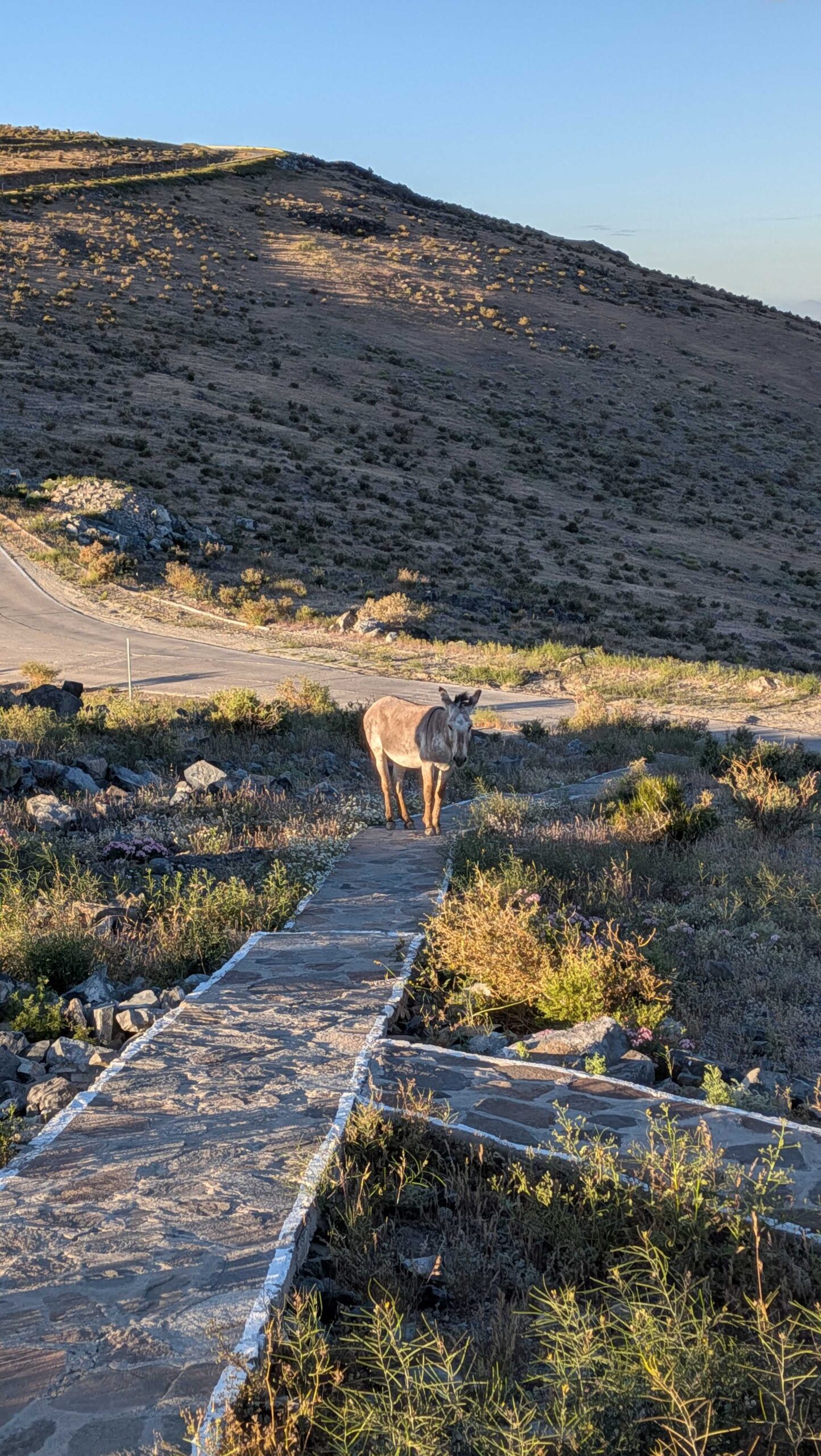
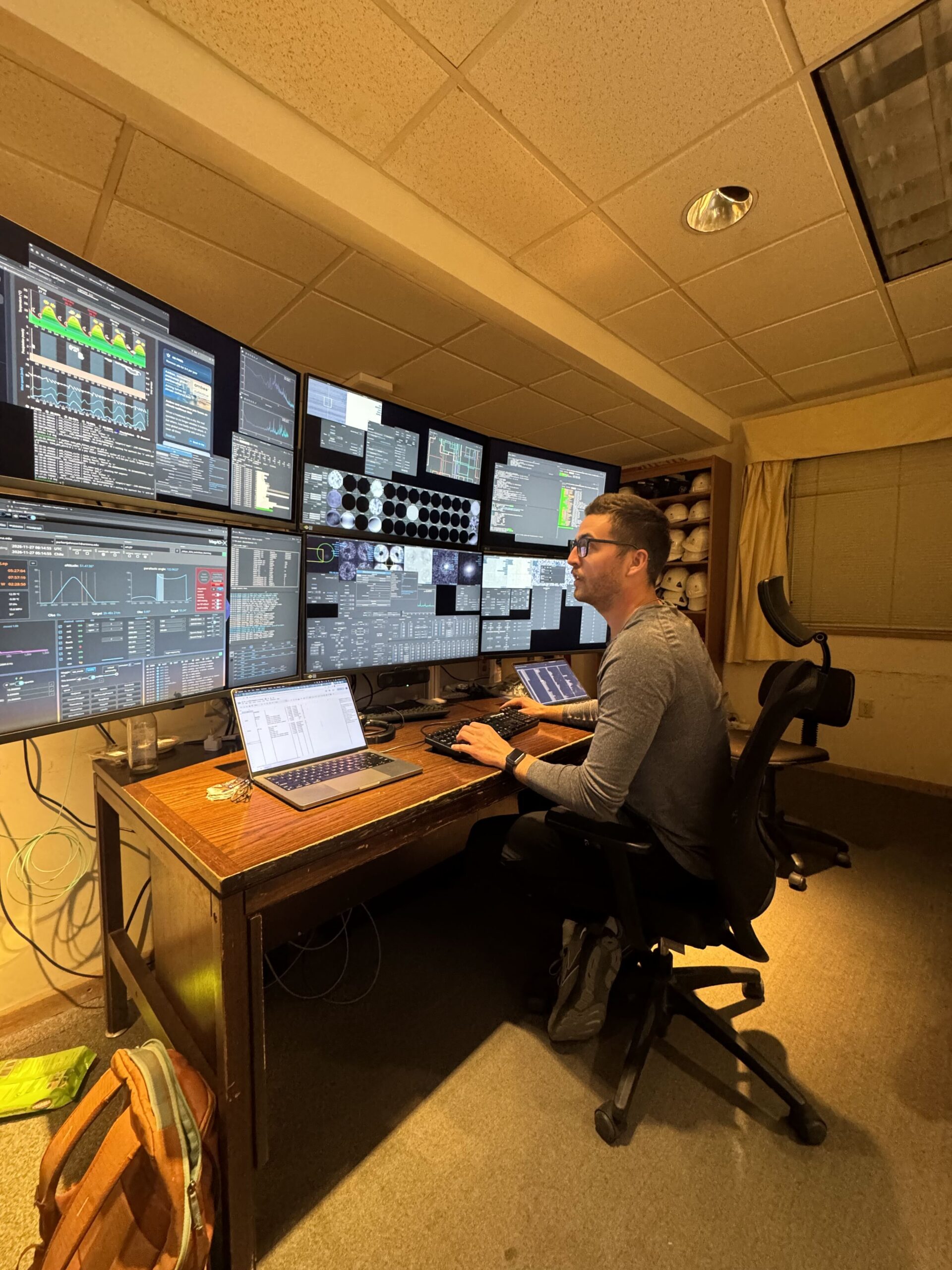
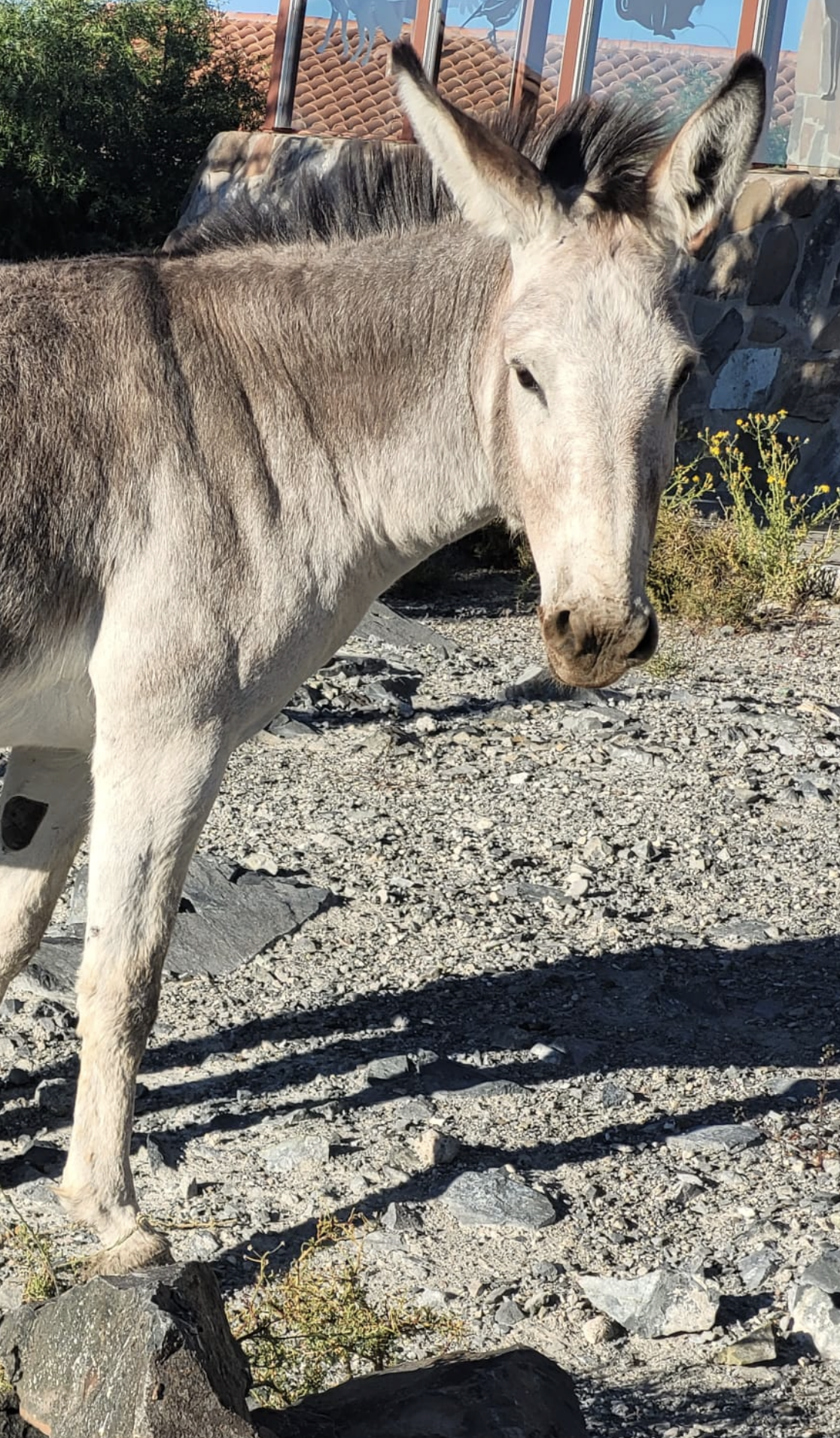
The day shift at Las Campanas making sure the telescope remains secureThis burro did not want us to go to the telescope
Some low clouds rolled in at the start of the night, so we had to wait a bit before opening the telescope. Miles was up first for polarimetry, but his calibrator star was close to the clouds and the seeing wasn’t great.
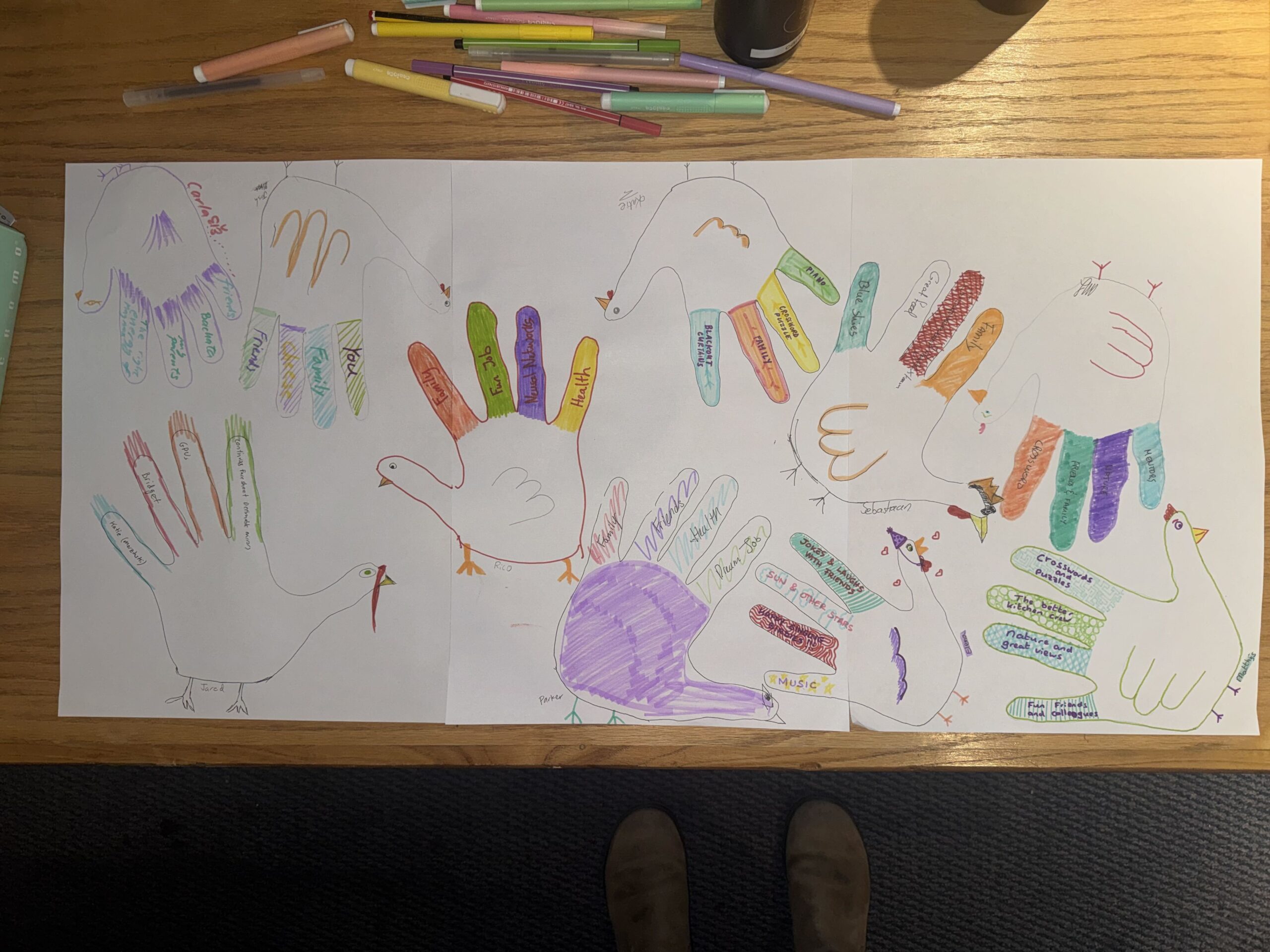
That gave us some time to make Thanksgiving hand turkeys. I’d never made one before. You trace your hand, turn the thumb into the turkey’s head, and write something you’re thankful for on each feather. Family, friends, crosswords and good food came up a lot. Someone put down blackout curtains, which I think is a very good answer after a week of trying to sleep during the day. Someone else managed to fit “continuous face sheet deformable mirrors” onto a single feather.
Our Thanksgiving hand turkeys
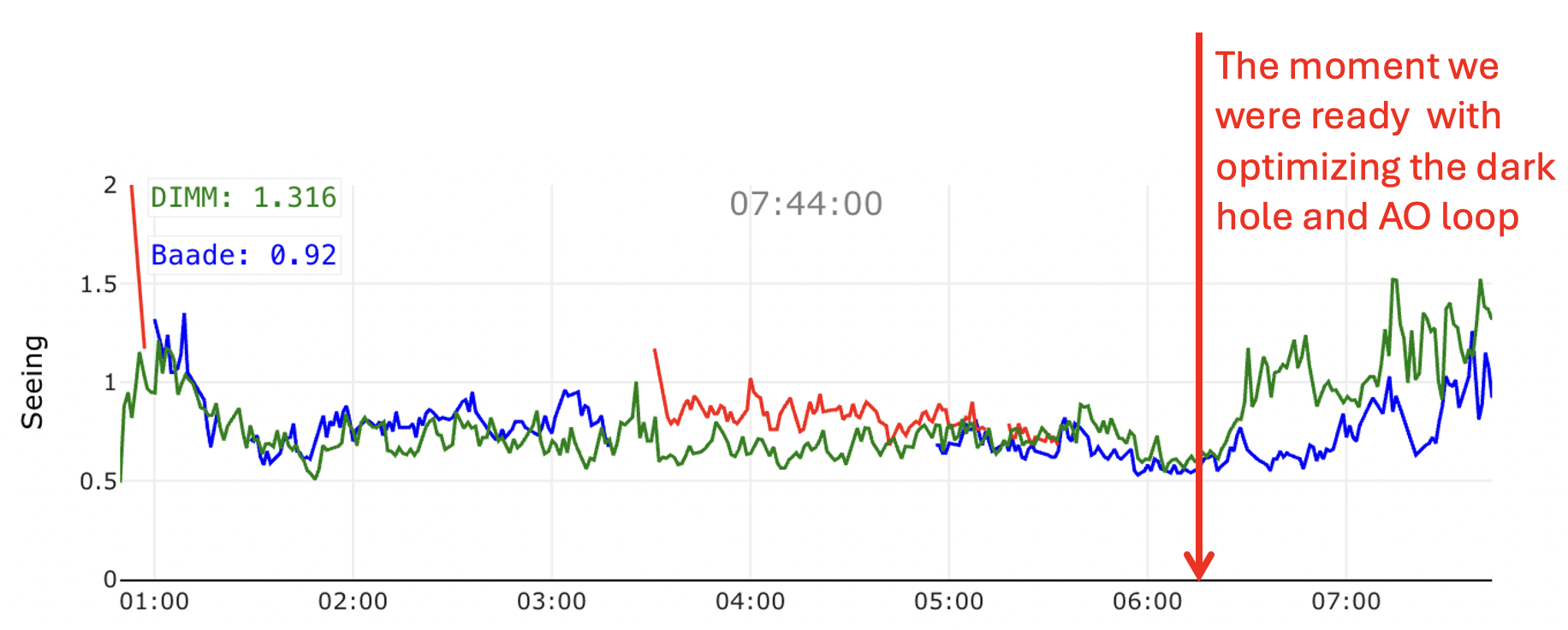
Later, Sebastiaan and I spent a bit longer than planned tuning the dark hole and the adaptive optics loop for AF Lep. The seeing was decent while we were tuning. As soon as we were happy with the setup, the atmosphere decided it had done enough for Thanksgiving and the seeing jumped all over the place.
By the end of the night, it was just Katie and Parker vibing, acc-ing, and offloading on the instrument while the rest of us had meetings or started switching back to a daytime schedule. Both the offloading and Parker’s predictive control using the accelerometers worked really well on-sky!
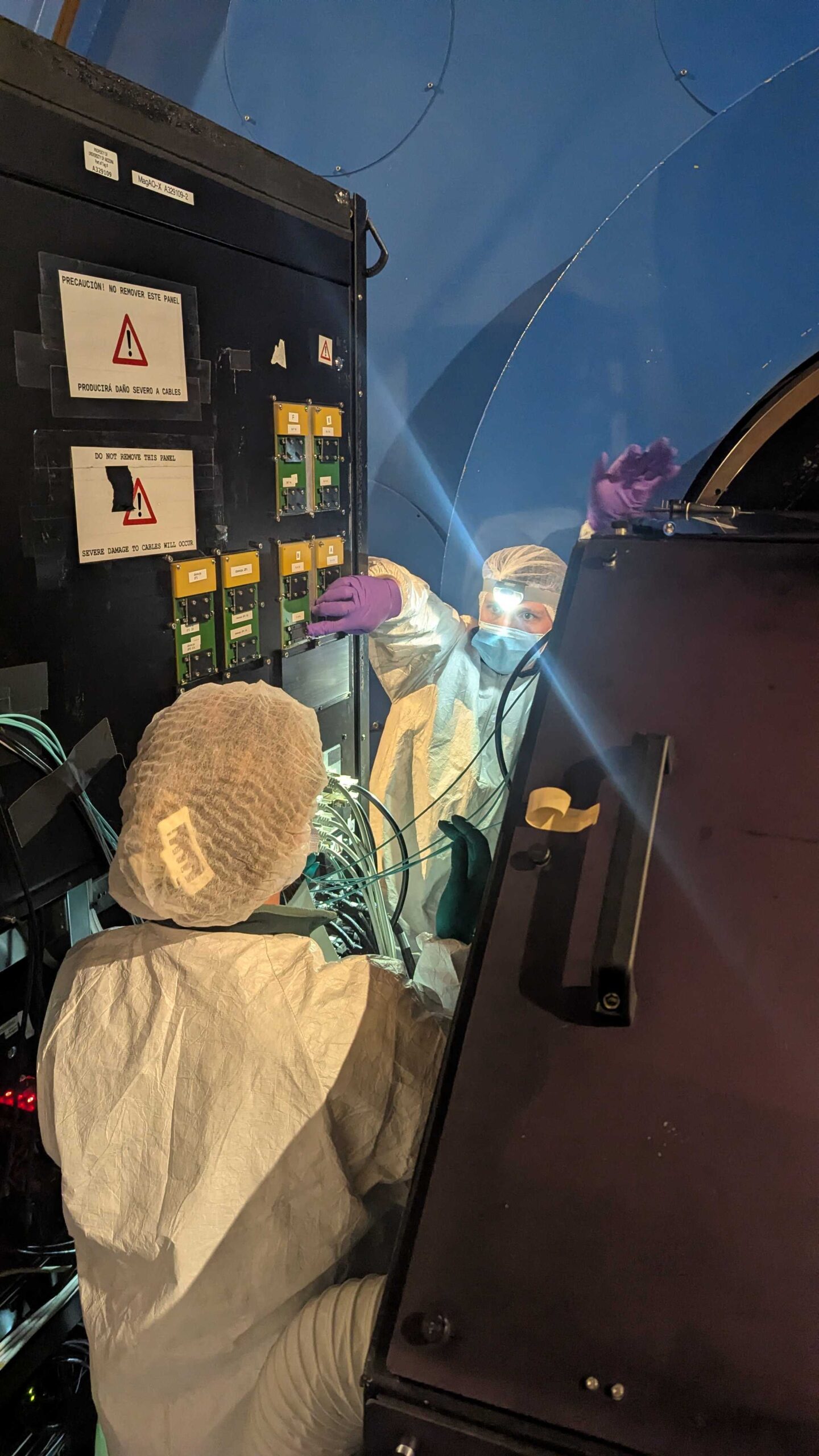
Today was installation day, so we went up to the telescope in the morning to move MagAO-X onto the platform. This time we installed the instrument on the East Nasmyth platform instead of the West, where it was during the previous run.
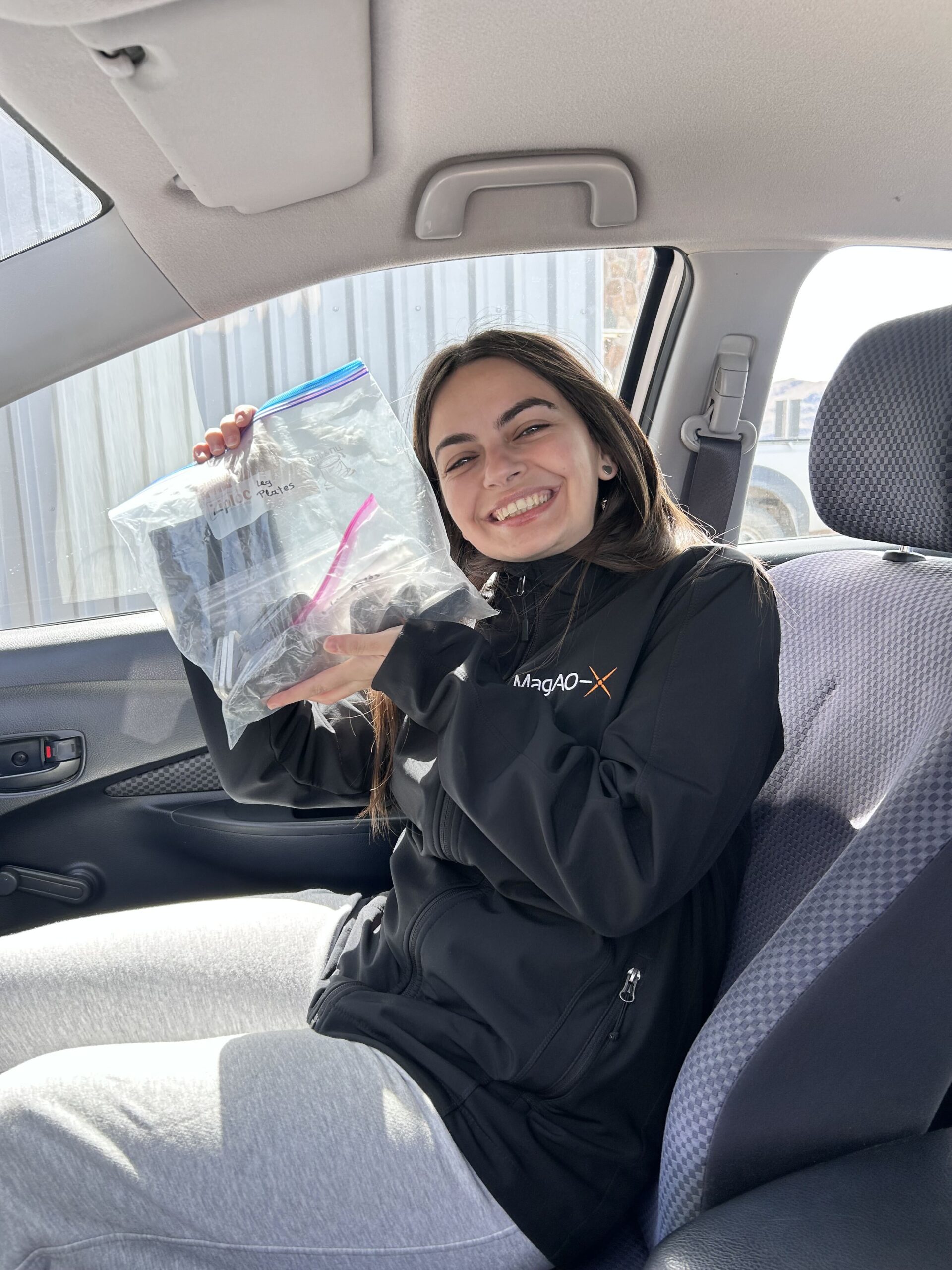
Installation went quite smoothly, and it looked like we would finish cabling before lunch. Unfortunately, the alignment plates had gone missing, and we spent half an hour looking for them. Parker checked the spot where they were hiding twice, but it took Elena to actually find them.
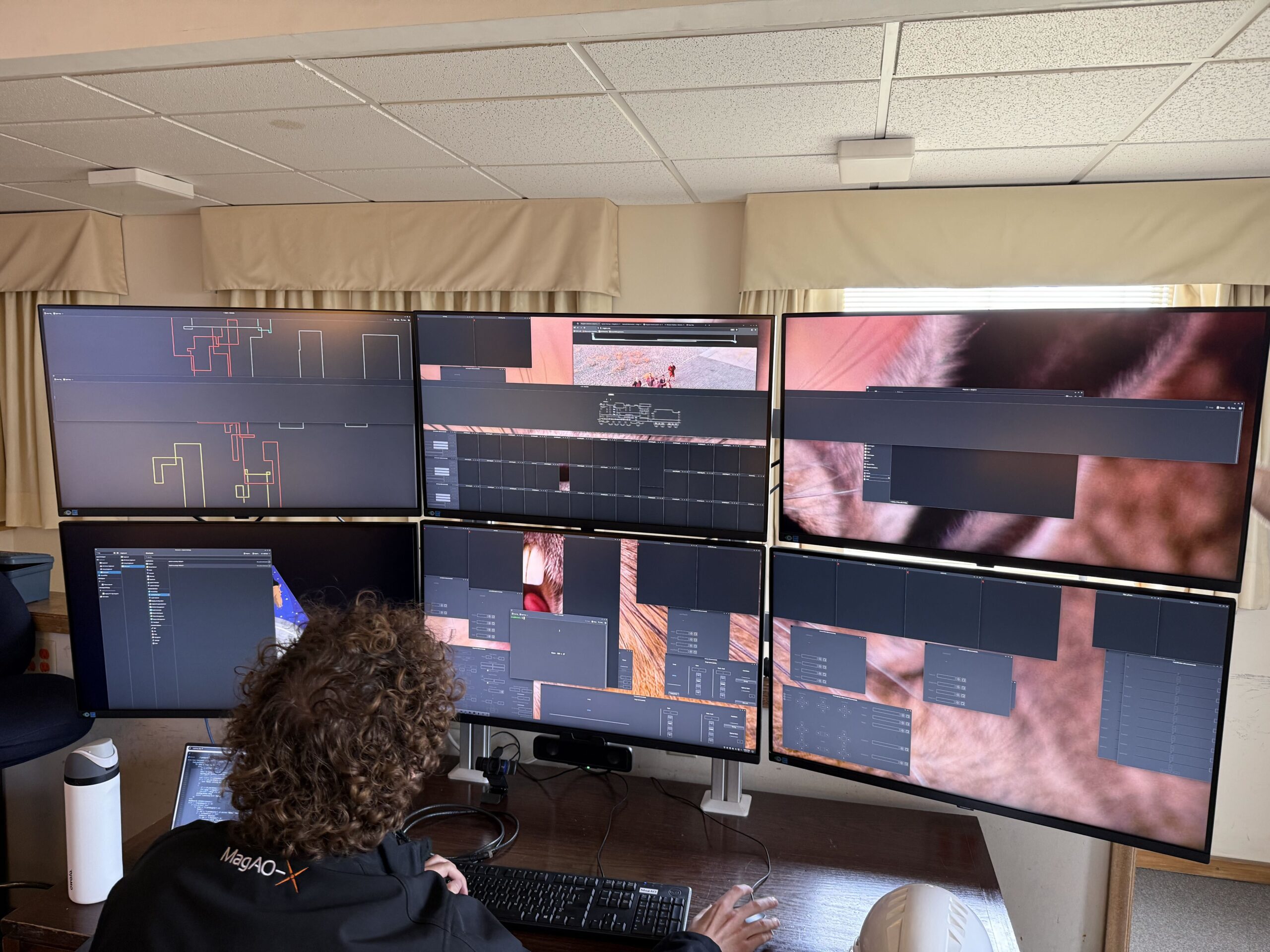
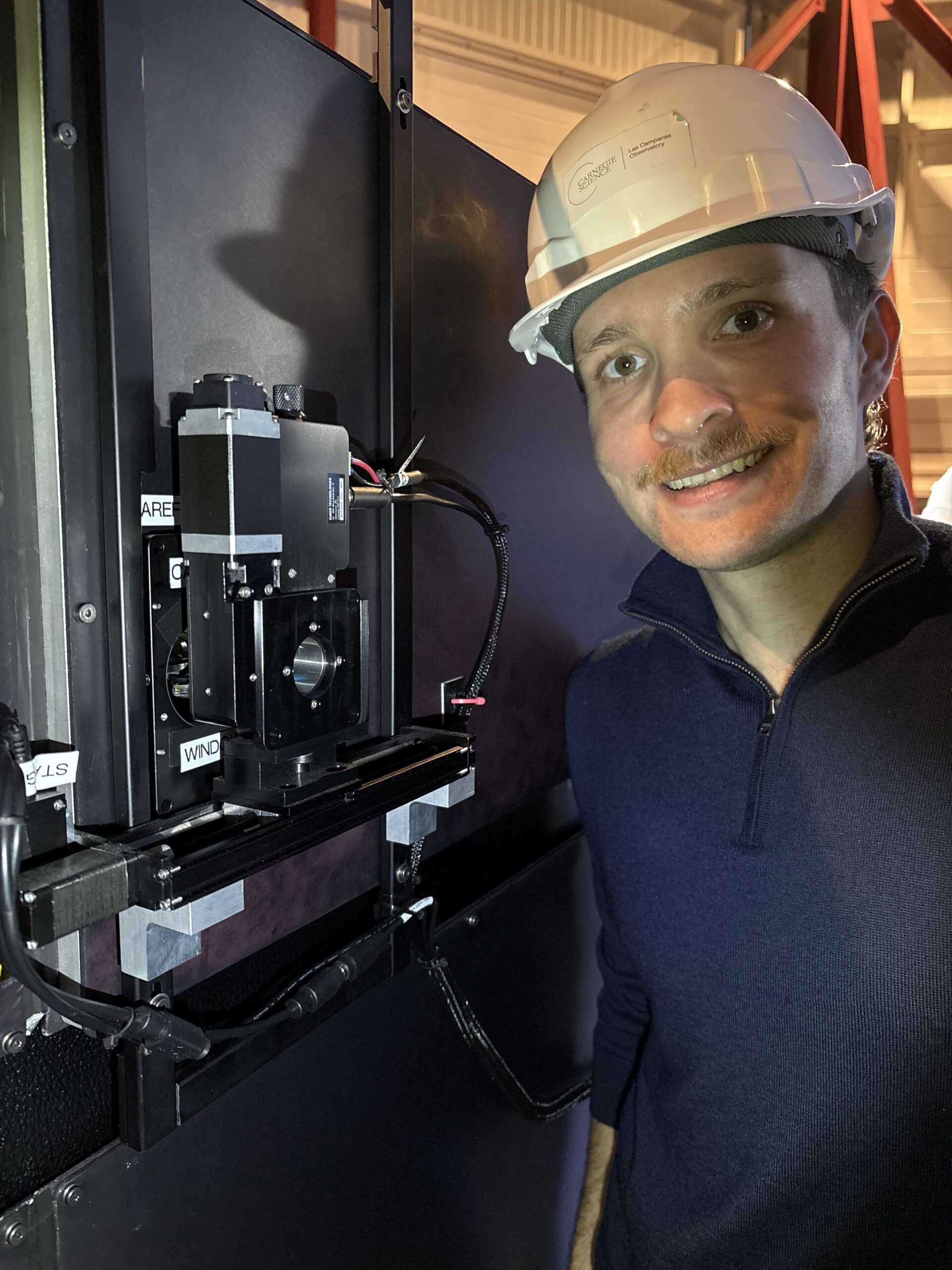
Elena proudly presenting the lost alignment plates.While some of us were lifting the instrument, Matthijs had fun optimizing and automating the GUI layout on the control computer.Miles with his waveplate, now mounted at the entrance window.Miles and Katie cabling the deformable mirrors.
Usually when we dig a dark hole, we do it in the starlight so we can look for planets. The observatory crew spent part of the day digging a somewhat more conventional hole. The construction caused quite a bit of noise and vibrations, scaring away the vizzy’s.
Diggy diggy hole
During observing runs, astronomers also become meteorologists and the weather forecast was not looking great for the first three observing nights. Laird convinced us that this was an ideal time to look at Betelgeuse and that the clouds wouldn’t be a big issue. However, the humidity was too high to open the telescope for the first couple of hours, so our expectations for the night were pretty low.
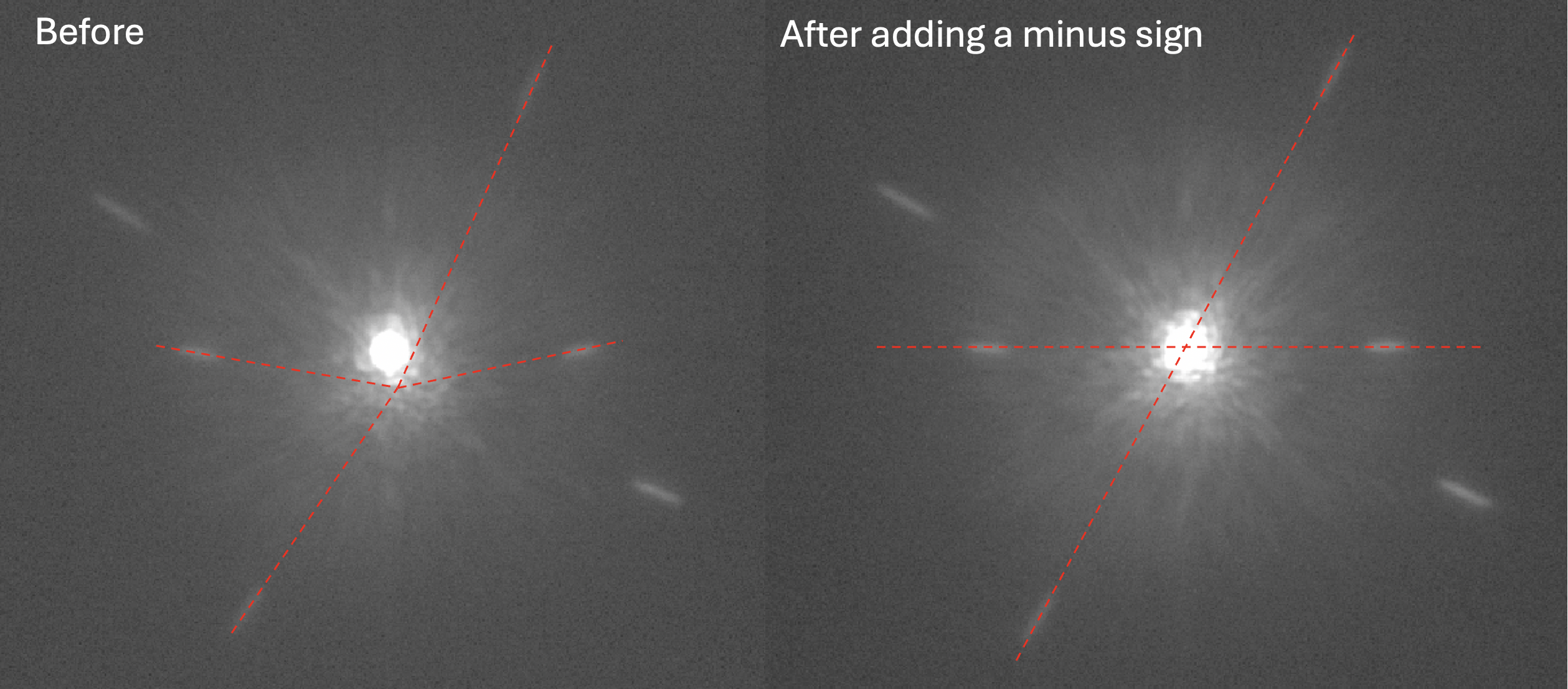
Luckily, the sky cleared up a bit and the humidity dropped so we could open up the telescope. We tried to acquire our first star, but we couldn’t get a good image on the acquisition camera. The solution? Add a minus sign.
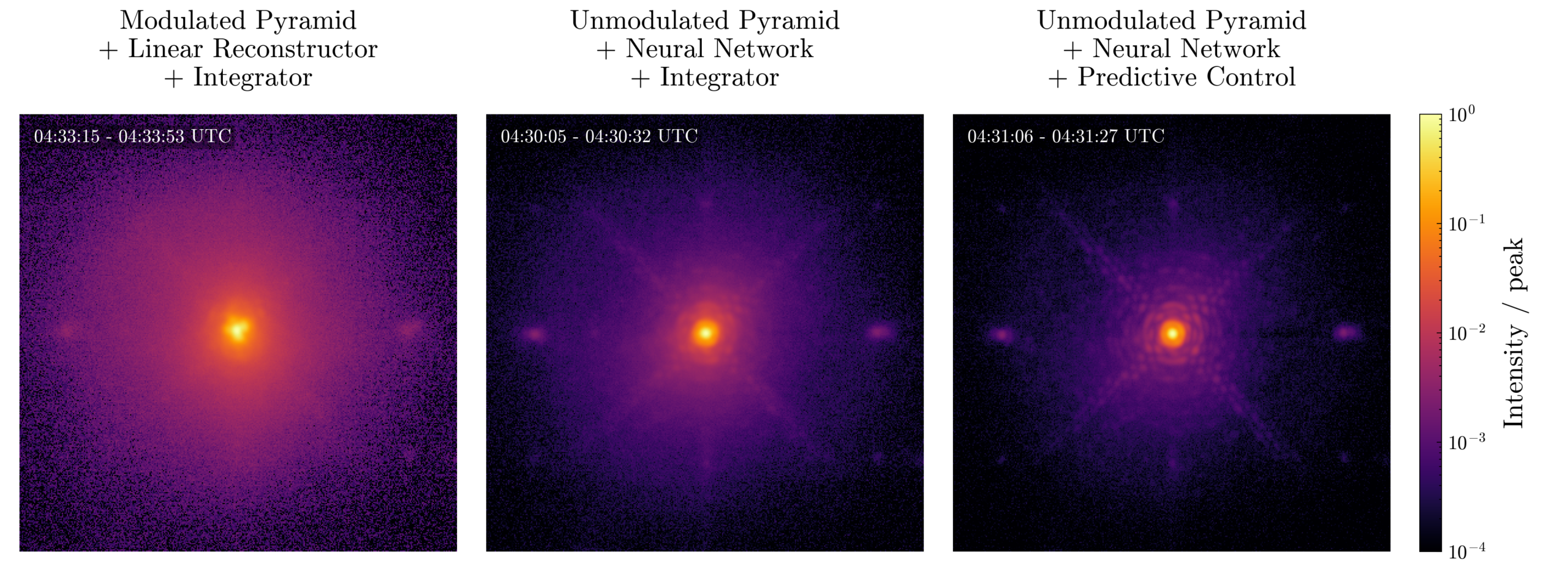
The seeing was pretty bad, so we figured we might as well try the unmodulated pyramid wavefront sensor with the neural-network reconstructor and see if things improved. And improve it did! We then switched on the predictive controller I’ve been working on. It uses reinforcement learning to try to predict what the atmosphere is about to do, so we can get the correction in a little earlier. That improved the image quality even further. We were very excited to see this happen on-sky!
We saw a huge improvement in image quality using neural networks for reconstruction and predictive control.
Katie then worked on getting the atmospheric dispersion corrector running in closed loop, but it wasn’t quite cooperating. The fix? Another minus sign. That made two for the night, and we now had undispersed images from R through I band.
We spent the rest of the night watching Betelgeuse appear and disappear between patches of cloud. Eventually the clouds got close enough that we had to close the telescope. After a long day installing MagAO-X followed by our first night of observing, I was quite happy to go to bed.
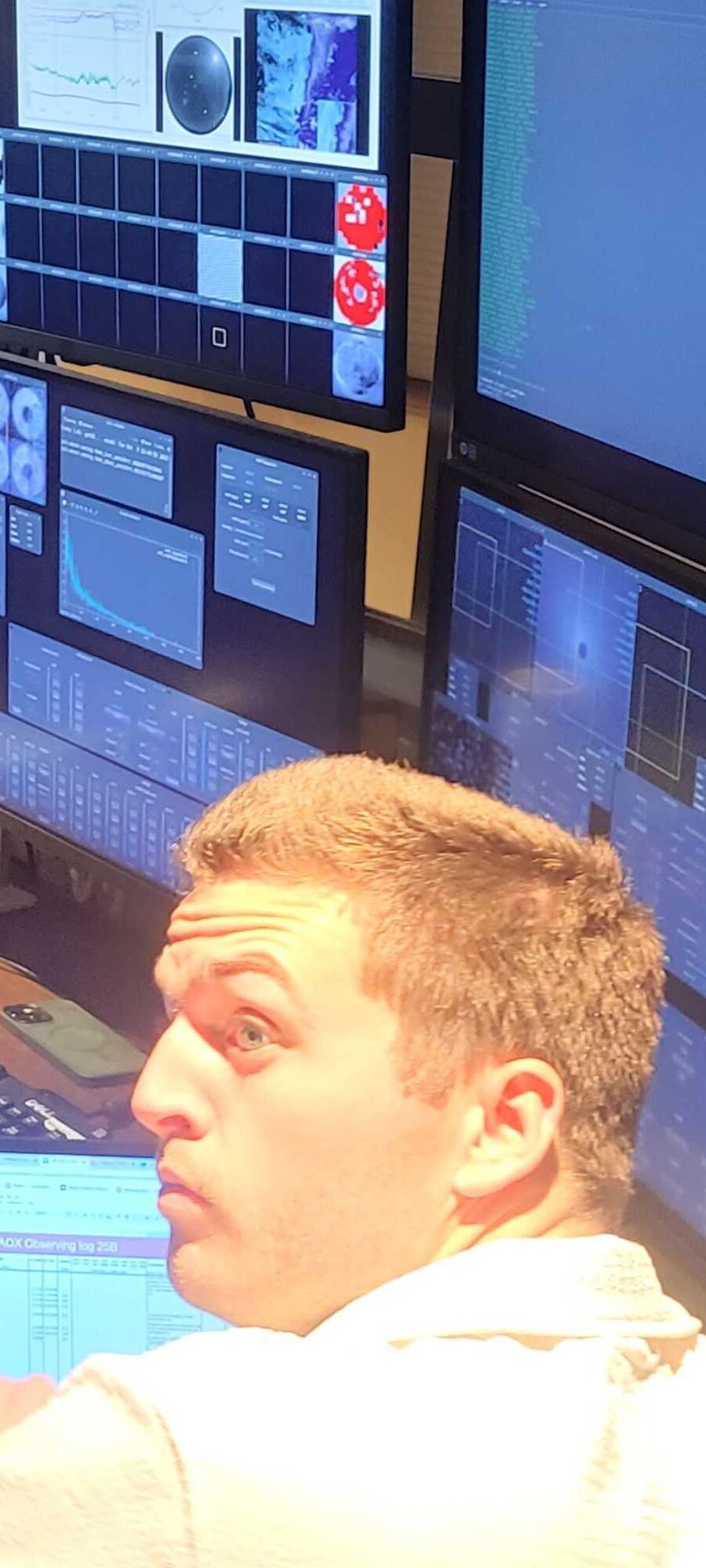
Observing the eye of Sauron while acquiring on Betelgeuse (yes, scintillation is a thing)
So, next time something isn’t working at the telescope, try these two things: 1. Turn it off and on again. 2. Add a minus sign
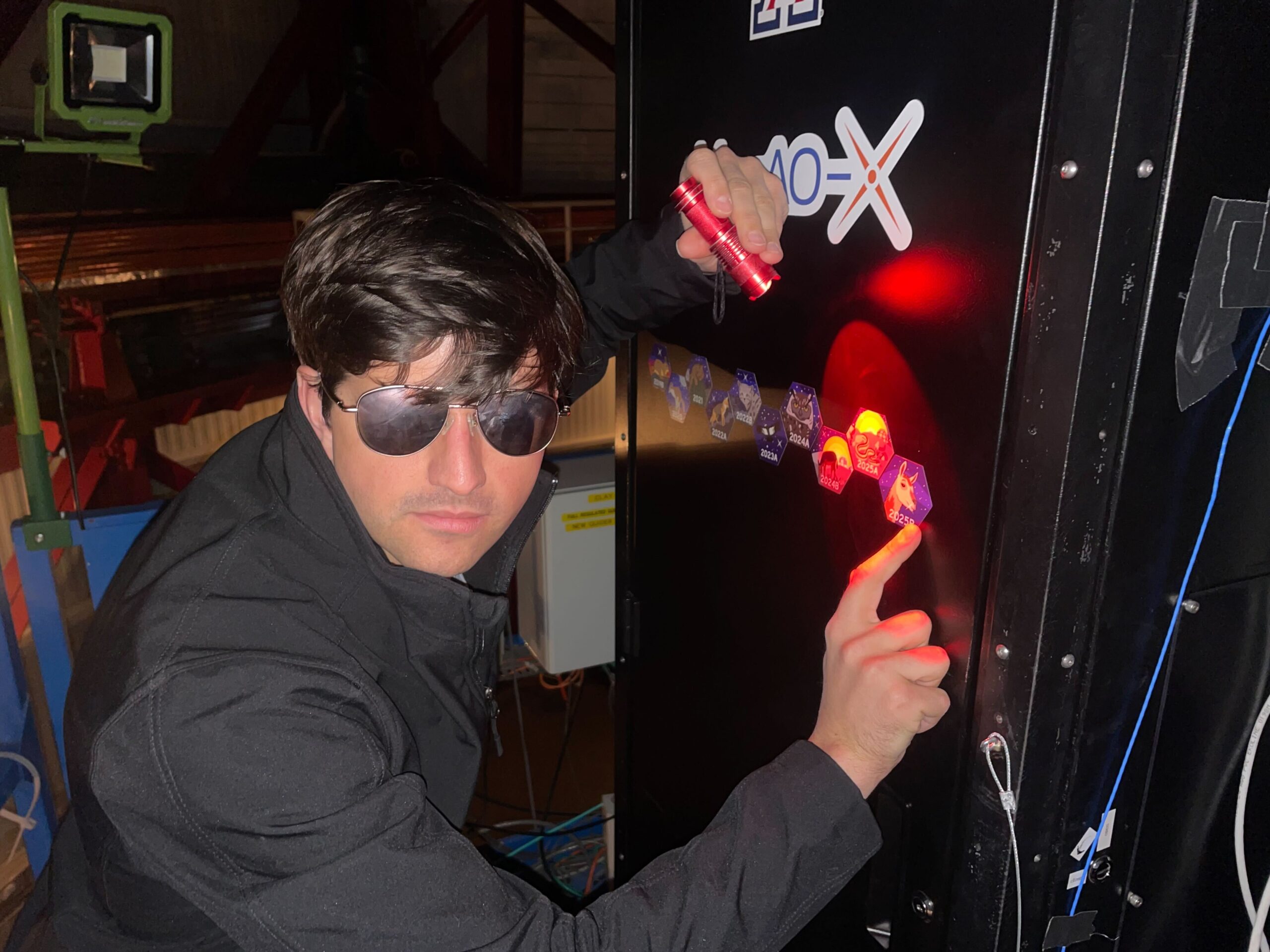
Today it is my (Rico) turn to write the blog. It has been great fun joining the observing run this past week, and I am impressed with the team. It feels a bit like being in the cockpit of a starship: everyone instantly knows what the 100+ buttons do on the six monitors controlling the instrument. It’s an organized chaos I’m quickly growing to love. However, since I have arrived, the seeing deities have not been in the spirit of giving. To appease the seeing gods special agent Joseph finished his all important mission: The Enstickening. With the sticker in its proper place, we optimistically set up the instrument for this nights observations.
Special agent Joseph finishing The Enstickening.
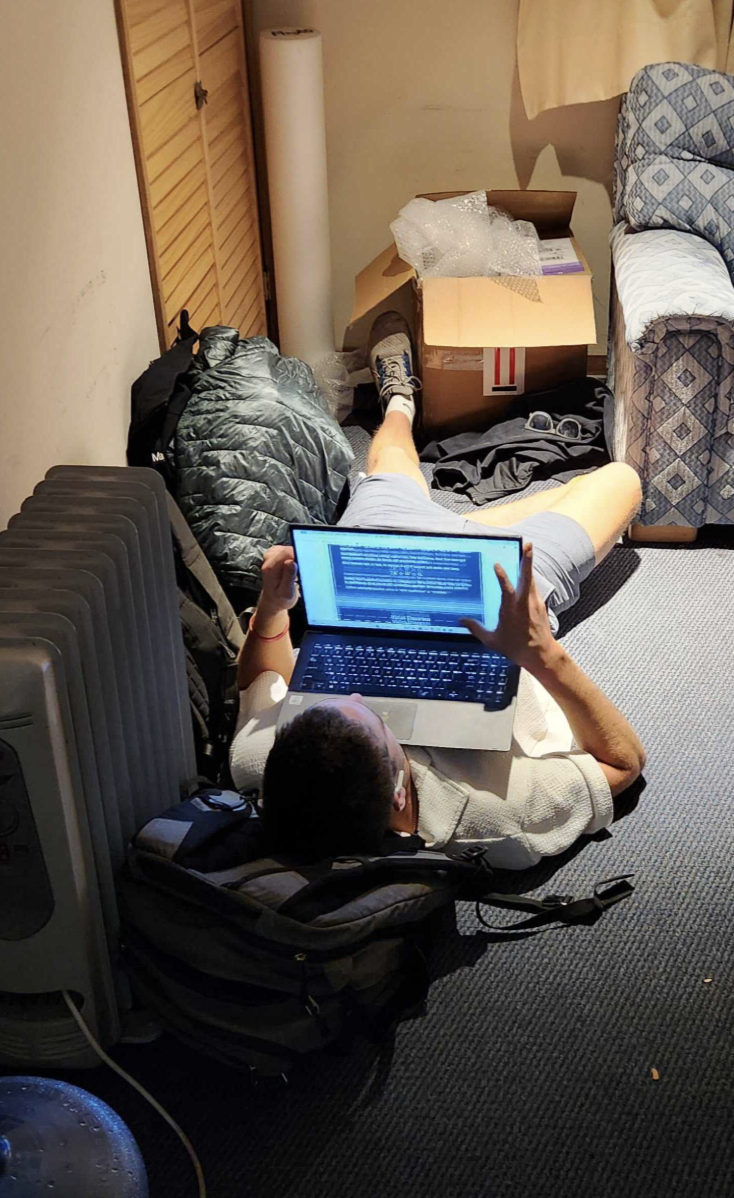
Parker trying to get comfortable while studying for his exam.
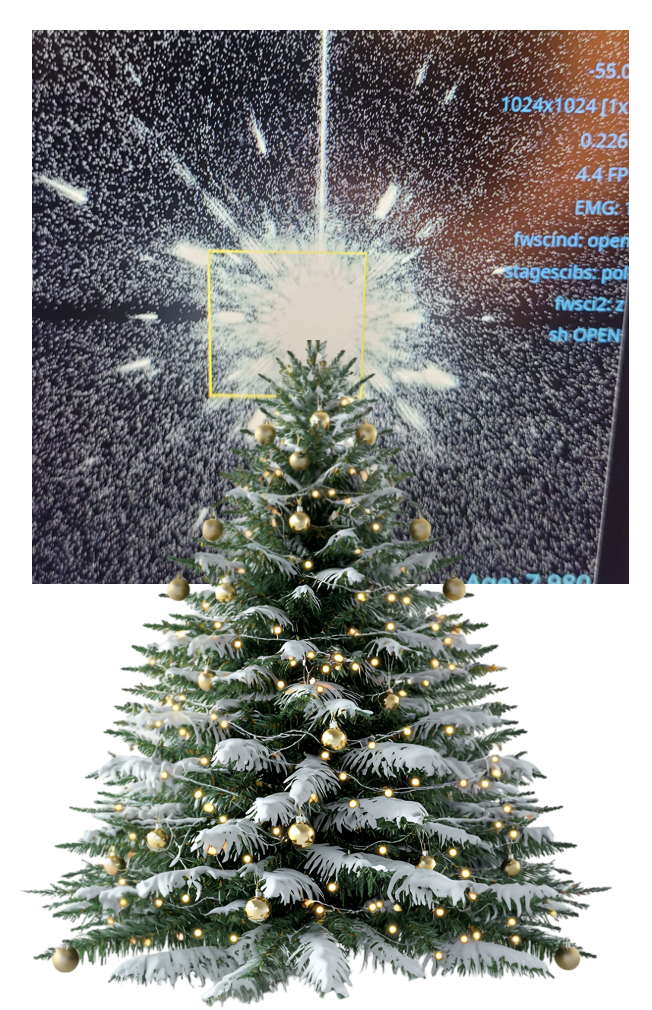
The MagAO-X PSF getting ready for Christmas.
The night started with Elena and Katie operating the instrument for Miles. Miles is focused on further validating the polarimetric mode of the instrument. He is hoping to generate some beautiful Polarimetric Differential Imaging images of protoplanetary disks.
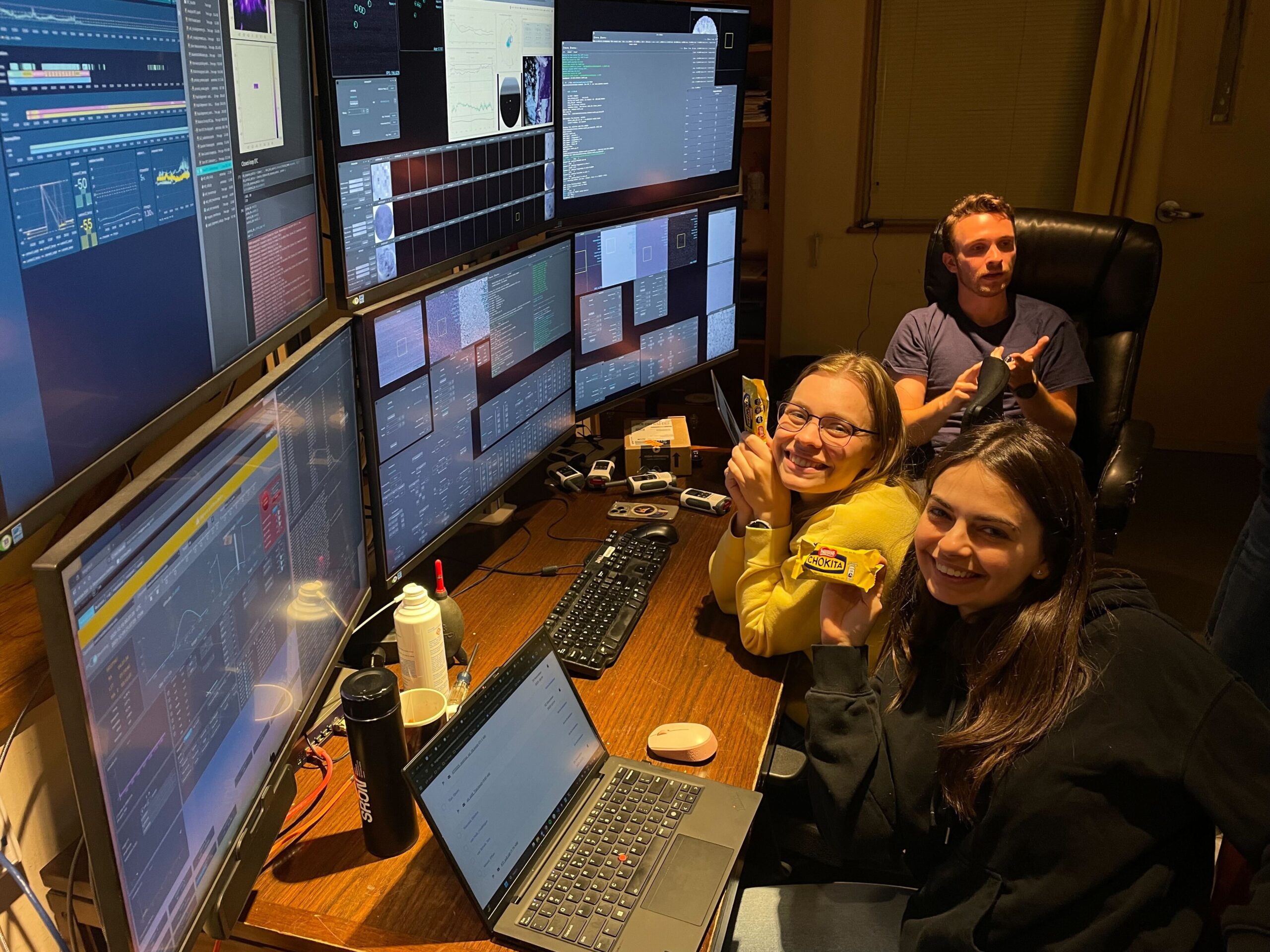
The first shift getting ready for the night.
After that we switched to Josh and Eden who spend the rest of the night star hopping for Leah, also in search of protoplanetary disks. It turns out Leah is remarkably good at finding previously unknown binaries for the hopping.
With only two observing nights remaining, a part of the group (among which the PI) called it an early night to start adjusting to a daytime schedule, and like the instrument says: “Als de kat van huis is, dansen de muizen op tafel”. We took full advantage, turning on DJ Haffert’s playlist and letting the music energize the final hours.
When the seeing just hits too hard and your DM’s can’t keep up.
The Burro I had a close encounter with during the day. I don’t think it likes me very much.
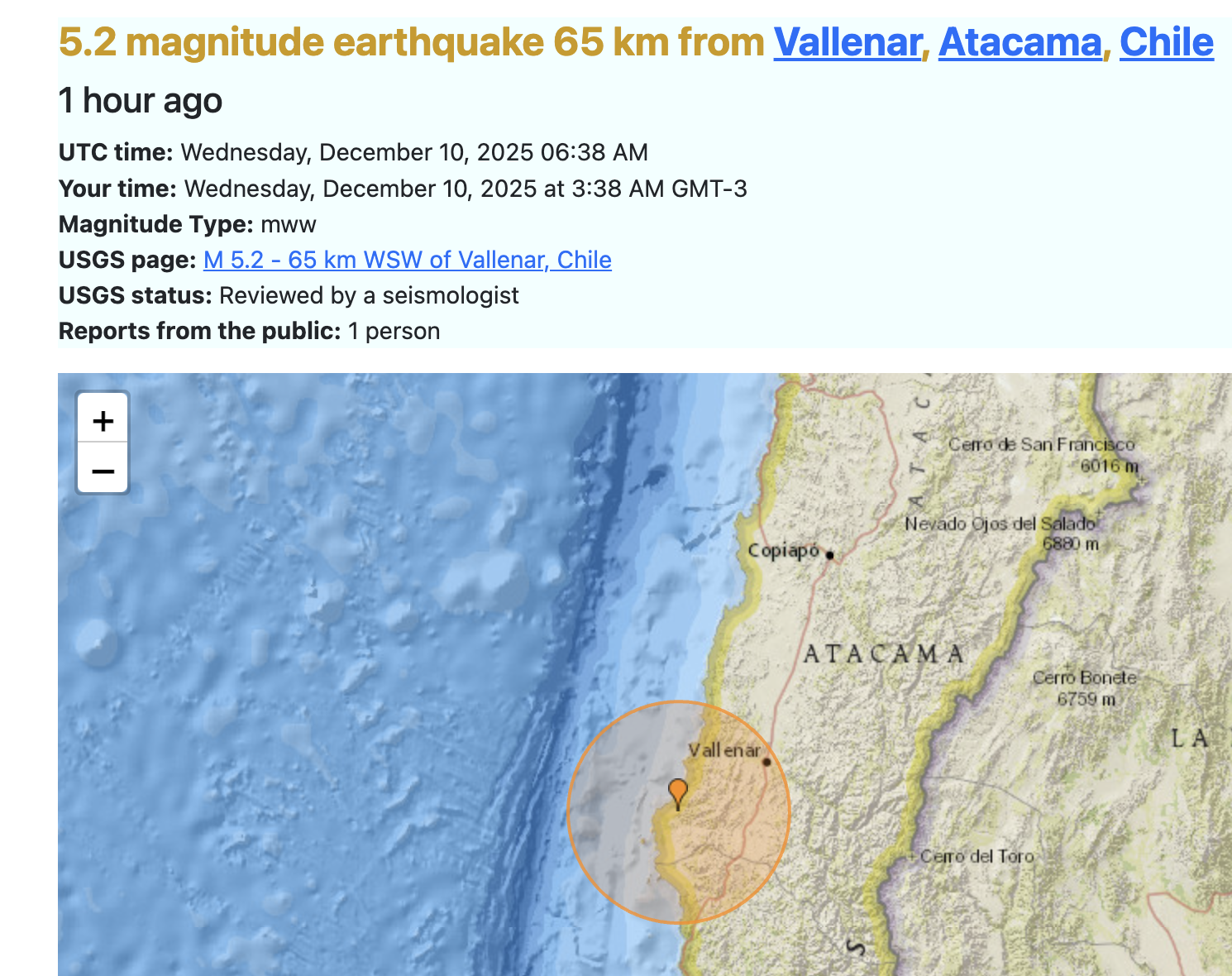
Just as things were settling into a rhythm, we got hit by a small earthquake. Some people quickly ran outside. However, I was too busy wrestling with a different kind of instability. I was trying to get the Neural Network (NN) to run its AO correction loop. When the ground is moving, and the control loop is fighting the atmosphere, you quickly learn what your priorities are. It’s fair to say my own internal NN has not been performing well on little sleep, as I almost walked straight into a Burro earlier this afternoon. The Burro was clearly not happy with this sudden close encounter, and I was also pretty startled. The instrument’s NN, however, survived the tremor, and helped us collect better data when the seeing was not ideal.
Fun ‘fact’ of the day: Donkeys Kill More People Than Plane Crashes
There are an estimated 44 million donkeys on the planet. A donkey kick can be anywhere between 0-2000psi, depending on the size and breed. As of 2013 there were 20000 planes on the planet. Due to these numbers it is safe to presume that this is true. In 2016 there were 325 aircraft related fatalities. In the same year there were 5478 admissions to emergency rooms across the world, 1478 of these resulted in the death of the donkeys victims. (the very reliable source: https://imgur.com/gallery/donkeys-kill-more-people-than-plane-crashes-QAhE6)
Song of the day
It is definitely better when not everything is in C.