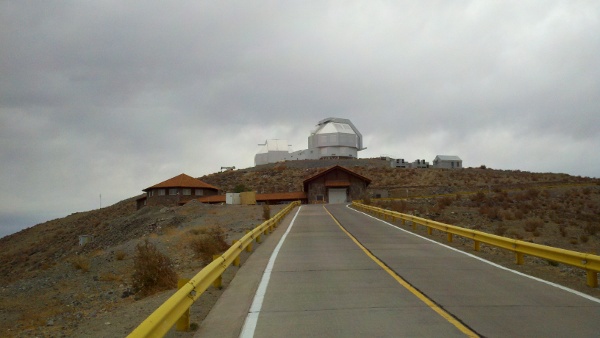
An argument broke out at lunch today over how many days we’ve actually been here. Luckily we have a blog, so we just looked it up.
As the Guanaco noticed, Mario and Frederico have left us after more than pulling their weight. They took the early bus to La Serena.
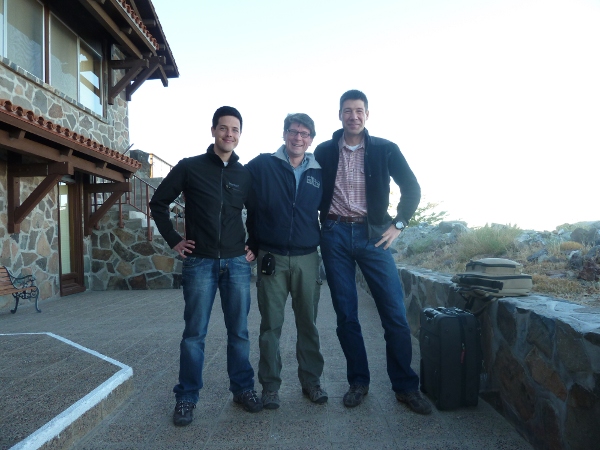
Frederico, Laird, and Mario just before the boys from Microgate left for their long journey back to Bolzano. Thanks guys.
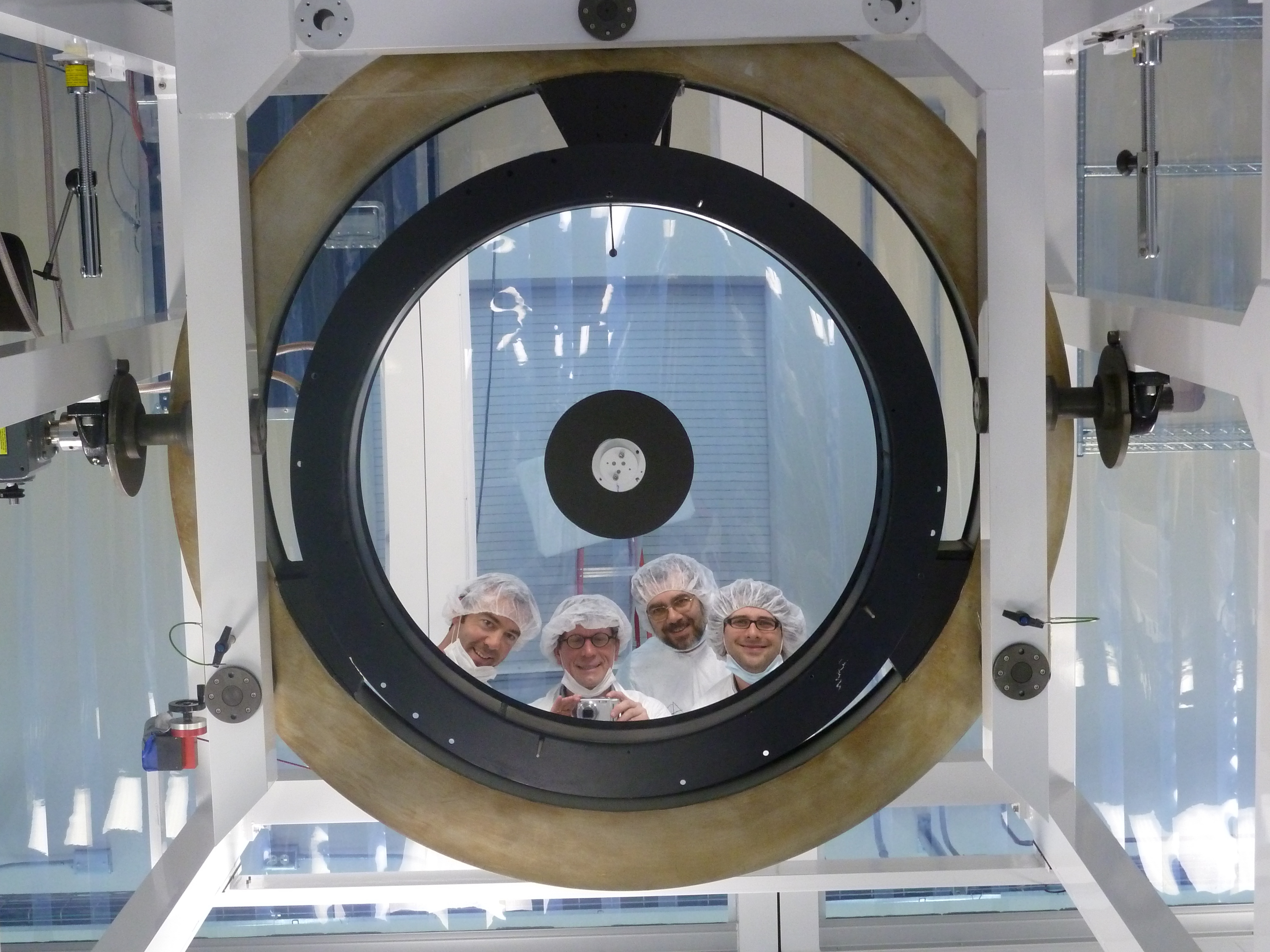
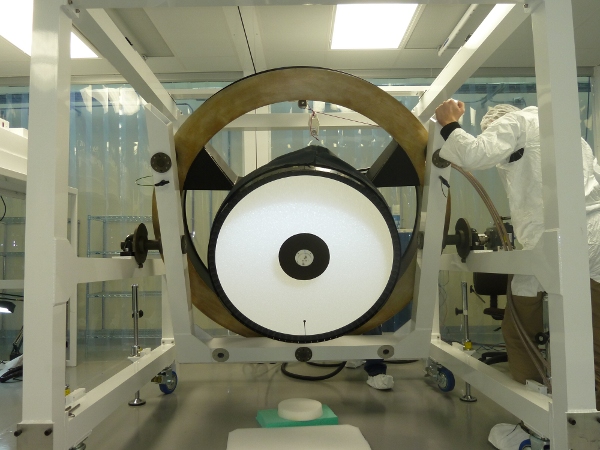
Now that the TSS is fixed, we moved on to mounting our windscreen. This is just a metal ring that encircles the bottom of the ASM to protect the shell from high wind. We also removed a set of shims from the mounting system.
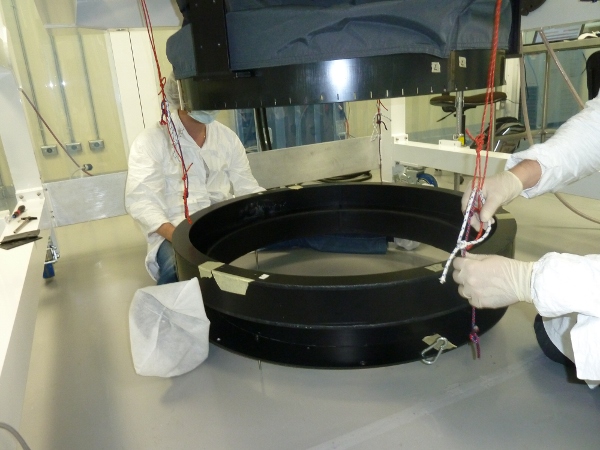
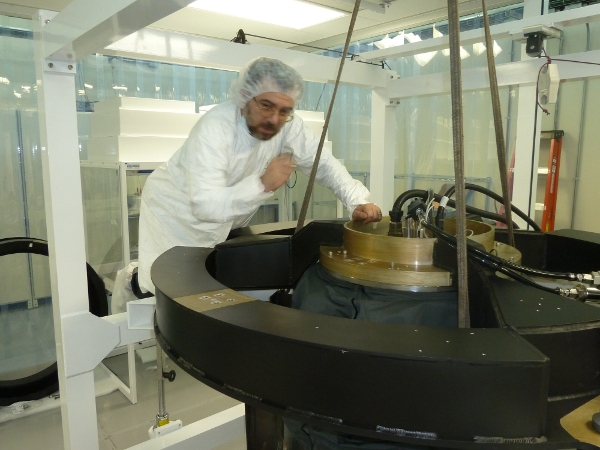
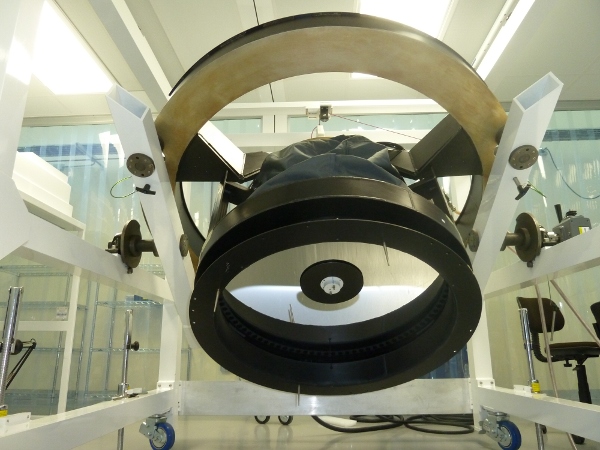
The windscreen about to be lifted into place. This requires some fine alignment since our calibration system hangs from it.If you're going to have someone climb on top of your ASM, it should be Armando.The ASM with the windscreen.
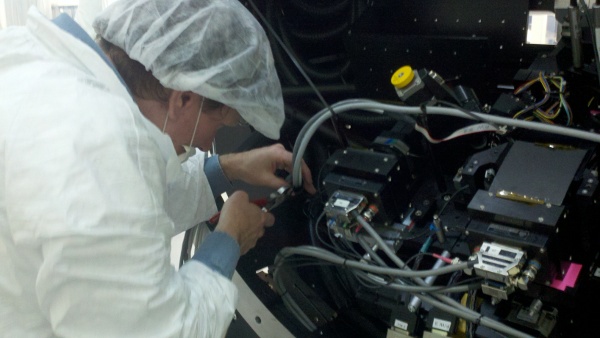
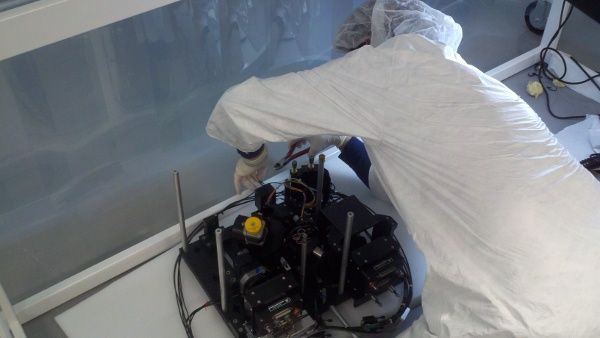
In the afternoon Laird spent some time perfecting the routing of cables to the W-Unit. This is a hard problem – the whole thing translates in 3 dimensions, and has to be able to turn upside down, and cables tugging on optics generally ruins nights.
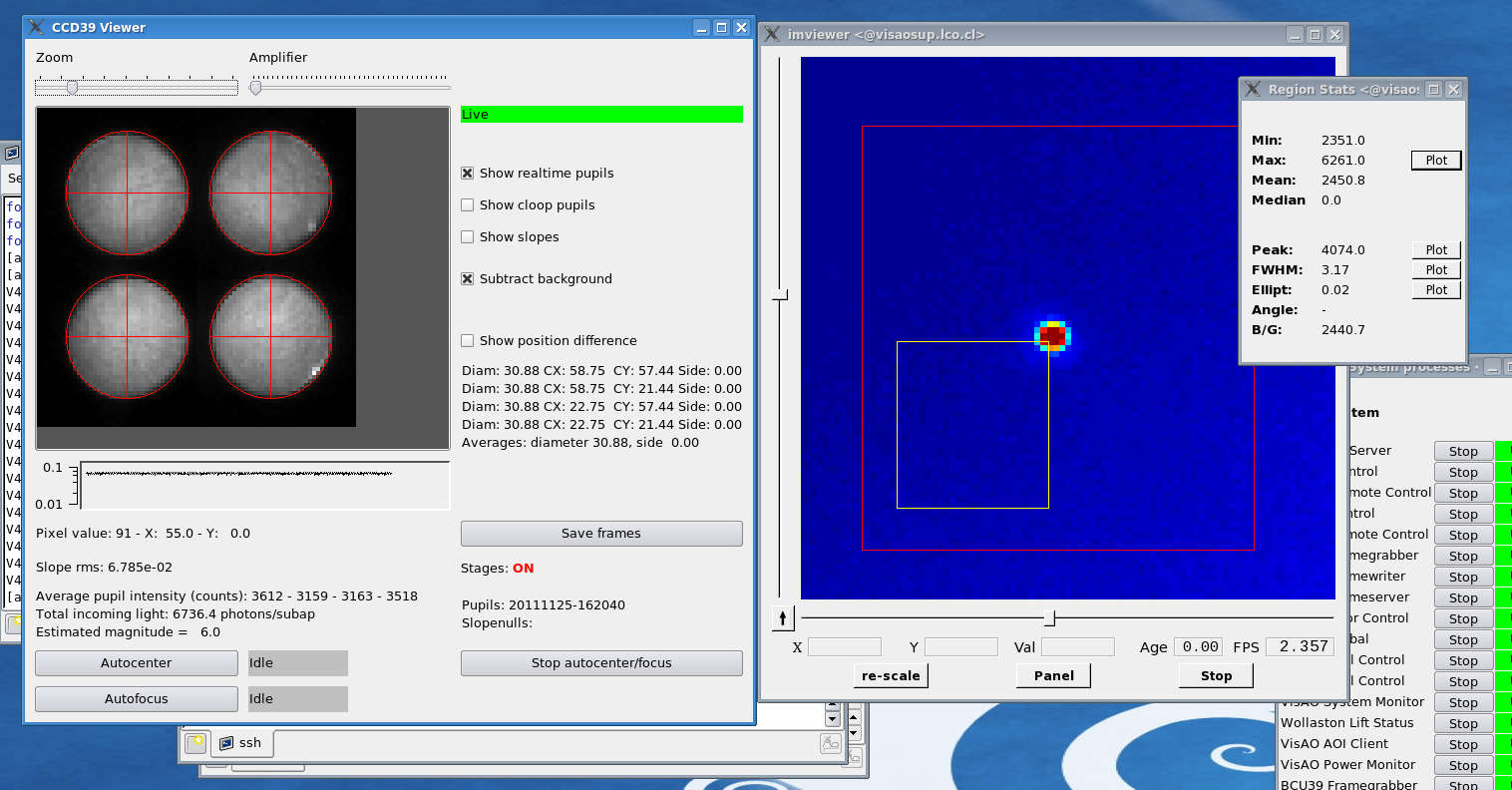
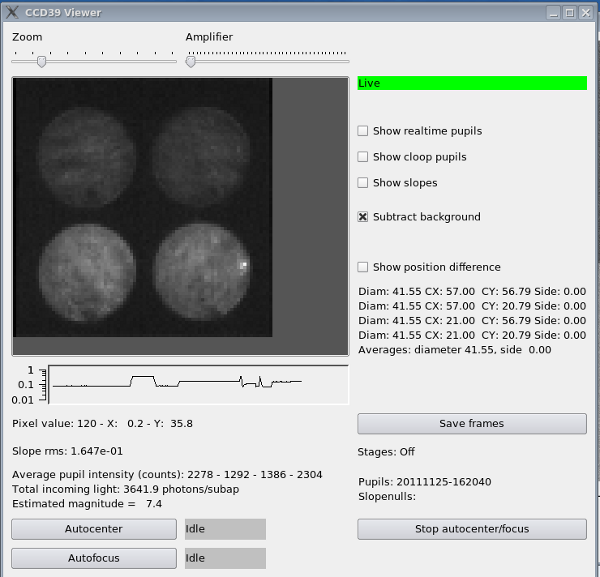
We had to make a few adjustments to the cable housing to get enough flexibility.The final product.This is for Enrico. After dinner we cleaned some dust off our WFS side fold mirror, and recorded these white light images. Pupils look great, and the SDSS i' is in focus. Click to enlarge.
Today’s quote: “You know Laird, you need to seriously think about hiring an exorcist.” (Armando Riccardi, commenting on Jared’s project long bad luck with electronics).
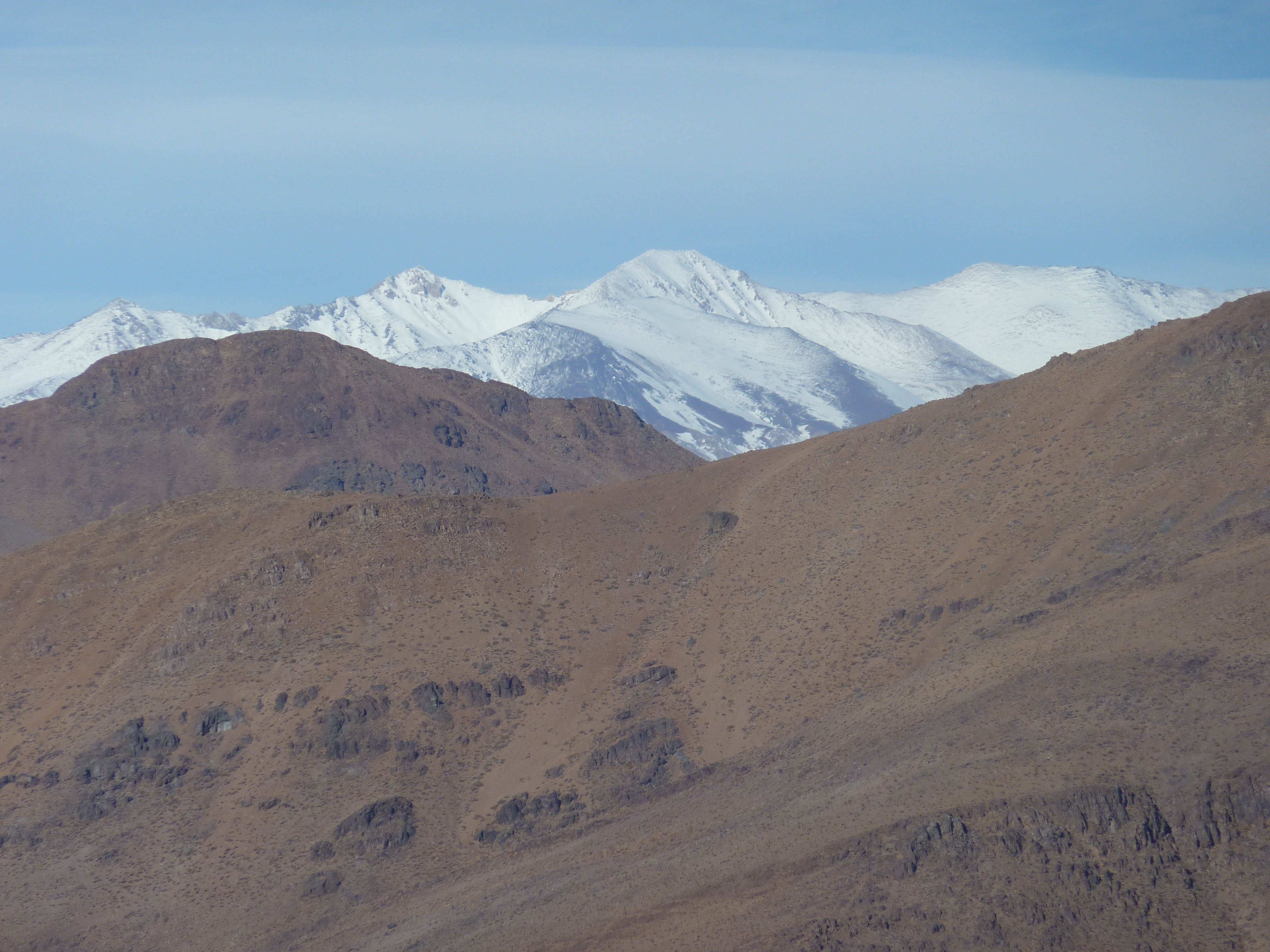
The remaining 4. Click for a rotated image - we leave it as an exercise for the reader to determine the correct orientation of this image.A nice shot by Laird of newly snow-capped peaks. The big storm improved the view a bit, once we could see it.
The storm is finally gone, and the beautiful clear sky is back. The TSS is fixed too, and after we installed our gimbal mirror motors the W-unit is complete.
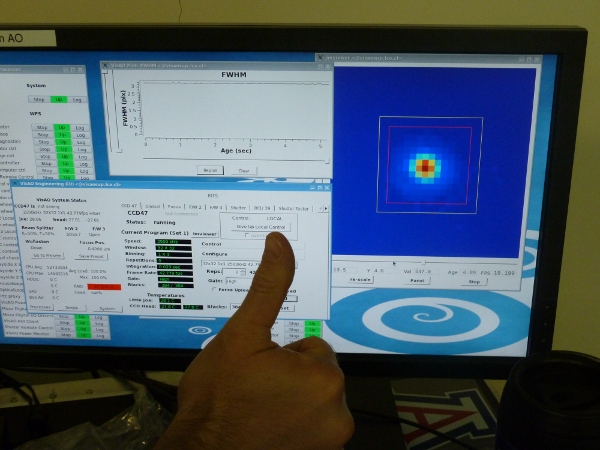
It's nice to see the sun again, and to not feel like you're going to blow away.The white light calibration source, in focus in the SDSS i' filter. Note the 3.2 pixel FWHM.
This (kind of lame) video shows our little W-Unit robot responding to a Board Setup command. This tells it to go to a set of pre-determined positions which makes it ready to operate.
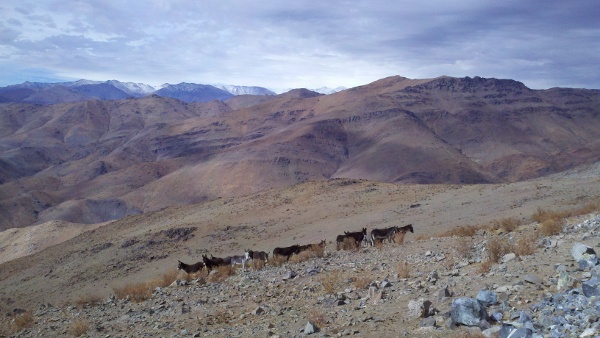
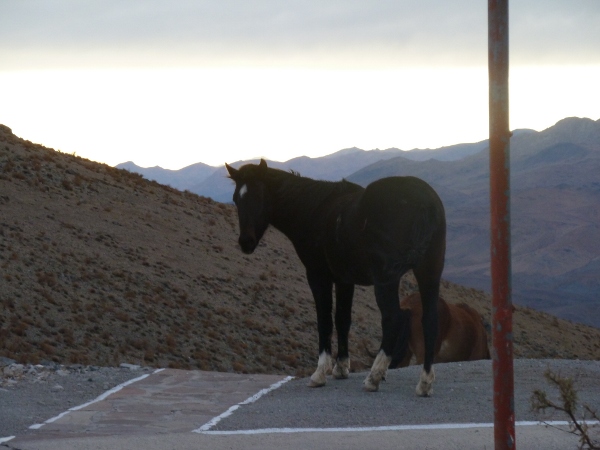
The Burros came back after the storm. We hadn't seen them for a few days. A Guanaco walked by at lunch, so they're around somewhere.Saturday was GTL night.
At this point most of our urgent critical path stuff is done, and we are starting to relax a little. We have a few more days of ASM testing to do, and some mundane odds and ends in the W-unit to take care of, like cable management. We also plan to do some testing of our software interfaces with the telescope control system.
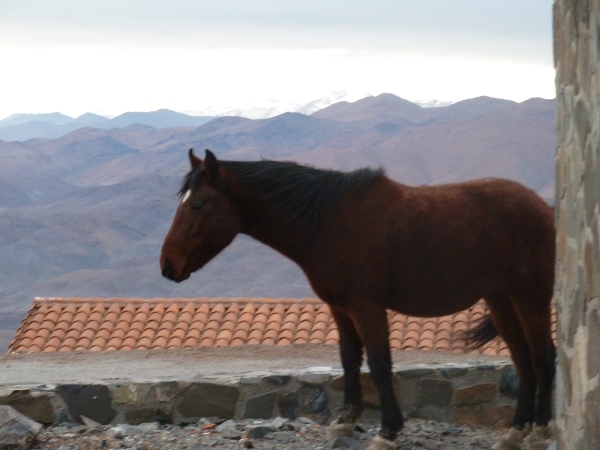
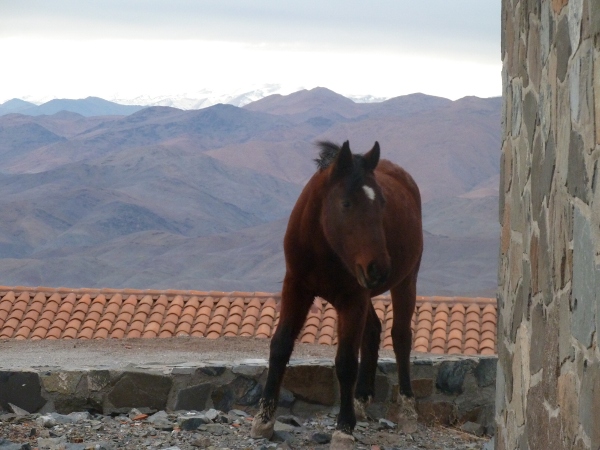
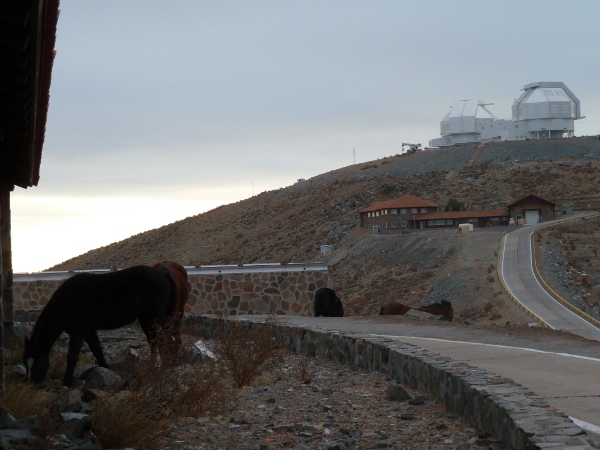
Look what the wind blew in. We met some new LCO denizens this morning. When Laird left his room for breakfast he was surprised to find a horse standing just outside his door.
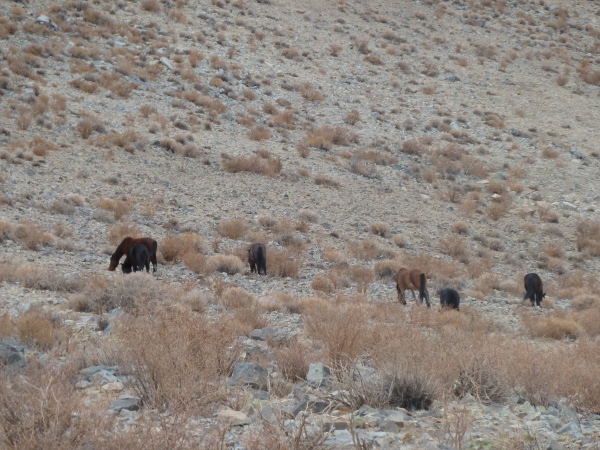
Outside the dorm this morning, this horse was waiting for Laird to wakeup.Not camera shy.Am I in your way?The herd grazing below the telescopes.Later, they moved down into the valley east of the road.
By the way this post is especially for horse lovers Emmeline and Annabel Close, who I hear are following along at home and requested some more animals.
Hi Ladies. This was at our favorite Florence pizzeria last summer.
The PI got hit with a rock this morning. That’s how hard the wind was blowing. He’s o.k., and the wind has died down tonight.
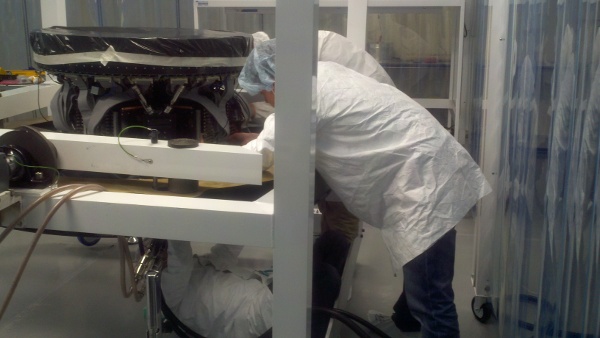
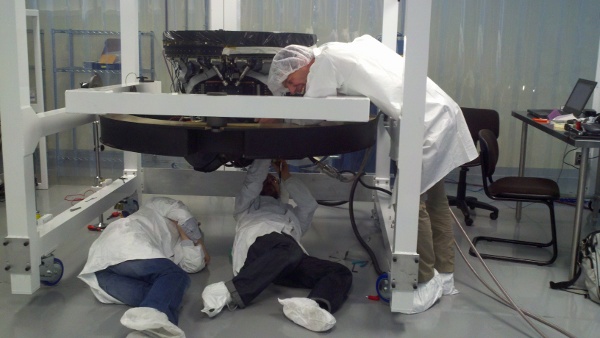
I’ll let Marco update us on progress with fixing the TSS. For now here are a couple of pictures of the work being done there:
The ASM was flipped all the way upside down to work on the TSS.The fix required going deep into the electronics of the unit.
Laird and I finalized the alignment of the W unit tonight. It looks like none of the components shifted during shipping so we don’t have to re-align anything on the board – a big relief. We also took a set of readout noise measurements, with decent results. Things are as good or better than they were at Arcetri. For the AO-nerds out there, the CCD 39 (our WFS camera) is turning in around 9 electrons RON at 1 kHz frame rate, and roughly 4.2 to 4.4 electrons on our slow (~100 fps) mode. We had both cameras running and were modulating during these measurements, so we fell pretty good about them.
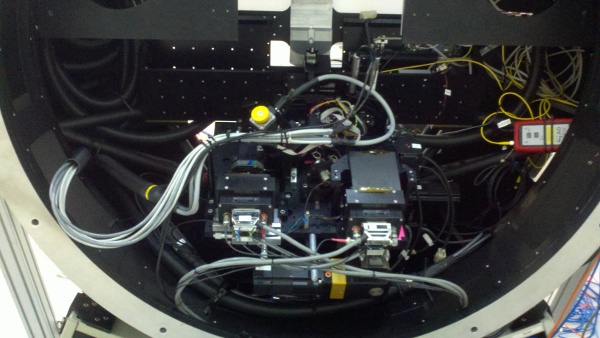
A few pictures of the WFS in the NAS:
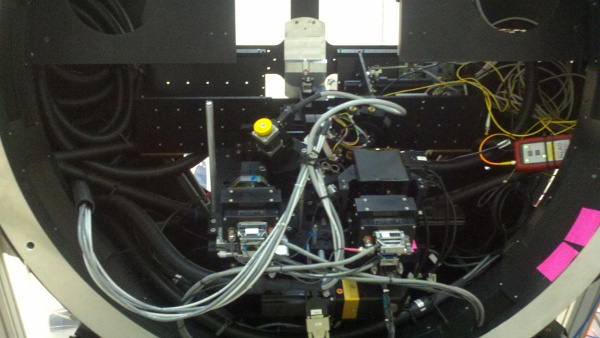
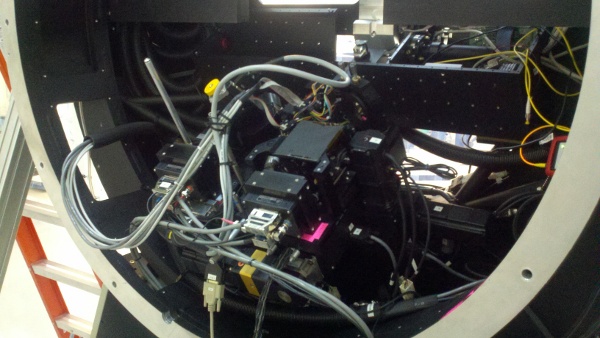
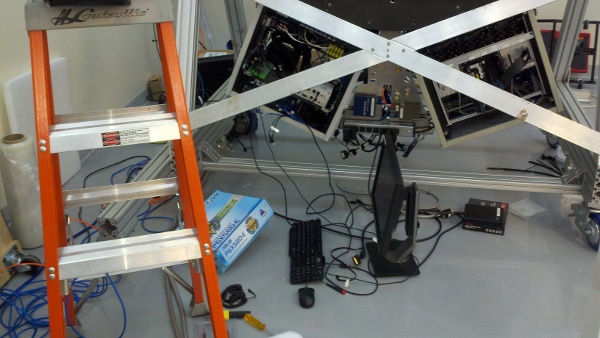
The W-Unit, our WFS, mounted in the NAS. When it's mounted on the telescope you would have to be standing on the primary mirror to get this view.This is the VisAO side of the W.Here we're checking the aligment of VisAO's new gimbal mirror. We're going to attach the motors to it tomorrow.We left the lab about 10 minutes too late to catch what must have been a gorgeous sunset. Crappy observing weather.
Some good quotes from the last 2 days:
“It’s pretty hard to keep VisAO down for more than an afternoon.” (Jared Males, spectacularly wrong)
“No! I want this to be a bonding ritual between us – and you know we’re going to do this every time we come up here.” (Laird Close, after Jared whinged about taking the same measurement for the 427th time in the last year).
“My attiude is when something is unknown, take the conservative choice, so fix it.” (Armando Riccardi, the ASM man)
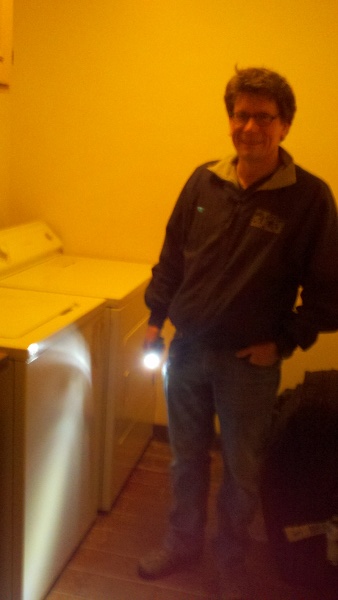
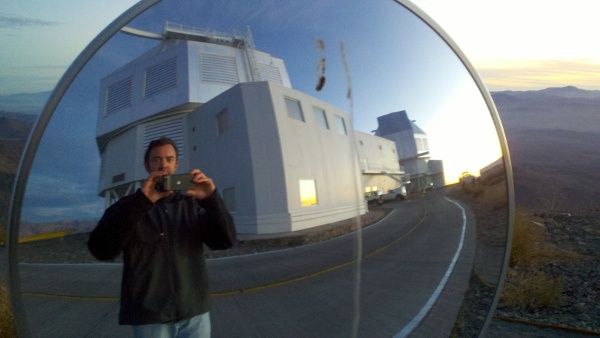
For my mom again. This seemed like an awesome idea . . . I didn't notice the bird poop until later. Baade is behind me, Clay further back.
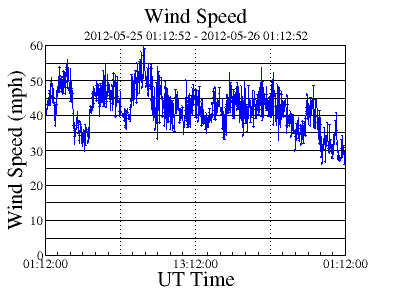
The big story at LCO right now is the wind. It is strong enough that it’s hard to walk in a straight line. Here’s a plot of the last 24 hours:
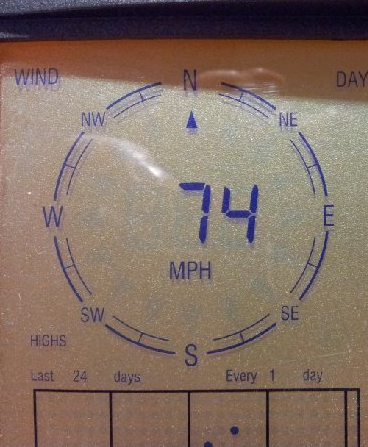
24 hours of wind at LCO. One of the telescopes saw a 74 mph gust last night.
It’s still nice and calm in the cleanroom though, and we’re getting lots done. ASM testing continues apace.
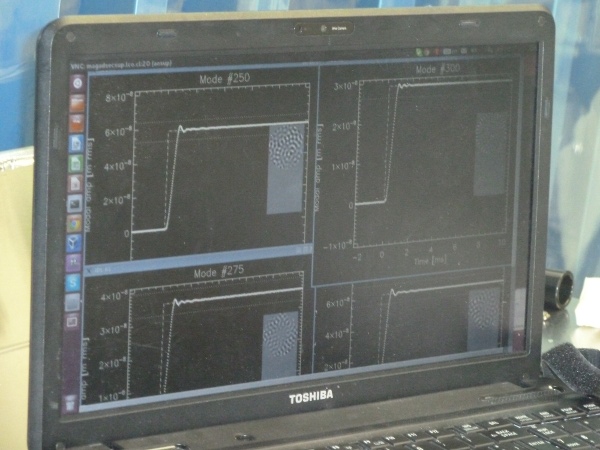
Marco keeps an eye on the shell. By the way, thanks Marco for helping out with some of the blogging duties around here.We have started testing our mirror modes - essentially pre-programmed shapes that we use to correct turbulence.A nice shot of the ASM in one piece. Note that the cap is now installed. You can also really appreciate the keyhole here.
We finally mounted the W-Unit on the NAS today. Our wavefront sensor (WFS) is called the W-Unit because the light path makes a W. It is the instrument which actually measures atmospheric turbulence, and it also contains our visible wavelength camera, VisAO.
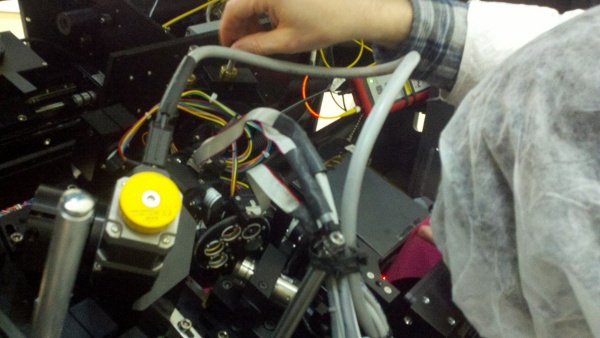
Laird is removing some cable ties that are still attached after shipping.
After a skype consultation with the W-Unit Master (Enrico Pinna), and with some help from Armando, we hoisted the board onto the X-Y-Z stage and bolted it down.
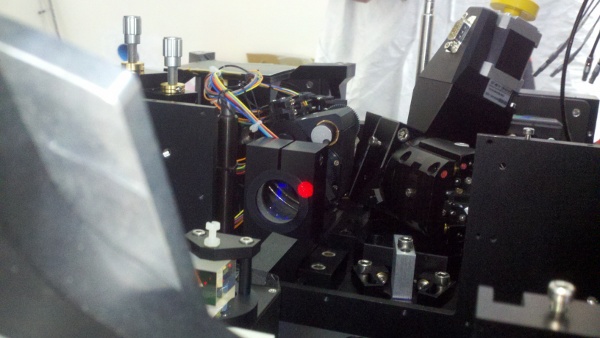
Here our alignment laser just misses L1 (that's lens 1) right after installing the W-Unit. We made a few adjustments and got the light in the center - but that makes a pretty boring picture.
The boys from Microgate (Mario and Frederico) replaced a power supply in our “minicrate”, which provides high voltage power to our piezo-tip-tilt mirror and camera lens. We had developed a problem where those two components seemed to cross-talk, making a worrisome chatter under certain conditions. It’s fixed. Thanks guys.
Our pyramid WFS pupils, in the 950 dichroic beamsplitter, modulating at 100 Hz. We don't think this is very well aligned, but it is pretty good for a half hours work. And I centered by hand, no auto-center here. That's how I roll.
The side attraction for the last 24 hours has been the VisAO computer. This computer operates the VisAO camera – it saves the data from the CCD and controls focusing and filter selection. Shortly after mounting the VisAO box (containing the computer) on the NAS, the motherboard failed, specifically the hard drive controller. It is a matter of some debate what caused this – it’s been shipped from Tucson to Florence to Las Campanas, and taken apart and put back together many many times over the last 2 years, but mounting could also have stressed the box enough to damage the board inside.
I knew this was going to happen, because motherboards suck. I even carried a spare with me in my luggage because I knew this was going to happen. The brand new spare didn’t boot. Disaster. On a project of this size you might think of a $200 motherboard as a nothin’ part. But as a great man once said “It’s nothing ’til you don’t got one. Then it appears to be everything.”
Troubleshooting into the wee hours.
After trying everything else we could think of, we hacked together a solution out of a retired server and the PCI guts of VisAO. She’s limping along. The server used to be called “Vizcacha“, so I think VisAO now has a mascot.
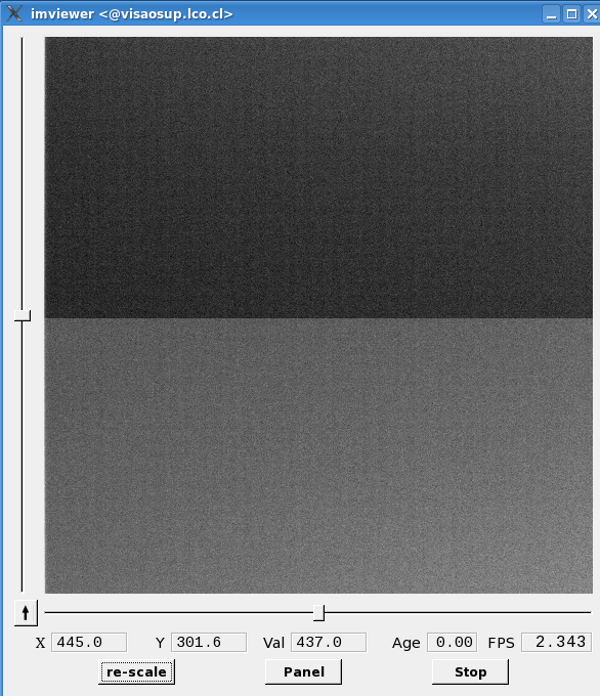
This incredibly boring picture means that our stand-in VisAO computer works, and more importantly that the CCD 47 survived shipping. The cap is still on, so this is just a noise frame. Looks like the bayside stages are powered up - see the lines?
We have now turned everything on that we can think of and the only casualty is the motherboard. All of our motors spin or step, our mirror modulates, and our cameras take good data. We’ll do a bunch of rigorous checks over the next few days, but the initial indications are great.
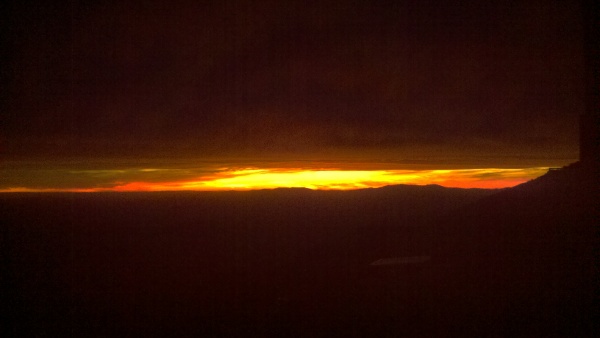
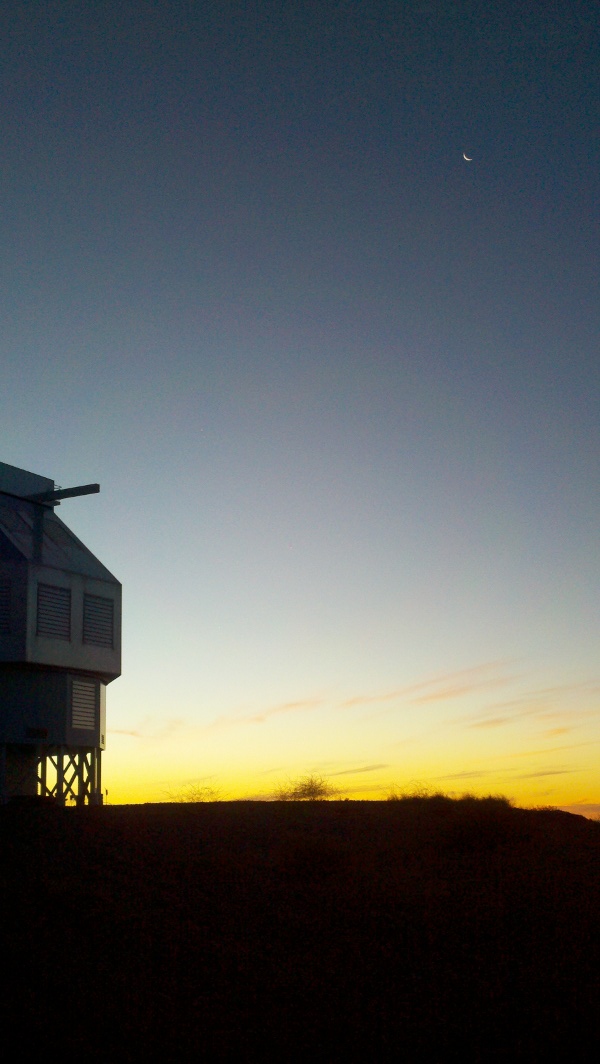
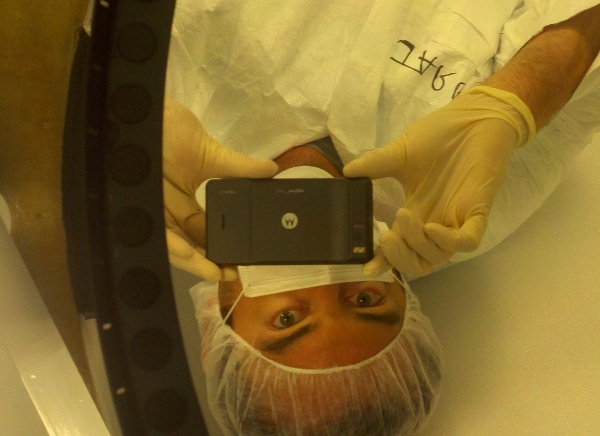
This was last night's sunset, as the clouds started blowing in. That's the Clay on the left.The sky this morning. The weather has been pretty bad the last day or two.My mom says I should post a picture of myself more often. Here you go mom.