Tonight was another beautiful clear night. Seeing ranged from around 1-3 arcseconds. At the start of the night we were confused why we were seeing very little AO correction — it turns out the TT mirror was not modulating, oops! After this we took several sets of AO-on vs. AO-off Pisces data. We also compared the response matrix modes for a set of 20-modes-RM taken with 5 trials and it is encouraging that we are seeing the Zernike-ish modes as expected!
The song of the night is “Num Num Cat TikTok Chain but its actually good lol”:
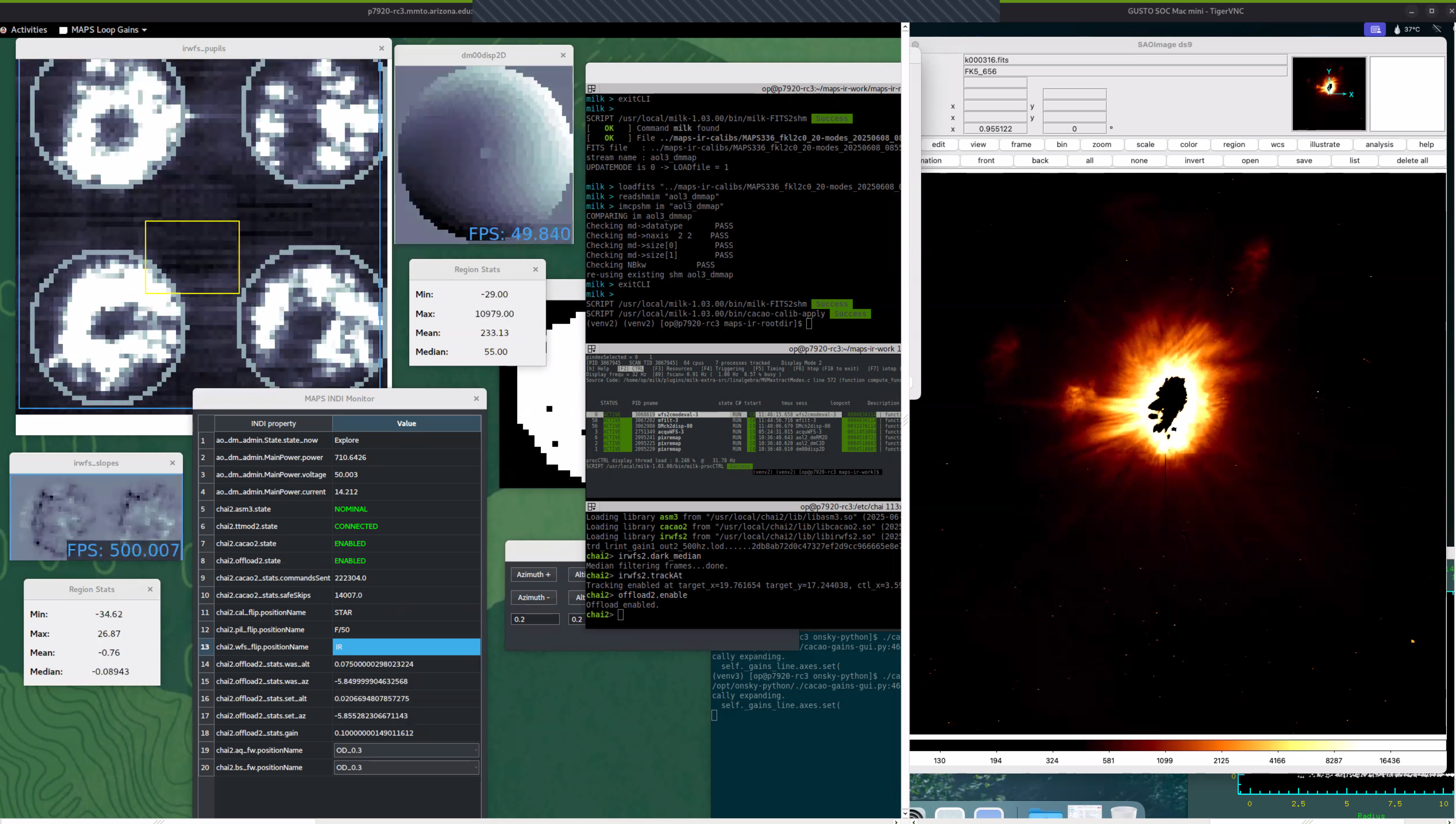
The return of IR WFSing! After squashing some software bugs we closed the loop on 3 and then 20 modes with CACAO using the IR WFS:
I’m back at home where I’m finding it brilliant, reliable, intelligent, diligent, glorious, exceptional, and troublesome. Thanks to the mountain team for enabling a good remote-observing session.
The song of the night is Malagueña – Michael Lucarelli, classical guitar:
Tonight after some daytime work on the rotator we tried the rotational centering again. Alas Brian saw that the star was still jumping when he sent the command, and thus we still couldn’t find the chief ray. We moved on and attempted a curvature wavefront sensing test where we defocussed the hexapod and that helped us get as close as we could get with alignment.
From last night’s opening:
Next up was CACAO to start improving our AO modes. This took us a while to get set up, especially the IR WFS which we haven’t used for almost a year. By the end of the night we had a 3 modes loop and were attempting to move on but needed more help with the gains gui that was again not working. Tomorrow we’ll keep going!
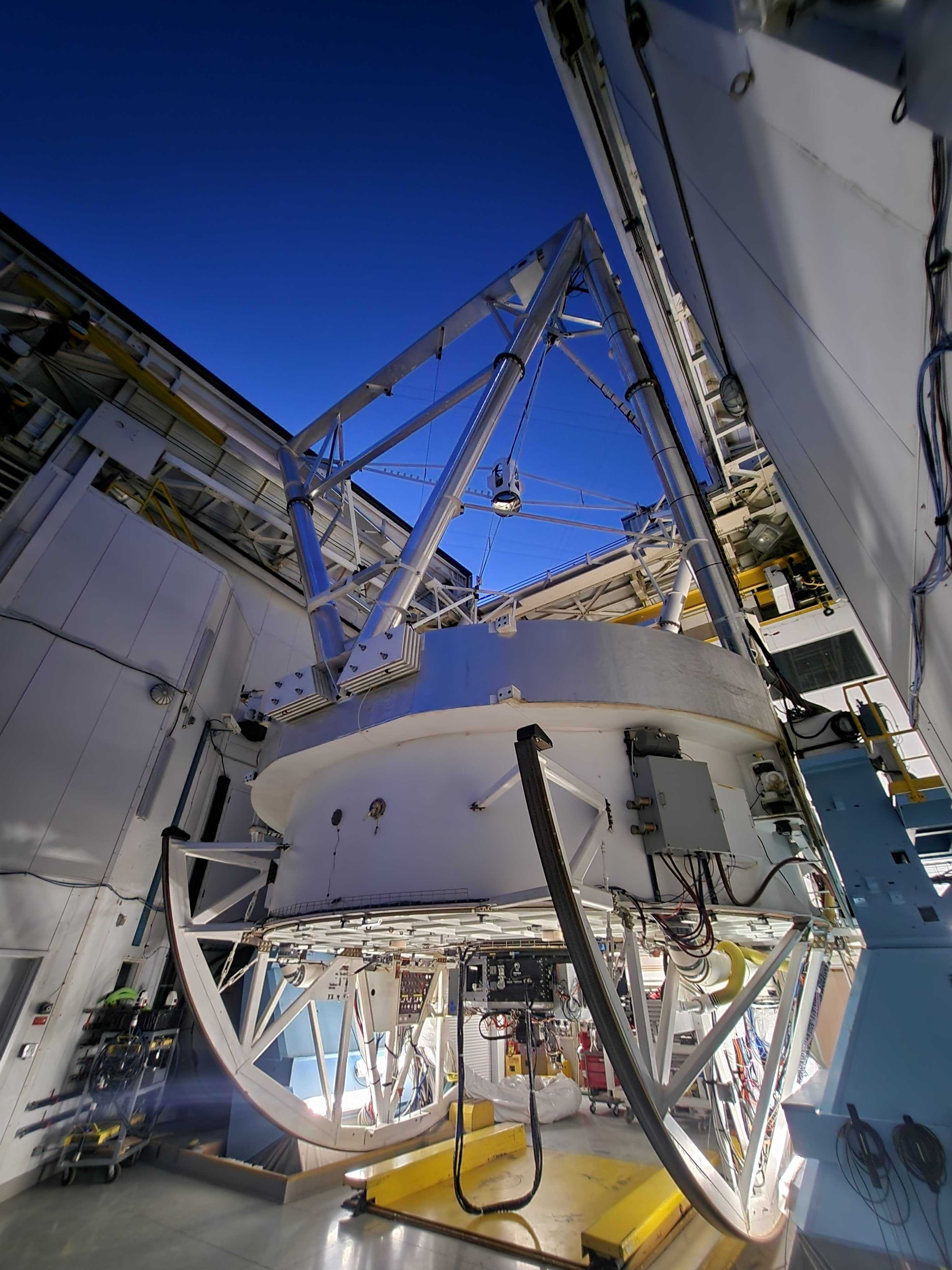
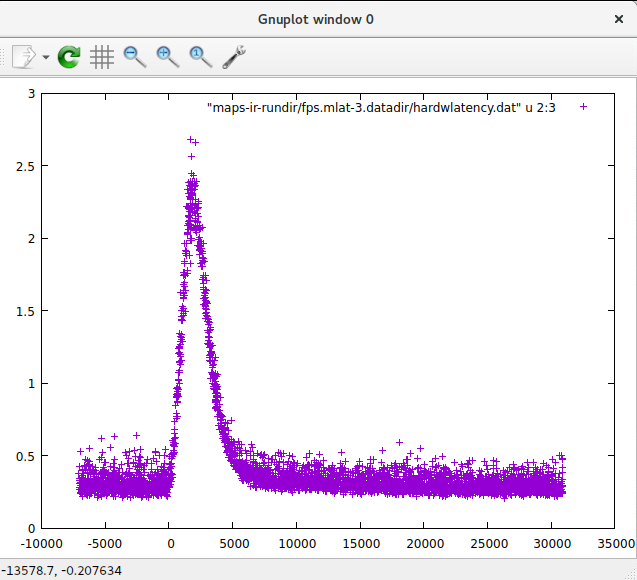
Here is the MLAT with the IR WFS:
The song of the night is “Diggy Diggy Hole” by Wind Rose:
Hello dear blog friends, I’m back after being away due to beautiful, robust, inquisitive, dynamic, gregarious, exuberant, thoughtful reasons. And here we are at the MMT to observe adaptive-optically again!
The installation was more challenging than usual because both MMTO and MAPS teams were somewhat short staffed, but was still all done well by sunset.
As per usual we started with alignment. Once we got the star on Pisces (with, again, disturbingly unique-to-this-run Az-El offsets), we did a rotational centering test in order to find the chief ray. Not the one where you rotate your images and see where the star goes on the pixels, but the one where you rotate the instrument and see where the star goes on the camera. We started the rotator at -60 and went all the way to +60 — the result was a compact bean (looks kinda like this). We started the rotator at +60 and went all the way to -60 — the result was a large arc (looks kinda like this). (Images taken in strip scan mode.) The center of the bean did not coincide with the center of the arc. The arc did not overlap the bean. We saw the same behavior on the acquisition camera, so it’s not the Pisces mount wobbling. It seems the rotator itself is jumping at the start of a move. And it appeared to be when started from any initial position.
With that diagnosed and the star set to somewhat the average center, we decided to stop messing with the instrument rotator (which we don’t generally move as of yet) and moved on to WFS alignment. This included working on the fibers for the newly re-installed IR WFS, adjusting the tip/tilt mirror settings and checking whether differences between Vis and IR were due to any common optics, and finally closing up at dawn with still an open question about co-alignment. To be continued tomorrow night!
The song of the night is “The Happy Song” by Imogen Heap:
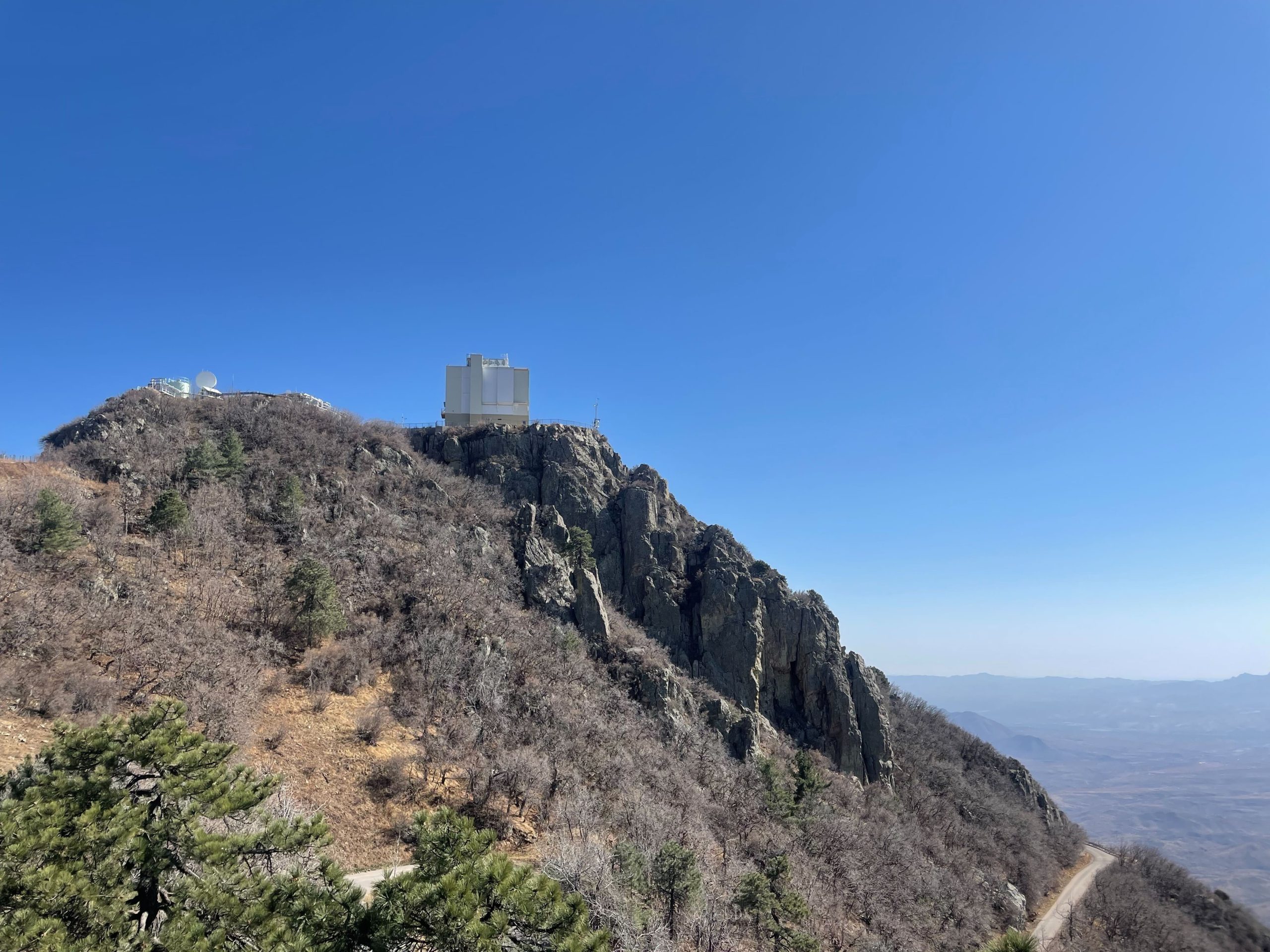
Not a sunset picture. I took this earlier in the day (I actually went outside! It was not 100 degrees out, so I decided to enjoy the weather.)
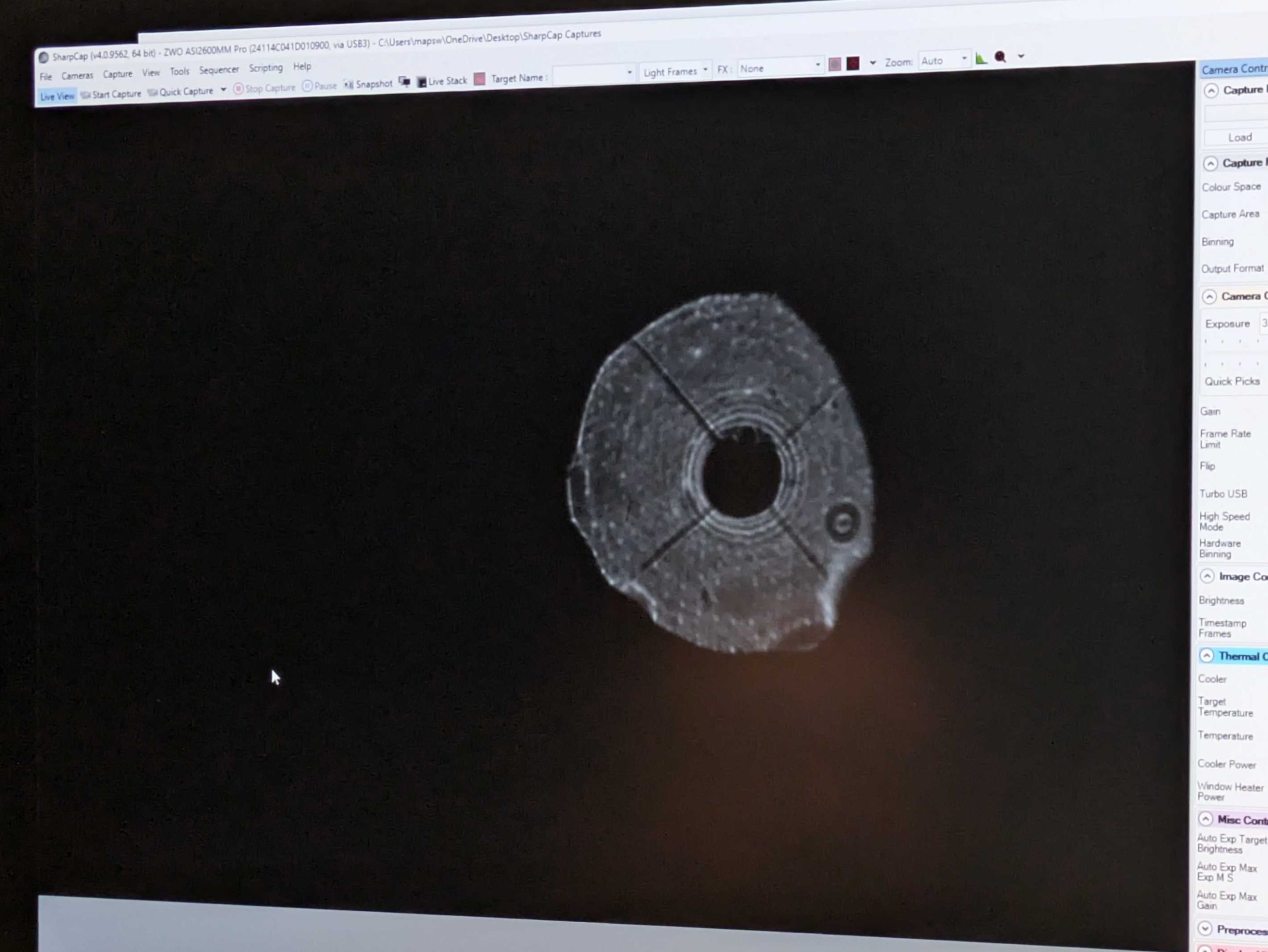
For the first time, Bianca and I are the only AOistas at the AO station for the entirety of a run. After last night’s work, we felt motivated to close the loop. In fact, I would even say we felt confident in our abilities to do so. We began the start of the night CACAO processes while making constant WFS pupil adjustments. Normally our pupils don’t drift this much, so we decided to check the pupil imager. Sure enough, our pupil image was vignetted.
Flashback to last night:
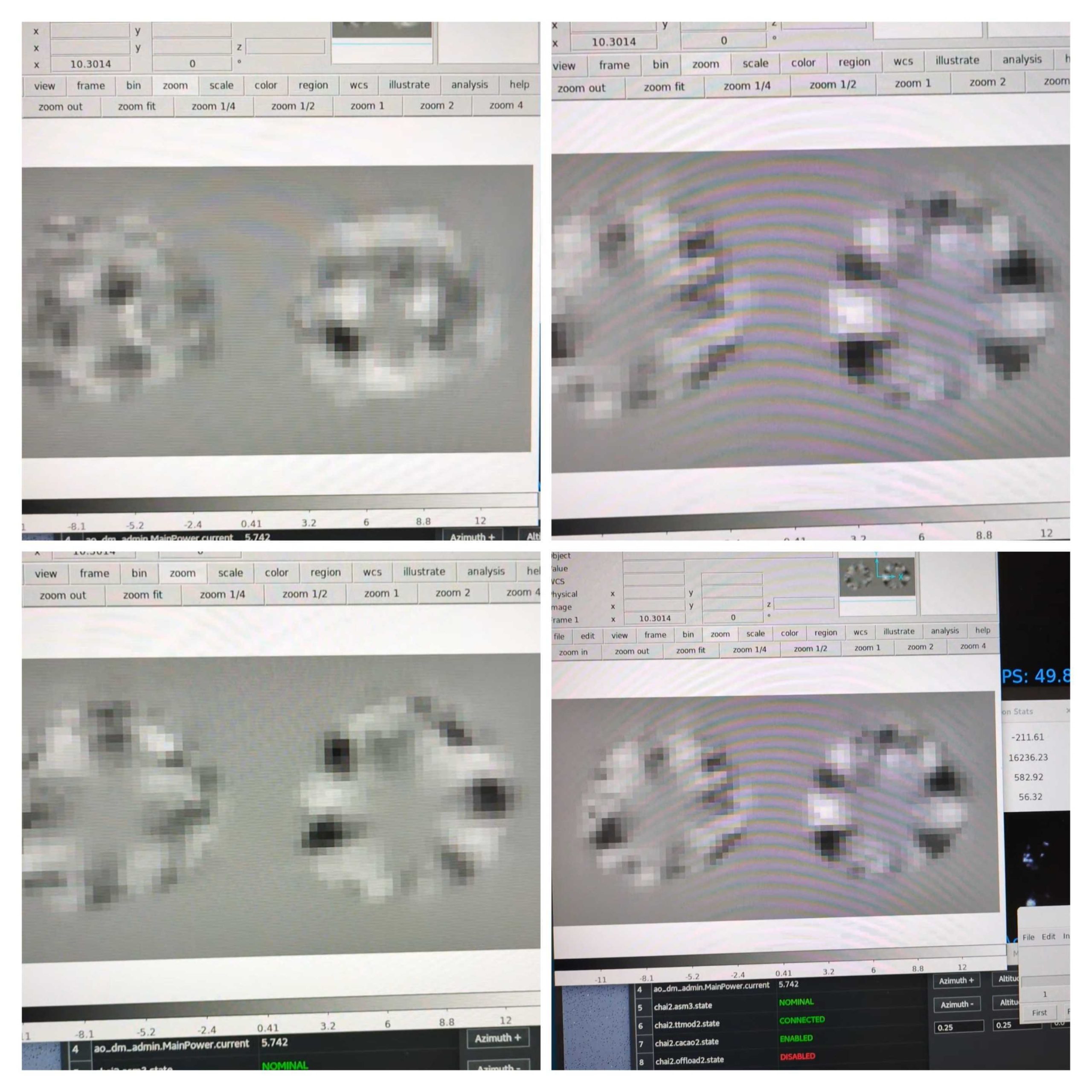
After alignment, we worked on booting up CACAO and acquired an RM. While checking RM modes, we noticed modes were not looking AO ready. They should not have chunks taken out of them. This led us to check the pupil image. We saw the same vignetting we see today.
Not smooth RM modes. Notice the chunk taken out in the bottom right corner of each | Photo Creds: Bianca Payan.Vignetting as a result of MIRAC being off the center of rotation.
Our solution was to adjust alignment in the periscopes and MIRAC dichroic. With the remaining time in the night, Bianca and I were able to get to the part of the CACAO process where we open up the gains gui that allows us to close the loop. At this point, we did not notice any extreme drifting. Unfortunately, we were receiving errors while trying to open the gui, and sunrise was just around the corner.
Back to present:
Just as last night, Oli and Maggie adjusted the MIRAC dichroic and top-box periscopes. Bianca and I proceed to CACAO, but continue to face the same drifting issue. We now realize this vignetting/drifting issue is very repeatable. Our suspicion is that this is due to MIRAC being off the center of rotation. To test this, we realign to the telescope chief ray to see how AO performs without MIRAC. By the end of the night we are able to close the loop on 20 modes with minimal drifting. This was a bit tricky, as we did not have a PSF to reference as we were closing the loop (MIRAC is very useful for PSF imaging). Unfortunately, we cannot easily determine how good the loop is working purely based on vibes and what we can see from the acquisition camera.
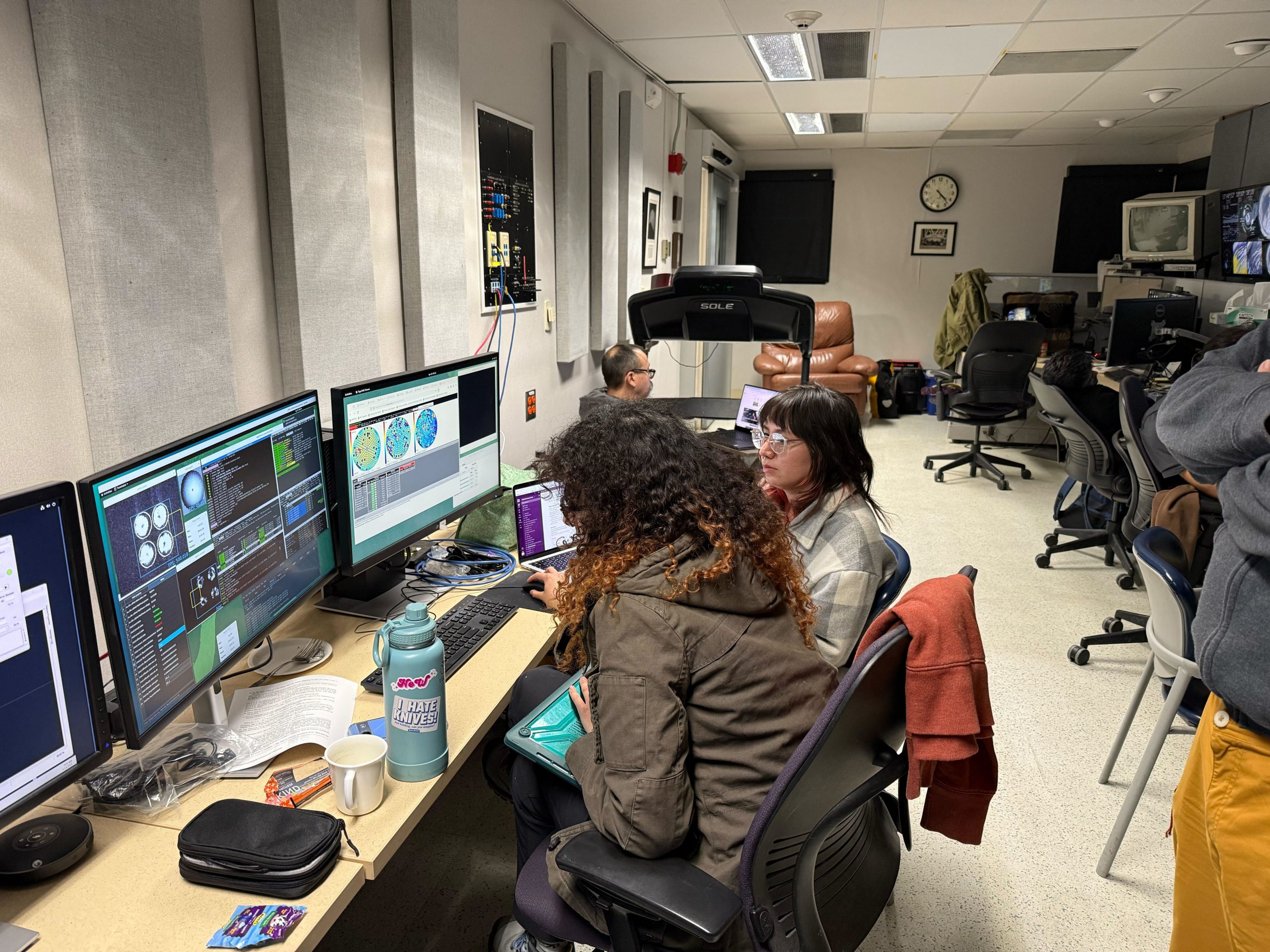
Bianca and I closing the loop on 20 modes without the MIRAC PSF.
We came to the conclusion that we do not want to proceed using MIRAC this run. Our plan is to hopefully get PISCES installed before tomorrow night so that we can continue with the optimal setup to perform AO. To be continued…
Stay tuned for the next chapter of the MAPS April 2025 run!
The song of the night is “Drift Away” by Uncle Kracker.