Today’s blog post is going to highlight my raison d’être for working with MagAO-X: its new polarimeter!
Polarimetric differential imaging
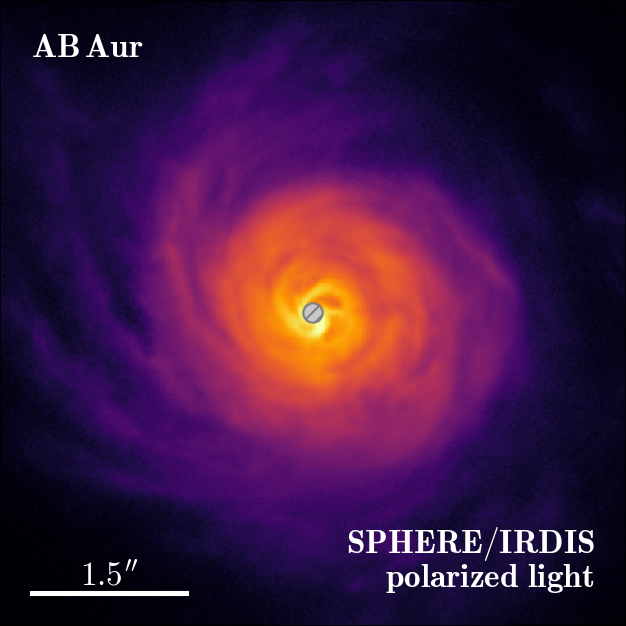
The MagAO-X polarimeter was initially installed in spring of 2025, consisting of a rotating half-wave plate (HWP) and polarizing beamsplitter cube (PBS). The combination of these two optics enables MagAO-X to measure the angle of linear polarization of light (i.e., the orientation the electric field is oscillating). Detecting polarized light is useful for imaging scattered light in astronomical scenes, in particular light reflecting off of circumstellar disks!


The major benefit of polarimetry is that light reflecting off disks, for example, is polarized, while the on-axis starlight is unpolarized. The PBS directs half the unpolarized starlight to each camera along with the small percentage of the fainter disk light which is polarized in orthogonal directions. By subtracting the two camera images the unpolarized starlight is almost completely cancelled out, leaving only the polarized circumstellar signal. This technique is powerful for attenuating the starlight, orders of magnitude better than using angular or spectral differential imaging, alone (although these methods can be combined with polarimetry for even better attenuation!).


Calibrating the MagAO-X polarimeter
The fundamental reason disks have polarimetric signal is due to the reflection of starlight towards the observer–reflections polarize light! One may wonder, what about all the reflections off the mirrors inside our instrument, won’t those also polarize the incoming light? Yes, indeed, every reflection will polarize the light, inducing instrumental polarization (IP), which cannot be distinguished from circumstellar signal. In addition, certain optical elements will rotate the angle of linear polarization of the incoming light, and can even turn linear polarization into circular polarization (crosstalk). Because the PBS only filters linear polarization states, any light which becomes circularly polarized effectively disappears, leading to a net loss in polarimetric throughput.
The effects of instrumental polarization are mitigated to first order by the HWP itself–by placing the HWP as early as possible in the instrumental beam path, we can cancel out any IP induced downstream of the HWP through another layer of differential subtraction by rotating the HWP and taking multiple images. This will not correct for any crosstalk though, which requires more sophisticated methods. Modern polarimeters overcome both IP and crosstalk by directly modeling the polarimetric response of the instrument and using the solution for correcting astronomical observations. This modeling requires calibration sequences injecting light with known polarization states into the instrument and measuring the response.
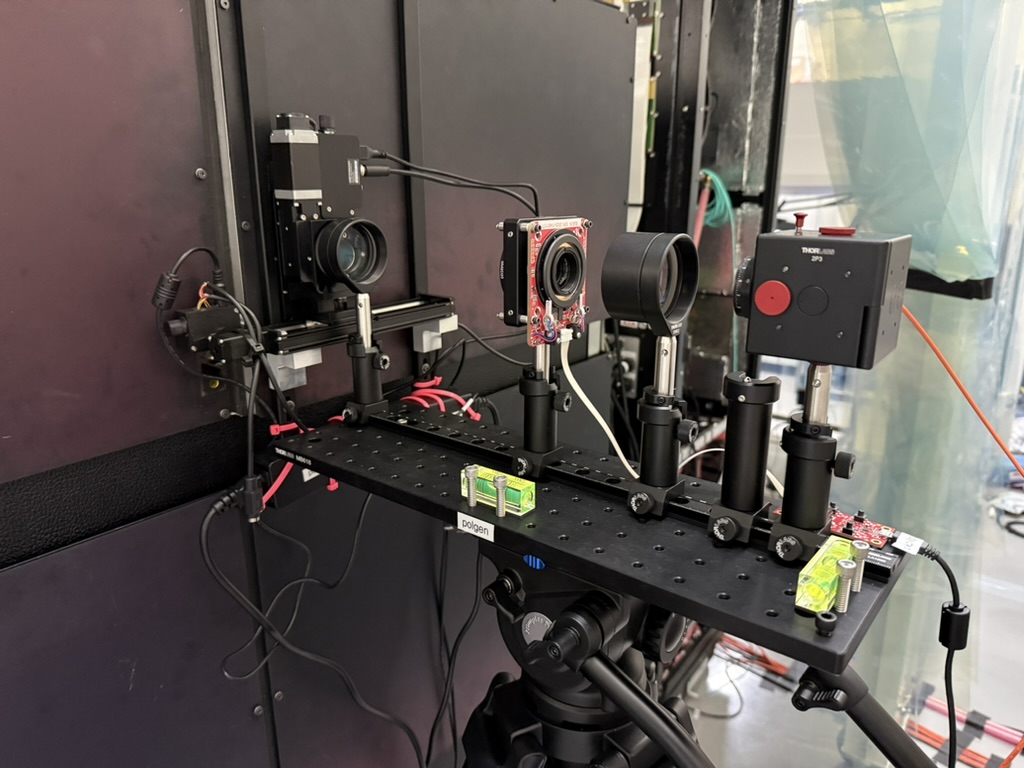
MagAO-X does not have the capability of injecting polarized light on the same path as the on-sky beam, so I designed a polarization generator which can be aligned on the exterior of the instrument precisely for measuring the calibrated polarimetric response. I got it designed and built in Tucson before shipping here to the telescope, where it will remain in the clean room for future polarimetric calibrations!
Initial results from the polarimetric calibration
After a week of Joseph and Jared working tirelessly on getting my calibration data in the right format with the right metadata, I was able to reduce it and begin the measurements of the polarimetric response of MagAO-X!
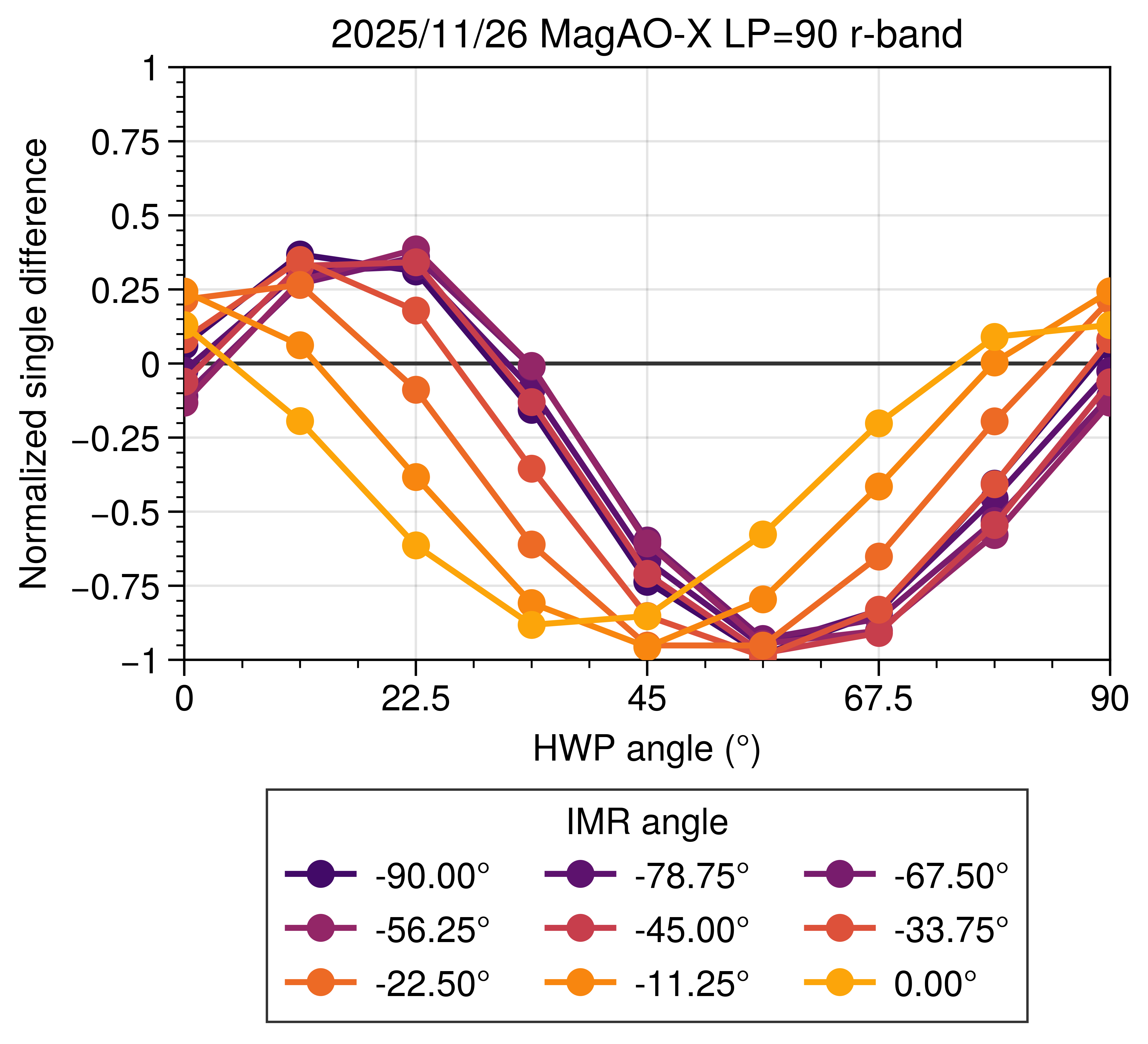
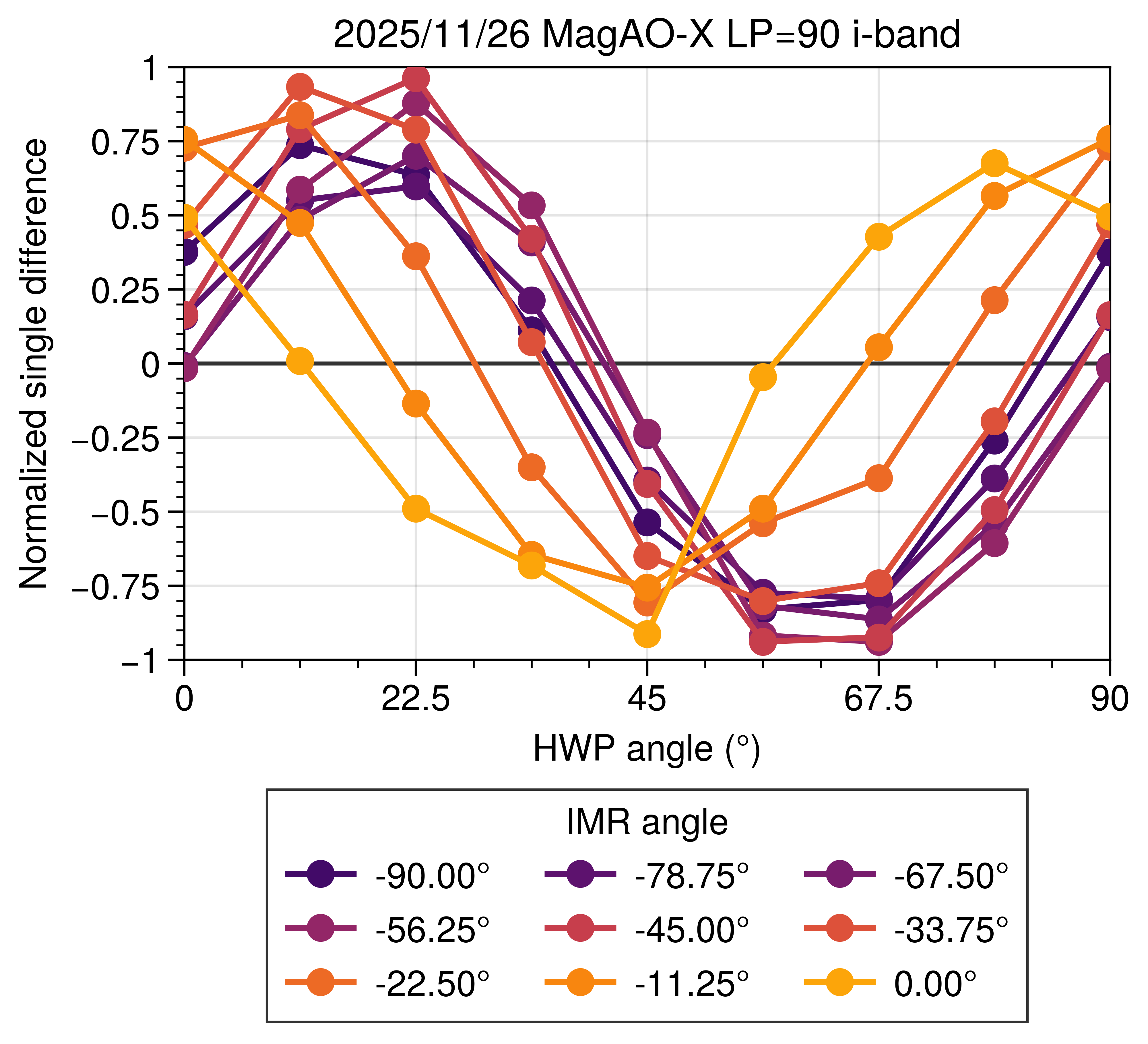
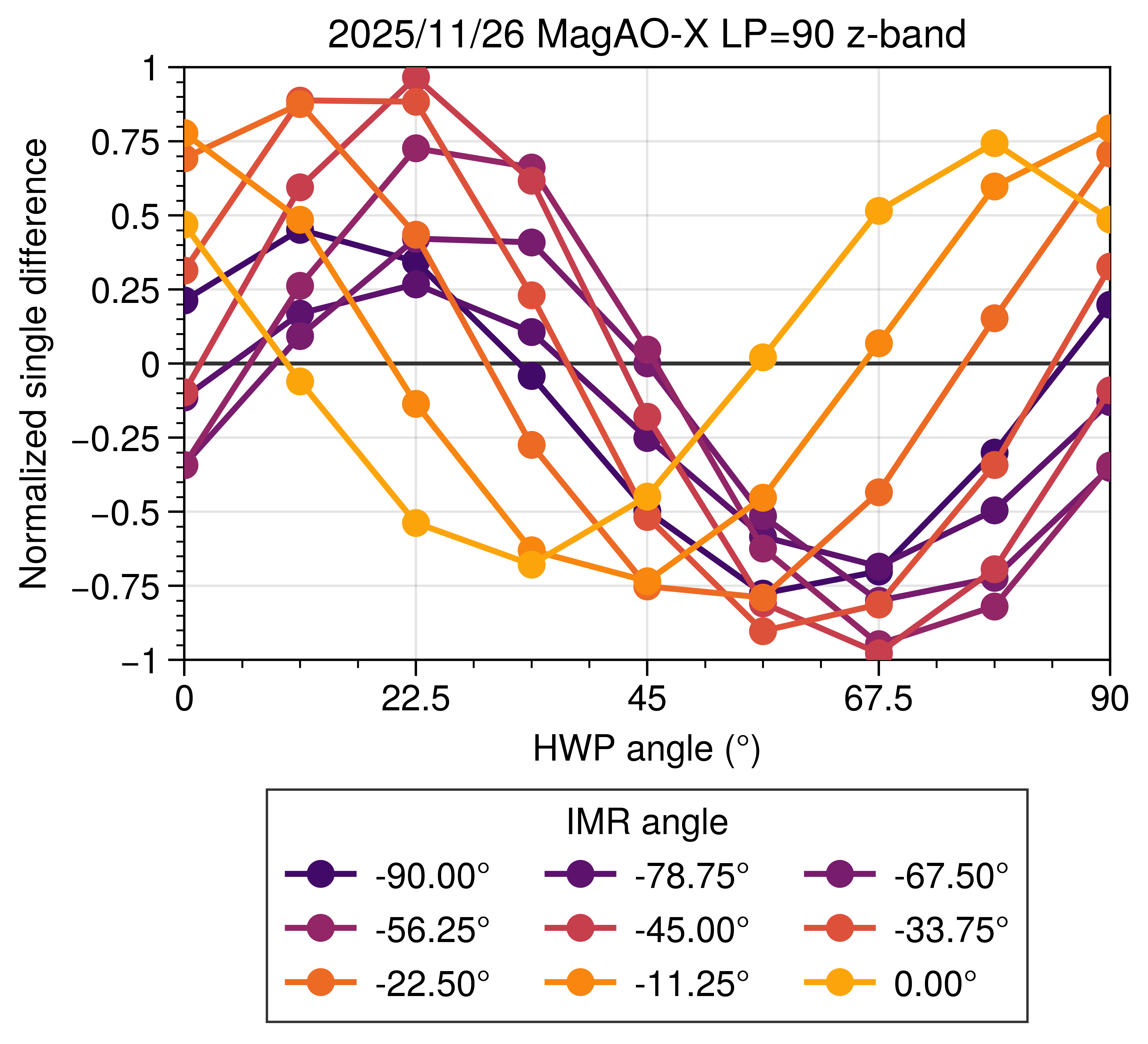
These images show the direct polarimetric response of the image on the two cameras at the three filters we can use for polarimetry (r, i, and z). Each data point is the fractional polarized flux measured between the two cameras: +1 means 100% of the input vertically polarized light was measured, -1 means 100% of the input vertically polarized light has now become horizontally polarized, and 0 means 0% of the input flux was measured. An ideal curve goes from +1 at HWP=0° to -1 at HWP=45°. Shifts in the locations of the curves indicate retardance in the instrument, and when the curves are squished less than ±1 it indicates a loss in polarimetric efficiency due to crosstalk.
From these curves we can see immediately by eye a lack of sensitivity at r-band, which can be attributed to the PBS–it has non-ideal performance below 650nm, which is half of the r bandpass. We can also see that the image rotator (IMR) has clear retardance and crosstalk effects as the different colored curves shift and squish at different IMR angles.
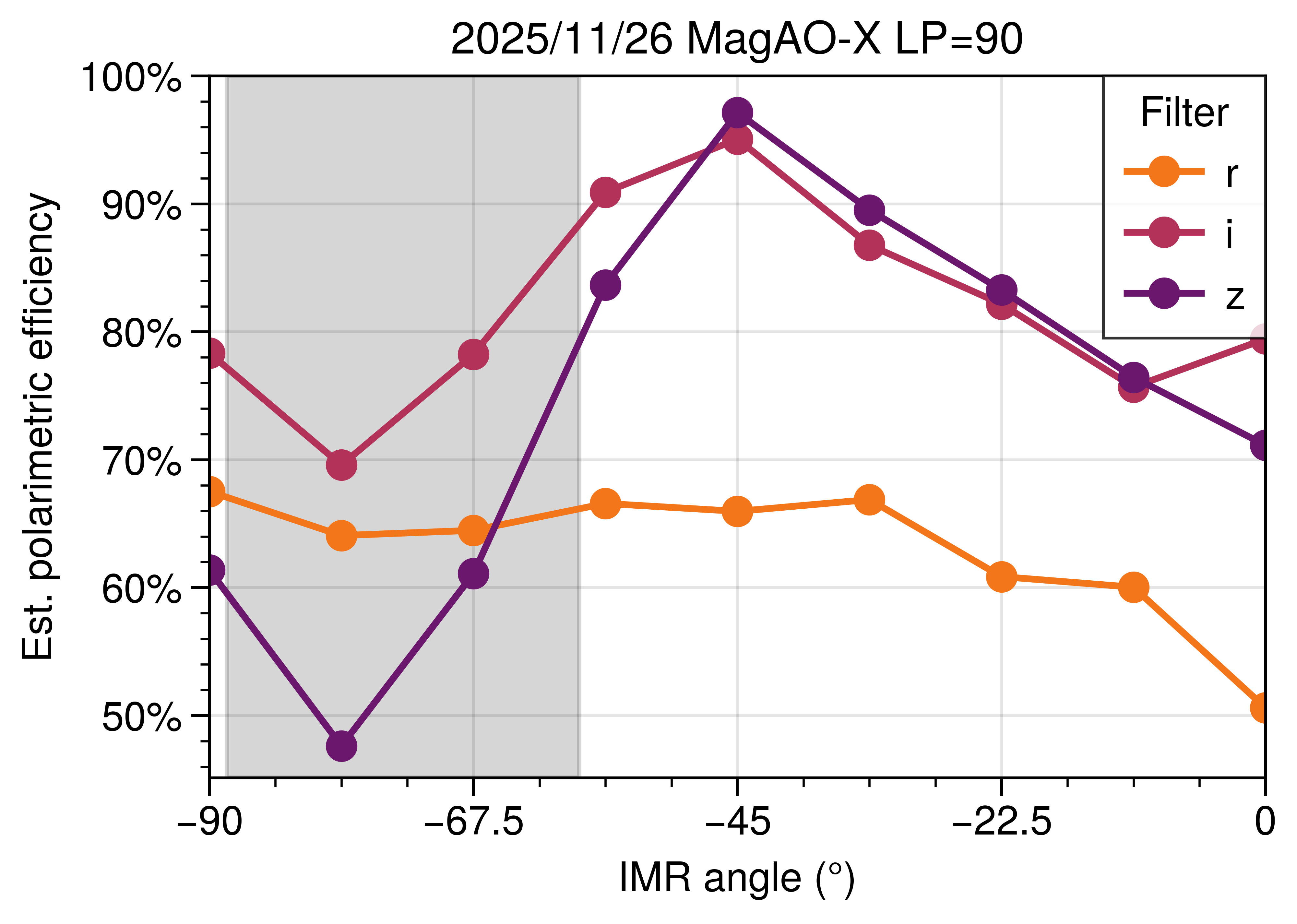
The overall polarimetric efficiency can be estimated from the maxima and minima of the normalized single-difference curves. A curve that goes from +1 to -1 has 100% efficiency, while a curve that goes from +0.4 to -1 only has 70% efficiency. The above plot shows the estimated polarimetric efficiency for each filter at different image rotator angles. The highlighted region indicates the typical image rotator angles used on-sky by MagAO-X.
First off, we can see that at i- and z-band we can reach an efficiency of almost 100% without any additional polarimetric components in the instrument, which is great! However, this is reached at image rotator angles that we never use on-sky due to the fixed orientation of the instrument pupil offset compared to the telescope pupil–this is difficult to change because this angle is optimized to minimize the effects of dead actuators on the deformable mirror (DM) and all pupil stops in the instrument are co-aligned with the DM. Thankfully, even with the current pupil offset we’re only losing 50% of the polarized flux, at most.
Future work
Now that these data have been measured, I am going to begin working on fitting polarimetric models for the instrument. In a few nights, I will also take measurements of polarized and unpolarized standard stars, which allows me to measure the polarimetric response of the telescope’s tertiary mirror (which we know has IP and crosstalk). Hopefully I will also get some time on a circumstellar disk, too!
Before next observing run I am going to work on the design of a polarimetric compensator to optimize the polarimetric efficiency by inverting the effects of the instrumental retardance and crosstalk. This will require new optical components and motorized stages, which means I’ll be preparing a new proposal asking for money! If all goes well, we should have an optimal polarimeter in time for the 2026 observing runs.
Other news
Following the arrival of Rico, we’ve had to say goodbye to Matthijs, keeping our Dutch equivalency number constant


As we progress further and further in the run, our attempts for consistent sleep are getting more and more exasperated, to the point of insanity for some

Observations are continually mostly well, although our luck with the weather is becoming more tenuous. Everyone keep your fingers crossed and knock on wood we can finish out the remaining 5 nights successfully!
Song of the day
Fact of the day
Hawai’i is the extinct and endangered species capital of the world. Most native Hawaiian plants and animals are endemic, meaning they are found nowhere else in the world but Hawaiʻi. Once they are lost to extinction, they are gone forever, largely due to habitat loss and impacts of invasive species. Current estimates show 95 of 142 endemic bird species, 50% of land snails, and 134 species of plants have been extinguished from the Hawaiian islands.