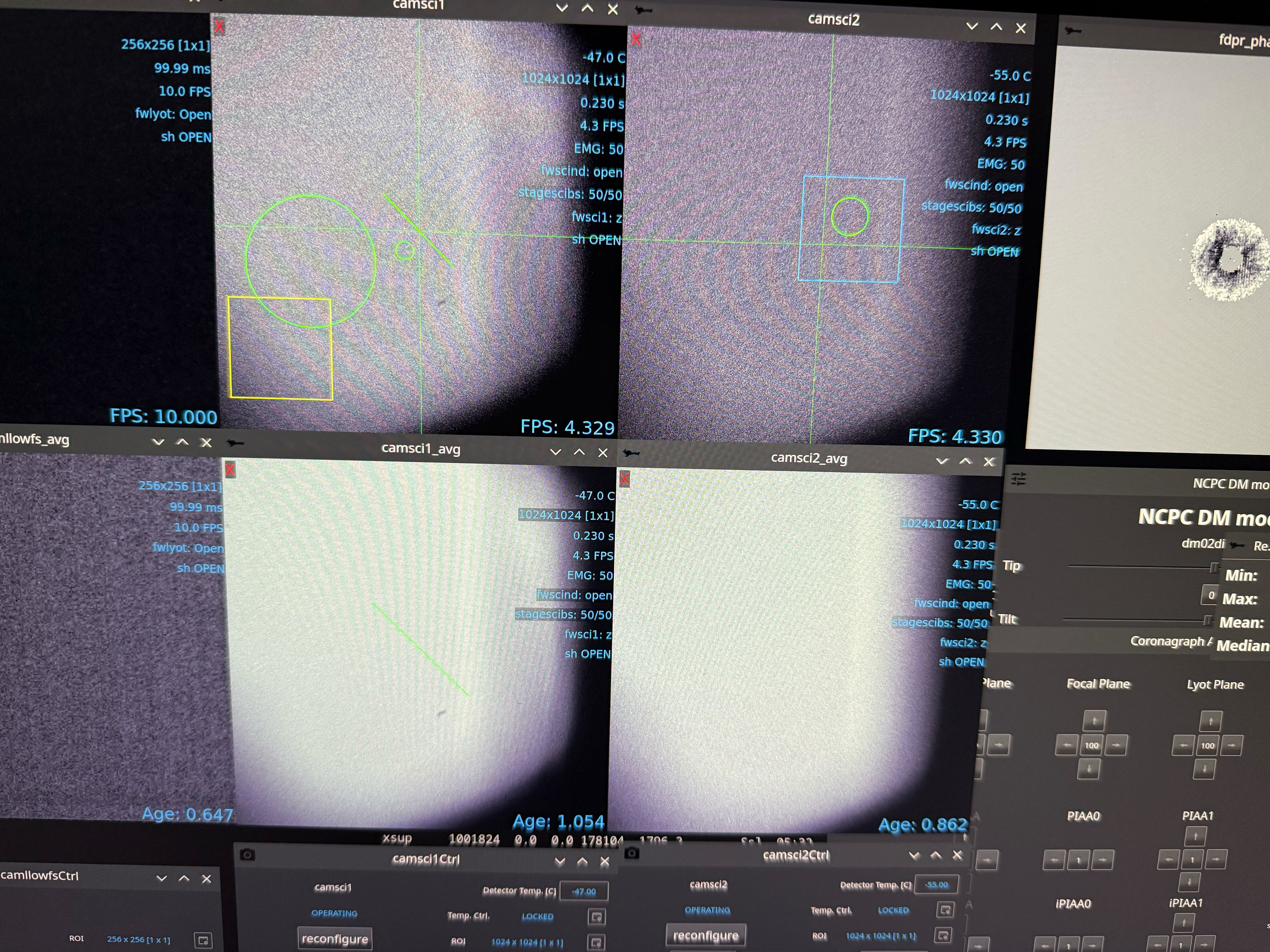
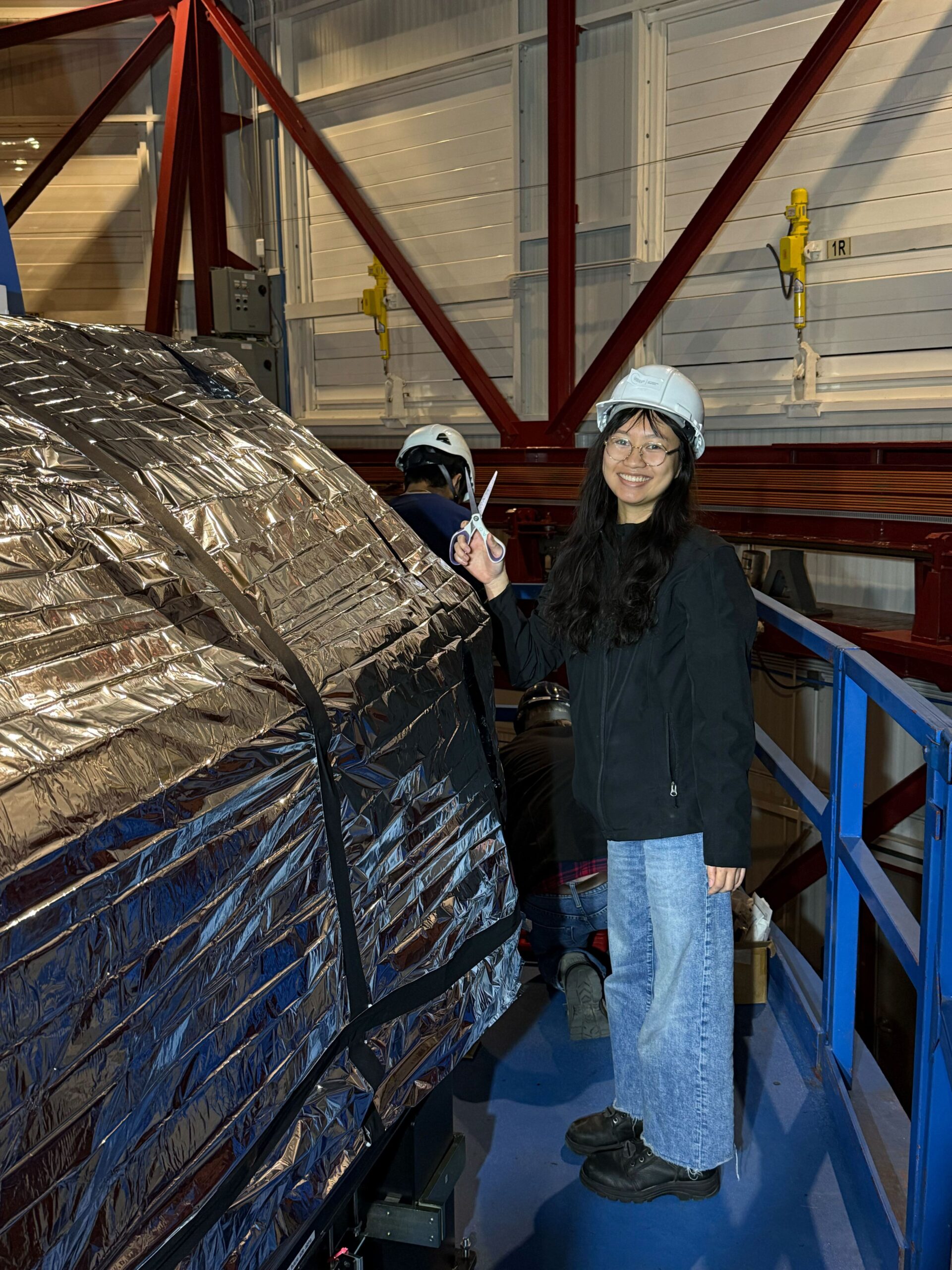
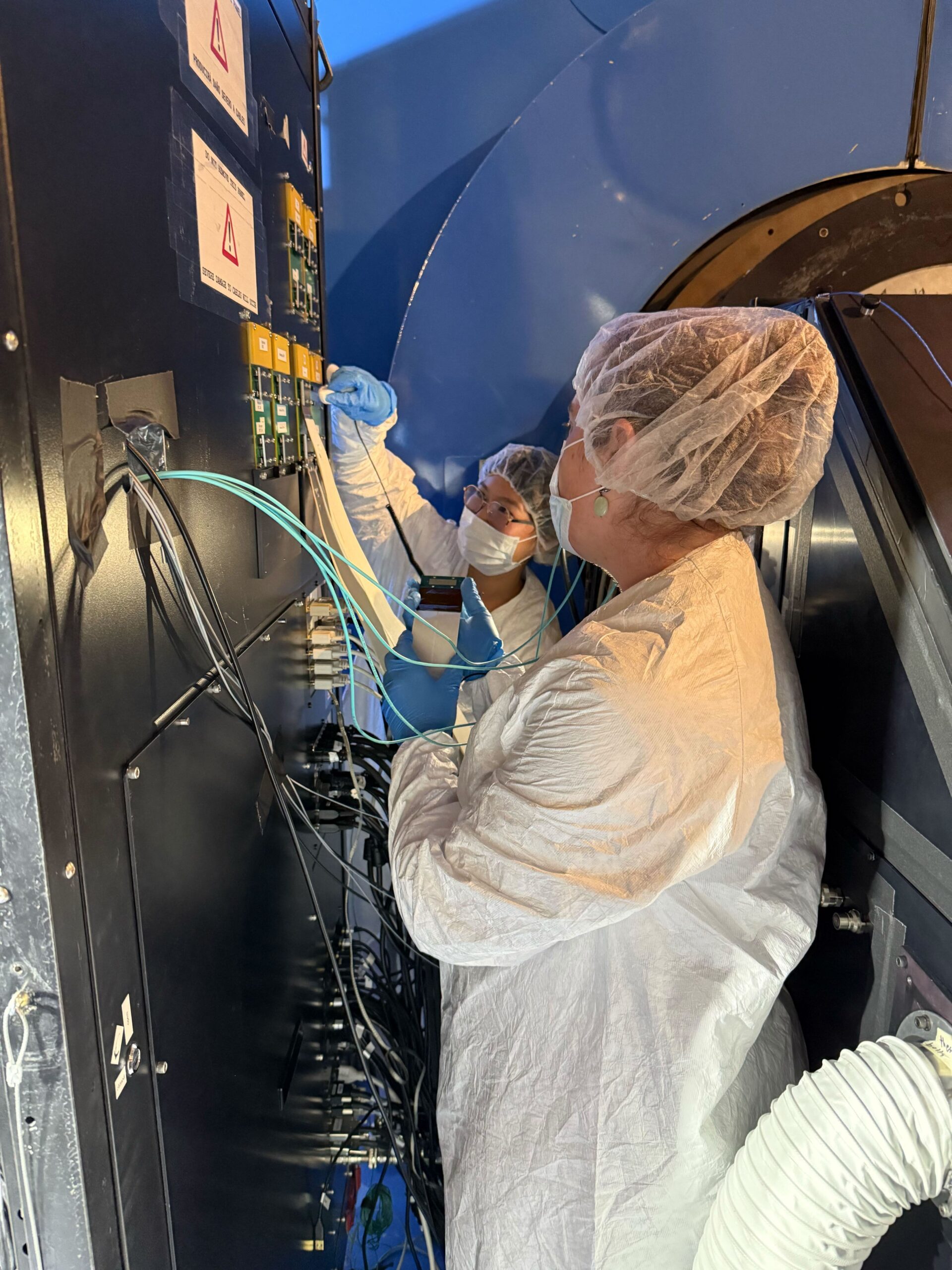
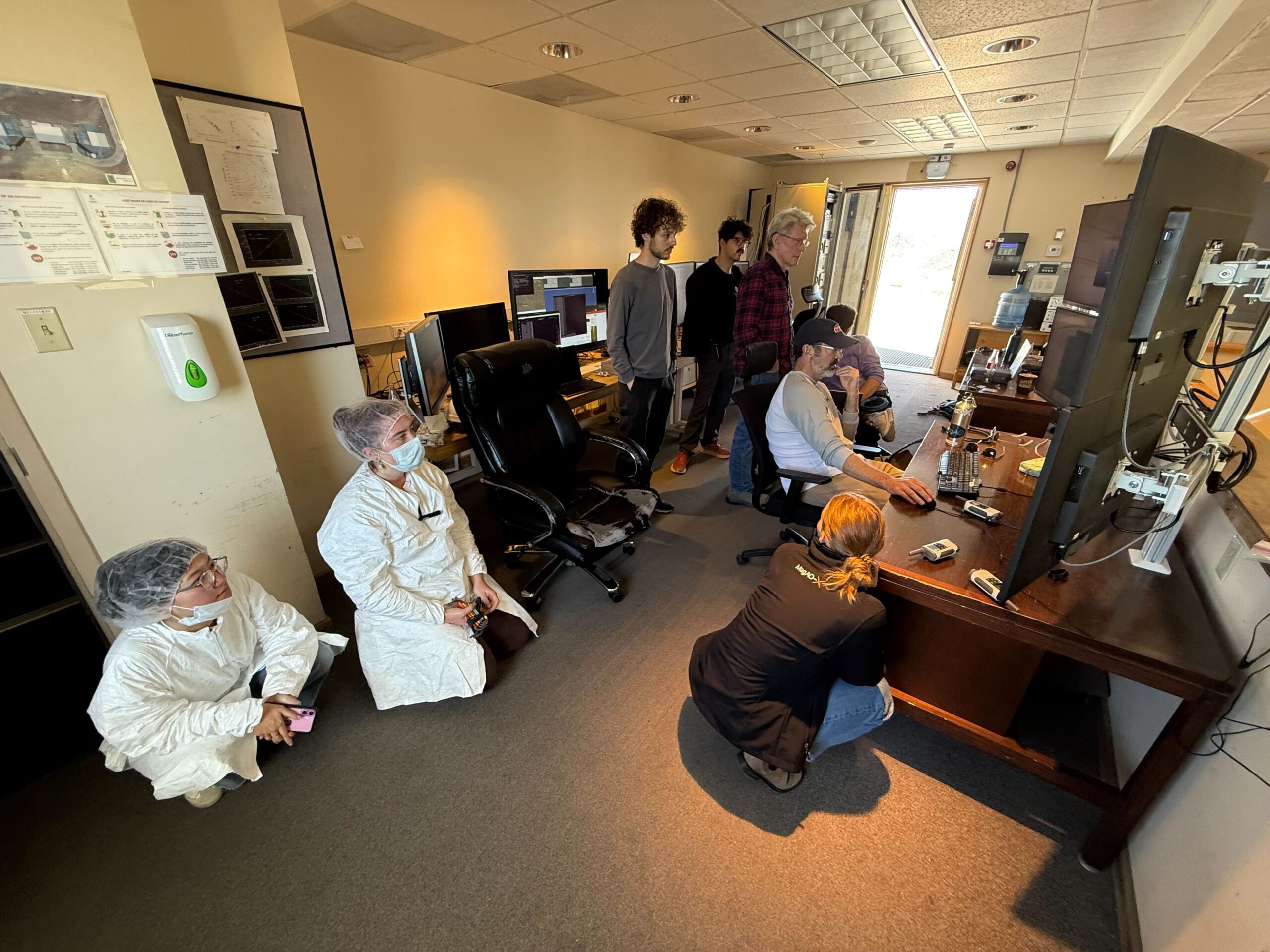
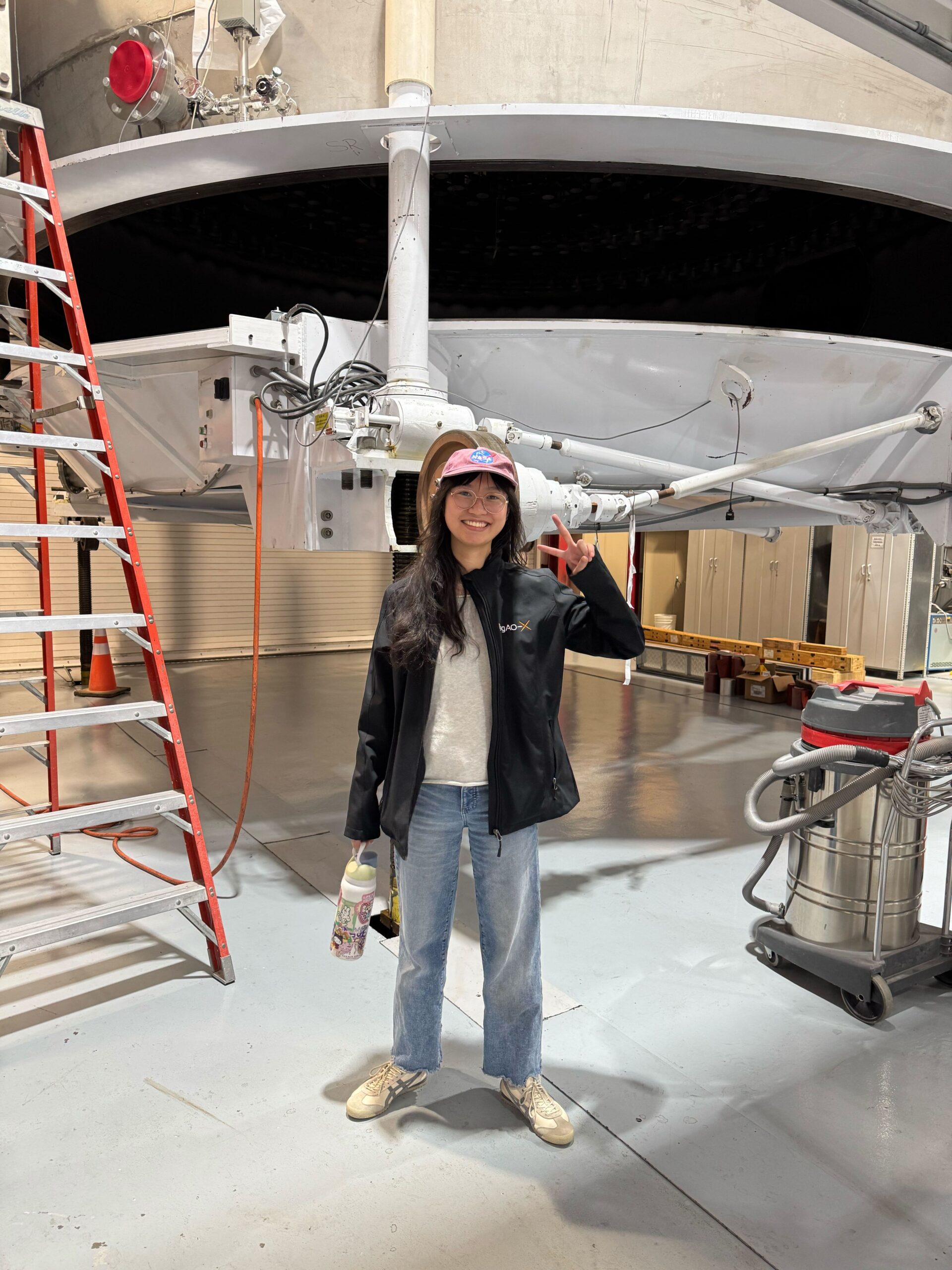
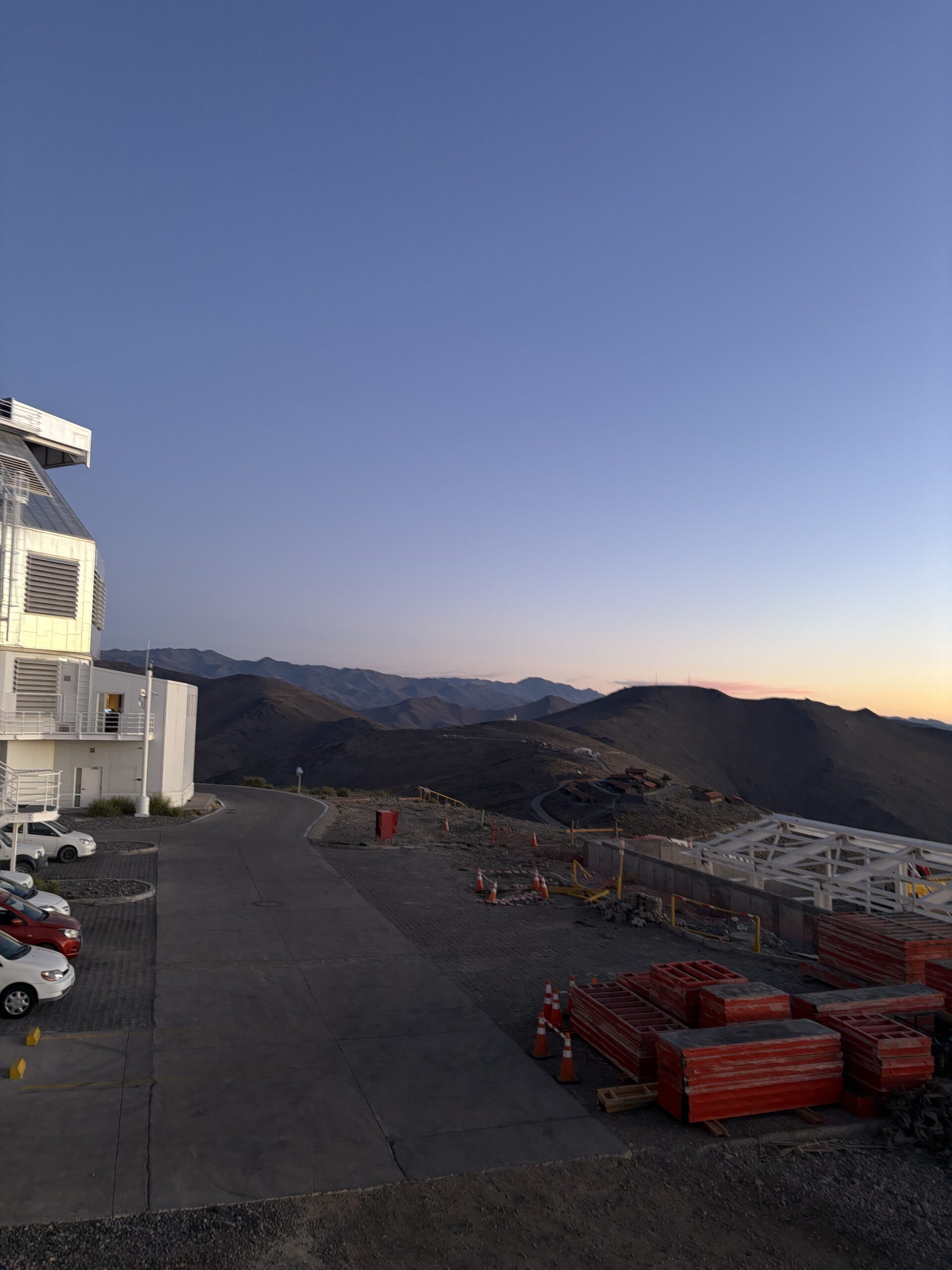
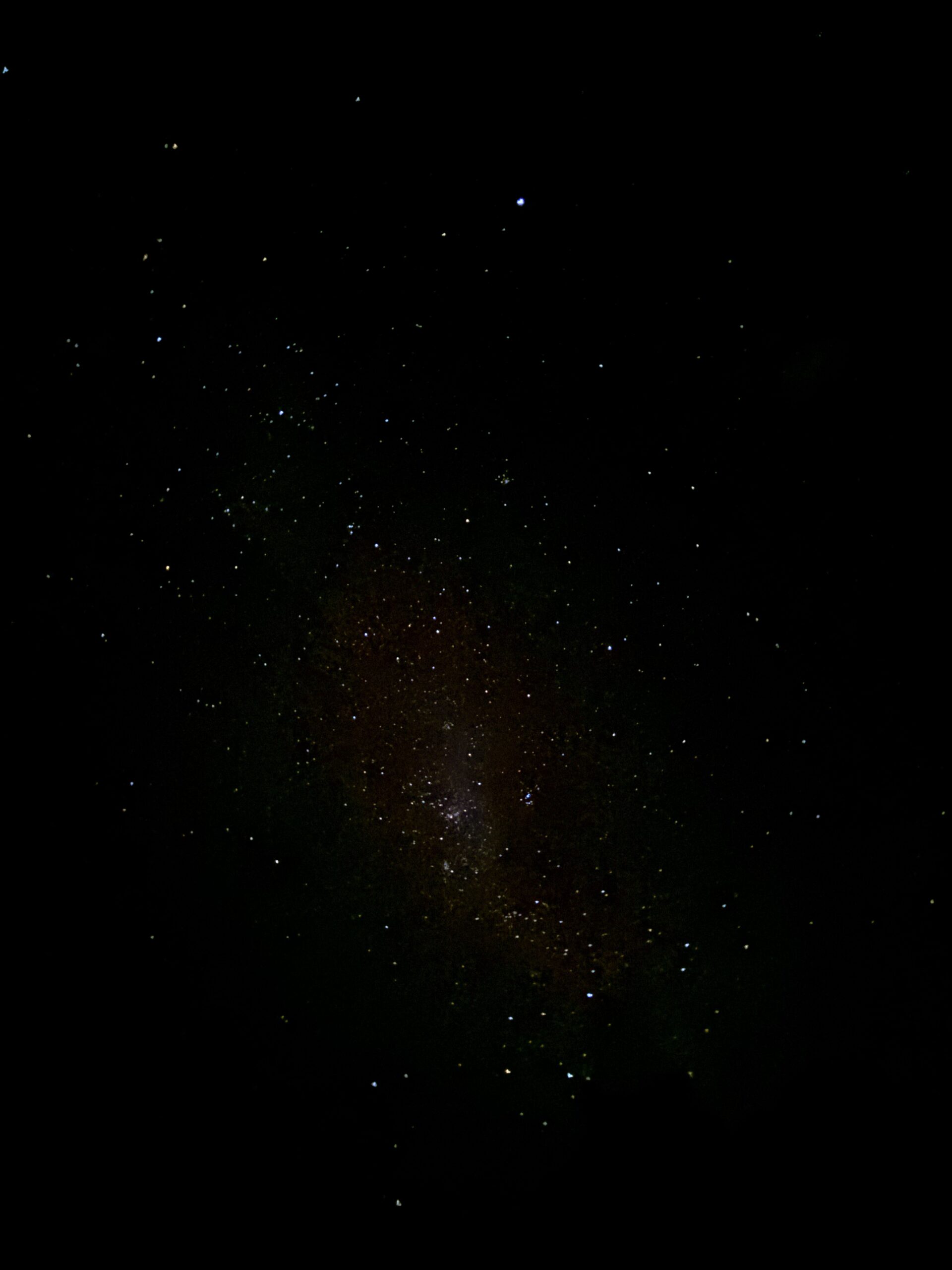
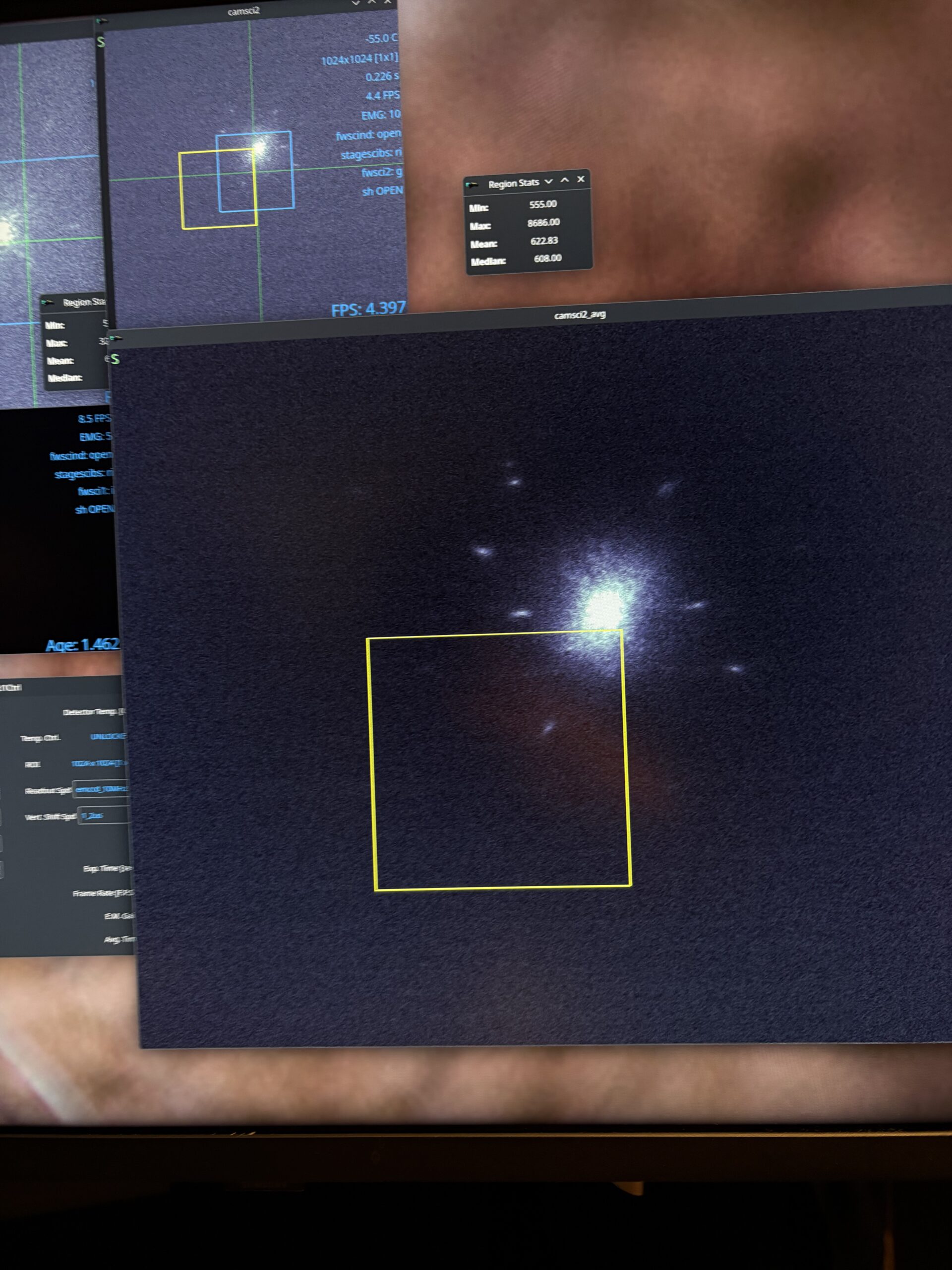
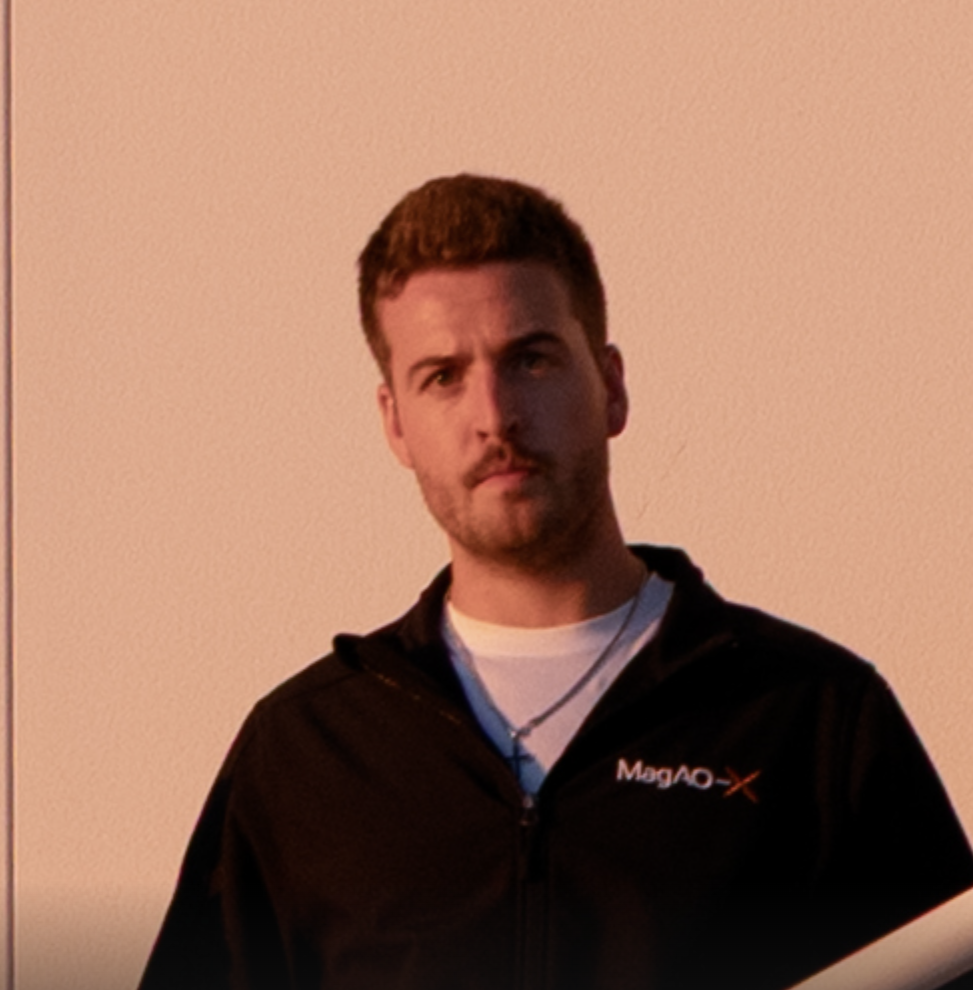
And now it falls to me to write today’s blog post. The plan for the day was simple enough: adjust the focus on the science cameras and then pack up the instrument for its move to the aux building. However, while one of our fresh postdocs succumbed to the infamous Haffert disease and stayed up until 5 AM taking flat fields, we discovered that with the instrument’s recent changes, we were actually seeing some unexpected vignetting on the science cameras.
Credit: Miles Lucas
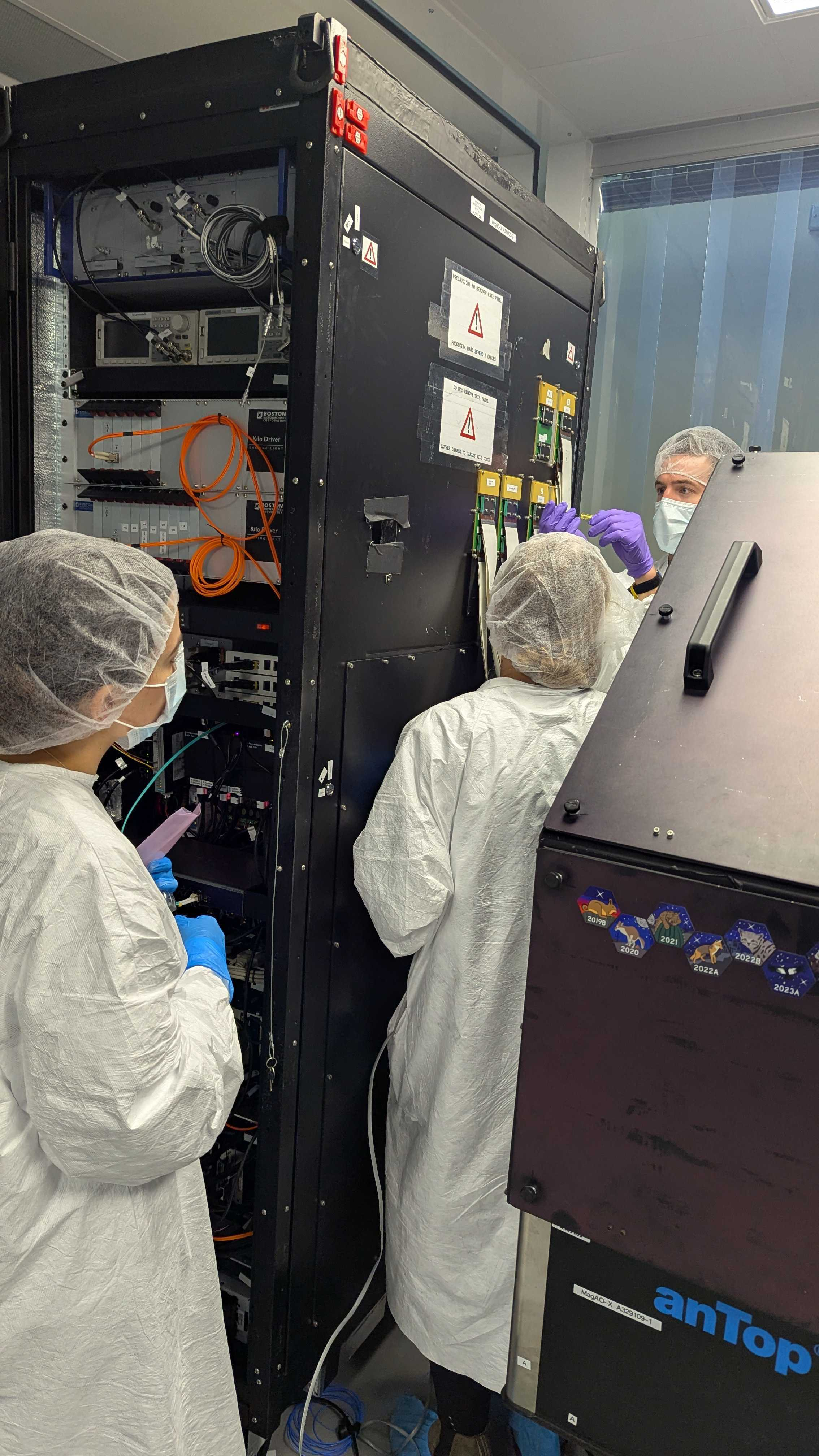
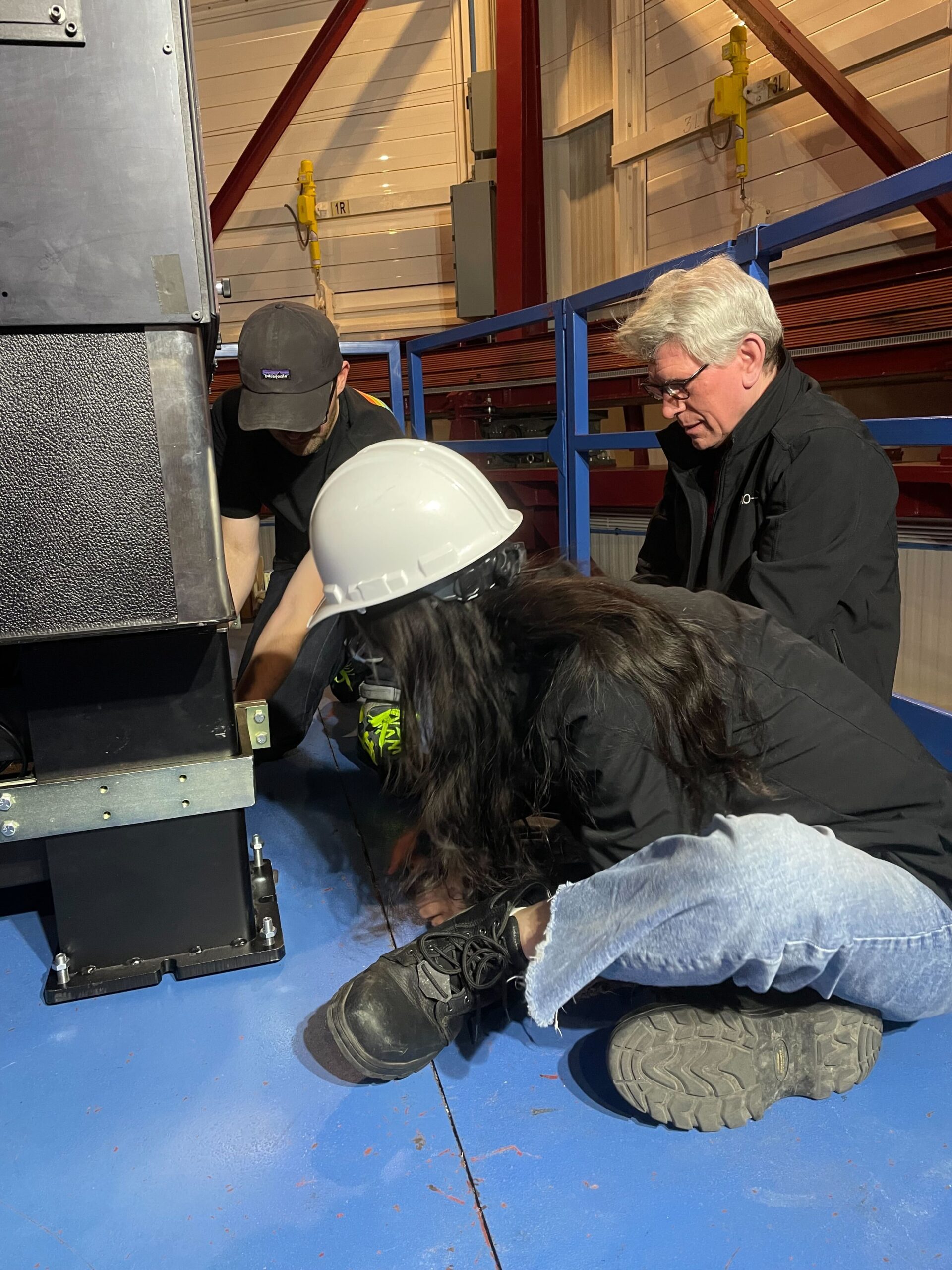
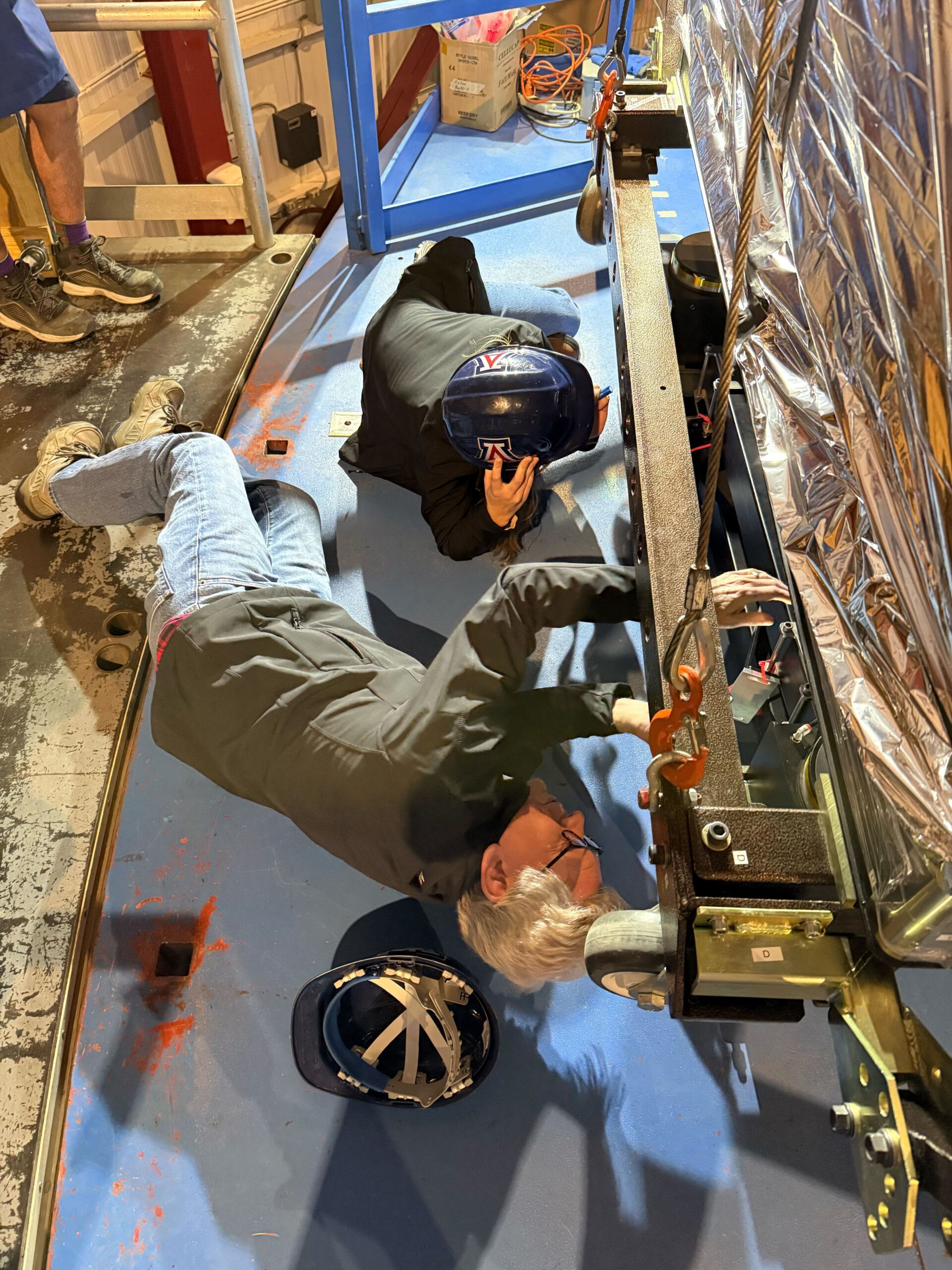
After a vigorous morning of re-aligning the beam and removing most of the vignetting (it actually went pretty smoothly, though it did eat up a decent chunk of time), there was unfortunately no time left to refocus the science cameras. MagAO-X had an appointment with some professional riggers to be moved up the mountain, and the first step was to remove all the cables.
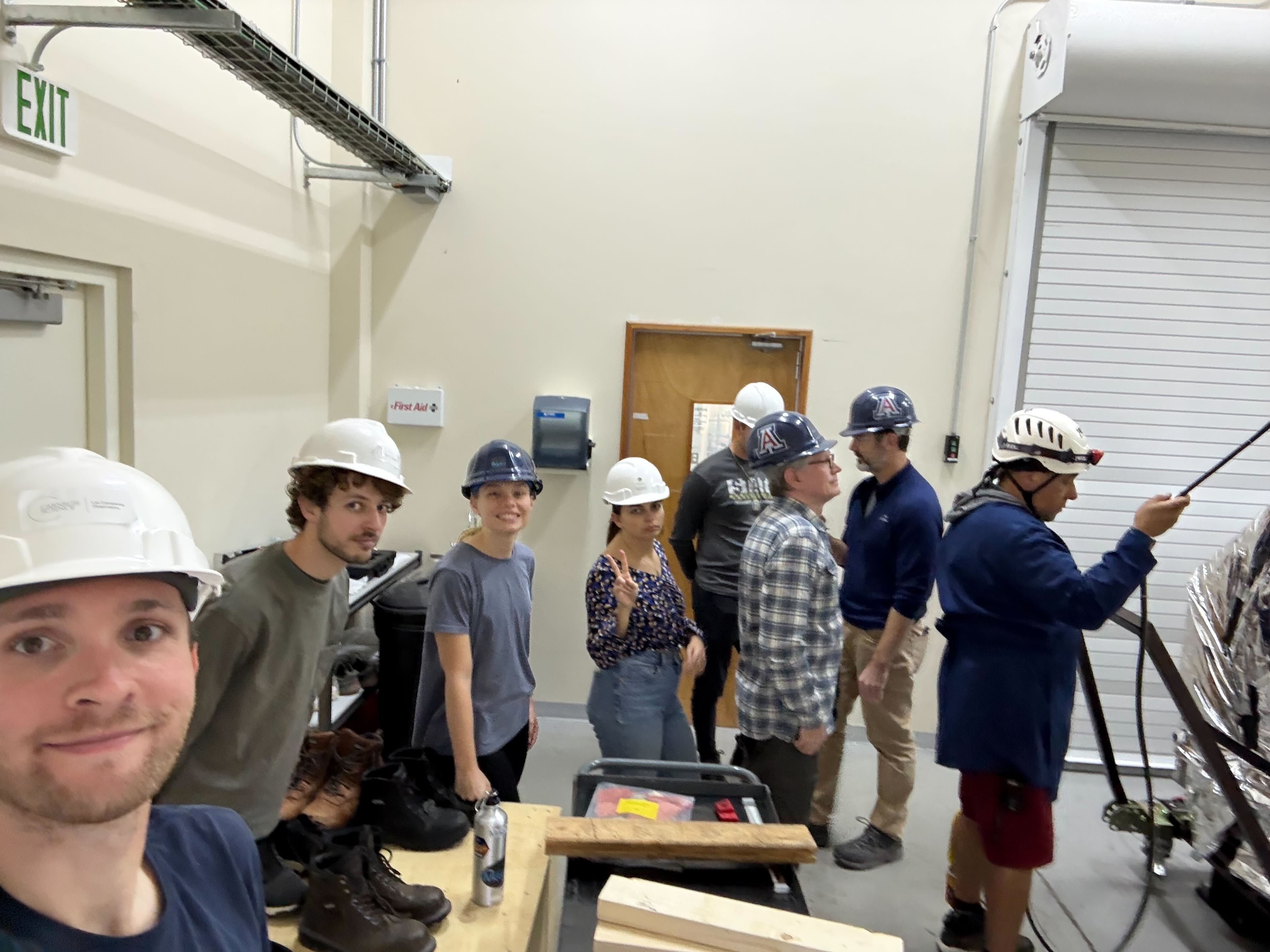
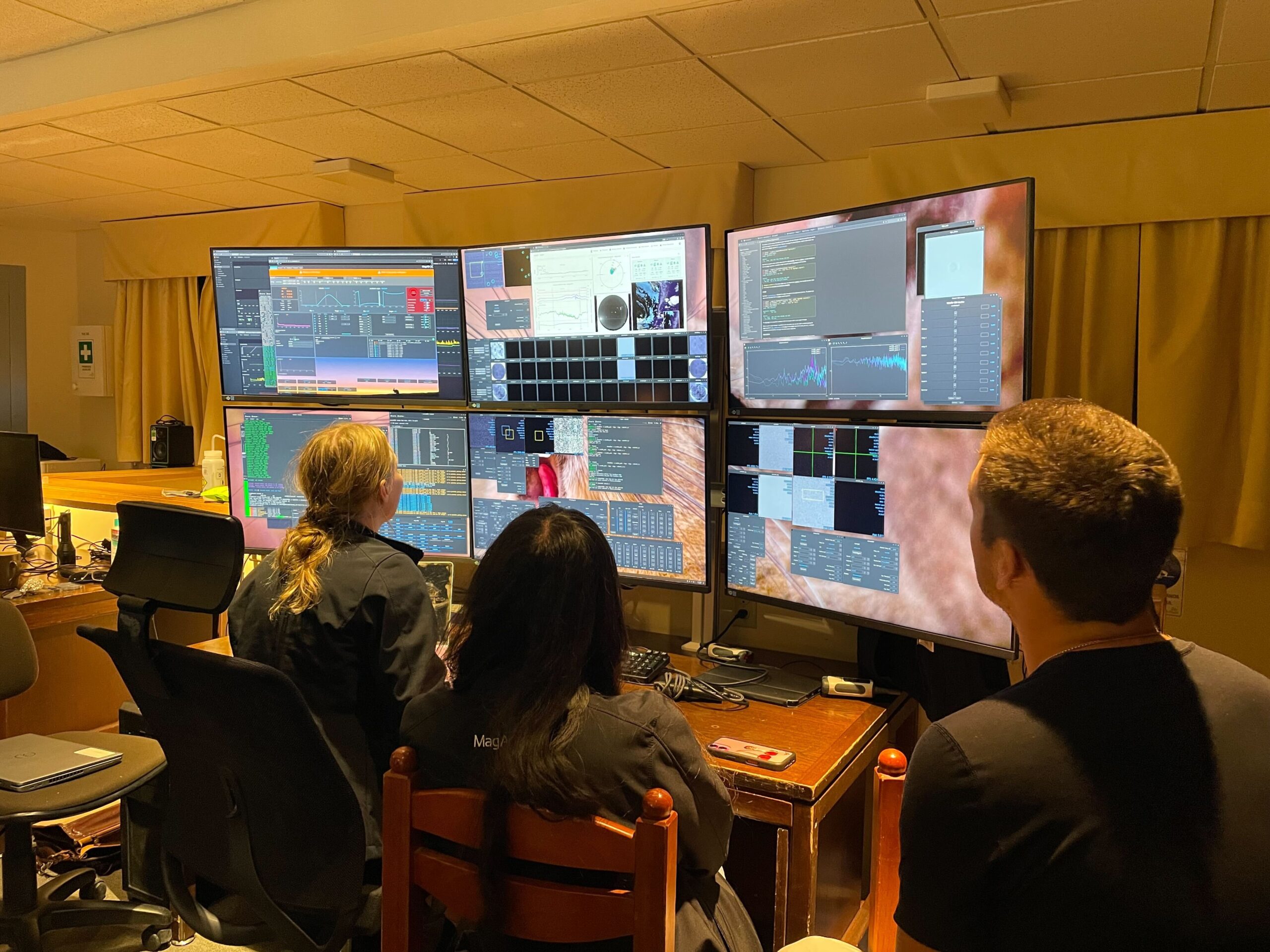
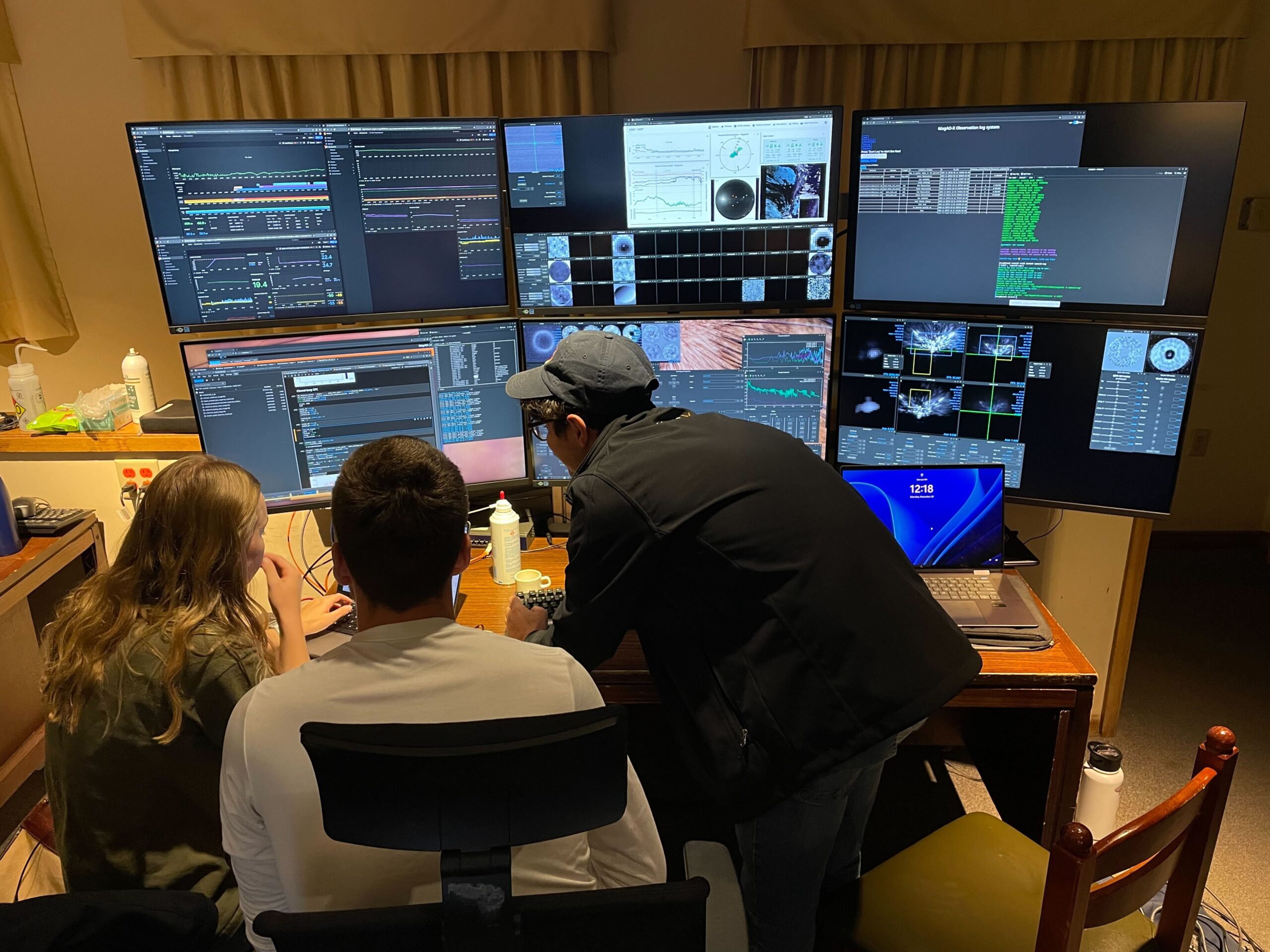
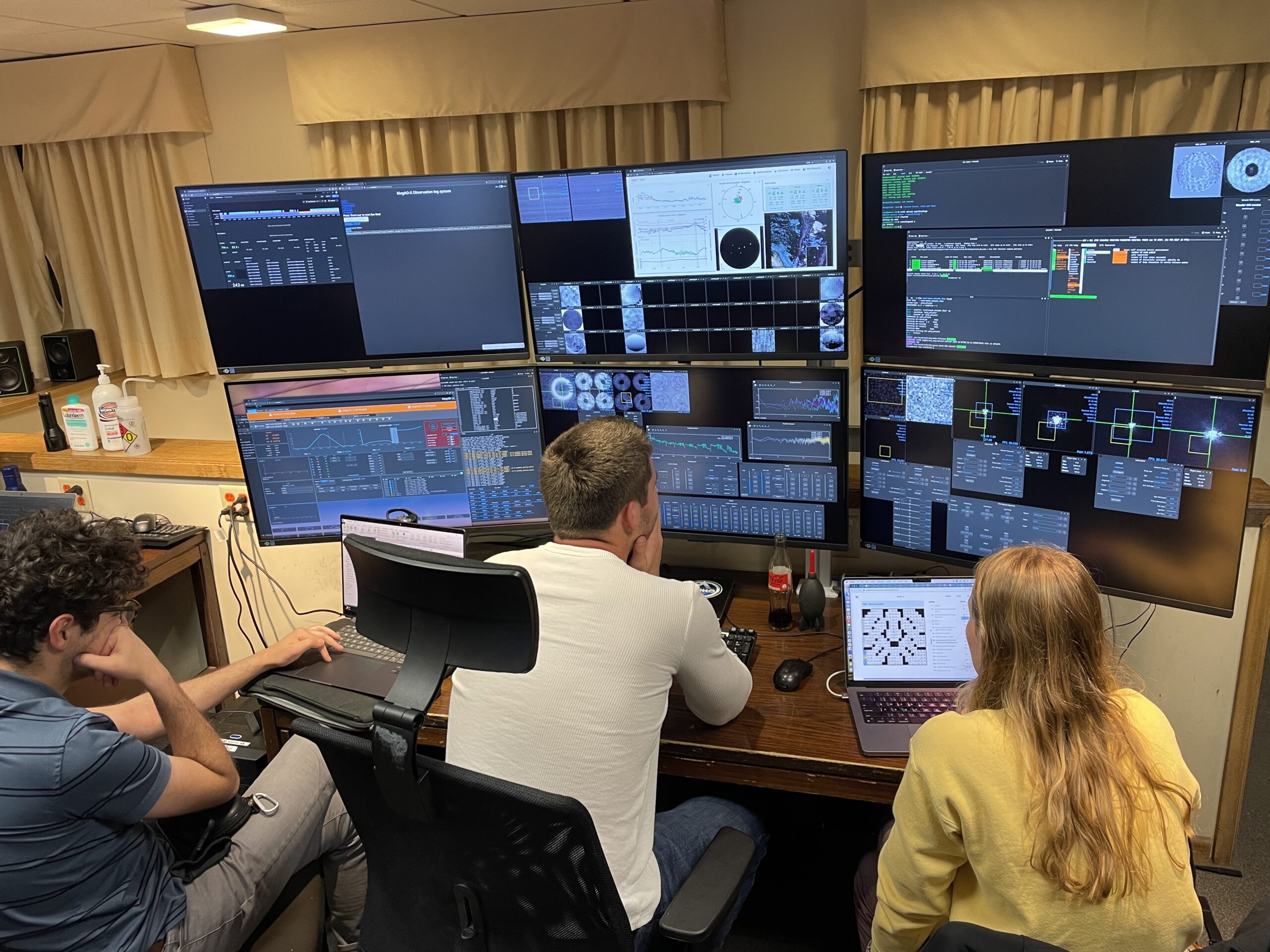
Grad students working
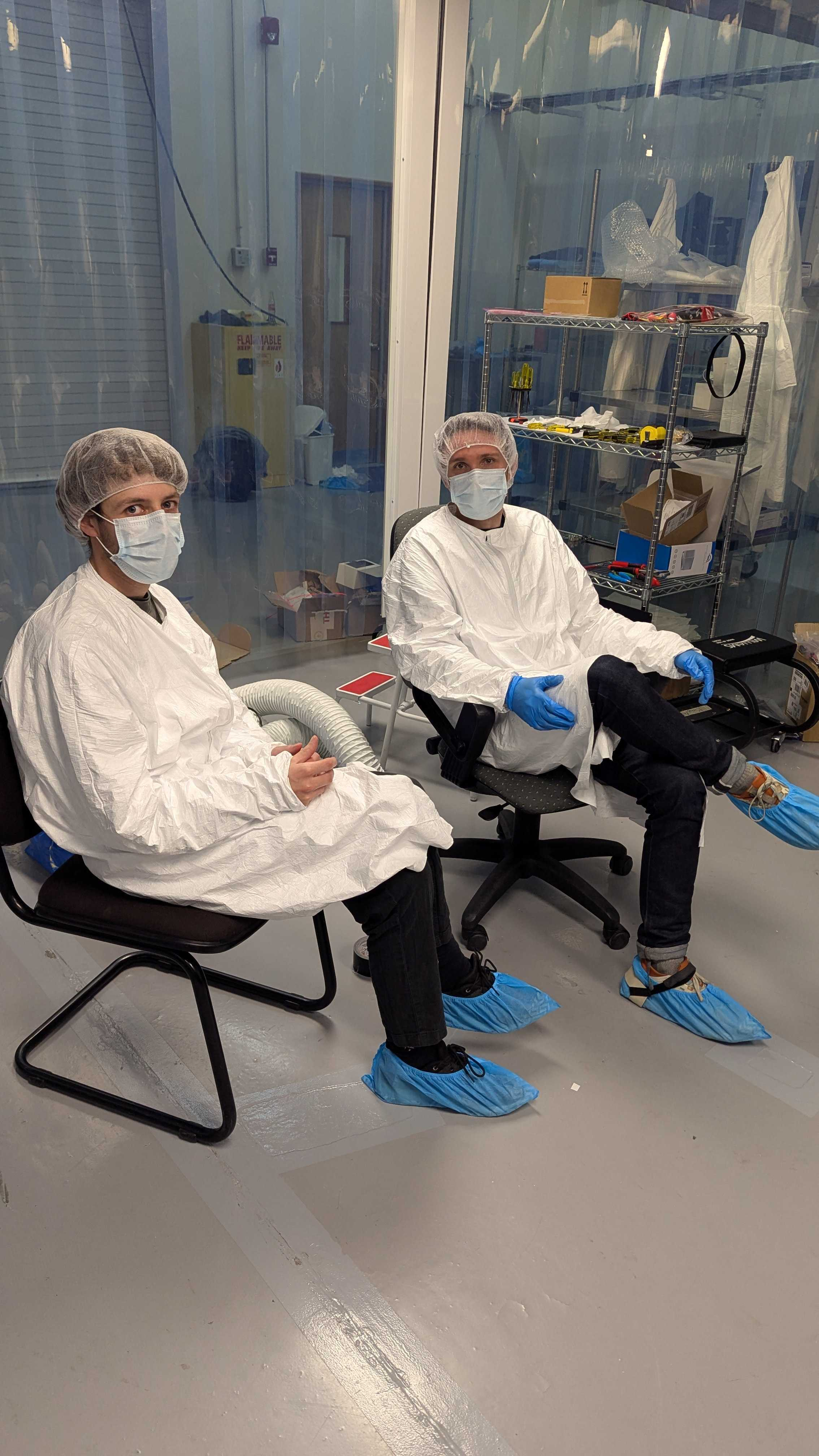
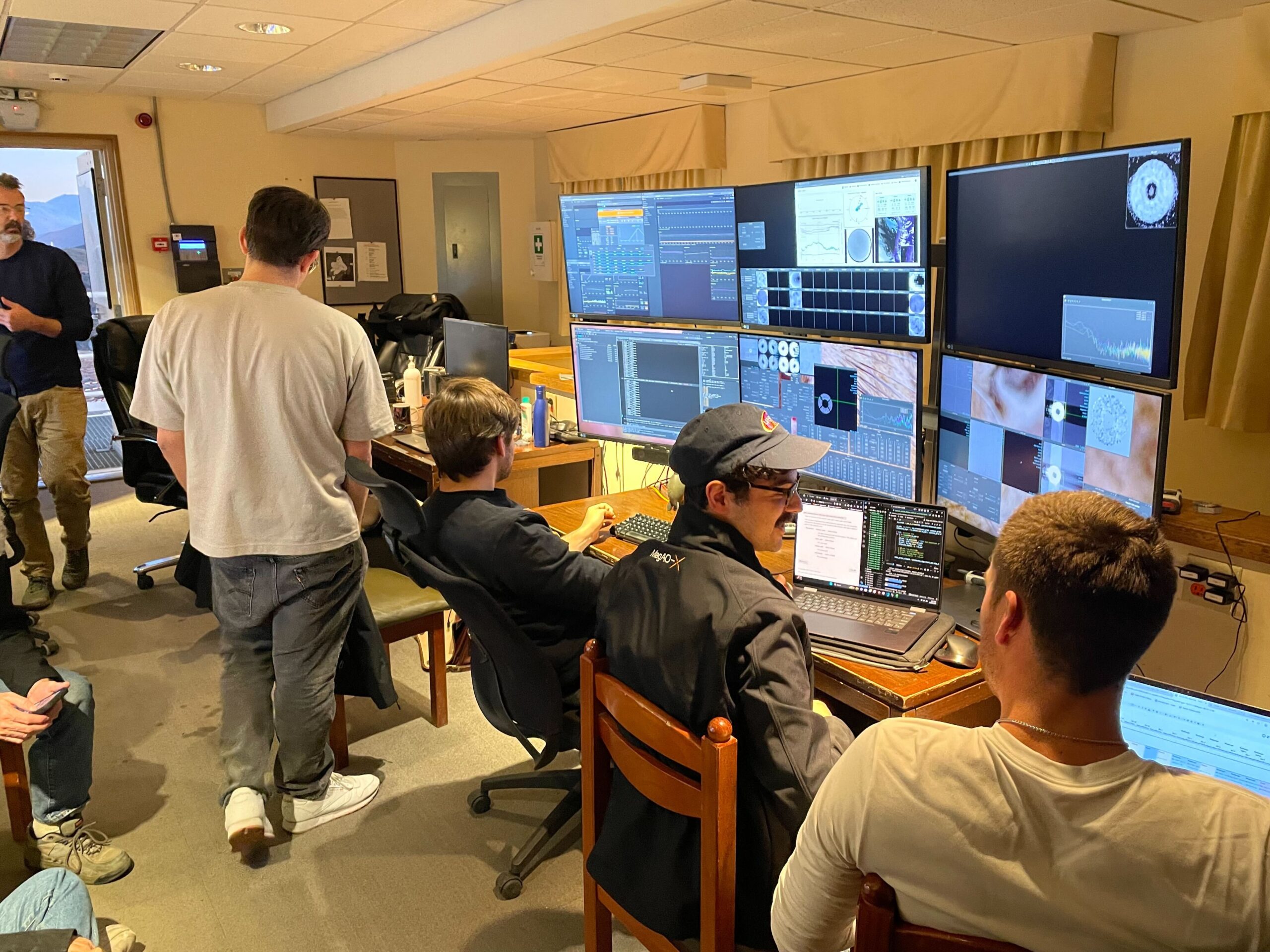
Post-docs supervising (credit: Jared Males)
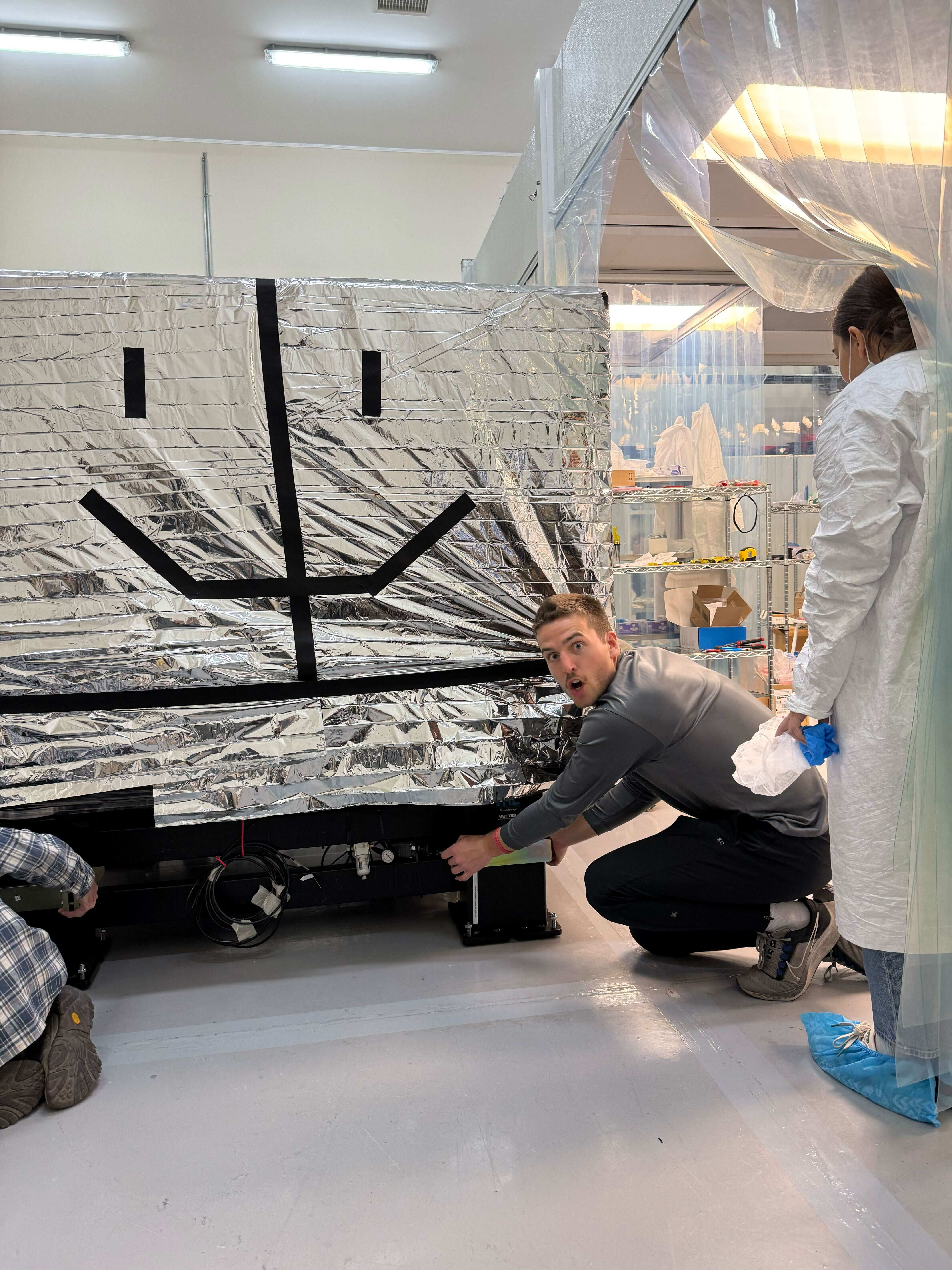
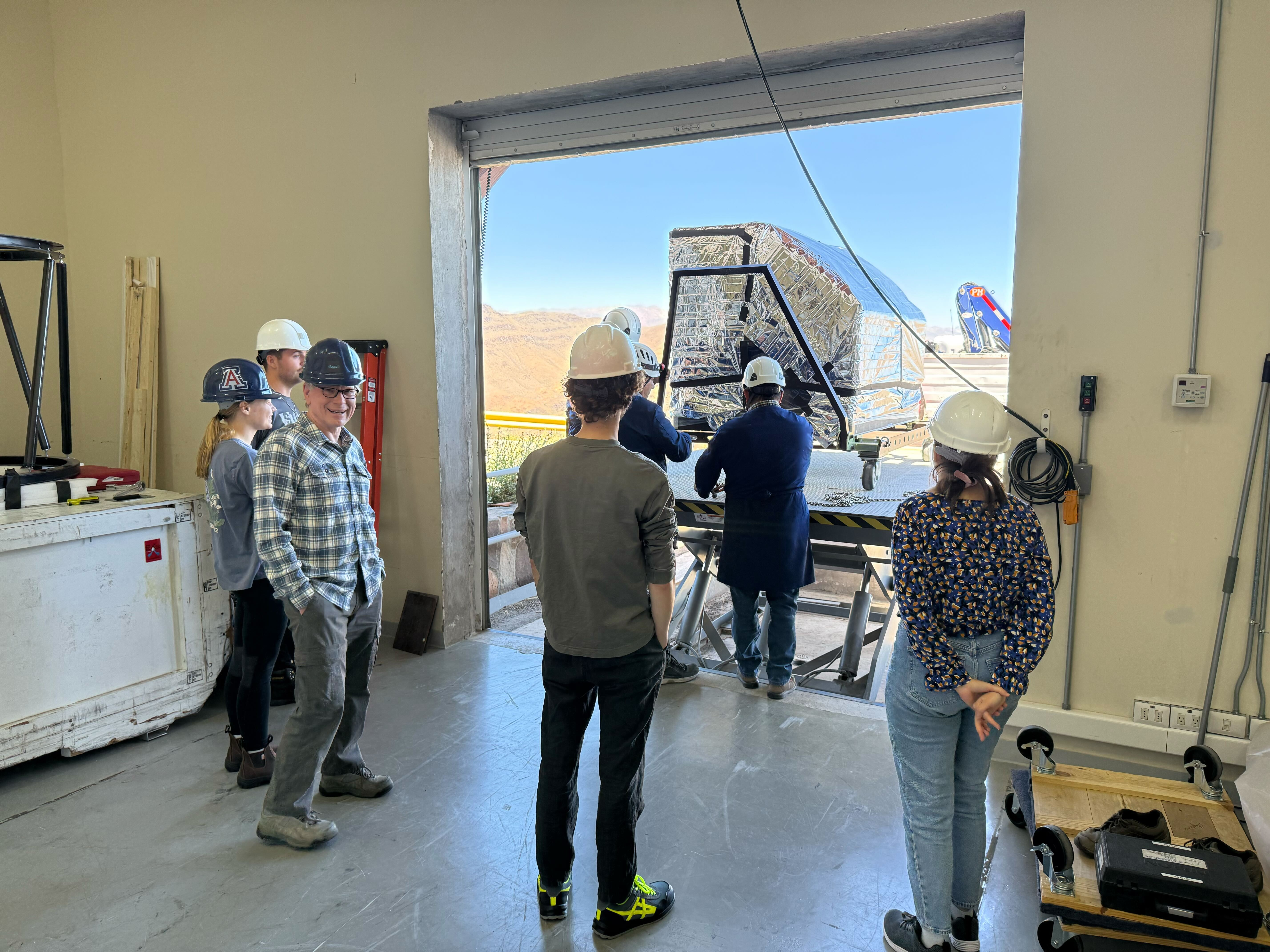
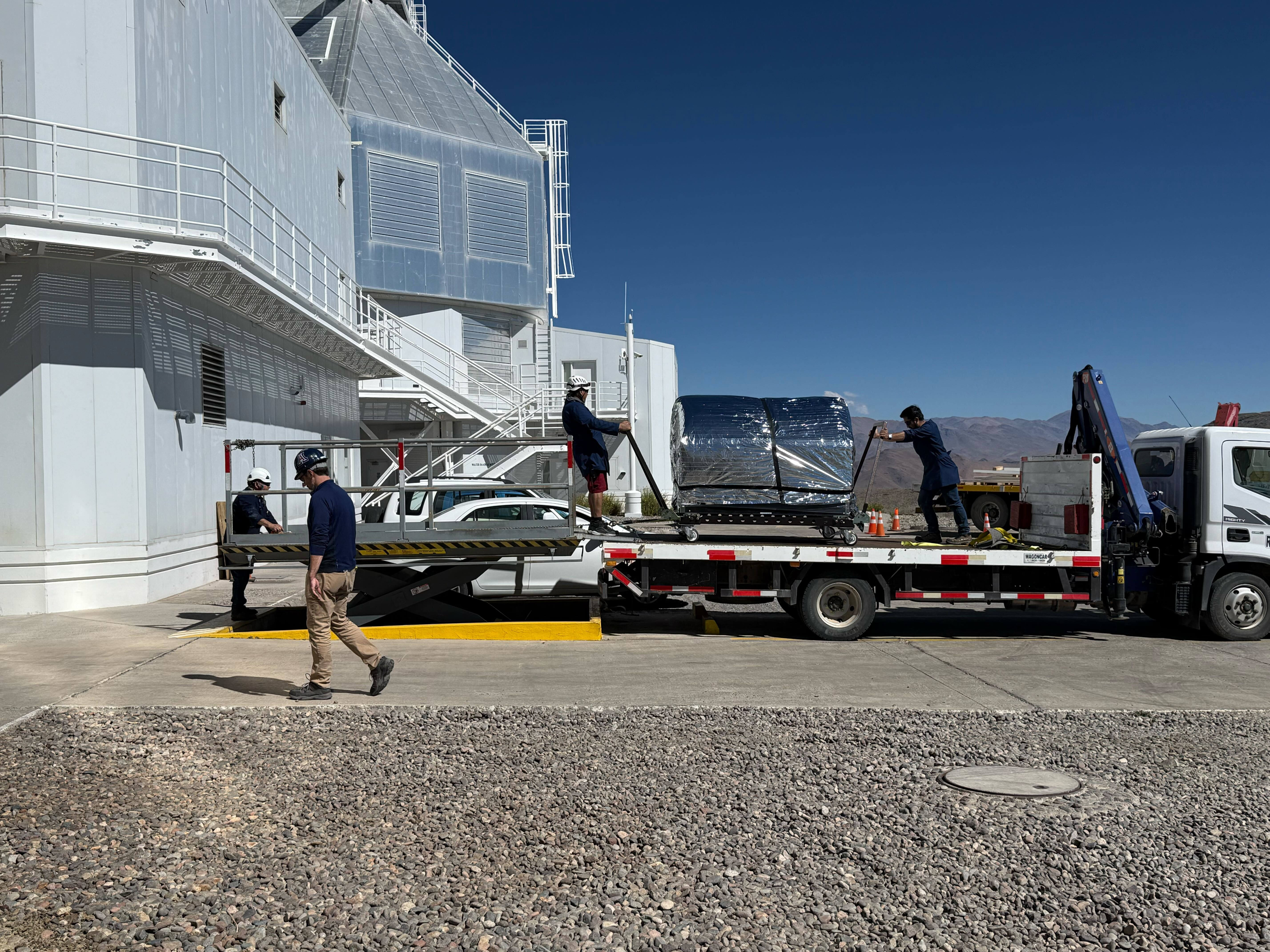
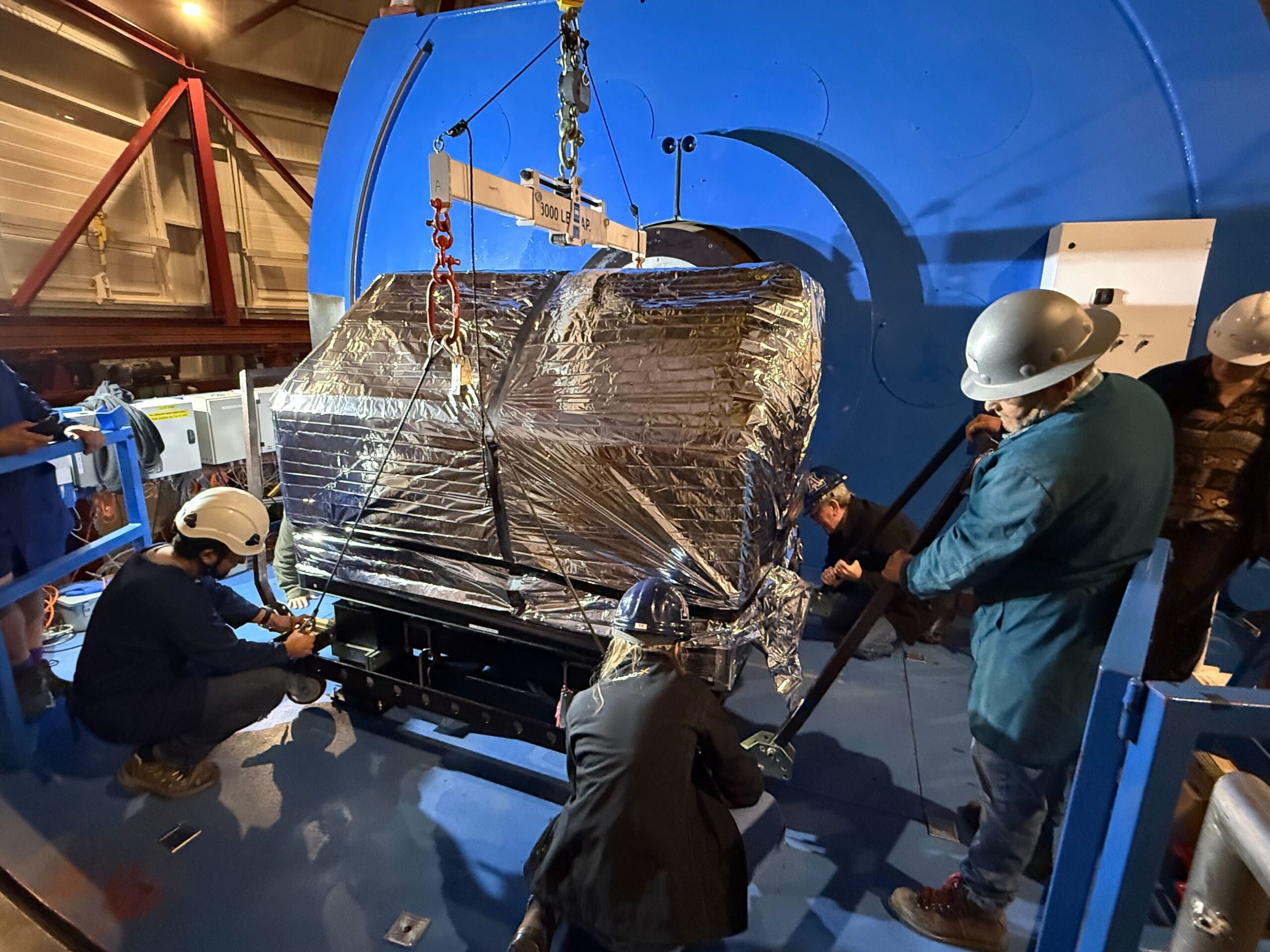
And then it was time to move MagAO-X out of the clean room, wrap up the “gift,” and do some serious rigging to get her ready for the trip up the mountain.
Better watch your fingersThe gift that keeps on givingOur resident riggersThere she goesShe made it up the mountain!
All in all, it was a very successful day, and we’re more than ready to set up the instrument at the telescope and begin our first night of observing. In the meantime, we’ve had some new arrivals up the mountain and with even more reinforcements on the way:
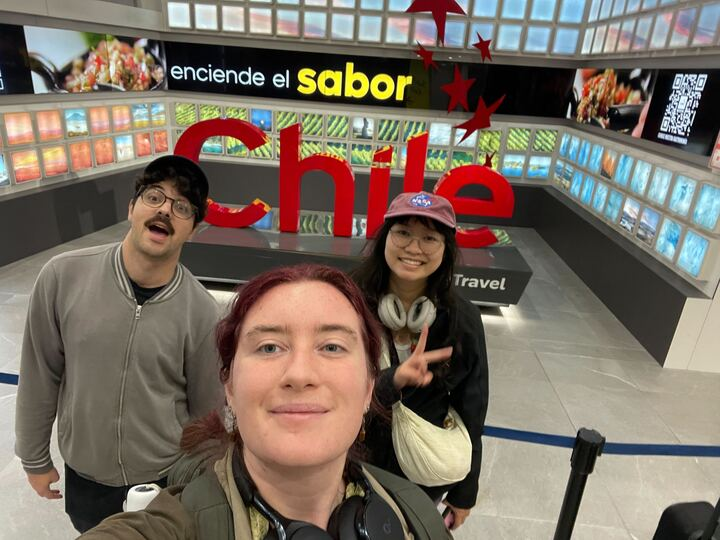
From Tuscon to ChileTravelling all by himself this time. They grow up so fast.
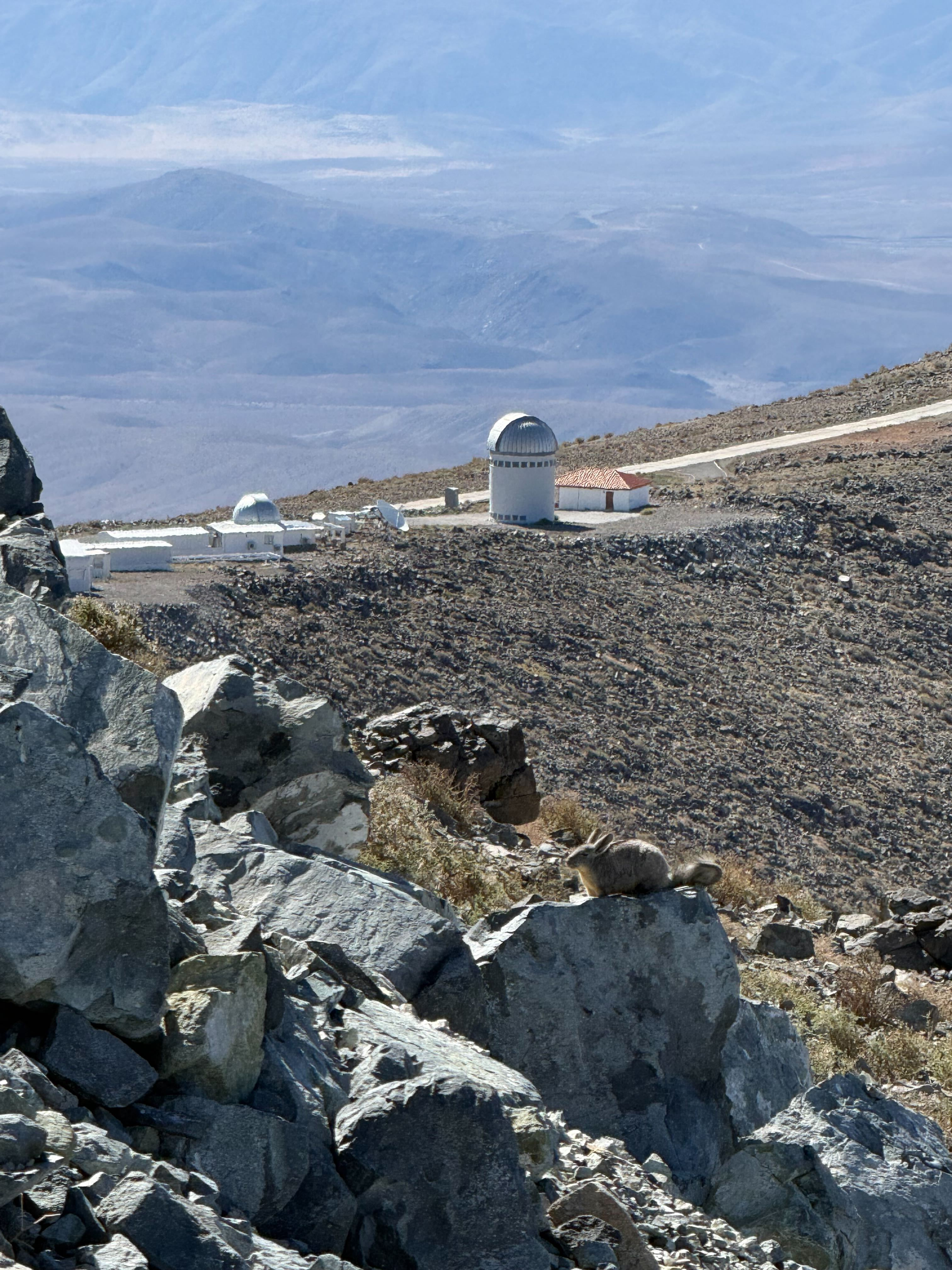
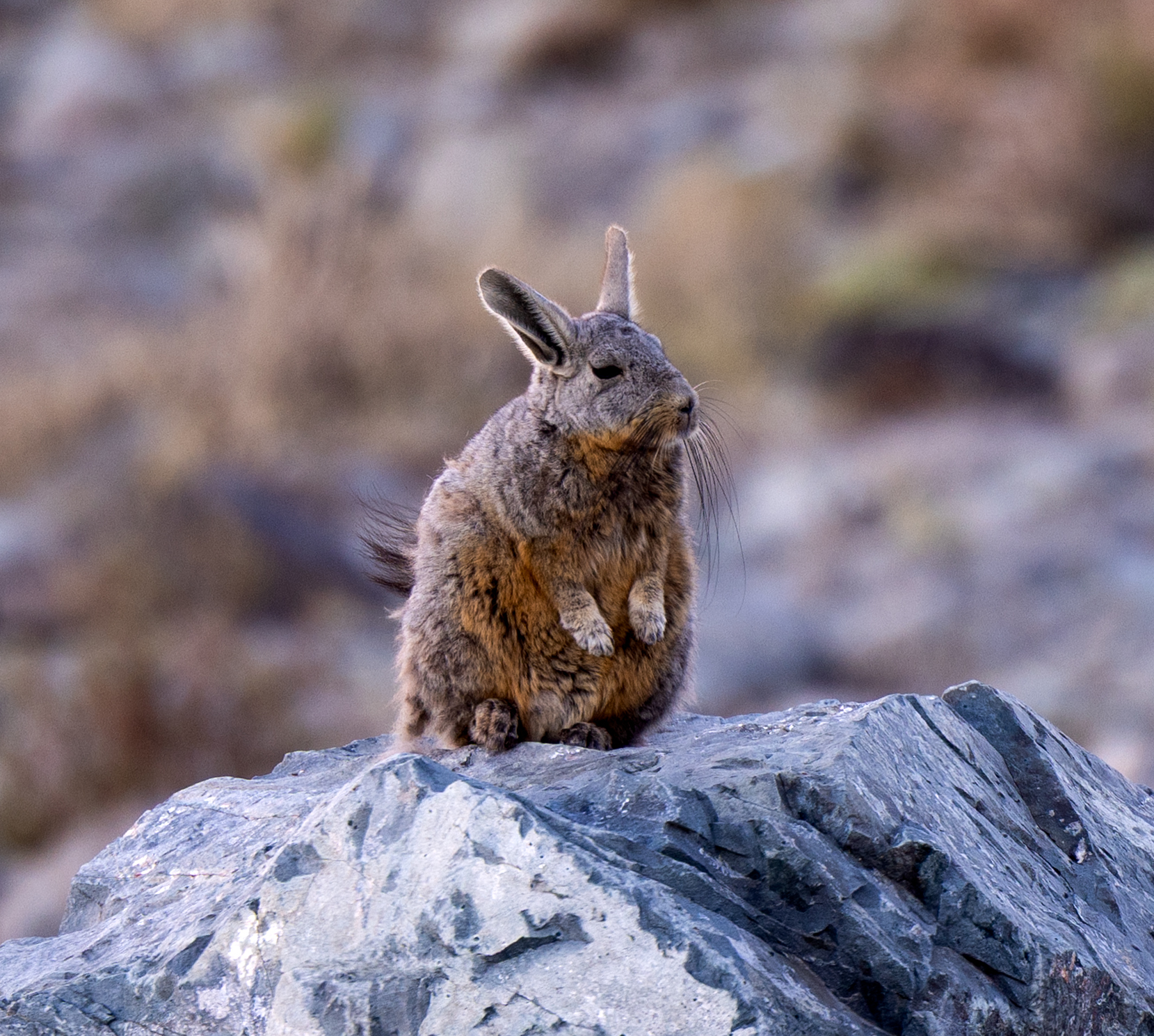
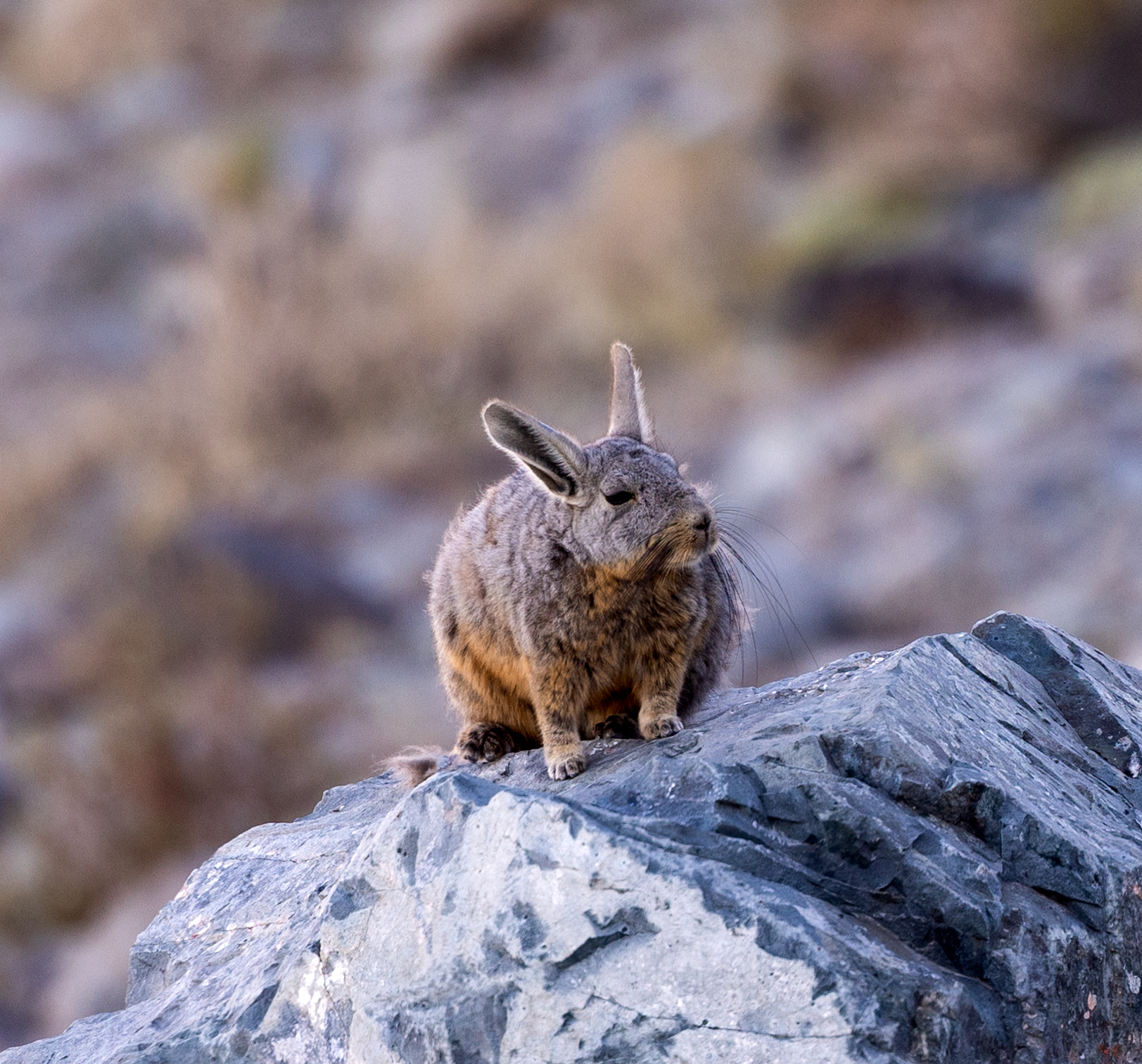
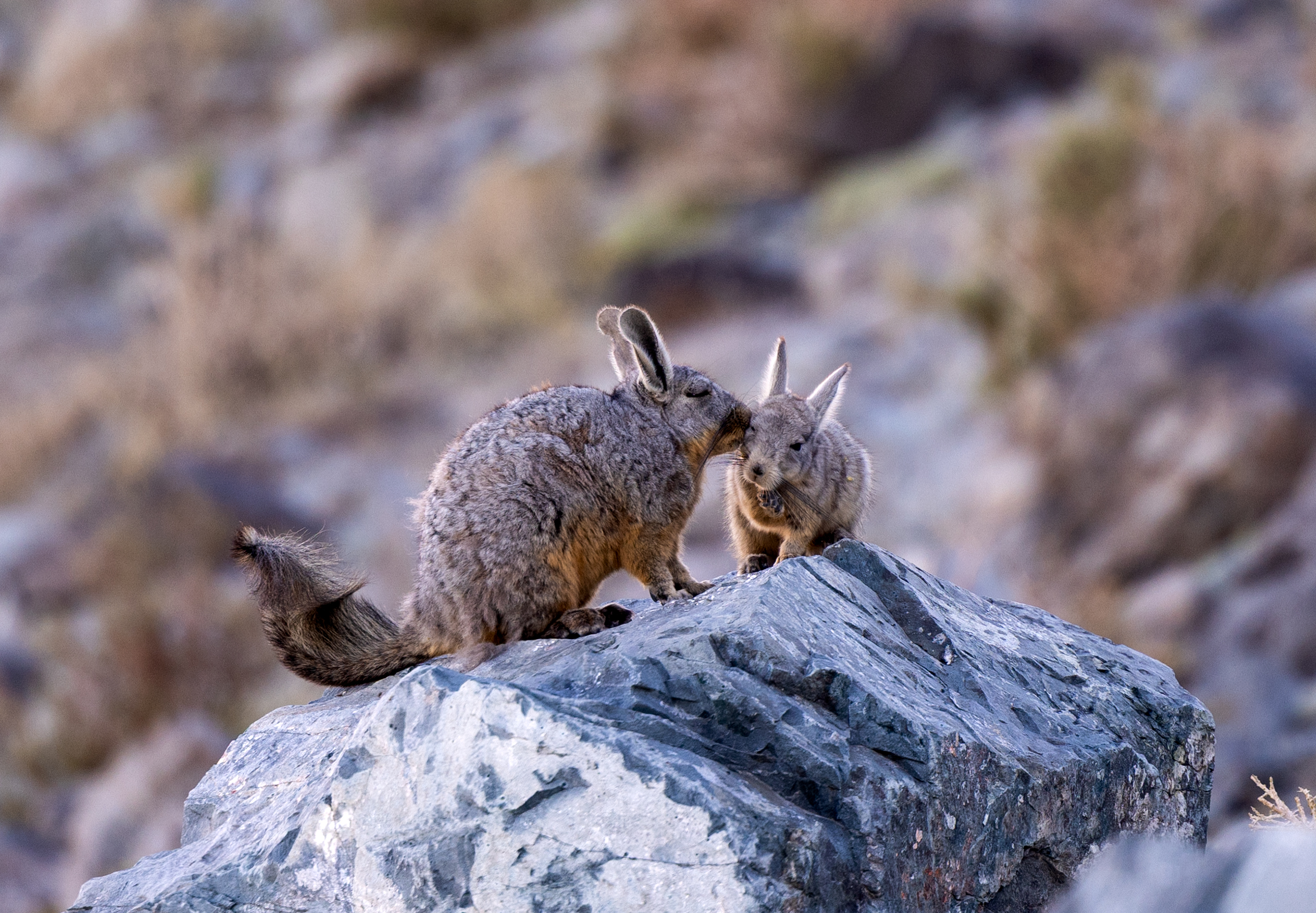
Finally, the day was blessed with the first official viscacha sighting.
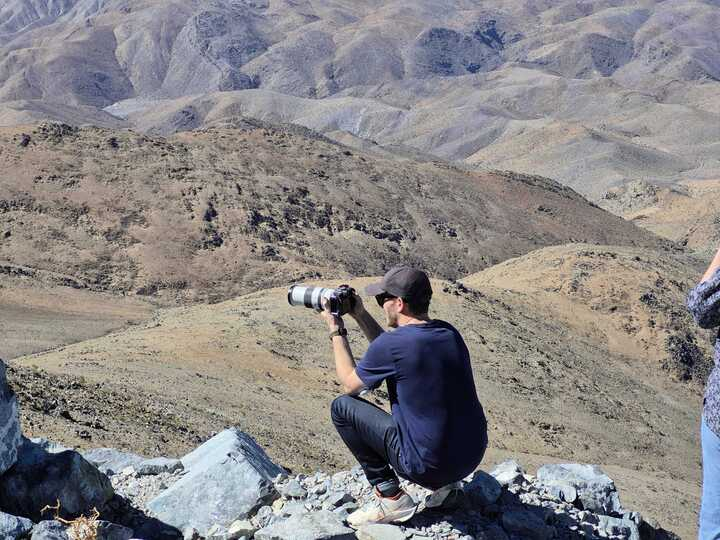
#blessed (credit: Miles Lucas)Miles in action (credit: Joshua Liberman)
Song of the day:
A theme song for moving the instrument out of the clean room and up the mountain.
Fact of the day:
Any scramble of a 3×3×3 Rubik’s Cube can be solved in 20 moves or fewer. The highest number of moves required for an optimal solution is often referred to as God’s number in the community.
Hi, Happy Thanksgiving and welcome to my first blog post and first time in Chile!
Not long after a long travel, we woke up and were immediately put to work. There were a lot of things to be done on Thanksgiving, and gifts to be unwrapped.
The gift! (Credit: Miles Lucas)
Of course before opening the the gift, we had some tasks to do. We were putting MagAO-X in place! It wasn’t too dangerous, but my screw did get jammed today.
Credit: Miles LucasInstalling the polarimeter! Credit: Laird CloseLunch Break! Credit: Jared Males
Today was a whole lot of new experiences, but very importantly, I finally learned what it meant to cable the DM.
cabling the DM?How’d our cabling go??
It was hard, but it turned out that we did our cabling properly! I mean we did have to replace something, but that was actually due to dust.
Today also featured the full tour from Laird and Jared. We experienced the echo chamber and some secret underground parts of the telescope.
Echo chamber!! Credit: Katie Twitchell
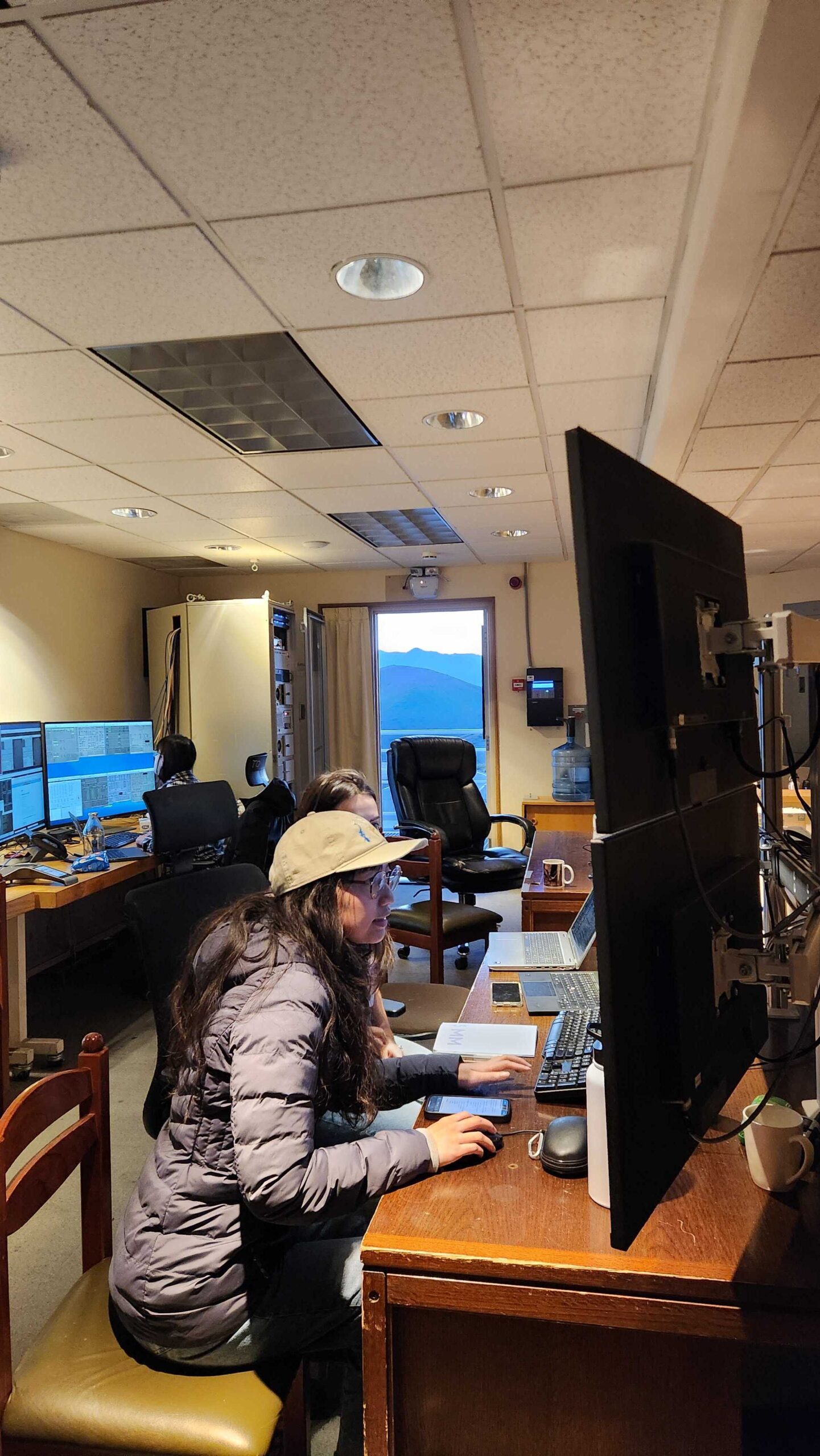
And all of a sudden, it was already time for the first shift. Operating looked very complicated, but Katie told me all about it. Seeing PSF’s on sky, AO in action, and everything I learned about in simulations was pretty awesome, though I know there is still a lot for me to learn… (How exciting!)
Credit: Eden McEwen
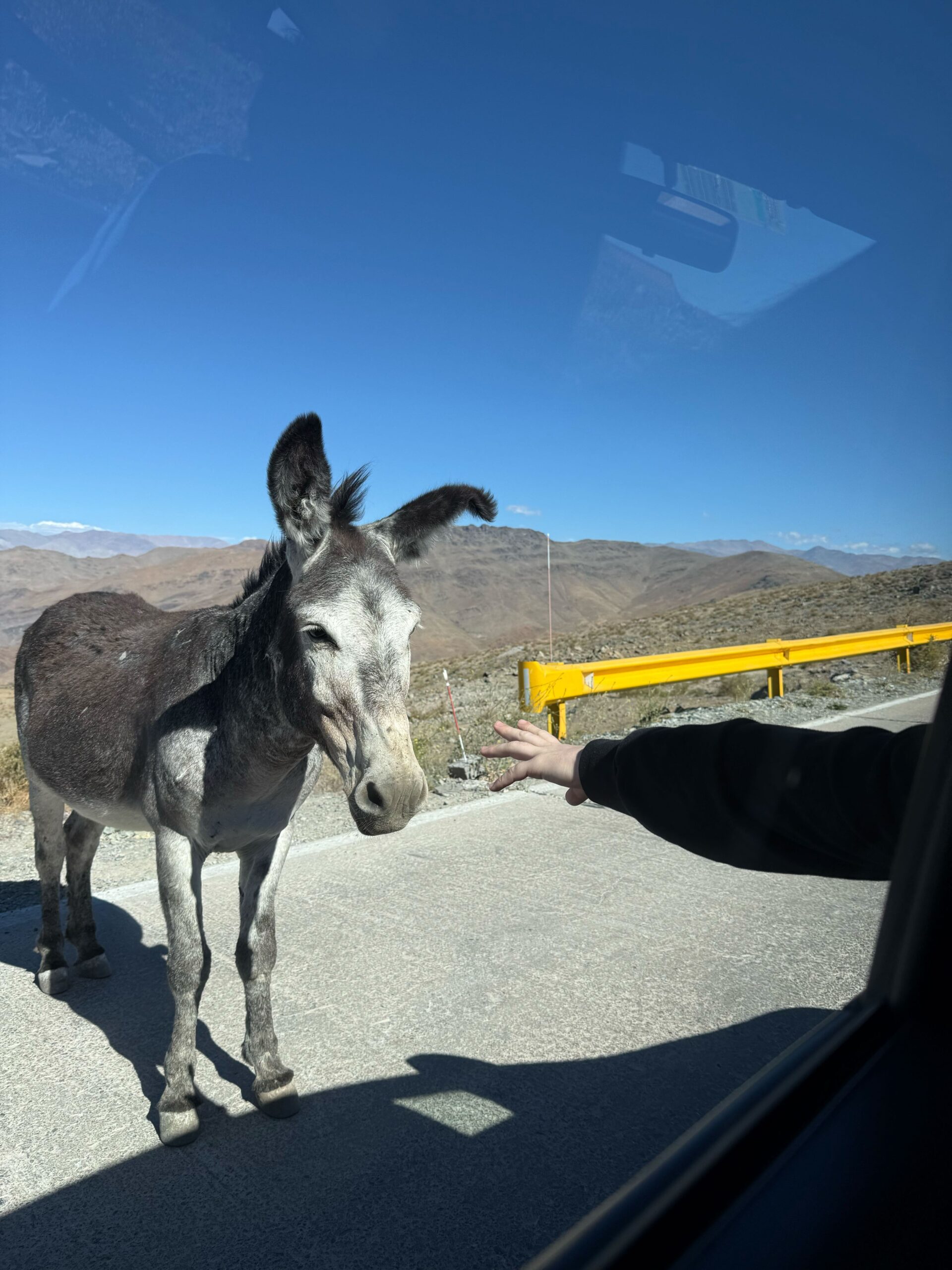
On the way back down from the telescope we saw all the stars in the sky, and finally I saw a bunch of donkeys! (I was looking for you!) What a long day, but a great Thanksgiving.
Song of The Day:
Following that Radiohead theme. And also me in Chile!!! I’m a tourist and all…
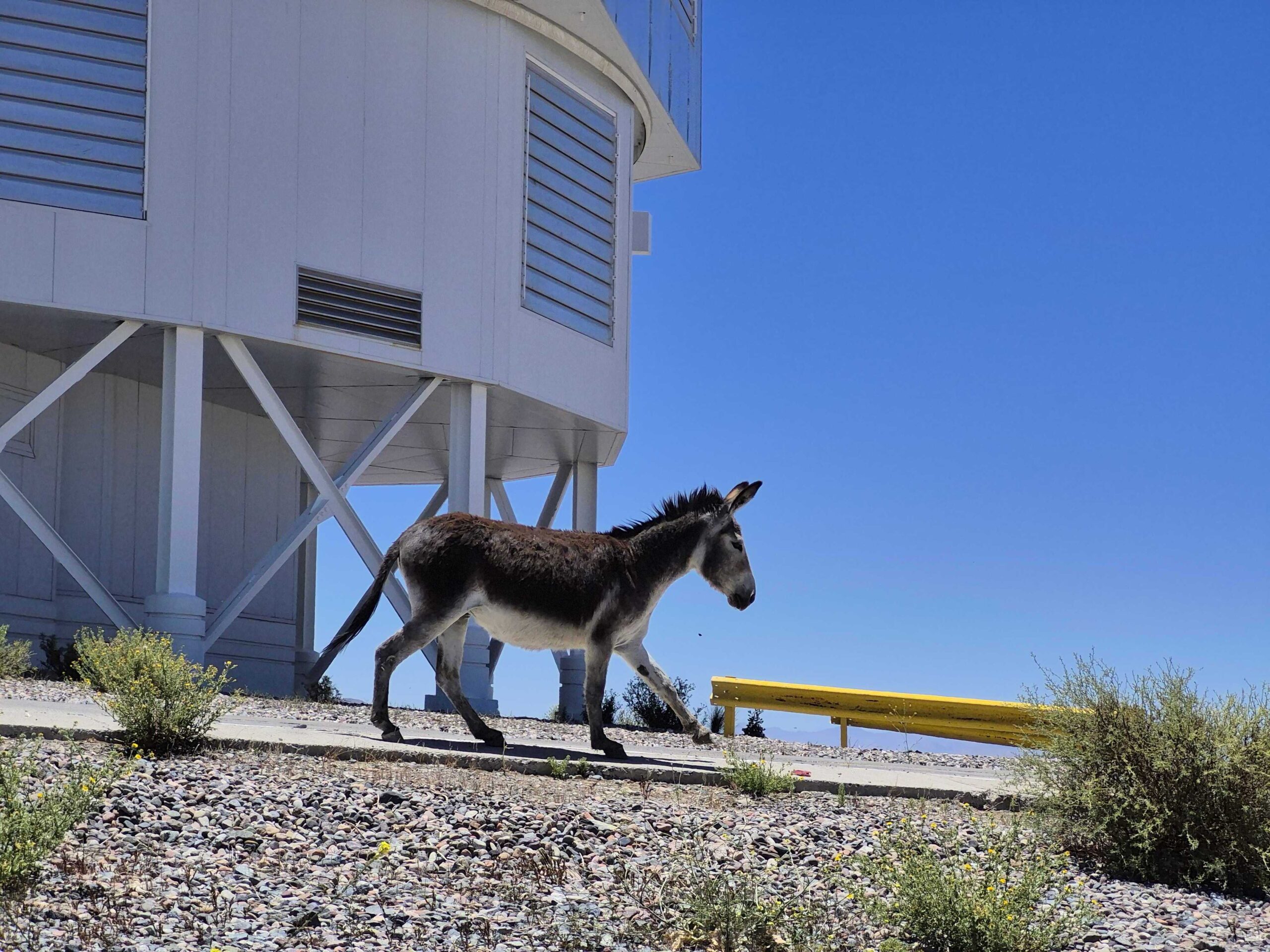
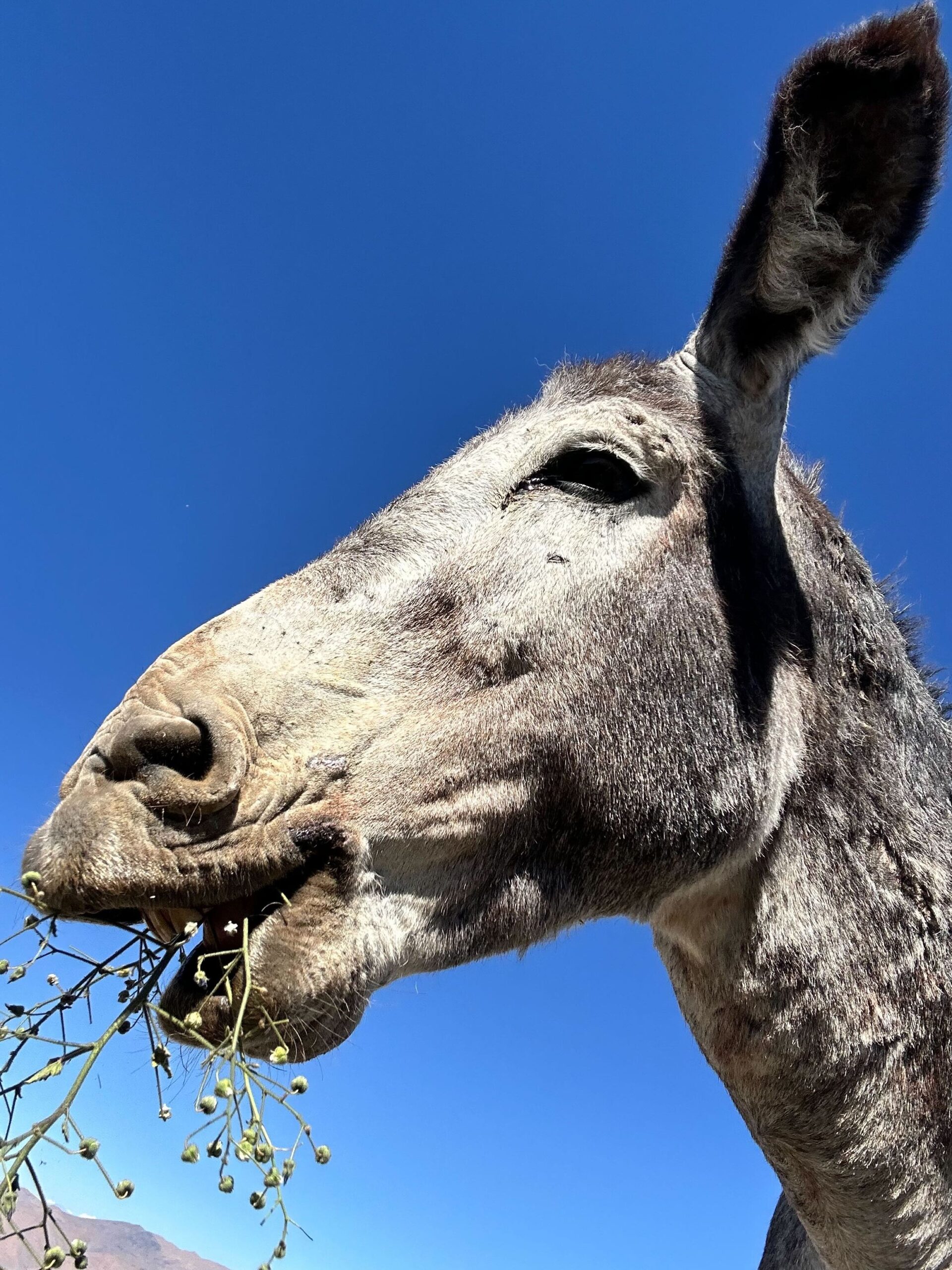
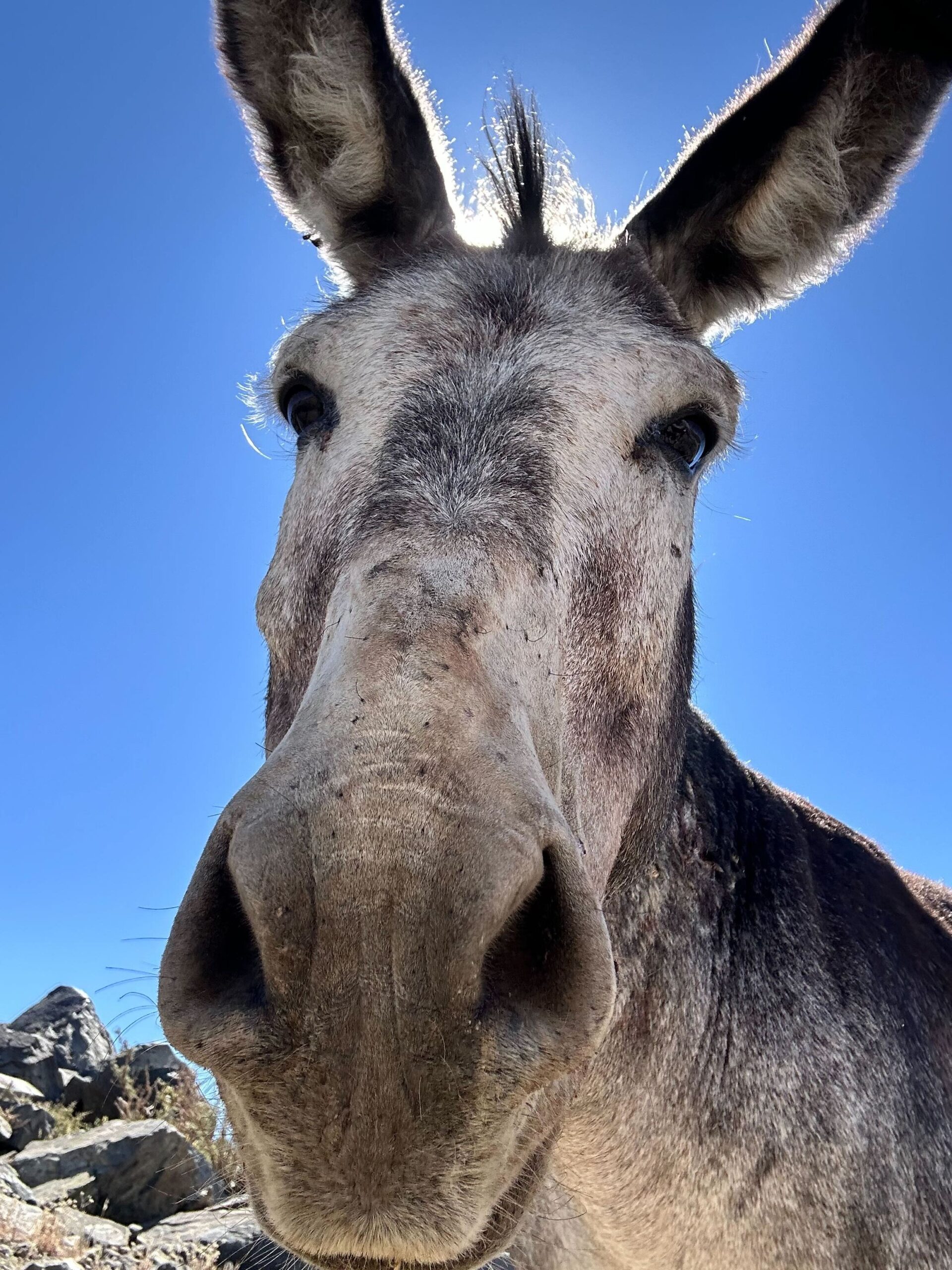
Greetings again from MagAO-X-ville! Us astronomers are equal parts wildlife and planet photographers, although today involved a strong emphasis on the former. Enjoying the beautiful sun over the Atacama and the lack of 2-legged individuals, the burros seized their opportunity to reclaim the mountain (one might call it a burrocracy).
Many a burro photo was captured today by our professional shutterbugs (yes, this is actually a word) so I have included a brief compilation below:
BURROAn on-axis burronagraphAn off-axis burronagraph (deserving of its own half blog page)
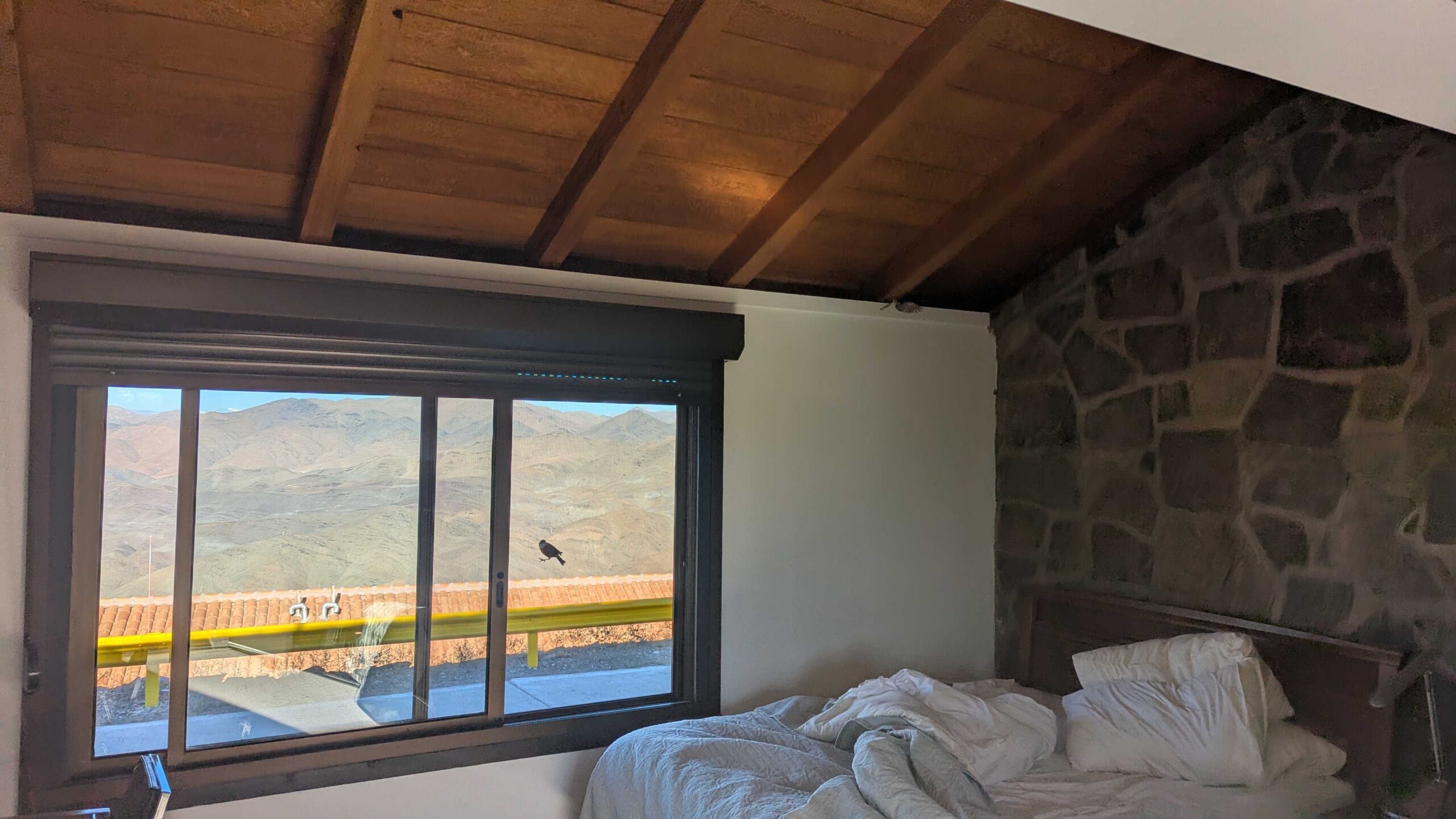
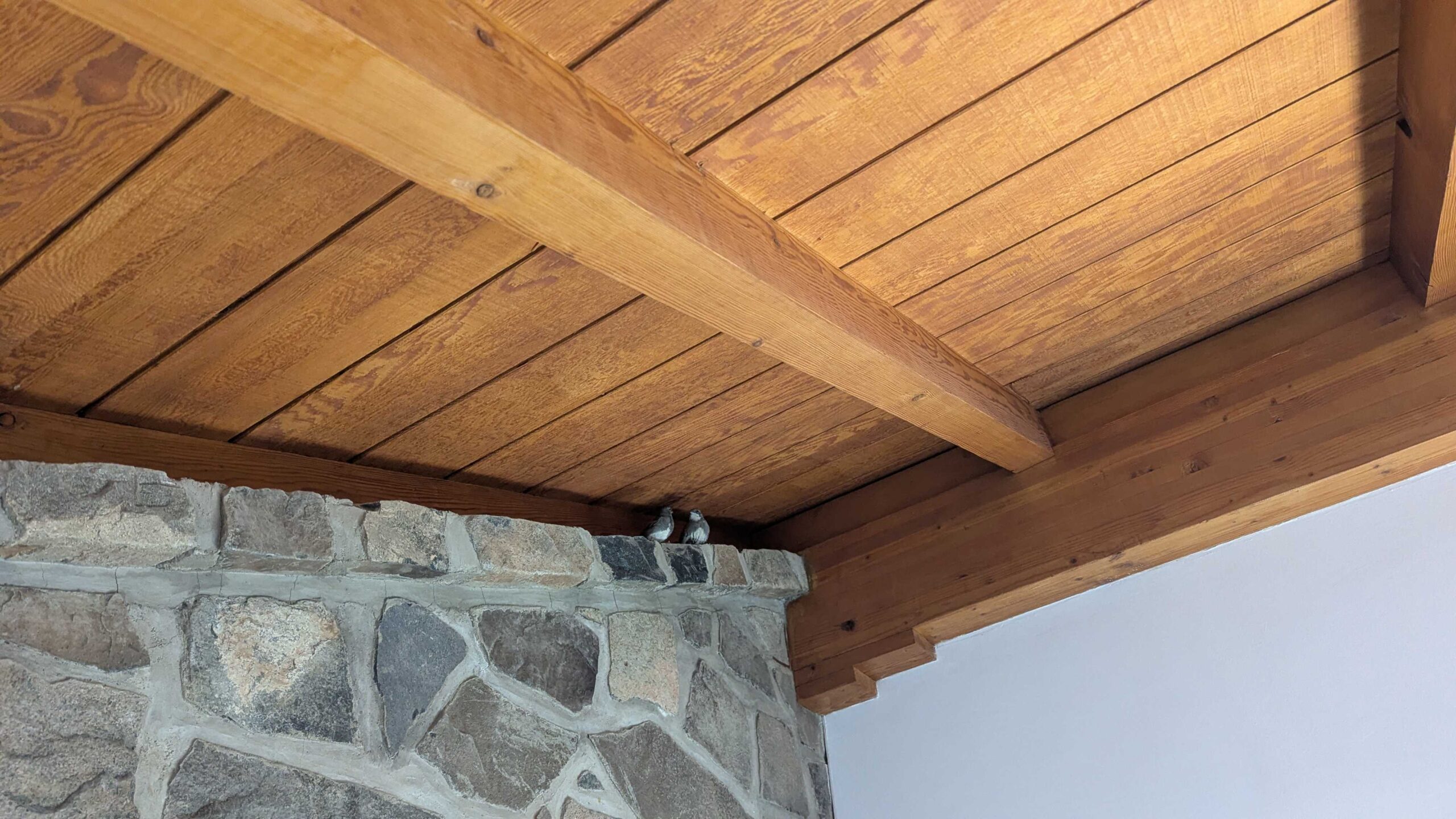
Our professionals also identified an assortment of smaller creatures including (but not limited to):
Birds:
A frequent flyer looking rather suspicious.Jared had 2 unexpected roommates in his dorm.
Carloses:
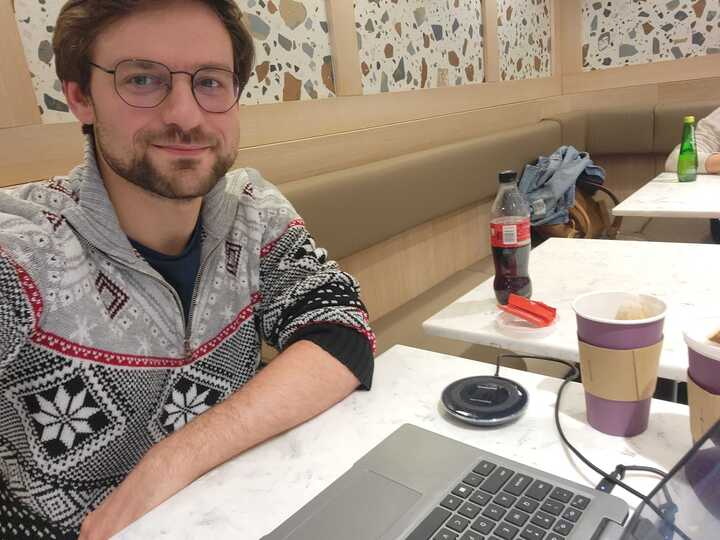
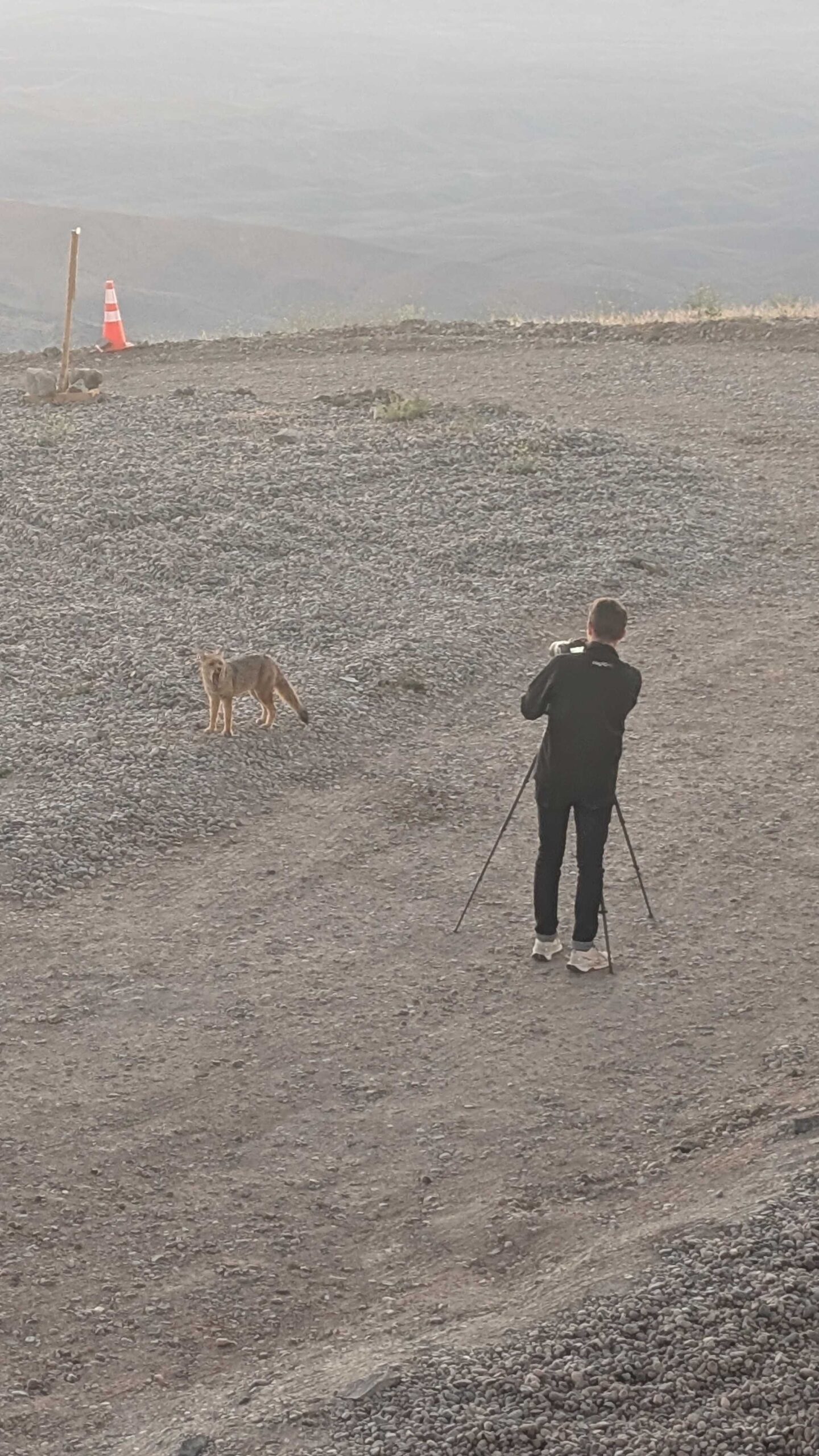
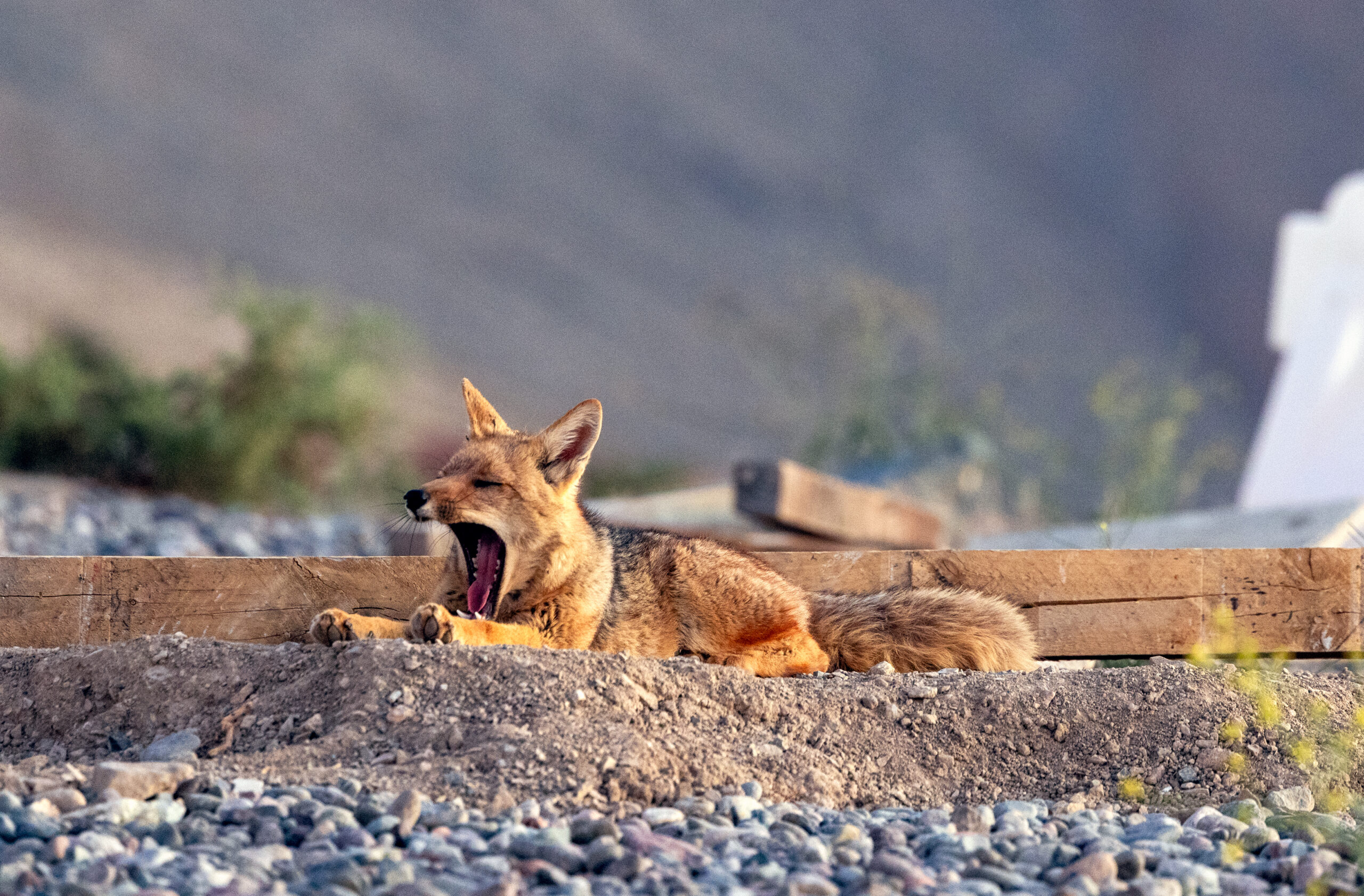
Miles setting up the perfect shot of our fox friend.Someone captured a photo of me writing this blog post.
Vizzies (vizzibility was high during both the day and the night):
VIZZY
And Hoomans:
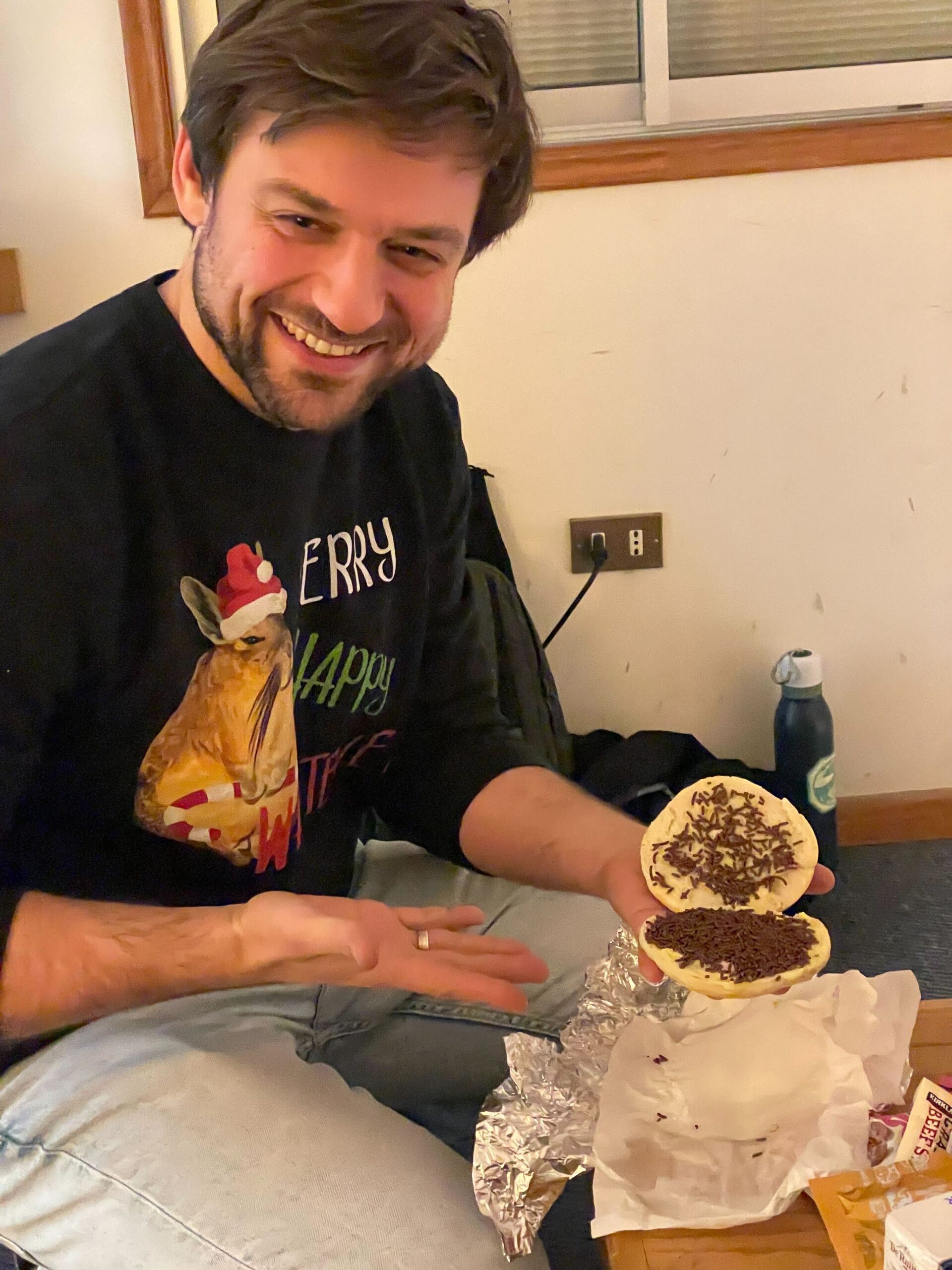
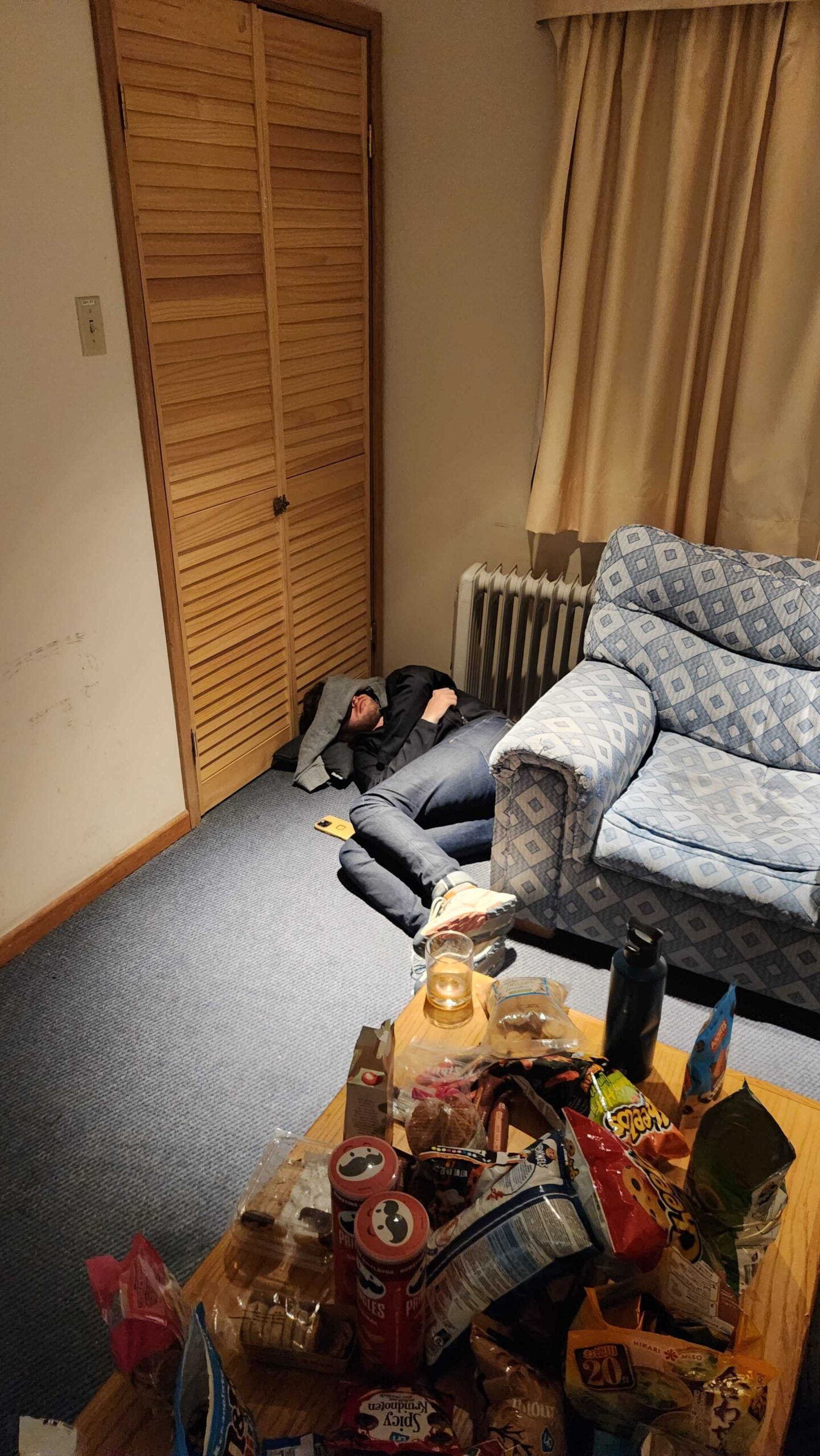
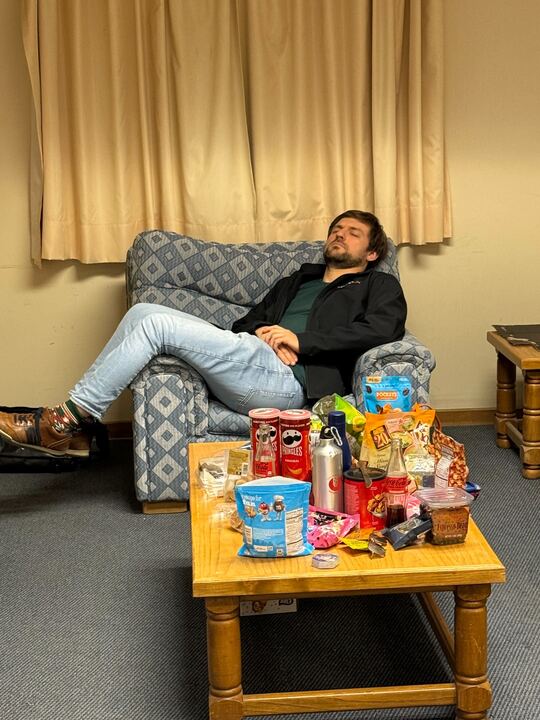
An angry ParkerA wild Josh sabotaging a perfectly nice dark hole. Observers milling about.A Dutch delicacy.Please don’t feed the astronomers. They will fall asleep next to the furniture.A gathering of wildlife photographers (who also do some astronomy).
After a busy day at LCO, both the hoomans and the animals must go to bed, assuming they have not already done so.
Song of the Day:
Fun Fact:
I once got attacked by a goose after feeding it a peanut butter and jelly sandwich.
You wouldn’t guess it but it was already our third night at the telescope. Which means it was also my third day (night) here at Las Campanas Observatory. I arrived as an extremely fresh (and hopeful) astronomer on our first observing day. It was quite though to go through an almost 30hr journey to immediately observing. However, EFC duty called and I had to respond. I thought I would have been able to slowly ease into it, but I have been EFC’ing already for 3 nights straight. Luckily, the next 6 nights are also EFC nights. This means no breaks for me for at least the next week or so!
Me taking my power nap during my first night.
After two nights of great observations, it was time to do some engineering. This engineering block was all about commissioning our new Phase Induced Amplitude Apodization Complex Mask Coronagraphs, or PIAACMC for short. The PIAACMC is one of the most performant coronagraphs (if you can actually make it an align it). The PIAACMC has two sets of aspheric lenses that were designed by our one and only Warren Foster, MSc. These are mounted in only the most beautiful of optical mounts that one can imaging. They are also fully remotely controllable, which makes it possible for other people to actually use them. Since last year, Elena Tonucci has been working on getting the PIAACMC to work on-sky. One of the crucial missing pieces was the CMC (CM?) part of the PIAACMC. She uses fancy 2-photon polymerization additive manufacturing to make the focal plane complex mask.
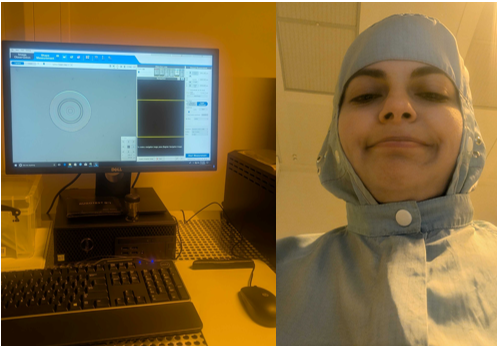
Measuring the manufactured CMC masks in the clean room.
All our troubles, or Elena’s troubles (I was just vibing along), were not for nothing. The new phase masks that were made resulted in much better performance! We were able to to get an order of magnitude better on-axis suppression than last year in the lab.
Our next step was to go on-sky. The first part of the night was great. However, just around the time of switching from Parker’s amazing Tau Ceti program to ours, the seeing started to cause problems. This was not great. We were going to try and image a challenging exoplanet target. Luckily, the seeing started to settle after about 10 minutes into our part of the night. We got really good data and I am excited to see some results.
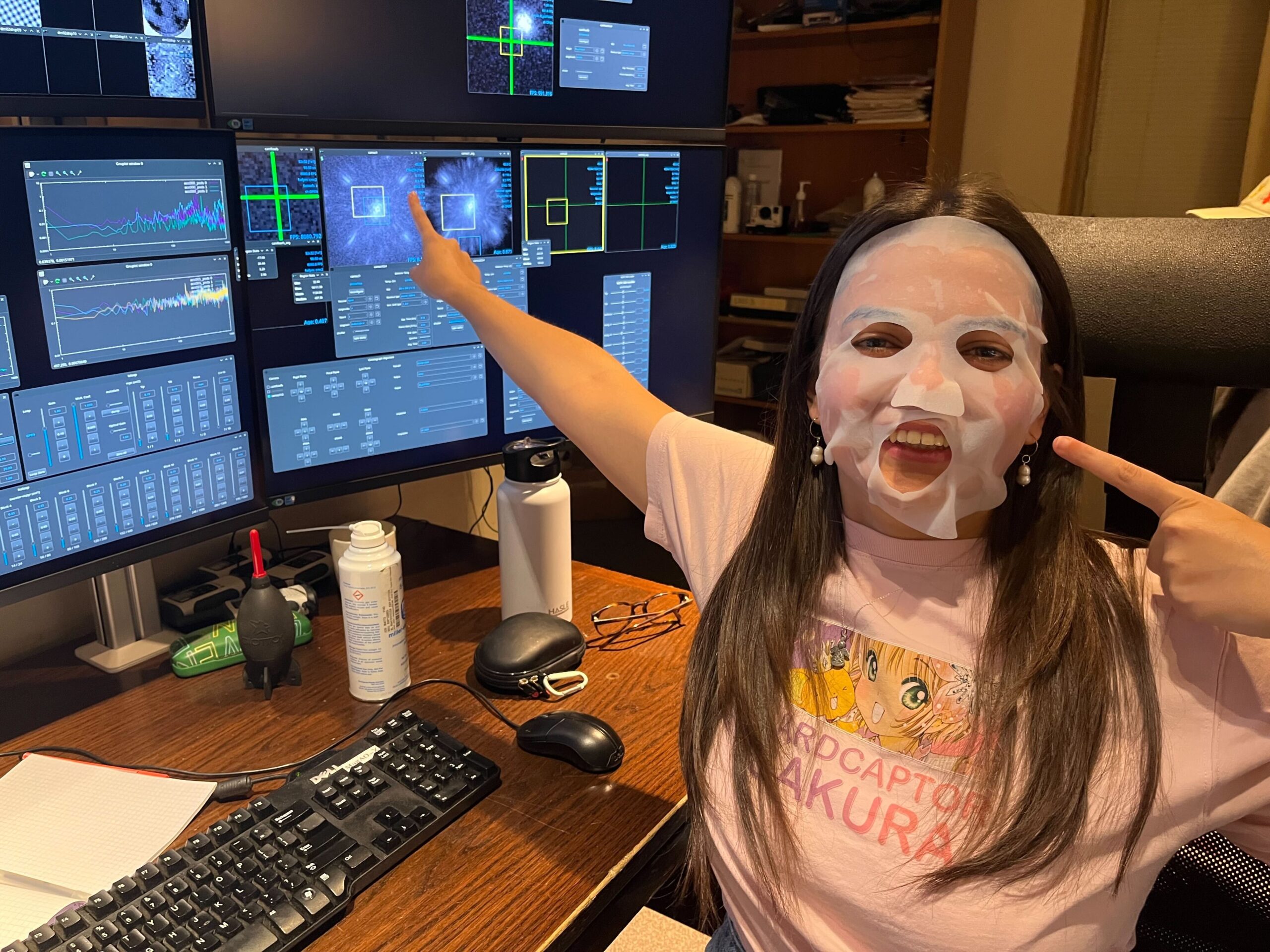
It’s a double face mask picture! LCO can be quite dry so its good to hydrate. Skincare is important, you will thank your younger self if you take care of yourself.
It is not always fun to look only at speckles. So, our night ended with about an hour or so of imaging close binaries. This was to convince ourselves that PIAACMC actually worked.
Again, I failed to document our great work by not taking phone pictures.
At the end of the night, I was passing on my wisdom of observing as many photons as you can each night. No photon left behind! Every photon is precious! The TO was getting a little nervous and started to ask if she could close the telescope because the sun was rising.
Learning from the best.
Fun fact: “Moretta muta”, an oval mask that women wear for Carnival in Venice has no straps to be fastened to the head. Instead, it has a button on the inner side that is held in the mouth and with that mask is held to the face.
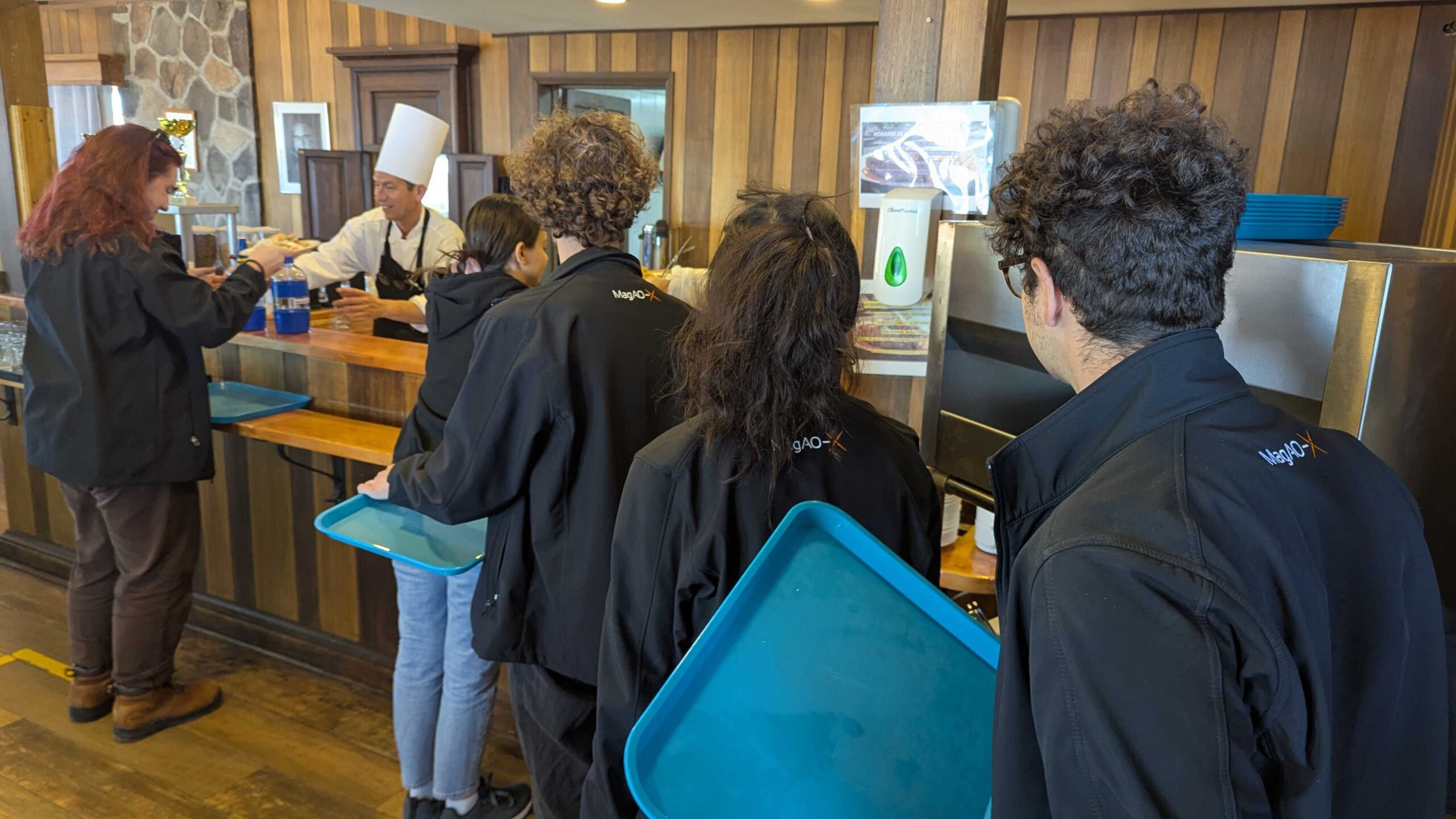
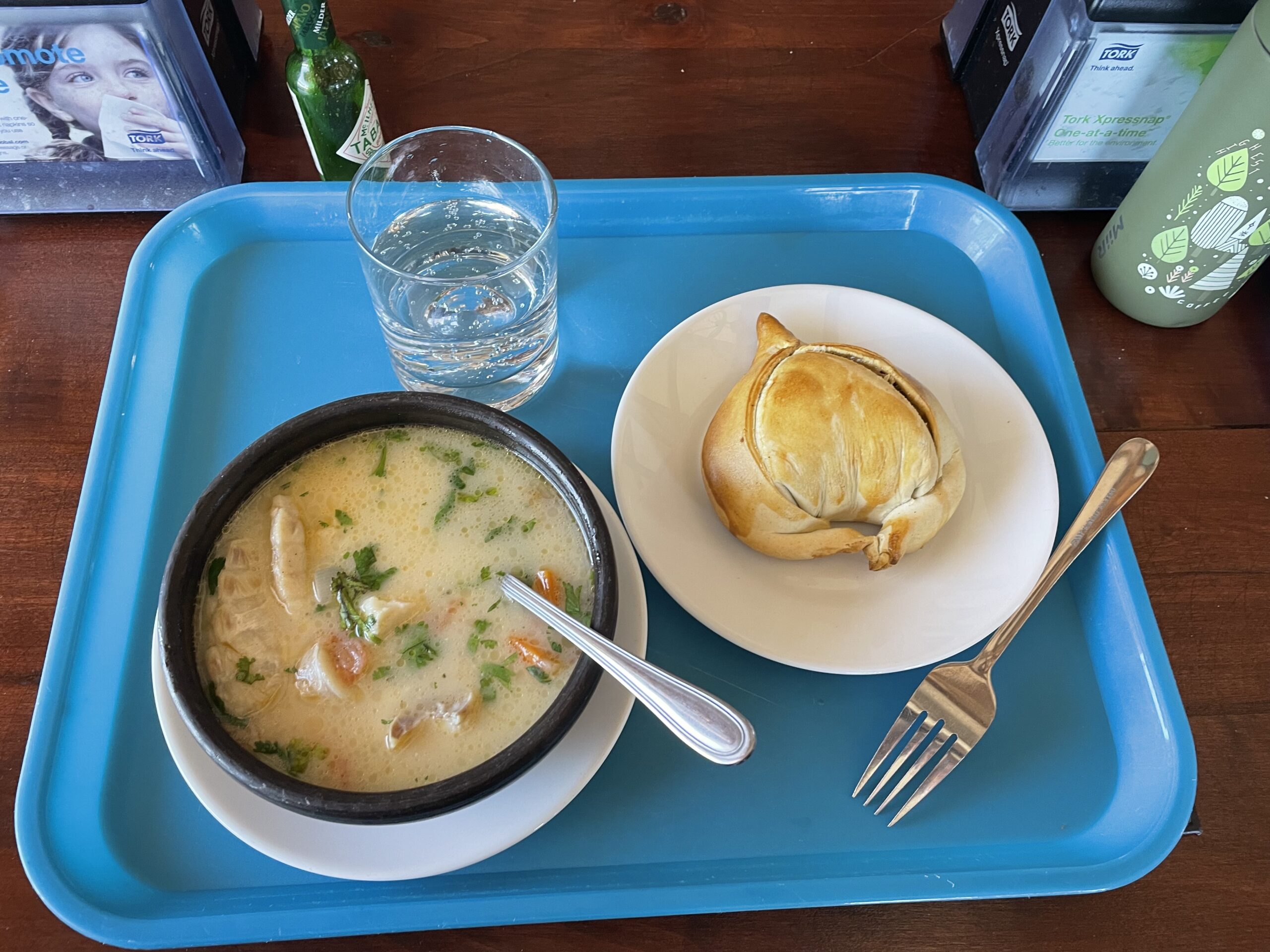
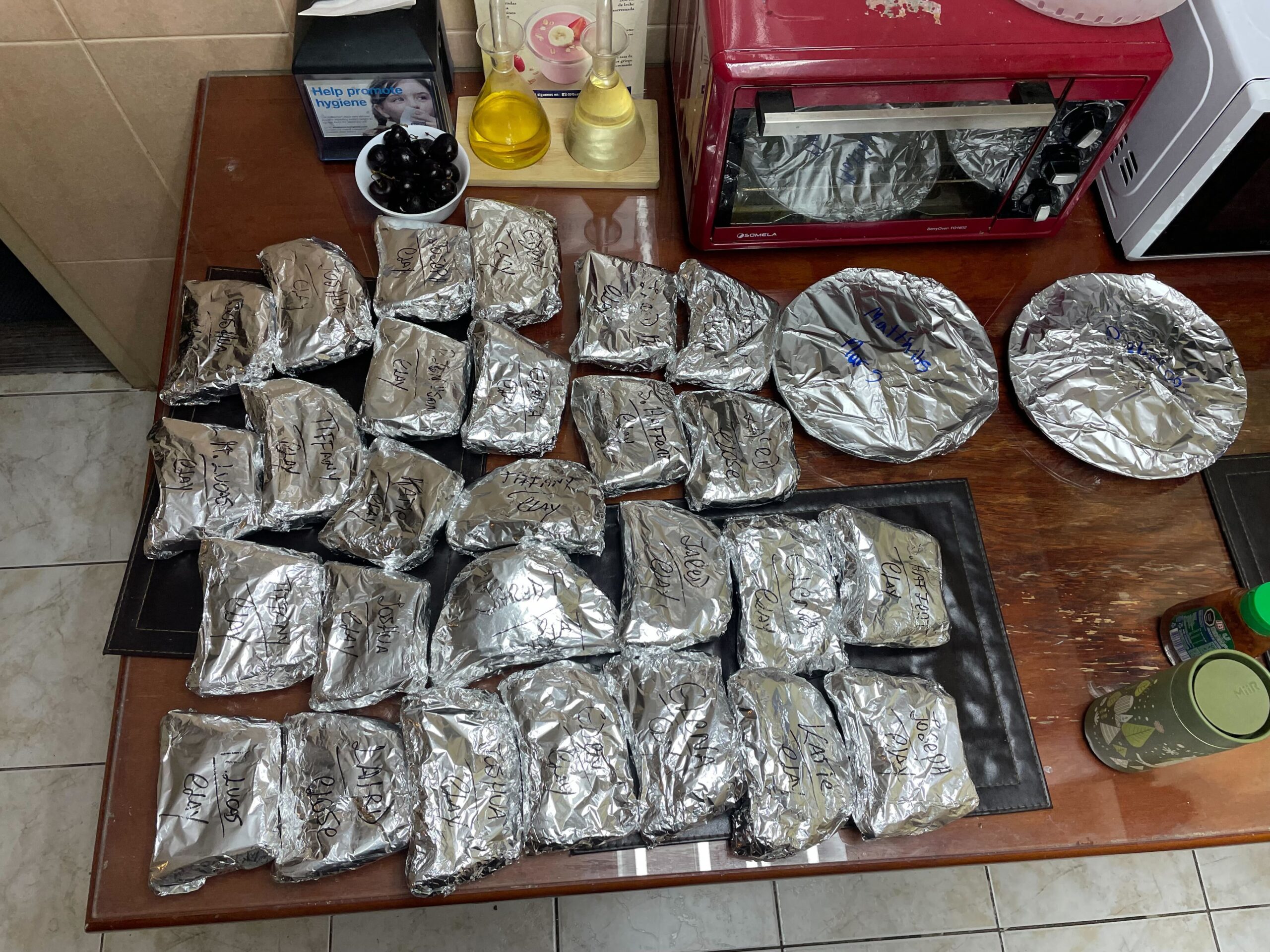
If there ever was a day to wake up for lunch, Sunday is that day. While we all placed our much anticipated empanada night lunch orders, nothing beats the pastry goodies paired with the lunchtime soup choices.
Empenada de mariscos e Caldillo de Congrio.
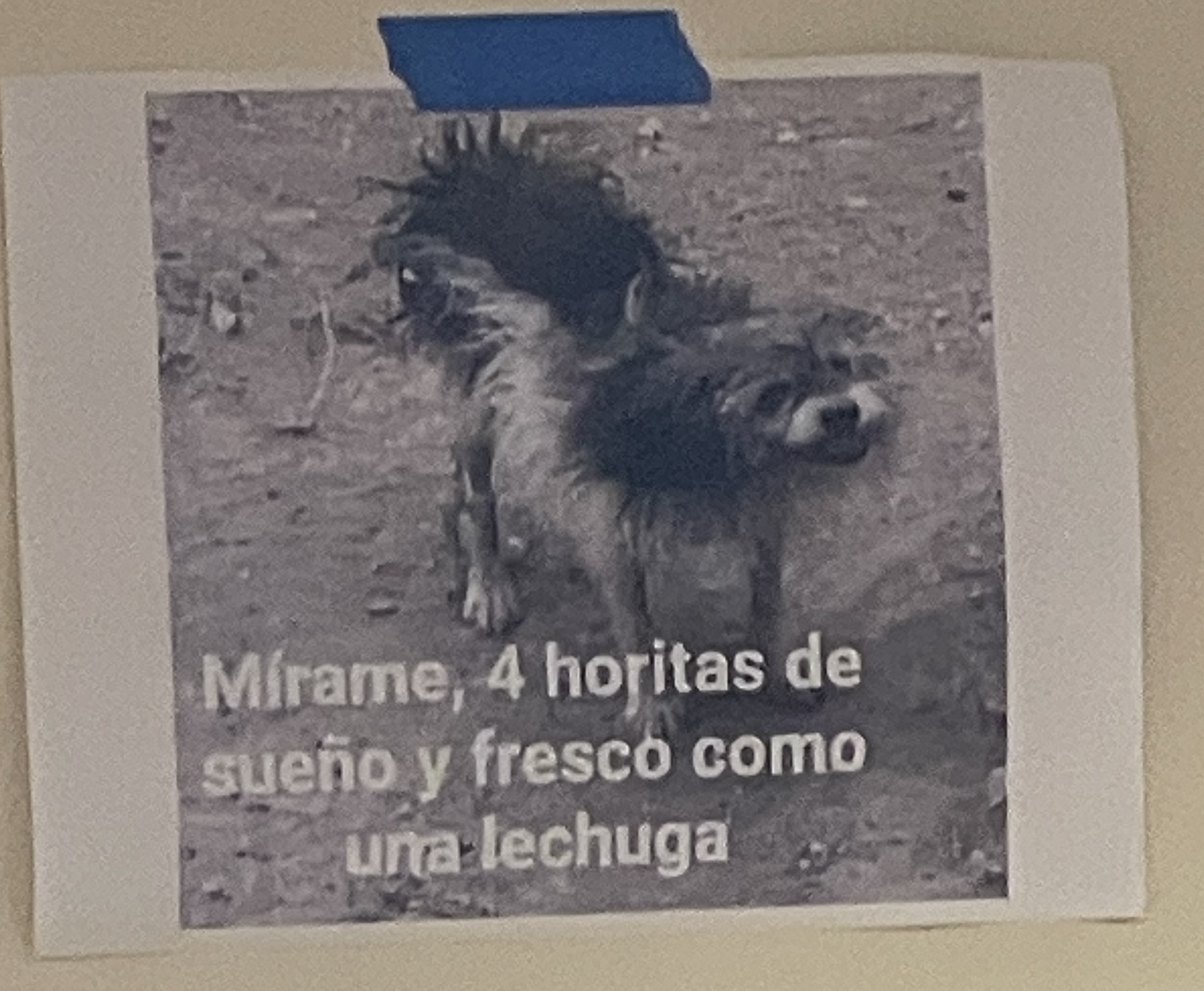
Though delicious, the prize lunch came at the cost of some significant sleep debt for members of our crew. Nevertheless, we rallied, drank our little coffee drinks, and went right back up the hill for an afternoon of testing, bug fixing, and poking around on the internal source. I have no photos to show you the productive daytime endeavors, but I do have the motivational poster now stuck to the control room wall to sum up the energy of the participating members.
“Look at me, 4 hours of sleep and fresh as a lettuce”
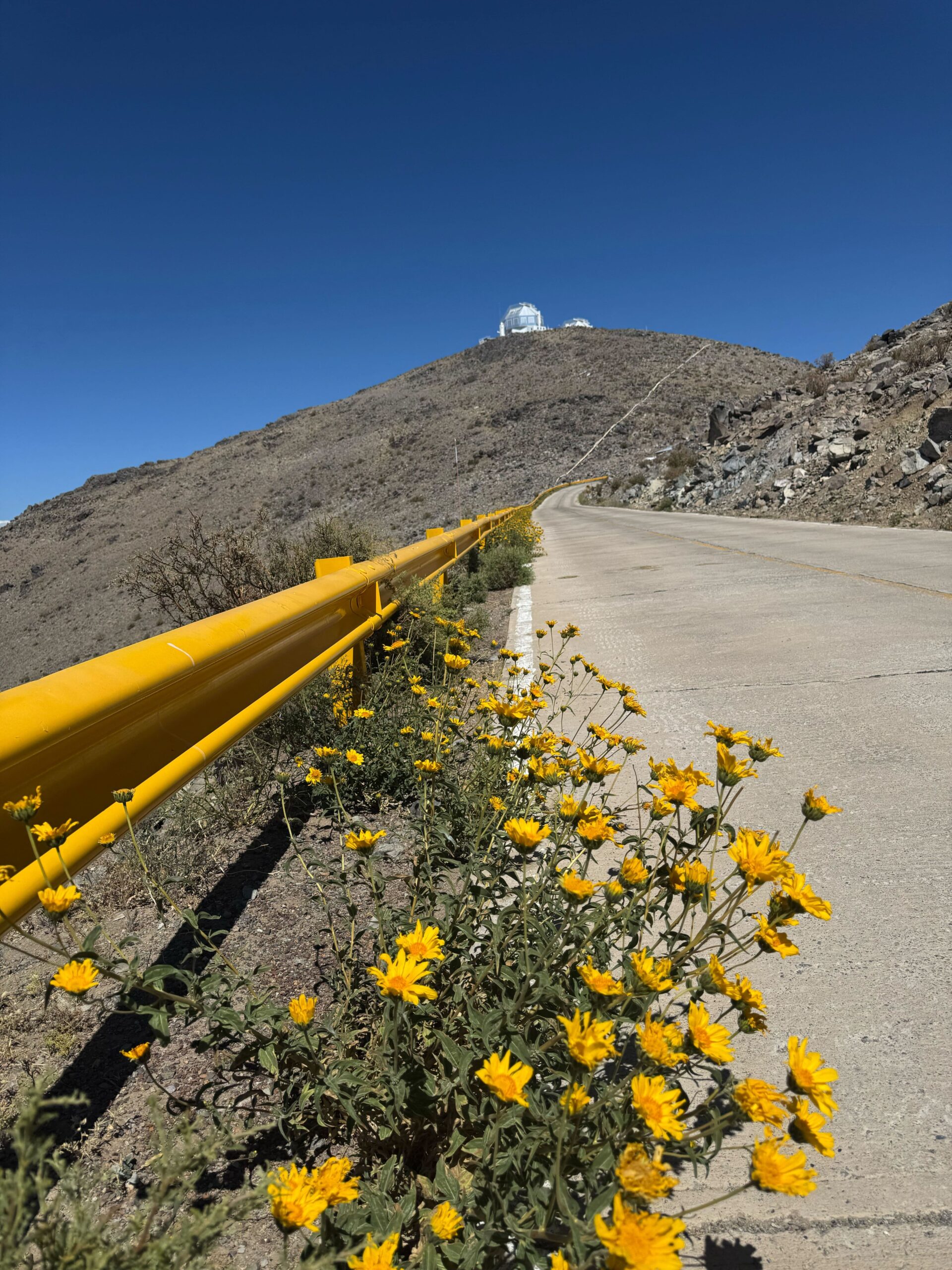
Turns out if you wake up early enough, you can have a whole day before your observing work day. Enjoy these vignettes from our afternoon on the mountain.
A spurned pet. A lush path. A longing view.
Our empanada appetites did not overwhelm our TO Rebecca, who was able to muscle our nighlunch up the hill. We arrange the spread to remind ourselves of the richness and abundance of life.
The first big LCO empananda order of the run.
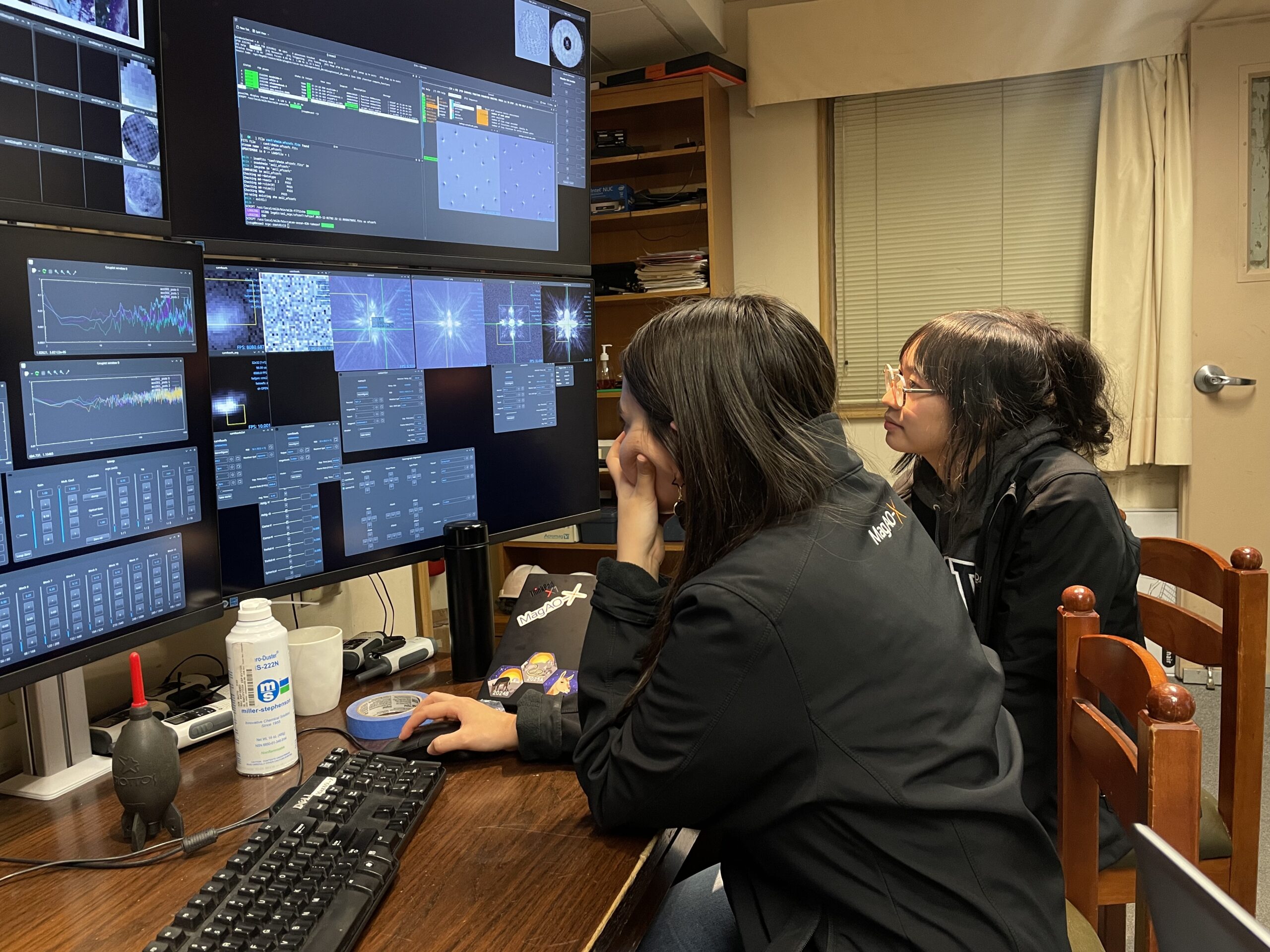
The first half of the night was shepherded by Parker, Katie, and Josh. We’re back on tau Ceti with the bells and whistles (iEFC dark holes and almost all the datastreams writing). The seeing gave us a good reason to work a little extra on internal source set up before it settled down to a fairly typical if a bit bumpy LCO night.
Seeing so bad they did not anticipate needing to plot it. Locked in and focused
At 1am, Parker and I switched. This was actually a big night for me! Though I’ve assisted with observations at telescopes since I was 19, this is the first time I’ve gotten to take data for my own science on my own proposed-for time. I always try to be a diligent AO operator, but it feels different for your own data. (The difference is anxiety.)
Our time on Beta Pic is split in two goals, firstly to try to push into bluer wavelengths (r’ band) where the contrast of Beta Pic b depends on the kind of atmosphere it has, and secondly see if we can observe the closer in Beta Pic c at all. Thank you Katie and Laird for installing the ri beamsplitter cube that makes these goal somewhat simultaneous.
The PIAA engineer at work.
Since Beta Pic c is so close in, and given all the good PIAA work from yesterday, we used the PIAACMC to improve our inner working angles. Thank you Elena for her PIAA expertise, and Tiffany for sticking it out with us for the rest of the night. We wrapped up not too far after our TO gave us the 15 minute warning.
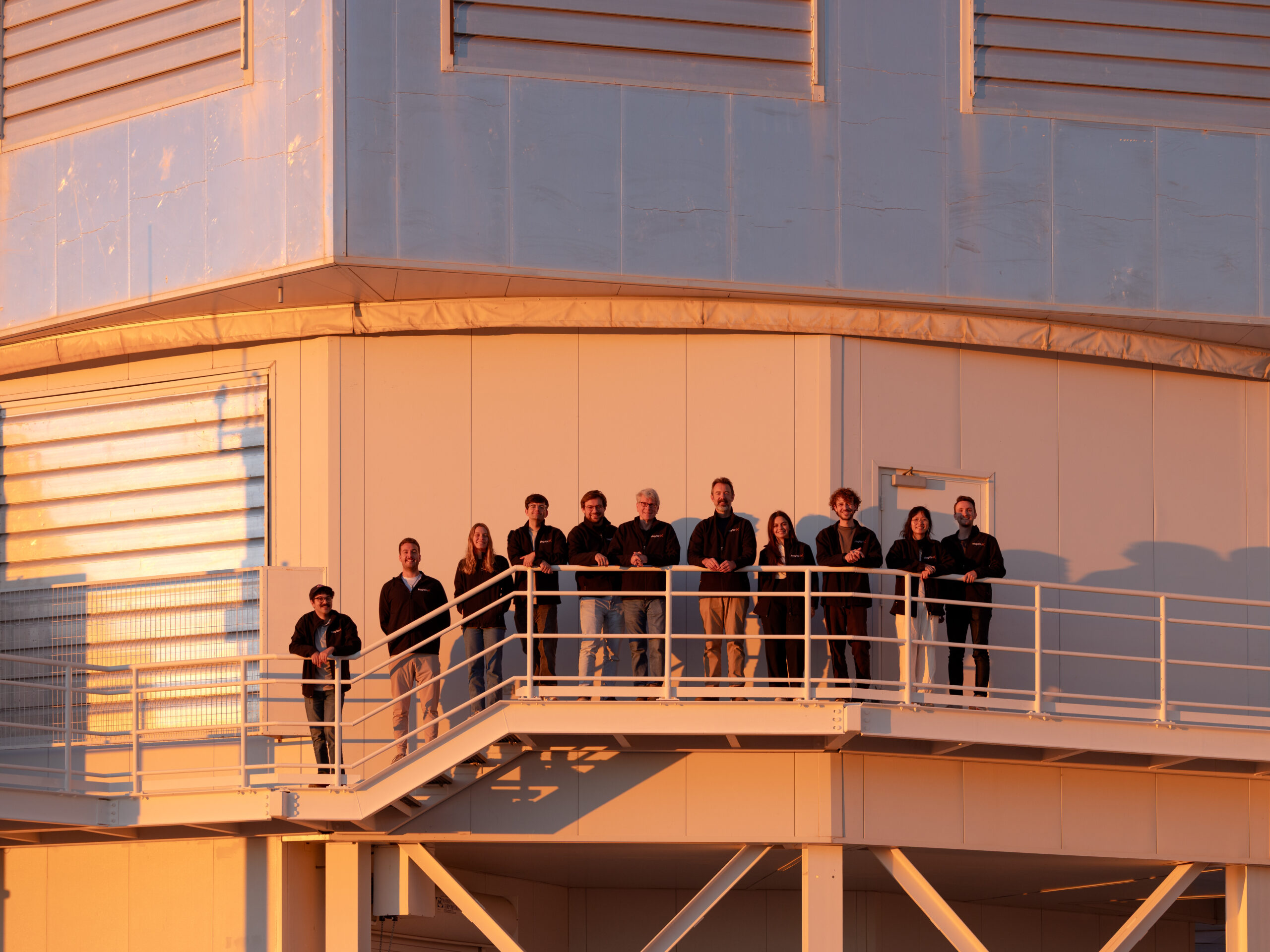
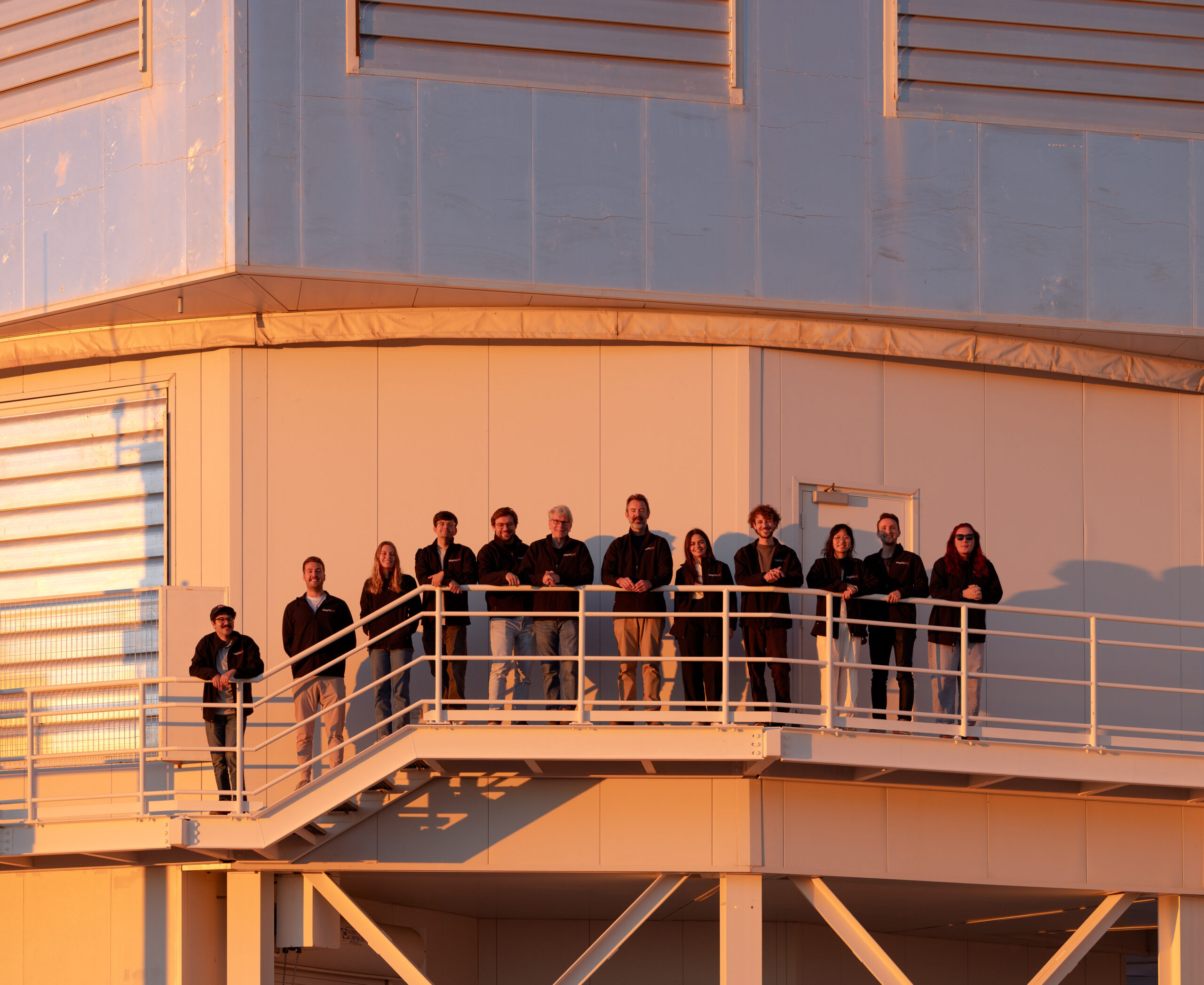
Miles did not lock in on photoshop for his masterpiece to fail to make an appearance on the blog. The whole team in one photo! How lucky to be planet hunting with them all.
Play “spot the difference” with the Day 7 photo.
Fun Fact: Pablo Neruda’s favorite soup
As Duo Lingo likes to remind me, I really need to work on my Spanish. As I was ordering my soup, the chef very excitedly explained something I only vaguely understood to be about Pablo Neruda, the Chilean poet. I since learned, and now you will know this too, that the soup from lunch today was popularized by Neruda’s “Oda al caldillo de congrio” (Ode to Conger Chowder). The conger chowder is one of many everyday items Neruda romanticized in his series of Odes, among soap, socks, and salt. It is considered today one of the most popular Chilean dishes, partially because of his love for how it represents Chile.
“… deliver the treasure to the flame, until in the chowder are warmed the essences of Chile, and to the table come, newly wed, the savors of land and sea, that in this dish you may know heaven.” – Pablo Neruda
Song of the Day:
Wait what do you mean Katie hasn’t used a Stroke’s song yet?