Welcome to the second work day of the 26A run! Today we’ll be taking a brief look at some of the polarization work I’ve been doing (because, you know, if I didn’t mention polarimetry, did I even write a blog post?)
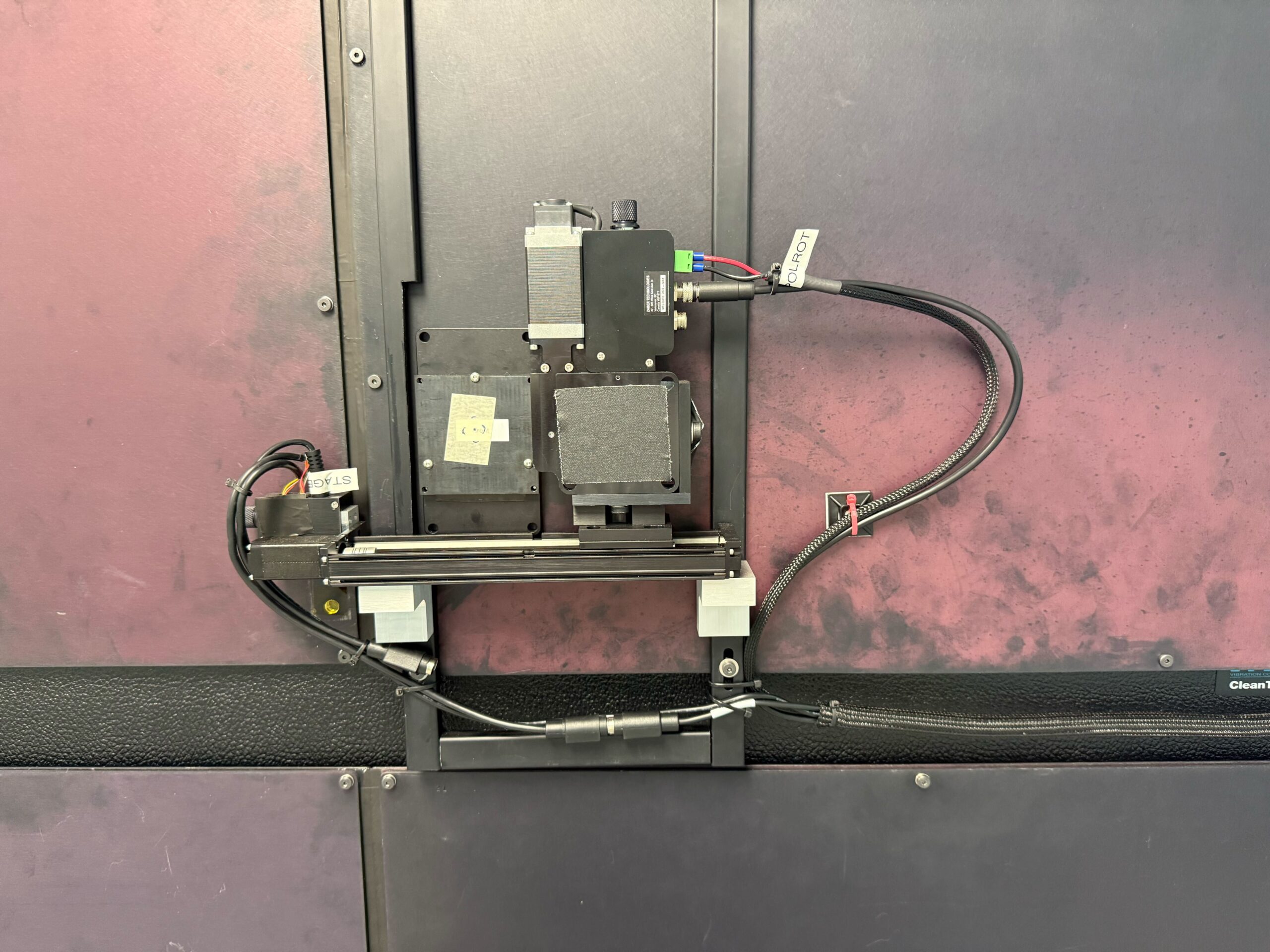
I’m back on mountain timeOne of the weirder polarization stages at LCO.
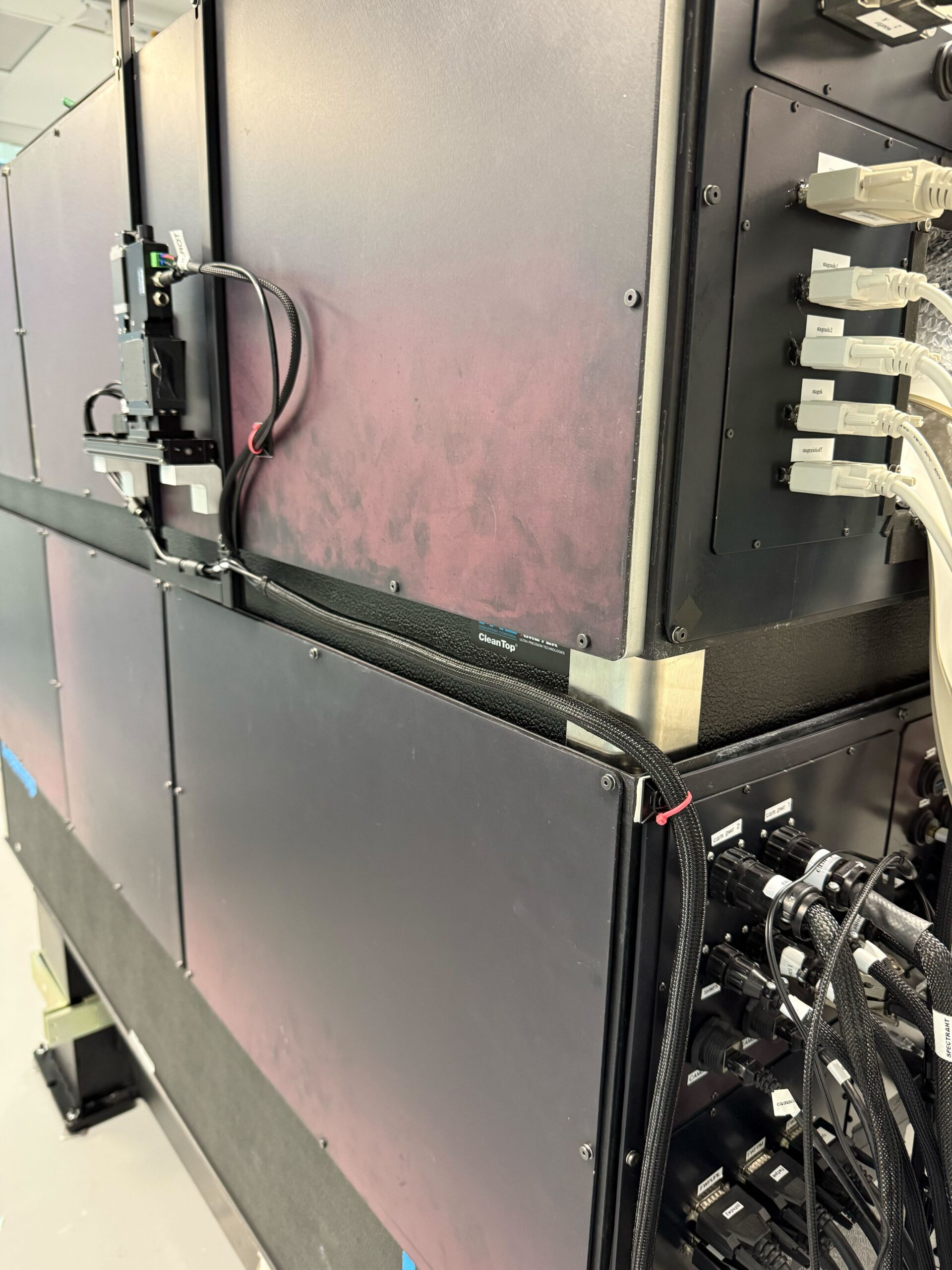
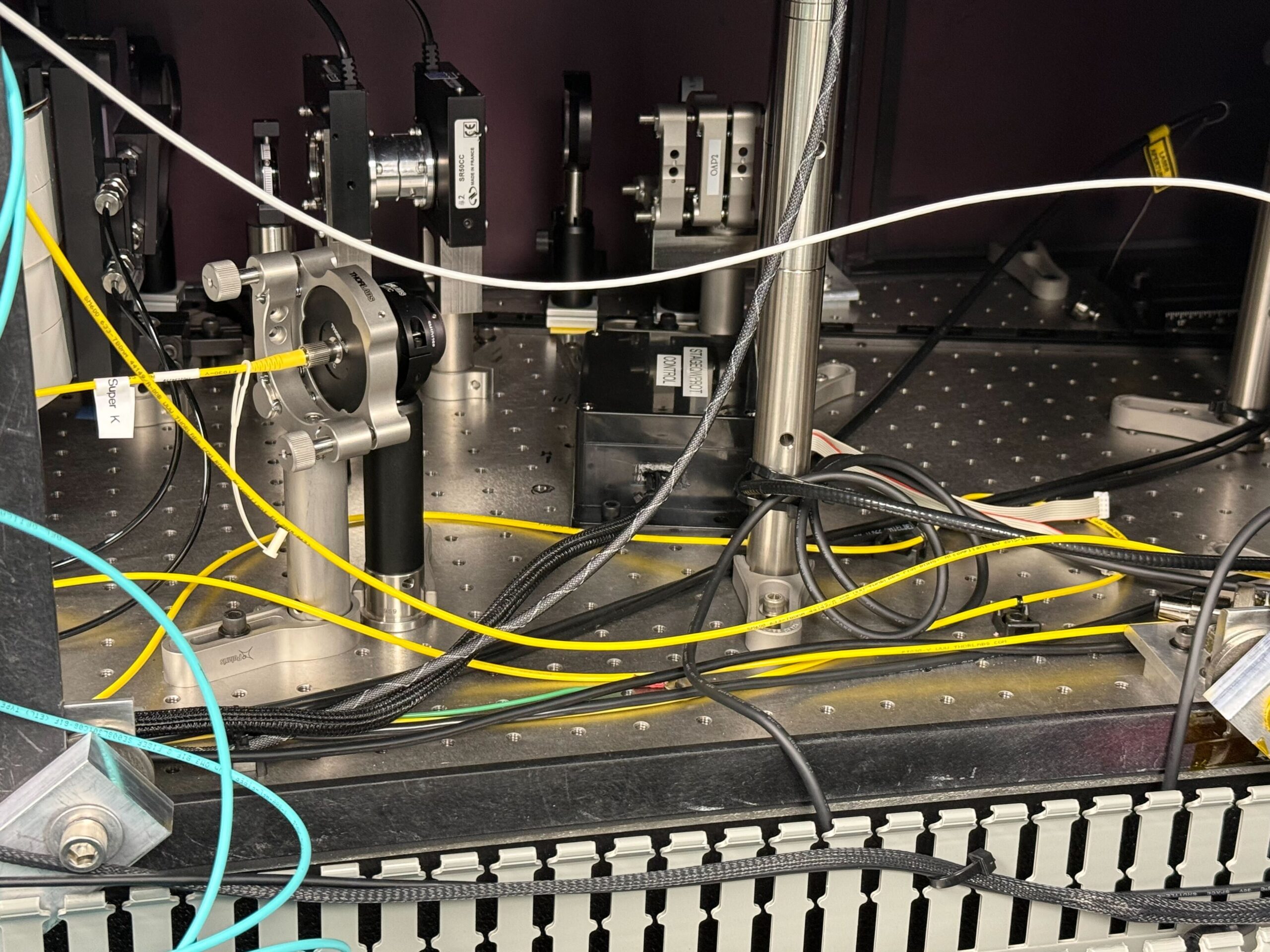
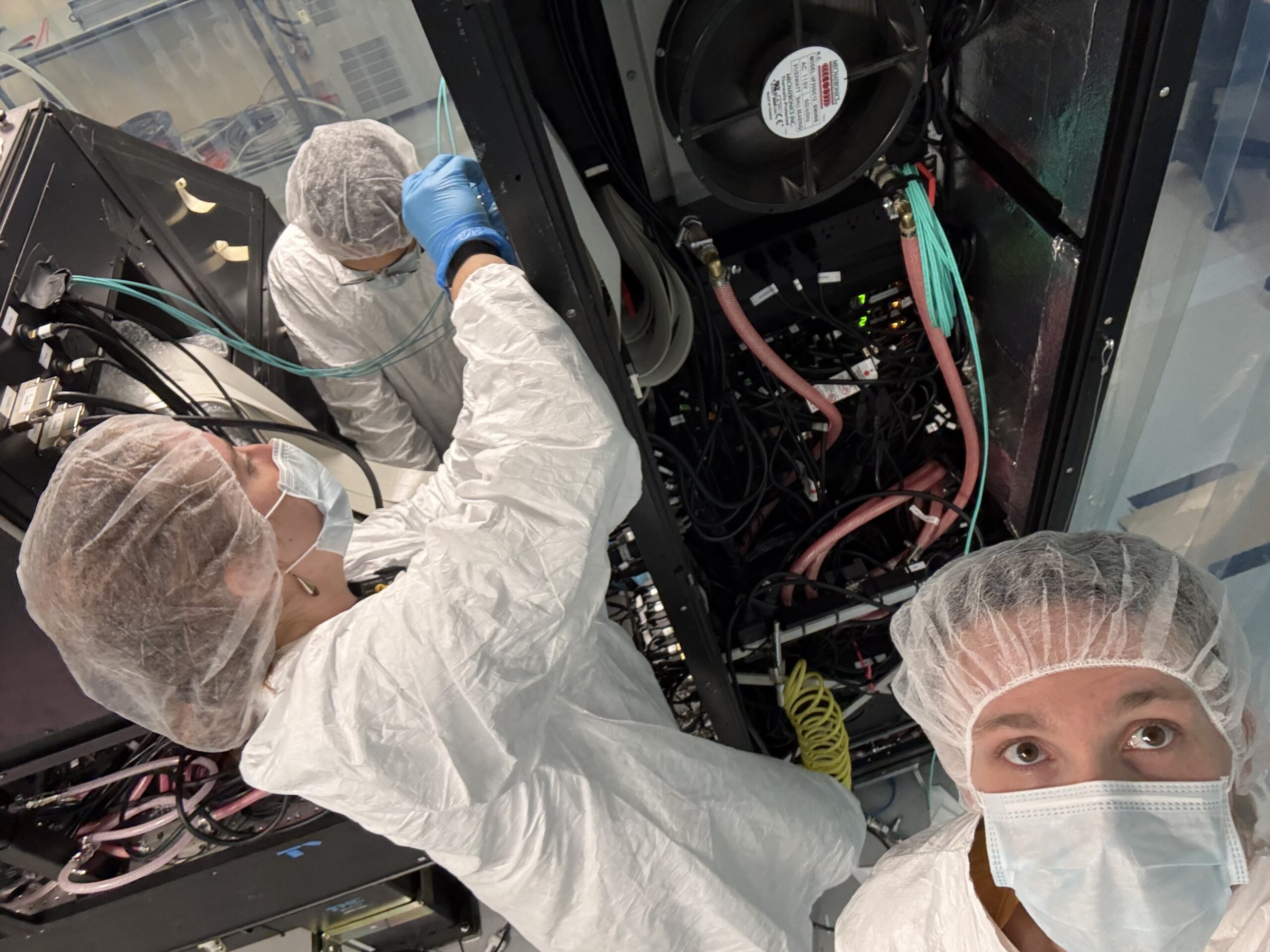
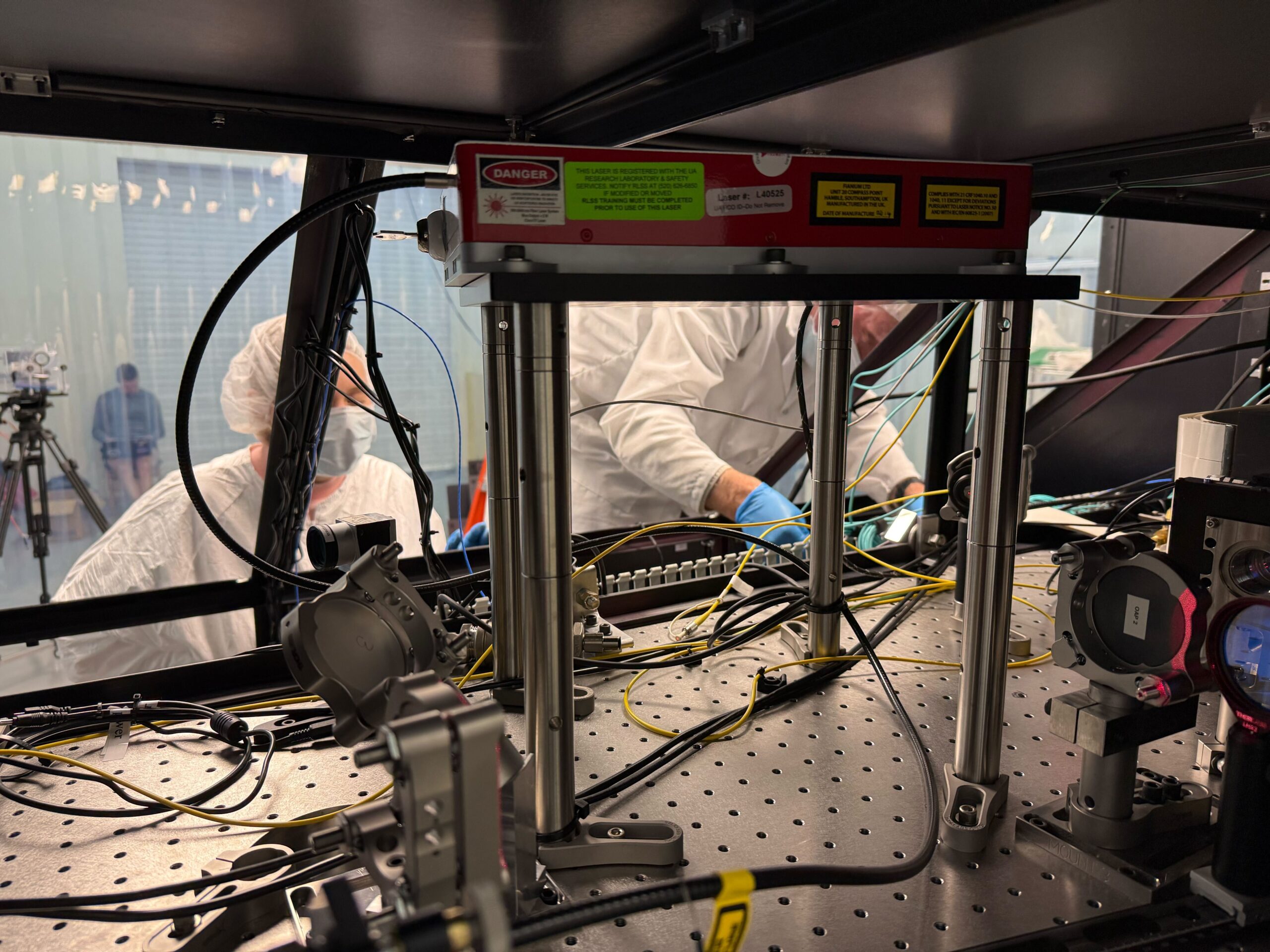
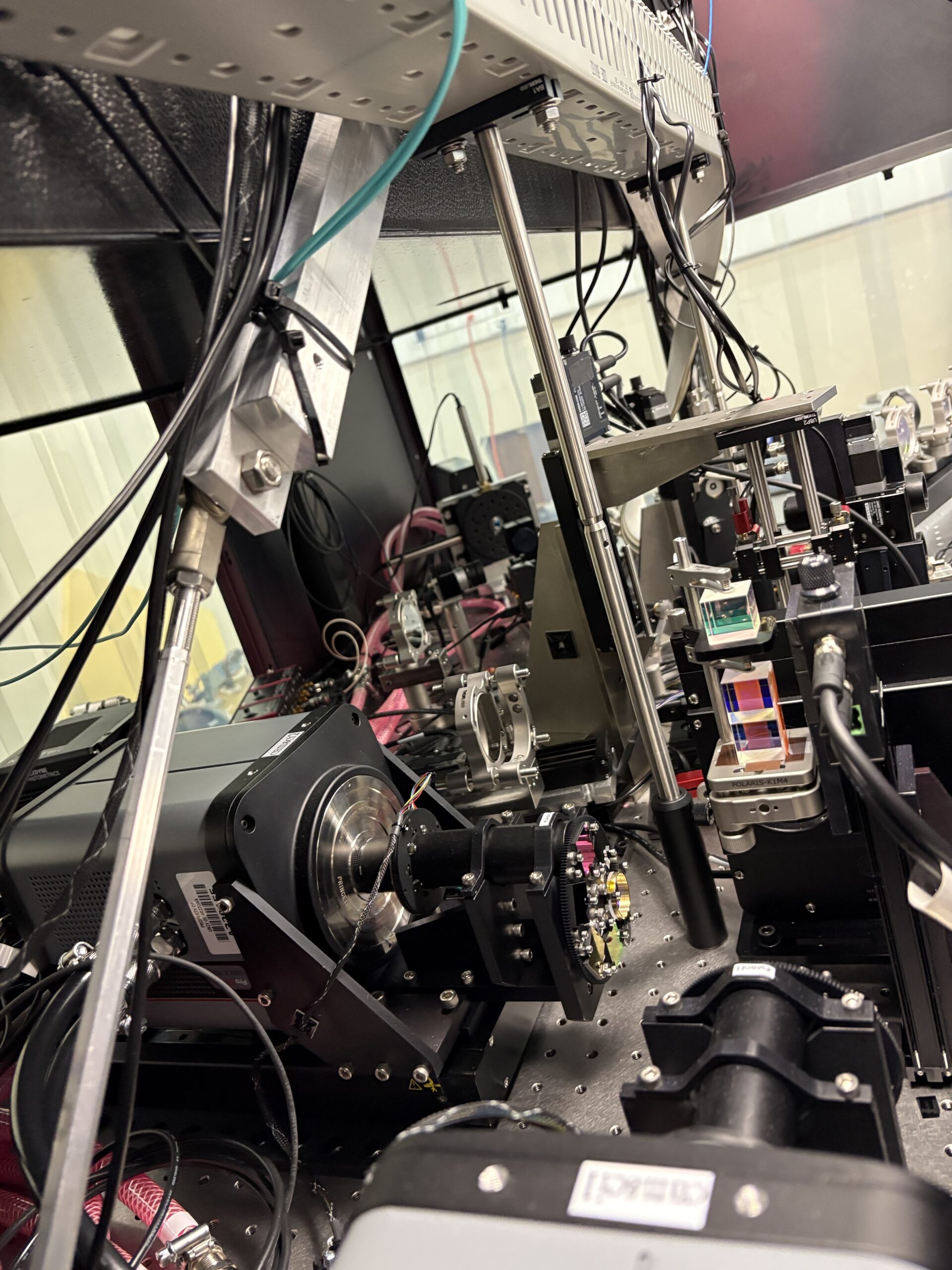
Today I spent time managing cables for the polarimeter and for the new polarization compensator I’ll be deploying. For the half-wave plate stage outside the instrument, I worked on reducing our heat outputs by moving the AC to DC converter bricks from directly underneath our entrance port to inside the server rack. I reckon this’ll give us at least +1-2% Strehl ratio. Having all the cables managed neatly in bundles keeps our operations smoother: there’s less chance of the cables snagging, and plugging and unplugging from the server rack is logistically easier.
What’s missing from the polarimeter now?Clean cable management
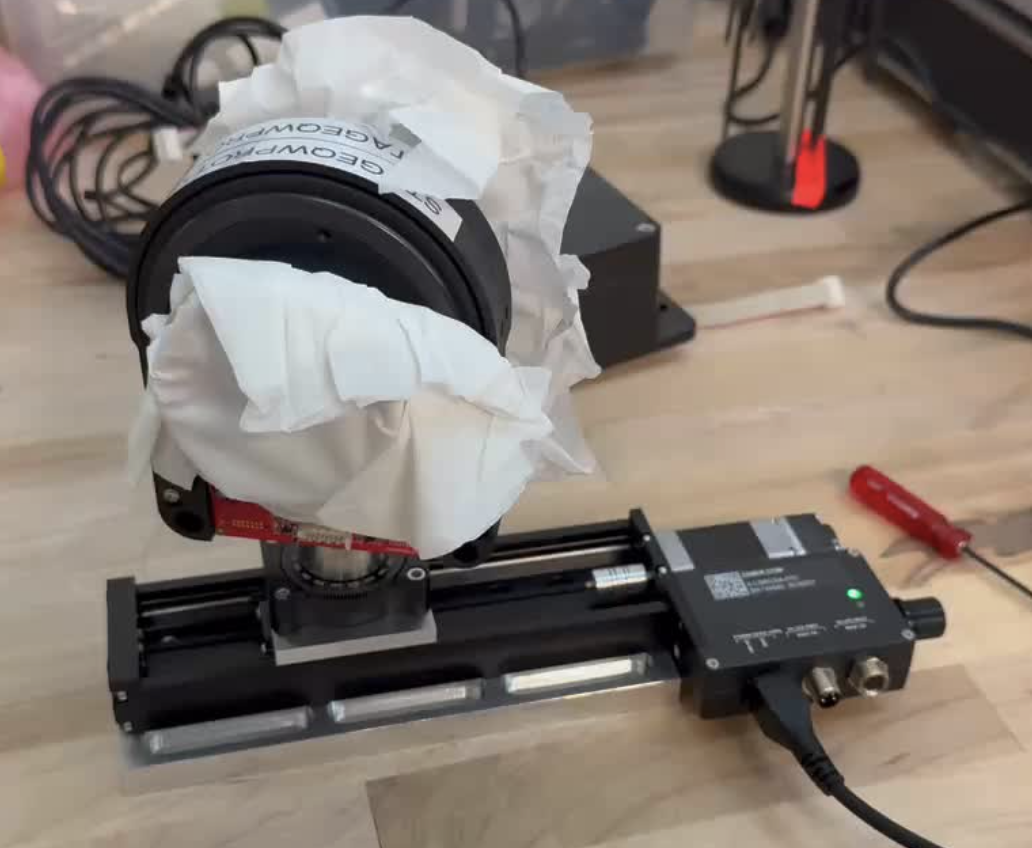
Inside the instrument, I’ve gotten the control electronics routed into the top bench for the polarization compensator–tomorrow I’ll be installing it!
Control electronics in the black boxThe dual QWP polarization compensator
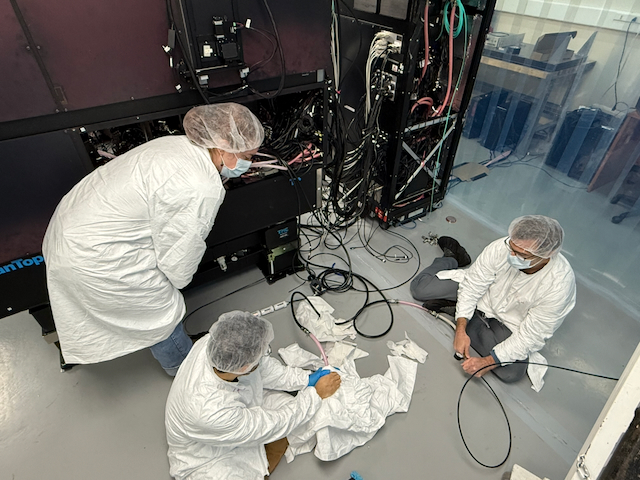
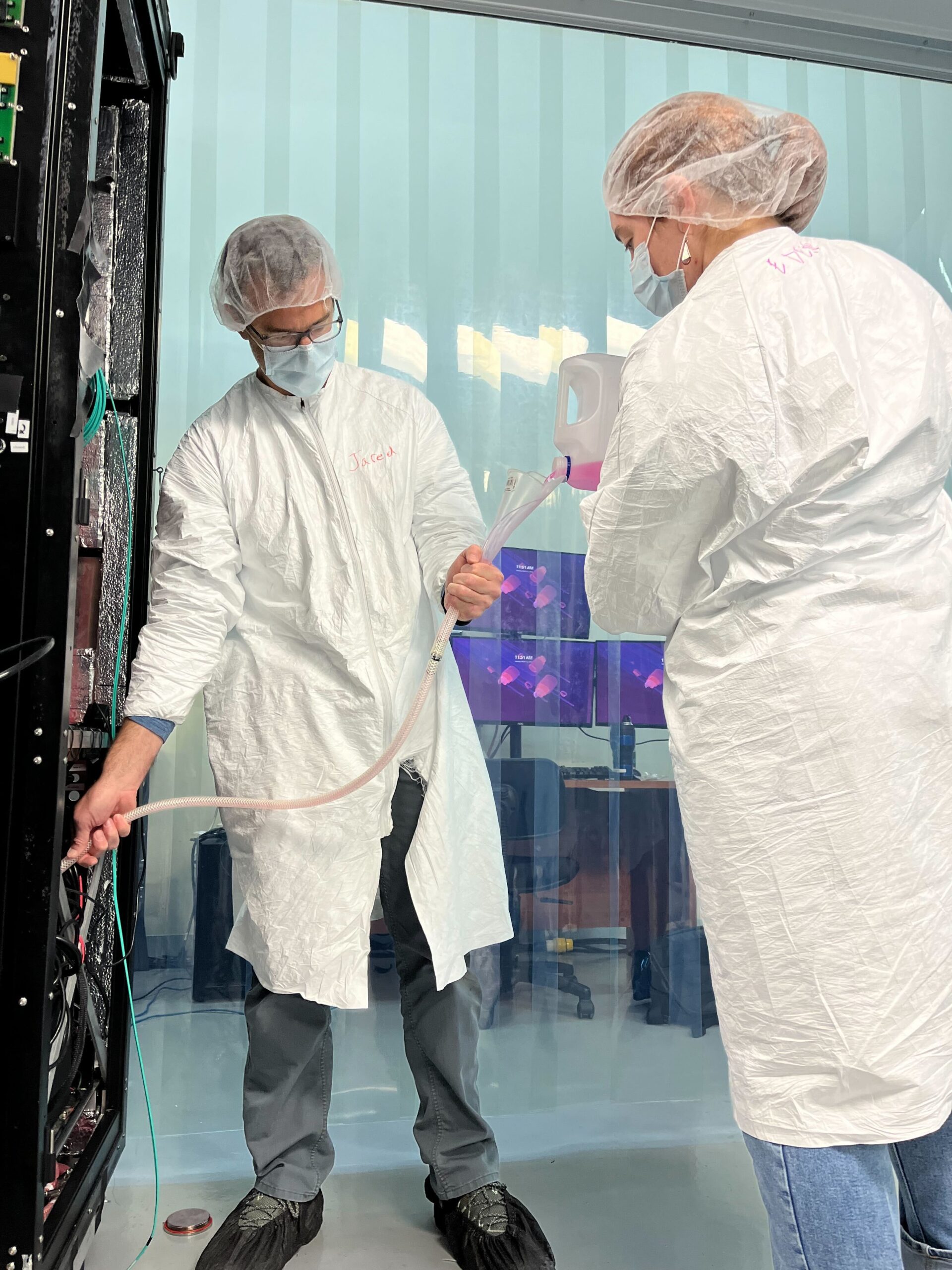
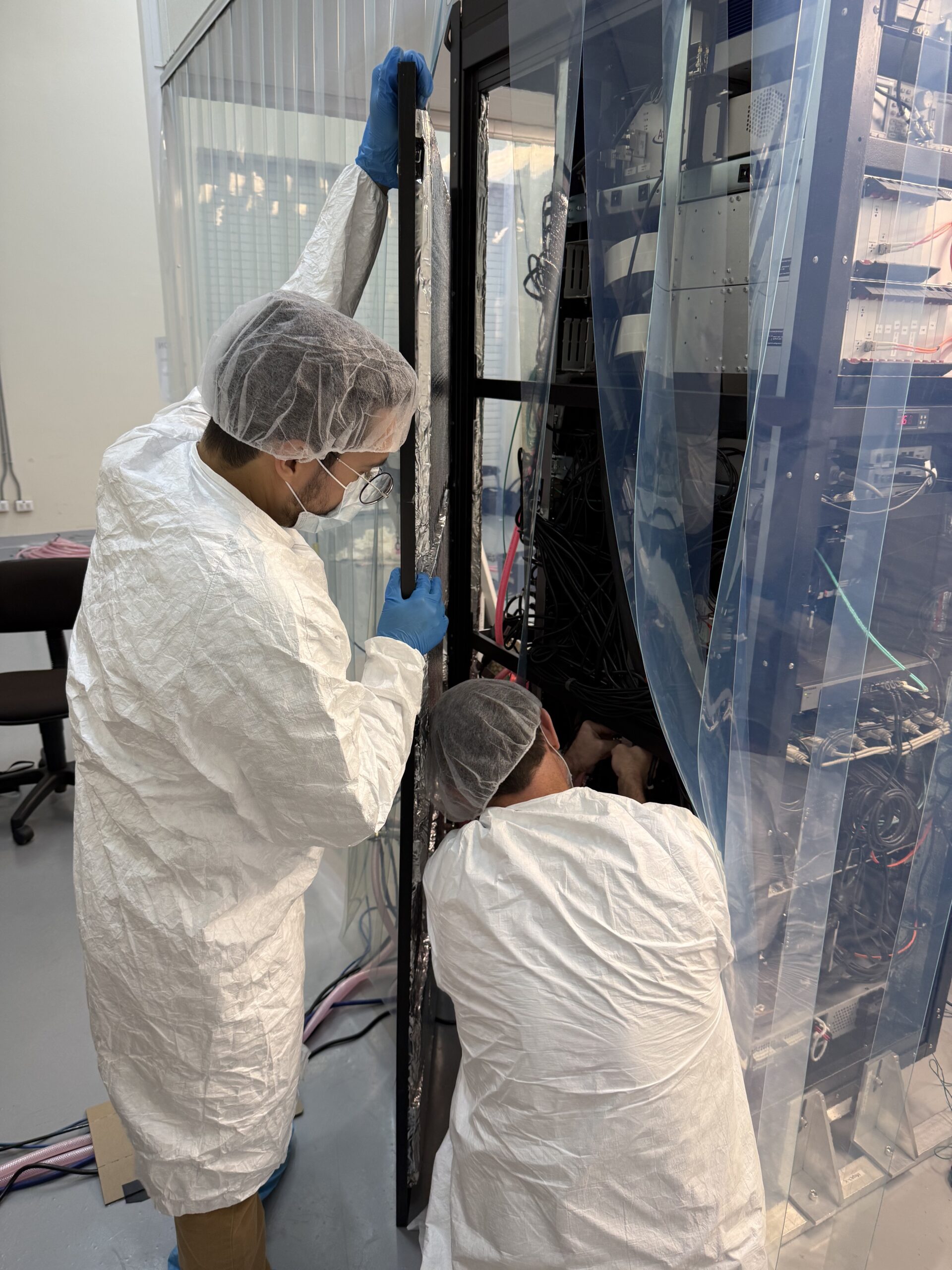
Additionally, Jay, Eden, and Jared finished the glycol plumbing! The hoses, manifolds, and devices were backflushed to remove gunk and, eventually, the entire cooling loop was up and running!
Backflushing the gunkThe Gunk^TMOut with the old, in with the newClean Connectors lead to Constant CoolingTroubleshooting
Following the successful plumbing, the remainder of the cables between the server and the instrument were connected, followed by a system check for the deformable mirrors and motion stages. The loop has been closed, so we’re ready to proceed with the remaining engineering tasks for this run.
They’re so good at cabling I just stayed in the corner with the cleaning wipes
Color of the Day
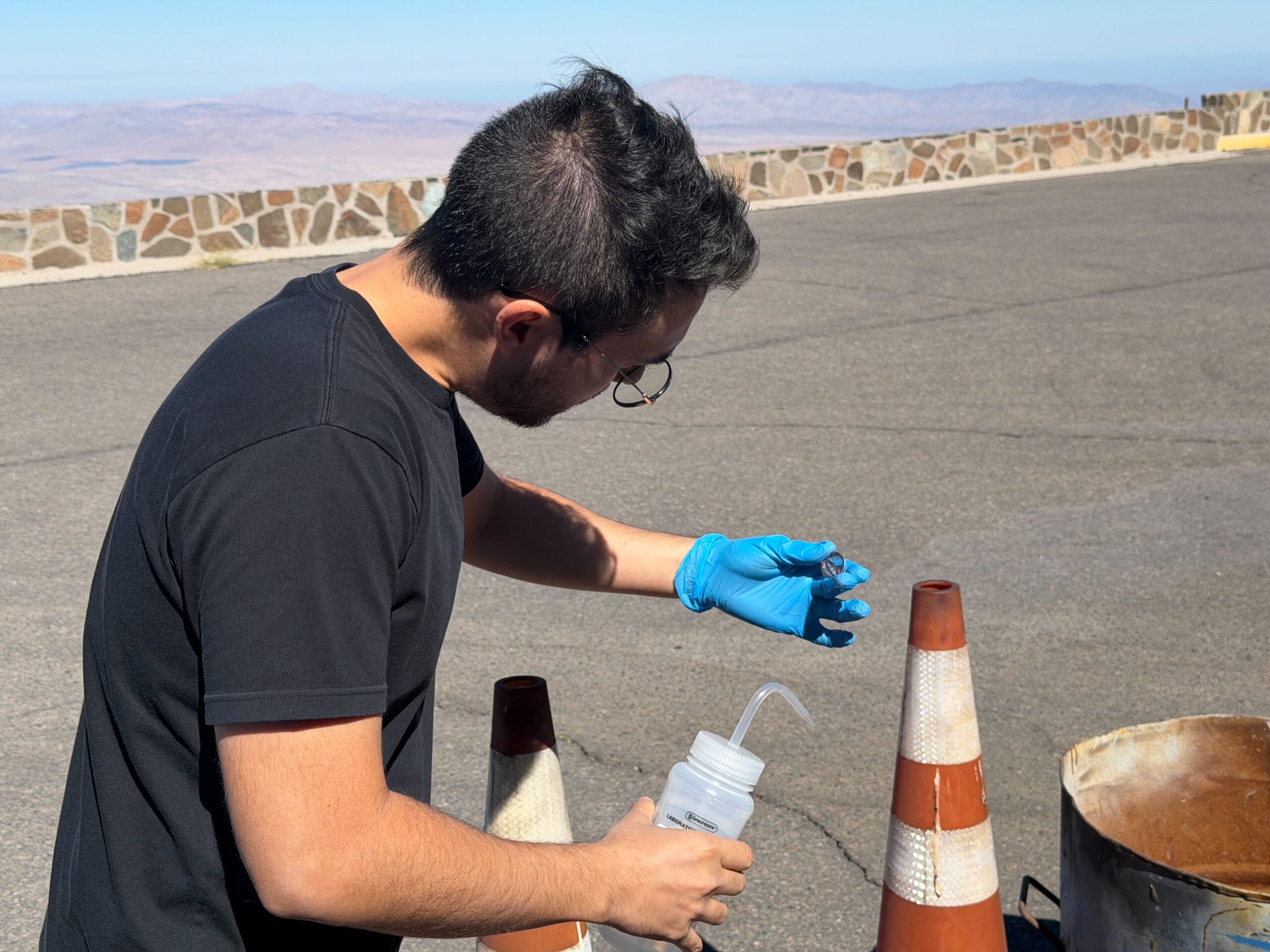
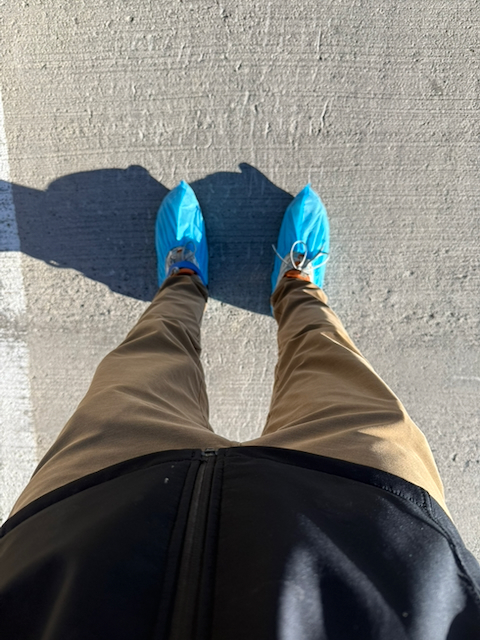
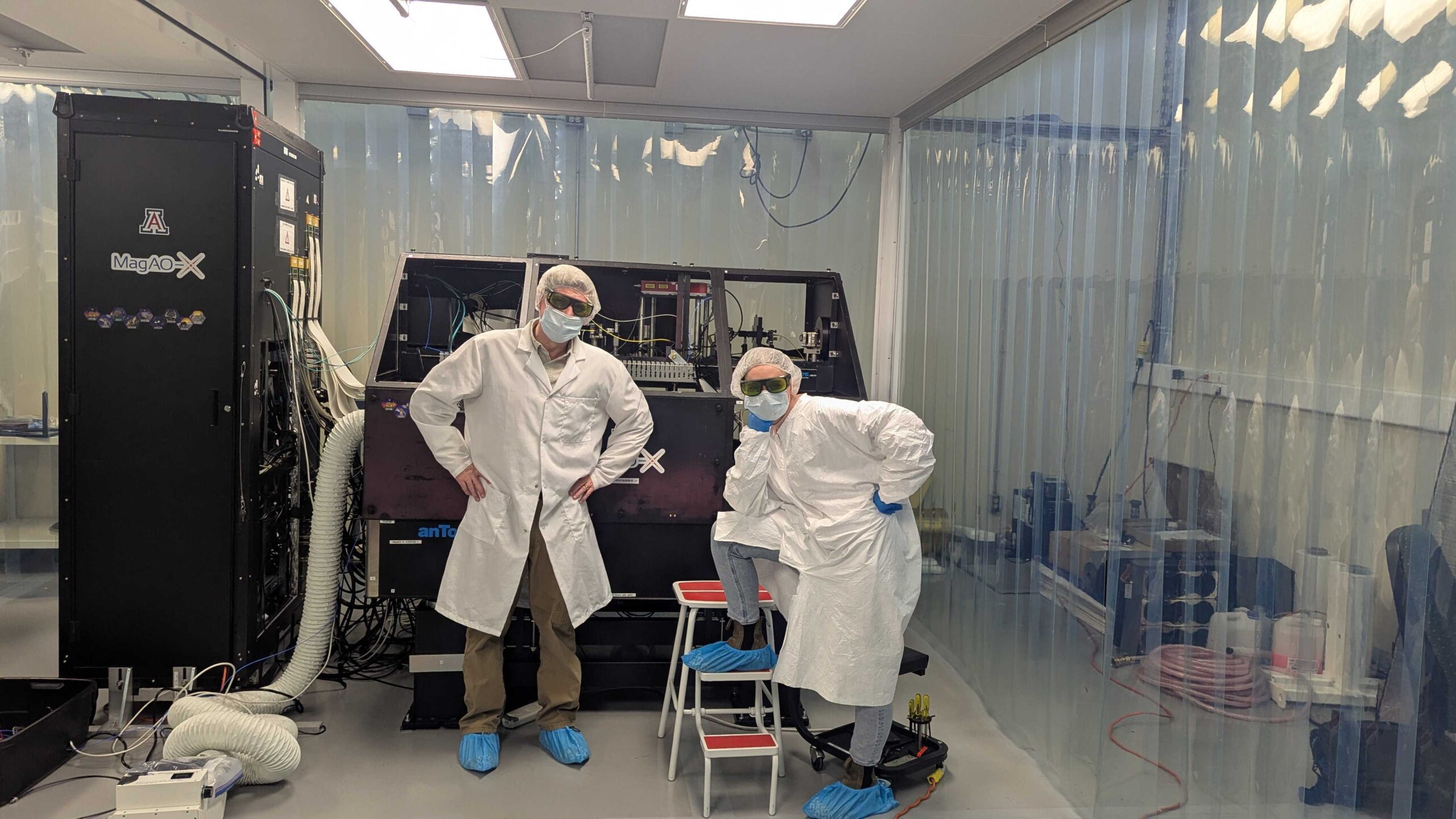
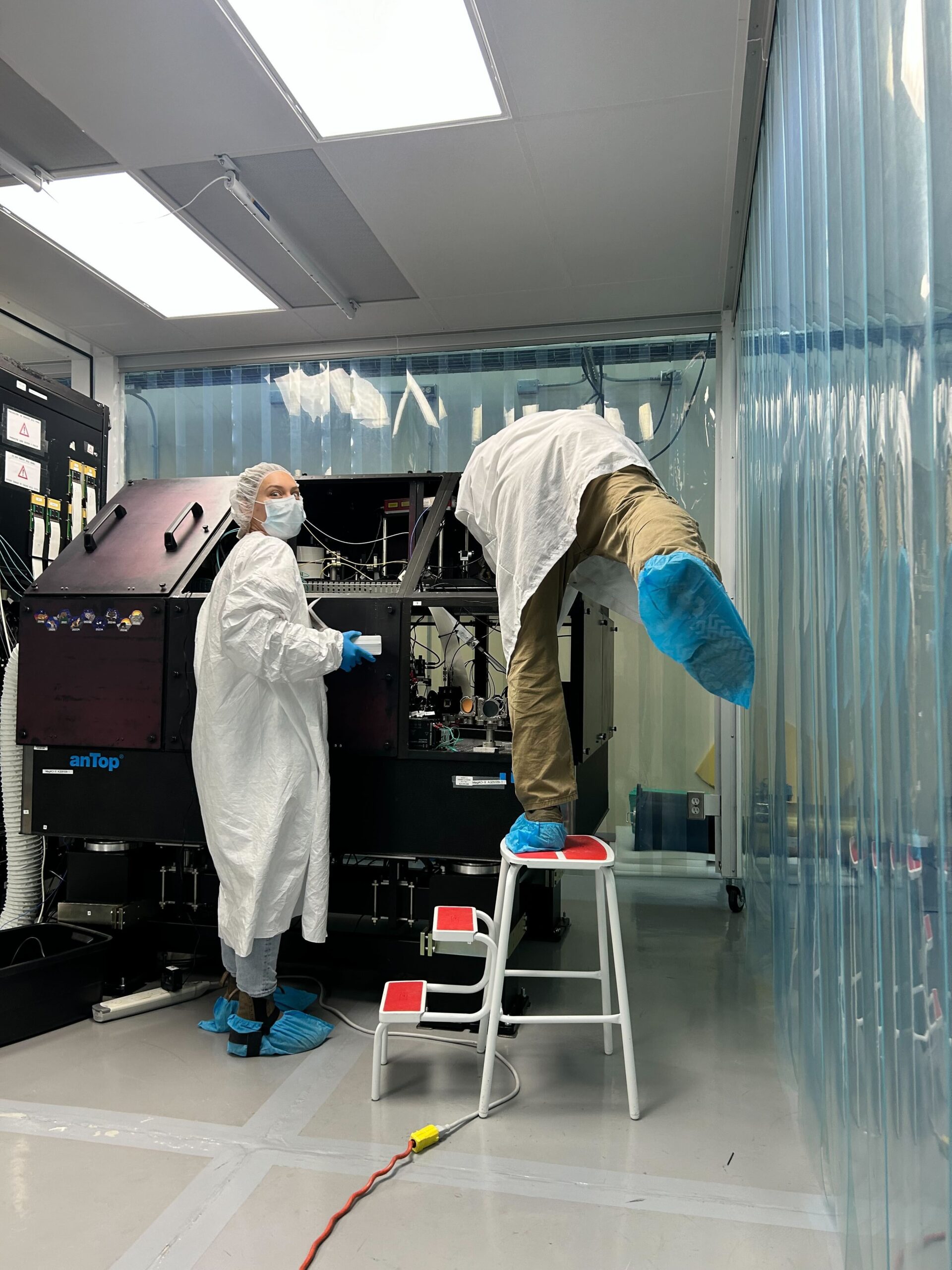
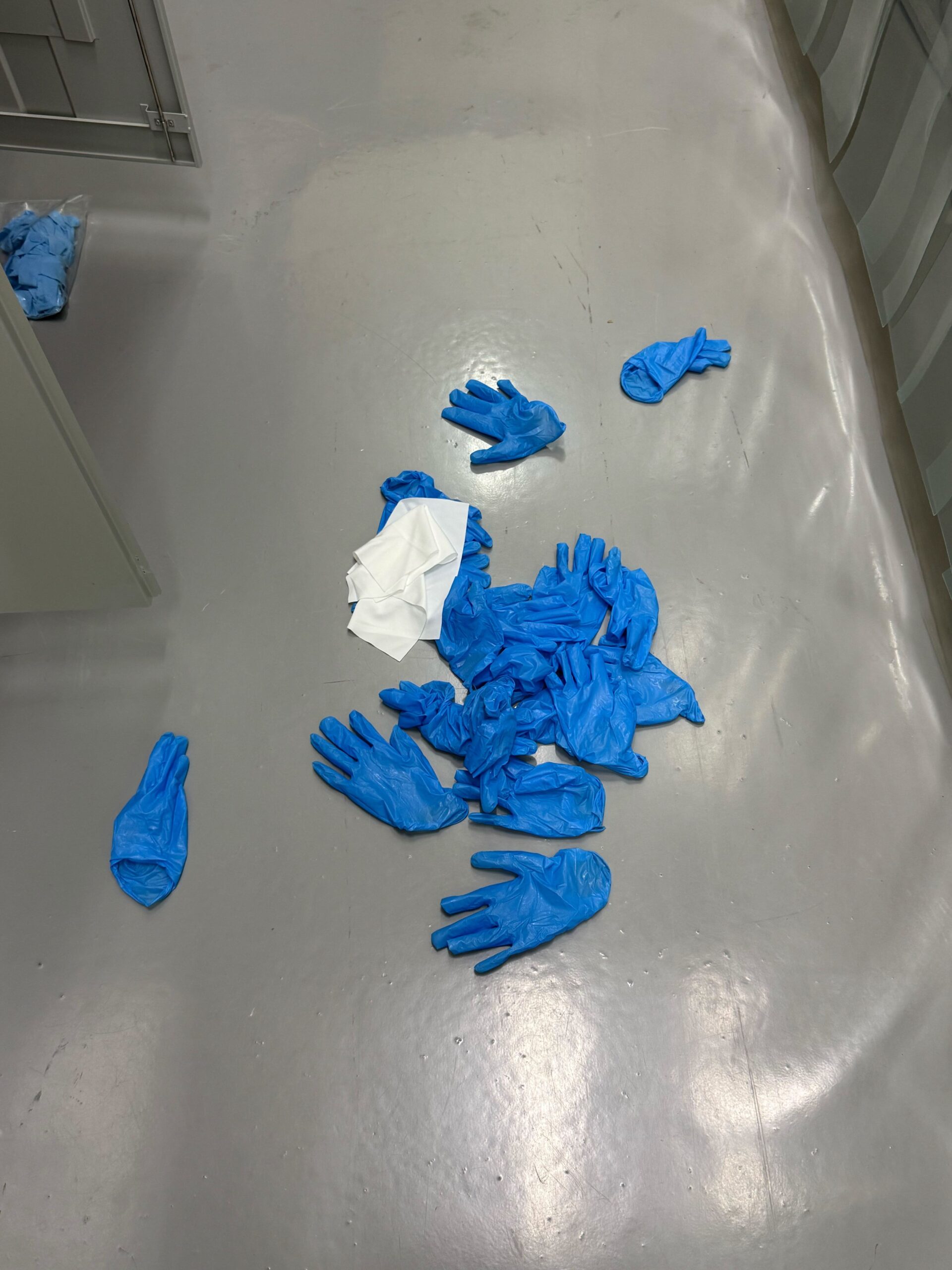
So, today I accidentally walked out of the clean room with my shoe covers still on. Oops. Miraculously, so did Eden at the end of the day. In honor of our buffonery, I nominate clean room shoe cover blue (Pantone 14-4530 TN BLUEFISH) as the color of the day.
Today’s blog post is going to highlight my raison d’être for working with MagAO-X: its new polarimeter!
Polarimetric differential imaging
The MagAO-X polarimeter was initially installed in spring of 2025, consisting of a rotating half-wave plate (HWP) and polarizing beamsplitter cube (PBS). The combination of these two optics enables MagAO-X to measure the angle of linear polarization of light (i.e., the orientation the electric field is oscillating). Detecting polarized light is useful for imaging scattered light in astronomical scenes, in particular light reflecting off of circumstellar disks!
Schematic of polarized light generated by a linear polarizer. Design of the HWP and PBS for MagAO-X (credit: T. G. B. de Souza)
The major benefit of polarimetry is that light reflecting off disks, for example, is polarized, while the on-axis starlight is unpolarized. The PBS directs half the unpolarized starlight to each camera along with the small percentage of the fainter disk light which is polarized in orthogonal directions. By subtracting the two camera images the unpolarized starlight is almost completely cancelled out, leaving only the polarized circumstellar signal. This technique is powerful for attenuating the starlight, orders of magnitude better than using angular or spectral differential imaging, alone (although these methods can be combined with polarimetry for even better attenuation!).
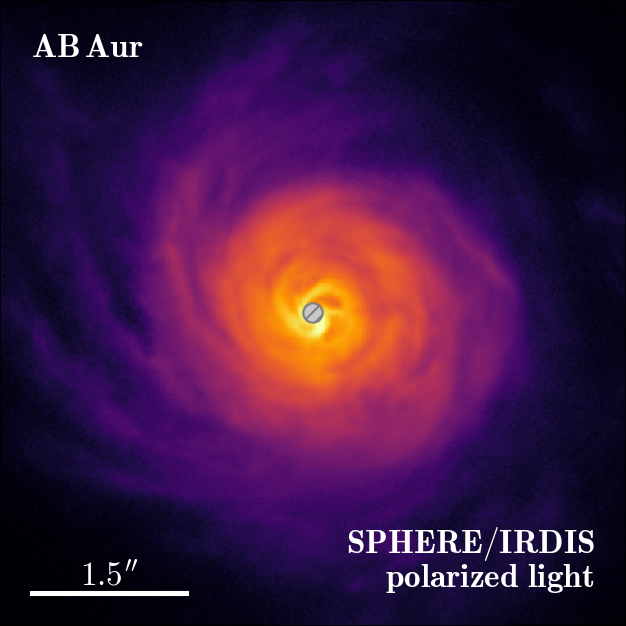
Examples of polarimetric disk images from VLT/SPHERE (credit: C. Ginski and DESTINYS team)
Calibrating the MagAO-X polarimeter
The fundamental reason disks have polarimetric signal is due to the reflection of starlight towards the observer–reflections polarize light! One may wonder, what about all the reflections off the mirrors inside our instrument, won’t those also polarize the incoming light? Yes, indeed, every reflection will polarize the light, inducing instrumental polarization (IP), which cannot be distinguished from circumstellar signal. In addition, certain optical elements will rotate the angle of linear polarization of the incoming light, and can even turn linear polarization into circular polarization (crosstalk). Because the PBS only filters linear polarization states, any light which becomes circularly polarized effectively disappears, leading to a net loss in polarimetric throughput.
The effects of instrumental polarization are mitigated to first order by the HWP itself–by placing the HWP as early as possible in the instrumental beam path, we can cancel out any IP induced downstream of the HWP through another layer of differential subtraction by rotating the HWP and taking multiple images. This will not correct for any crosstalk though, which requires more sophisticated methods. Modern polarimeters overcome both IP and crosstalk by directly modeling the polarimetric response of the instrument and using the solution for correcting astronomical observations. This modeling requires calibration sequences injecting light with known polarization states into the instrument and measuring the response.
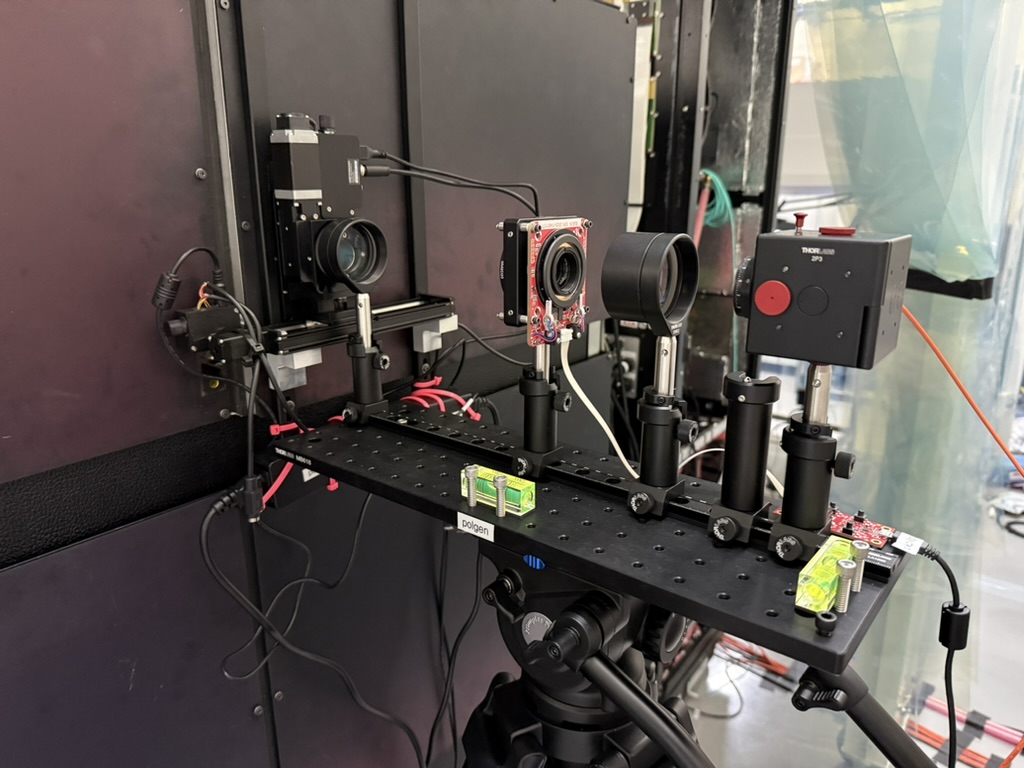
MagAO-X does not have the capability of injecting polarized light on the same path as the on-sky beam, so I designed a polarization generator which can be aligned on the exterior of the instrument precisely for measuring the calibrated polarimetric response. I got it designed and built in Tucson before shipping here to the telescope, where it will remain in the clean room for future polarimetric calibrations!
The polarization generator aligned in front of the HWP, ready to inject a flat-field of polarized light.
Initial results from the polarimetric calibration
After a week of Joseph and Jared working tirelessly on getting my calibration data in the right format with the right metadata, I was able to reduce it and begin the measurements of the polarimetric response of MagAO-X!
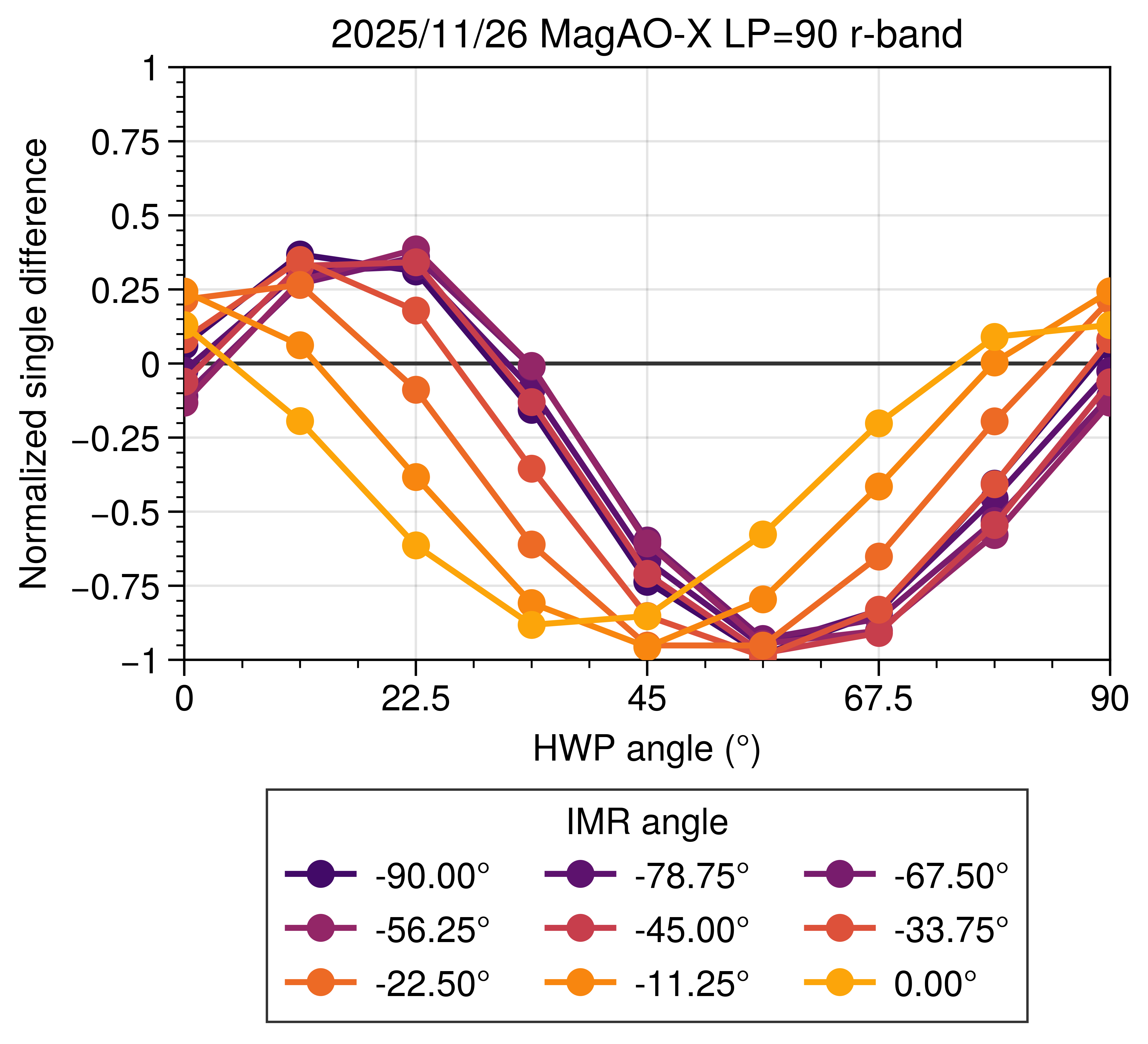
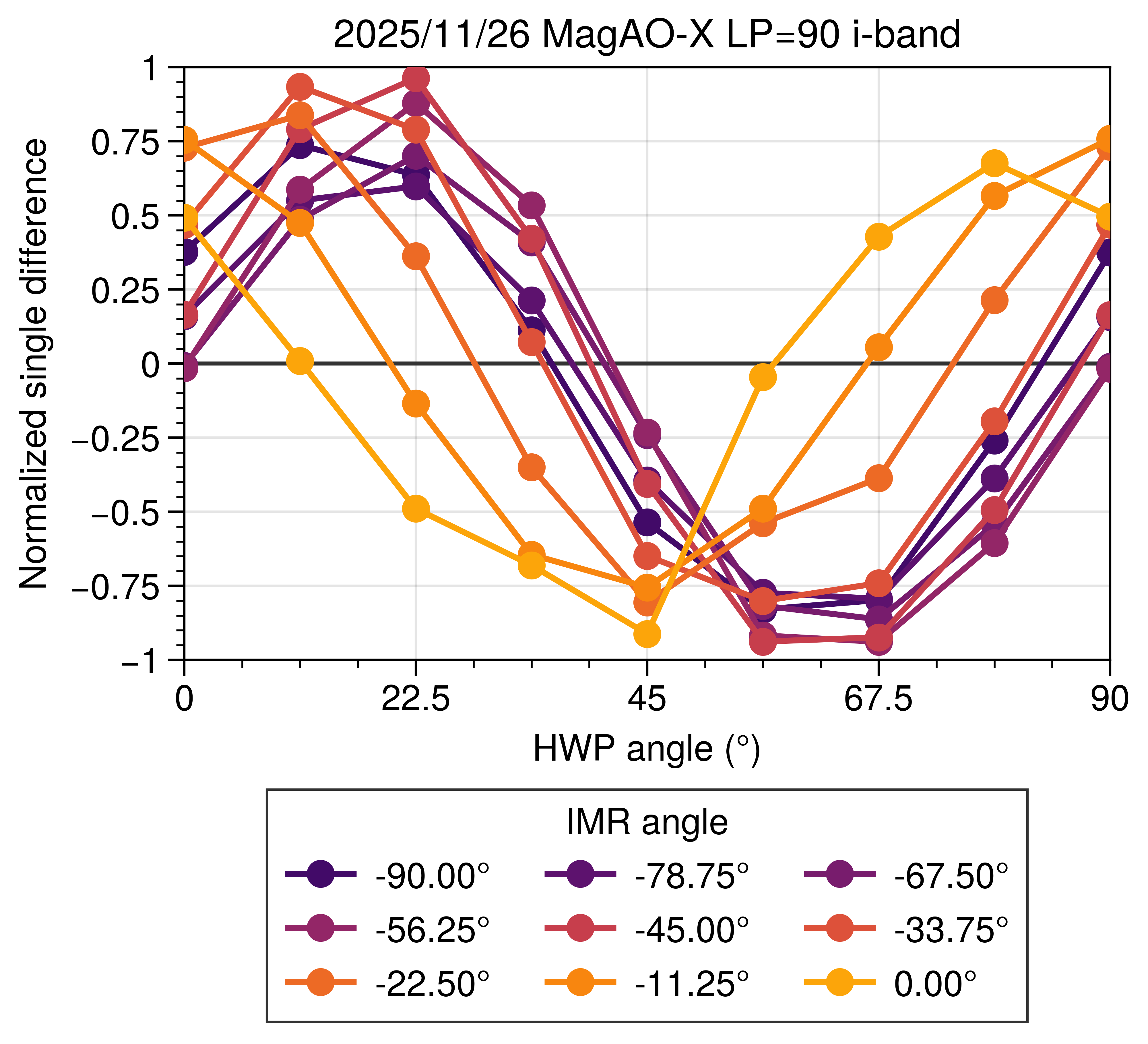
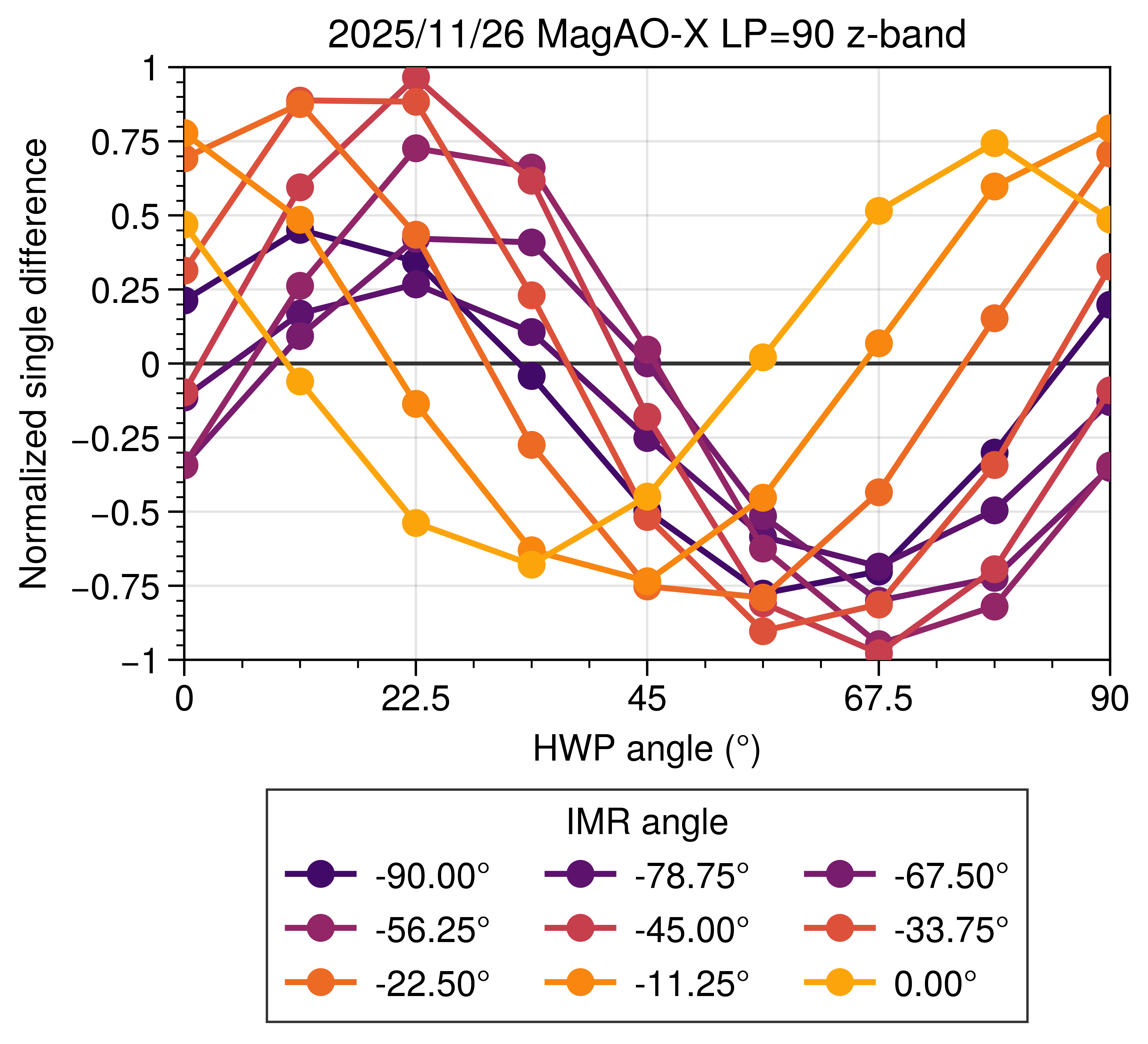
Normalized single difference flux at different HWP and IMR angles.
These images show the direct polarimetric response of the image on the two cameras at the three filters we can use for polarimetry (r, i, and z). Each data point is the fractional polarized flux measured between the two cameras: +1 means 100% of the input vertically polarized light was measured, -1 means 100% of the input vertically polarized light has now become horizontally polarized, and 0 means 0% of the input flux was measured. An ideal curve goes from +1 at HWP=0° to -1 at HWP=45°. Shifts in the locations of the curves indicate retardance in the instrument, and when the curves are squished less than ±1 it indicates a loss in polarimetric efficiency due to crosstalk.
From these curves we can see immediately by eye a lack of sensitivity at r-band, which can be attributed to the PBS–it has non-ideal performance below 650nm, which is half of the r bandpass. We can also see that the image rotator (IMR) has clear retardance and crosstalk effects as the different colored curves shift and squish at different IMR angles.
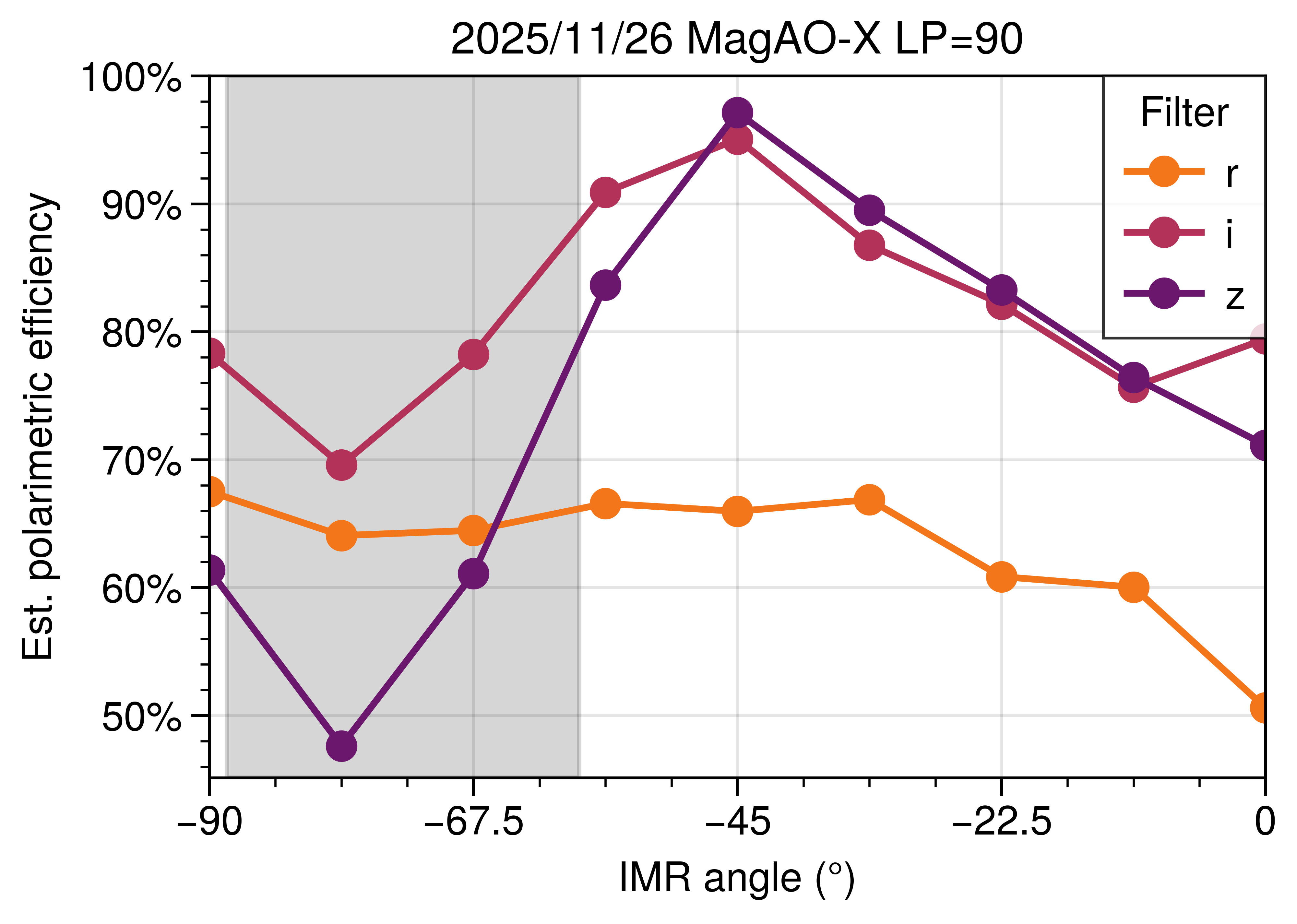
The overall polarimetric efficiency can be estimated from the maxima and minima of the normalized single-difference curves. A curve that goes from +1 to -1 has 100% efficiency, while a curve that goes from +0.4 to -1 only has 70% efficiency. The above plot shows the estimated polarimetric efficiency for each filter at different image rotator angles. The highlighted region indicates the typical image rotator angles used on-sky by MagAO-X.
First off, we can see that at i- and z-band we can reach an efficiency of almost 100% without any additional polarimetric components in the instrument, which is great! However, this is reached at image rotator angles that we never use on-sky due to the fixed orientation of the instrument pupil offset compared to the telescope pupil–this is difficult to change because this angle is optimized to minimize the effects of dead actuators on the deformable mirror (DM) and all pupil stops in the instrument are co-aligned with the DM. Thankfully, even with the current pupil offset we’re only losing 50% of the polarized flux, at most.
Future work
Now that these data have been measured, I am going to begin working on fitting polarimetric models for the instrument. In a few nights, I will also take measurements of polarized and unpolarized standard stars, which allows me to measure the polarimetric response of the telescope’s tertiary mirror (which we know has IP and crosstalk). Hopefully I will also get some time on a circumstellar disk, too!
Before next observing run I am going to work on the design of a polarimetric compensator to optimize the polarimetric efficiency by inverting the effects of the instrumental retardance and crosstalk. This will require new optical components and motorized stages, which means I’ll be preparing a new proposal asking for money! If all goes well, we should have an optimal polarimeter in time for the 2026 observing runs.
Other news
Following the arrival of Rico, we’ve had to say goodbye to Matthijs, keeping our Dutch equivalency number constant
Hallo, Rico; tot ziens, Matthijs!A trio of knit-wearing AO scientists
As we progress further and further in the run, our attempts for consistent sleep are getting more and more exasperated, to the point of insanity for some
A Faraday-cage construction around one of the dorms
Observations are continually mostly well, although our luck with the weather is becoming more tenuous. Everyone keep your fingers crossed and knock on wood we can finish out the remaining 5 nights successfully!
Song of the day
twenty one pilots – Polarize
Fact of the day
Hawai’i is the extinct and endangered species capital of the world. Most native Hawaiian plants and animals are endemic, meaning they are found nowhere else in the world but Hawaiʻi. Once they are lost to extinction, they are gone forever, largely due to habitat loss and impacts of invasive species. Current estimates show 95 of 142 endemic bird species, 50% of land snails, and 134 species of plants have been extinguished from the Hawaiian islands.
This week started off with the arrival of Matthijs and Elena; welcome (back) to Chile!
Elena and Matthijs arriving in Santiago (credit Elena)
New Optics
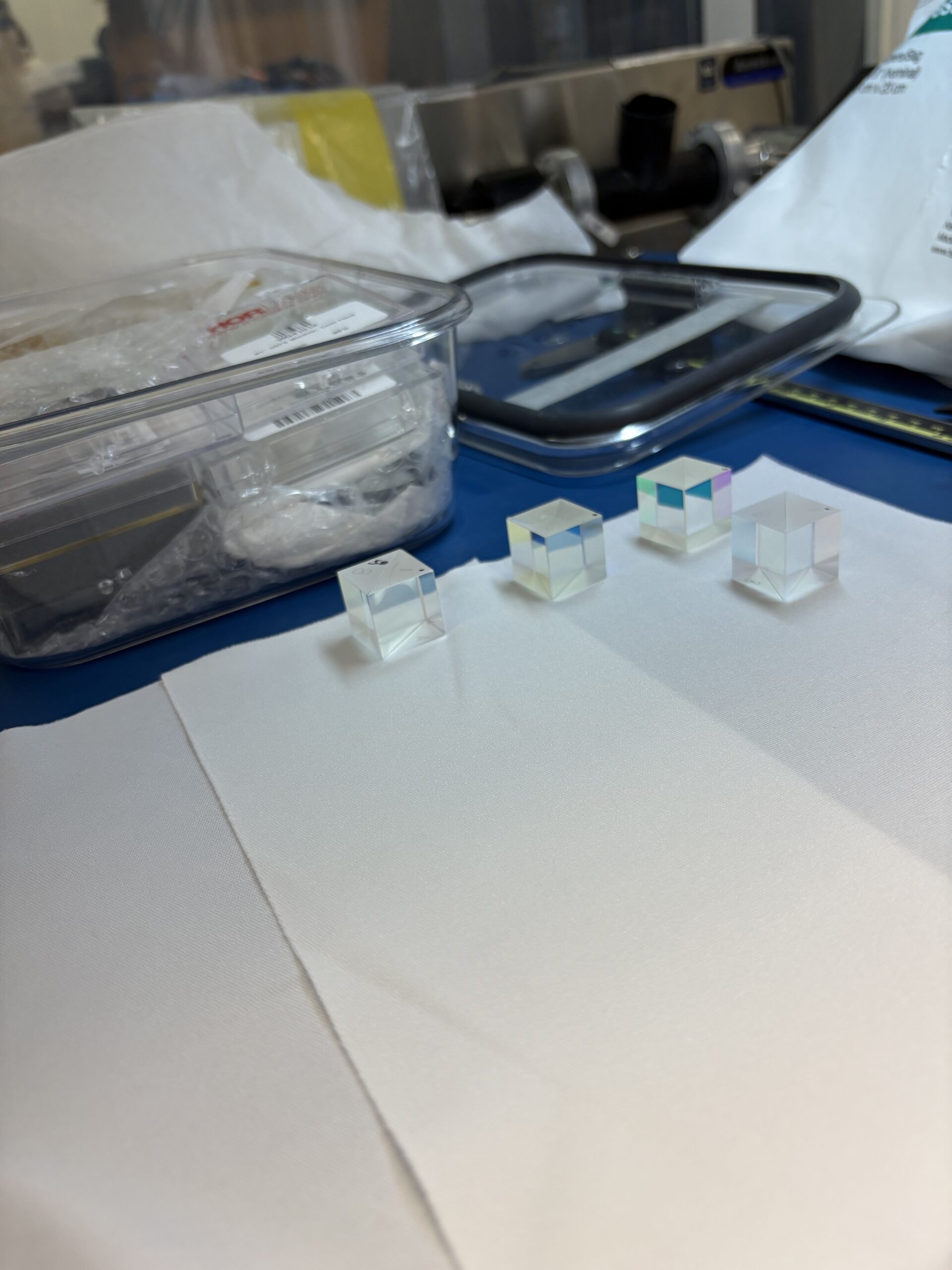
More optical adjustments and alignments on the MagAO-X bench were led by Katie and Laird to prepare for a new dual-band observing mode. The goals today were to prepare alignment targets, install a new beamsplitter cube, and to install a new filter in the telescope simulator laser enclosure.
Les experts en optiqueAttending to the beamsplitter cubesGood formA quick restModern art
The new beamsplitter that was installed has a dichroic cutoff to split between r and i bands, which DOUBLES the throughput efficiency for dual-band imaging between i/r and z/r compared to the 50/50 beamsplitter.
All the beamsplitter cubes, old and newThe three new cubes installed in MagAO-X
To test this mode, the output of the super-continuum white light laser was modified. A new shortpass filter with a longer cutoff wavelength was installed inside the laser box, which meant an evacuation of the clean room so Katie and Laird could work with proper safety precautions and minimal distractions. This turned into quite the ordeal–re-aligning the single-mode fiber became a tour de force, draining the rest of the two’s energy. Before the end of the day, though, we were treated with this view:
Rainbow effect achieved by tilting the fiber behind the injection lens (credit: Katie)
and with the exciting demonstration of the mode by Laird
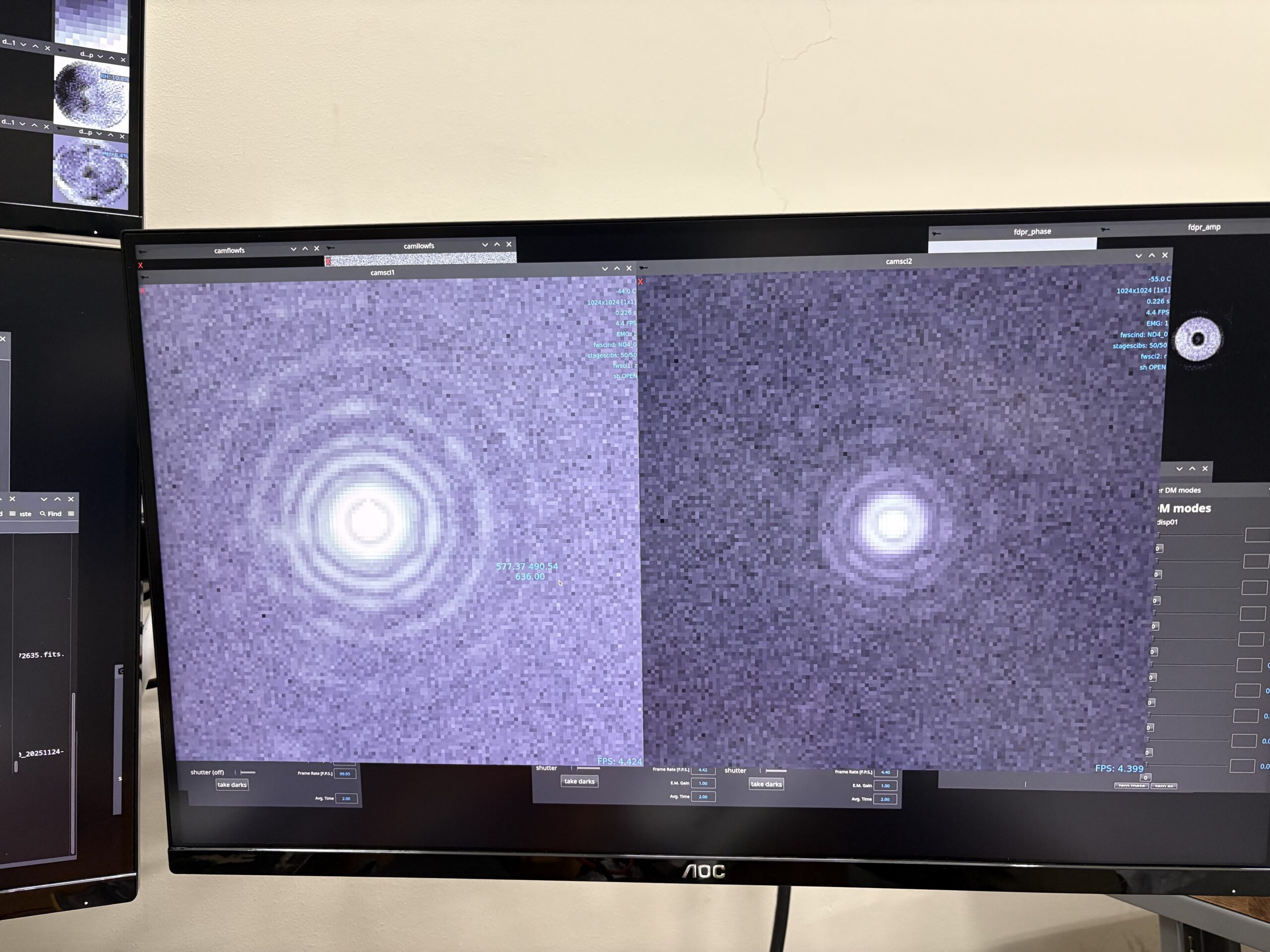
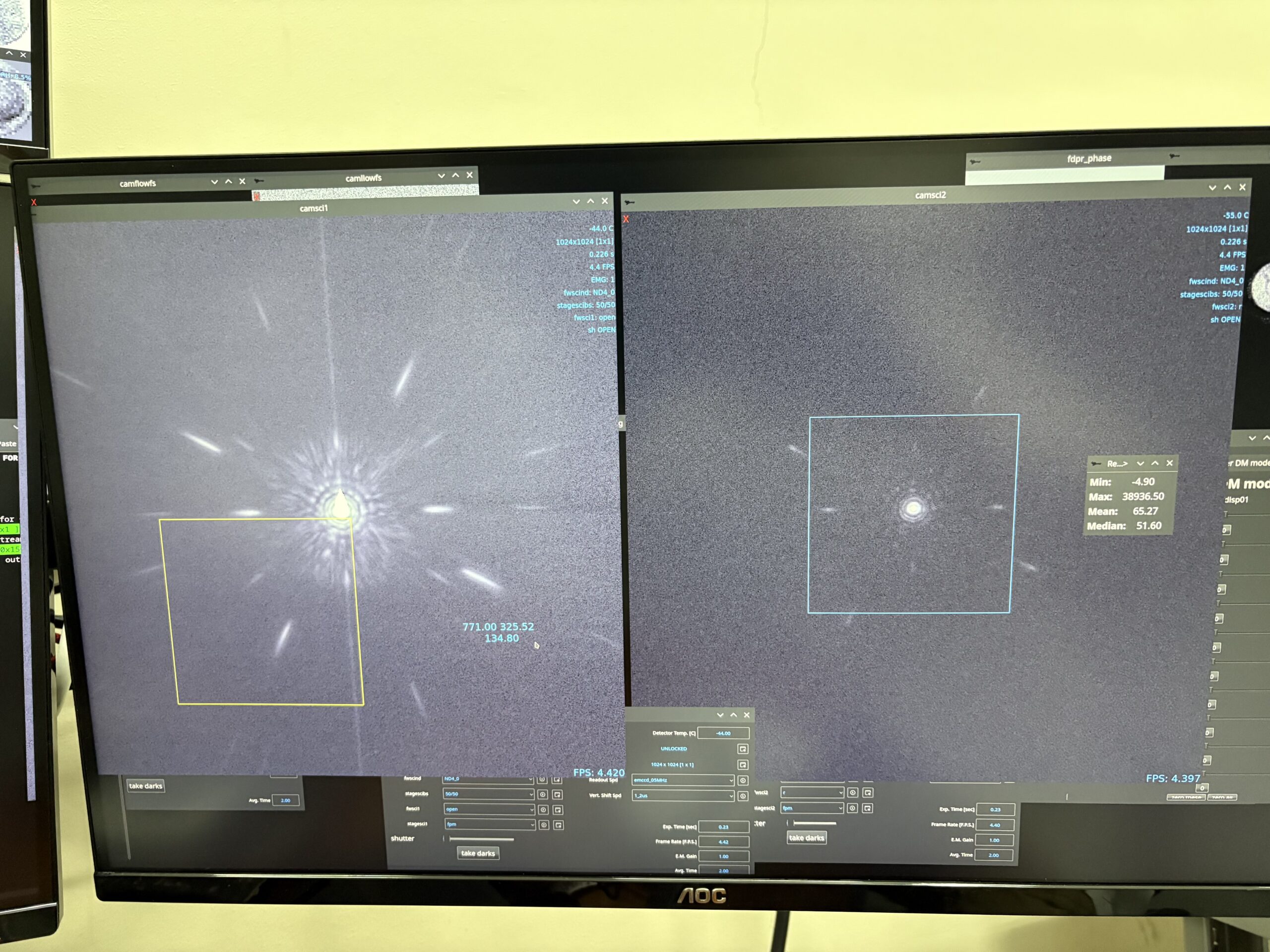
Here we have z-band (0.7-1.0 um) on camsci1 and r-band (~0.6-0.7 um) on camsci2. So all science photons from 0.6 to 1.0 um are now being detected, which is roughly 400% more photons than before the RI cube.
My new favorite mode for MagAO-X.
— Laird Close
Other News
Jared and I finished the implementation of the polarimeter’s HWP stage into the MagAO-X software system, including a pupil-tracking mode. In addition, we attached external trigger cables for the two science cameras in preparation for hardware synchronization. Joseph continued his work on COC and preparing hard drives for the run. Parker continued implementation of the device application for his accelerometer controller.
Song of the Day
The album title is what’s relevant
Fact of the Day
Orlando, Florida is further west than all of South America.
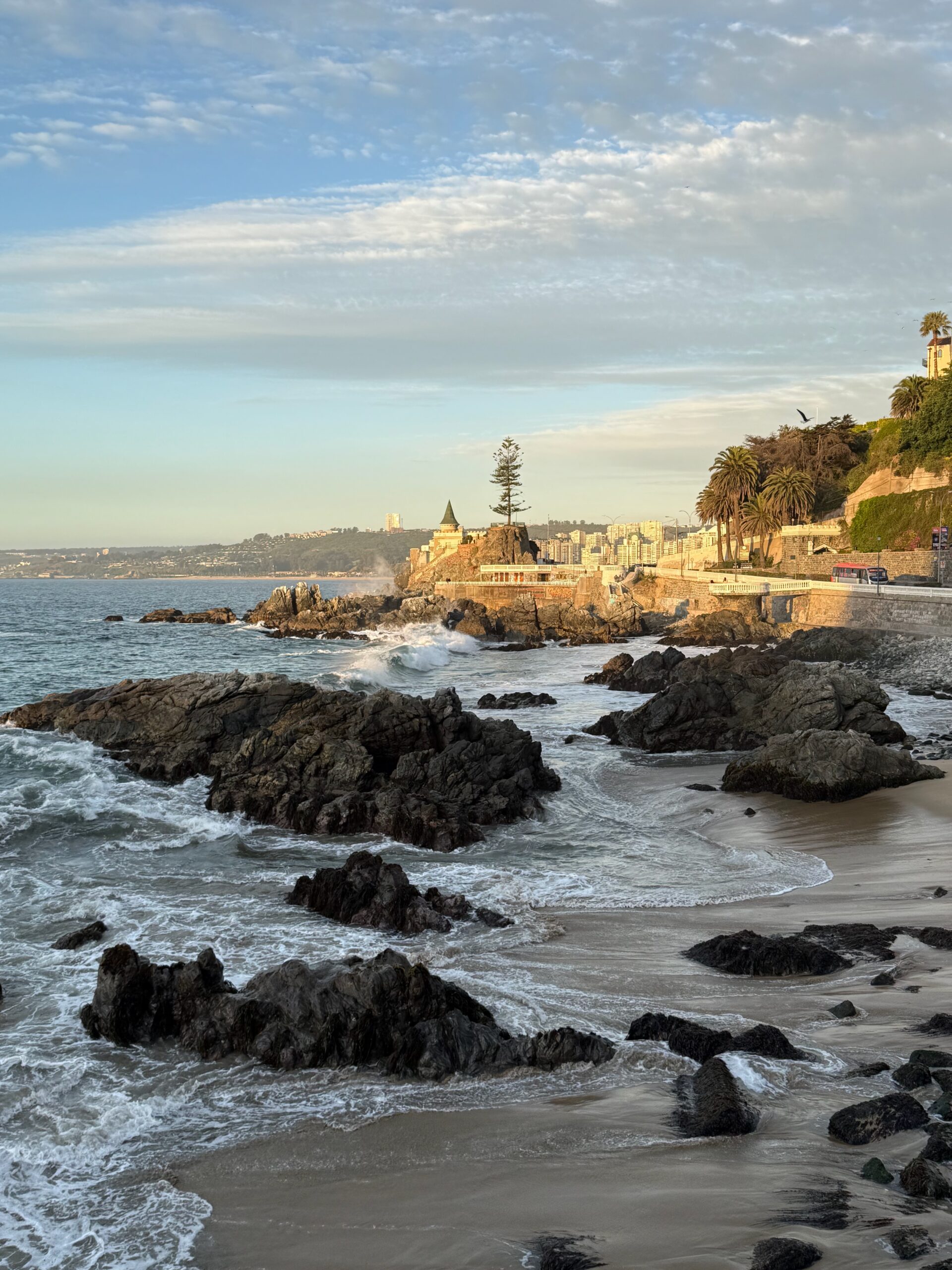
The biannual Adaptive Optics for Extremely Large Telescopes conference was held in beautiful Viña del Mar this year. Although normally a summer conference, it was held from October 27 to October 31–springtime in Chile!
The Reloj de Flores, a landmark in Viña del Mar.
AO4ELT aims to gather adaptive optics scientists from across the globe to discuss and formulate solutions to the largest problem facing the largest future-generation telescopes: wavefront sensing and control.
Wavefront sensing and control (WFS/C) is critical for the success of the massive 30-m telescopes (ELT, GMT, and TMT), whose performances are severely limited by atmospheric turbulence. For the goal of directly imaging exoplanets around nearby stars, the field of adaptive optics must come together to develop the technology and the algorithms for correcting tens of thousands of controllable elements thousands of times a second.
To summarize the talks, I would say the overall theme of this AO4ELT was the proliferation of improved control algorithms. We have discovered that vibrations and other quasi-stable error modes can dominate the residual wavefront errors of modern AO systems, and simple leaky integrators are insufficient for achieving high Strehl ratios on future telescopes.
The new controller architectures predominantly have moved towards machine learning and reinforcement learning to use data-driven techniques that don’t require precise system models. This agnosticism is powerful for adapting a single control architecture to multiple testbeds and telescopes, and we saw many talks about successful implementations of Policy Optimization for AO (PO4AO), among other machine learning algorithms.
Another common theme of the conference was the success in using older, smaller 1-m-class telescopes telescopes for on-sky prototyping and testing. There is an age-old problem of adapting technology and algorithms from simulations to testbeds, and then from testbeds to telescopes. These older telescopes are having a renaissance in utility, since AO scientists are getting crucial on-sky time without the stress and overhead of competing with observers for time on larger, more modern telescopes. This renaissance is also giving students and young career researchers valuable experience in the planning and operations of observations, something you can’t get on a testbed, alone.
Walking back from the conference at sunset, enjoying the view of Castillo Wulff.
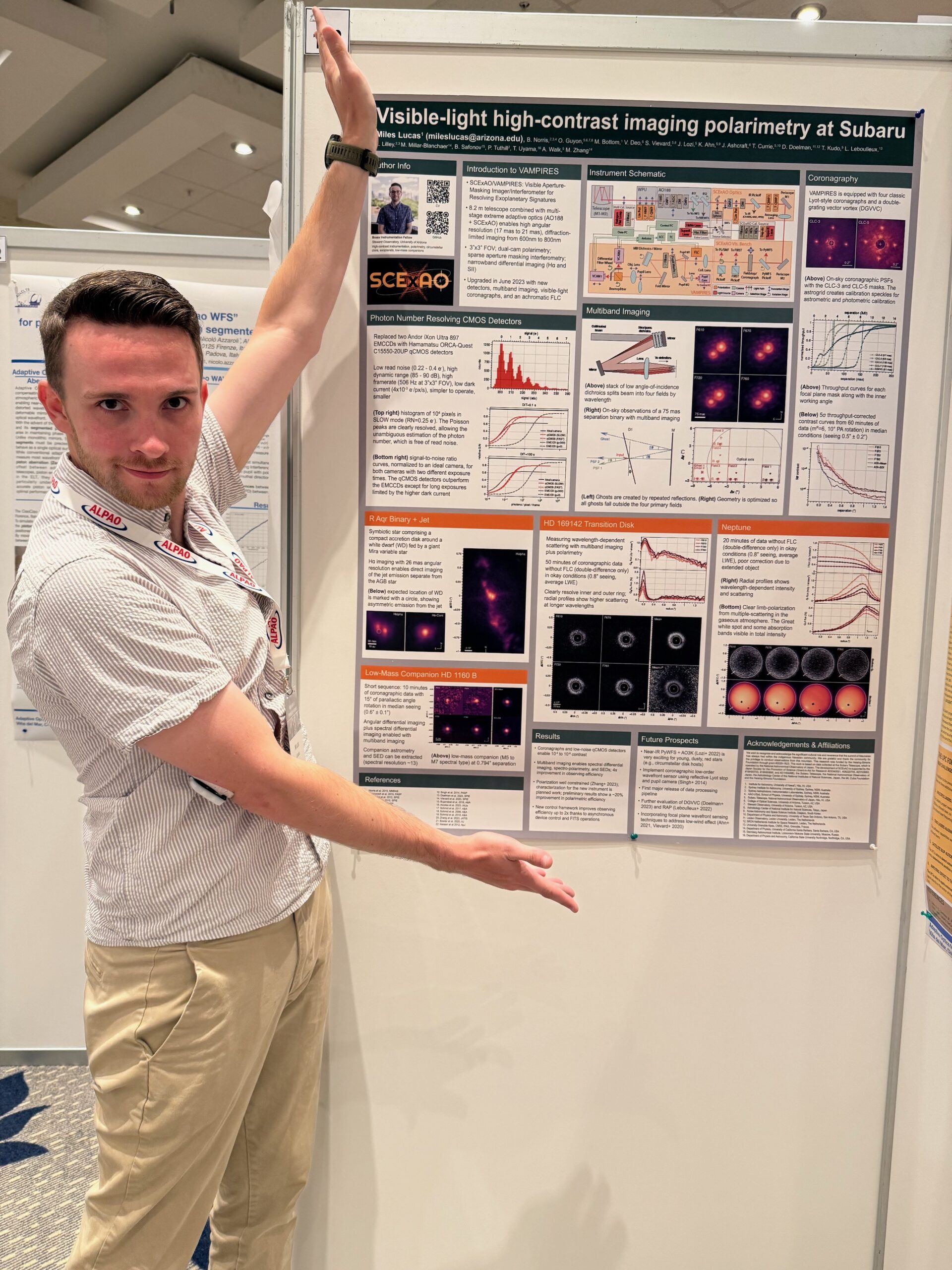
Now, what was I presenting at AO4ELT? Having just started work with the XWCL, I didn’t have any exciting results to share for the polarimetric mode of MagAO-X, but I did share work from my Ph.D. dissertation on the upgrades and early science of the VAMPIRES instrument on SCExAO (the sister of MagAO-X on the Subaru Telescope).
Showing off my poster with glee.
Beyond the conference, I enjoyed the sounds of the sea and many of the cultural staples of Chilean food–including many pisco sours. For those who are unaware, like I was, pisco is distilled fermented grapes, basically distilled wine. A pisco sour combines the liquor with lemon/lime juice, egg white, and a sweetener. The best pisco sour I had was at the Macha restaurant, where I also enjoyed octopus by recommendation of the chef to celebrate my birthday, which fell on the final day of the conference.
Pink octopus from Juan Fernandez Island, yellow chili pepper sauce, vegetables, and sweet potatoes.
Following the conference, I had planned to explore Valparaíso and spend a few days in Santiago, but my arch nemesis, the conference bug, had other ideas. I quickly got caught up on the spanish needed to naviagate a farmacía, from pañuelos to vaporaciones (de Vick). Nonetheless I was able to seek out some cozy cafes and tasty food before my long flight back to the US.
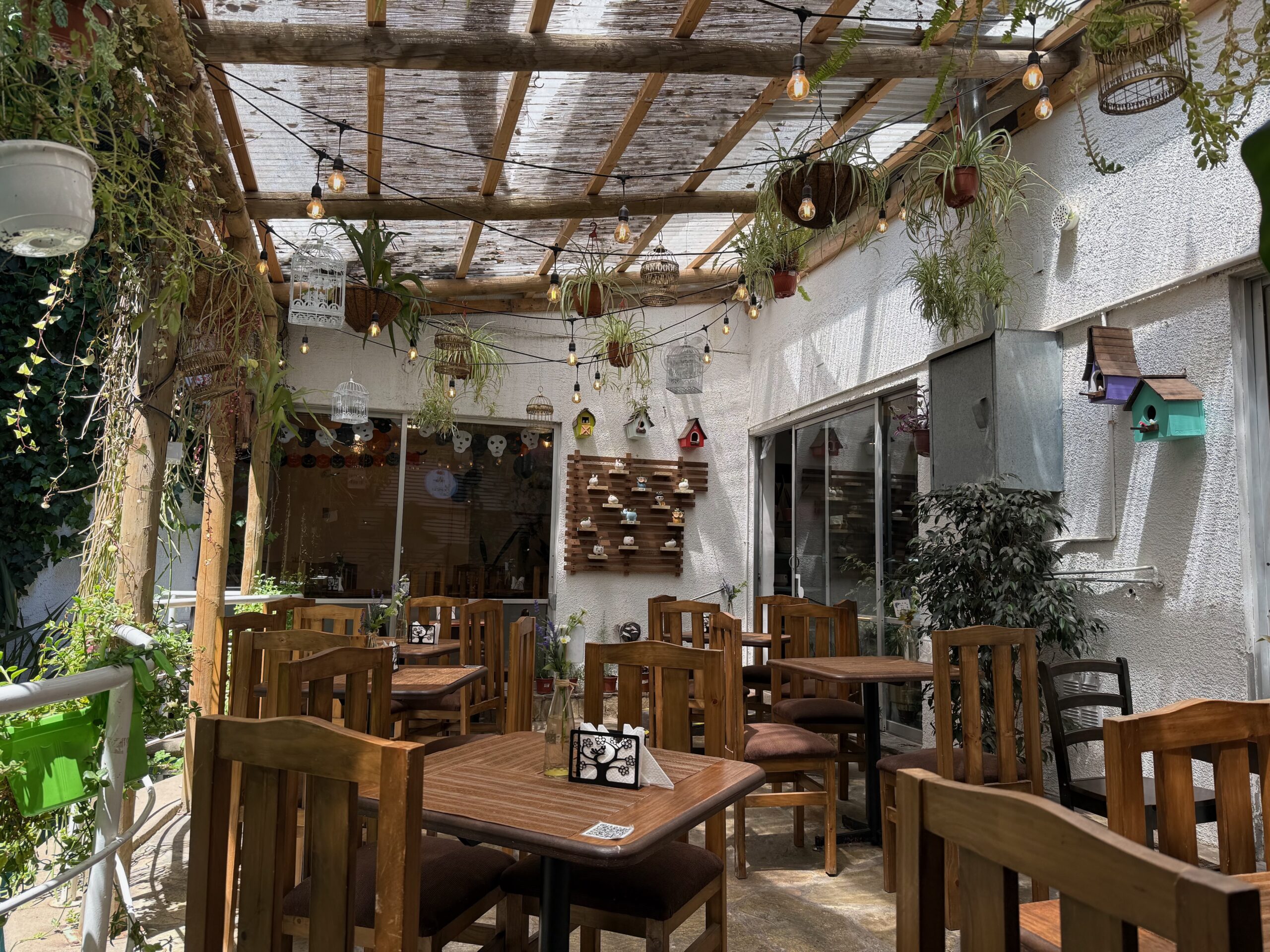
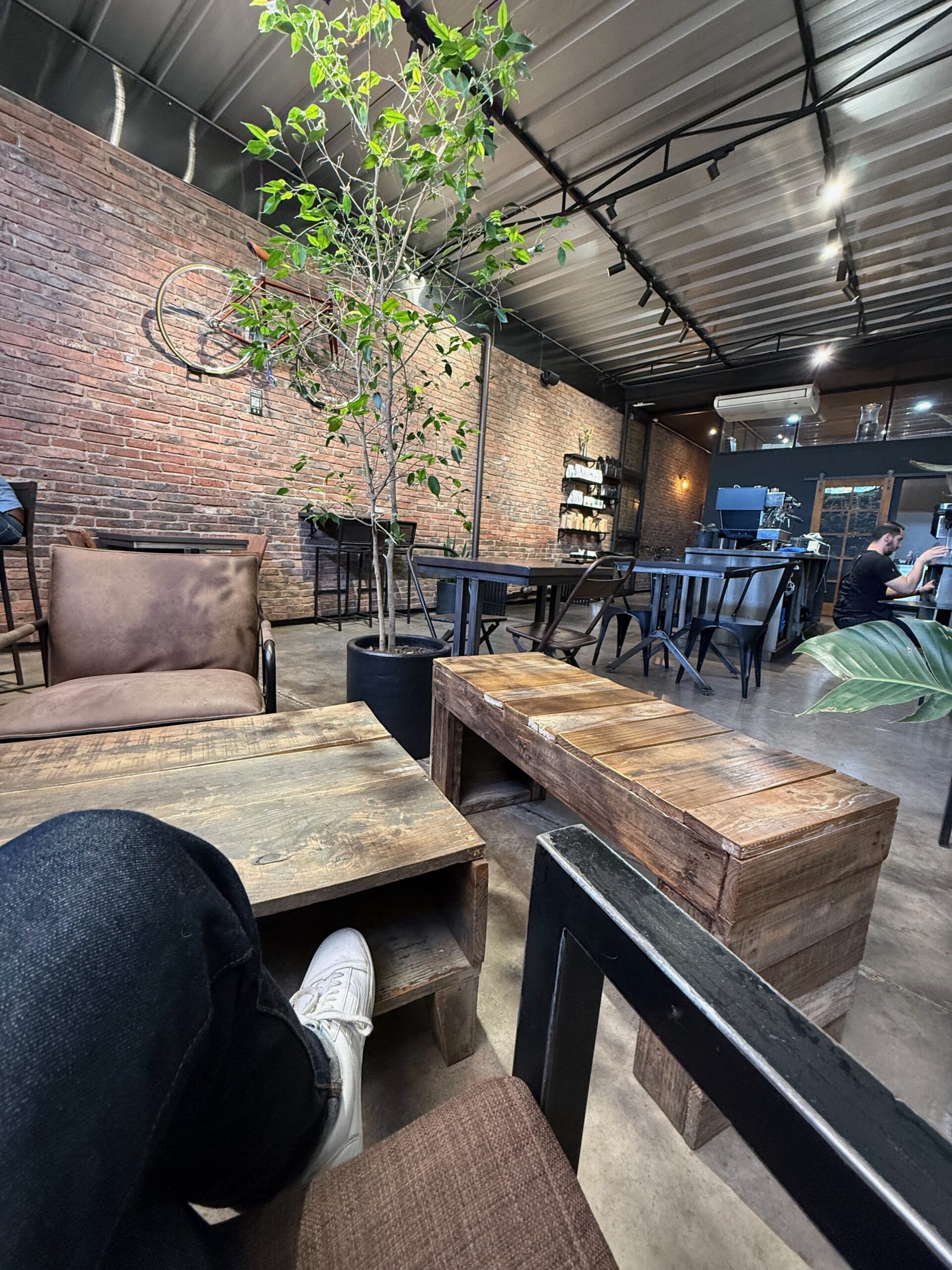
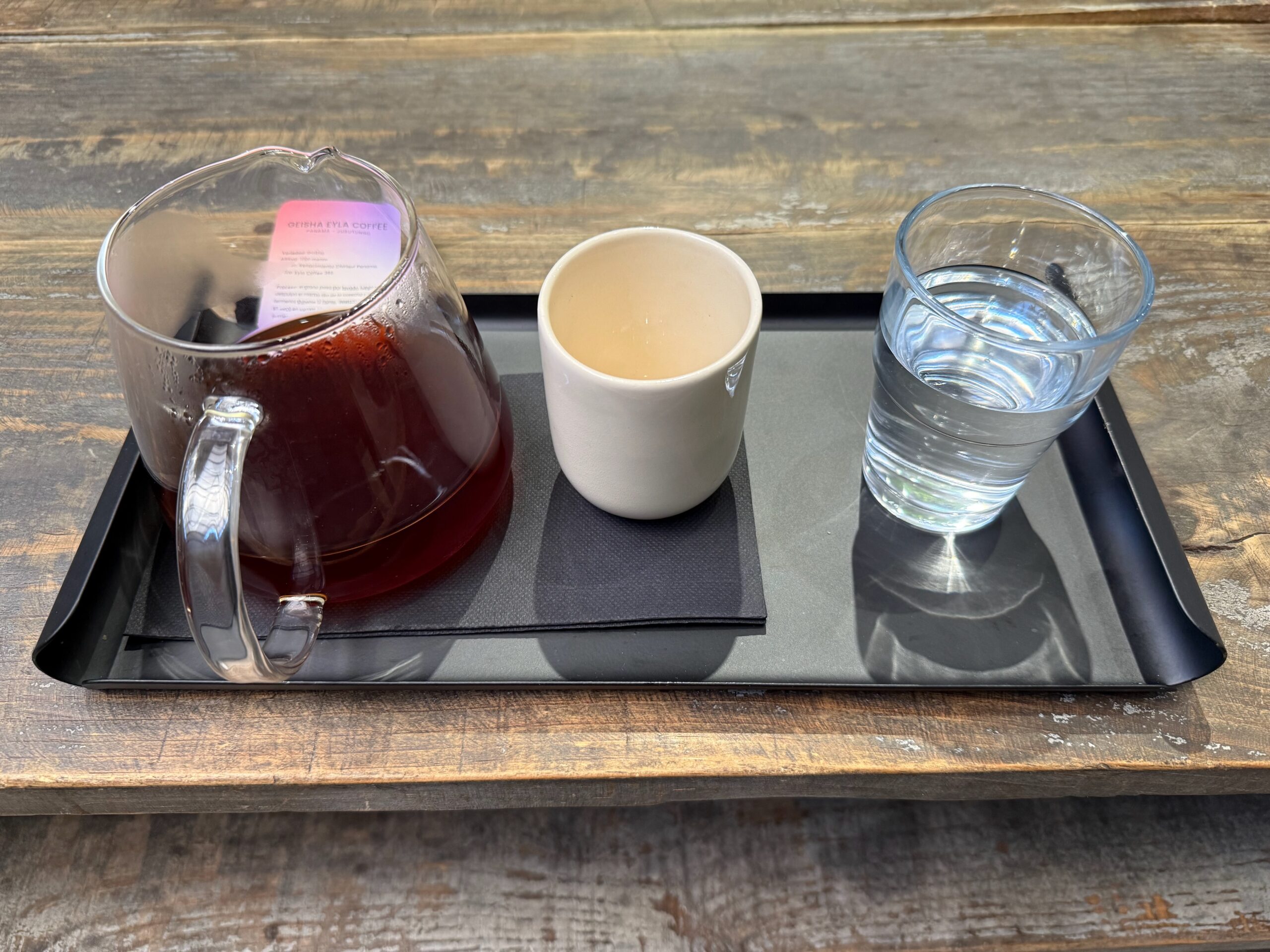
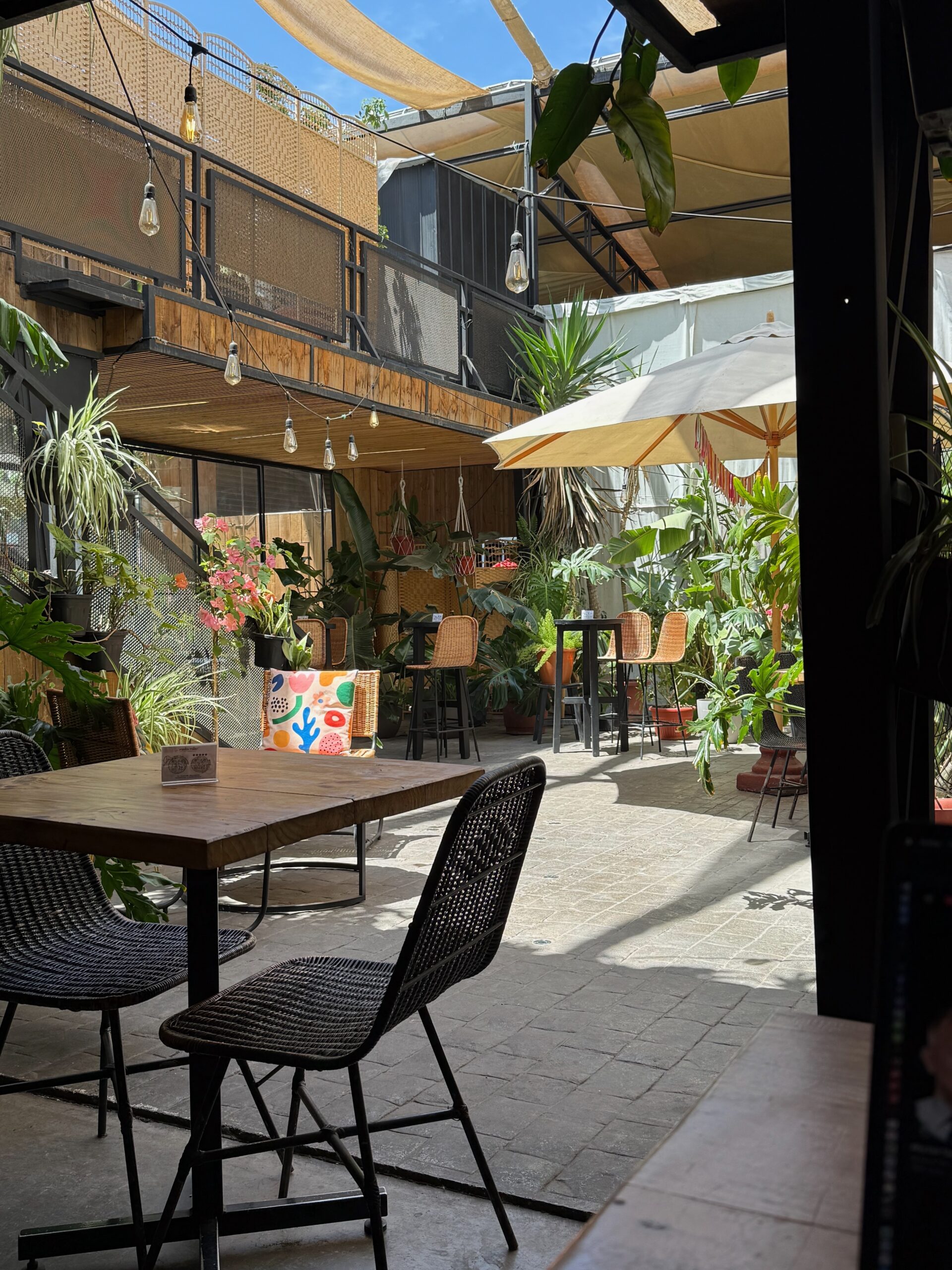
A powerful breakfast of coffee and tres lechesWhat would you call this fork?La Florería CafeSingular RoastersI like my coffee slowMama Mia Cafe
Song of the day: Despacito (it’s the Mr. Brightside of Latin America)