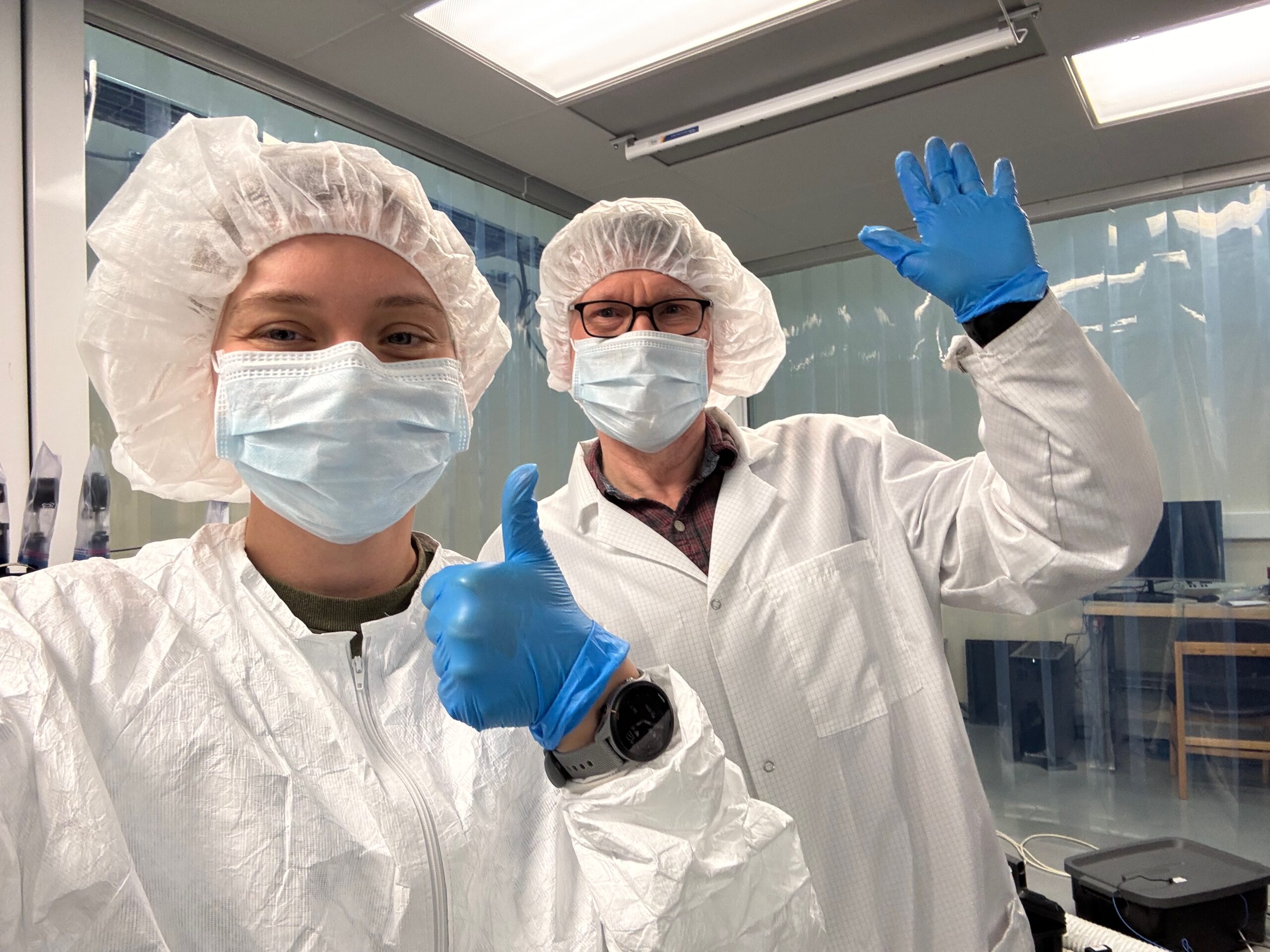
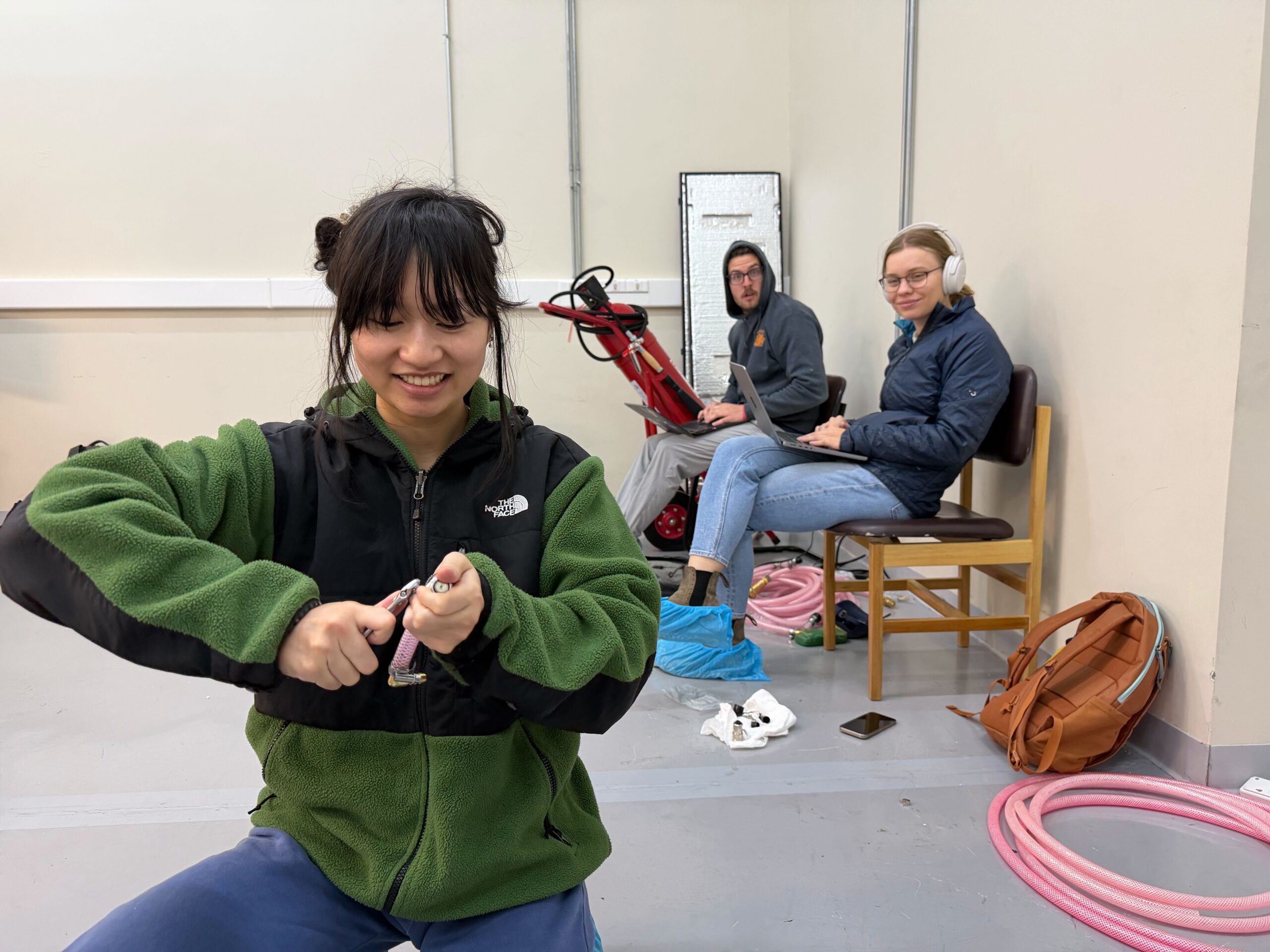
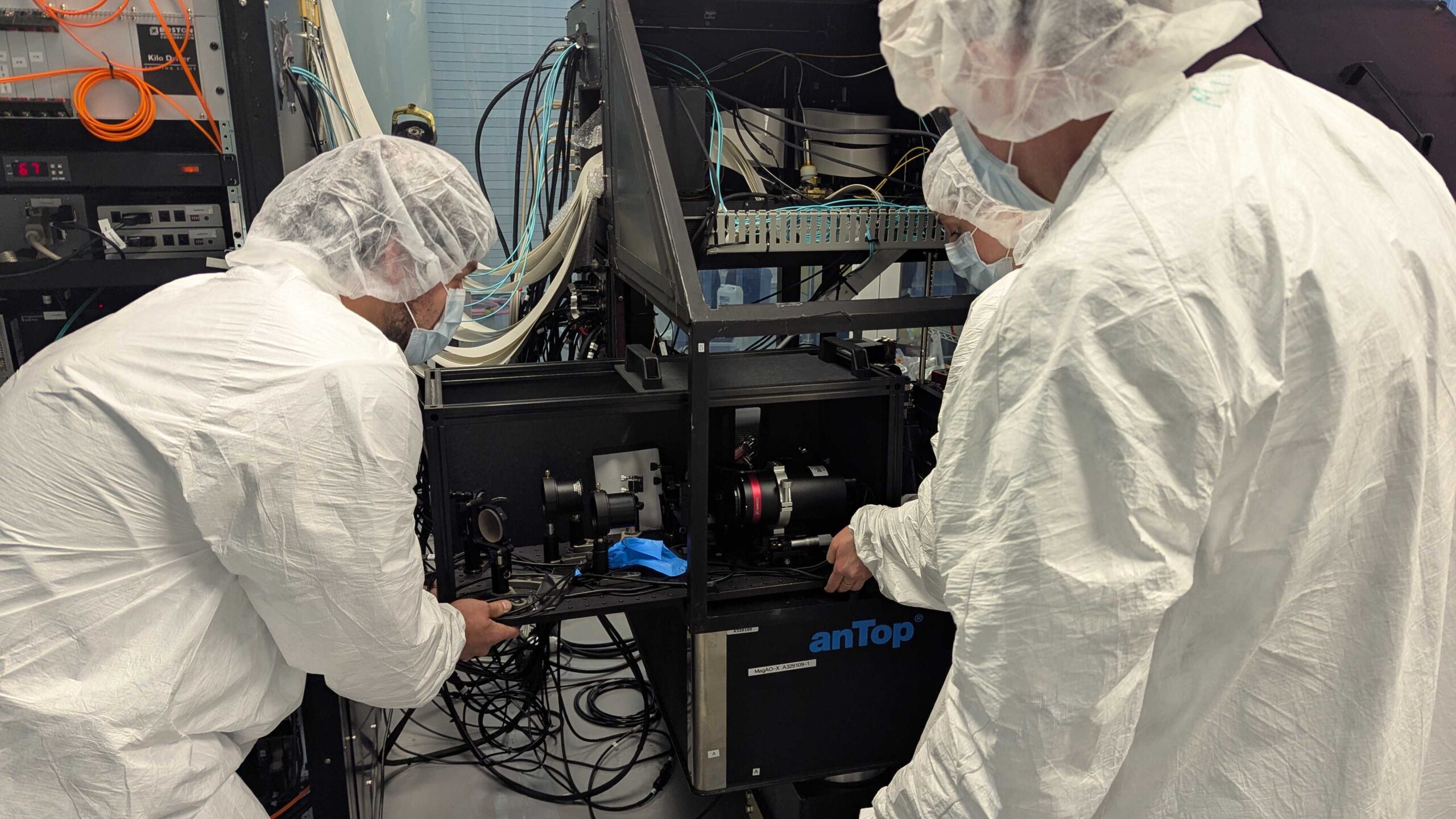
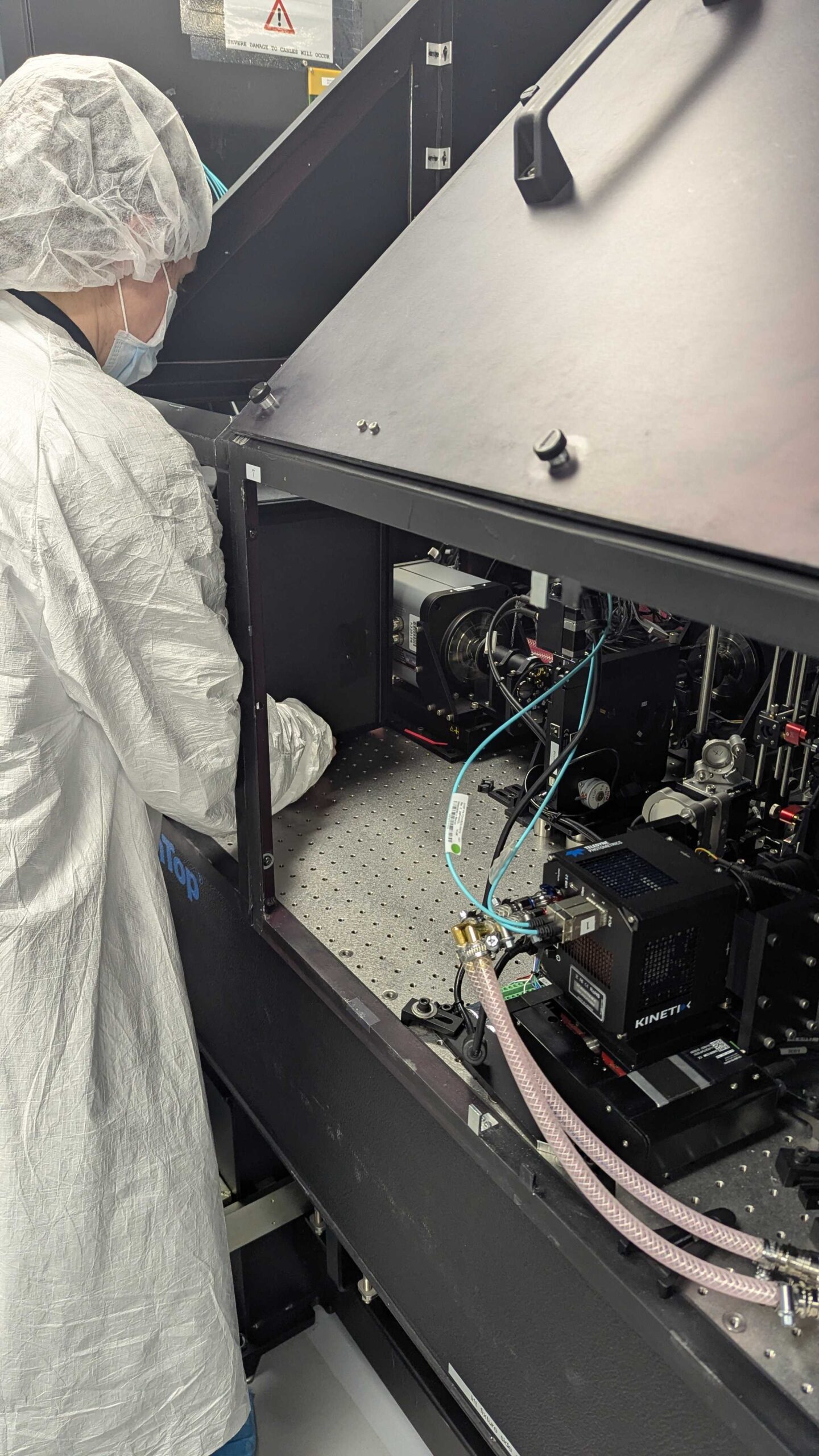
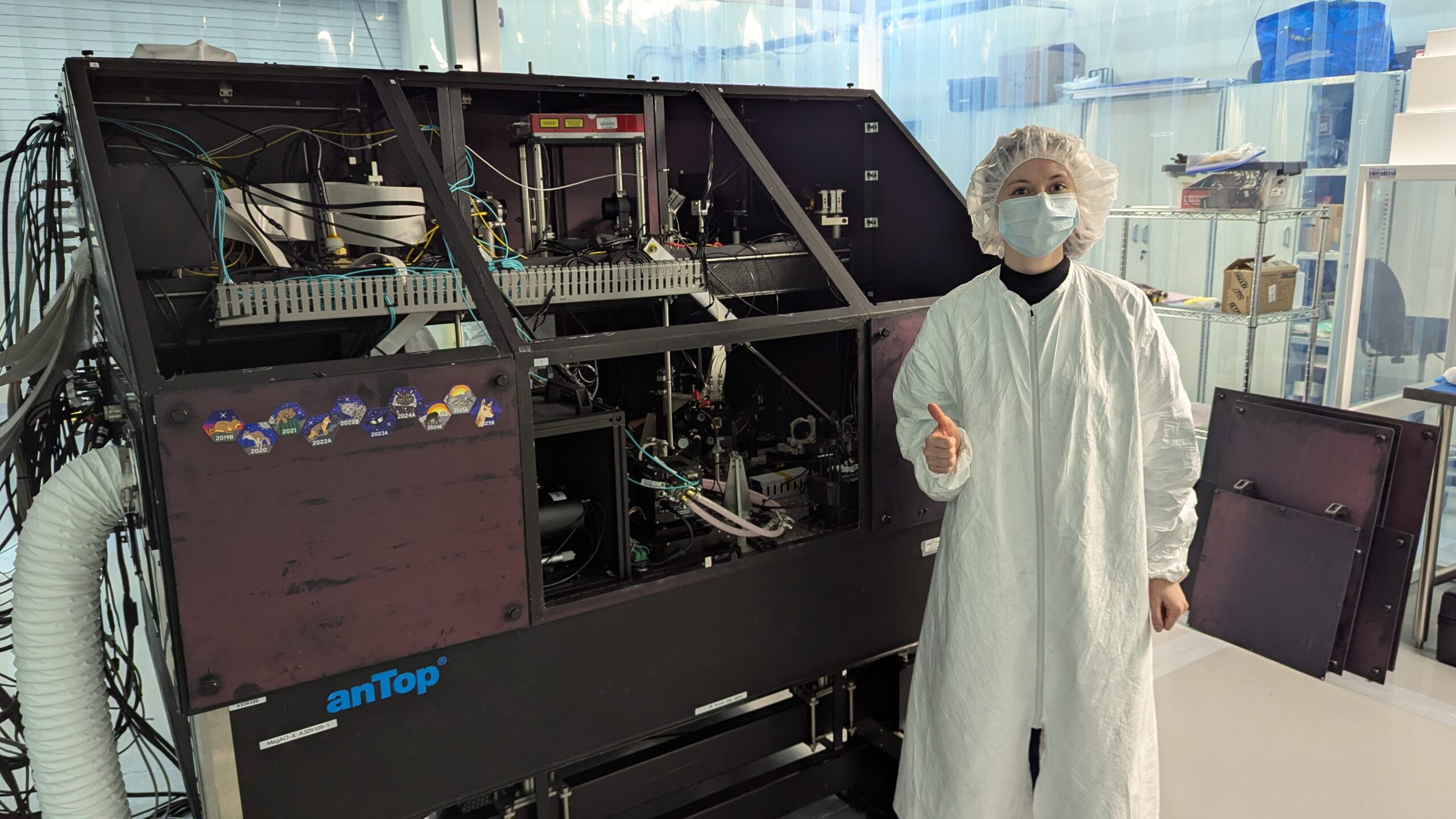
Today started with Tiffany putting in some plumbing work for MagAO-X. We added a new glycol port to go into the side instrument panel to cool the new IR camera being installed within the next week.
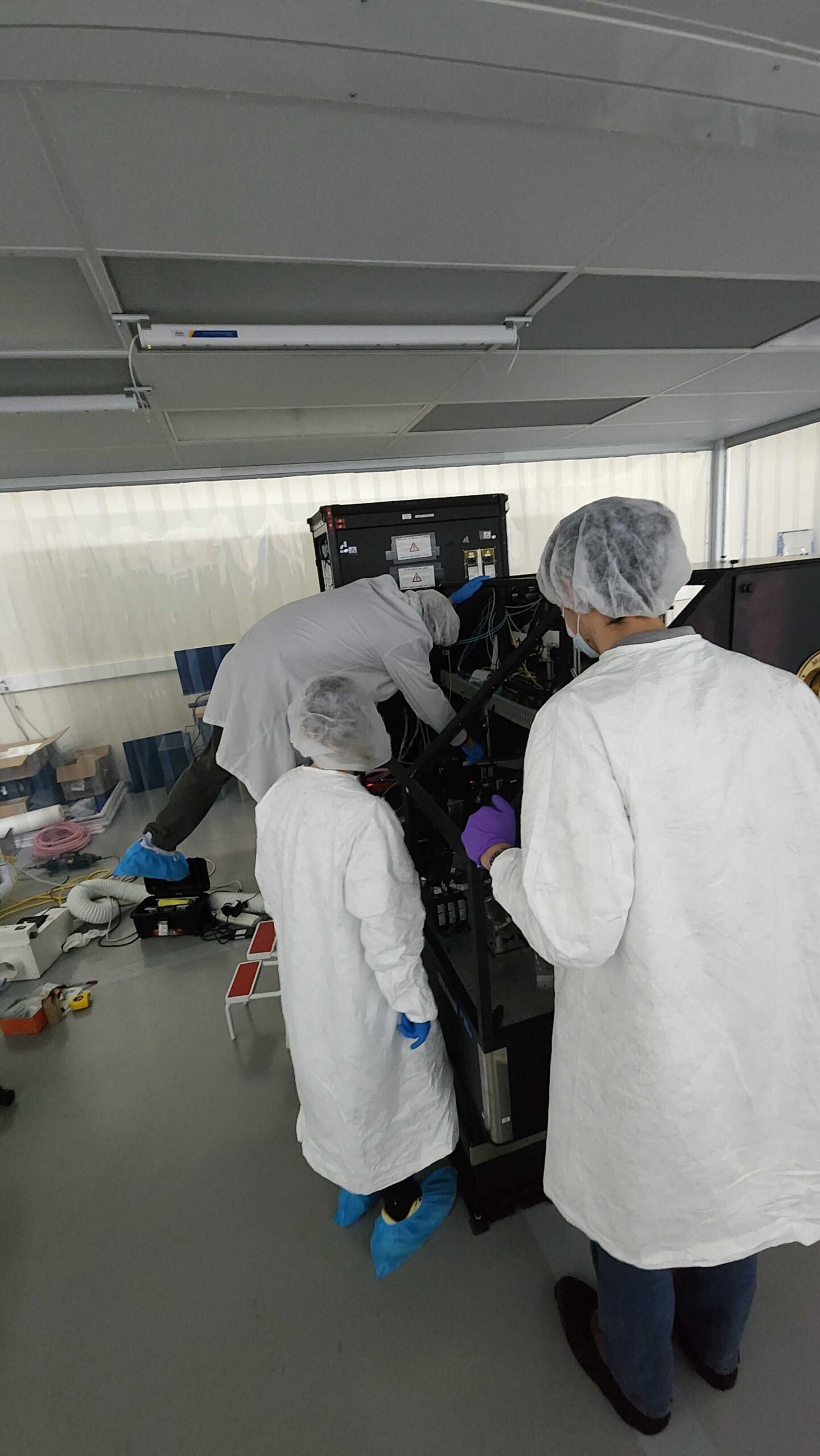
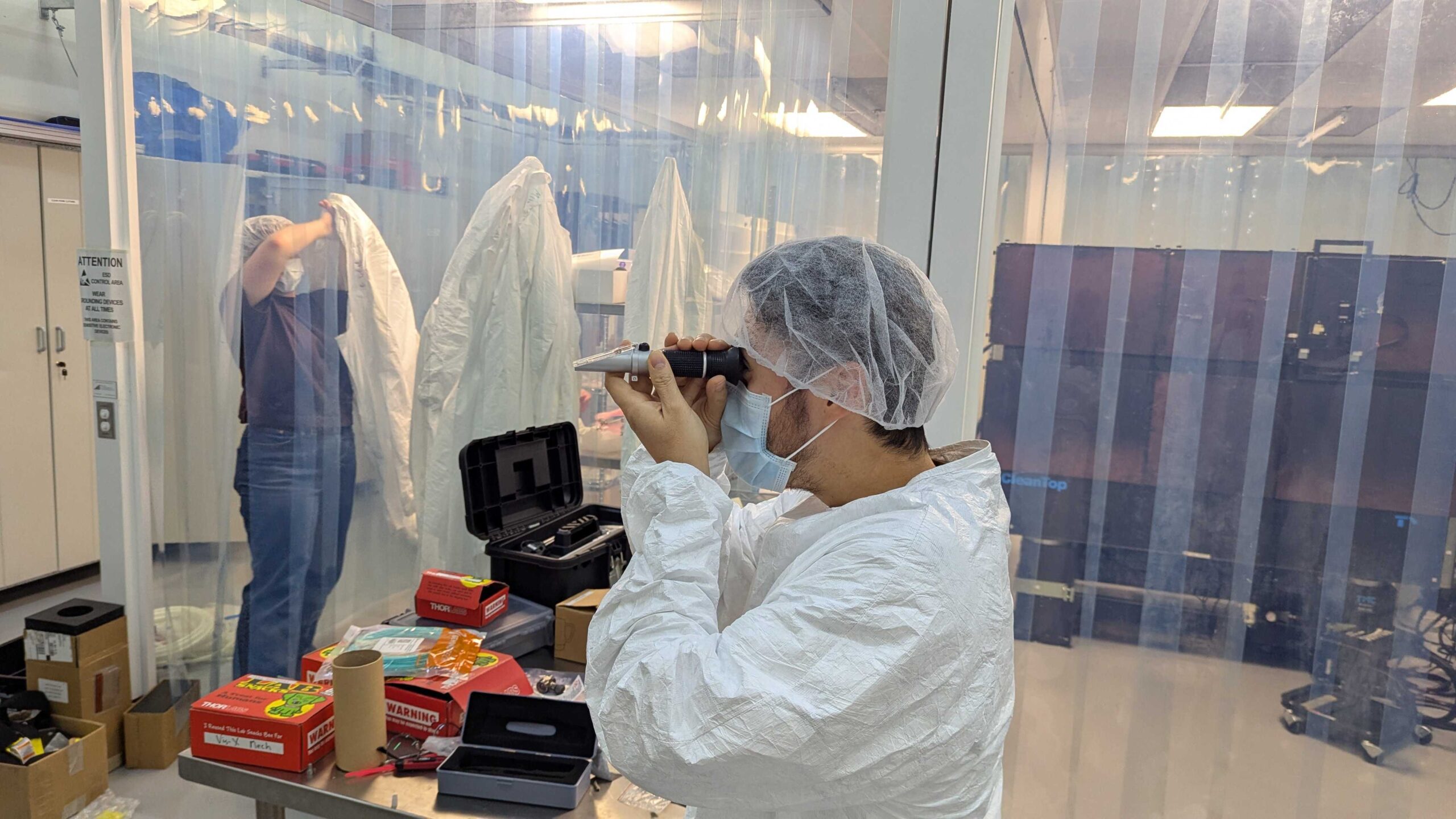
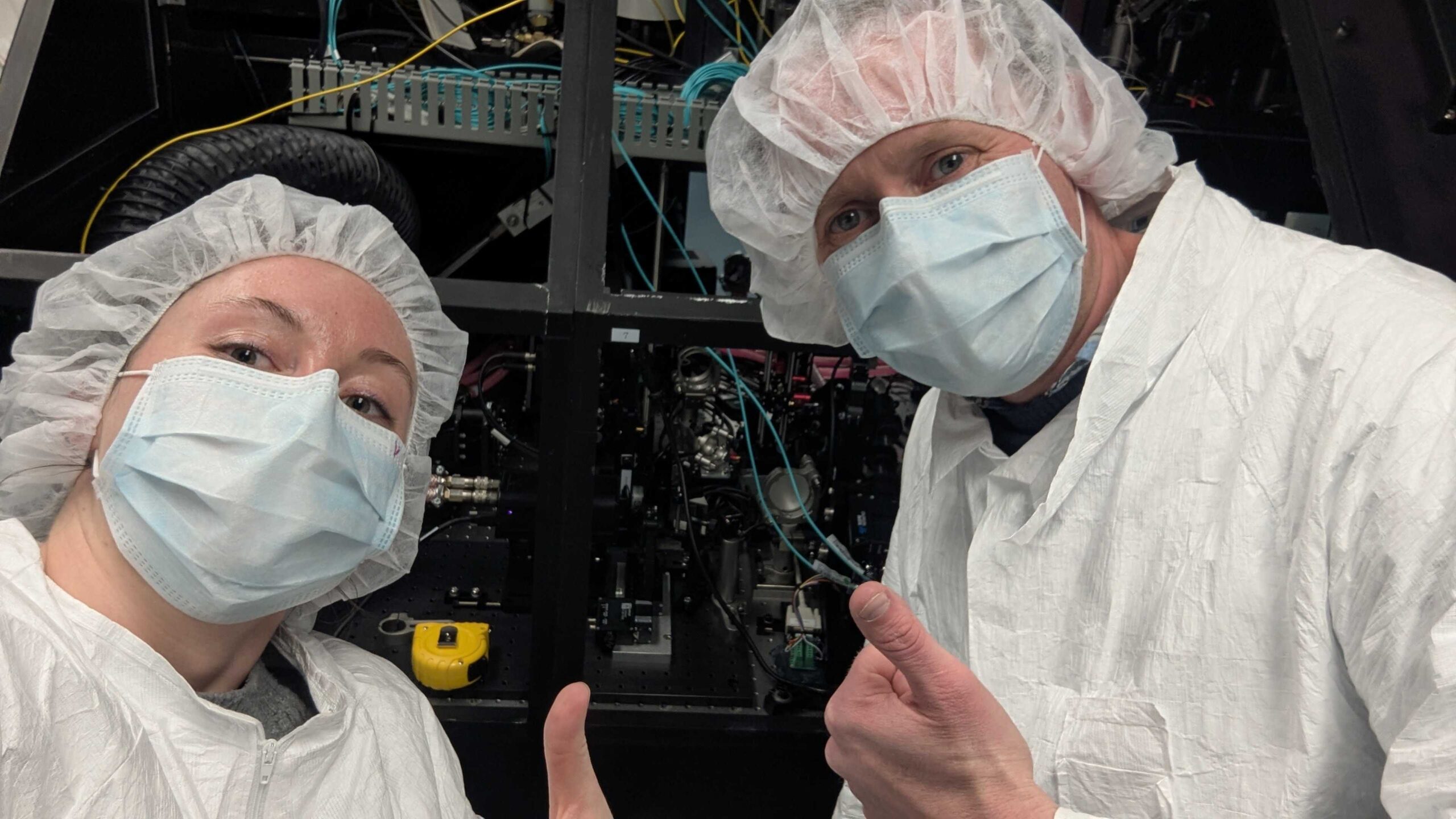
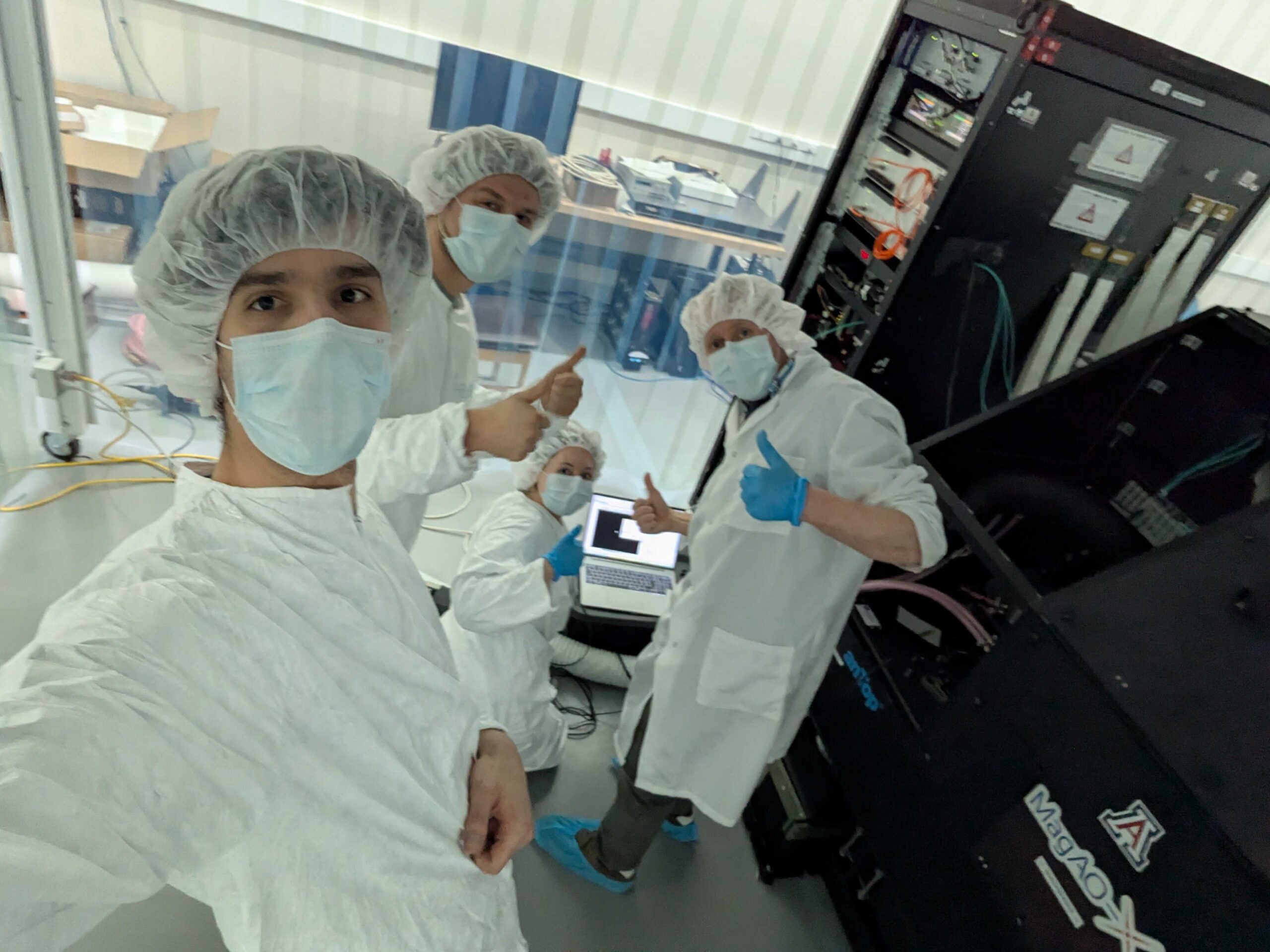
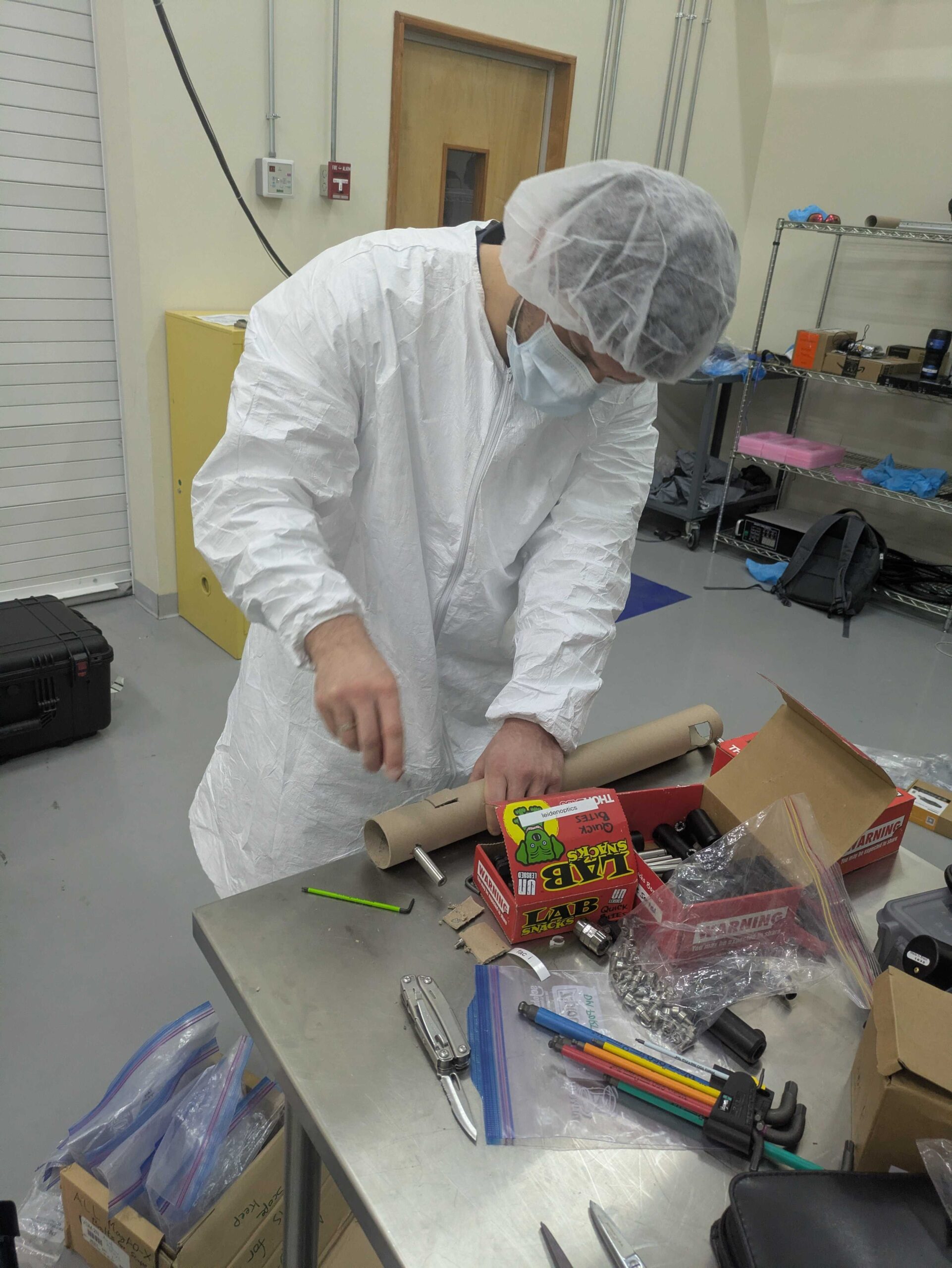
In order to make space for the new IR camera, Sebastiaan and our collaborators from Durham University, Rob and Viktoria, performed surgery to remove VisX from its home in the instrument. The goal of this upgrade is to allow for first ever IR imaging with MagAO-X and to measure the overall throughput and strehl ratio of the instrument at IR wavelengths to drive design considerations for a future spectrograph.
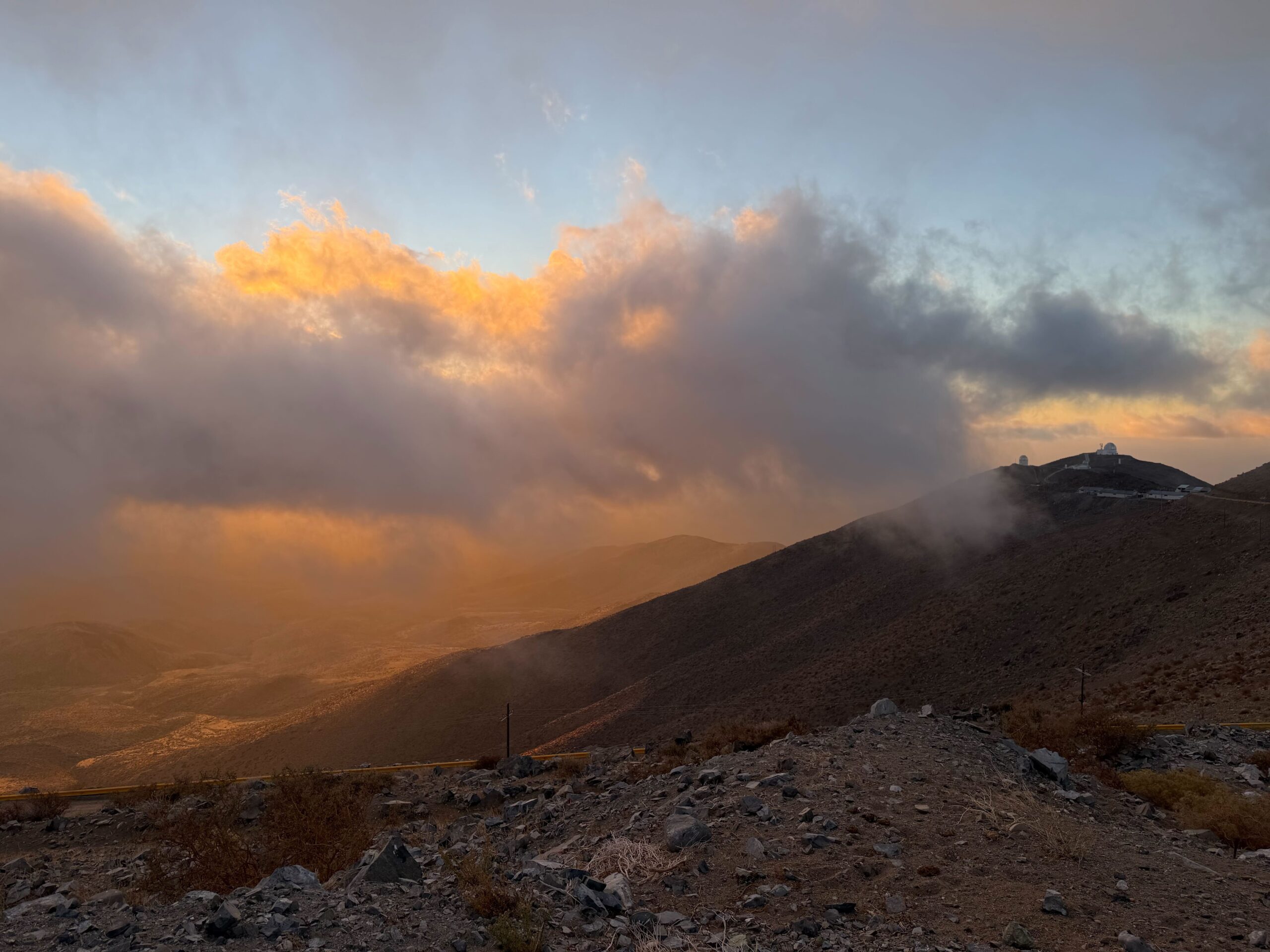
Luckily, we are still working in the cleanroom since some healthy-looking clouds are making tonight look unpromising for observations.
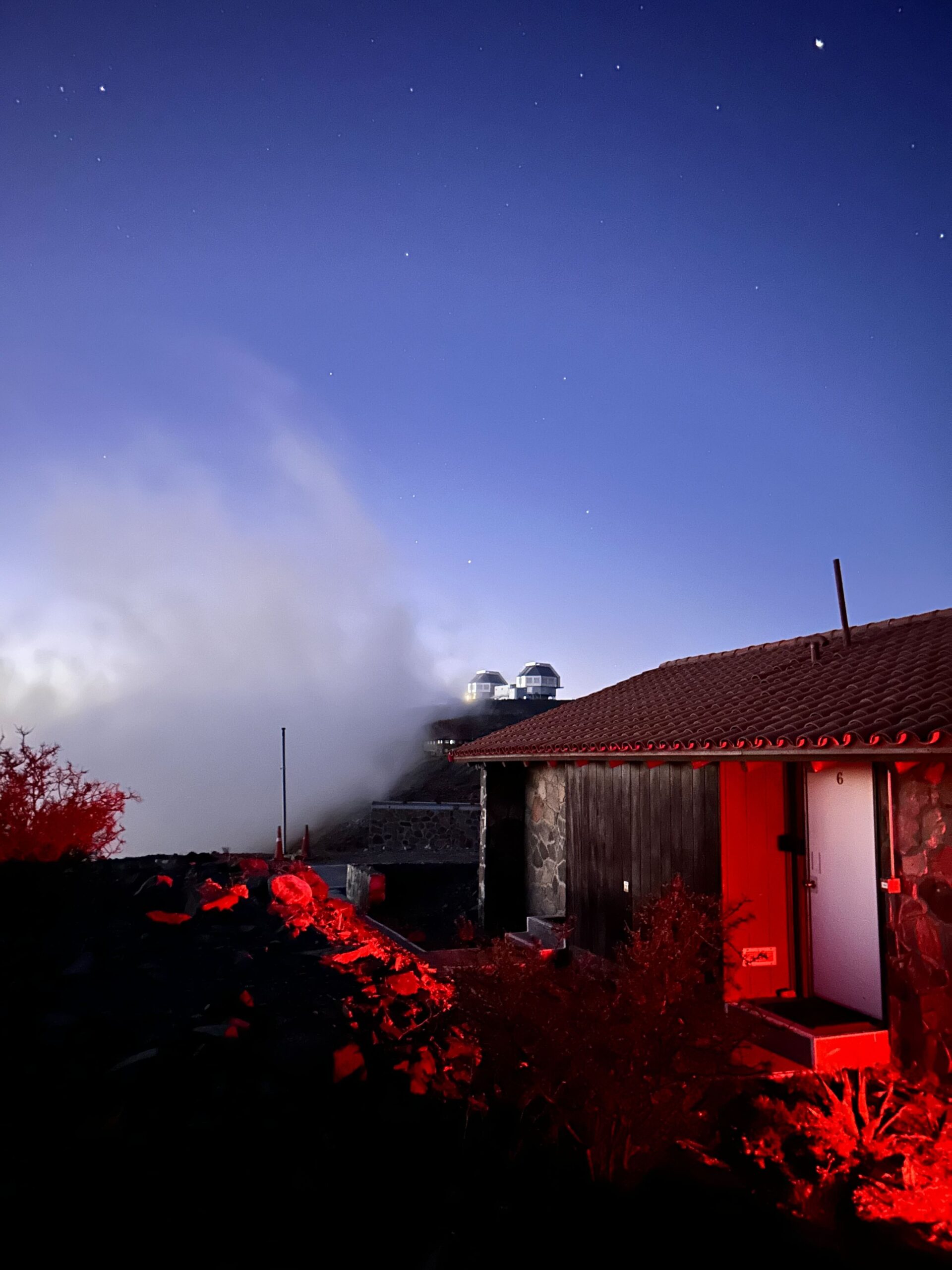
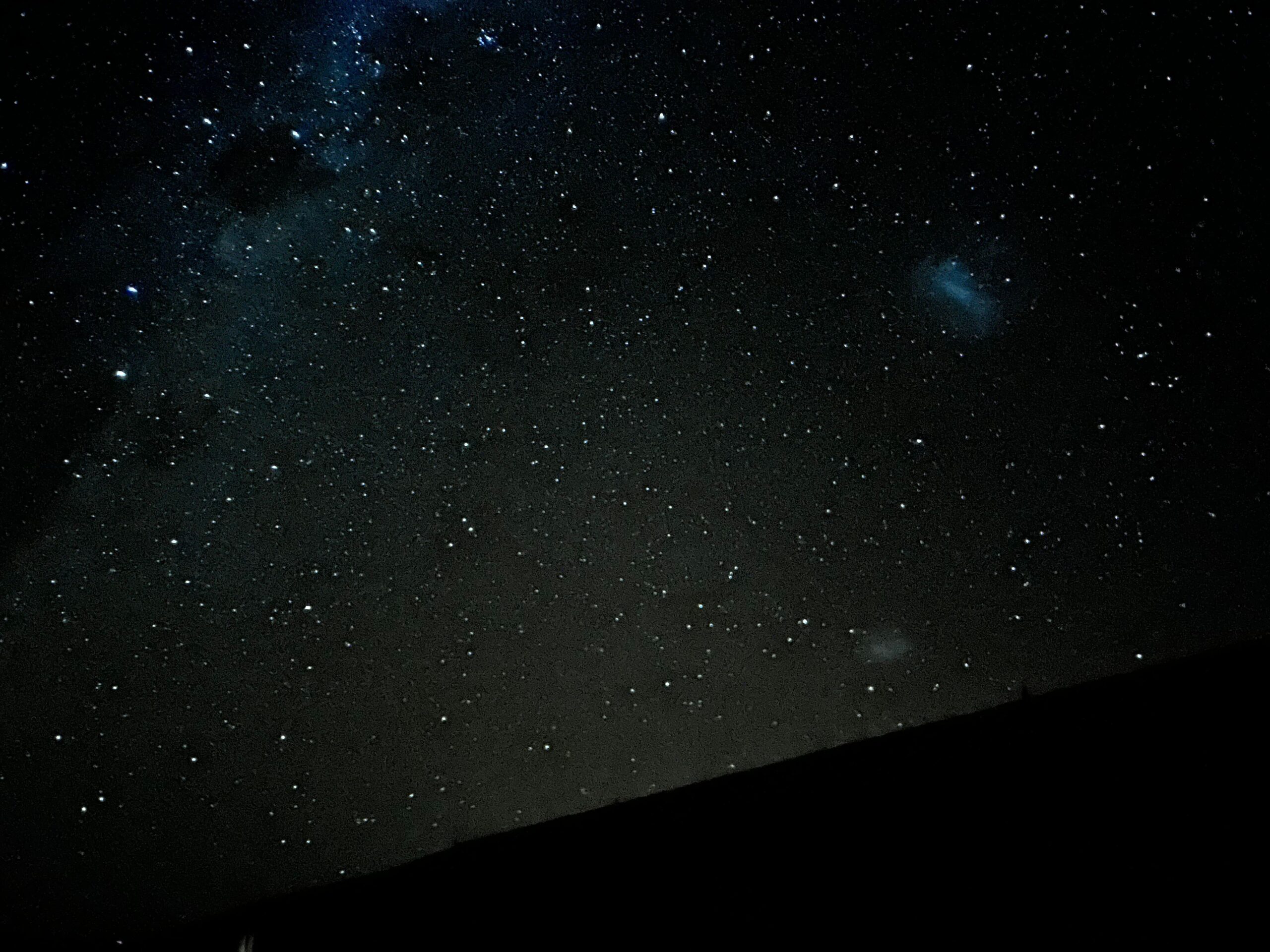
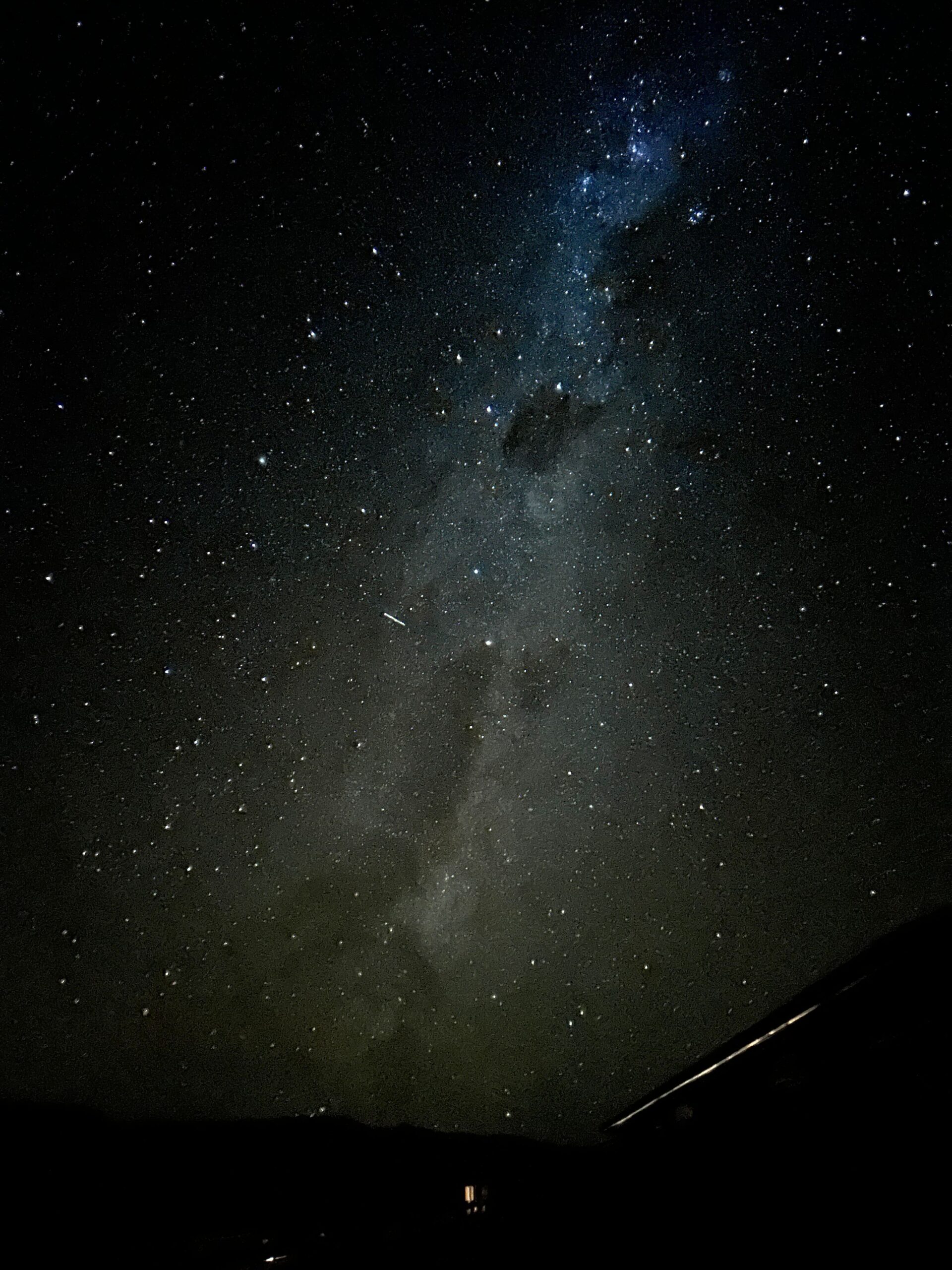
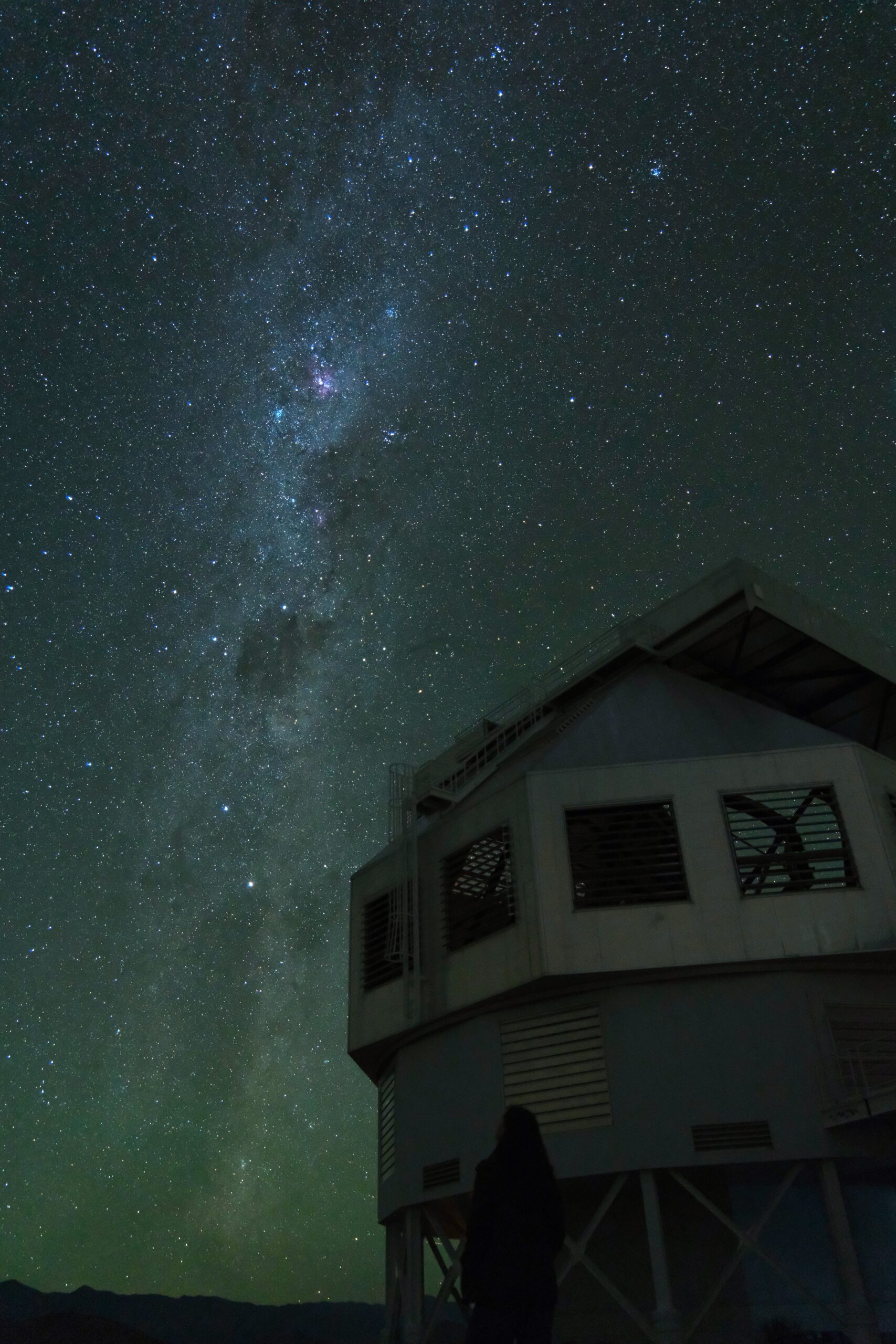
Despite a rather brisk and windy night last night, I was able to take advantage an extremely dark night and get some pretty impressive pics of the Milky Way and Small/Large Magellanic Clouds with just an Iphone14.
Color of the Day
First, I have to give a shoutout to AZ for having the largest margin win in nearly 3 decades in the tournament. But more importantly, BIG RED is one step closer to making the trip to Indianapolis for the national championship game! With the being said, the color of the day is BIG RED!
The 26A run is well and truly moving along now. We had our first sunburn, a visit to a fellow Clay instrument (Lightspeed) and some more of the team (Katie, Parker and Tiffany) joining today.
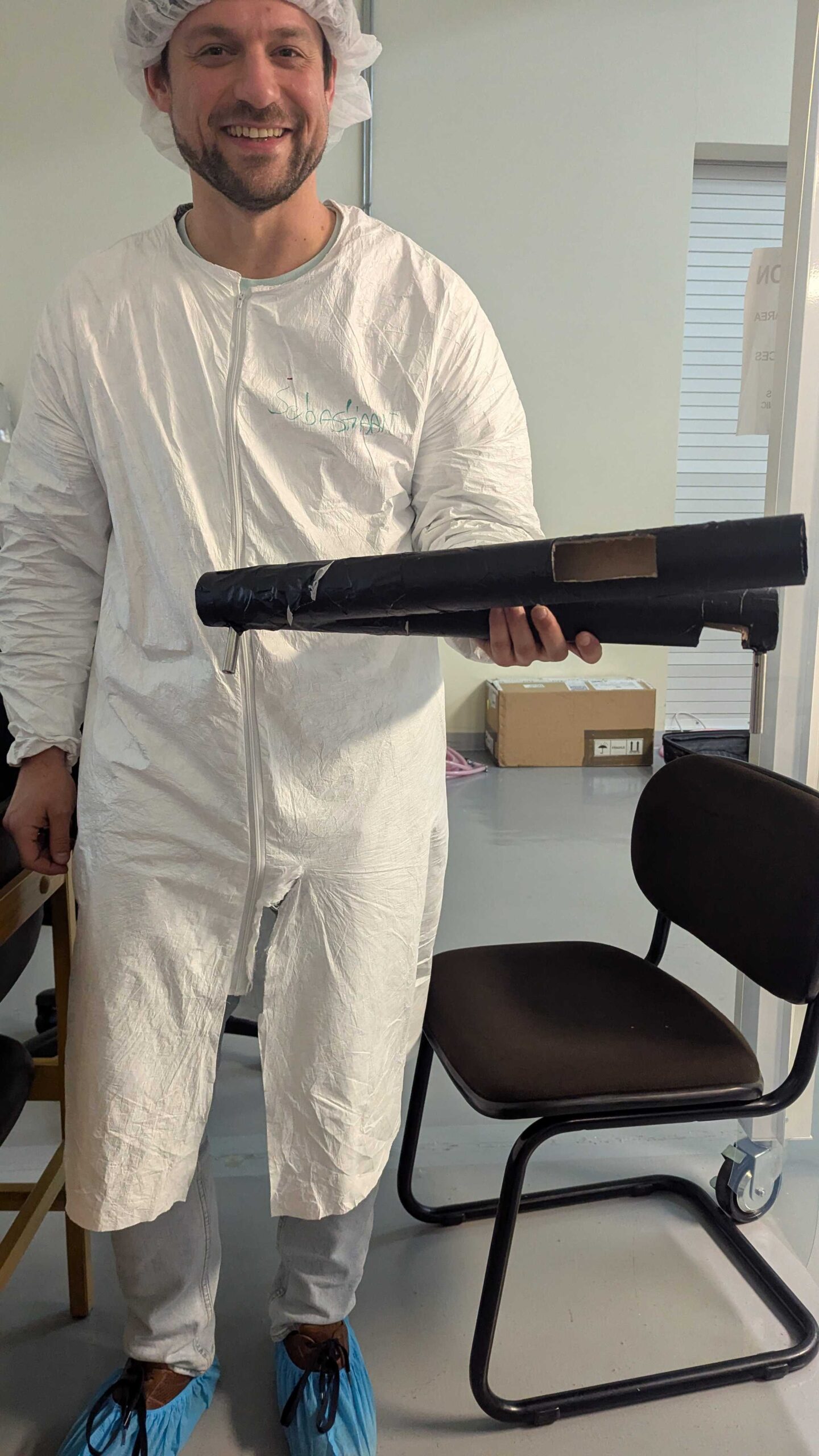
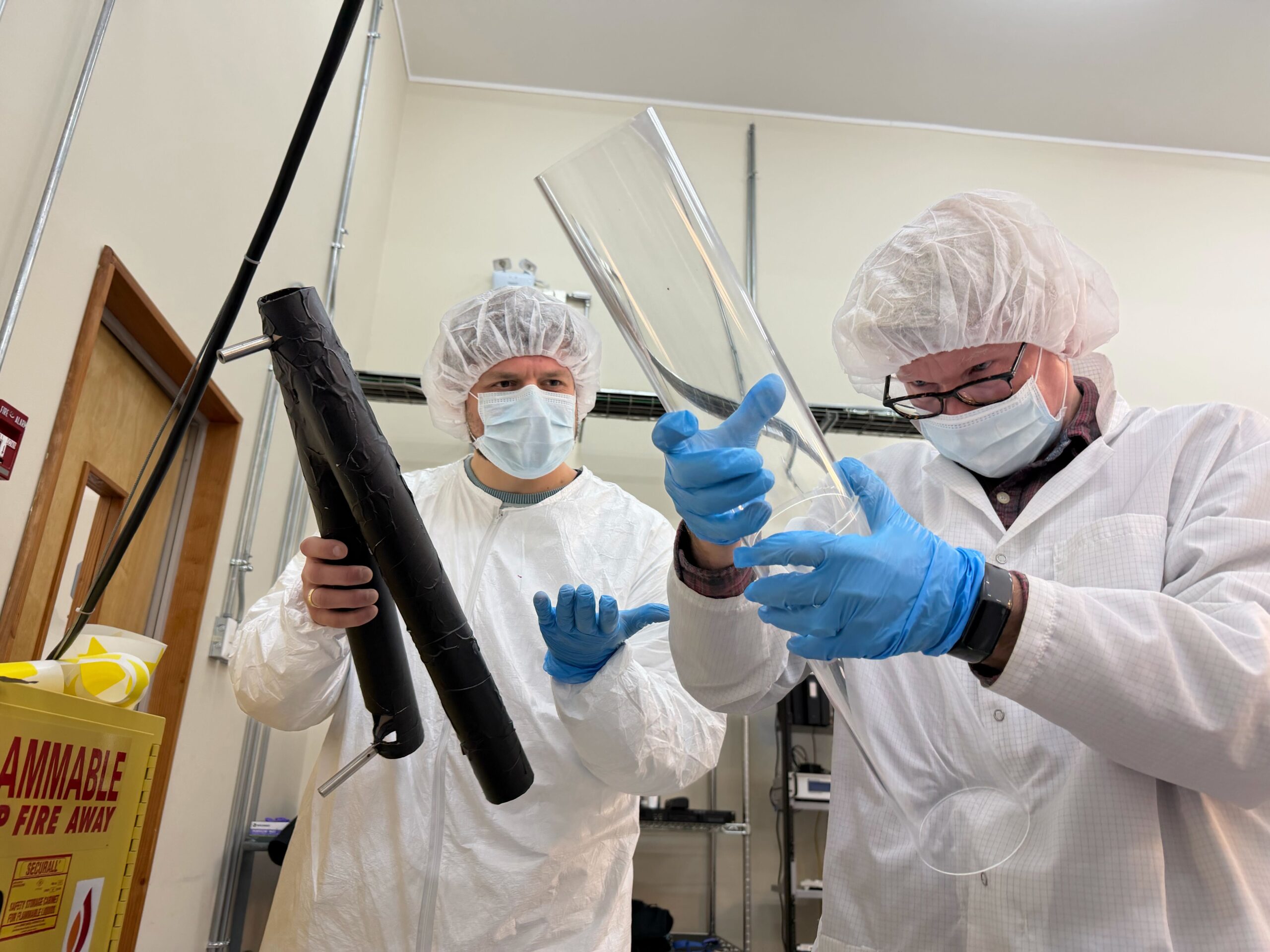
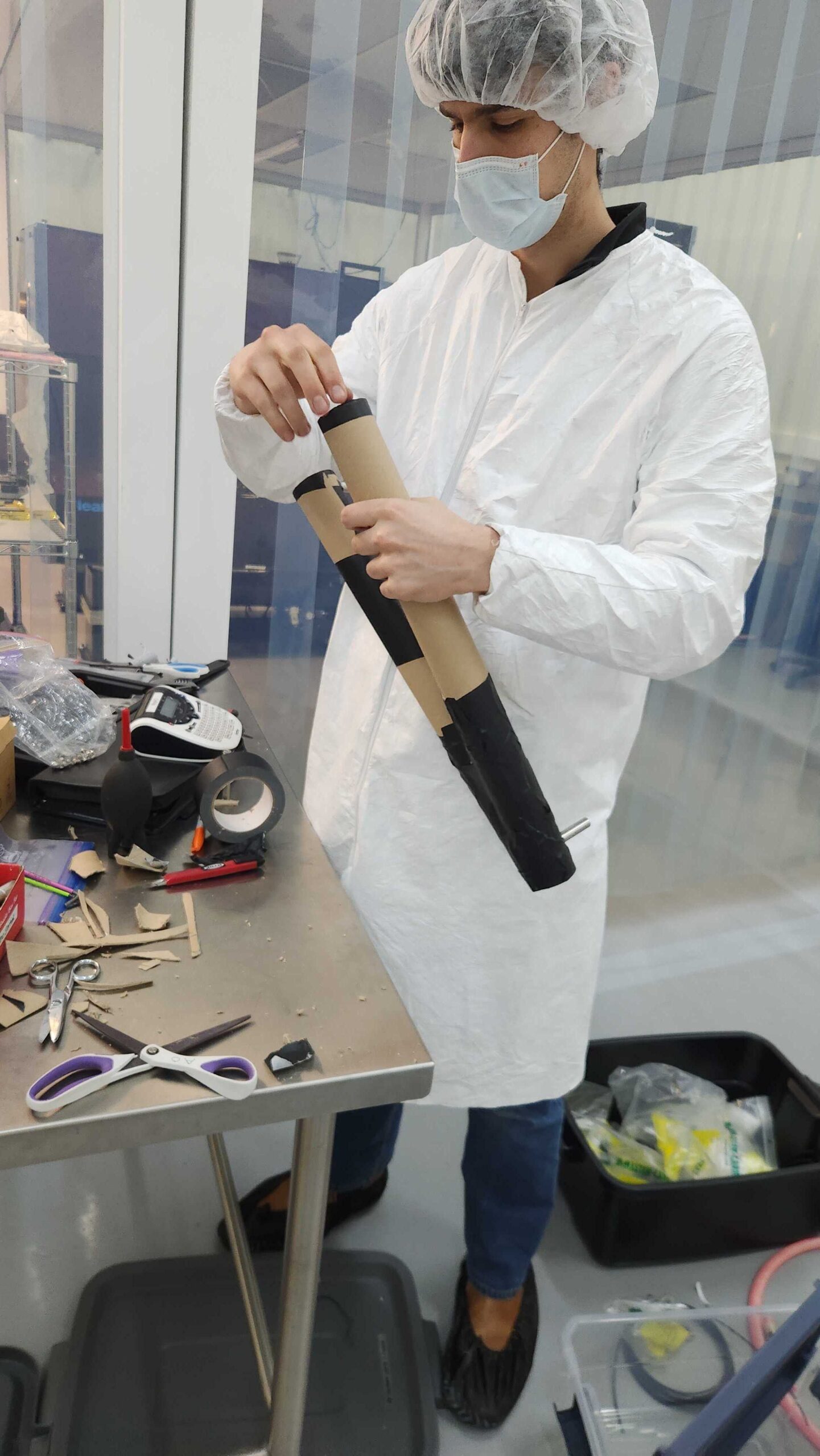
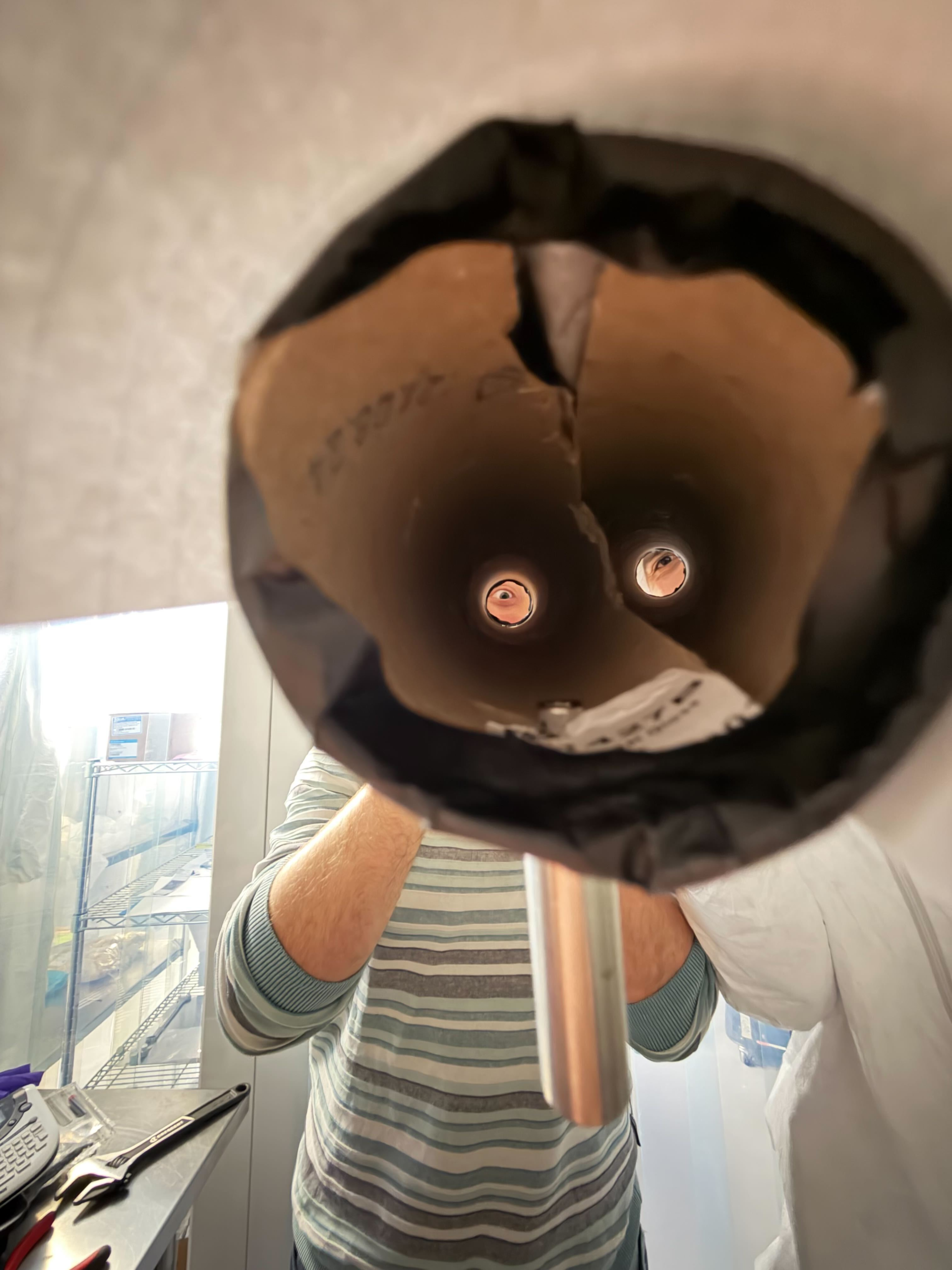
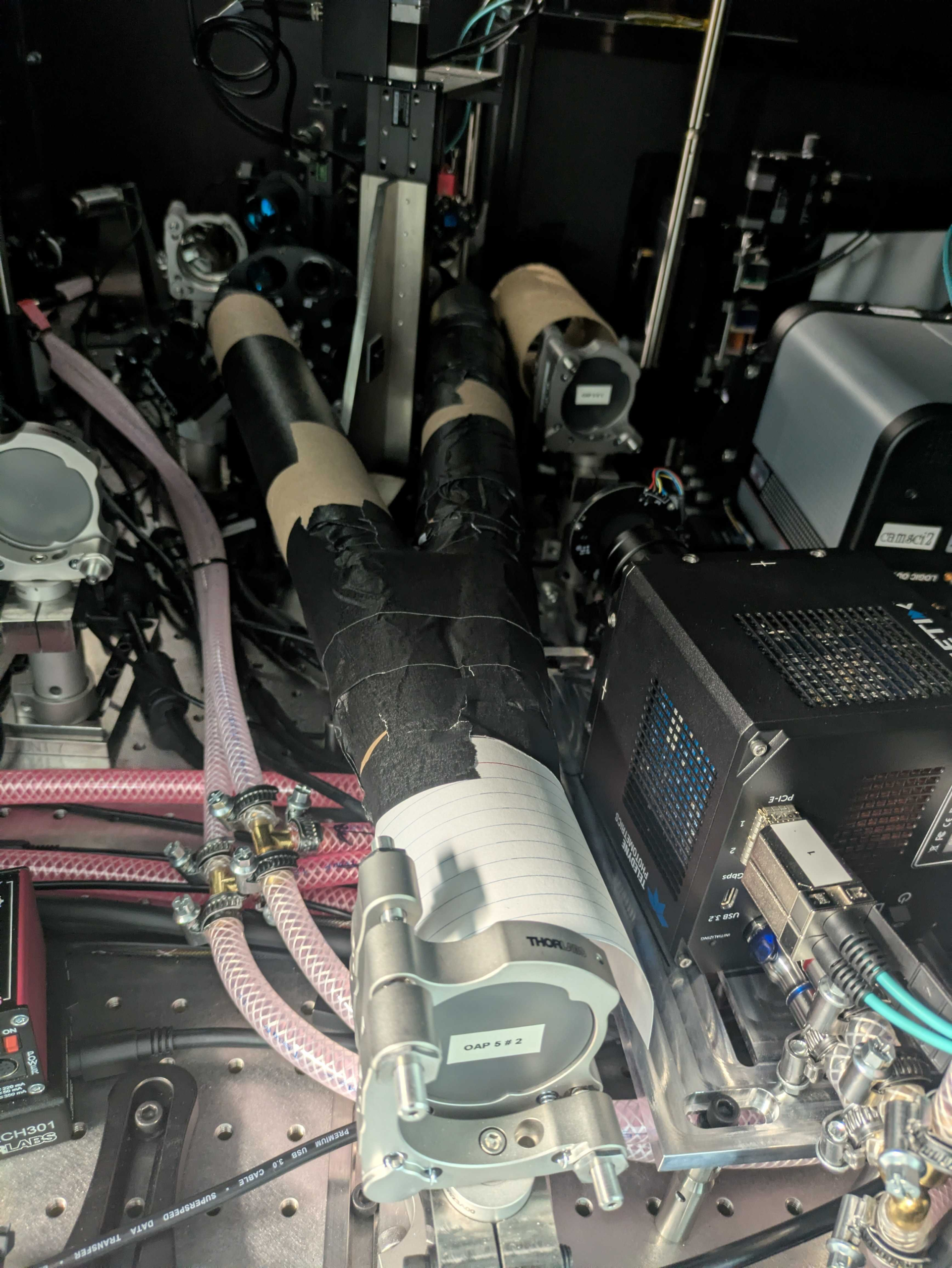
On our first and second day of work, Sebastiaan and I targeted the vibes of the instrument – tip/tilt dominated residuals that limit what we can do at our science plane. These aberrations could come from several sources – heat differences from warm motors/cameras causing convection, turbulence from fans/the blower and/or vibrations on the bench. The hunch from the team was more on the former, but we named the tests about the latter since the name sounded cooler. Sebastiaan and I came here armed with some high tech equipment to try and reduce these effects – about €20 of poster tubes and some old posts.
So read on to learn more about what could be the most bang-for-buck improvement to MagAO-X…
Back to kindergarten…
Yesterday we did arts & crafts. This involved measuring distances, sharpy-ing hole locations and opening/closing the instrument many times. Every time we made a significant change we took some data for later analysis to see if things actually improve rather than doing rms-by-eye.
Sebastiaan becoming a surgeonNeed to tape up those dusty edgesThis photo deserves to be alone in a rowThe tubes in the instrument. They block convective currents from warm elements and turbulent air from fans between the focal plane masks (left end) to the Lyot mask (right end).
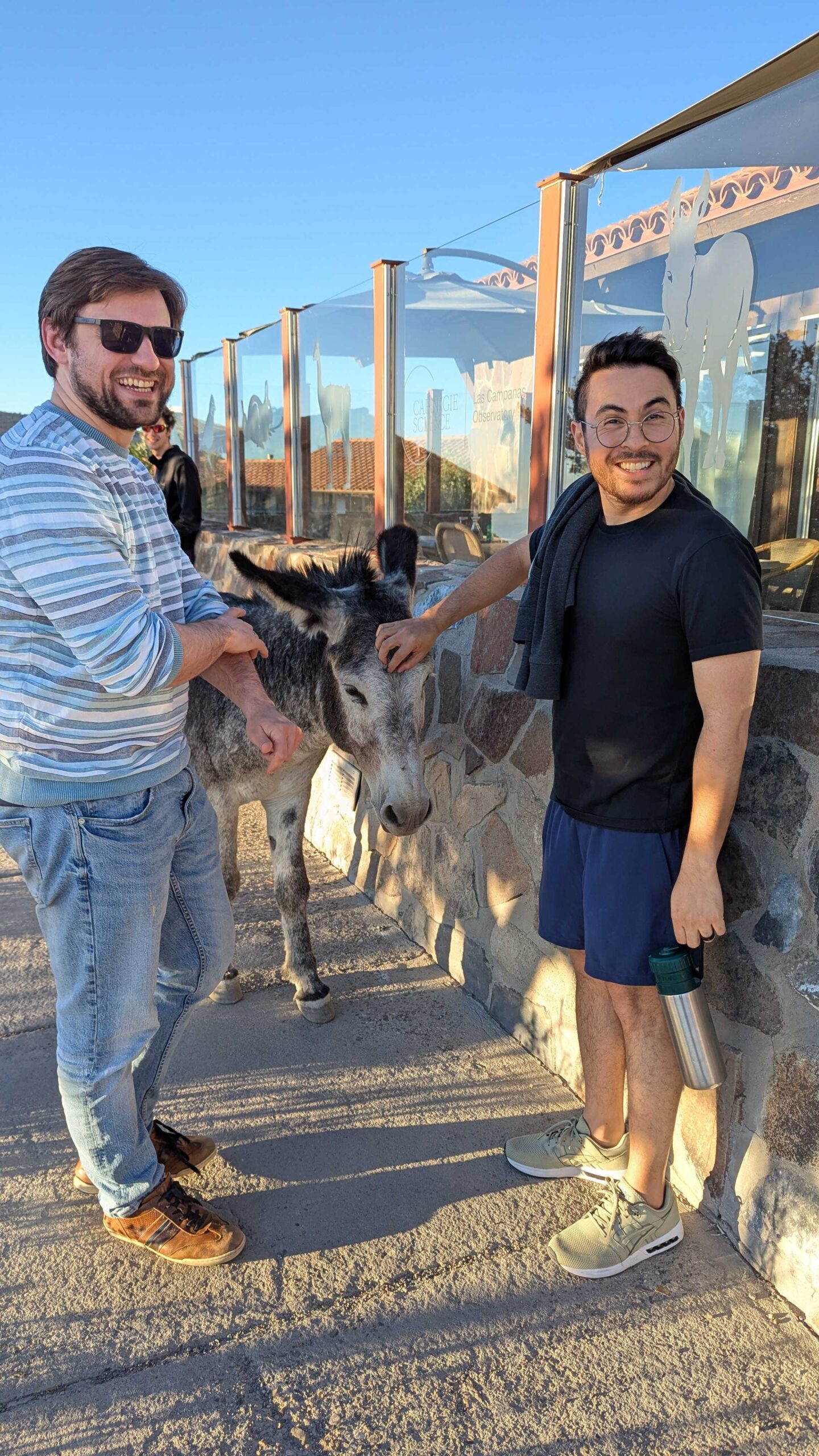
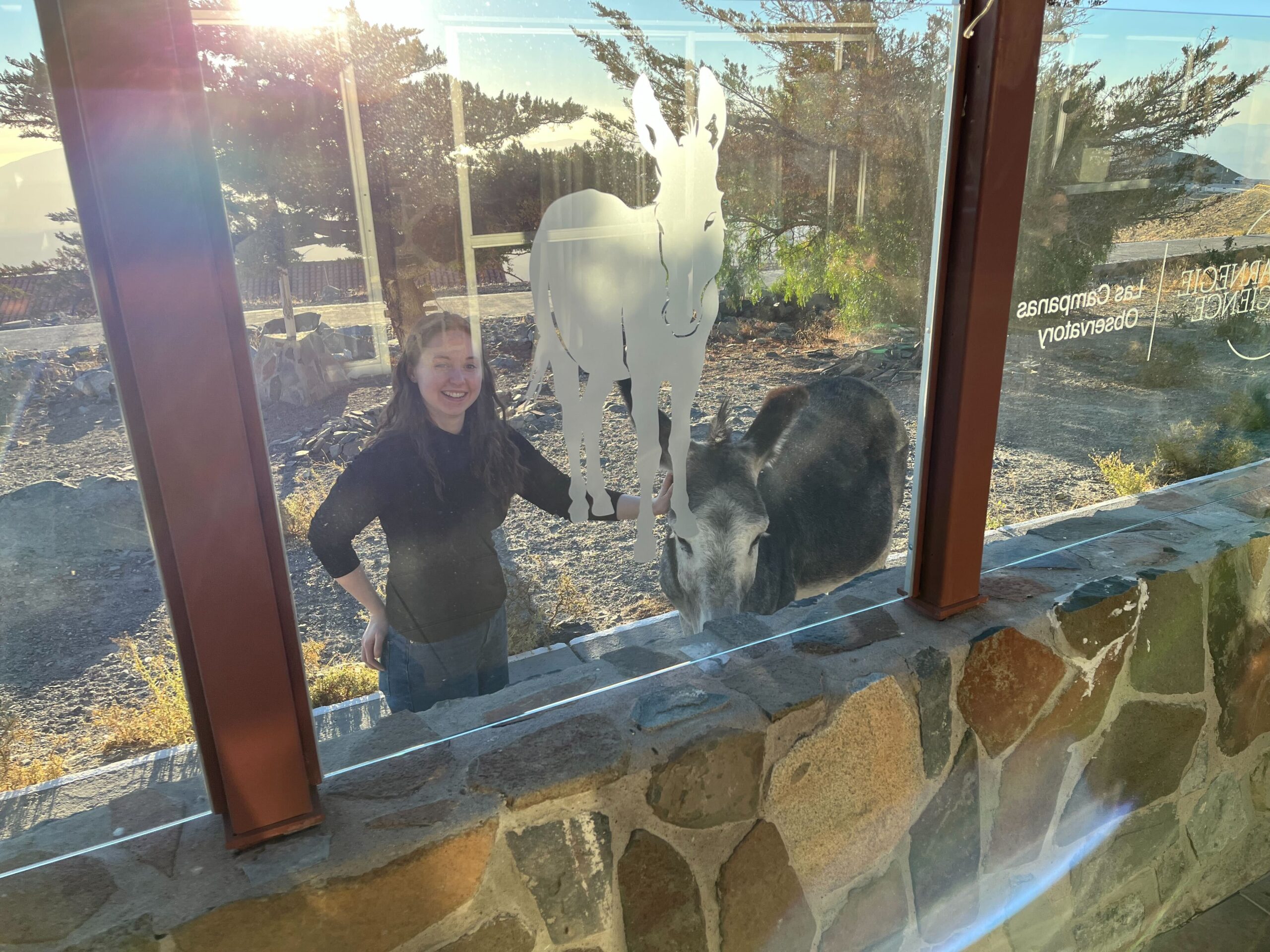
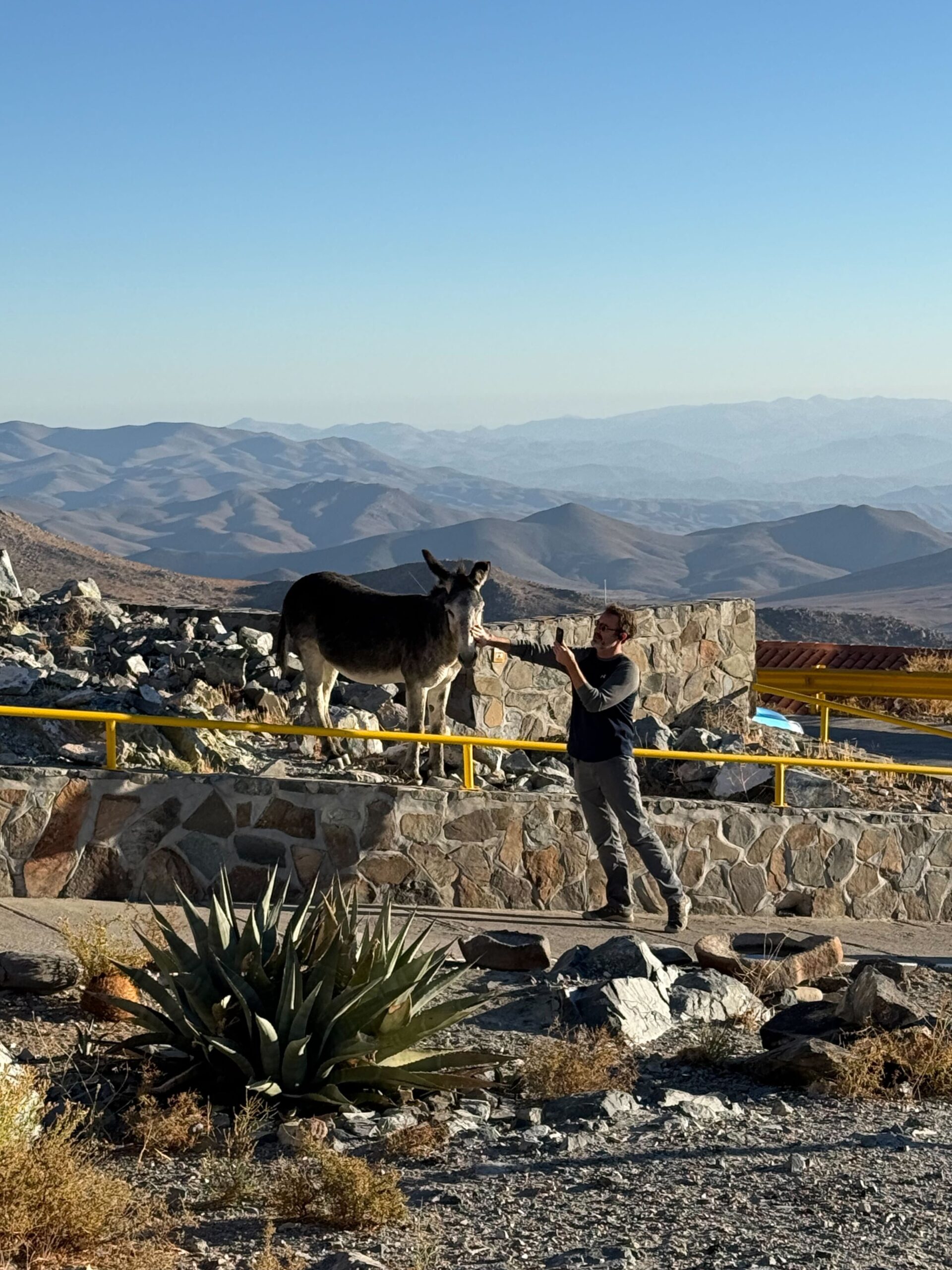
In the theme of going back to primary school, we also had a petting zoo visit after dinner.
Bench seeing results
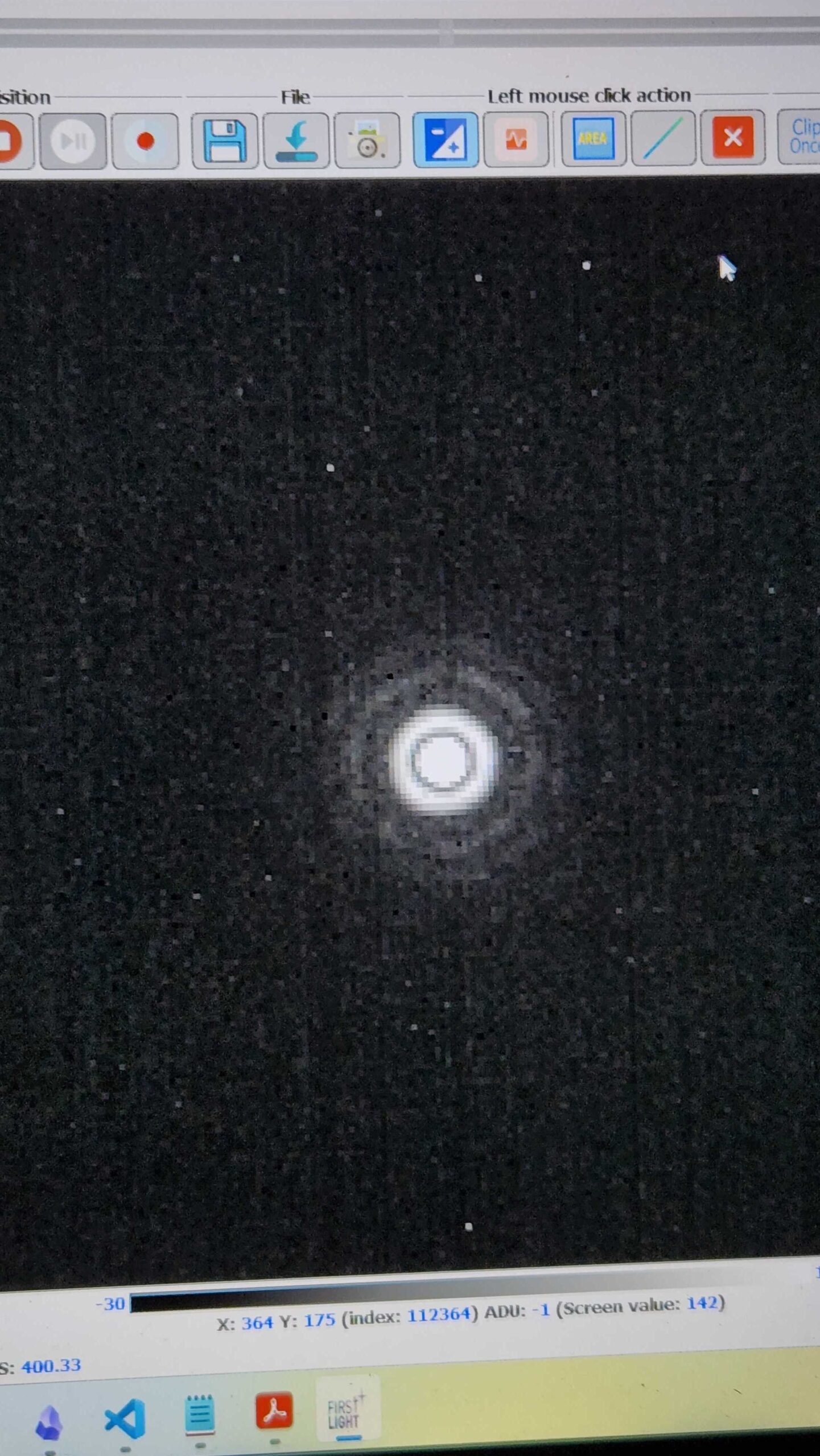
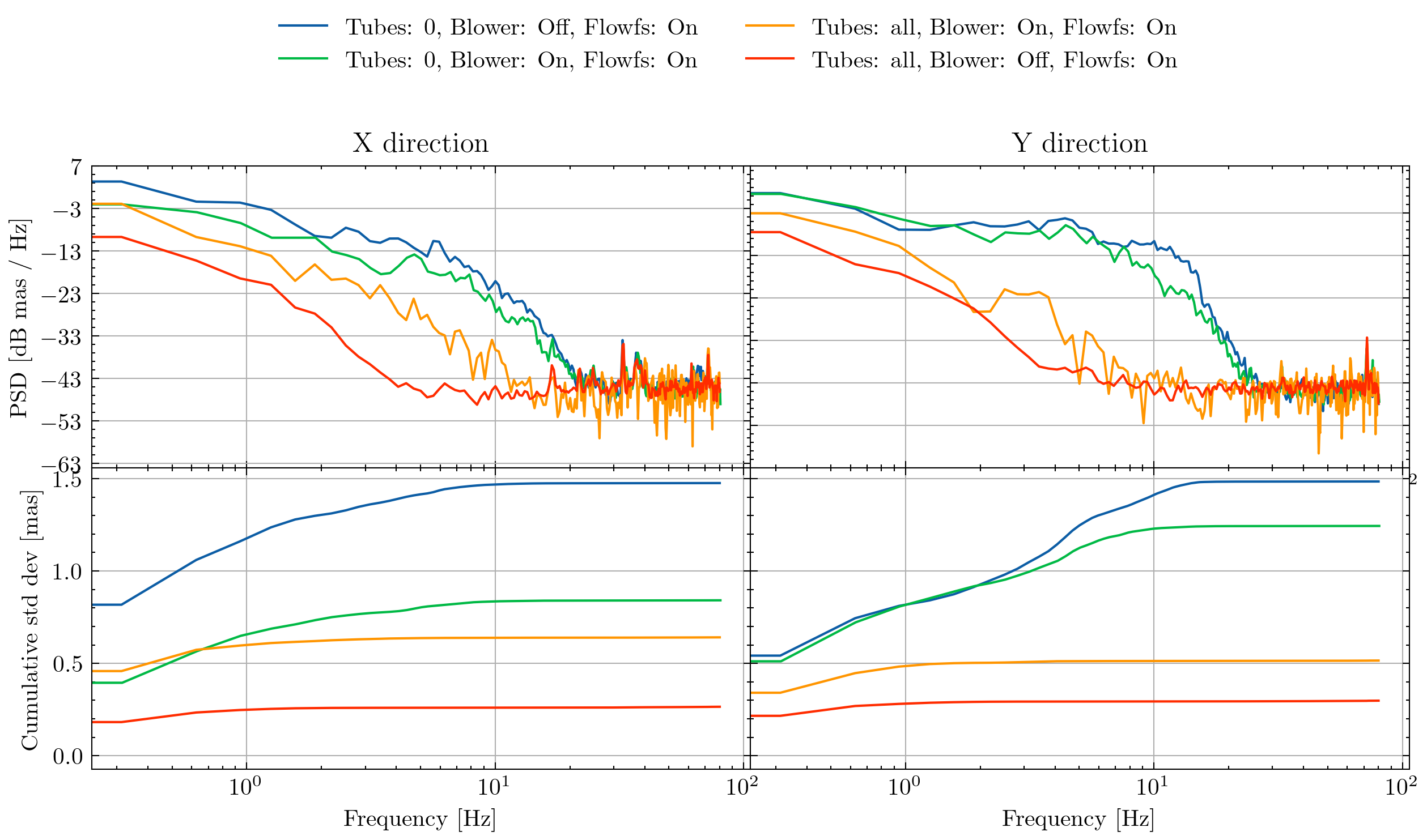
Today I did the analysis of the data. TLDR: We found a 6x reduction of the bench seeing effects with just a few pieces of cardboard! This translates to a ~50x improvement in raw contrast for a second order chronograph.
Each column is a different direction. Top row is the power spectrum density, bottom row is the cumulative standard deviation (square root of integral of PSD up to frequency). Units are in mas assuming 5.98 mas/px. Blue: using or not using FLOWFS doesn’t change much when there is bench seeing (no FLOWFS case not shown for clarity). green/red/orange: both the tubes and the blower status seem to matter, consistent with the blower being the next most dominant turbulence source after area covered by tubes.
Color of the Day
“Woodland Hearth” a.k.a Cardboard brown a.k.a Burrow fur
Song of the Day
Sticking with the theme of the anti-vibes tubes, I present Paint Tape it black (the Westworld instrumental since I slightly prefer it!)
Hello to day 4 — or, as a true Austrian would say: Griaß eich! As always, it is a beautiful sunny day here at the telescope, but maybe even sunnier today since it’s my birthday. It would have been a great present if our instrument had finally shown up, as we had some problems with customs at the beginning, but still pending.
Rob Harris and I are here from the University Durham to install a mini‑prototype of the MCIFU2 (Multi‑Core Integrated Field Unit). Our goal is to quantify how much infrared light (~900–1700 nm) makes it through the MagAO‑X system. Thanks for having us!
Me in awe of an amazing instrument
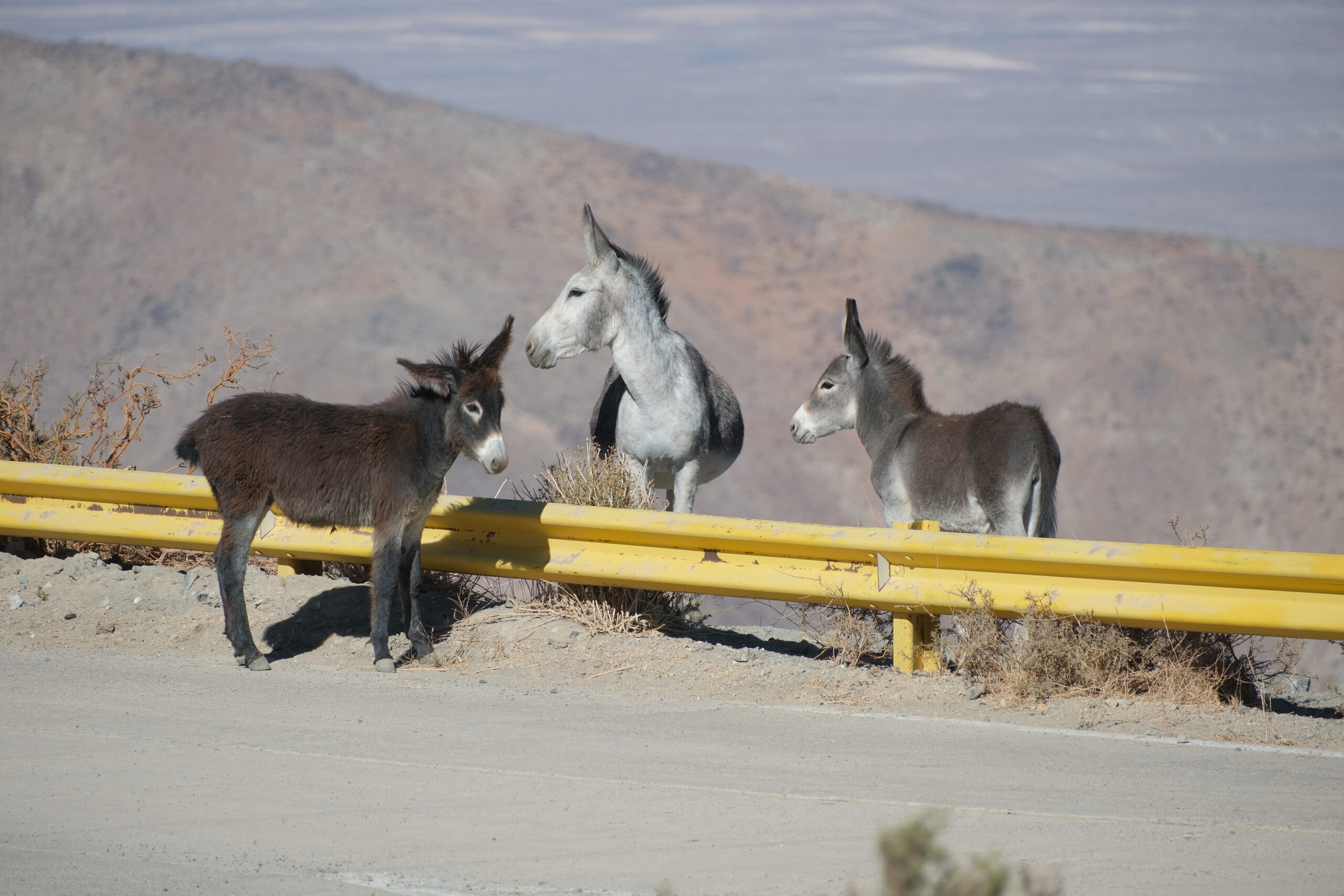
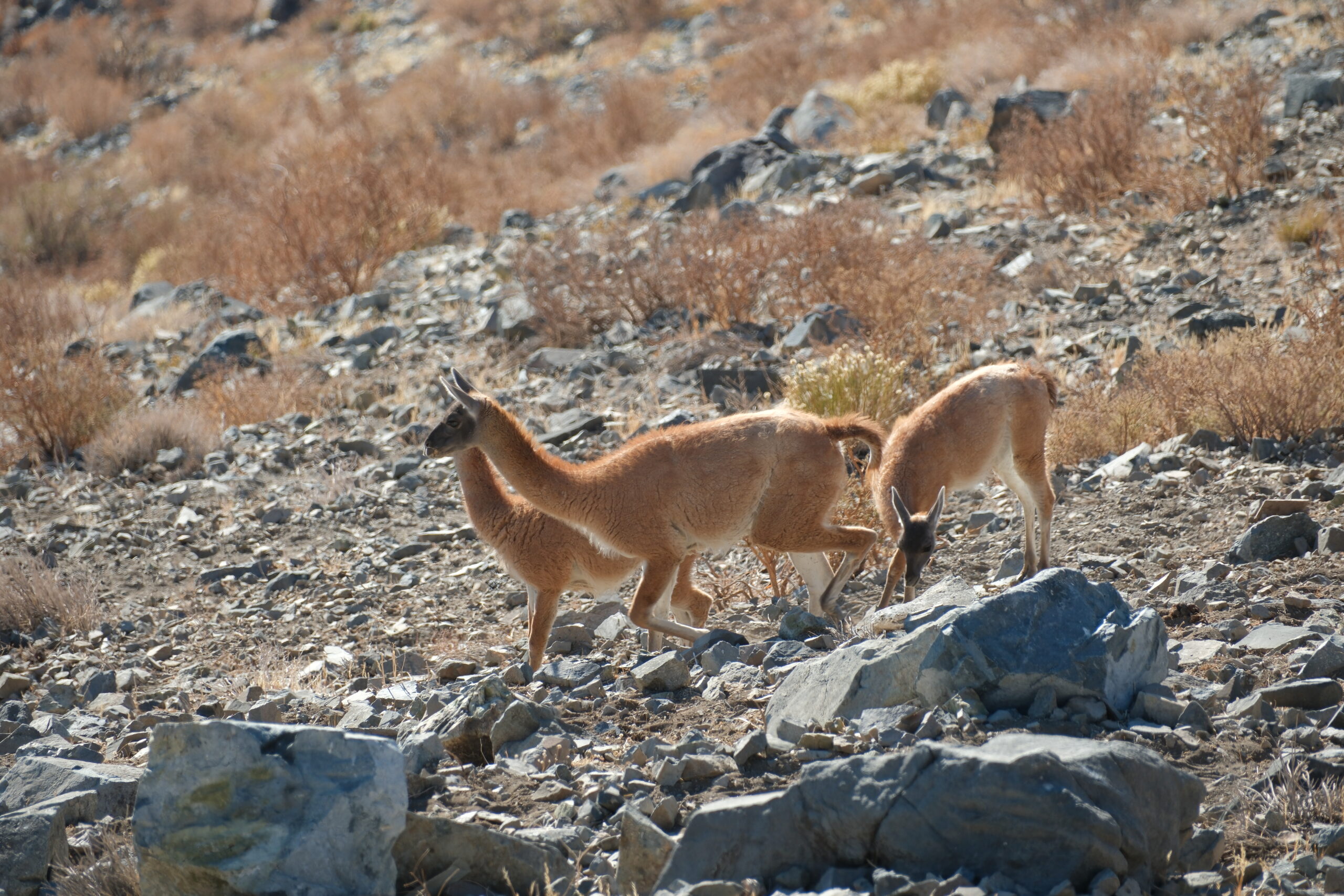
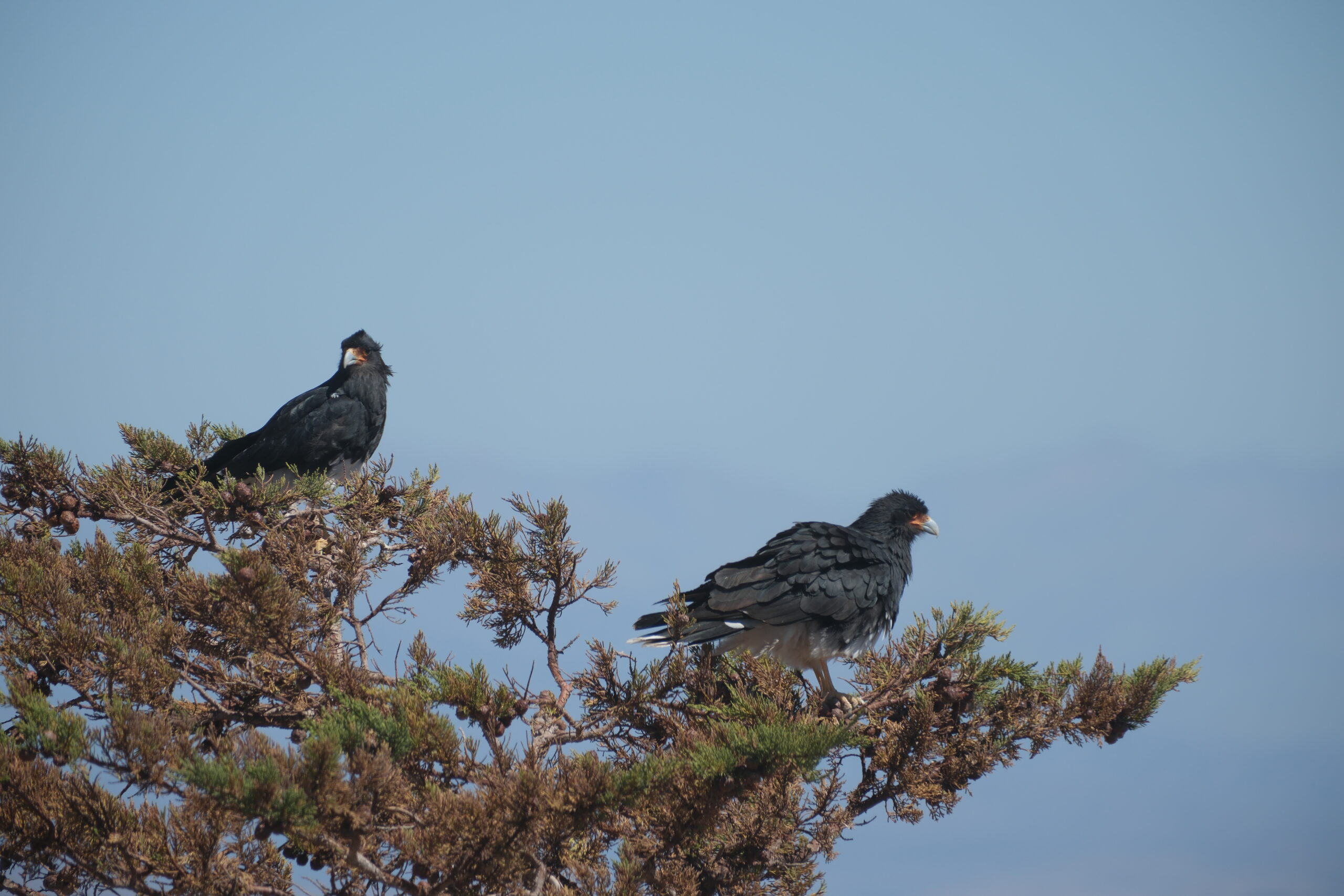
But since we have to wait until our parts arrive, I’m working on some data‑reduction software and simulation code. Because you probably don’t want to see me hunched over my laptop, here are some pretty pictures I took of the versatile local fauna and surroundings.
Wild BurrosGuanacosGray Fox (actually not a Fox)Mountain Caracara
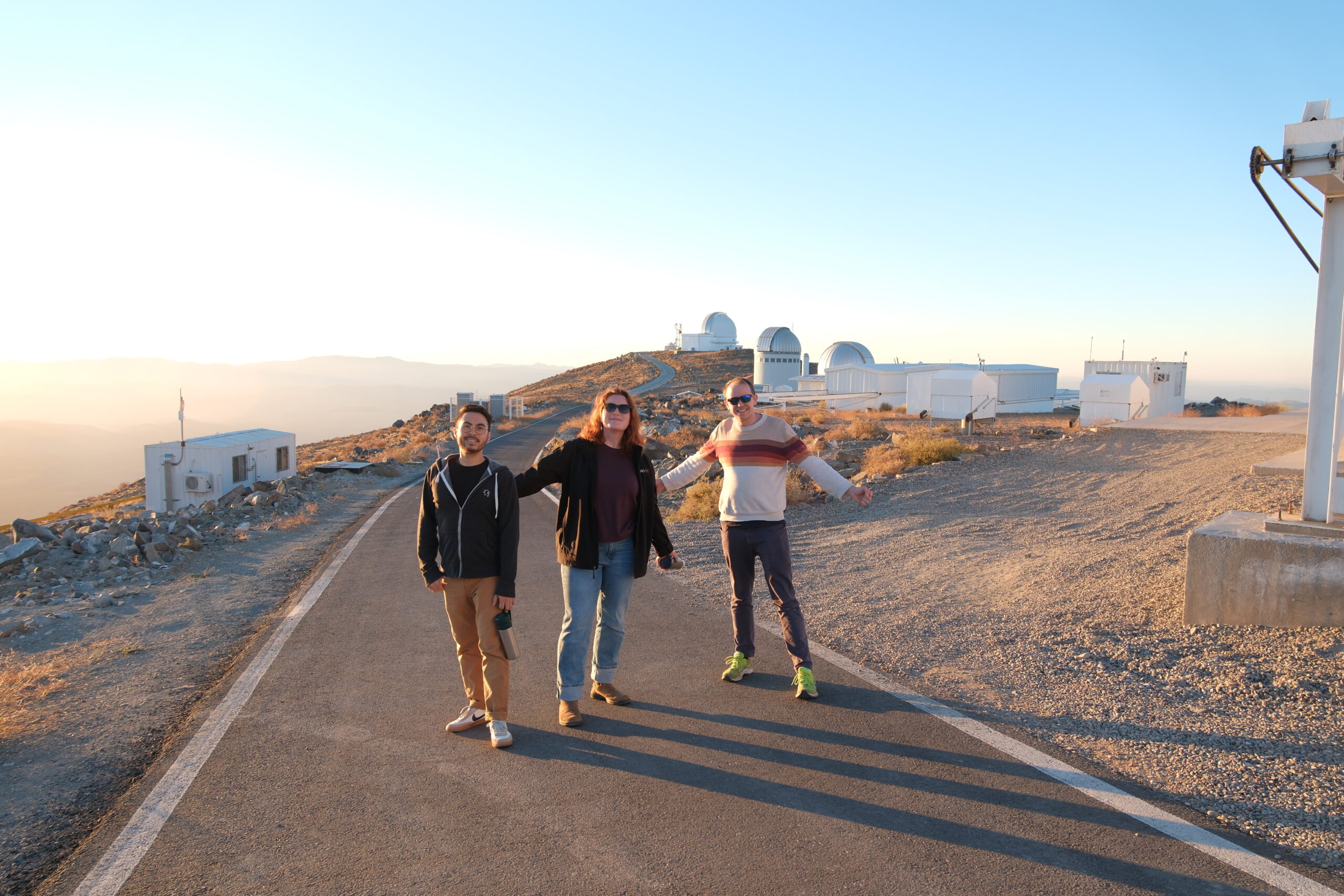
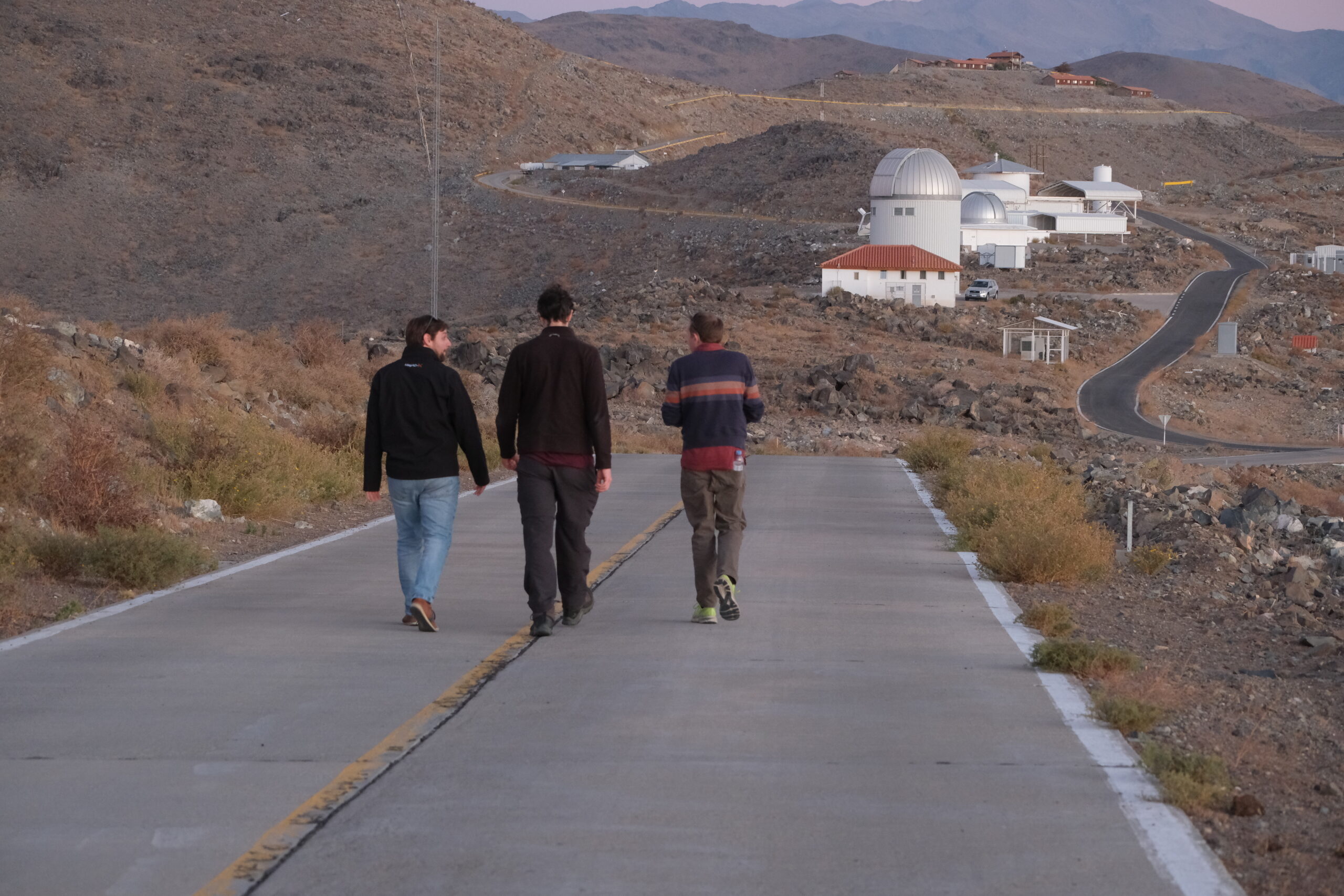
Every evening we go for a little digestive walk around the telescopes, always in the hope of seeing a green flash (the brief green glow that can appear at the exact moment the sun sets). I also went out for a late‑night stroll and took some pictures of the Milky Way.
Jay, Eden, RobWalter Baade Telescope and Milky WaySebastiaan, Adam, Rob
Color of the Day
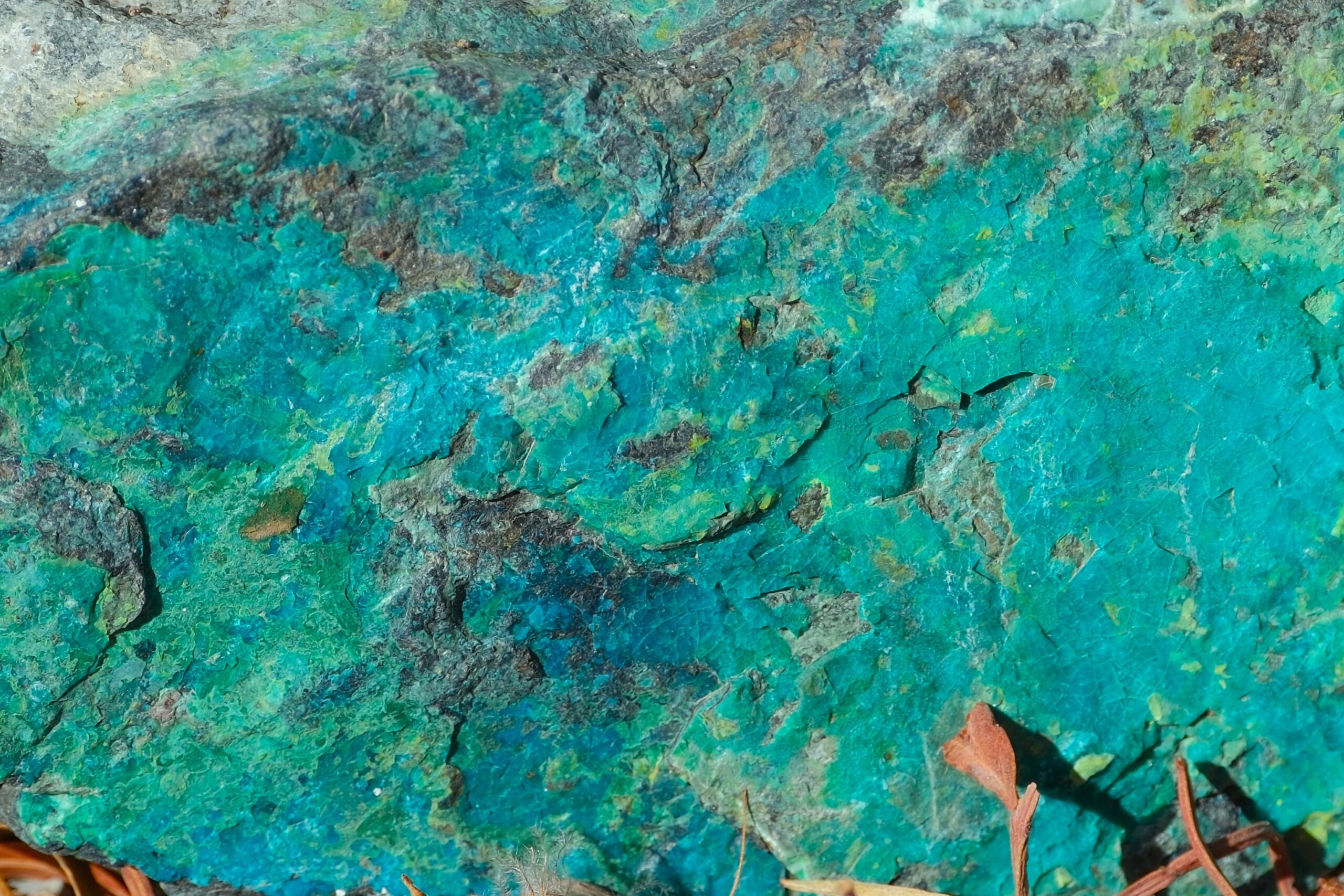
“ohhh look look look, what a nice rock!” colour
The rock probably gets its “ohhh look look look, what a nice rock!” colour from copper‑rich minerals like chrysocolla and malachite, which form when copper ores weather. Chile is one of the world’s largest copper‑mining regions.
Multi-threaded software is hard. You get all these different processes trying to access the same place in memory, and if they do it at the same time weird things happen. We have ways to stop these “data races” with tools like “atomics” and “mutexes” (mutices? plural of mutex for mutual exclusion) — but these add a new fun bug called “deadlock” when different threads try to lock the same mutex. So I’ve been spending lots of quality time with my new third best friend GPT-Codex. We make about 20 steps forward for every step back, but it’s in the time it used to take me to take about 1 step forward. Winning.
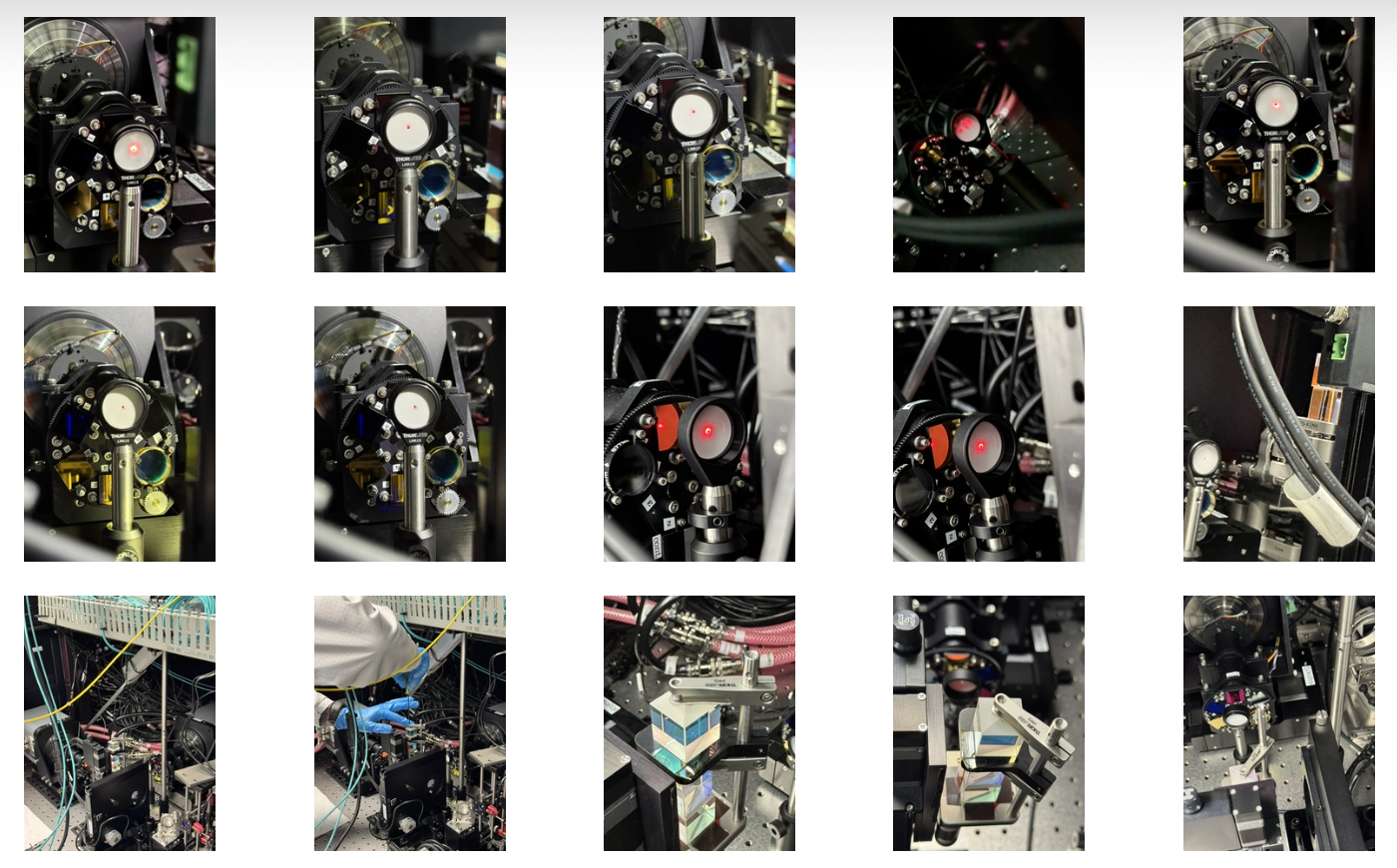
Miles has been hard at work getting his new polarization components installed. Here we’re using a bright red laser to chase the beam path through the instrument.
Sebastiaan and Adam arrived from Leiden today. Sebastiaan is already complaining about having to do EFC.
The door to the lodge was being guarded this afternoon. In a very friendly fashion.A nice sunset from my room tonight.
The color of the day is HeNe laser red.
The song of the day is The Emptiness Machine by Linkin Park:
Welcome to the second work day of the 26A run! Today we’ll be taking a brief look at some of the polarization work I’ve been doing (because, you know, if I didn’t mention polarimetry, did I even write a blog post?)
I’m back on mountain timeOne of the weirder polarization stages at LCO.
Today I spent time managing cables for the polarimeter and for the new polarization compensator I’ll be deploying. For the half-wave plate stage outside the instrument, I worked on reducing our heat outputs by moving the AC to DC converter bricks from directly underneath our entrance port to inside the server rack. I reckon this’ll give us at least +1-2% Strehl ratio. Having all the cables managed neatly in bundles keeps our operations smoother: there’s less chance of the cables snagging, and plugging and unplugging from the server rack is logistically easier.
What’s missing from the polarimeter now?Clean cable management
Inside the instrument, I’ve gotten the control electronics routed into the top bench for the polarization compensator–tomorrow I’ll be installing it!
Control electronics in the black boxThe dual QWP polarization compensator
Additionally, Jay, Eden, and Jared finished the glycol plumbing! The hoses, manifolds, and devices were backflushed to remove gunk and, eventually, the entire cooling loop was up and running!
Backflushing the gunkThe Gunk^TMOut with the old, in with the newClean Connectors lead to Constant CoolingTroubleshooting
Following the successful plumbing, the remainder of the cables between the server and the instrument were connected, followed by a system check for the deformable mirrors and motion stages. The loop has been closed, so we’re ready to proceed with the remaining engineering tasks for this run.
They’re so good at cabling I just stayed in the corner with the cleaning wipes
Color of the Day
So, today I accidentally walked out of the clean room with my shoe covers still on. Oops. Miraculously, so did Eden at the end of the day. In honor of our buffonery, I nominate clean room shoe cover blue (Pantone 14-4530 TN BLUEFISH) as the color of the day.