I’m baaaaaack. My last post on April 23 promised that if I got to come in person, I’d bring goodies. I tried to make good, but bad weather makes for a lot of snacking need.
Not shown: chocolate covered pretzels
The daytime weather has been lovely, for the viscachas and humans who happen to be awake then. After a couple hours of data taking, the dome started dripping tonight. Maybe our Vizzy friends are taking showers under it.
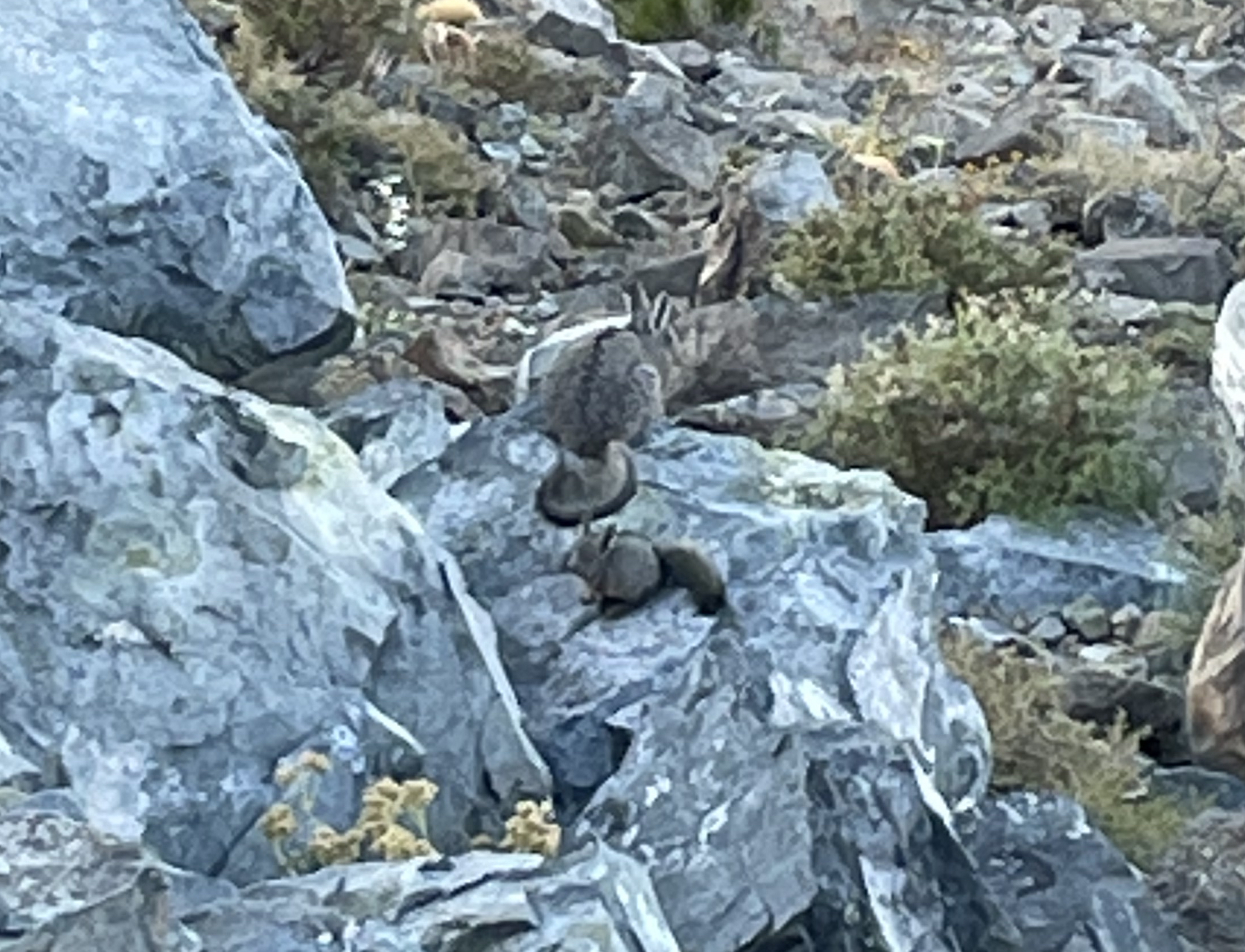
I like to think of this as “Dad and teen viscachas fend for themselves while mom viscacha observes.” I think they just went out to dinner.
Logan’s Vizzy Viddy of the day.
In case you were wondering, KLIP is an algorithm we use for reducing our MagAO-X data, so we’d rather be KLIPping than Dripping.
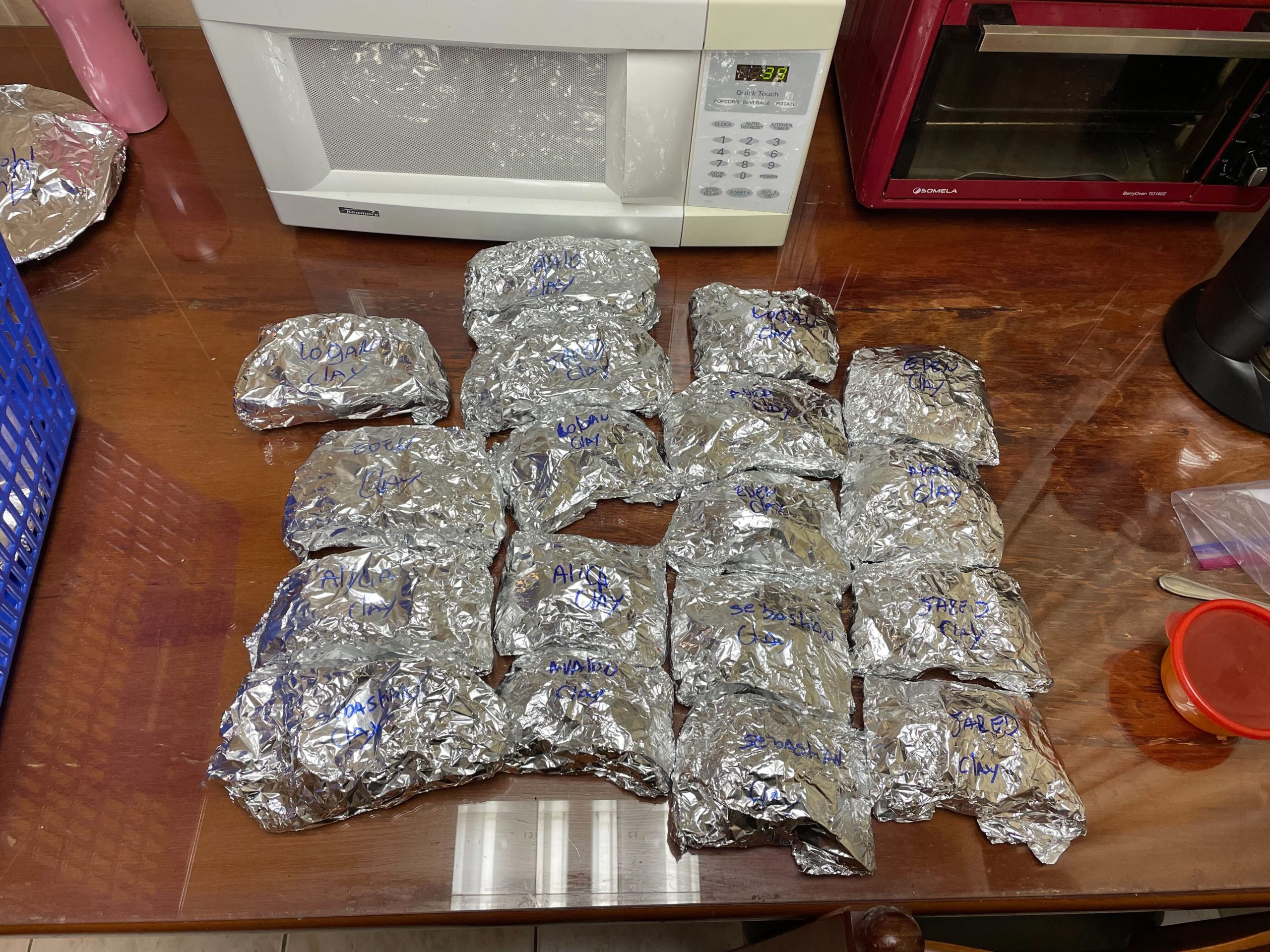
I got a taste of sunshine today when I got up early to get my get-out-of-bubble Covid test (negative, yay!) and then treated myself to a cheese empanada by going to lunch. Eden has provided this view of our dome’s “empanada empire.”
Don’t think we only have 18 empanadas; the cheese are two to a packet. There should have been 28 total since Jared made us all order 4 each.
Is it really possible that no one has used Train’s “Drops of Jupiter” as song of the day before? Drops of starlight are, alas, falling on the ground and not the mirrors tonight as drops of water fall from the dome.
I wish I could send a supersonic shipment to the MagAOX team to sustain them while they quickly pack up everything in the next day or so. I’d include really good coffee and Coke Zero (“We’ve really disrupted the economy of Las Campanas” –Joseph on the soda supply). I just realized I haven’t heard anything about wasabi peas, so maybe those too. If I get to join in person next time, I’ll bring goodies, I promise.
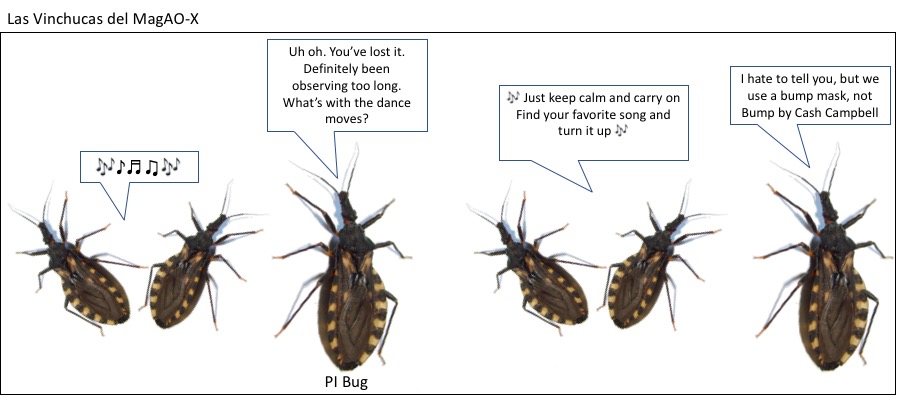
I’ve learned a little more about MagAO-X in the last few days, so I’m even competent to keep the log now, and I have dared to touch the web GUI to change the names of the files. I’m catching on to the procedures for starting on new targets, so with apologies to Herman Oliveras, former DuPont Telescope operator and cartoonist extraordinaire:
Yeah, there’s bad calls seeing and bad news speckles Sometimes you don’t know what to do gain to slide Your mind wave front sensor can turn a pebble into a boulder Might feel like a mountain that you’re rolling over, But it ain’t nothing but a bump. [With apologies to Cash Campbell]
An afternoon walk to stretch from a night of sitting and snacking is an observing must-have. I have long admired the local LCO flora and fauna (see old blog posts, e.g. here), particularly the vizcachas. Well, there are some consolations to remote observing — it’s spring here in Chevy Chase, MD, that miraculous season between the freezing rain and horrible humidity, and I did get to take a walk on a day that was pleasantly warm in my neighborhood bursting with flowers.
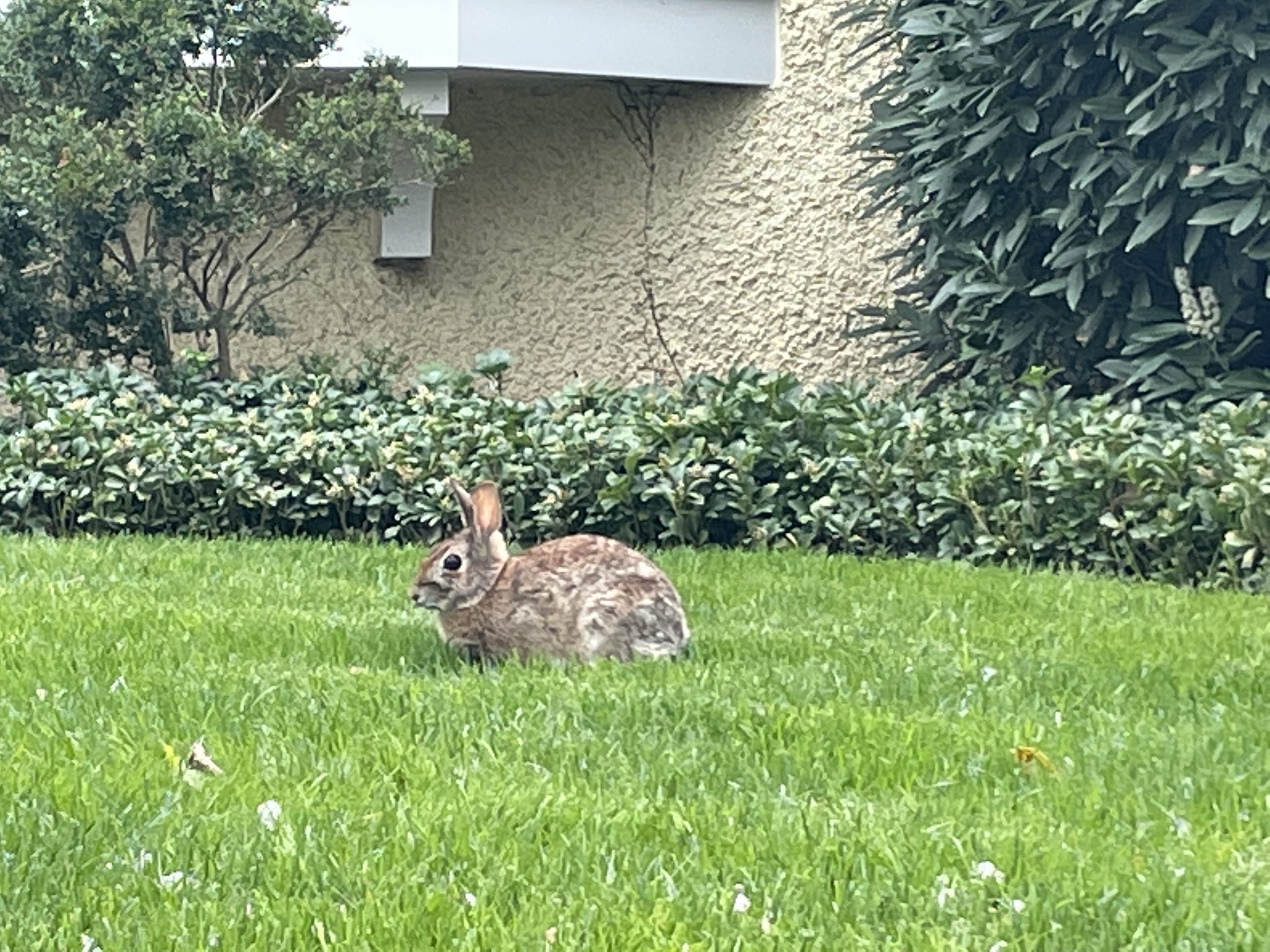
This vizzy relative was in my front yard enjoying a lunch buffet on my plants.
They’re very cute until they eat my vegetable garden, then I see them as candidates for stew.
The neighborhood has a bit of a predator-prey cycle going with foxes. Come summer, when the rabbit is feasting on my vegetable garden, I’m going to try to lure some Carnegie Earth and Planets Lab foxes up the road a mile to here. Meanwhile, check out this video that a Carnegie postdoc posted today (take that LCO foxes, we have babies):
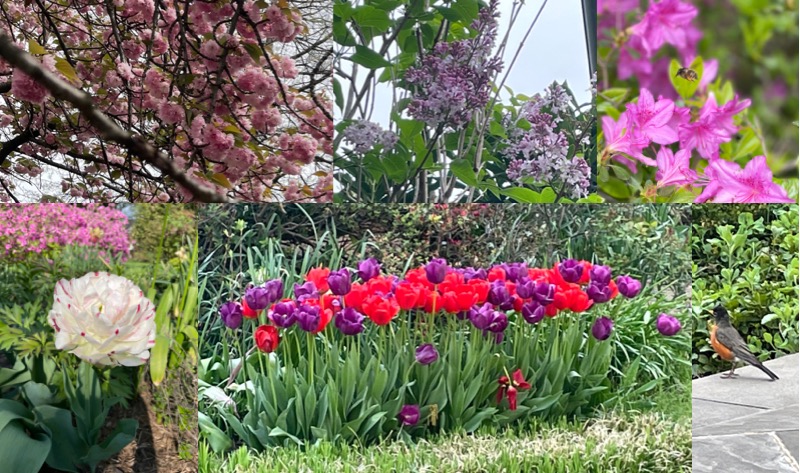
And for you desert dwellers, enjoy these colorful photos of the cherry tree and lilacs in my yard, tulips in neighbors’ yards, a busy bee on some azaleas, and a Robin on my front steps.
This is definitely the time of year to be in the DC area.
Speaking of things that are bright and striking …
The team has been calling the artificial spots placed by shaping the deformable mirror, which I can use for photometric calibration, “sparkles” (see Sebastiaan’s blog yesterday). I find the name apropos and not just because I like fireworks (in fact, the whole PSF including sparkles and diffraction looks like fireworks) but also because the alternative, “speckles” has too many meanings. I did my PhD thesis with a pre-adaptive optics technique called “speckle imaging.” Speckle is a horribly ambiguous term now, as AO-using scientists use the term speckles to mean any compact light on the detector, whether it arises from rapidly changing atmospheric cells (the way I used the term when I did my PhD), errors in wavefront correction, or is longer-lasting due to wavefront errors in the optical system.
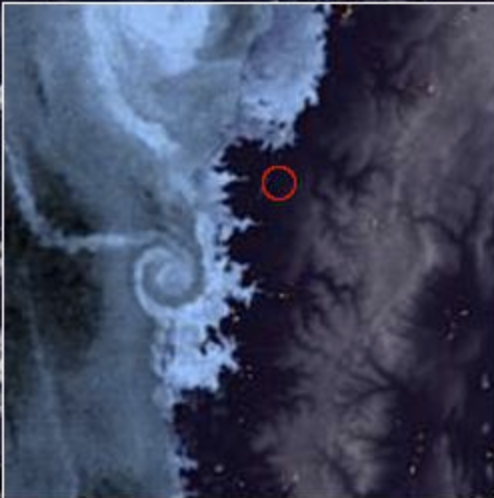
Before this post totally spirals out of control, here’s a cool spiral from the satellite image at 220424T0537.
Whatever eddy caused that isn’t making our seeing bad under the red circle.
The seeing has finally gotten really good for me, and that makes me love a good night of observing! Speaking of love, it turns out sparkle is the subject of a lot of love songs. I think I’m going to love the sparkles placed by the deformable mirror when I go to reduce my data.
Earth Wind and Fire: Sparkle
“Harmonies in tune that reflect the moon Sparkle, you’re so lovely in my sight”
Billy Holliday – Them There Eyes
“Sparkle, bubble, get you in a whole lot of trouble.”
Aretha Franklin: Sparkle
“Breathlessly and eager, you got me round your finger A sparkle with the fire, you always take me higher”
Late last year, we surveyed the Magellan community about what was lost and what was gained from remote observing. 10/28 people who had used a new instrument during remote observing cited a downside as the difficulty learning to use a new instrument. Obviously, MagAO-X wasn’t on during the 14 months of remote observing to that point. I have to wonder if the other 18 people all used a single-object-medium-resolution-visual spectrograph with few choices, … but I digress.
I assert that difficulty in learning to use MagAO-X is a major downside of remote observing. Now, MagAO-X is an experiment not a facility, so it’s not really fair to compare it to the facility instruments. But I’m used to at least having a goal of observational self-sufficiency. Alas, self-sufficiency is remote. So to speak.
I love observing. I love experiments. I am deeply grateful to the MagAO-X team who has been at LCO for the better part of a month and are still willing to collaborate to try some difficult observations with me. I hope I’ll be able to join them in person later this year (and not just because I’m jealous of their empanadas — surprisingly, in that observing survey, only 93/150 respondents chose “Delicious Empanadas” as a benefit to in-person observing. I can only assume that the other 57 are crazy ascetics who survive only on soylent).
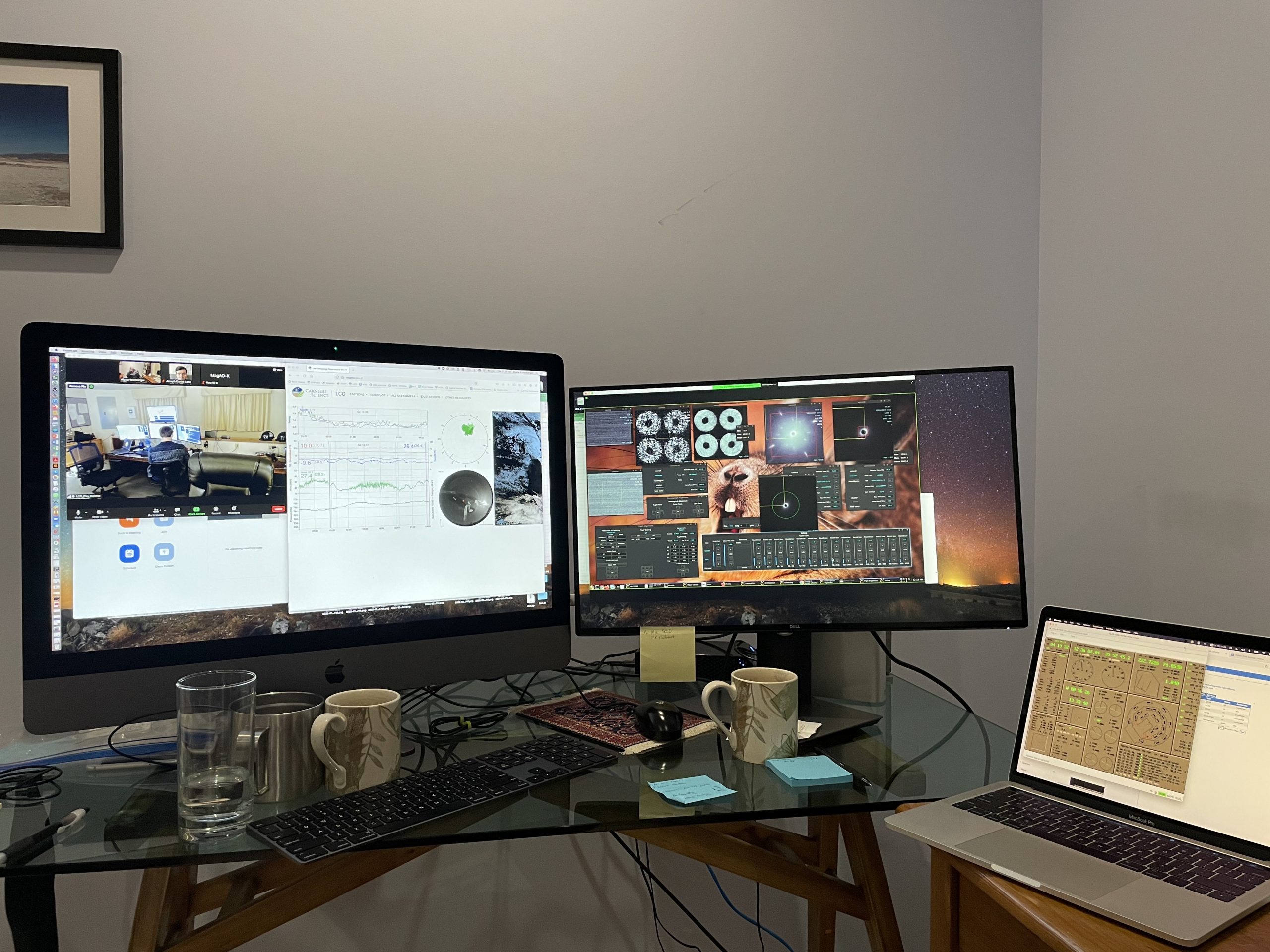
My remote observing station in my home office. I notice that I am probably drinking too much coffee. The desktop, if visible, would show lovely images of LCO at night.
So for the song of the day, here are some appropriate lyrics from an appropriately named song on an appropriately named album (Confusion on Electric Light Orchestra’s Discovery album).
Every night you’re out there, darlin’ You’re always out there runnin’ And I see that lost look in your eyes
Confusion
don’t know what I should do Confusion I leave it all up to you
Aside question to ponder: I bet everyone reading this can name more famous astronomers than ELO members. I have actually met one former guitarist/vocalist of ELO Part II whose daughter goes to school with my son, but I really only remember his name because he made it a famous building in Athens. Fame is in the eye of the beholder.
I’m working on telescope domination this week. I started at Clay using MIKE (well, not really, I got clouded out). I moved to duPont using CAPSCam, I had a night off to visit with the MagAO team, and now I’m back at Clay using MagAO. Tomorrow I’m off to Baade with MagE. Have a telescope or instrument, I’m there!
It’s been a while, so I took last night to get reacquainted with my old friend Clio. It’s like riding a bike (or maybe like being back in the saddle again, though I wouldn’t really know), it turns out. I think I might even have muscle memory for the Camera Control GUI.
Last night was great, but tonight, well, we have some problems. The Clio pupil mask was out of place, though it was fine last night and no one should have touched the motor. Then, the MagAO systems stopped communicating with each other correctly. But by 1 AM, we were back in the saddle again.
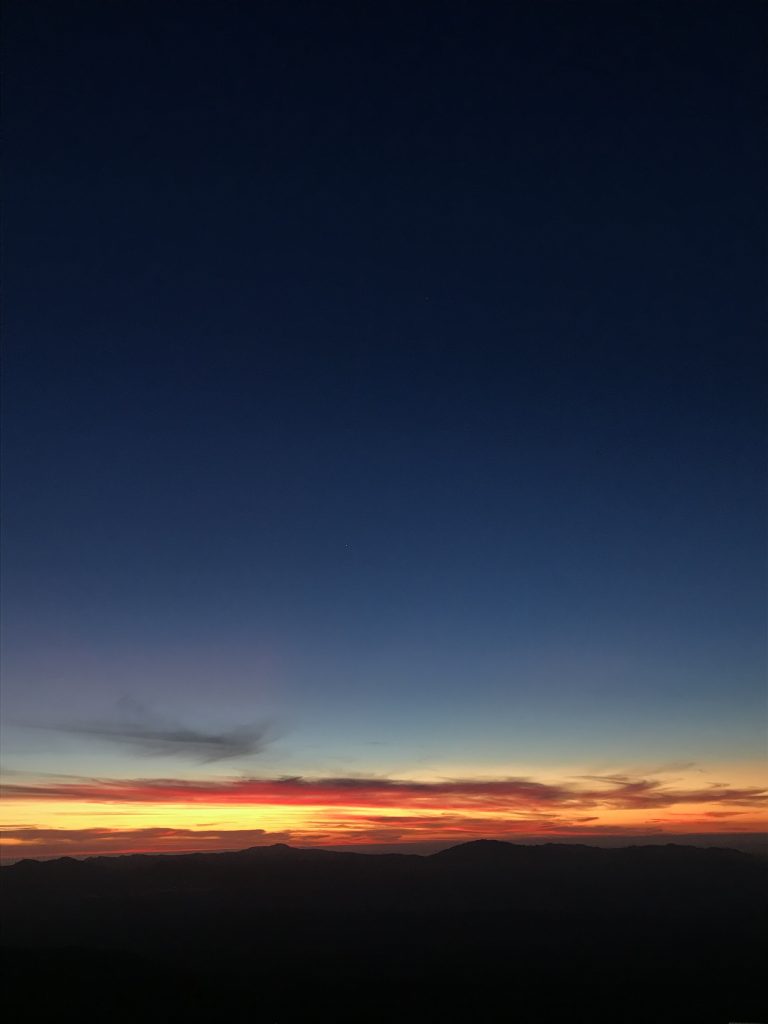
So, let’s talk about the weather, animals, and classic songs instead. The sunset was beautiful.
Clouds make for lovely sunsets, and I’m fine with these on-the-horizon beauties as long as they don’t come overhead. If you look very carefully (at least, I could see them on my phone screen), you can see Venus, Jupiter and Saturn along the ecliptic. Yes, our planets seem to have formed in a disk.
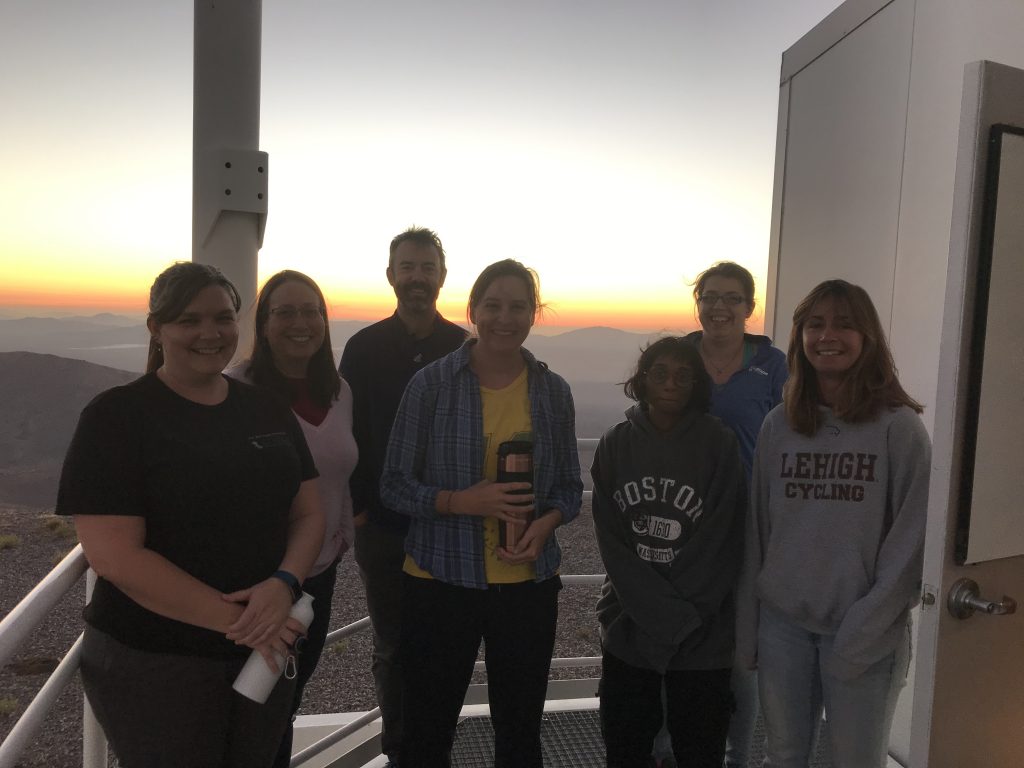
We have a big group up here, possibly larger than I’ve seen since my first MagAO runs up here in 2013 or 2014. I love the number of women we’ve got working here. Last night there were none of those beautiful clouds at all, when we gathered on the catwalk at sunset:
Sunset with the whole gang: Logan, Me, Jared, Katie, Amali, Elisabeth, and Emily
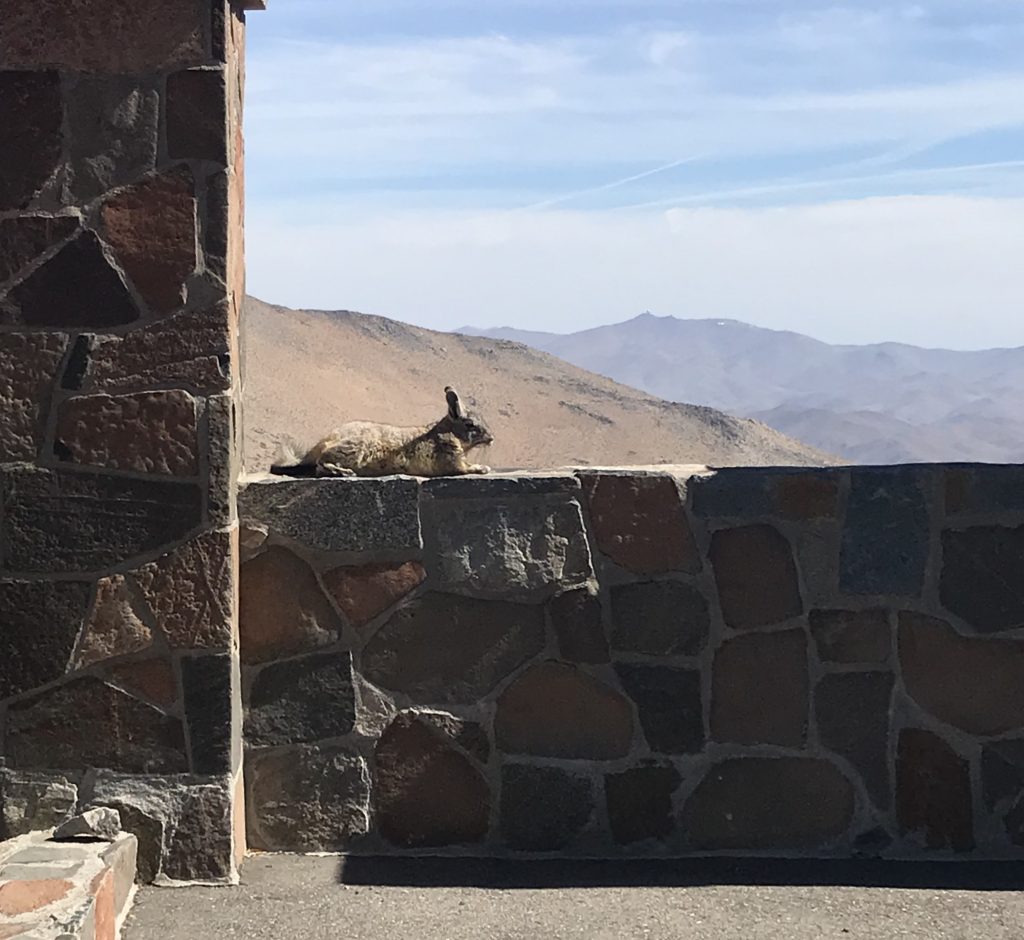
This week, I’ve seen a fox, more than a dozen burros, a herd of goats, and at least three vizcachas, so I’m only missing a guanaco to get LCO animal bingo. I have never seen a vizcacha sunning him(her?)self like this before.
A vizcacha sunning itself on the wall next to the Astronomer Support Building this afternoon.
I am using the classic Gene Autry, “Back in the Saddle Again” as my song tonight.
I’m back in the saddle again Out where a friend is a friend [here’s looking at you Katie, Jared, MagAO and Clio] Where the longhornburro cattle feed On the lowly gypsum weed [or whatever those plants are outside] Back in the saddle again
Ridin’ the range sky once more Totin’ my old.44wavefront sensor Where you sleep out everynightday And the onlylaw is rightsky is fey Back in the saddle again
I don’t have much to say, so I figured I would title this “The Universe” as that covers anything I might be tempted to say. Actually, we were discussing Arthur C Clarke tonight, and Katie found this good quote from him, “I sometimes think that the universe is a machine designed for the perpetual astonishment of astronomers.” I hope I continue to be astonished. As I said in this interview for the DTM website — it’s a shame to lose a sense of curiosity.
Tonight is my last night, so it’s goodbye to LCO for at least a few months. Good luck to the rest of the MagAO users!
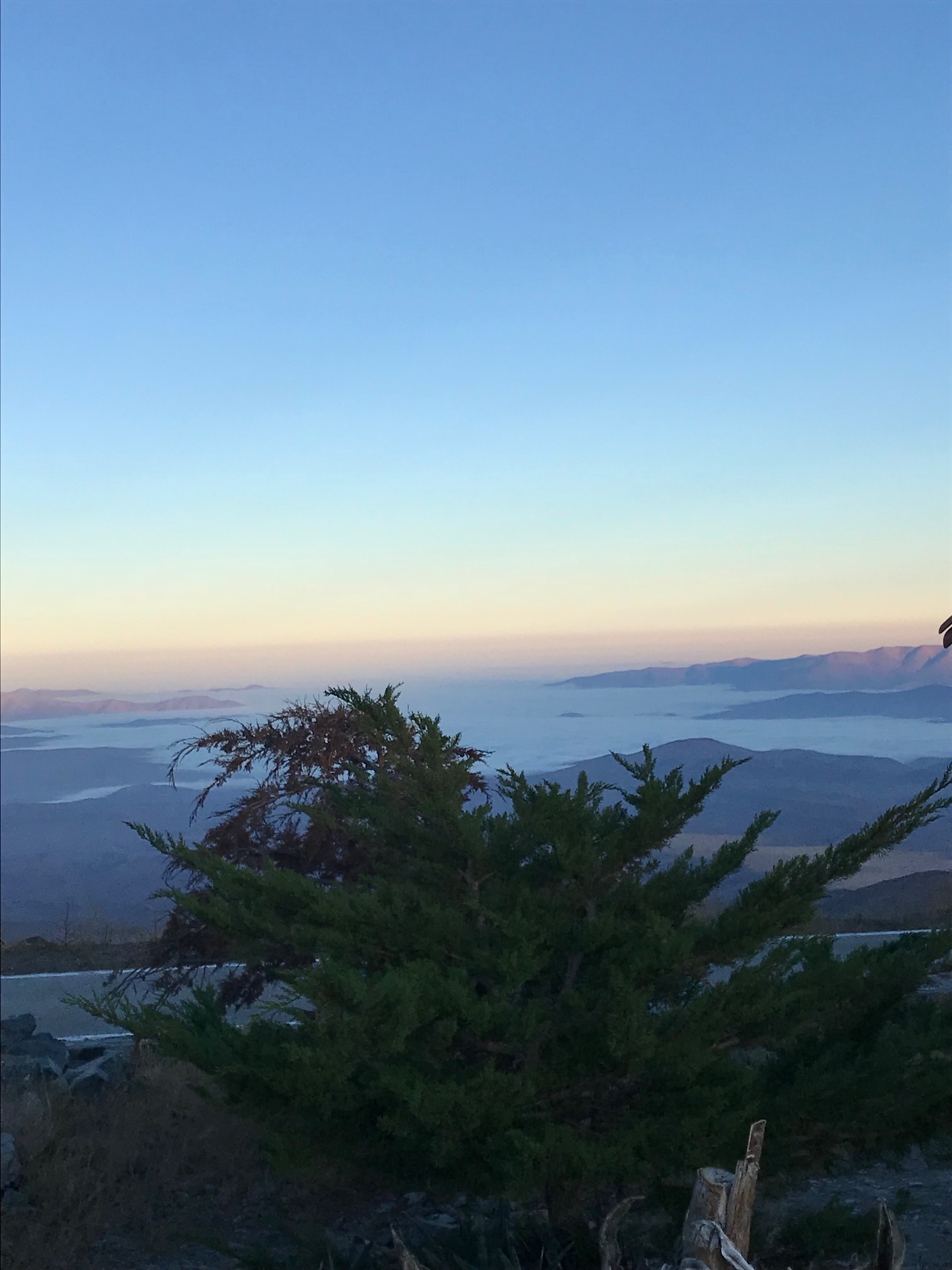
Here are some photos from dawn and sunset:
Dawn on Sunday. Note the conspicuous lack of clouds as soon as the Sun rose. But the dawn was a harbinger of empanadas at least.
Sunset on Sunday. Note that the sky is still clear. The dome was open early for some tests on the infrared camera.
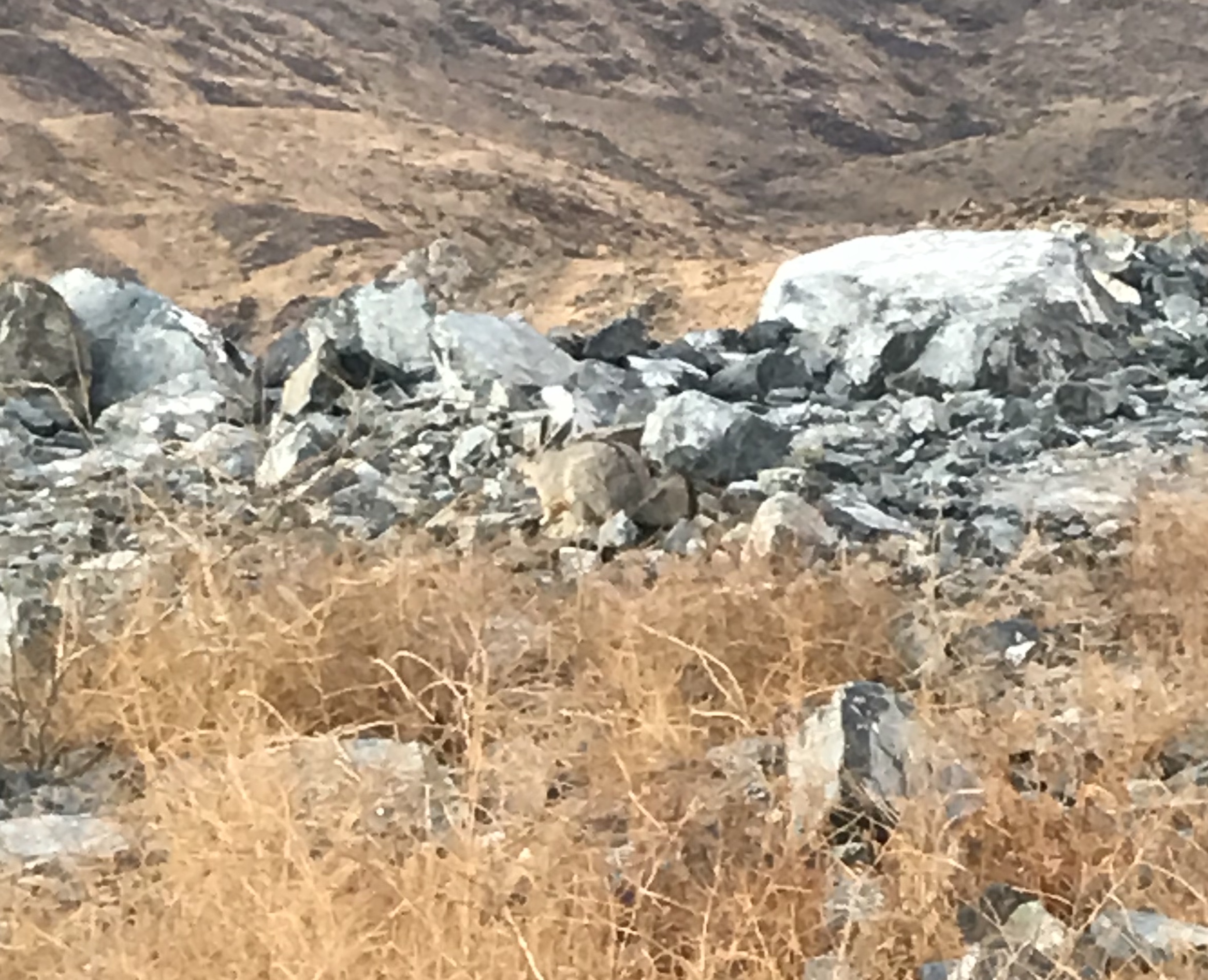
The wild vizcacha of the hillside to the north of the Magellan Telescopes. He/She stayed still just long enough for a photo before hopping away. I like the stripe down his/her back.
The Universe makes us feel small, so that’s a link, perhaps tenuous to this song by one of my favorite singers, Suzanne Vega, called “Small Blue Thing.”
I hope someone strumming in her home studio counts as a cover: