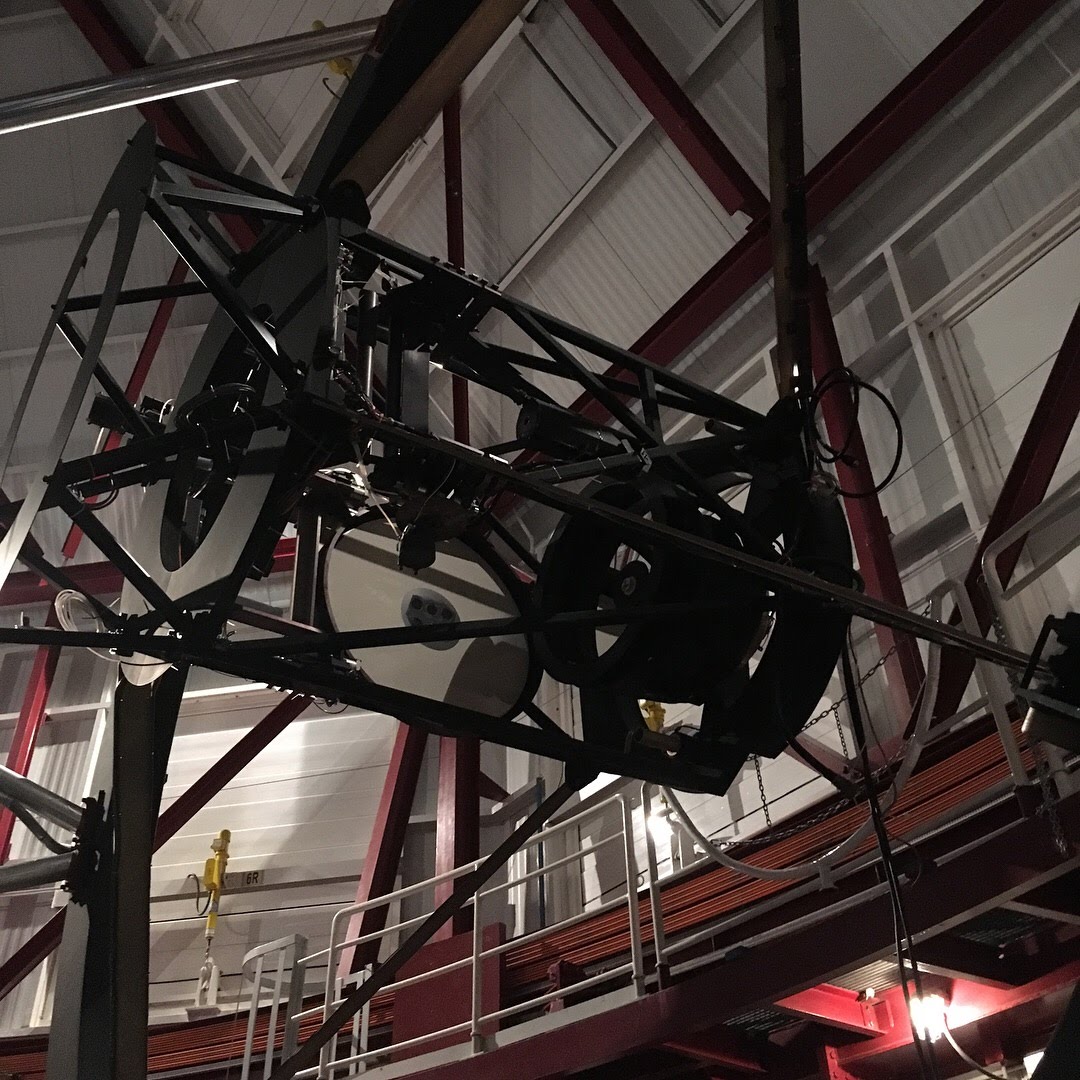
Placing our 2040-actuator deformable mirror in MagAO-X

As of today, our 2040 actuator Boston Micromachines MEMS deformable mirror (BMC-2K DM, for short) has been moved to MagAO-X instrument optical table. With a cost of roughly three houses, it’s by far the most expensive piece of the whole project. (If you don’t count paying half a dozen graduate students for half a decade.)
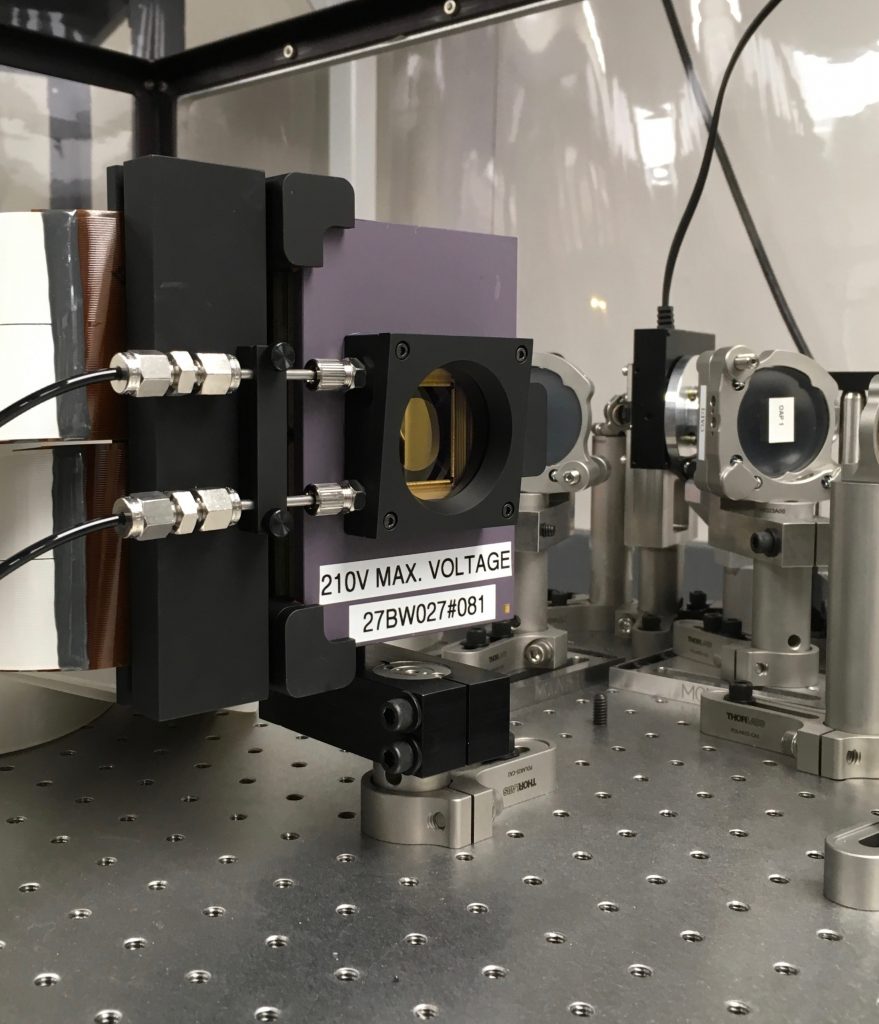
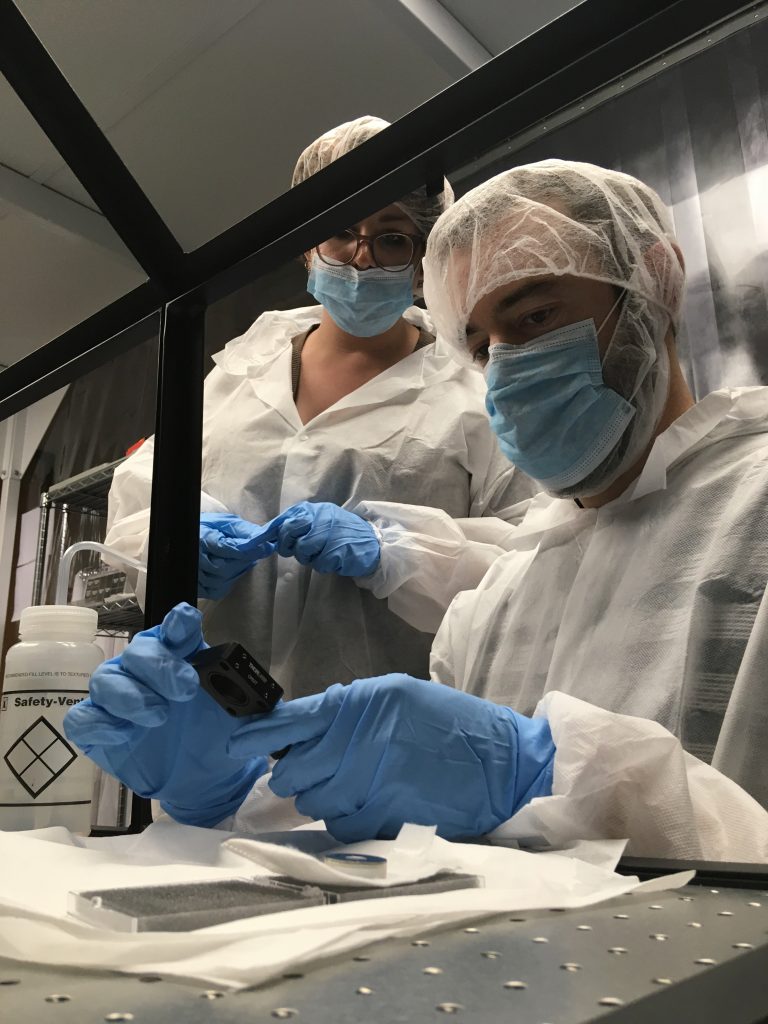
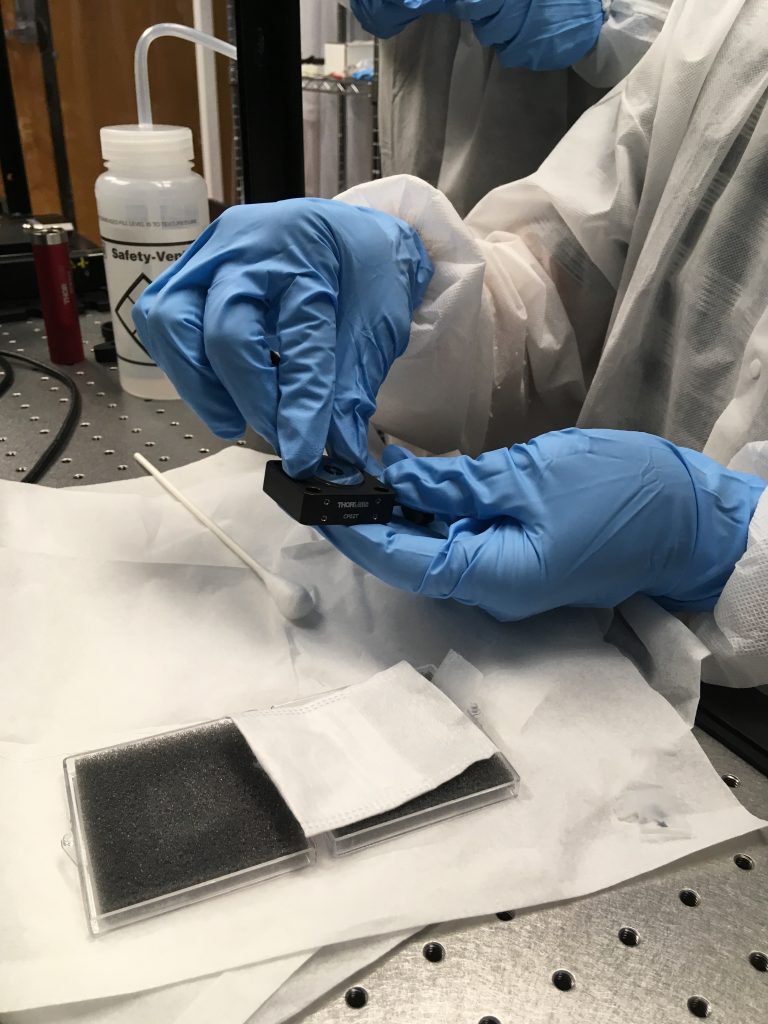
View of the BMC-2K DM mounted in its holder on our MagAO-X optical bench.
The BMC-2K in all its glory, finally in place atop the MagAO-X optical balcony.

So, why is it important? And what makes it so expensive?

Adaptive optics involves first sensing the shape of an incoming wavefront of light to determine aberrations, then deforming a reflective surface to perfectly cancel out as much of the aberration as you can. So, as you might guess, a deformable reflective surface is key.

Extreme adaptive optics is an informal term for the next stage in the evolution of adaptive optics for astronomical high-contrast imaging. We’re running our system faster than predecessor systems like MagAO (in terms of the number of measurements and corrections each second), placing more stringent tolerances on all of our optical surfaces, and using more actuators on our DM. Unlike the MagAO system, which deforms the telescope’s secondary mirror directly, MagAO-X uses three DMs placed at images of the pupil within the instrument enclosure.
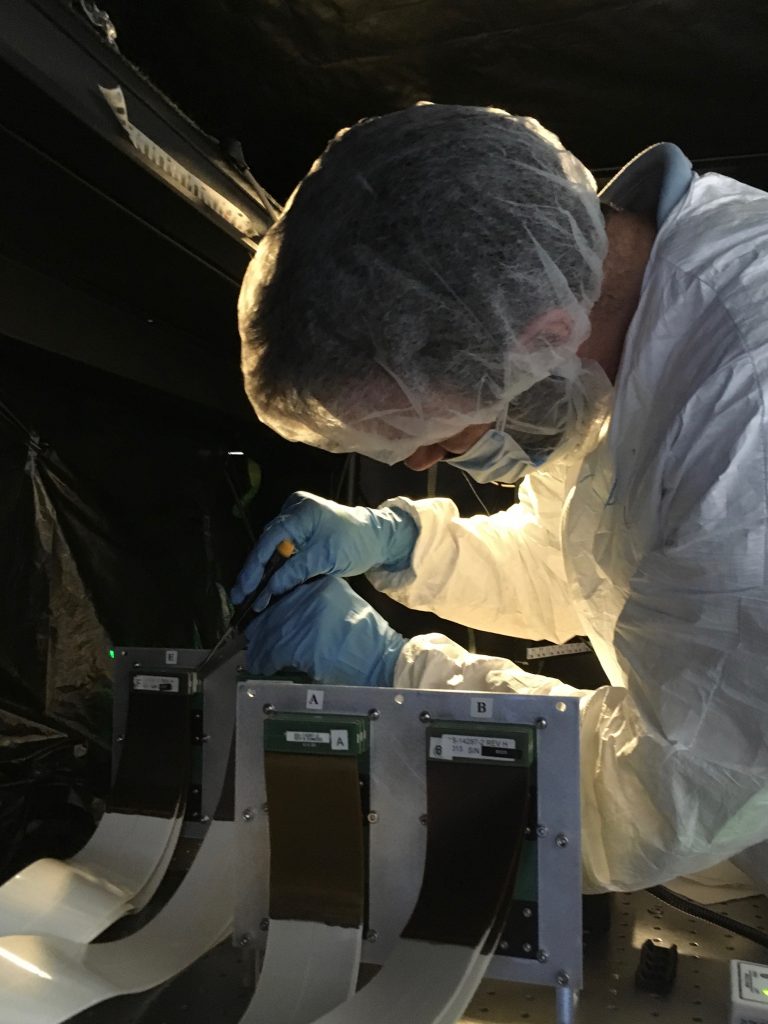
Dr. Jared Males leaning over some cable assemblies to disconnect them.
The P.I. disconnects one of the 16 sets of ribbon cables necessary to interface the DM with its high-voltage drivers.

The first DM in the optical path, an ALPAO DM97, is a large-stroke device, meaning it can deform a whole 80 µm from one edge to the other. This is about the diameter of a human hair, which doesn’t seem “large”, but for H-alpha (0.656 µm) photons 80 µm is over 120 wavelengths. The flip-side is that it has only 97 actuators. We call this the “woofer” by analogy with speaker systems, since it can only correct aberrations with low spatial frequencies.

The last DM the light will encounter before being imaged onto a detector is another ALPAO DM97. This one is tasked with squashing “non-common path” aberration: basically, any aberrations we’re introducing ourselves within the instrument that aren’t being sensed by our wavefront sensor.
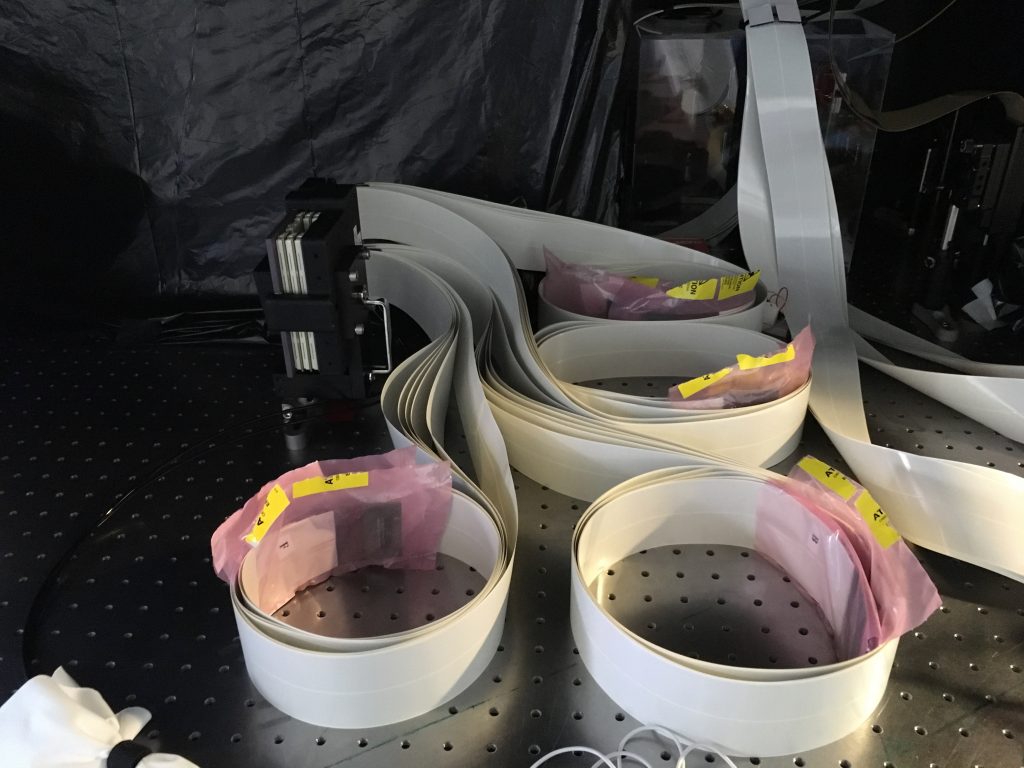
Interface plate where ribbon cables from the DM driver meet ribbon cables from the DM.
Not for nothing is this thing called the octopus.

The device we moved today is the “tweeter”, responsible for correcting the high-spatial-frequency modes that generate speckles in our images. These speckles can look awfully similar to planets, and can even persist in a quasi-static way in a series of images. After we’ve taken out the low-frequency content with our woofer, the residual aberration is smaller amplitude but higher frequency.

Our BMC-2K DM lets us cancel out these aberrations to a high degree, resulting in more control over speckle-causing aberrations and less light lost from the core of the image of each star or planet.

Thanks to Jared Males, Kelsey Miller, and Lauren Schatz for the patient explanations that informed parts of this writeup.
MagAO-X gets sporty

As originally reported on the Steward Observatory website, and archived here for posterity:

On Jan 17, NBA Hall of Famer, one of “50 Greatest Players in NBA History,” and iconic Deadhead Bill Walton came to town to be the color commentator for the UA-Oregon men’s basketball game. Whenever Walton is a commentator ESPN has a 2-minute feature called “Walton’s World.” In this episode, Bill visited the MagAO-X lab at Steward!

Taking delivery of the MagAO-X vAPP coronagraph

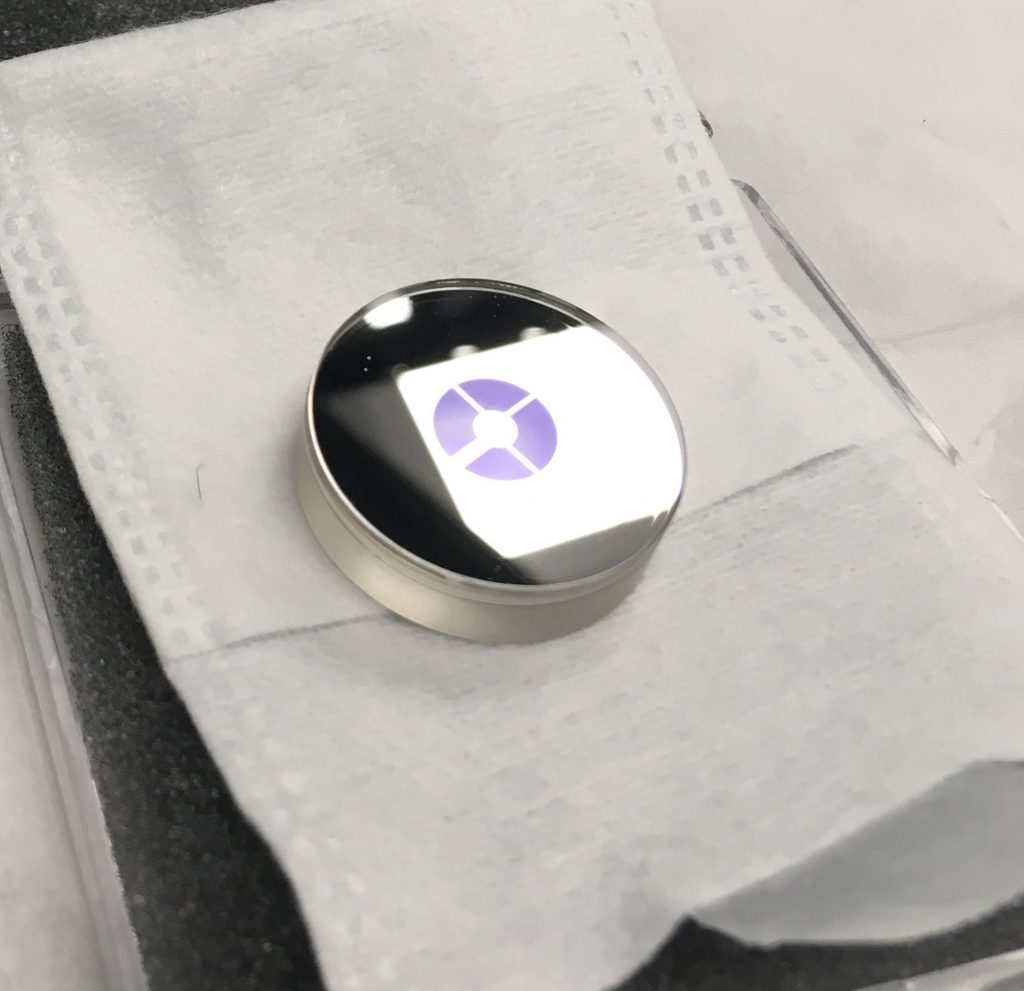
On September 17, 2018, we got our first look at the MagAO-X vAPP (that’s “vector apodizing phase plate”) coronagraph optic. Kelsey Miller had been working with the phase pattern for a long time, but there’s something special about holding it with your own hands. Or, at any rate, watching the P.I. hold it with his own hands.

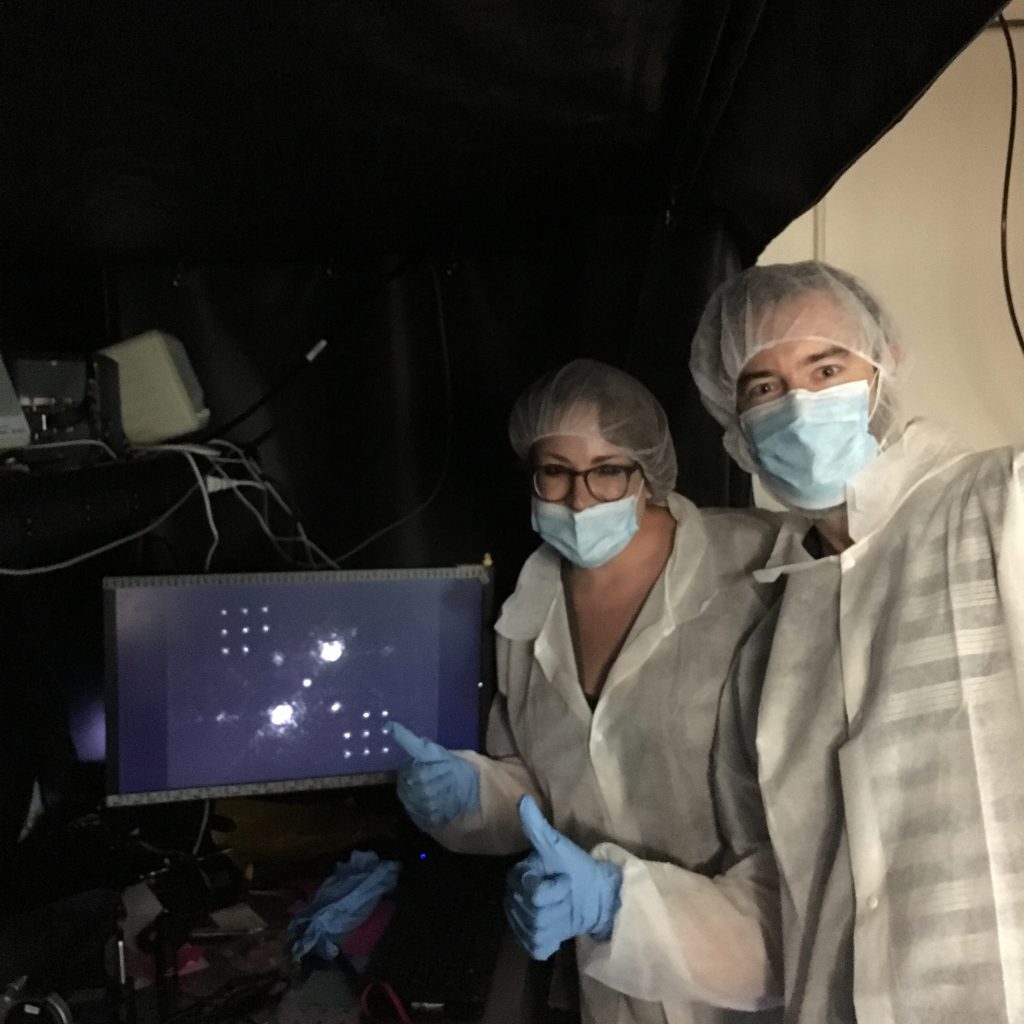
Jared and Kelsey pose with an image taken through the vAPP coronagraph.
The vAPP slotted right into Kelsey’s coronagraph testbed, and we got the predicted pattern on our camera! Fourier optics works.

MagAO 2018A Day 17: The Wrong End of a Telescope

Proto3 has been detached from MagAO, and now MagAO is fully put away. Since this (northern hemisphere) fall will extremely busy with work on MagAO-X, it’ll be a whole year before we’re back here.

My check list for today:

  • Switch back to a day schedule all in one go
  • Take the last final exam for my first year of graduate school
  • Remove a 1000+ lb piece of scientific equipment from the top of a three-story tall machine

I’m happy to report that I accomplished all three, though it may be more accurate to say that I was a minor contributor to the last task. It takes a whole crew to remove the adaptive secondary mirror from the Magellan Clay telescope, and my main contribution was to help Laird keep all the various power, data, and coolant lines from getting away during the disconnect process. (Pink zip ties are the astronomer’s best friend.)

Since I was not operating a crane or lifting 80 lb load spreader bars by hand, I was able to document the process. Enjoy!

It's fun to stay at the Ell Cee Oh, yay!
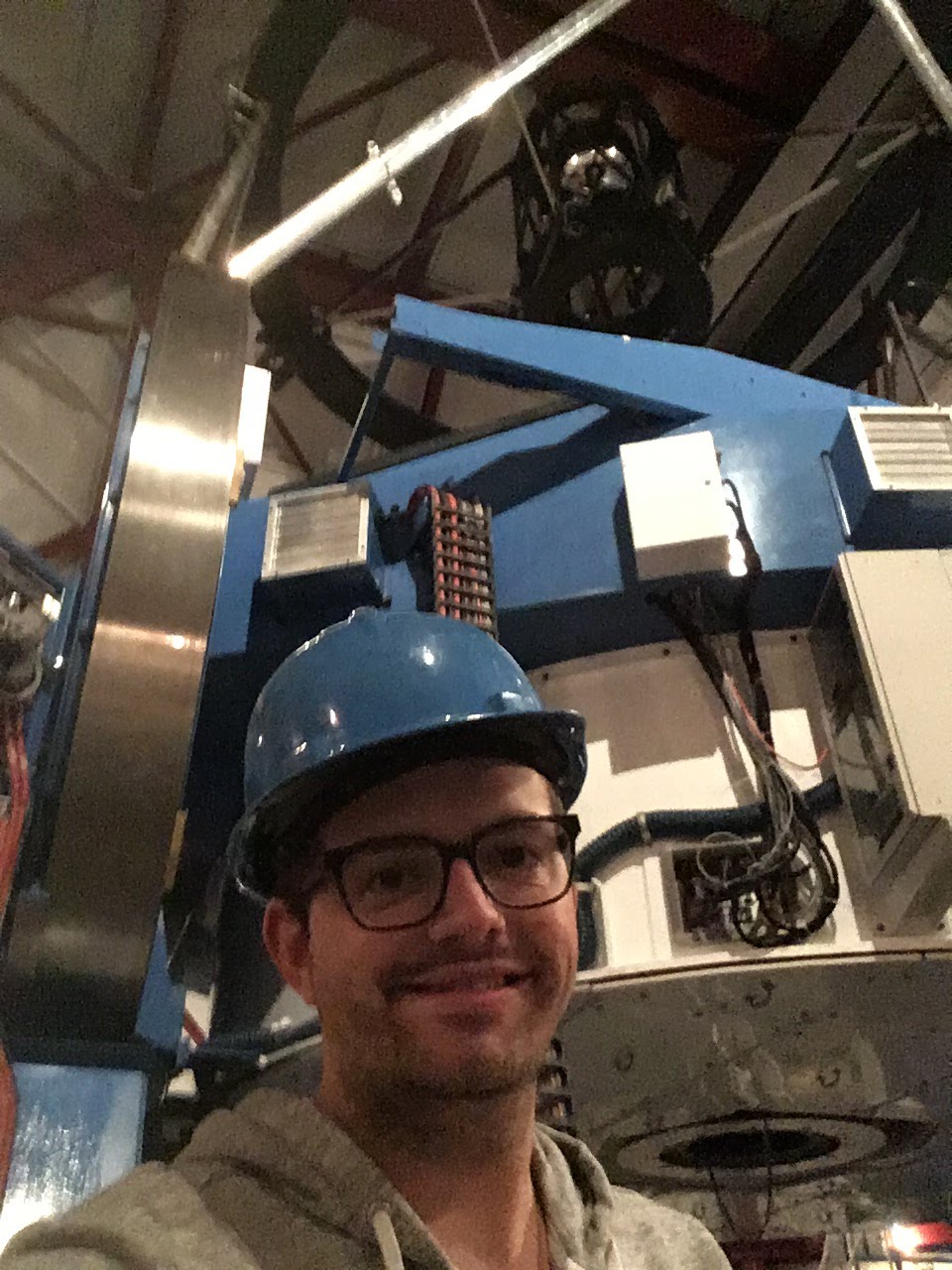
The author, looking like a member of The Village People, prior to ASM decabling.

I felt like one of the monkeys my sister studies, climbing up there.
To swap secondary mirrors, the telescope points parallel to the ground. There’s a crane that rotates as part of the dome which can very gently lift the ASM out and transfer it to a storage cart while the static secondary is in place.

Tomorrow, we leave LCO for La Serena (and Santiago and Dallas and Tucson, hopefully without issue). We’ll be back next year!


Last, but not least, here’s a song of the day about looking through the wrong end of a telescope.

(Lucius – Turn it Around)

And here’s a cover version I dug up by someone with cool hair:

(Kaela Sinclair – Turn it Around (Lucius cover))