MagAO-X 2019B Unpacking Day 7: I broke Megadesk.

Friends, this was supposed to be a celebratory blog post.

My web-based interface to MagAO-X is getting to the stage where it’s actually useful. My suitcase finally arrived from airline purgatory. I finished my SPIE 2020 abstract. I found out how to make the soda machine dispense plain fizzy water (my one non-caffeinated vice).

However, fate had other plans for this author.

One of the reasons for constant comings and goings of MagAO-C and MagAO-X personnel here at LCO is that the P.I. foresaw the need for periodic supply missions from Tucson, as the unpacking process gradually revealed what we’d forgotten to stuff in the shipping containers back in October. (Alas, that he could have foreseen what would befall poor Megadesk!)

Among my items to hand-carry was a monitor mounting plate from the exquisite quadruple monitor stand in our lab in Arizona to stand in for a missing part in the corresponding quadruple monitor stand in Chile.
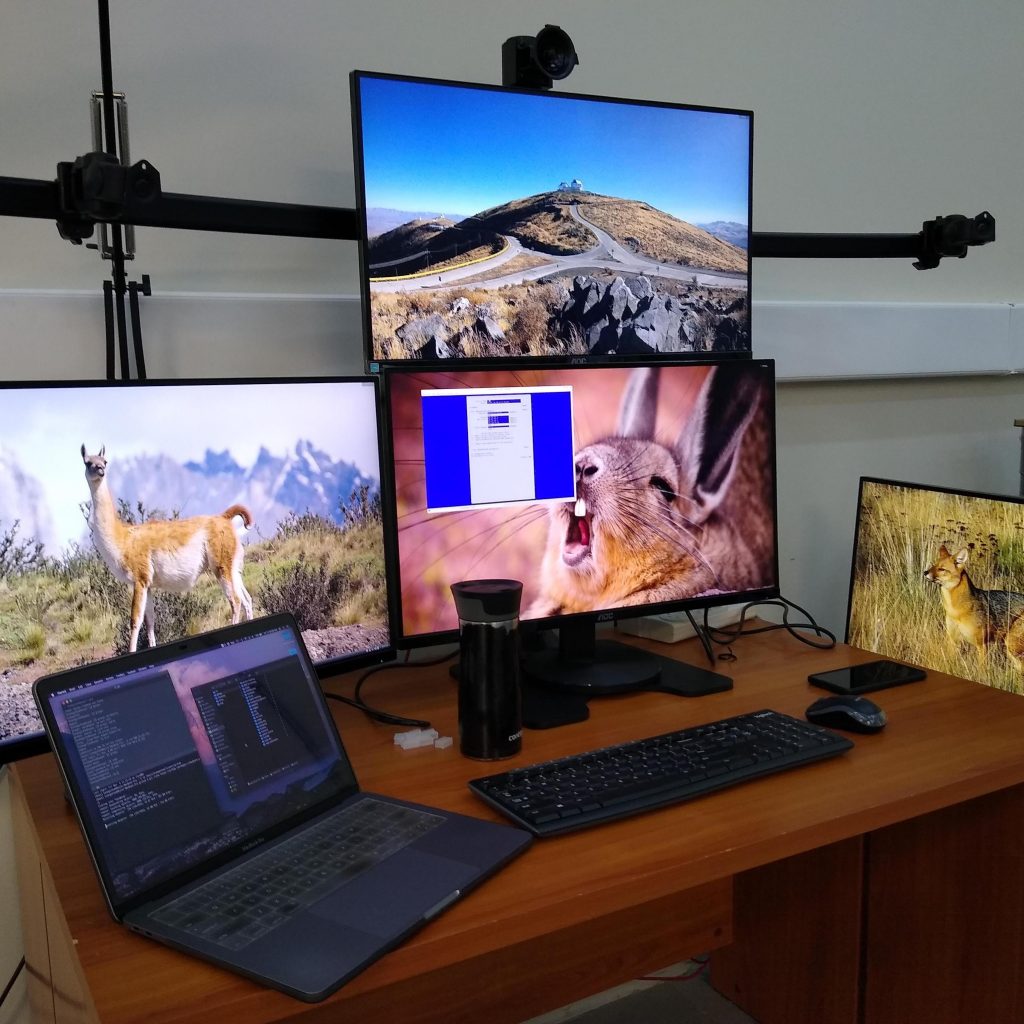
Four monitors are suspended from a mount in an inverted T-shape arrangement at the desk in our lab.
Four computer monitors are visible, three sitting on a desk and one on a mount. The mount has positions for all four, but only one is occupied.

Of course, LATAM and American conspired to lose the suitcase containing this, replacement clean-room booties, 3/8″ plastic tubing, Fruit Snacks for Kyle, MagAO-X hats and stickers, and all of my clothes.

(I set out from Tucson on Saturday, and by the time the suitcase caught up to me Wednesday afternoon I was likely offending staff and scientist alike with my single pair of jeans that were last considered clean five whole days ago.)

Naturally, as soon as the bag arrived, I gathered up all the MagAO-X special deliveries and ferried them to the clean room. A viscacha was perched above the loading dock—normally an auspicious sign.
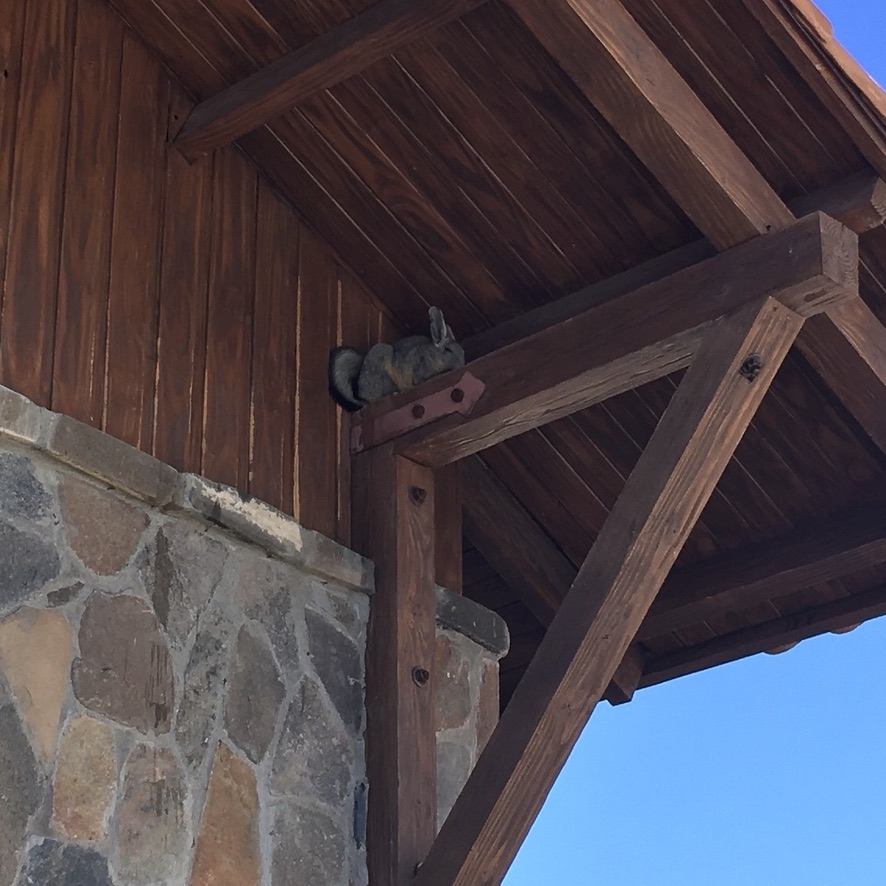
A viscacha perches under the eaves of the cleanroom building

In this case, however, it proved a dark portent—as I shall explain shortly.

This was also the end of the MagAO run, meaning it was time to remove from the telescope Clio2, VisAO, the MagAO Nasmyth unit, and the crown jewel—the MagAO adaptive secondary. Both extremely heavy and extremely delicate, its removal is a multi-person job involving many observatory personnel under the watchful direction of MagAO P.I. Laird Close. If you are concerned about the aforementioned omens, fear not—MagAO’s removal was a complete success! As I’ve blogged (and assisted) with this before, I’ll confine my comments to what’s new this time.

This afternoon was a first for MagAO-X and MagAO-C: two generations of Magellan adaptive optics systems (and their P.I.s) in the same cleanroom!
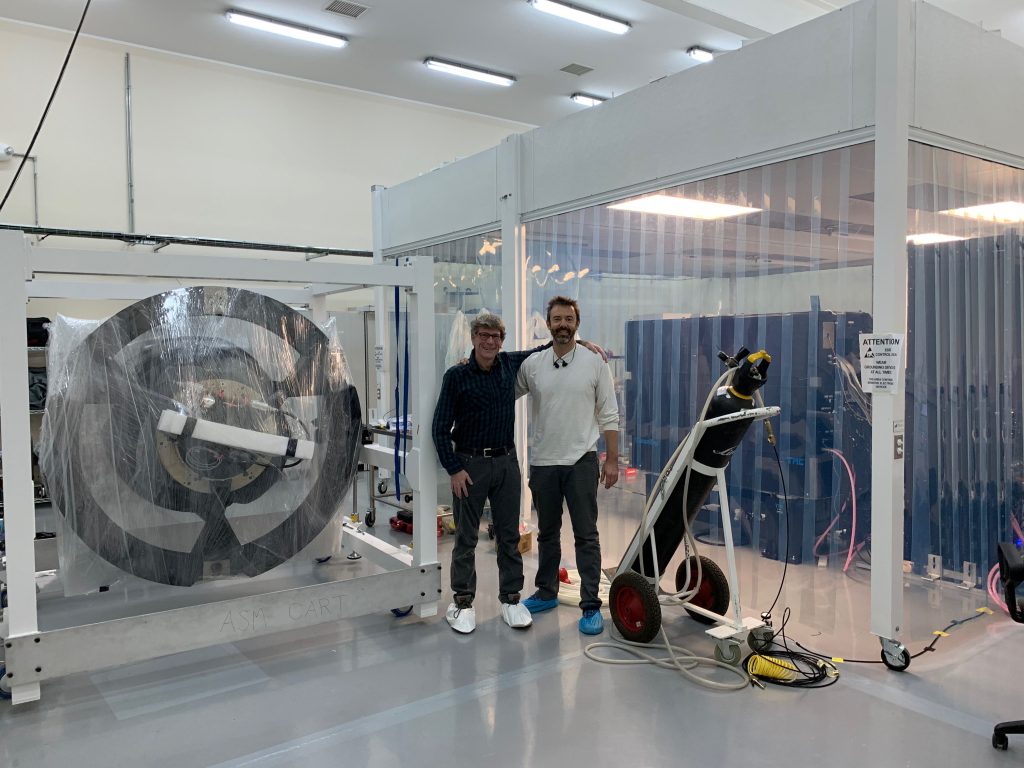
Jared Males and Laird Close, MagAO-X and MagAO PIs, stand next to their respective instruments in the LCO cleanroom
From left: MagAO ASM, Prof. Laird Close, Dr. Jared Males, and MagAO-X (behind the nitrogen tank) (Photo by Emily Mailhot)

But let us return to my shame, my downfall, the tragic demise of Megadesk-LCO. I slotted in the new brackets and attempted to affix all four monitors to the stand. The last one proved unable to fit, requiring some adjustment to the height of the arm that supports the three monitors arrayed horizontally.

The following conversation took place, somewhat portentously.

Me: “And this monitor stand—it’s not clamped to the desk, or anything?”

Jared: “No, it’s pretty stable with just the base plate.”

Me: “Wow, I need one for myself”

Jared: “Here’s the instruction manual. You finish up here; I have to go upstairs and finish a proposal.”

About five minutes later, the monitor mount was on the floor. You see, I made a classic blunder: forgetting about simple machines. When I removed the first monitor and turned to set it down somewhere safe, I didn’t consider the lever action of the horizontal mounting bar. With the mount in a partially disassembled state, its center of gravity went sideways… and so did it, slowly at first and then all at once.

There was one casualty, a 4K monitor in the lower right position that landed “buttered-side down”. Your author, appropriately mortified, informed the P.I.

Penance was assigned.

Anyway, we now have 0.75 of Megadesk. And an order for a new monitor.

To not end on a totally negative note, here’s a panorama I took on the road to the Magellans that would be ideally suited for a desktop background with the new three-up monitor arrangement.
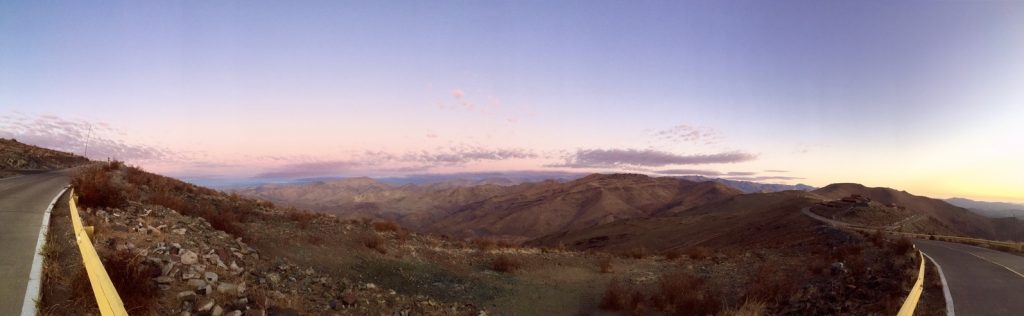
A panorama of the Chilean desert at sunset with scattered purple clouds

The blog rules state today’s Song Of The Day must relate in some way to the last MagAO-C post’s song of the day (which was “Gangnam Style” by Psy).

They do not state the connection must be obvious.

Here’s “Essentially” by Japanese Breakfast (and no, I don’t think Psy is Japanese!)
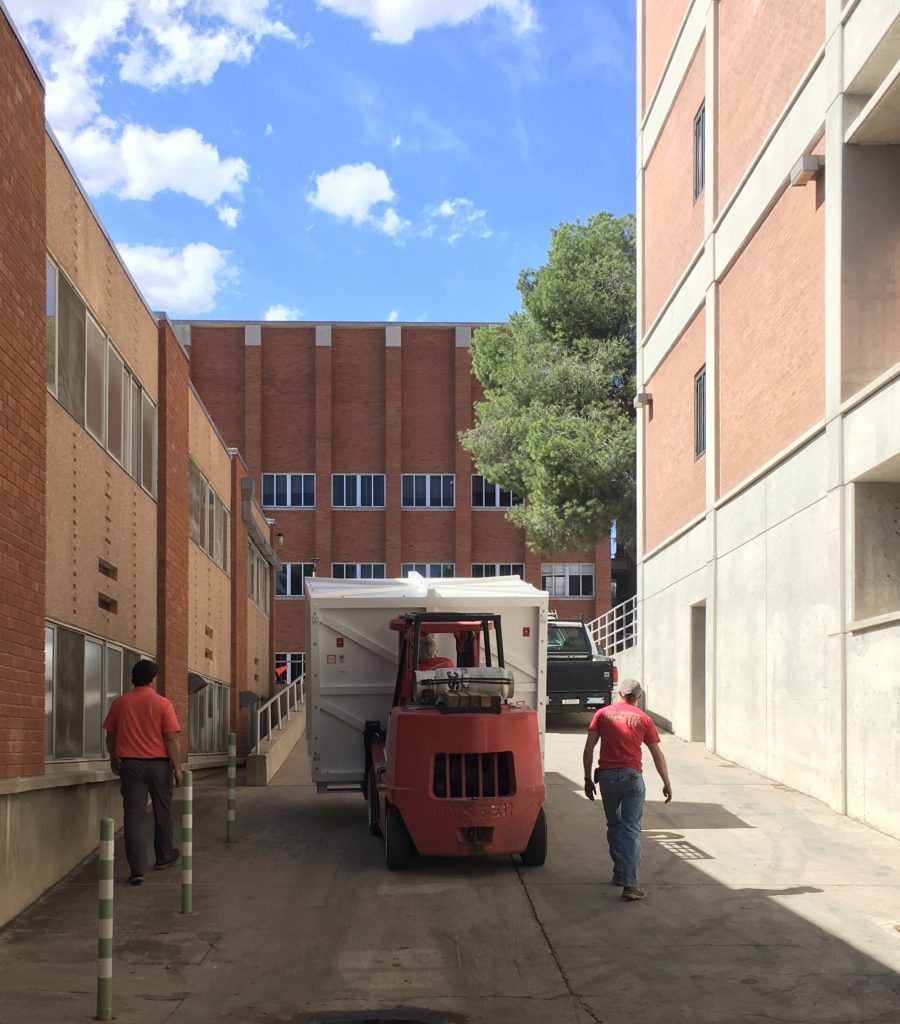
MagAO-X gets taken for a ride

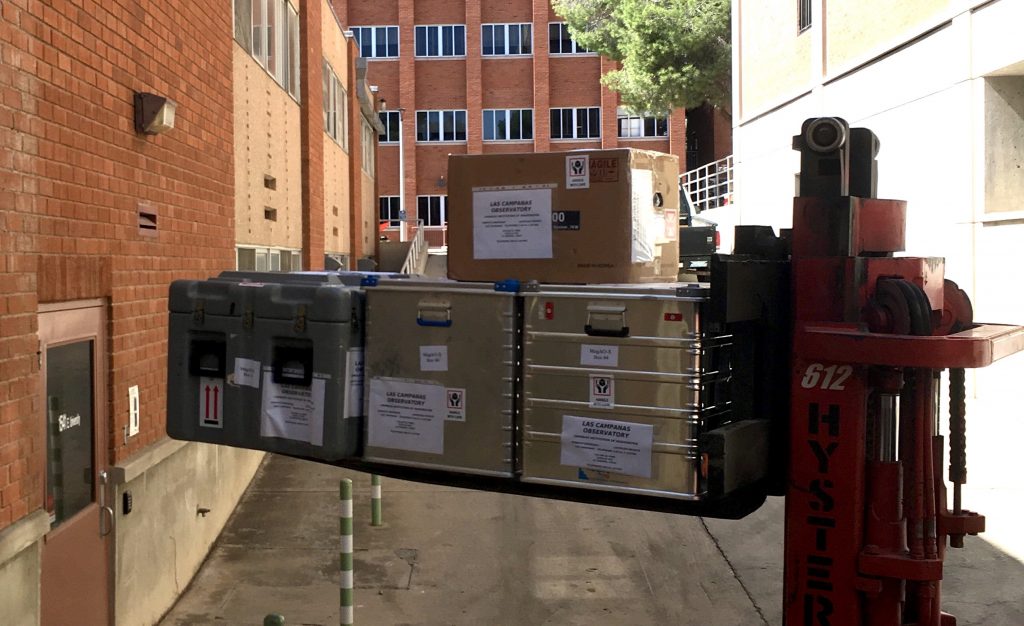
Today, we handed MagAO-X off to the shipping contractor (all 2961 kg / 6527 lb / 3.26 tons of it). Our dinky little forklift was not up to the task, so Southwest Industrial Rigging Inc. was called in.

MagAO-X leaving the Steward Observatory loading dock under the supervision of riggers (center, right), grad students (behind camera), the P.I. (outside of frame), and Project Manager Victor Gasho (left).
Forklifts: not just for pallets any more.
Loading MagAO-X for its ride to Los Angeles (probably). (Photo by Kyle van Gorkom)

Oddly enough, three ton shipments get tracking numbers just like your Amazon order of cat toys. We’ll be updating the map below with information from our shipper.

  • 2019-10-17 @ 12:25 — Pickup at Steward Observatory
  • 2019-10-18 @ 07:57 — Arrived at warehouse / Phoenix Sky Harbor International Airport
  • 2019-10-19 @ 13:06 — Booked on flight QT 4157 on Oct 27th from Miami to Santiago
  • 2019-10-19 @ 14:11 — Arrived at warehouse / Los Angeles International Airport
  • ??? — Arrived at Miami International Airport (seriously, we have confirmation on the phone, but nothing updated on the tracking page)
  • 2019-10-25 — Held in Miami while the people of Chile demonstrate against inequality
  • 2019-10-29 — The tracking website dispenses new information: “SANTIAGO E.T.A.: 11/01/2019 02:30” (What does it really mean? Who can say. There’s no Avianca Cargo flight arriving then…)

Dr. Males claimed that he was going home to “not think about MagAO-X for a few hours,” but we know the truth. He fears for his child going through the rough world of international logistics. But sometimes, you need to… Go Outside (by Cults).

¡Vámonos a Chile!

Last Friday, MagAO-X underwent a pre-shipment review. This is the process by which the Magellan Observatory ensures that we won’t waste everyone’s time by shipping our instrument to the telescope. It’s a multifaceted process, evaluating everything from “does your instrument work in the lab?” to “have you baked your shipping crate?”

I’m happy to report that we’ve cleared this hurdle, meaning we’re taking MagAO-X to Chile for the 2019B* run! Many thanks to all of our reviewers and the observatory staff for productive discussions and suggestions. We look forward to getting on sky with MagAO-X this December! (Since this is the MagAO blog as well, it bears mentioning that we’ll be there in November too.)

* We use ‘A’ and ‘B’ to refer to the former and latter halves of the year, since “winter” means different months depending on your hemisphere.

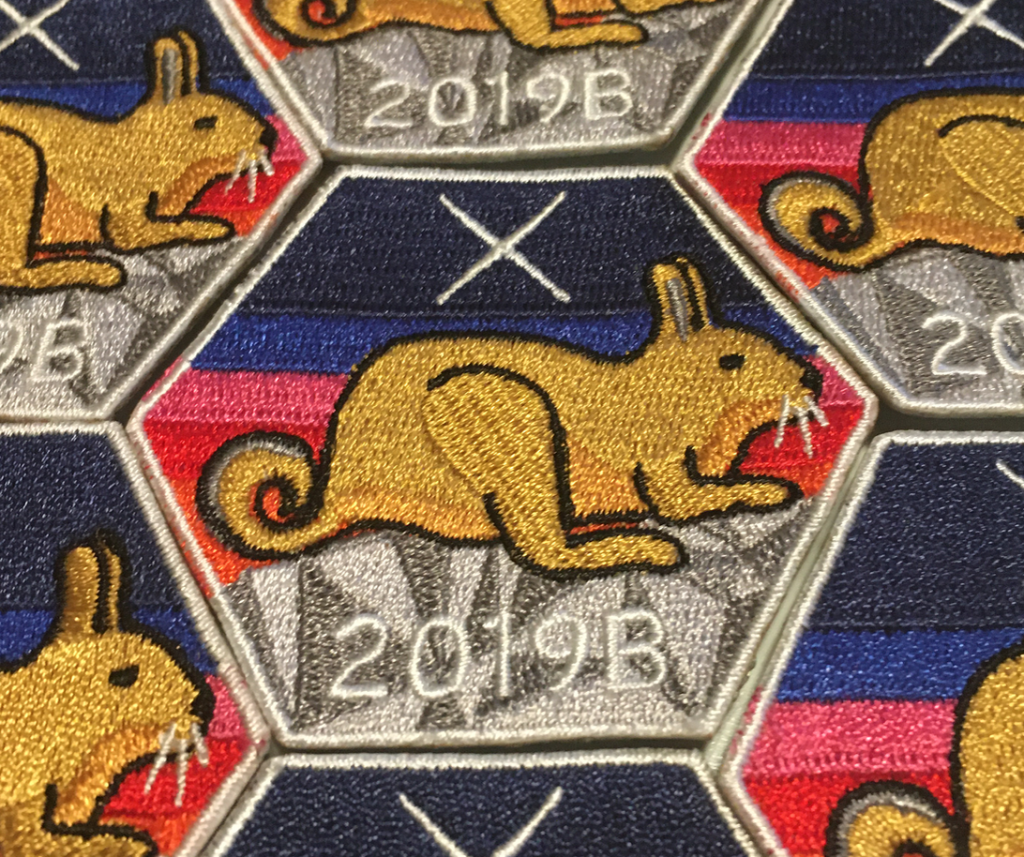
Also, this means Jared feels it’s finally acceptable to hand out the 2019B mission patches I designed:

Sunset scene with viscacha and diffraction spikes

The patch depicts a viscacha, one of the local fauna of Magellan, perched on a rock at sunset. (As they do.) In the sky above, a point source is diffracted by some telescope spiders to form a stylized Magellan PSF. (Or possibly a MagAO-“X”.)

As long as I don’t run out of South American animals, I plan to do a patch for every run. Then I’ll put them all on a vest and look like the world’s nerdiest boy scout.

Part of being in the XWCL is following the P.I.’s rules:

  1. No unauthorized use of the label maker
  2. No coding in MATLAB
  3. No circus activities
  4. No volunteering for Olivier
  5. No metric shit running around in the lab
  6. Every post must have a song of the day
  7. No unauthorized use of the label maker

I regret that I forgot rule #6 in my last post, so I will take this opportunity to rectify my mistake with two songs of the day.

I’ve been digging this song about not being too hard on yourself by Alex Lahey:

And if I had been thinking about a song of the day for the back-to-school post, it might have been “Restart” by Little Daylight:

Hasta pronto.

MagAO-X goes back to school

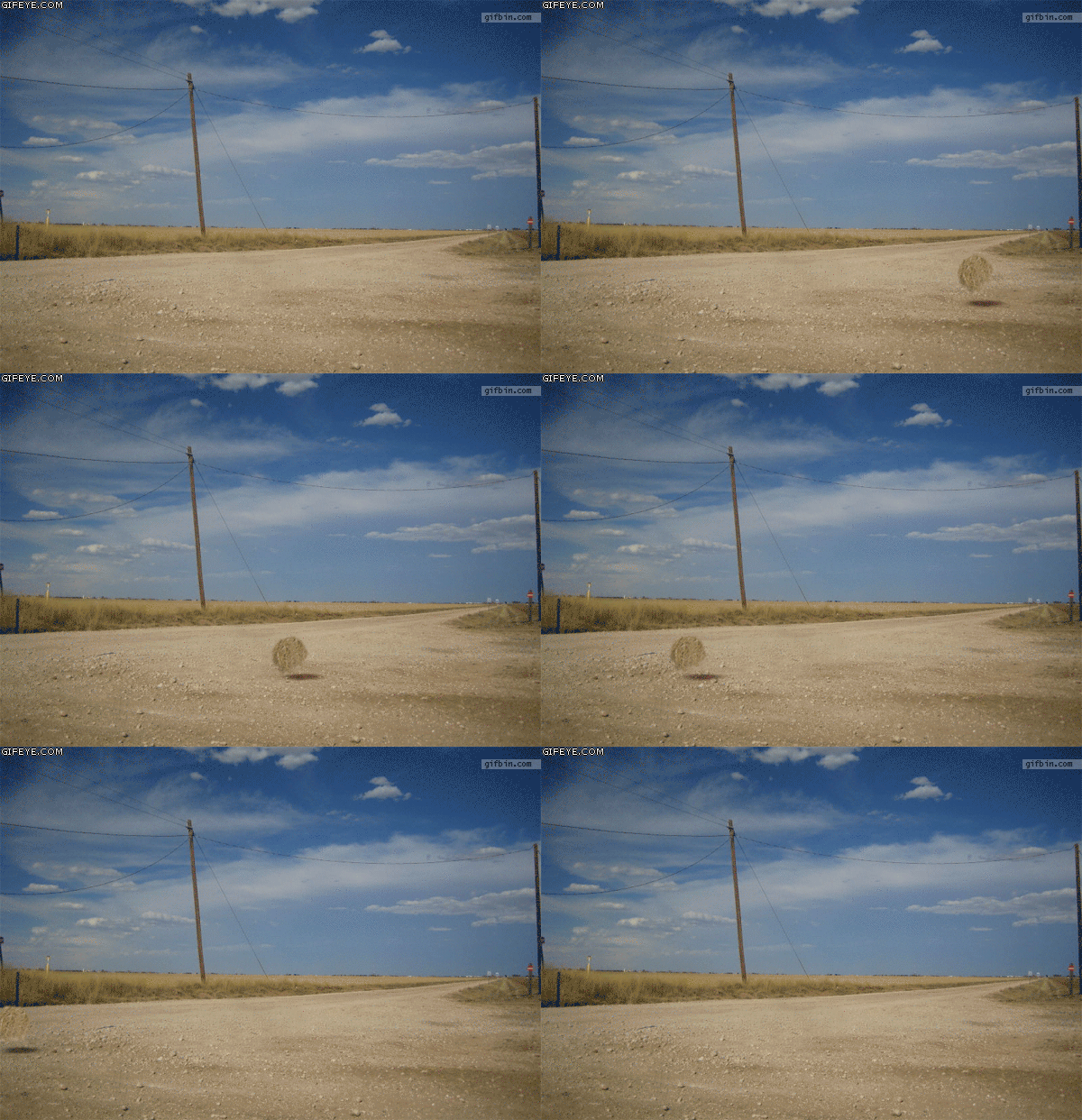
Tucson in the summer is a bit like this, only less exciting.

A tumbleweed crosses a barren desert scene in a repeating animation.

However, summer is waning. (Why, it’s only 99ºF at 7:00 p.m. as I’m writing this!) Tucson is filling back up with new and returning students, and I’m no longer guaranteed a table to myself at my favorite coffee shop.

This semester, we are happy to be welcoming two new graduate students to the group!

NSF Fellow Logan Pearce (whom you may remember from this special guest appearance) is joining us in the Department of Astronomy from the University of Texas at Austin. And Maggie Kautz, another NSF fellow (and recent graduate from The University of Arizona) will now be pursuing her Ph.D. in Optical Sciences here and continuing her work with the XWCL. She was in Baltimore all summer working on the HiCAT testbed at Space Telescope Science Institute. Welcome, Logan, and welcome back, Maggie!

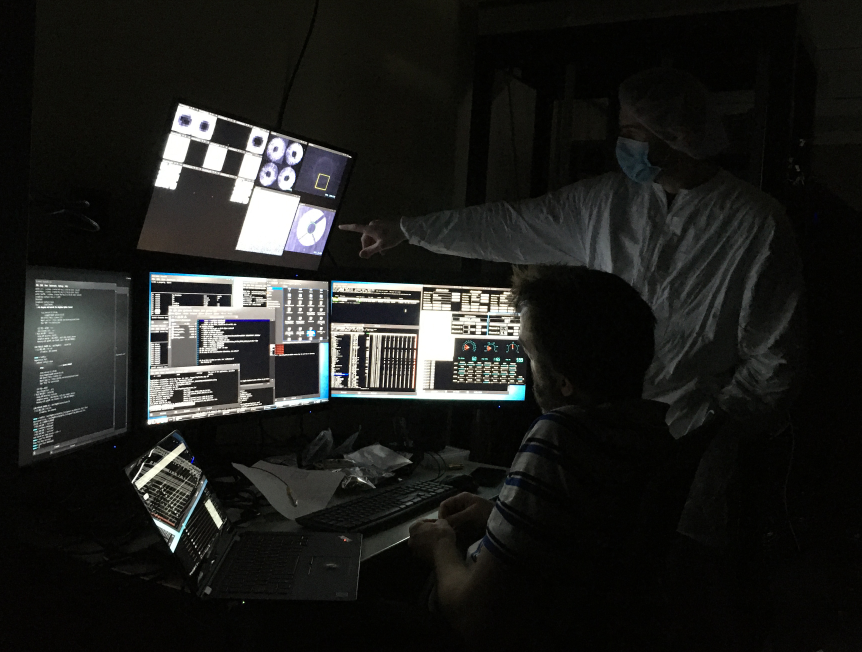
Meanwhile, in the lab, we’re sitting in the dark and occasionally pointing at things.

Alex Hedglen, in full cleanroom getup, points to an image of the MagAO-X pupil on one of Jared's five screens full of MagAO-X control software.

The final integration of the software and hardware for MagAO-X continues at a breakneck pace, with the number of tasks remaining before first-light described as “countably infinite”. I’d elaborate, but there’s so much to be done! More to come soon.

Summer in (and out of) the lab

MagAO-X integration and testing continues apace, with Jared shaving microseconds off the loop latency, Kyle working on making the world’s flattest DM, and Alex H. identifying holes in our hardware that were made in the wrong place. The rest of us are fighting with hardware more indirectly, getting our simulations to converge or our embarrassingly parallel jobs to be more than a (parallel) embarrassment.

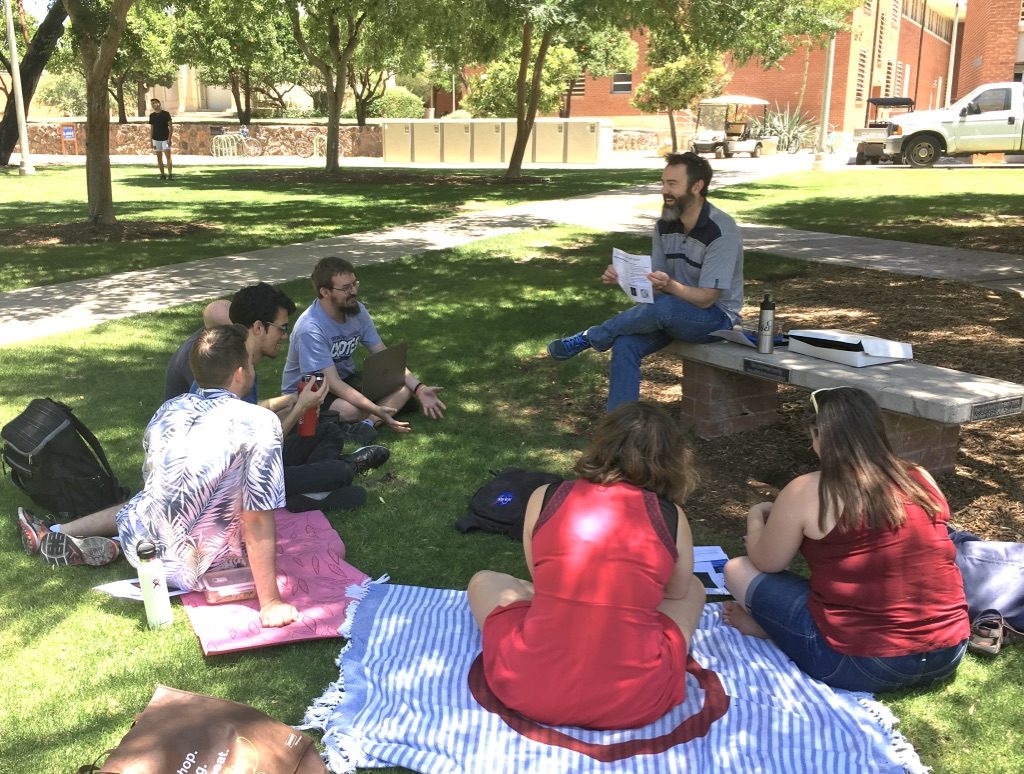
Lauren Schatz, pyramid wavefront sensing person extraordinaire, has recently been the victim of delegation by the P.I. Her task? Arranging the weekly group meeting. In retaliation, she decided the venue would be outdoors. On a 95ºF (35ºC) day.

Our recent meeting was graced by a special guest: incoming graduate student (and NSF Graduate Fellow) Logan Pearce! She talked to us about research she’s been doing with Adam Kraus at University of Texas at Austin using data from the Gaia mission. This fall she plans to join the XWCL and MagAO-X team here at The University of Arizona. Welcome, Logan!

Several of us (but not this author) will be at AO4ELT6 next week, and everyone is diligently working on their posters and talks. If you’re there, keep an eye out for our group:

  • Monday, June 10
    • Development of the Three Sided Pyramid Wavefront Sensor — Lauren Schatz (poster)
    • Focal plane wavefront sensing and control with a vAPP coronagraph on MagAO-X using holographic modal wavefront sensing and linear dark field control — Kelsey Miller (poster)
  • Tuesday, June 11
    • Characterization and closed-loop laboratory testing of deformable mirrors for the MagAO-X project — Kyle van Gorkom (talk @ 9:40 AM)
    • Real-time estimation of NCPA and exoplanet detection in the face of wavefront measurement error in extreme-AO coronagraphs — Alexander Rodack (talk @ 5:40 PM)
    • Imaging habitable planets in optical/NIR with large ground-based telescopes: WFS/C challenges, opportunities and R&D activities — Olivier Guyon (poster)
  • Thursday, June 13
    • The Current Optical and Mechanical Design for the GMT High-Contrast Exoplanet Instrument GMagAO-X — Laird Close (poster)
  • Friday, June 14
    • From MagAO-X to GMagAO-X: extreme-AO performance demonstration and science case for the GMT — Jared Males (talk @ 10:00 AM)

In recognition of recent climatic developments in Tucson, Arizona, your author has selected this as the song of the day:

“Too Darn Hot” by Cole Porter, performed by Ella Fitzgerald.