2014A Day 19: The Shadows Of The Night

T.J., Alycia, and Kate left us yesterday. Vanessa was supposed to be here, but her flight was delayed. So, it was down to Laird, Katie, and Jared to carry on the MagAO mission tonight.

Our day started early. We had to get up before dinner to do some maintenance on our shell wind monitor. This is a little anemometer attached right at the edge of the secondary mirror to tell us if the winds get too high. One flaw with our current device is that it is battery powered and the batteries only last about 10 days. So the crew tipped the telescope over for us, and Laird and Katie climbed up to replace the batteries.
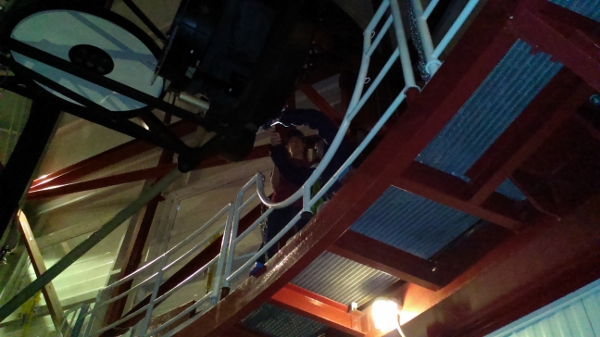
Laird and Katie replacing the batteries on the wind monitor.

After that bit of periodic maintenance was taken care of, we headed back down the hill for our usual breakfast.
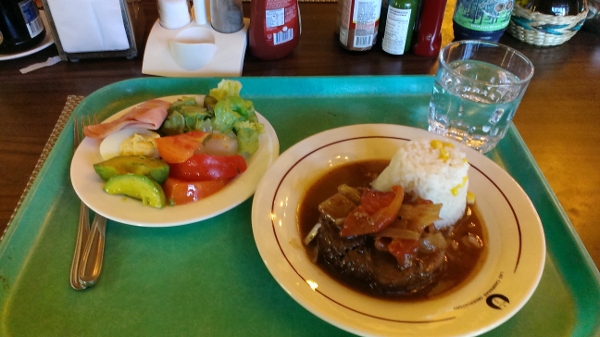
We have a nice steak dinner just about every evening — for breakfast.

After that we headed right back up, and closed the loop. Our minimum number of planets detected tonight is 1 (100% confidence). The maximum number is 4, with a most likely value of 2. Stay tuned.
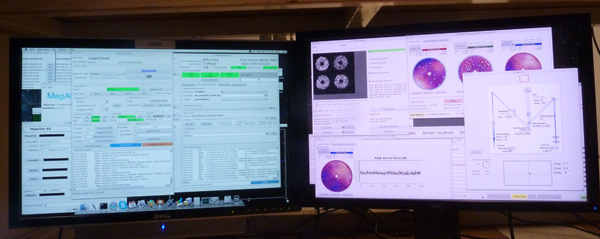
How the AO system looks when it’s running well.

Tonight was a little bit more interesting than usual, since we got to enjoy a total lunar eclipse. We knew we were in for a special night when we saw the moon rise over the Andes on our walk up to the telescope after dinner
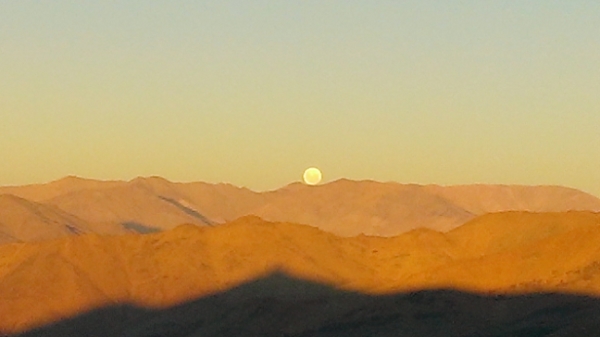
The moon looked almost shy.
Let the show begin!

With only 3 of us to operate MagAO, Clio2, and VisAO, plus Ernan our telescope operator, we had to watch the eclipse in shifts, leaving one person inside the control room to come holler if something went wrong.

Laird worked hard to get some nice shots of the dark moon.
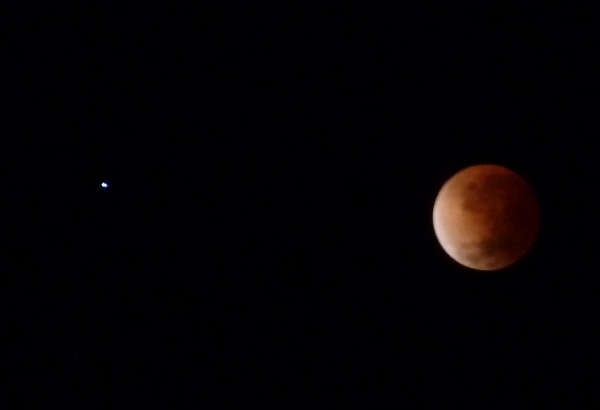
The eclipse as seen from just outside the Clay control room.
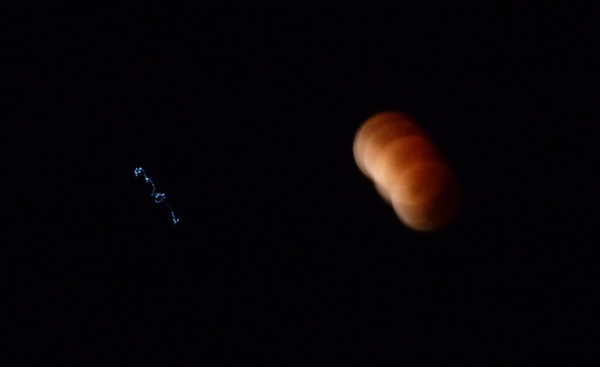
Laird might have had too much caffeine before taking this shot. He might also be over-driving tip and tilt.

When the moon is full here, the mountain top is really really bright.
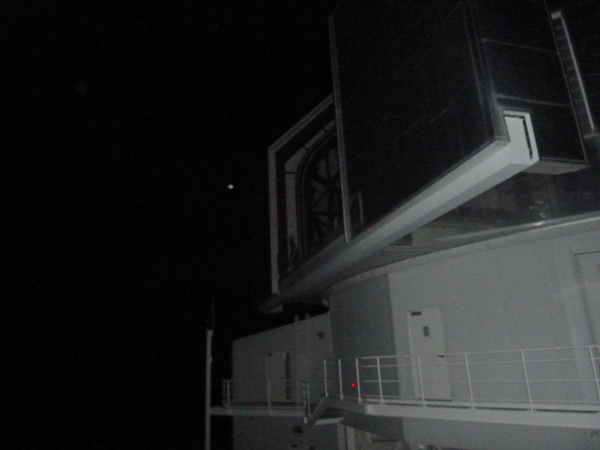
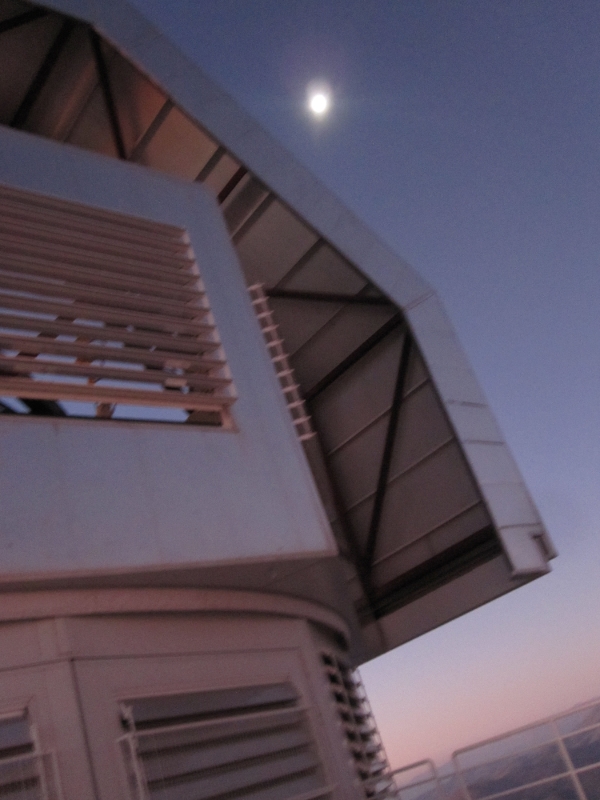
Clay, containing the MagAO system, by the partially eclipsed light of the moon.

MagAO also obtained world-wide coverage of the eclipse. Well-planned, I say.
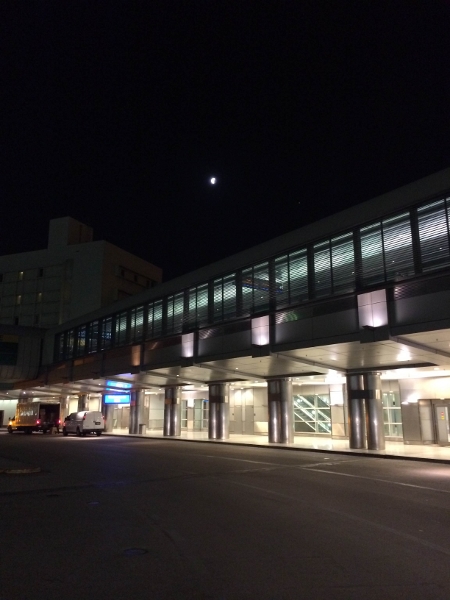
The departing members of the MagAO team saw the eclipse from the Miami airport this morning.

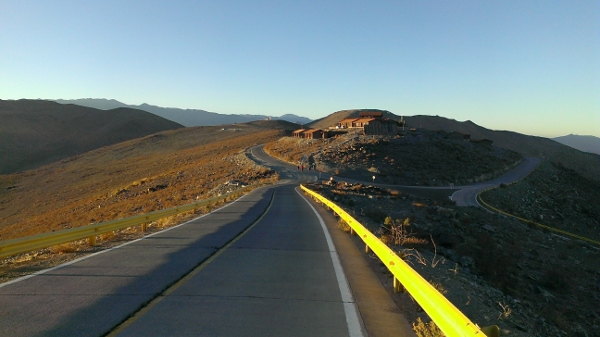
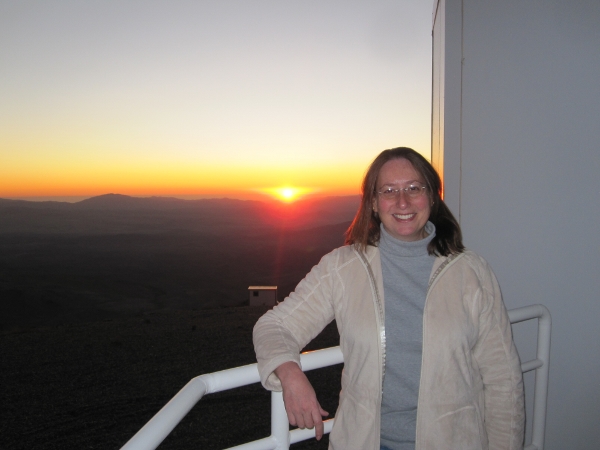
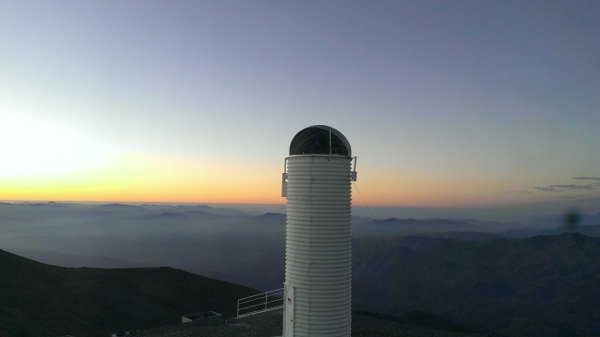
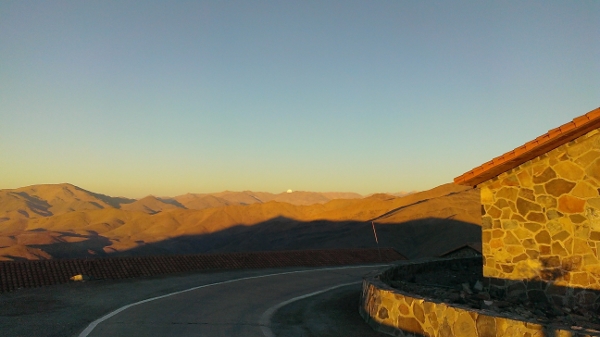
On our walk up at sunset, the Moon and Sun were 180 degrees apart in the sky. On our walk down at sunrise, they had nearly exactly swapped positions. Mornings here can be stunningly beautiful.
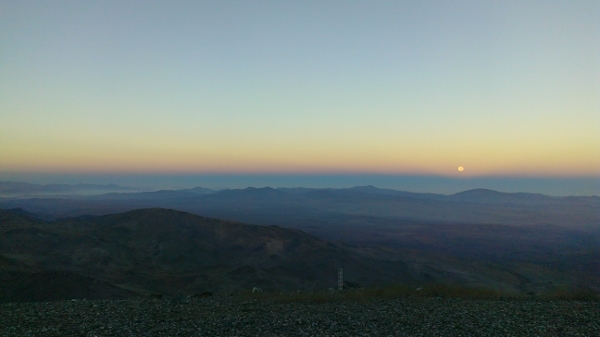
The moon, now opposite the sunrise. Free MagAO sticker to the first person who emails me the name of the pink band on the horizon (hint, the answer is in a blog post from last April).

You might remember that this isn’t the first time we’ve observed an eclipse at LCO.

Here’s the song of the night:
2014A Day 17: Working Away

Tonight we are happy to present you with the first release of the official trailer for the MagAO movie, directed by Alycia Weinberger.

Coming soon to a theatre or scientific journal near you.

We’re still here at LCO, observing star after star, seeing disk after disk, maybe a high contrast close separation point source or two, and we aren’t out of cookies yet. Here’s a few more things going on:

Those “keeners” (Laird’s word) at Baade always beat us on sky. We’re getting faster.
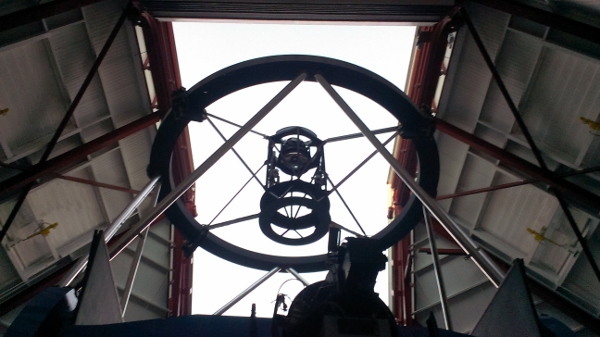
The MagAO adaptive secondary mirror catches the last daylight as we open to take flats.

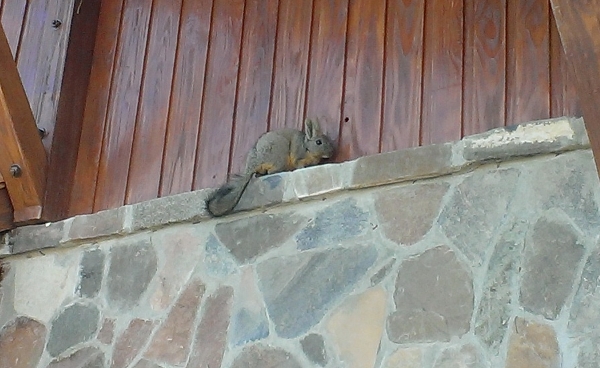
Alycia got a good picture of a cute little vizzy at the ASB which she posted the other day. I saw him or her tonight, and I’m sure this is a new animal that we haven’t been seeing before, maybe a young vizzy. In any case, it’s cute.

A dainty little vizcacha at the clean room.

We are now totally on a night schedule. Here’s Laird, Kate, and T. J., heading down to a late breakfast before bed.

Laird, Kate, and T. J. headed down to breakfast after a long night of MagAO science.

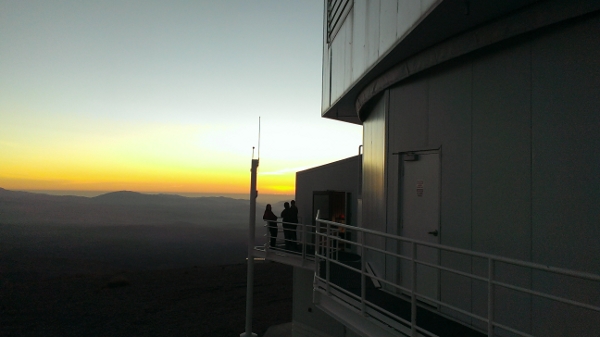
It’s always pretty here, and watching the sunset is our nightly ritual.

Laird, Alycia, and Kate watched the sunset from outside the Clay control room.

This came up last night. Man these guys are cool.

2014A Day 13: What We Came For

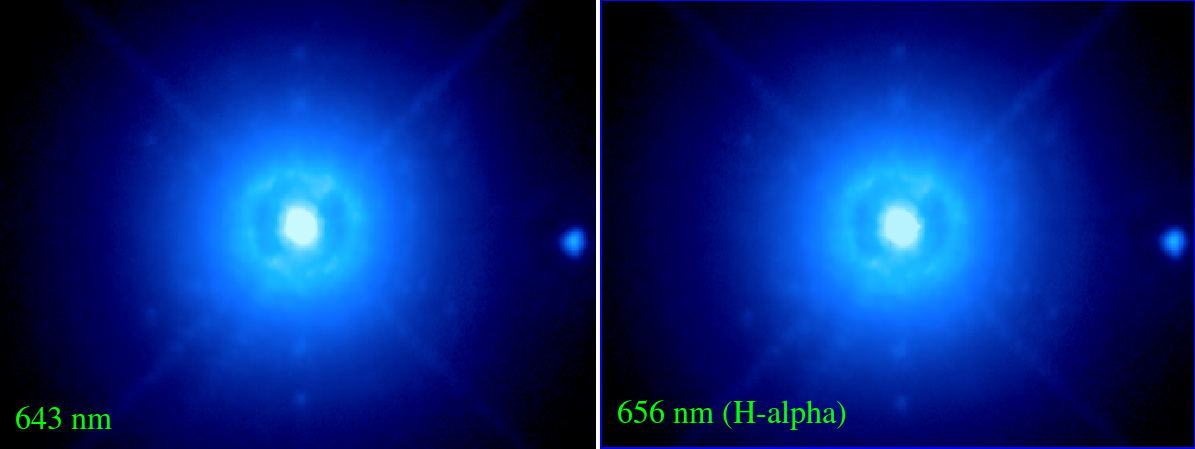
One of MagAO’s specialties is high contrast imaging in the visible using simultaneous differential imaging (SDI). For this run we bought a new H-alpha SDI filter set, and tonight we really put them to use. This image compares our on and off H-alpha PSFs. These are formed from 1 hour of 45 second exposures. No strehl selection or any other shady tricks.

Since Kate is here, we are of course doing lots of H-alpha differential imaging.
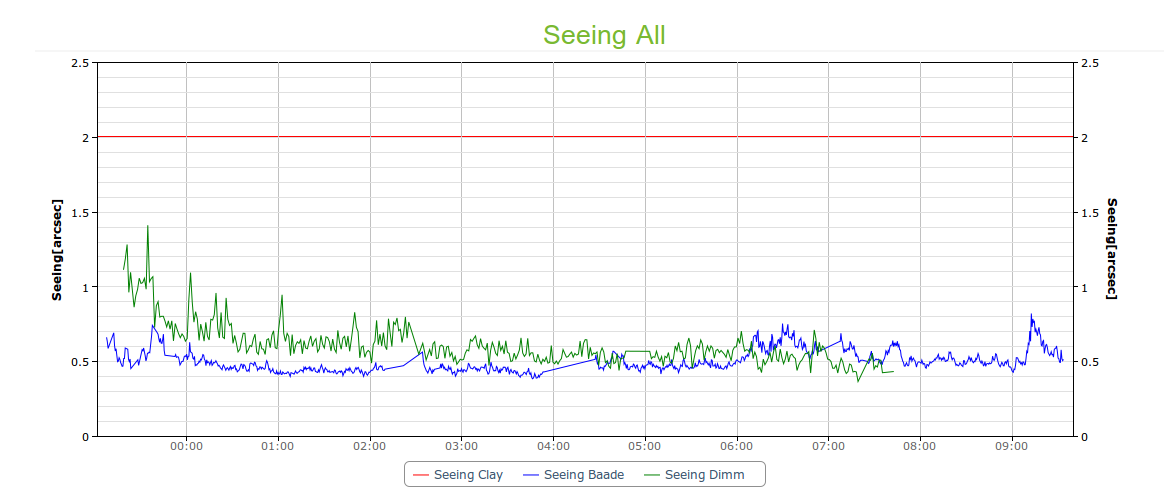
We had a great night tonight, with fantastic seeing the whole night.
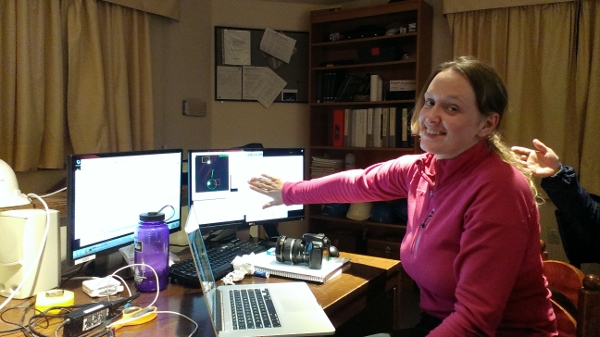
Kate Follette is back. Here she is taking data with VisAO. She’s hiding the name of the object cuz it’s a secret.
TJ, Laird, and Alfio hard at work. T. J. is contemplating the fate of humanity.
Alycia has joined us again.
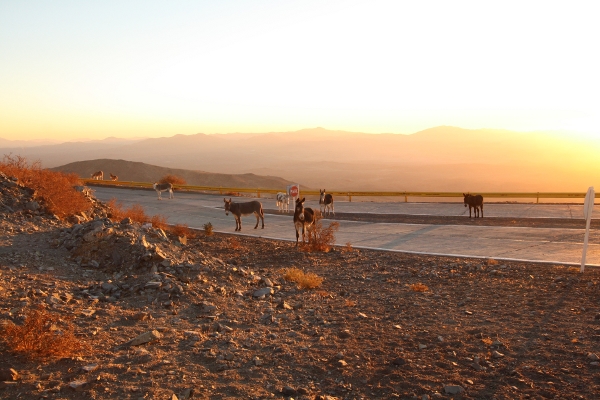
The burro herd showed up after dinner.
Clay, by the light that never warms. (If you don’t get that reference, you need to start listening to our songs.)

We close tonight with deep thoughts by T. J. Rodigas: “What I’m worried about is human knowledge after the Earth is destroyed . . . we should beam it up to the space station.”

2014A Day 11: Two Arcsecond Guanaco

We had another somewhat so-so night. Some high winds made it interesting, but there were few to no clouds and seeing was at least mediocre. But right at 4 am, when we switched targets, seeing blew up to more than 1.5 arcseconds. Sorry DZ — we aren’t doing this on purpose.

The differential image motion monitor (DIMM) telescope opening for the night. This measures the seeing (how strong the turbulence is). There was a lot of differential image motion tonight.
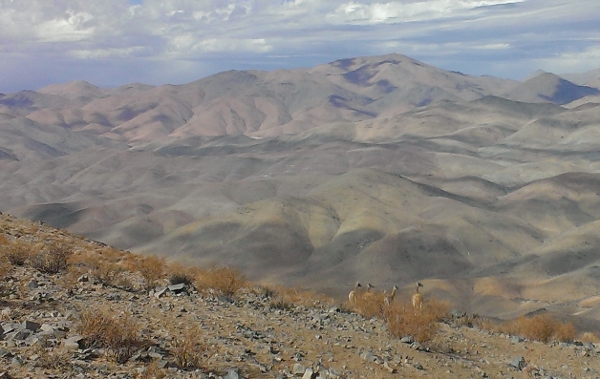
A herd of guanacos was hanging out just over the edge today.
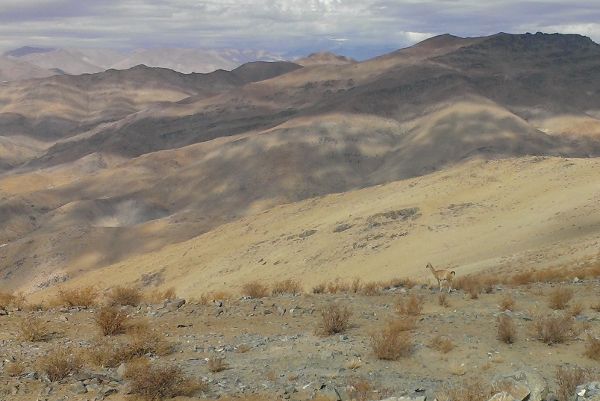
This one was off to the side. Someone told me the lone one is always the male.
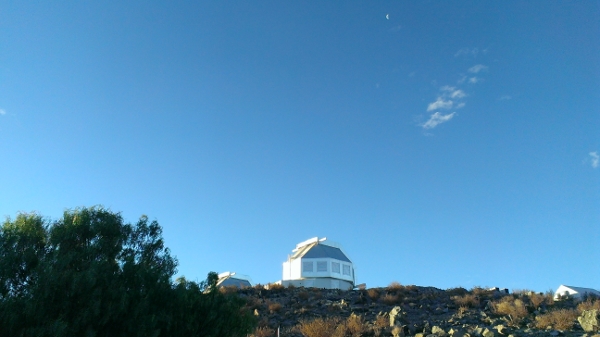
The Magellan telescopes coming over the hill.
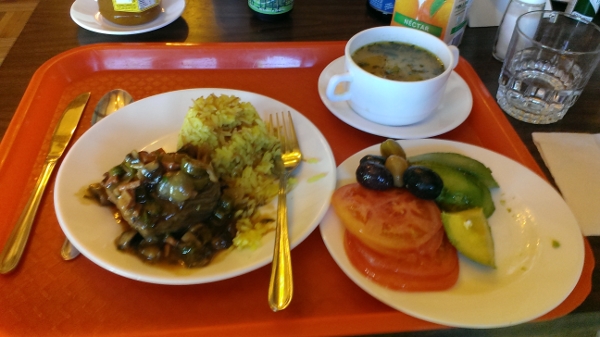
A typical dinner. Which really means breakfast when we’re observing.
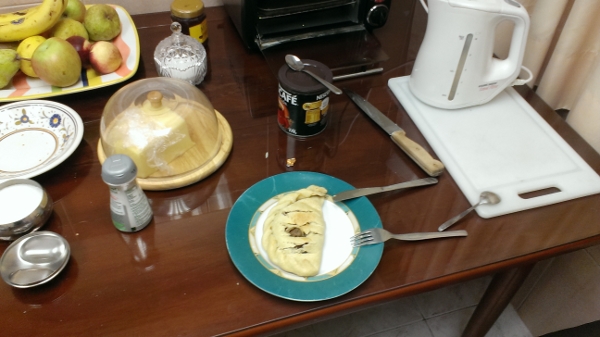
It was Empanada Sunday (our second if you’re keeping track). Since we were asleep at lunch, they chefs sent us empanadas for our midnight snack.

There have been several calls for the return of the quotes of the day. Here’s a sample from the last few days:

Jordan: “The problem with this AO system is that it stays closed for so long that it’s hard to find a bathroom break.”

Alfio: “I went there once to take their cheese.” (explaining that he has been to the Baade telescope).

Laird: “You fooled me by taking the data incompetently.” (to T. J.)

Finally, my song for the night is absolutely full of astronomical references. Free MagAO sticker to the first person who emails me a list (no googling, on your honor). In any case, you should listen to this with the volume at 11. Trust me, it’s better that way.

2014A Day 8: Clusters and Quakes

We spent almost the whole night with the loop closed, with a few exceptions. For instance, we had to open the loop during an earthquake! Not a big one, but the floor rumbled and the loop went a little crazy because of the vibrations.

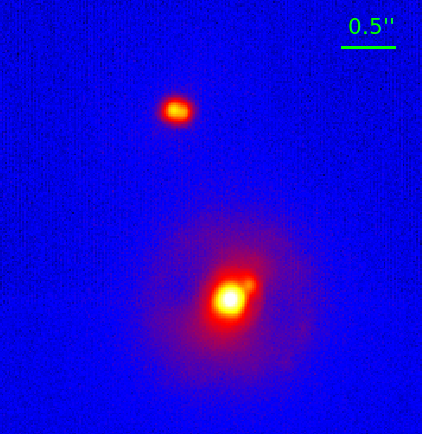
One of the fun things about observing with AO is that we frequently discover that stars listed as singles are doubles, triples, or even quadruples. This happens when we pick a star just to do engineering tests, and we find more stars than we expected. Here’s an example from tonight.

A quadruple, probably hierarchical, star system that we weren’t expecting. This is a VisAO z’ image.

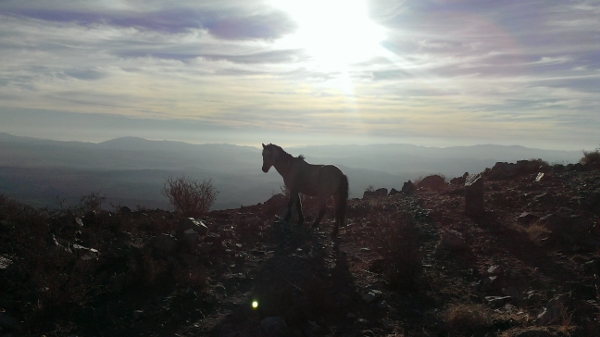
The same horse is still hanging around. He still won’t let me pet him.

Our horse friend posing dramatically

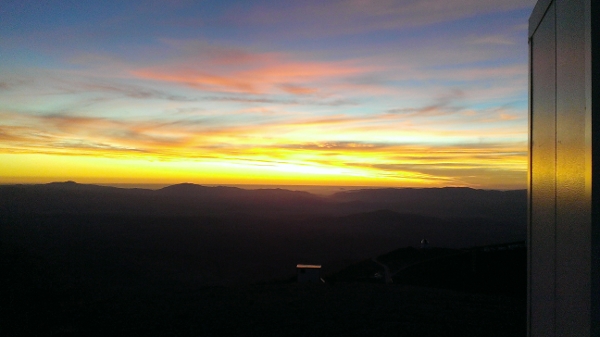
We couldn’t do much in the way of photometric standards, but the sky was pretty.

Tonight’s sunset.

In addition to the quad, we imaged a couple of star fields and clusters. We counted lots of stars on both of our cameras.